

For more than 80 million years, the oceans of prehistoric Earth hid a nightmare unlike almost anything alive today. Long before sharks became rulers of the sea, an enormous marine reptile armed with crushing jaws and serrated teeth prowled the warm waters that once covered much of North America. Now, paleontologists have officially identified this giant predator as a brand-new species: Tylosaurus rex — a name already earning headlines as the “T. rex of the sea.”
The newly described species was not a dinosaur, despite the famous “rex” nickname. Instead, it belonged to the mosasaurs, a group of giant marine reptiles that evolved into apex predators during the Late Cretaceous Period. Scientists say Tylosaurus rex may have been among the most terrifying predators ever to haunt Earth’s oceans.
The Giant Sea Predator Hidden in Texas Fossils
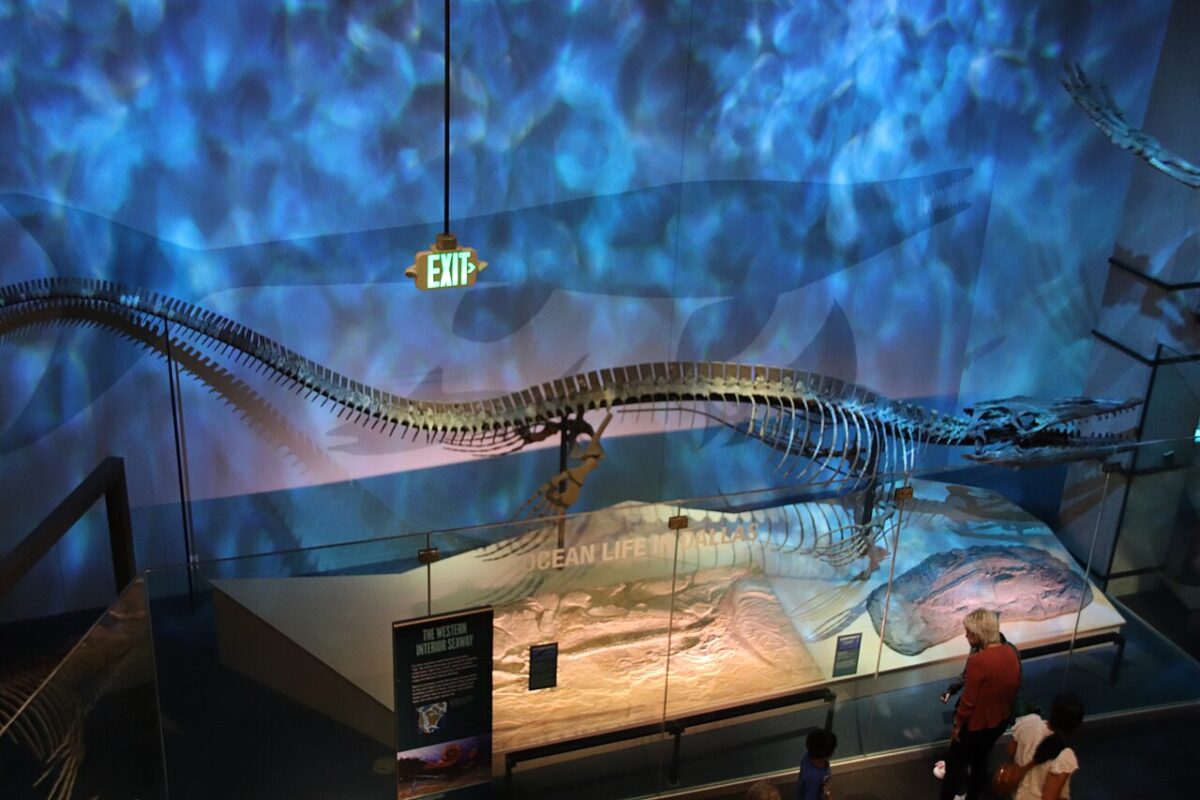
Researchers identified Tylosaurus rex after reexamining fossils that had been sitting in museum collections for decades, many of them discovered in northern Texas back in the 1970s. For years, the remains were thought to belong to another species called Tylosaurus proriger. But closer analysis revealed that this creature was larger, more specialized, and far more formidable than previously believed.
The ancient predator lived roughly 80 million years ago in the Western Interior Seaway, a vast prehistoric ocean that once split North America into two landmasses. At the time, much of modern-day Texas sat beneath warm, shallow seas teeming with giant reptiles, fish, sharks, and squid-like creatures. Tylosaurus rex appears to have ruled these waters as one of the ecosystem’s dominant hunters.
Why Scientists Are Calling It the “T. rex of the Sea”
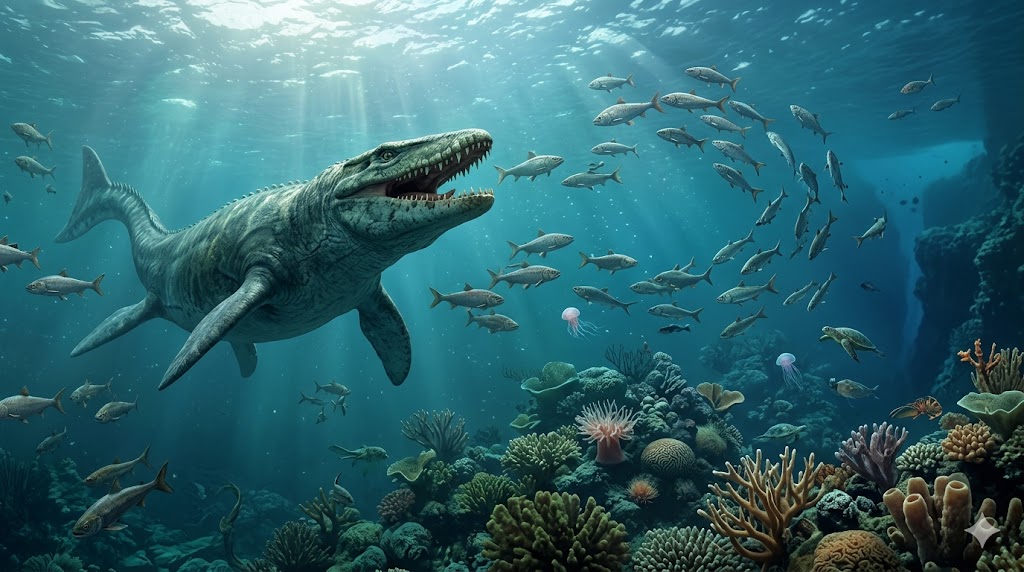
The species earned the name “rex,” meaning king, because of its sheer power. Scientists estimate the reptile could grow up to 43 feet long — roughly the size of a humpback whale and nearly twice the length of a great white shark.
But its true horror likely came from its skull and jaws. Researchers describe Tylosaurus rex as possessing a massive head lined with large, finely serrated teeth designed to slash through flesh and grip struggling prey. Its bite may have been strong enough to crush bone, while its muscular neck likely helped it thrash prey violently underwater.
Unlike many marine reptiles that relied mostly on speed, Tylosaurus rex seems to have been built for overwhelming force. Evidence from fossil injuries also suggests these giants may have fought each other brutally, much like modern crocodiles or large predatory mammals. One famous specimen reportedly showed severe facial injuries and a damaged jaw, signs of violent combat.
A Monster Built for Ancient Oceans
Mosasaurs like Tylosaurus rex were highly adapted marine reptiles with streamlined bodies, powerful tails, paddle-like flippers, and flexible necks that allowed them to strike quickly in water. Scientists now believe tylosaurs swam more like fast predatory fish than giant sea snakes, using their tails for bursts of speed.
That combination of speed, size, and jaw strength would have made Tylosaurus rex a terrifying ambush predator. It likely hunted large fish, sharks, seabirds, ammonites, and even smaller marine reptiles. Some paleontologists suspect it may have preyed on other mosasaurs as well. In the Late Cretaceous seas, virtually nothing would have been completely safe from a fully grown adult.
Its discovery is also forcing scientists to rethink mosasaur evolution. Researchers now believe some fossils previously assigned to other species may actually belong to Tylosaurus rex, suggesting these giant predators were more diverse and specialized than once assumed.
Could It Have Defeated a T. rex?
It is one of the most fascinating prehistoric “what if” scenarios imaginable: could Tylosaurus rex have defeated the famous Tyrannosaurus rex?
On land, the answer would almost certainly favor the dinosaur. Tyrannosaurus rex weighed far more, had immensely powerful legs, and evolved specifically for terrestrial combat. A mosasaur stranded on land would have been nearly helpless.
But in water, the balance changes dramatically.
A fully grown Tylosaurus rex possessed the size, mobility, and aquatic adaptations needed to dominate marine environments. In deep water, the giant mosasaur could likely outmaneuver a T. rex, drag it under, and attack with crushing bites. Its long body, flexible movement, and enormous jaws may have made it one of the few prehistoric predators capable of challenging almost anything that entered its domain.
Fortunately for both predators, they occupied very different worlds. One ruled the forests and floodplains of prehistoric North America, while the other reigned beneath the waves.
The Return of an Ancient King
The discovery of Tylosaurus rex is a reminder that even after centuries of fossil hunting, prehistoric Earth still holds enormous secrets. Hidden inside museum drawers and forgotten fossil collections may be creatures that completely rewrite what scientists thought they knew about ancient life.
And if researchers are correct, this newly identified mosasaur was not merely another sea reptile. It may have been one of the greatest marine predators Earth has ever produced — a 43-foot nightmare with serrated teeth, crushing jaws, and the power to dominate the ancient oceans like a true king of the sea.

- The Best Dog Breed For Each Zodiac Sign - July 19, 2026
- 10 Signs That Reveal Your Spirit Animal Is a Snake - July 18, 2026
- 10 Common Dog Training Mistakes That Actually Harm Your Bond - July 18, 2026