

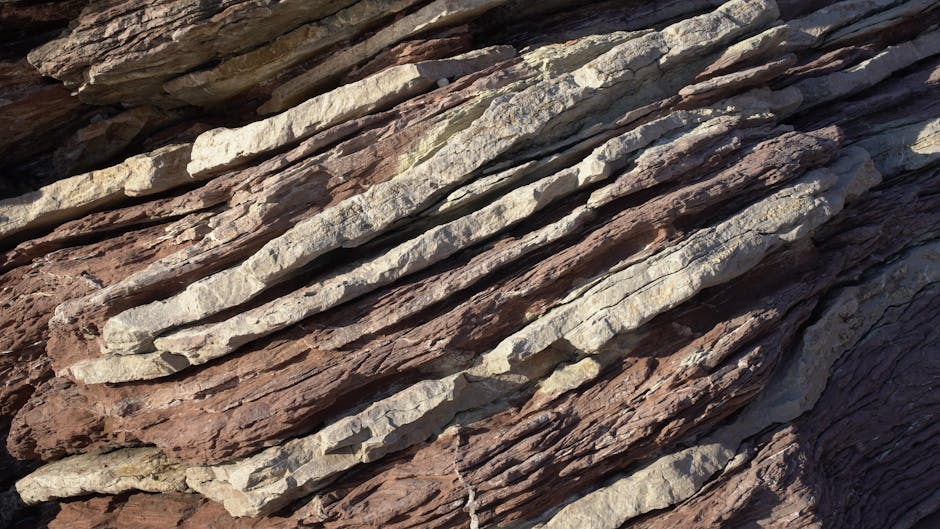
There’s a gap in the geological record so enormous, so baffling, that it has haunted scientists for over a century. Imagine flipping through a history book and discovering that nearly a billion years of pages have simply been torn out, with no clear explanation of how or why. That’s essentially what geologists face when they study a strange feature embedded in rock formations across the globe.
The Great Unconformity is one of Earth’s most profound geological mysteries, a massive missing interval where ancient rocks abruptly meet much younger ones, with an enormous chunk of time simply gone. What caused it? Was it one catastrophic event or many? Researchers are still piecing it together, and honestly, the answers so far are more surprising than most people would ever expect. Let’s dive in.
What Exactly Is the Great Unconformity?
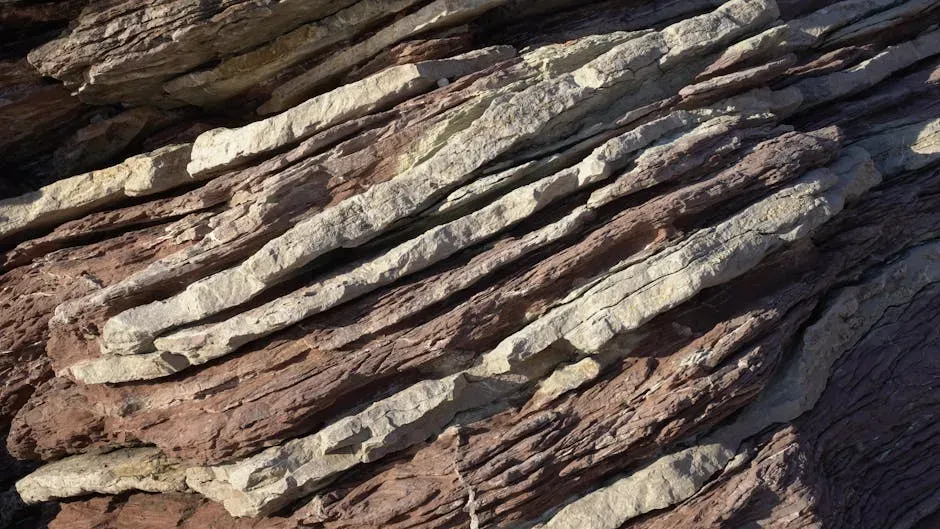
Picture two stacks of paper pressed together. One stack is ancient, representing rocks formed billions of years ago. The other is relatively young, formed hundreds of millions of years later. Now imagine the centuries worth of papers between them have completely vanished. That visual is roughly how geologists describe the Great Unconformity.
It’s a geological boundary visible in rock formations across North America, Europe, and elsewhere, where Cambrian-era sedimentary rocks sit directly on top of Precambrian basement rocks. The time gap represented can be anywhere from 250 million to nearly one billion years, depending on location. Entire chapters of Earth’s story are simply absent from the stone record.
Where You Can Actually See It
One of the most dramatic and famous places to witness this phenomenon is the Grand Canyon. Standing at the canyon’s rim, you can look down and literally see the unconformity as a visible line in the exposed rock walls, where younger sedimentary layers meet ancient crystalline basement rocks beneath. It’s genuinely awe-inspiring, the kind of thing that makes you feel very small very quickly.
The unconformity isn’t unique to Arizona, though. It shows up across multiple continents, which is precisely what makes the mystery so compelling. Its near-global presence suggests that whatever caused it wasn’t a local event. It was something planetary in scale.
The Snowball Earth Connection
Here’s the thing that really shook the geological community. A leading hypothesis links the Great Unconformity directly to “Snowball Earth,” a period when the planet may have been almost entirely covered in ice, possibly around 700 million years ago. Massive glaciers grinding across continents could have stripped away enormous volumes of rock, quite literally erasing those missing billions of years of geological record.
The ice, in this scenario, acted like a planetary-scale sandpaper, scouring away layer after layer of rock with extraordinary force. Some researchers estimate that glacial erosion during this period could have removed several kilometers of material from continental surfaces. That’s not a small number. That’s a staggering volume of geological history, reduced to sediment and washed into ancient oceans.
Why the Mystery Got Even More Complicated
For a long time, scientists assumed the unconformity was caused by one singular global event. It seemed like the simplest explanation. Recent research, however, has complicated that tidy narrative significantly, suggesting that the gap might actually represent multiple distinct erosion events happening at different times in different locations.
This means the Great Unconformity might not be one story at all. It could be several overlapping stories, each with different causes, timescales, and mechanisms. Honestly, that makes it simultaneously more fascinating and more frustrating. Geologists essentially have to unravel multiple mysteries layered on top of each other, which is either a scientist’s dream or their nightmare, depending on who you ask.
The Role of Tectonic Forces
Tectonic activity is another piece of the puzzle scientists are actively exploring. The breakup of ancient supercontinents, particularly Rodinia around 750 million years ago, may have dramatically altered the landscape in ways that contributed to the erosion responsible for the missing rock. When supercontinents fracture, land rises, sea levels shift, and enormous erosional forces come into play.
Think of it like this: when you shatter a ceramic plate, the edges don’t stay flat. They buckle, lift, and crack. Something similar happens when continents tear apart, and the resulting topographical chaos can accelerate erosion on a massive scale. The interplay between tectonic rifting and glacial scouring during this period may together explain why the gap is so dramatic and why it appears in so many places worldwide.
What the Missing Rocks Might Tell Us
This is where things get genuinely exciting. Scientists believe the eroded material from those missing rock layers didn’t just disappear. It was carried into ancient ocean basins as sediment, and some of that sediment may have played a direct role in triggering the Cambrian Explosion, the sudden and extraordinary diversification of life roughly 540 million years ago.
Massive influxes of mineral-rich sediment into oceans can dramatically alter ocean chemistry, providing nutrients that fuel biological growth on scales difficult to comprehend. If the erosion events that created the unconformity genuinely contributed to flooding ancient seas with these minerals, then this mysterious gap in the rock record may be intimately connected to one of the most important events in the history of life on Earth. That’s a jaw-dropping possibility, and researchers are working hard to either confirm or refute it.
What Modern Research Is Revealing
Scientists today are using increasingly sophisticated dating techniques and geochemical analysis to map the unconformity with far greater precision than was possible even a decade ago. By analyzing the chemical signatures preserved in rocks from different locations, researchers can better estimate when and how quickly the erosion occurred, and whether it happened in waves or all at once.
What’s emerging is a picture of Earth’s deep past that is far more dynamic and violent than previously appreciated. The planet was not a quiet, slowly changing world during this period. It was being dramatically reshaped by forces operating at almost incomprehensible scales. I think what makes the Great Unconformity so endlessly captivating is that it forces us to reckon with just how much of Earth’s story we genuinely haven’t read yet.
A Stone-Cold Reminder of What We Don’t Know
The Great Unconformity is ultimately a humbling thing. We live on a planet billions of years old, and yet enormous portions of its history remain locked away in eroded rock that no longer exists, washed into seas that have long since been swallowed by tectonic recycling. The gap isn’t just in the rock. In many ways, it reflects the limits of our current understanding.
What we do know is enough to keep scientists occupied for generations. The connection to Snowball Earth, the possible link to the Cambrian Explosion, the tectonic disruptions of Rodinia’s breakup, all of these threads are being pulled simultaneously, and each one leads somewhere genuinely surprising. The story of the Great Unconformity is far from over. If anything, the deeper we dig, both literally and figuratively, the more questions we uncover.
Is it not remarkable that a simple line in a canyon wall can open up one of the most profound mysteries in all of Earth science? What do you think the missing billion years might eventually reveal? Drop your thoughts in the comments.

- Urban Coyotes Show Remarkable Adaptability, Learning to Thrive in City Environments - July 22, 2026
- Beavers Are Nature’s Engineers, Creating Vital Habitats for Other Wildlife Species - July 21, 2026
- The Recovery of the California Condor Offers Hope for Other Critically Endangered Birds - July 21, 2026