

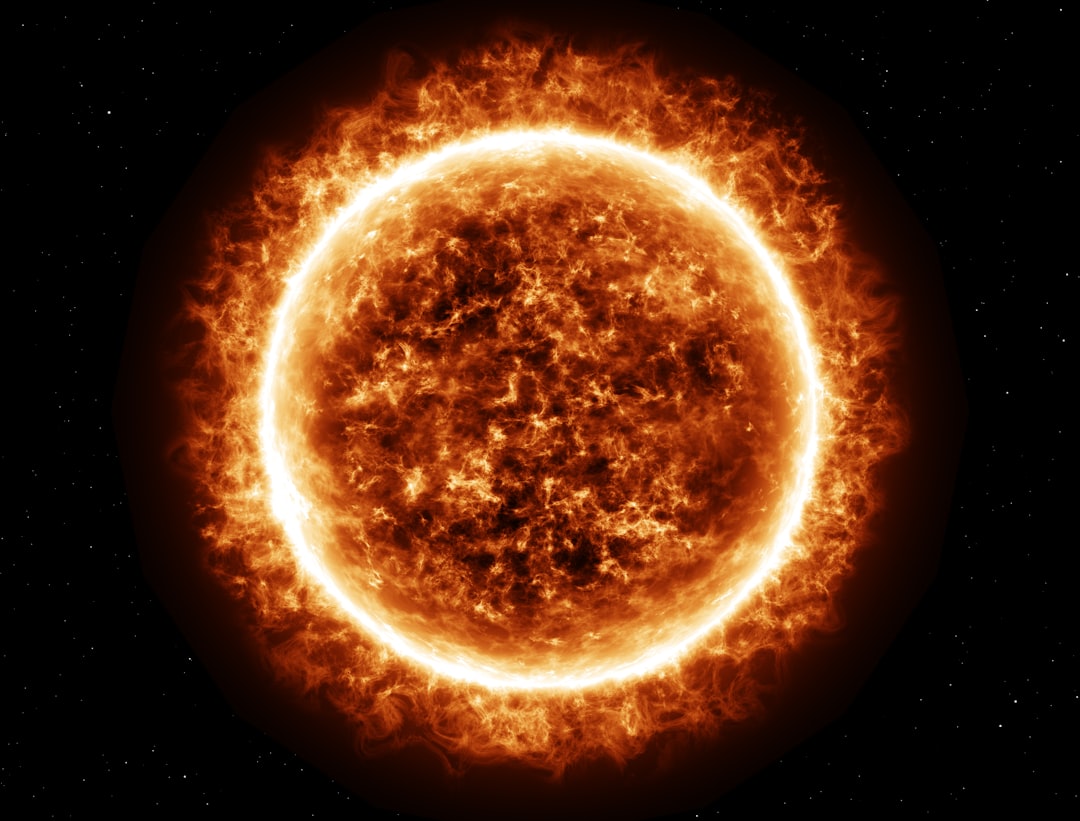

A Sudden Solar Surge Captured (Image Credits: Unsplash)
On January 14, 2026, astronomers observed a significant eruption on the sun’s far side, marking a dynamic shift in solar behavior as a new active region begins to emerge into Earth’s view.
A Sudden Solar Surge Captured
The event unfolded late on January 11, when a powerful X-class flare erupted from an unnumbered sunspot on the sun’s hidden hemisphere. This flare, registering at an intense level, triggered a long-duration coronal mass ejection that hurled plasma into space. Observatories like NASA’s Solar Dynamics Observatory quickly detected the outburst, highlighting its strength despite the source’s position beyond direct line of sight.
Experts noted the flare’s peak just before midnight UTC, with the ensuing ejection visible in coronagraph imagery from the SOHO spacecraft. The blast’s energy, though partially obscured, suggested a magnitude capable of influencing space weather patterns. As the sun rotates, this region now edges toward the limb, offering clearer glimpses of its potential.
Rotation Brings New Risks into Focus
Solar rotation, which completes a full turn every 27 days from Earth’s perspective, plays a crucial role in such events. The active region responsible for the eruption had been building on the far side, away from immediate scrutiny, until recent days. Now, as it swings into view over the coming week, forecasters anticipate increased flare activity that could directly affect our planet.
Historical patterns show that far-side events often foreshadow heightened solar storms once regions face Earth. This particular outburst aligns with ongoing solar cycle 25 dynamics, where sunspot clusters have grown more complex. Monitoring teams from the Space Weather Prediction Center emphasized the need for vigilance, as similar rotations have led to geomagnetic disturbances in the past.
Potential Impacts on Earth and Technology
Such eruptions can propel charged particles toward Earth, potentially sparking auroras in mid-latitudes or disrupting satellite operations. While the initial CME from this event appears directed away from our planet, subsequent flares from the emerging region might not be so fortunate. Power grids and communication systems remain vulnerable to induced currents from intense storms.
Recent solar activity has already demonstrated these risks, with minor flares causing radio blackouts earlier in the month. Scientists track these developments using a combination of ground-based telescopes and space-based instruments to predict arrival times of any Earth-bound material, which could take one to three days.
Key Solar Features to Watch
Active regions like this one often host multiple sunspots, each capable of producing flares. Current observations reveal at least four numbered regions on the visible disk, but the far-side newcomer stands out for its rapid development.
- X-class flares: The most powerful category, capable of global radio disruptions.
- Coronal mass ejections: Billions of tons of solar material expelled at high speeds.
- Sunspot rotation: Brings hidden threats into Earth’s view within days.
- Geomagnetic storms: Rated from G1 (minor) to G5 (extreme), affecting aurora visibility.
- Space weather forecasts: Updated daily by agencies like NOAA.
Key Takeaways
- The January 11 far-side X-flare signals a potent active region now rotating into sight.
- Expect possible Earth-directed CMEs as the sunspot cluster becomes fully visible.
- Enhanced monitoring could lead to spectacular auroras but also tech disruptions.
As this active region fully emerges, it underscores the sun’s unpredictable power during its current cycle peak. Staying informed about space weather helps mitigate risks for aviation, GPS, and energy sectors. What do you think about the potential for more solar spectacles this month? Tell us in the comments.

As a little kid, I fell in love with nature, wildlife, and animals. Living in the USA, South Africa, Italy, China and Germany gave me the opportunity to discover the world's Wildlife. My favorite animals are Mountain Gorillas, Siberian Tigers, and Great White Sharks.
I'm a certified PADI Open Water Diver, went to Everest Base Camp and Trekked Gorillas in Uganda. I hold a Master of Science in Economics and Finance.
Please send any feedback to feedback@animalsaroundtheglobe.com
- 11 Most Endangered Insects Buzzing in America Today - July 22, 2026
- 10 Most Frequently Googled Animal Birth Facts - July 22, 2026
- 10 Incredible Migration Journeys in the Animal Kingdom - July 22, 2026