


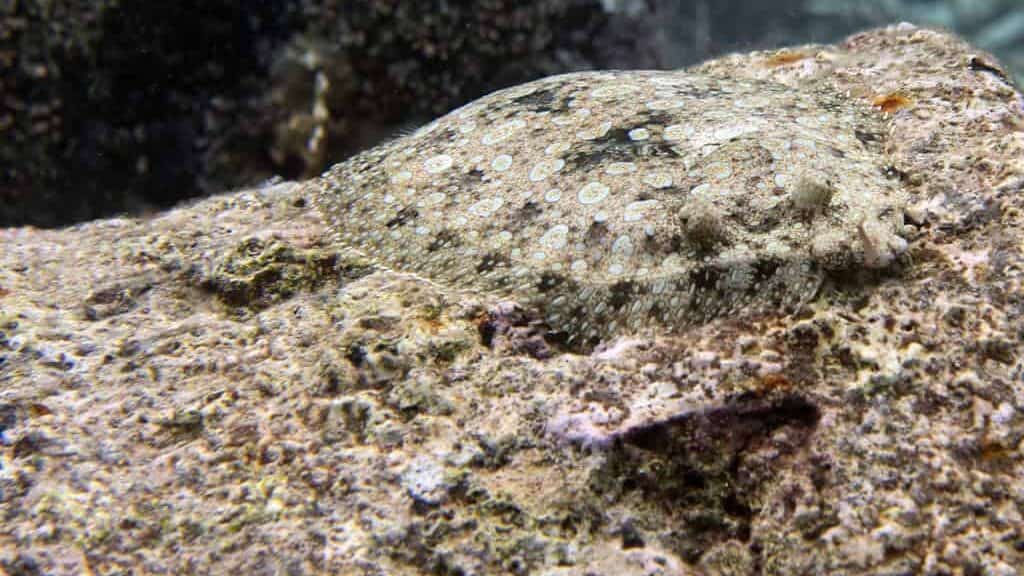
The peacock flounder (Bothus mancus) is a fascinating marine species that belongs to the family Bothidae, commonly known as lefteye flounders. These remarkable fish are found in tropical and subtropical waters throughout the Indo-Pacific region, from the Red Sea and East Africa to Hawaii, southern Japan, and Australia. What makes the peacock flounder particularly notable is its extraordinary ability to change color and pattern to match its surroundings—a camouflage technique that ranks among the most sophisticated in the animal kingdom. This flatfish has evolved remarkable adaptations that allow it to become nearly invisible against various seafloor backgrounds, protecting it from predators and helping it ambush prey. In this article, we’ll explore the intricate camouflage tactics of the peacock flounder and delve into the science behind its remarkable ability.
Physical Characteristics That Enable Camouflage
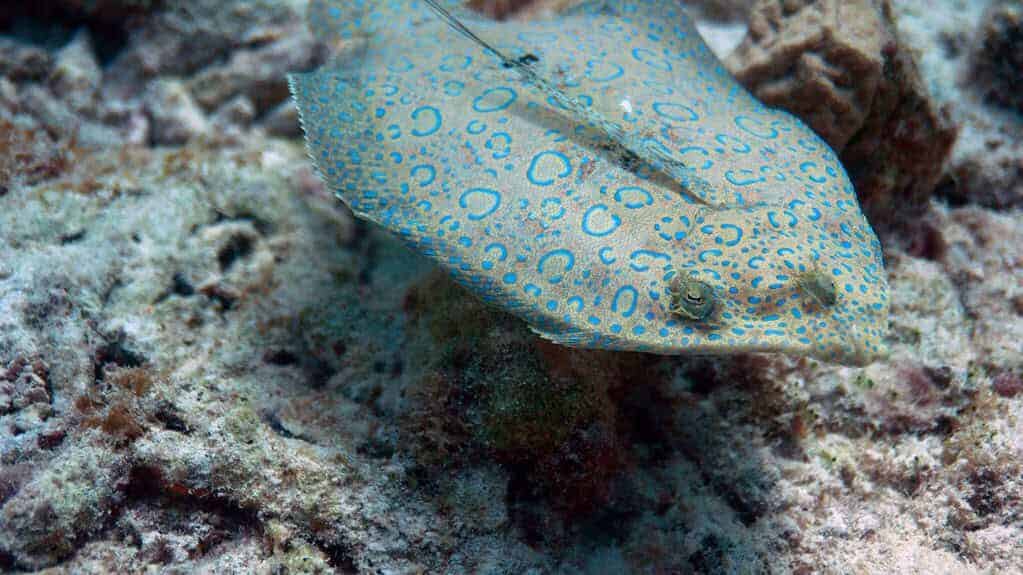
The peacock flounder possesses a uniquely adapted body that serves as the foundation for its camouflage abilities. Like other flatfish, peacock flounders undergo a dramatic metamorphosis during their early development. They begin life as symmetric larvae swimming upright in the water column, but during metamorphosis, one eye migrates across the head to join the other eye on what becomes the upper side of the fish. This results in their characteristic asymmetrical appearance, with both eyes positioned on the left side of their flattened, oval-shaped body.
This body structure allows the flounder to lie flat on the ocean floor, presenting a minimal profile. The upper (eyed) side of the fish contains specialized skin cells called chromatophores, which are responsible for color and pattern changes. The underside remains pale, typically white or cream-colored, as it doesn’t need to be camouflaged. Their fins are nearly transparent and can be extended or folded close to the body, further enhancing their ability to blend with the seafloor textures. These physical adaptations work in concert with their neurological systems to create one of nature’s most effective disguises.
The Science Behind Color Changing Abilities
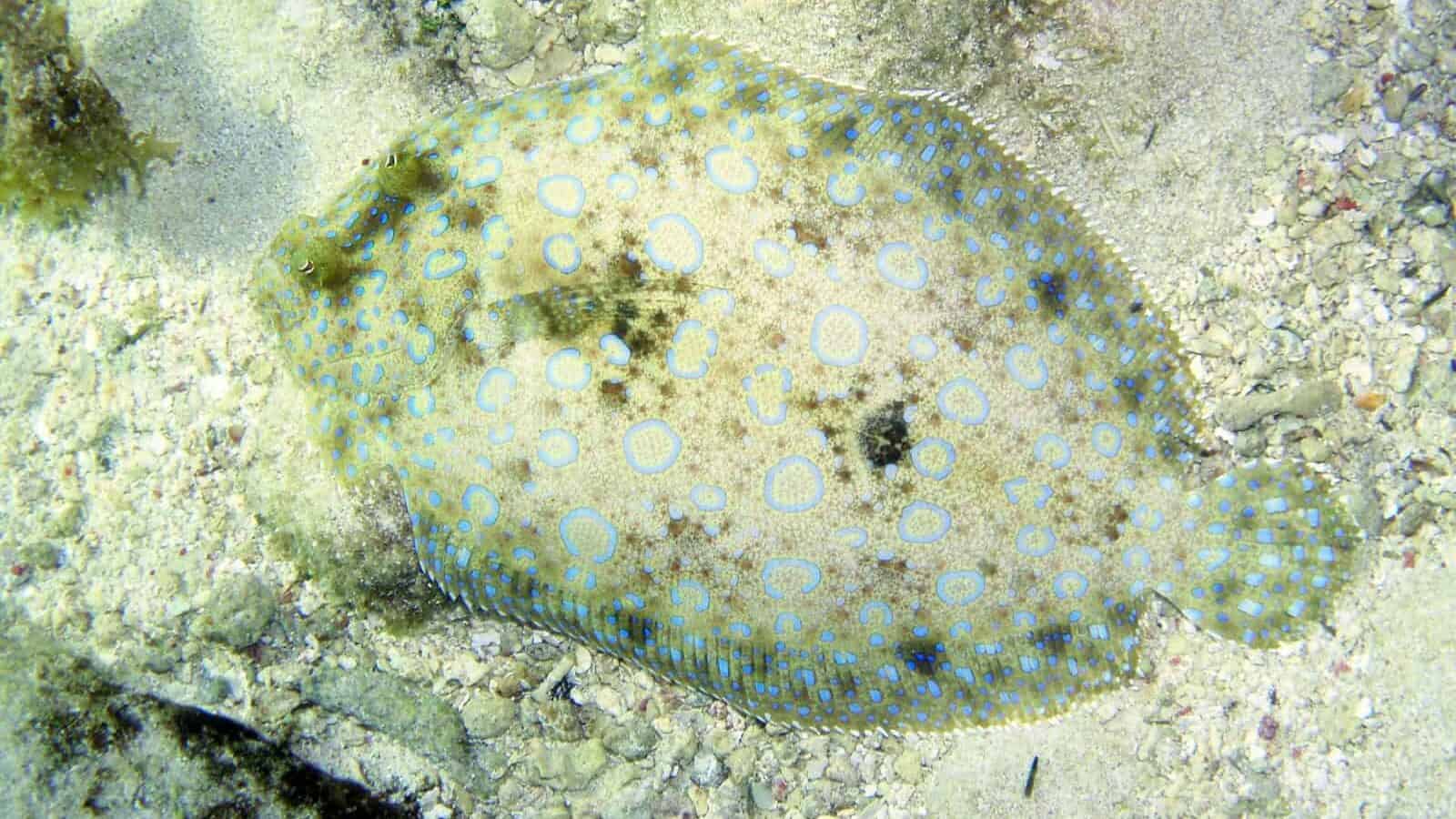
The peacock flounder’s ability to change colors and patterns stems from specialized cells in its skin called chromatophores. These cells come in several types, including melanophores (containing black or brown pigment), erythrophores (red), xanthophores (yellow), and iridophores (which reflect light to create iridescent blues and silvers). By expanding or contracting these pigment-containing cells, the flounder can rapidly change its appearance. When a pigment cell expands, the color becomes more visible; when it contracts, the color becomes less prominent.
What makes this system truly remarkable is how it’s controlled. The peacock flounder’s brain processes visual information from its eyes, analyzing the colors and patterns of the surrounding environment. It then sends signals through the nervous system to the chromatophores, instructing them to create a matching pattern. Research has shown that this process can begin in as little as 2-8 seconds, with a complete color change occurring within minutes. This neurologically controlled camouflage system is among the most sophisticated in the marine world, rivaling that of octopuses and cuttlefish, though using somewhat different cellular mechanisms.
Pattern Matching: Beyond Simple Color Changes
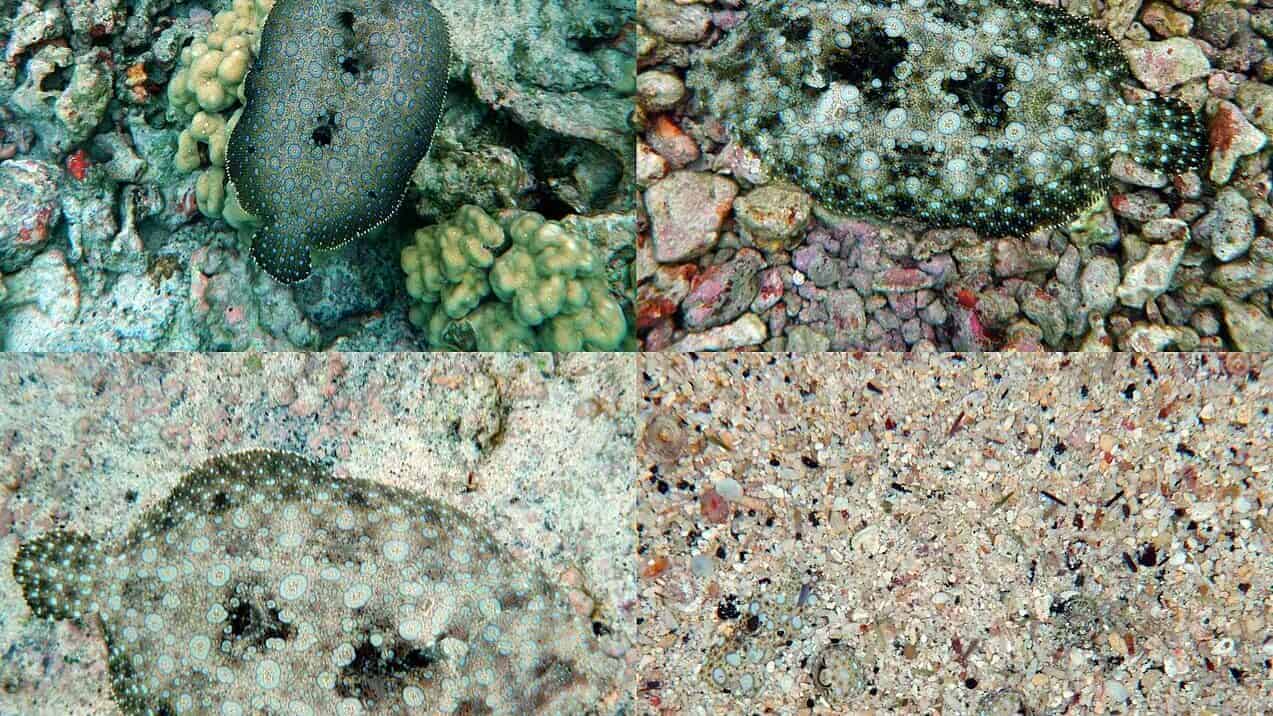
What truly distinguishes the peacock flounder’s camouflage ability is not just changing colors but matching complex patterns in their environment. These fish can replicate an astonishing array of seafloor textures—from the granular appearance of sand to the mottled patterns of coral rubble and even the complex arrangements of seagrass shadows. Research has shown that they can match not only the colors but also the approximate size, shape, and distribution of features in their background.
This pattern-matching ability relies on sophisticated neural processing that begins with their highly developed vision. Studies have demonstrated that peacock flounders can distinguish between different background patterns and select the appropriate skin pattern to match. In laboratory experiments, when placed on artificial checkerboard patterns of different scales, the flounders adjusted their skin patterns to match the size and arrangement of the squares. This demonstrates not just simple color matching but a complex analysis of spatial patterns in their environment—an extraordinary feat for a fish and evidence of advanced visual and neural processing capabilities.
The Role of Vision in Camouflage
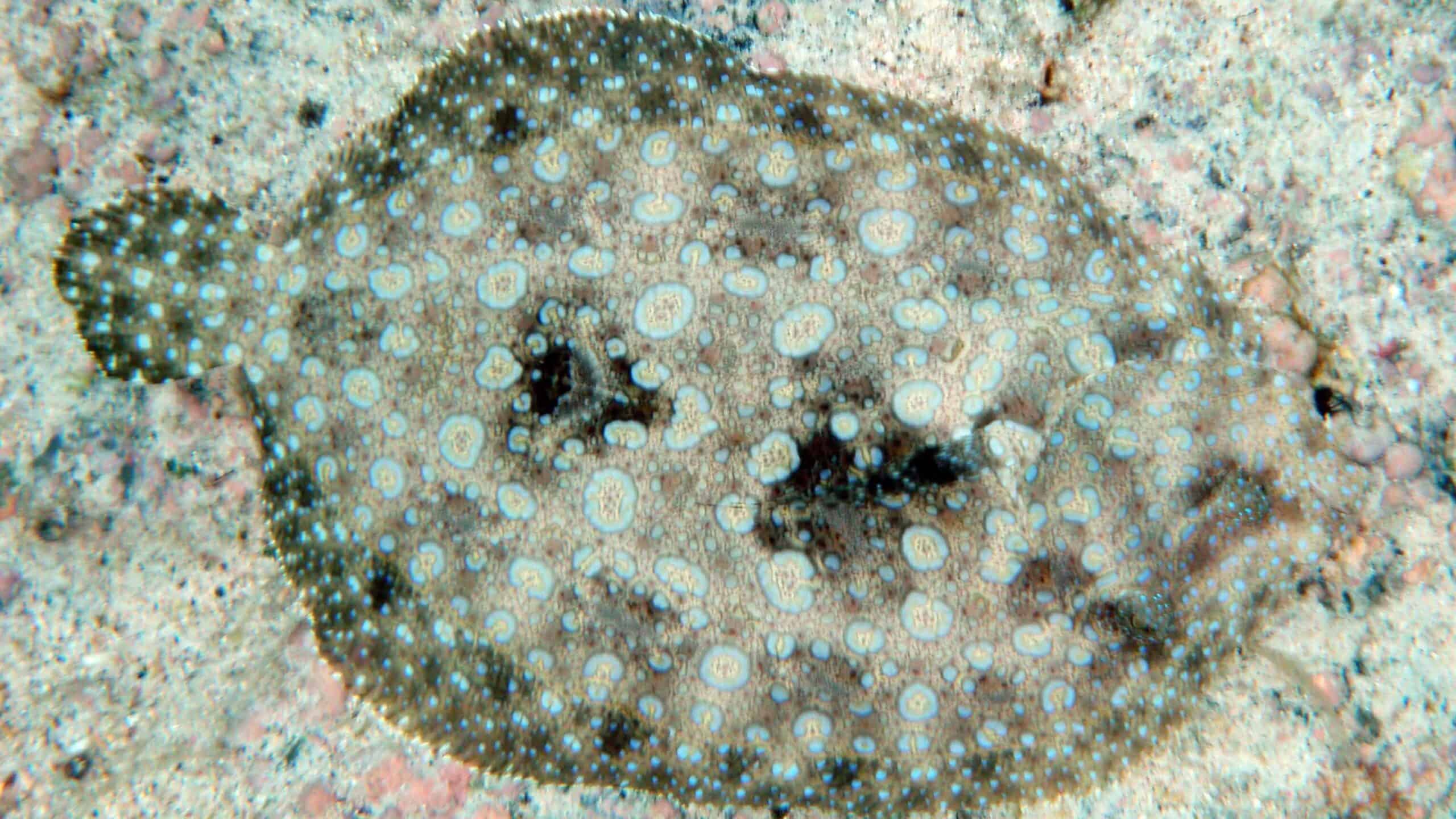
The peacock flounder’s camouflage ability would be impossible without its specialized visual system. Unlike most fish, whose eyes are positioned on opposite sides of the head, both of the flounder’s eyes are located on the left side (hence the family name “lefteye flounders”). This adaptation allows the fish to maintain visual contact with its surroundings while lying flat on the ocean floor. The eyes can move independently of each other, providing a wider field of vision and the ability to look in different directions simultaneously—one eye might scan for predators while the other monitors the seafloor patterns.
These eyes contain a high density of photoreceptors that provide excellent color vision and pattern recognition. Research suggests that peacock flounders can see a broad spectrum of colors, enabling them to accurately match various seafloor environments. Their visual acuity appears finely tuned for detecting edges and patterns rather than just colors, which explains their remarkable ability to replicate complex background textures. The direct neural connection between their visual system and chromatophores creates a feedback loop that continuously updates their camouflage pattern as they move across different substrates or as lighting conditions change.
Speed and Adaptability of Camouflage Responses
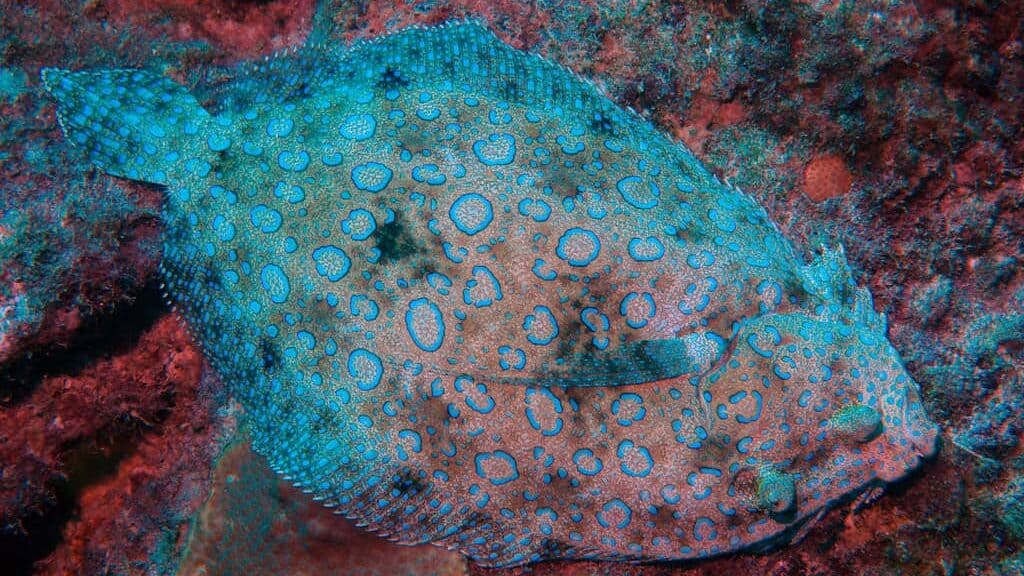
One of the most impressive aspects of the peacock flounder’s camouflage is the speed at which it can transform its appearance. When a flounder moves from one type of seafloor to another—say, from sand to coral rubble—it begins changing its pattern almost immediately. Initial color changes can be observed within seconds, with the full transformation typically complete within 2-8 minutes. This rapid response is crucial for survival, as a delay in camouflage adjustment would leave the fish vulnerable to predators during transitions between different environments.
The adaptability of this camouflage system is equally remarkable. Peacock flounders can effectively match a diverse range of substrates including sand (from white to black and various shades in between), coral rubble, seagrass beds, and even artificial materials introduced to their environment. Laboratory studies have demonstrated that when presented with novel patterns they’ve never encountered before, they can still produce reasonably effective matching patterns. This suggests their camouflage ability is not just based on a set of pre-programmed patterns but involves some level of real-time pattern analysis and synthesis—a sophisticated neural process that scientists are still working to fully understand.
Hunting Strategies Utilizing Camouflage
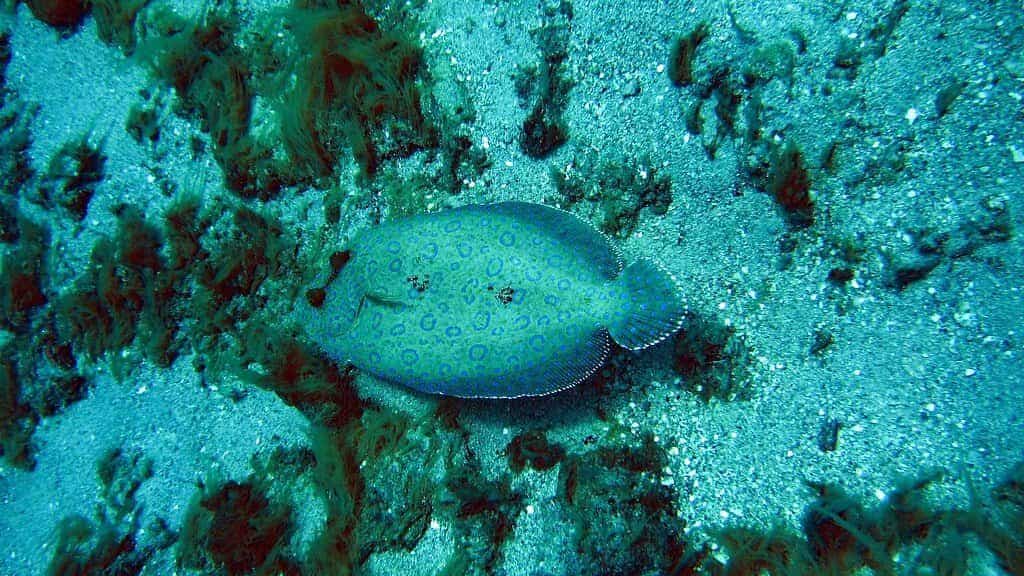
The peacock flounder’s camouflage abilities serve not only for defense but are integral to its hunting strategy. As ambush predators, these flounders rely on stealth to capture prey. They typically lie motionless on the seafloor, virtually invisible thanks to their matched patterns and colors. Small fish and crustaceans often fail to notice the flounder until it’s too late. When prey approaches within striking distance—usually just a few centimeters—the flounder launches itself upward with surprising speed, engulfing the prey in its expandable mouth in a fraction of a second.
This hunting technique is enhanced by several adaptations beyond mere visual camouflage. The flounder’s breathing mechanism is designed to minimize water movement that might give away its position. Its eyes can move independently, allowing it to track prey while remaining still. Some research suggests that peacock flounders may even be able to modulate their camouflage patterns specifically for hunting—creating patterns that are not just matched to the background but optimized to be less detectable to specific prey species based on their visual systems. This sophisticated integration of camouflage with hunting behavior demonstrates the evolutionary refinement of this species’ survival strategies.
Comparison to Other Marine Camouflage Specialists
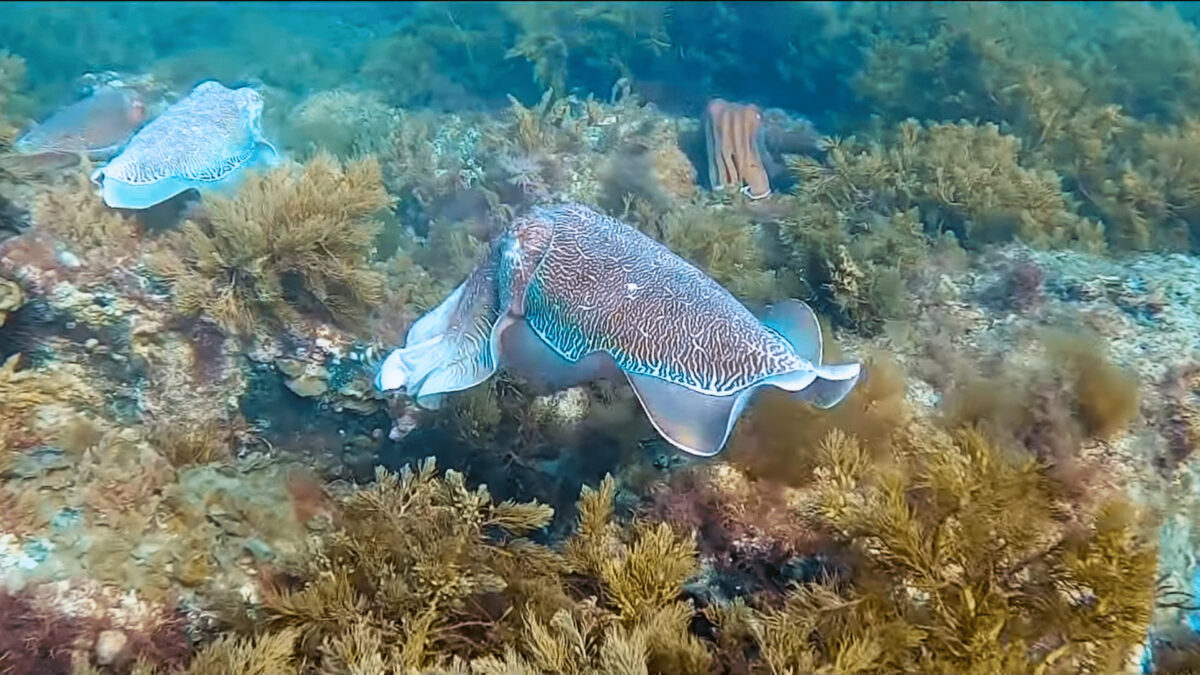
While the peacock flounder’s camouflage abilities are extraordinary, they’re part of a broader spectrum of camouflage adaptations in marine environments. Cephalopods—particularly octopuses and cuttlefish—are often considered the masters of marine camouflage, with abilities that in some ways exceed those of flounders. Cephalopods can change color and pattern more rapidly (in less than a second) and can also change skin texture to match three-dimensional features of their environment, something flounders cannot do. However, cephalopods achieve this through a fundamentally different mechanism, using muscle-controlled chromatophores rather than the neural-controlled pigment dispersion used by flounders.
Other flatfish species, including various soles and other flounders, also possess camouflage abilities, though few match the peacock flounder’s speed and precision of pattern matching. Scorpionfish and stonefish use a different approach, evolving body shapes and textures that resemble rocks or coral rather than actively changing their appearance. Each of these evolutionary solutions represents a different approach to the same problem of avoiding detection, with the peacock flounder’s solution being particularly sophisticated among bony fish. This convergent evolution of camouflage across different marine lineages highlights the strong selective pressure that visibility places on prey species in clear-water environments.
Limitations of the Flounder’s Camouflage
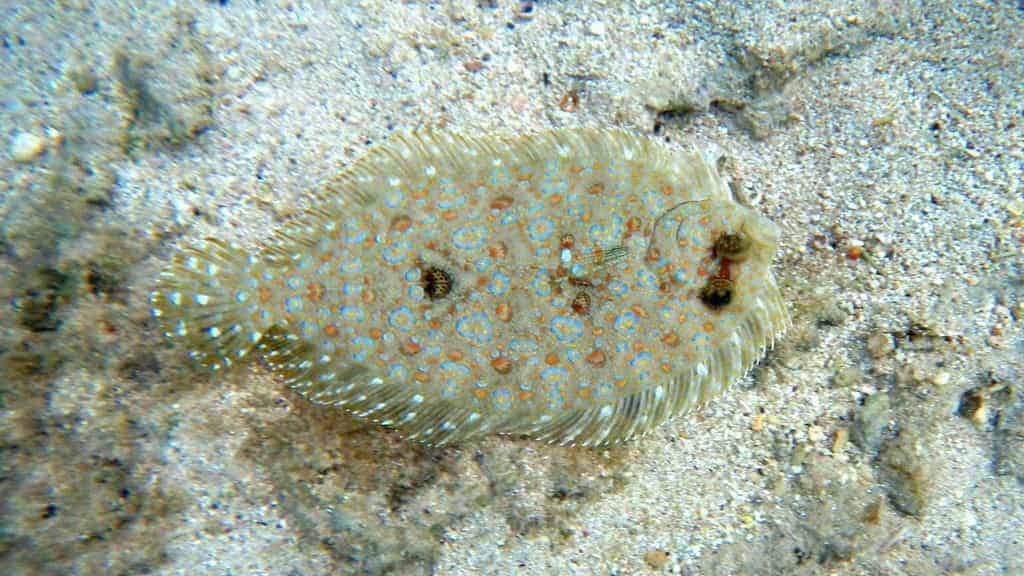
Despite its impressive capabilities, the peacock flounder’s camouflage system does have limitations. One significant constraint is the time required for complete pattern changes. While initial adjustments begin within seconds, full adaptation to a new background can take several minutes. During this transition period, the flounder may be more visible and vulnerable to predators. This is why flounders typically prefer to stay within a single type of habitat where their existing camouflage is effective, moving to new areas primarily when necessary for feeding or to avoid threats.
Another limitation involves the types of patterns they can replicate. While peacock flounders excel at matching two-dimensional patterns and colors, they cannot change their physical texture or three-dimensional shape to match environments with significant topographic variation. Additionally, their camouflage is optimized for the visual systems of their natural predators and may be less effective against predators with different visual capabilities, such as those that can detect ultraviolet light or polarized light. Human divers with knowledge of flounder behavior can often spot them despite their camouflage, typically by recognizing their characteristic eye movements or the outline of their body against the seafloor.
Environmental Factors Affecting Camouflage Efficiency
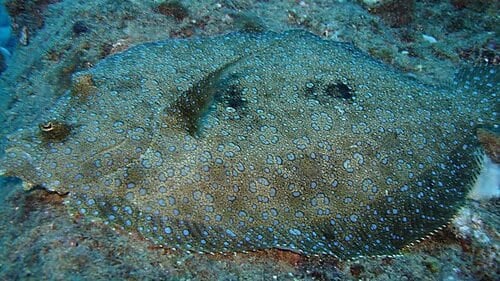
Several environmental factors can influence the effectiveness of the peacock flounder’s camouflage. Light conditions play a crucial role—their color-matching abilities work best in well-lit, shallow waters where their visual system can accurately perceive the colors and patterns of the seafloor. In deeper water or during low-light conditions, their color perception may be compromised, potentially reducing the accuracy of their camouflage. Water clarity also matters; in turbid waters with reduced visibility, the selective pressure for perfect camouflage is reduced, as predators themselves have difficulty seeing clearly.
The complexity of the substrate is another important factor. Peacock flounders achieve their most effective camouflage on relatively uniform substrates like sand or fine gravel. On highly complex or contrasting backgrounds, such as areas with mixed coral, rock, and sand, achieving perfect camouflage becomes more challenging. Interestingly, some research suggests that flounders may actively select habitats that optimize their camouflage effectiveness, preferentially settling in areas where their pattern-matching abilities will provide the greatest survival advantage. This behavioral adaptation complements their physiological camouflage abilities, creating a multi-layered approach to predator avoidance.
Research and Scientific Significance
The peacock flounder’s remarkable camouflage abilities have attracted significant scientific interest. Researchers studying these fish have gained valuable insights into various scientific fields, including neurobiology, vision science, and evolutionary biology. The neural pathways that connect visual perception to chromatophore control represent a fascinating example of how sensory information can directly influence physical adaptation. This has implications for understanding neural processing and sensory-motor integration in other species, including humans.
Beyond biological science, the flounder’s camouflage systems have inspired developments in camouflage technology. Military researchers and materials scientists have studied how the principles of the flounder’s pattern-matching could be applied to developing advanced camouflage systems for military vehicles and personnel. The concept of adaptive camouflage that can change in response to different environments has particular relevance in an age of advanced visual detection technologies. Additionally, conservation biologists study flounder camouflage as an example of specialized adaptation that may be affected by changing marine environments, particularly as human activities alter seafloor habitats and water clarity in coastal regions.
Conservation Status and Threats
While the peacock flounder is not currently listed as endangered or threatened globally, like many marine species, it faces challenges from human activities. Habitat degradation poses a significant threat, particularly in coastal areas where development, pollution, and destructive fishing practices can damage the seafloor environments these flounders depend on. Their reliance on specific substrate types for effective camouflage makes them potentially vulnerable to changes in seafloor composition caused by dredging, coastal construction, or coral reef degradation.
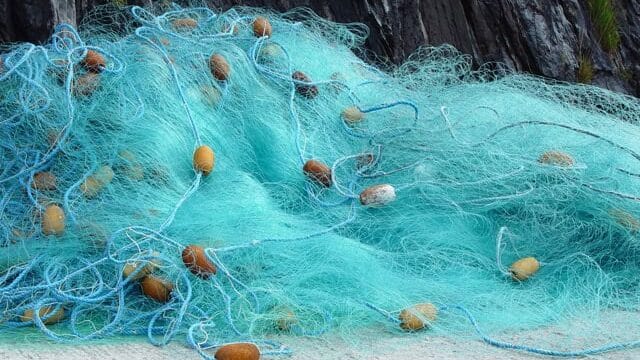
Fishing pressure also affects peacock flounder populations in some regions. While not typically a primary target for commercial fisheries, they are caught as bycatch in bottom trawling operations and are sometimes specifically targeted for the aquarium trade due to their interesting camouflage abilities and behaviors. Climate change represents another potential threat, as rising ocean temperatures and acidification affect marine ecosystems broadly. Changes in water clarity due to increased runoff or algal blooms could potentially impact the effectiveness of their visual camouflage systems. Conservation efforts focused on maintaining healthy marine habitats benefit not just the peacock flounder but the entire ecosystem they inhabit.
The peacock flounder stands as one of nature’s most accomplished masters of disguise, employing a sophisticated camouflage system that represents millions of years of evolutionary refinement. Through the complex interplay of specialized vision, neural processing, and chromatophore cells, these remarkable fish achieve levels of background matching that few other vertebrates can match. Their ability to rapidly analyze and replicate the colors and patterns of their surroundings demonstrates the extraordinary adaptive potential of seemingly simple organisms when shaped by the powerful forces of natural selection.
Beyond their biological significance, peacock flounders remind us of the wonders that lie hidden in plain sight beneath the ocean’s surface. A seemingly empty patch of seafloor might conceal a perfectly camouflaged predator, invisible until the moment it moves. This serves as a powerful metaphor for the ocean itself—a world of hidden complexity and adaptation that we are still working to fully understand. As we continue to study creatures like the peacock flounder, we not only gain insights into biological systems but also inspiration for human technologies and a deeper appreciation for the intricate solutions that evolution has produced to life’s challenges.

- The Most Stunning Whale Migration Off Alaska’s Coast - August 6, 2026
- How Pigeons, Horses, and Dogs Changed the Course of Wars - August 6, 2026
- What Happens If a Wolf Crosses Paths With a Cougar in the Wild - August 5, 2026