

There’s something almost instinctive about the way people respond to the sight of a mustang running free across an open plain. No fences, no saddle, no obligation to anyone. It’s a scene that carries weight far beyond horses.
The mustang is a free-roaming horse of the Western United States, descended from horses brought to the Americas by the Spanish conquistadors. Their story stretches across five centuries, woven into the land, the culture, and the contested politics of the American West. Understanding where mustangs came from, and what they continue to represent, reveals something unexpected about American identity itself.
From the Old World to the Wild West: The Origins of the Mustang
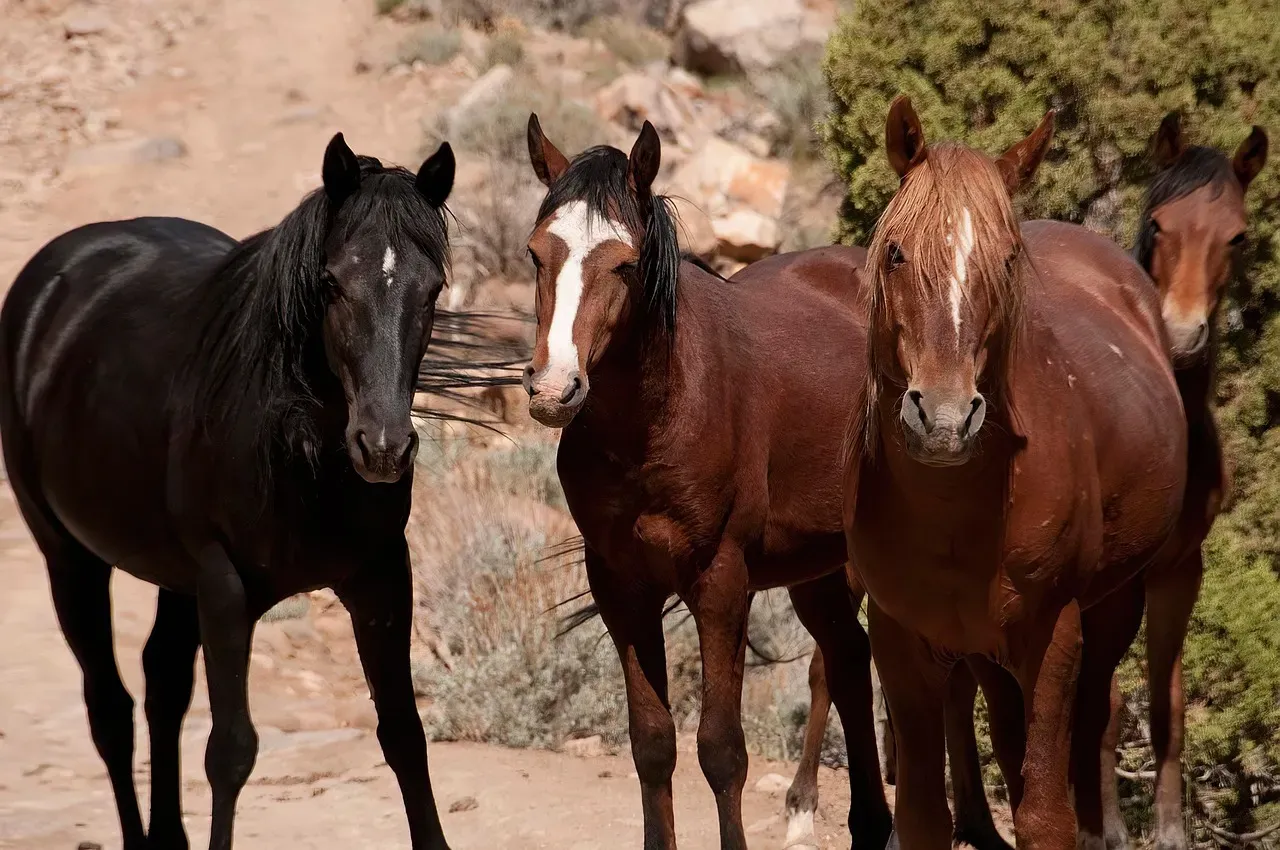
The mustang has a profound historical significance deeply rooted in the tapestry of American history. These robust animals can trace their ancestry back to the horses brought to the Americas by Spanish explorers during the 16th century.
Today’s mustangs originated in the 16th century, when the Spanish conquistadors colonized large parts of the American continent. On their ships were noble horses of Arabian or Andalusian blood. These weren’t small, unremarkable animals. These horses introduced by the Spaniards were uniquely suited to the vast plains of the American West, possessing superior stamina and adaptability. Produced by the breeding of Arabian and Barb horses, the Spanish horses were smaller in stature than the heavy European horses favored in many areas of the Old World and had the intelligence and speed that made them perfect partners for men in conquering the New World.
Colonial Spanish Horses are the founding ancestors of the Mustang breed. Early horses were left behind or released from Spanish missions and settlements. Feral herds established themselves and eventually spread throughout the Wild West.
Several breeding populations became genetically isolated in different geographic locations, resulting in various strains of Mustangs. Some feral herds have distinct types that suggest the introduction of Thoroughbred or Quarter horse blood. A few have draft horse characteristics, but many still resemble the light-riding horse type of the original Spanish horses. Their very diversity is a kind of living record of the American frontier’s complexity.
The Horse That Transformed a Continent: Mustangs and Native American Life
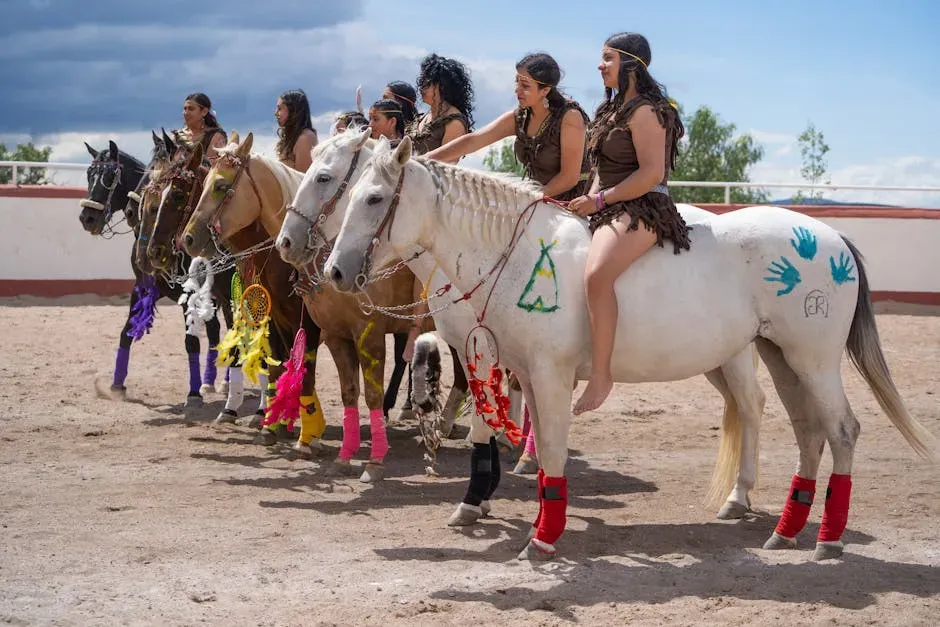
Native American people readily integrated use of the horse into their cultures. They quickly adopted the horse as a primary means of transportation. Horses replaced the dog as a pack animal and changed Native cultures in terms of warfare, trade, and even diet – the ability to run down bison allowed some people to abandon agriculture for hunting from horseback.
Tribes such as the Comanche, Lakota, and Blackfoot transformed from predominantly pedestrian hunters into formidable mounted warriors and more efficient buffalo hunters within just a few generations. The horse became not only a practical tool but also a spiritual and cultural centerpiece, with many tribes developing complex ceremonies, songs, and art centered around these animals.
The Lakota, for example, called horses Sun’ka Wakan, meaning “Holy Dog” or “Mysterious Dog.” To Native Americans, horses symbolized healing, strength, and a deep emotional intelligence that transcended the physical world.
The relationship between Native peoples and mustangs represents one of history’s most significant technological and cultural adaptations, fundamentally altering tribal territories, warfare, trade networks, and social structures across the American West. That transformation happened remarkably fast. Within a few generations, horses had reshaped the entire social order of the Plains.
Near Extinction and the Fight to Survive: The Story of Wild Horse Annie
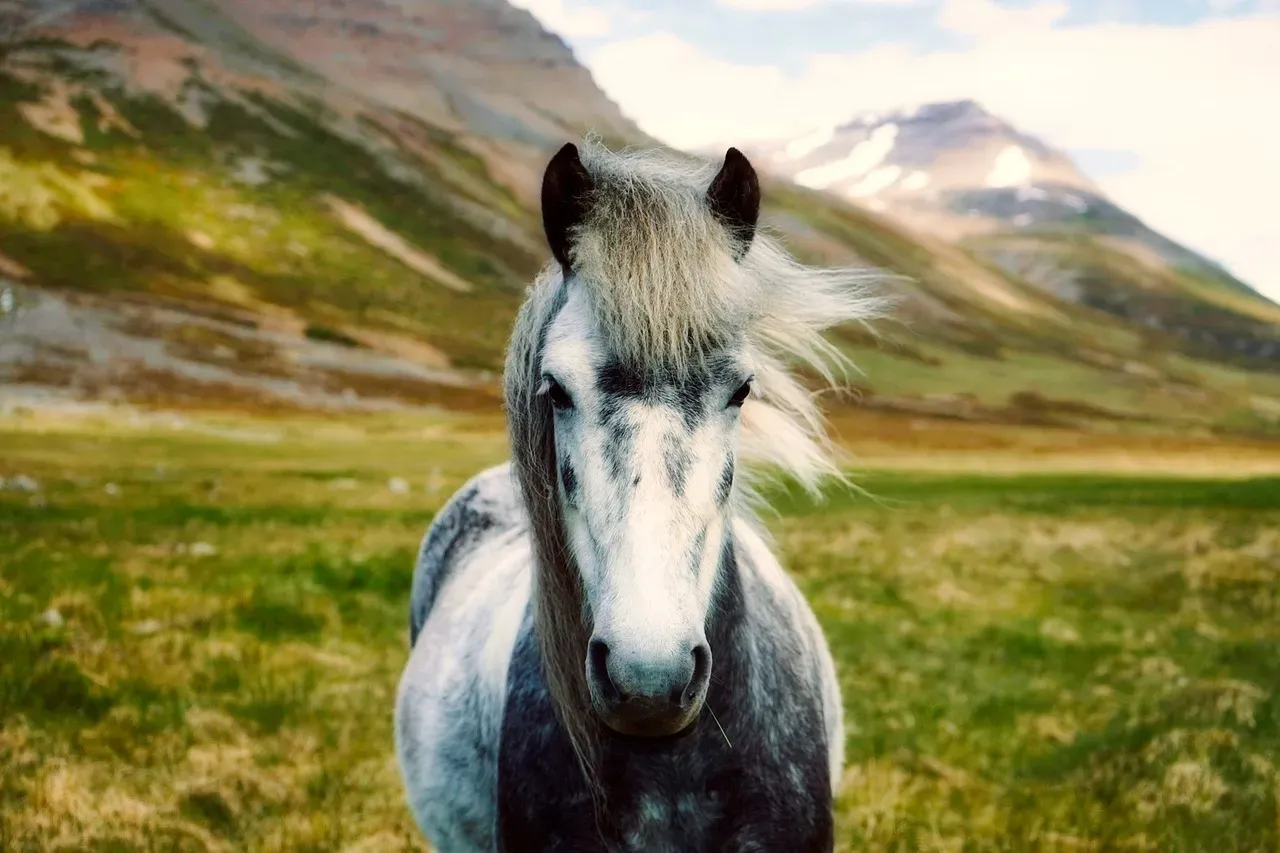
As people began settling the West, more livestock joined the growing population, reaching an estimated total of around two million wild horses and burros by the late 1800s. The habitat gradually shrank as settlement increased. Herd size was controlled by ranchers and mustangers who hunted the horses or gathered them for sale.
By the 1920s, tractors began replacing horses on American farms. No longer a resource, the wild horse became a pest and a nuisance, seemingly of use to no one. In the 1930s, the U.S. Government authorized the removal of wild horses from the public range. Wild horses were killed in large numbers. The scale of the decline was staggering. By the mid-1900s, the number of wild horses and burros roaming the West had dramatically decreased to an estimated size of 17,000.
In the 1950s, an unlikely champion emerged. Velma B. Johnston, who later became known as “Wild Horse Annie,” launched a campaign aiming to establish legislation to protect wild horses and burros across America. Johnston’s “Pencil War” invited others, including thousands of school-aged children, to join her in writing letters to Congress asking for change on behalf of the shrinking mustang population.
Congress responded by passing the 1959 Wild Horse Annie Act, followed by the 1971 Wild Free-Roaming Horses and Burros Act, and the 1976 Federal Land Policy and Management Act. The 1971 Act in particular carried genuine legal force. In 1971, the United States Congress recognized that “wild free-roaming horses and burros are living symbols of the historic and pioneer spirit of the West, which continue to contribute to the diversity of life forms within the Nation and enrich the lives of the American people.”
Life on the Range: The Biology and Social World of the Mustang
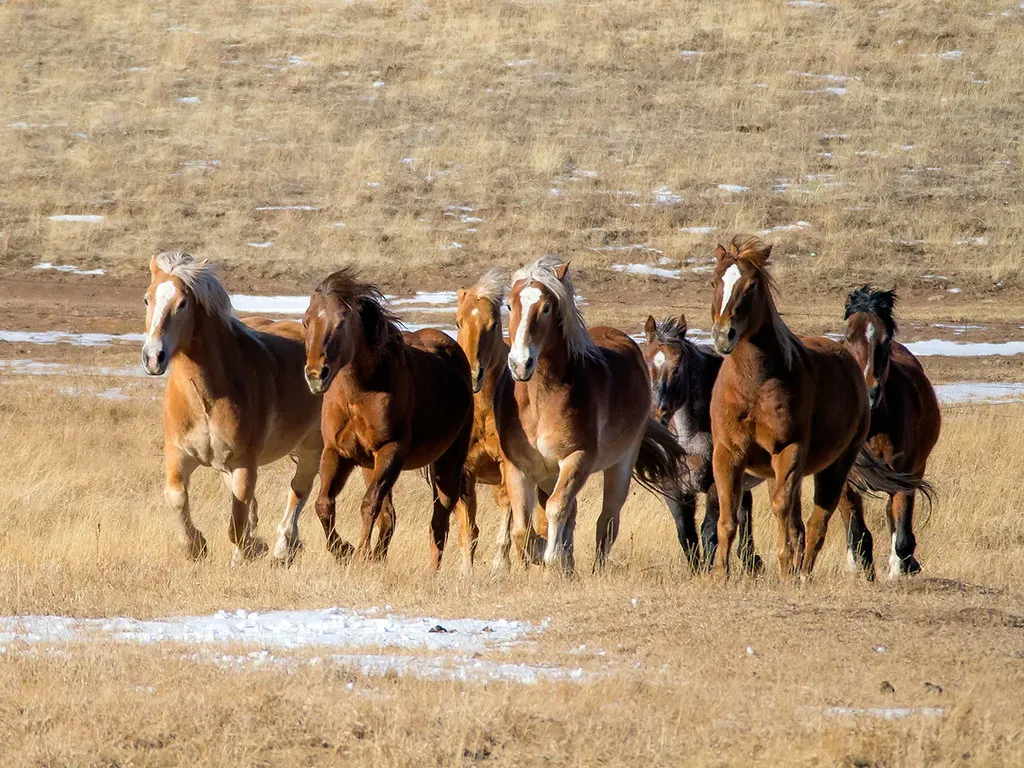
Mustangs are renowned for their hardiness and adaptability. These defining traits emerged as a result of centuries of natural selection in the diverse and often challenging environments across North America. Their adaptability has enabled them to survive and thrive in disparate habitats, from arid deserts to the lush prairies.
Most mustang horses can run, or gallop, at speeds of 25 to 30 mph, although a mustang has been recorded reaching 55 mph over a short distance. Their physical makeup suits survival well. Physically, mustangs are generally smaller than domestic horse breeds, typically standing between 14 and 15 hands tall. Their height, accompanied by their muscular build, contributes to their agility and endurance.
Within a herd, mustangs follow a social structure typically comprised of a single dominant stallion, multiple mares, and their young offspring. The stallion plays an essential role in protecting the group from external threats and maintaining its cohesion. Leadership within the herd is vital for survival, as it involves guiding the group to water and grazing resources and defending against predators.
Mare hierarchies within the band create an additional social structure, with older, experienced females often making crucial decisions about migration routes and feeding grounds. Young stallions unable to establish their own bands often form “bachelor bands” where they develop the fighting and survival skills necessary to eventually challenge for mares. This social complexity is part of what makes mustangs so distinctive – they’re not simply solitary grazers, but animals built around community and hierarchy.
An Unresolved Future: Conservation, Management, and What’s at Stake
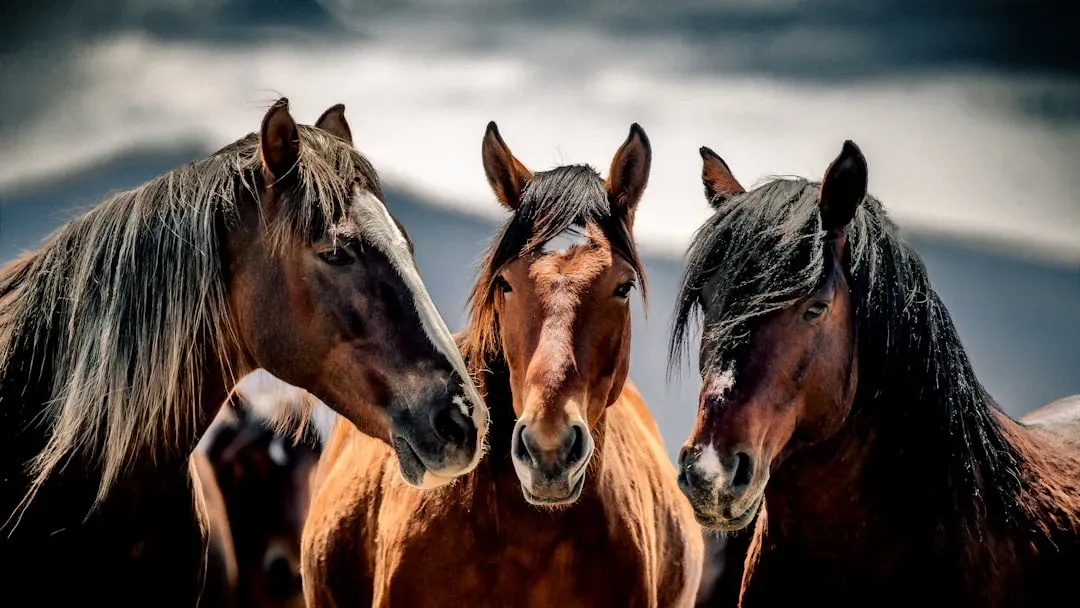
The Bureau of Land Management manages and protects wild horses and burros on 25.5 million acres of public lands across 10 Western states as part of its mission to administer public lands for a variety of uses. The Wild Horse and Burro Program’s goal is to manage healthy wild horses and burros on healthy public rangelands.
The Bureau of Land Management released its annual wild horse and burro population estimates showing a marked reduction in wild horse and burro overpopulation on public lands. This was the third year since 2020 that the overpopulation had declined. The BLM estimated there were approximately 73,520 federally-protected wild horses and burros on BLM-managed public lands as of March 1, 2024. Still, the BLM has established an Appropriate Management Level totaling 26,690 bureau-wide, but the on-range mustang population had grown well beyond that figure in prior years.
Advocates and many scientists believe that fertility control is the ideal way to control horse populations, but administering it by dart gun can be complicated for some herds and nearly impossible for others. Many activists argue that roundups are inhumane, saying that they break up families, traumatize individuals, and force free-ranging animals into confinement for life.
Nowadays, mustangs fulfill important tasks in nature. In hot summers, they prevent the overgrowth of bushes, which is considered an essential part of fire protection. In icy winters, they open frozen water holes with their hard hooves, which also benefits other animals. The debate over their management is real and complicated. But their ecological value, even in practical terms, is increasingly recognized.
Conclusion: More Than a Horse
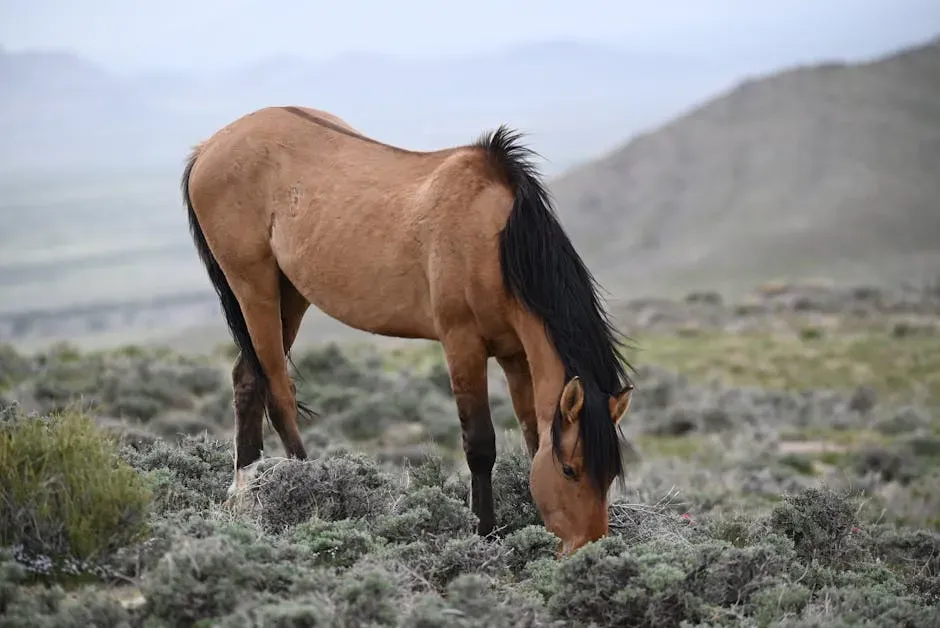
The American mustang occupies a peculiar, layered place in the national story. The mustang has transcended its biological classification to become a powerful cultural symbol deeply embedded in American identity and self-perception. They arrived by ship, went feral, shaped entire civilizations, were nearly wiped out, and were ultimately given legal protection through the unlikely force of schoolchildren writing letters.
The journey of the American mustang is a story of resilience, an epic battle for survival in a changing world. The tension between preservation and land use isn’t close to being resolved, and the horses remain at its center. The reality of the wild horse today is one of cautious optimism, with their continued existence in the wild at stake.
There’s something honest about that uncertainty. The mustang was never a simple symbol. It carries the weight of conquest, indigenous transformation, conservation failure, grassroots triumph, and ongoing political friction all at once. What endures is the animal itself, still running across land that barely belongs to anyone, indifferent to every argument made about it.

- What It Means When Your Cat Stares at the Same Empty Corner at the Same Time Every Night – and the Three Explanations Competing for It - July 19, 2026
- What It Means When a Snake Crosses Your Path From Left to Right According to Every Southern Appalachian Tradition That Recorded It - July 19, 2026
- What It Means When Deer Stop Coming to an Area They Have Visited for Years – and What Wildlife Biologists Say They Are Detecting - July 19, 2026