
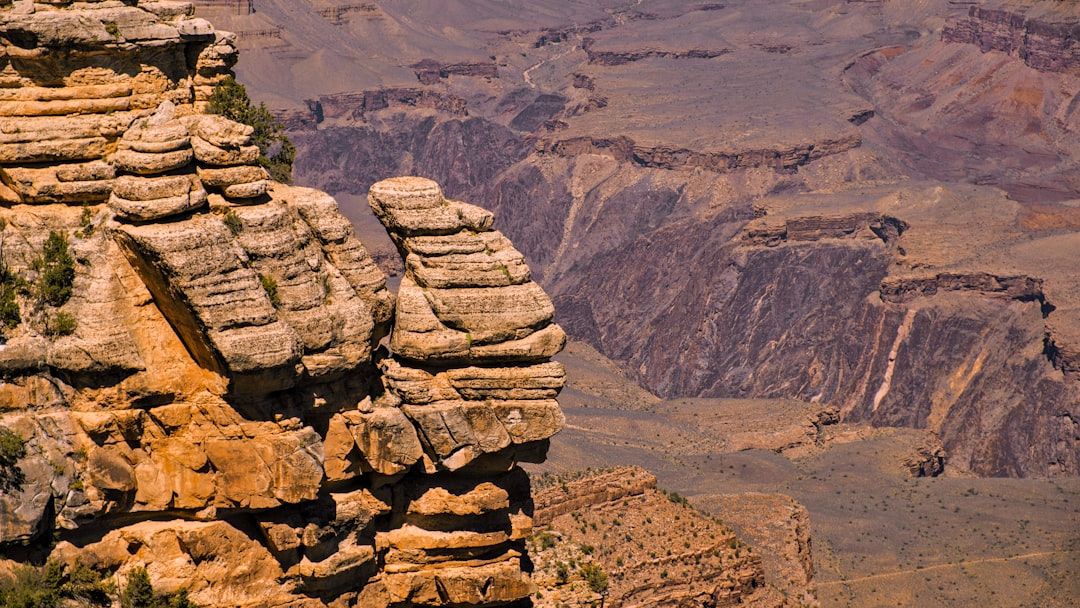
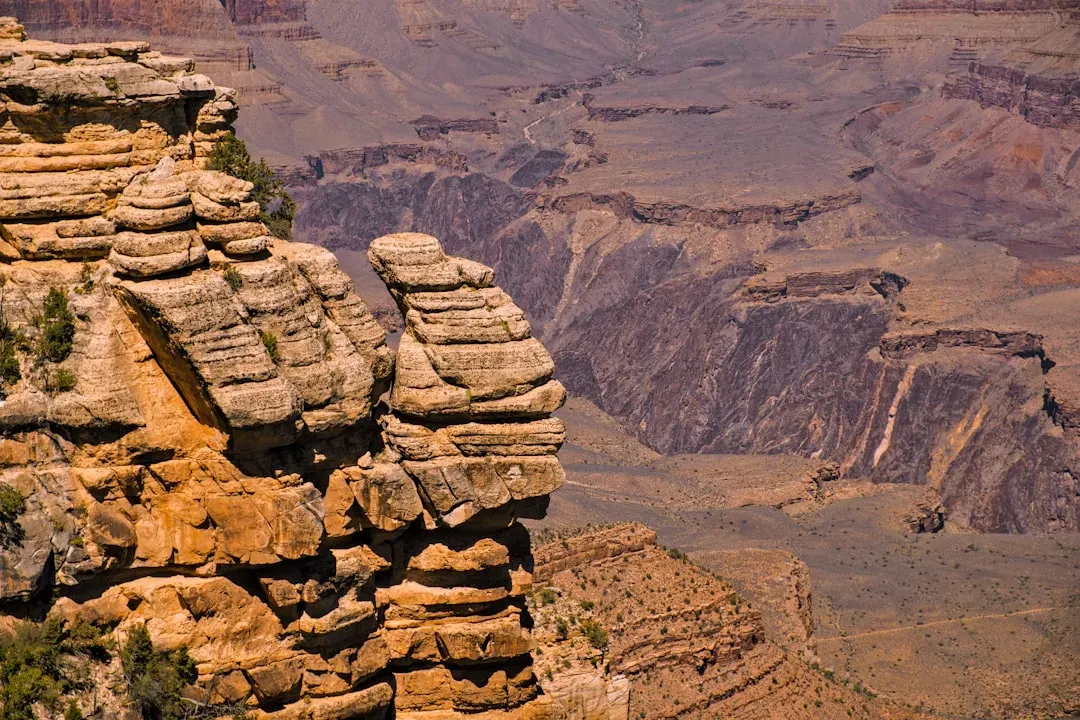
Picture this: a mile-deep chasm that slices through nearly two billion years of Earth’s history. The Grand Canyon doesn’t just impress with its sheer scale. Its colorful rock layers whisper secrets of ancient seas, deserts, and mountains long gone.[1]
Yet the canyon itself is surprisingly young, carved in just the last few million years. Those stacked strata hold clues to dramatic changes over eons. Ready to descend through time?
Unveiling the Vishnu: The Canyon’s Oldest Foundations
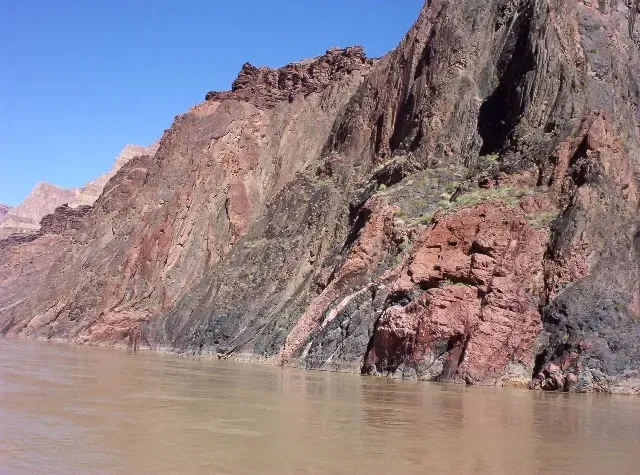
The Vishnu Basement Rocks form the dark, rugged base of the inner gorge. These metamorphic schists and granites date back nearly 1.8 billion years. Intense heat and pressure transformed ancient sediments and volcanics during continent-building collisions.[2][3]
Zoroaster granite intrudes through the schist, a remnant of fiery intrusions. Hiking here feels like touching the dawn of North America. Honestly, it’s humbling to stand where such ancient forces clashed.
These rocks withstood billions of years of burial and upheaval. They anchor the entire stack above.
The Grand Canyon Supergroup: Tilted Layers of Drama
Above the Vishnu sit the tilted Grand Canyon Supergroup rocks, mostly sedimentary from about 1.2 billion to 700 million years ago. Rivers, lakes, and shallow seas deposited sands and lavas in this Precambrian sequence. Later tilting and erosion exposed their angular edges.[2]
The Unkar Group features reddish shales and the dark Cardenas Basalt, around 1.07 billion years old. Nankoweap Formation adds coarse sandstones nearby. These layers hint at rifting continents and volcanic activity.
Unlike the flat layers higher up, their slant tells of tectonic twists. It’s like reading a book with pages slightly askew.
The Great Unconformity: A Billion-Year Gap
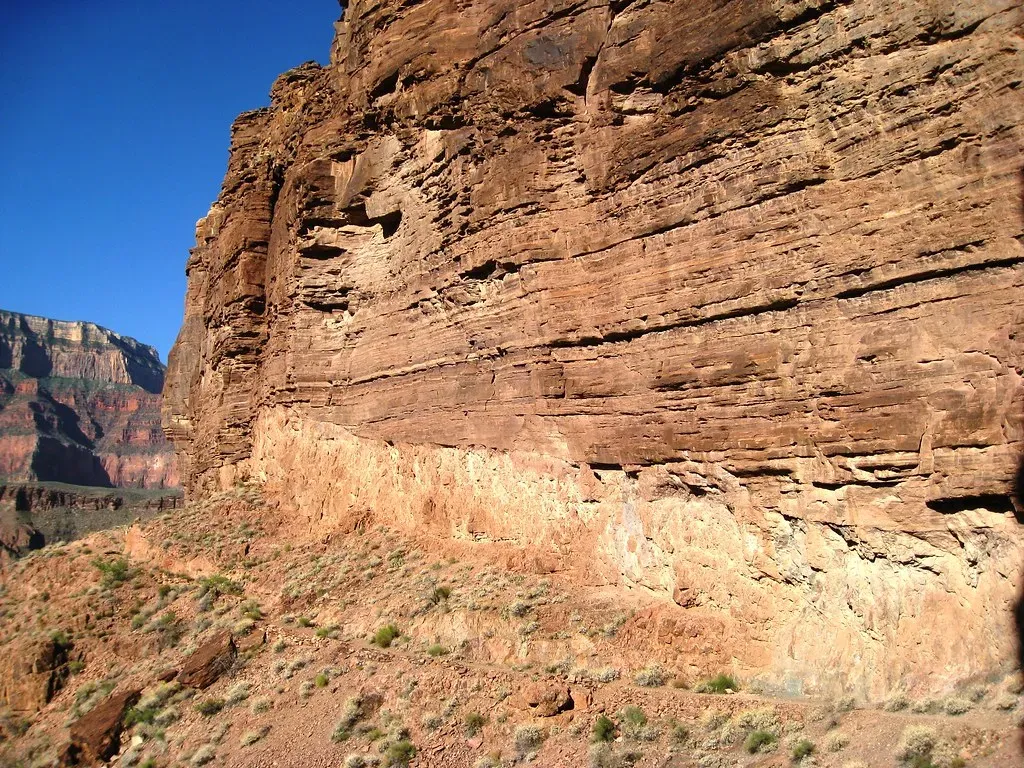
Here’s the thing that baffles geologists: the Great Unconformity. Between the Supergroup and overlying Tapeats Sandstone, nearly a billion years of history vanished. Erosion stripped away vast rock thicknesses before new sediments blanketed the scene.[3]
This angular gap spans Precambrian to Cambrian times, around 525 million years ago. The Tapeats, a beach-like sandstone, laps directly onto worn Vishnu in places. Such missing chapters spark endless debate on Earth’s restless crust.
Standing at this boundary feels eerie, like skipping volumes in a epic saga. What stories did time erase?
Paleozoic Layers: Oceans, Dunes, and Forests Revealed
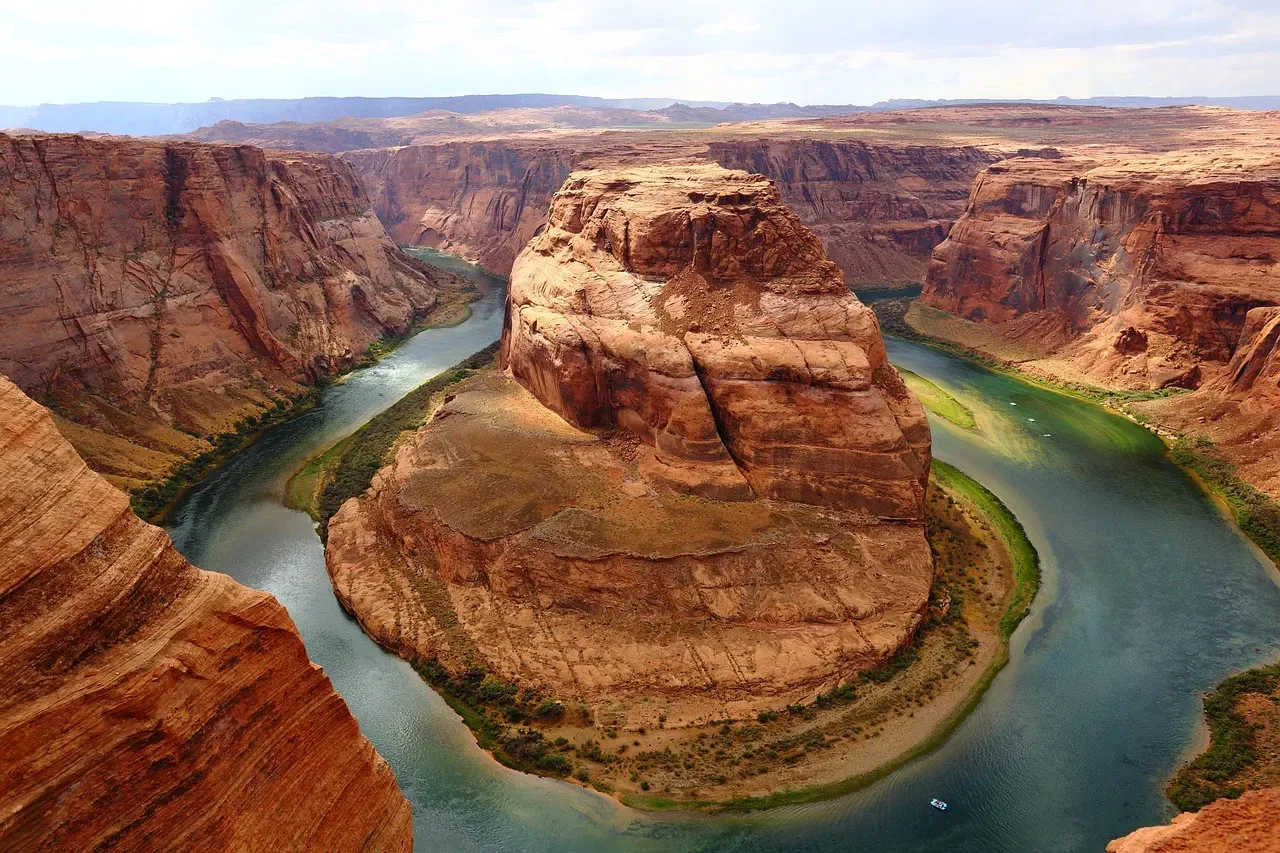
The upper canyon’s stair-step walls showcase Paleozoic strata, from Cambrian to Permian, spanning 530 to 270 million years. The Tonto Group kicks off with Tapeats Sandstone, Bright Angel Shale, and Muav Limestone from ancient seas. Fossils of early marine life abound here.[3]
Higher up, Redwall Limestone towers, formed in clear tropical waters. Coconino Sandstone preserves vast desert dunes. The rim-capping Kaibab Limestone, a mere 270 million years old, once lay under shallow Permian seas.[4]
Each band shifts from ocean floors to sandy wastes and swampy shores. Colors pop thanks to iron oxides and minerals. Let’s be real, it’s nature’s perfect timeline poster.
Conclusion: Layers That Speak Across Millennia
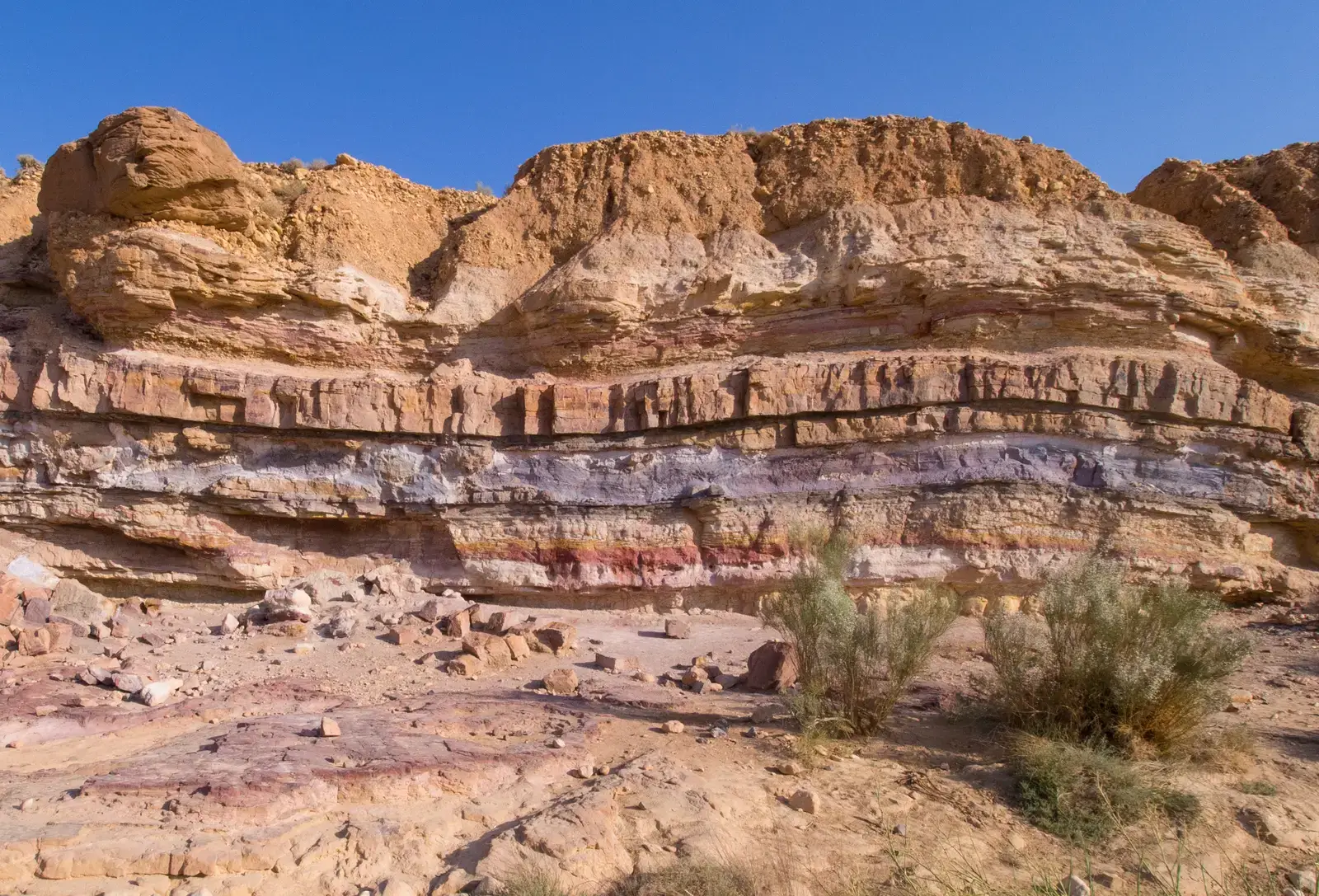
Uplift starting tens of millions of years ago raised these layers high. The Colorado River then sliced through in the past 5 to 6 million years, exposing the stack. Today, the Grand Canyon stands as Earth’s open geology book.[5]
From Vishnu’s fiery birth to Kaibab’s final seas, the layers chronicle profound change. They remind us how dynamic our planet remains. What layer surprises you most?
