
America’s wilderness holds many fascinating creatures, but few capture the imagination like massive snakes. While the U.S. isn’t home to the world’s largest serpents, it has its share of impressive specimens that have made headlines and astonished both scientists and the public. This article explores the remarkable story of the longest snake ever documented in the United States, examining the species, circumstances of discovery, and what these findings tell us about American snake populations.
The Record-Breaking Burmese Python

The longest snake ever found in the United States was an enormous Burmese python (Python bivittatus) discovered in Florida in 2022. This female python measured a staggering 18 feet and 9.3 inches (5.71 meters) long and weighed 215 pounds (97.5 kg). The specimen was captured in the Everglades by researchers from the Conservancy of Southwest Florida as part of their invasive species monitoring program. Not only was this the longest snake documented in U.S. territory, but it also set the record for the heaviest python ever found in Florida, making it a truly exceptional discovery in American herpetological history.
The Invasive Species Context

The record-breaking Burmese python wasn’t a native American snake, but rather part of an invasive population that has established itself in the Florida Everglades. Burmese pythons are native to Southeast Asia and were introduced to Florida primarily through the exotic pet trade. Beginning in the 1980s and accelerating in the 1990s, pet owners who could no longer care for their growing pythons released them into the wild. Following Hurricane Andrew in 1992, which destroyed several breeding facilities, additional pythons escaped into the ecosystem. Today, tens of thousands of these invasive constrictors inhabit South Florida, creating serious ecological challenges for native wildlife.
Physical Characteristics of the Record Holder

The record-setting python displayed the classic physical traits of Burmese pythons, but on a magnificent scale. Its body featured the characteristic tan coloration with dark brown blotches bordered in black that resemble the markings of a giraffe. Scientists found the snake had a massive girth of 25 inches (63.5 cm) at its widest point. This specimen was female, which is typical for size records in pythons, as females generally grow larger than males. Upon necropsy, researchers discovered the snake contained 122 developing eggs, which would have added significantly to the invasive population had they been laid successfully, demonstrating the reproductive capacity that makes these snakes such successful invaders.
Capture and Research Methods

The capture of this massive python involved innovative tracking techniques developed by researchers at the Conservancy of Southwest Florida. The team used what they call “scout snakes” – male pythons fitted with radio transmitters that lead researchers to breeding females during mating season. This method has proven highly effective for locating the typically elusive female pythons. When the record-breaking female was found, it required multiple team members to safely restrain and transport the enormous reptile. The snake was humanely euthanized, as is standard protocol for invasive Burmese pythons captured in Florida, and then studied to gather crucial data about the invasive population’s biology, diet, and reproductive patterns.
Natural Size Limitations of U.S. Native Snakes

The United States’ native snake species don’t approach the extraordinary dimensions of the Burmese python. The eastern indigo snake (Drymarchon couperi), the longest native snake in the U.S., typically reaches a maximum length of about 8 feet (2.4 meters). The bulkier but shorter eastern diamondback rattlesnake (Crotalus adamanteus) is the heaviest venomous snake in the Americas but rarely exceeds 7 feet (2.1 meters) in length. Environmental conditions, available prey, and evolutionary adaptations have all played roles in determining the size limitations of native American snake species, which have evolved for different ecological niches than the giant constrictors of tropical Asia.
Ecological Impact of Giant Pythons

The presence of such enormous predators in the Florida ecosystem has had devastating consequences. These massive pythons consume a wide range of prey, from small mammals to larger animals like deer and even alligators. Studies have shown population declines of over 90% for several mammal species in areas where pythons are established. Researchers found that the record-breaking female had consumed an adult white-tailed deer as her last meal, demonstrating the snake’s ability to prey on large mammals. As top predators with few natural enemies, these pythons have fundamentally altered the food web in the Everglades ecosystem, creating cascading effects throughout the environment that scientists are still working to understand fully.
Previous U.S. Snake Length Records

Before the 2022 discovery, the previous record for the longest snake found in the U.S. was also a Burmese python captured in Florida in 2013, measuring 18 feet and 8 inches (5.68 meters). Prior to the Burmese python invasion, length records for U.S. snakes were held by native species. A documented eastern indigo snake reached 8.6 feet (2.62 meters), while the largest bull snake (Pituophis catenifer sayi) on record measured just over 8 feet (2.4 meters). These historical records illustrate how dramatically the invasion of non-native giant constrictors has changed the scale of what’s possible in American snake sizes, with pythons now exceeding twice the length of the largest native species.
Global Context: How the U.S. Record Compares

While impressive by American standards, the record U.S. python falls short of verified global snake length records. The reticulated python (Python reticulatus) of Southeast Asia holds the official title for the longest snake species, with confirmed specimens exceeding 25 feet (7.6 meters). The green anaconda (Eunectes murinus) of South America, though typically shorter than the reticulated python, is considered the heaviest snake species, with large females potentially weighing over 500 pounds (227 kg). Despite many unverified claims of 30-foot snakes in the wild, most herpetologists consider measurements above 25 feet to be extremely rare, if not apocryphal. The Florida record-holder, while not approaching these global extremes, represents what may be close to the maximum potential size for Burmese pythons in the North American environment.
Growth Potential and Limiting Factors
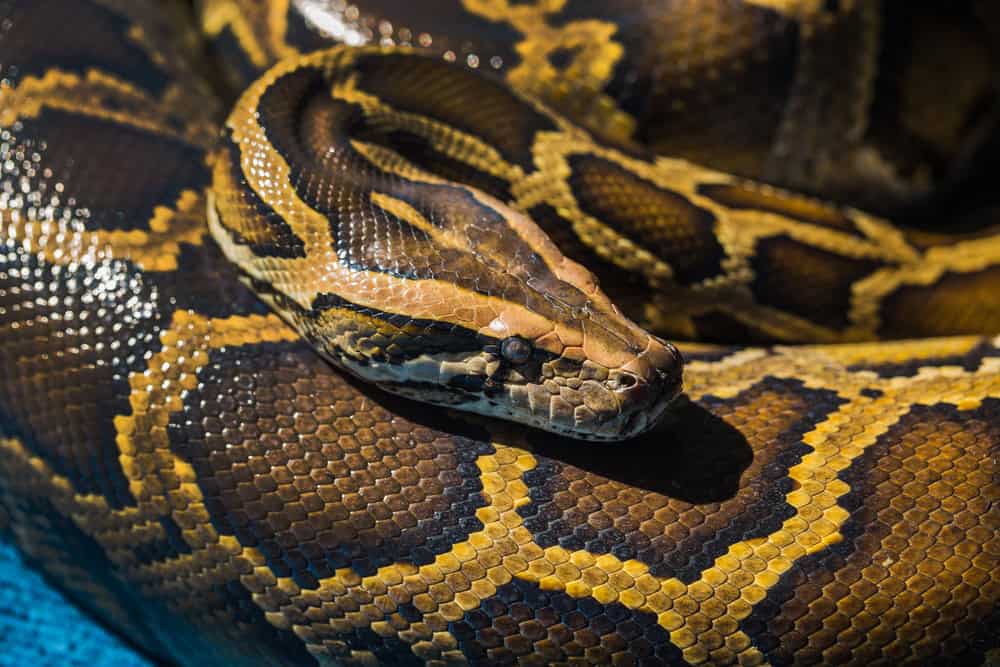
Burmese pythons demonstrate remarkable growth potential, particularly in the Everglades’ favorable conditions. Hatchlings measure about 2 feet (60 cm) long but can grow rapidly, adding several feet per year when food is abundant. Females typically reach reproductive maturity at 8-10 feet (2.4-3 meters) in length and continue growing throughout their lives, though at a slower rate after sexual maturity. The maximum size potential appears to be influenced by several factors including genetics, food availability, and environmental conditions. The Florida climate, while not identical to the python’s native range, provides sufficient heat, humidity, and prey density to support exceptional growth. However, occasional cold snaps in Florida may limit the population’s northward expansion and could potentially affect maximum size attainment by creating periodic stress conditions.
Conservation and Control Efforts

The discovery of such massive invasive snakes has intensified efforts to control the Burmese python population in Florida. The state sponsors python elimination programs, including the Python Challenge, an annual competition that encourages hunters to remove as many pythons as possible. Professional python hunters contracted by government agencies now work year-round to reduce the population. Additionally, researchers are developing innovative detection methods, including environmental DNA sampling and detector dogs trained to find pythons. Despite these efforts, complete eradication seems unlikely given the pythons’ cryptic nature, high reproductive output, and the vast, inaccessible swampland that comprises much of their invaded range. The focus has shifted toward containing the population and preventing further spread to new areas while protecting particularly vulnerable native species.
Genetic Analysis and Origin Theories

Genetic analysis of the record-breaking python provided valuable insights into the invasive population’s origins and characteristics. DNA testing confirmed it was a pure Burmese python, rather than a hybrid with the closely related Indian python (Python molurus) that has occasionally been documented in Florida. The genetic profile suggested the snake was likely many generations removed from its imported ancestors, reinforcing the established nature of the breeding population. Researchers have identified multiple genetic lineages within Florida’s python population, indicating several independent introduction events rather than a single release. Some scientists theorize that the exceptional size of certain individuals might result from hybridization between different genetic lines of captive-bred pythons, potentially creating heterosis or “hybrid vigor” that contributes to enhanced growth in some specimens. This genetic diversity complicates control efforts but provides a fascinating case study in rapid adaptation to new environments.
Public Perception and Media Coverage

The discovery of the record-breaking python generated significant media attention, both nationally and internationally. News outlets featured dramatic images of researchers holding the massive snake, capturing the public imagination and reinforcing Florida’s reputation for exotic wildlife encounters. Public reaction ranged from fascination to fear, with the enormous python becoming a symbol of both natural wonder and environmental concern. The story highlighted the complex relationship between humans and invasive species, especially those that evoke primal responses like large predatory snakes. Wildlife officials have used the publicity surrounding record-breaking pythons to educate the public about responsible pet ownership and the ecological consequences of releasing non-native animals. The media coverage also raised awareness about citizen science opportunities, encouraging people to report python sightings and participate in removal efforts, effectively transforming public fascination into conservation action.
Conclusion: The Significance of America’s Largest Snake

The 18-foot, 9.3-inch Burmese python discovered in Florida represents far more than just a fascinating biological specimen or an impressive statistic. It stands as a powerful symbol of humanity’s ongoing impact on natural ecosystems and the unpredictable consequences of introducing non-native species. This record-breaking snake embodies the complex challenges facing conservation biologists in the 21st century, where managing invasive populations must be balanced with protecting native biodiversity. As research continues and control methods evolve, the story of America’s largest snake will undoubtedly continue to fascinate the public while providing valuable scientific insights. Perhaps most importantly, this magnificent yet problematic giant serves as a compelling reminder of our responsibility to protect and preserve natural balances in ecosystems around the world.

- What Happens During a Wolf Pack Power Struggle - June 22, 2026
- Is It Okay To Domesticate Wild Animals? - June 22, 2026
- The Story Behind the Bison’s Comeback from Near Extinction - June 21, 2026