
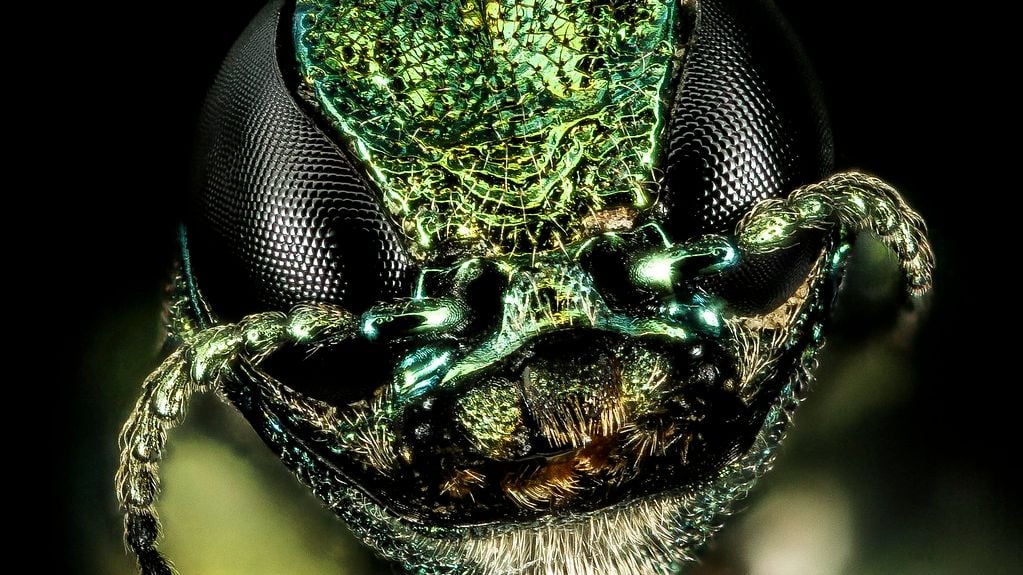
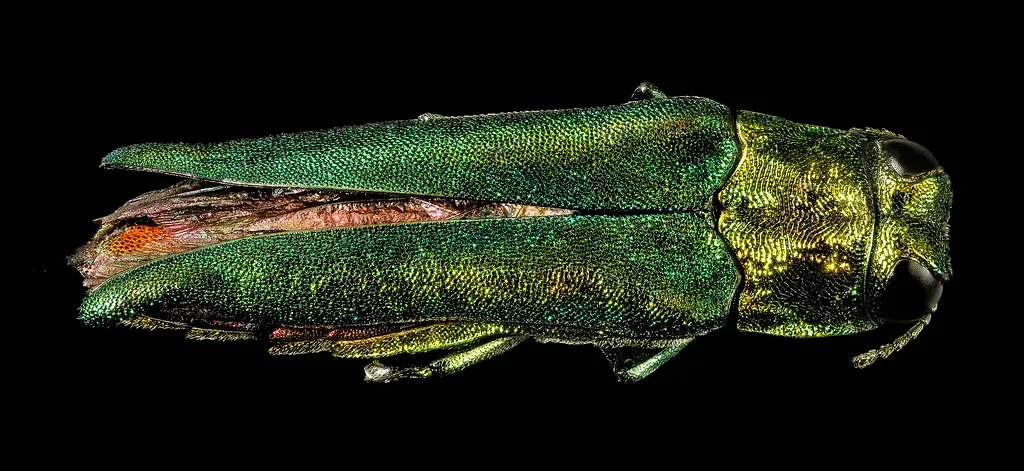
It looks harmless enough. Smaller than a penny, with a shimmering metallic-green shell that catches the light, the emerald ash borer seems more like a jewel than a threat. Yet this tiny insect has earned a grim distinction as one of the most destructive invasive pests ever to reach North American shores.
The EAB is the most destructive and costly forest insect to ever have invaded North America, and it attacks all 16 species of ash trees on the continent, having already killed hundreds of millions of them. The scale of that loss is difficult to fully absorb. Forests, neighborhoods, wetlands, and Indigenous communities have all felt it. What began quietly in the suburbs of Detroit has become a national environmental crisis that shows no real signs of stopping.
How It Got Here and How It Spread
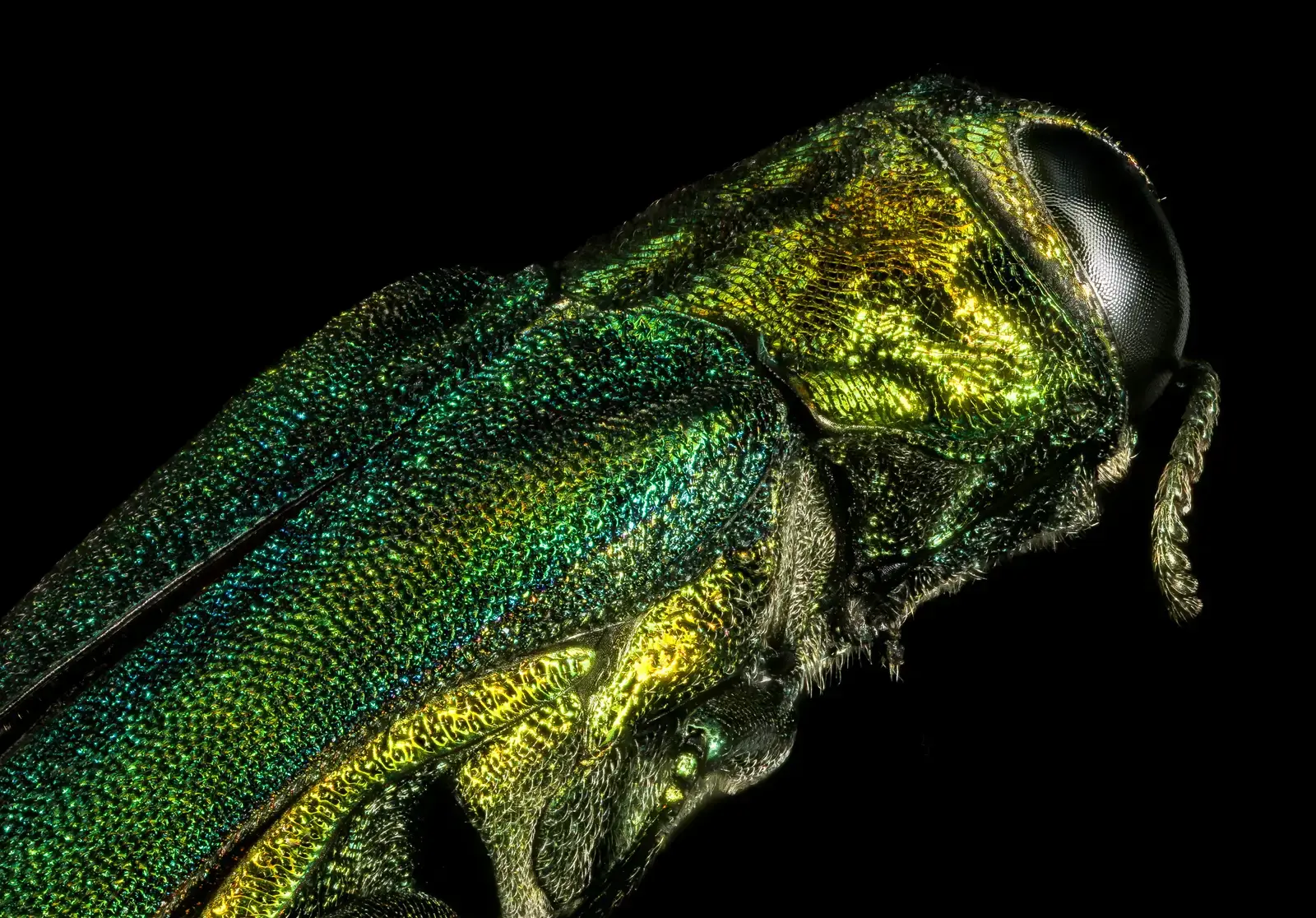
The emerald ash borer was first identified in North America in southeastern Michigan in 2002. Scientists, however, believe the story started earlier than that. Emerald ash borer was first noticed in Michigan in 2002, but scientists believe the insect had been present there since the early to mid-1990s.
It was accidentally transported in infested crates and pallets to the United States, where a lack of natural controls such as predators and disease allowed the population to grow rapidly. Once it had a foothold, the spread was relentless.
The rapid spread of the beetle through North America is most likely due to the transport of infested firewood, ash nursery stock, unprocessed ash logs, and other ash products. Campers, landscapers, and well-meaning homeowners unknowingly carried the beetle hundreds of miles in firewood bundles. Emerald ash borer populations can spread naturally between roughly one and a half to over twelve miles per year.
Infestations have now been detected in 38 states and the District of Columbia. The beetle’s reach has also extended to the West Coast. Emerald ash borer was first confirmed on the West Coast in 2022, in Forest Grove, Oregon, and in Portland in 2025. At the time of the Oregon discovery, the first observance on the West Coast occurred on June 30, 2022, in Forest Grove, and the nearest known infestation was more than 1,200 miles away in Colorado.
What the Beetle Actually Does to a Tree
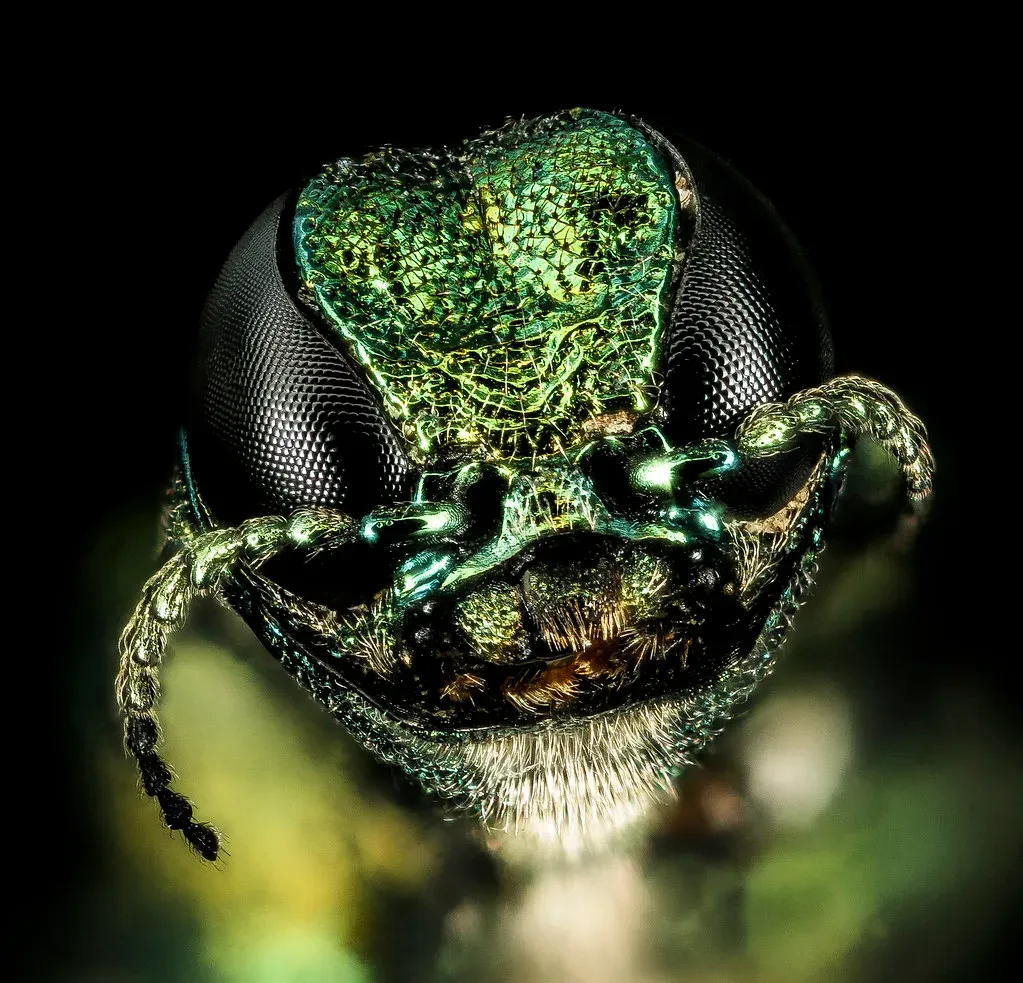
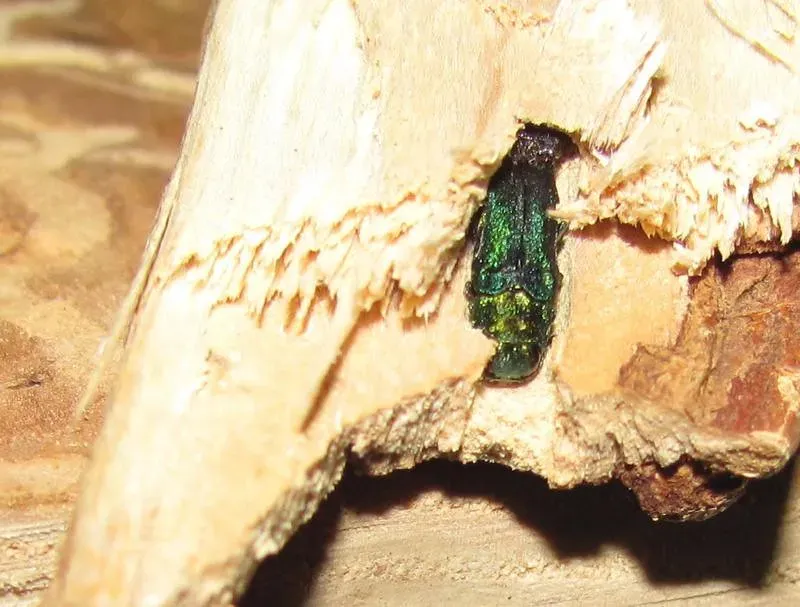
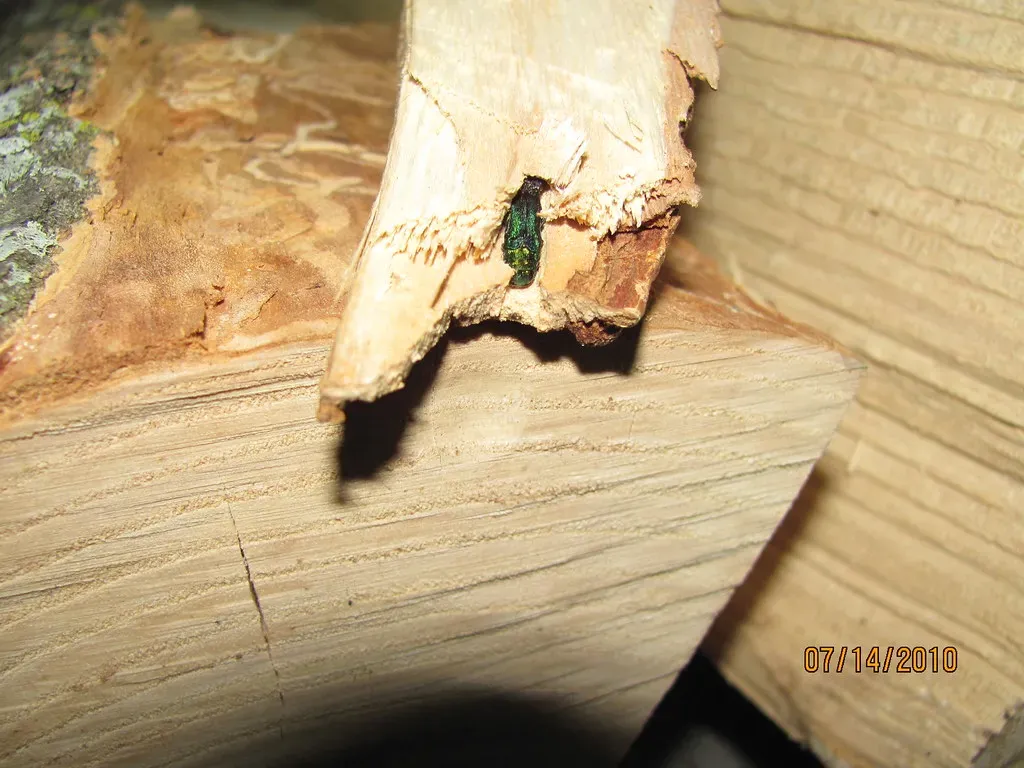
The emerald ash borer is a green buprestid beetle native to north-eastern Asia that feeds on ash species. Females lay eggs in bark crevices on ash trees, and larvae feed underneath the bark to emerge as adults in one to two years. The adult beetle is relatively innocuous on its own.
The adult beetles consume foliage but do not cause much defoliation. The real problem is caused by the larvae, which tunnel through the wood just under the bark and damage the tree’s ability to transport nutrients and water. Those winding tunnels, called galleries, essentially cut the tree off from its own food supply.
Tree mortality is caused when larvae feed on the tissue between the sapwood and the bark, disrupting the transportation of nutrients and water within the tree. This disruption eventually causes the branches to die first, followed by the entire tree.
Because the beetle is invasive to the U.S., ash trees have no natural defenses against it. Once an ash tree is infested with EAB, it is likely to die. In areas where EAB is well established, it can kill an ash tree within one year of the first infestation. Larger, older trees may hold on a little longer, but the outcome is usually the same.
EAB is difficult to detect early when pest populations are small because damage to the trees is hidden under the bark and tree decline is gradual. By the time visible symptoms appear, the infestation is often already severe. Symptoms may include dead branches near the top of ash trees, excessive branching on tree trunks, and vertical cracks in tree bark.
The Scale of the Damage: Trees, Cities, and Dollars
The emerald ash borer threatens the entire North American genus Fraxinus. It has killed tens of millions of ash trees so far and threatens to kill most of the 8.7 billion ash trees throughout North America. That number – 8.7 billion – is not a typo.
The emerald ash borer has destroyed 40 million ash trees in Michigan alone and tens of millions throughout other states and Canada. States like Minnesota face their own daunting reality: with more than 1 billion ash trees in Minnesota, the spread of emerald ash borer has already had a serious impact on forests and communities, and it will continue to do so for the foreseeable future.
Because ash is widely planted as a street tree, the greatest economic impacts of EAB have been felt in cities. One earlier estimate put the cost of ash tree treatment and removal in U.S. cities at $12.5 billion through 2020. Those costs fall heavily on municipal budgets and individual homeowners alike.
Emerald ash borers eliminated the majority of the 300,000 ash trees in the National Capital Region in nine years, leaving fewer than 80,000. These forests had 17 to 18 ash trees per hectare prior to infestation, and only 5 to 6 per hectare subsequently. The landscape change is visible and lasting. Ash-dominated swamplands have become shrublands, impacting wildlife.
What’s at Stake Beyond the Forest
Ash wood has many specialized uses, including as the principal wood used in baseball bats. Native American tribes use ash, especially black ash, to make baskets because the wood splits easily into thin strips along the growth rings. Black ash is an important part of the history, culture, and tradition of numerous eastern and Midwestern tribes.
Michigan State University research details how the emerald ash borer is jeopardizing the entire U.S. and Canadian native range of black ash trees. The finding is particularly troubling because the trees are of cultural importance to Indigenous and First Nations groups.
Black ash is a species central to the origins and culture of Indigenous nations, communities, and people that continue to thrive and use it for medicine, ceremony, artwork, and forest products throughout the entire region affected by EAB. Losing these trees is not simply an environmental event. For many communities, it amounts to the erasure of a living cultural material.
In both North America and Europe, the loss of ash from an ecosystem can result in increased numbers of invasive plants, changes in soil nutrients, and effects on species that feed on ash. The ripple effects move through the food web in ways that are still being studied and understood.
What’s Being Done – and What’s Still Possible
The EAB has spread so widely that it will never be eradicated from North America, and it is highly likely that most North American ash trees will die from this invasive pest. Individual trees can be treated to kill EAB if the infestation is caught early enough. The most common treatment is with systemic application of the insecticide emamectin benzoate, which needs to be re-applied every few years.
Biological control shows promising results through the careful introduction of specialized parasitoid wasps from the beetle’s native range, which target and kill emerald ash borer eggs and larvae. These natural enemies, including Tetrastichus planipennisi, Oobius agrili, and Spathius galinae, have established successfully in many release areas and reduced beetle populations locally, though they cannot eliminate the pest entirely.
Since 2007, over 5 million parasitoid wasps have been released. Three of the wasp species have become established in the areas where they were released. In some areas, up to 80 percent of the EAB larvae examined have been parasitized by these wasps. That is a meaningful result, even if it falls short of a solution.
Researchers are also investigating genetic approaches, including breeding resistant ash varieties and potentially using gene editing technologies to enhance native ash resistance. Over the long term, biological control and resistance breeding provide the best hope for the eventual restoration of ash trees in North America.
Conclusion: A Cautionary Tale Still Being Written
The emerald ash borer arrived unnoticed, tucked inside packing material from overseas. It spent years quietly multiplying before anyone understood the scale of what was coming. By the time the alarm was raised, it had already spread across a continent.
The story is not simply about a beetle. It’s about how connected our world is, how quickly an ecosystem can be reshaped by a single introduced species, and how slowly, and imperfectly, our systems respond. The firewood warning signs posted at campground entrances across the country are a small, quiet acknowledgment of that reality.
Some ash trees will survive through treatment. Some resistant individuals may eventually form the foundation of a recovery. But the forests, wetlands, and city streets that have already lost their ash will take generations to look the same again – if they ever do. What the emerald ash borer has taken so far is enormous. What it may still take depends, in part, on choices being made right now.
