


The ocean’s depths harbor one of the most enigmatic and intellectually sophisticated creatures known to science: the octopus. Despite evolving along an entirely separate branch of the evolutionary tree from humans and other vertebrates, octopuses have developed remarkable cognitive abilities that continue to astonish researchers. With problem-solving skills that rival those of some mammals, these eight-armed invertebrates challenge our understanding of intelligence and consciousness. This article delves into the fascinating world of octopus cognition, exploring how these remarkable cephalopods think, learn, and interact with their environment in ways that defy conventional expectations about invertebrate intelligence.
The Evolutionary Marvel of Cephalopod Intelligence

Octopuses belong to the cephalopod family, which diverged from our evolutionary lineage over 500 million years ago. This makes their intelligence particularly remarkable—it evolved completely independently from the vertebrate brain. While mammals developed intelligence through the expansion of the cerebral cortex, octopuses took an entirely different evolutionary path.
Their central brain contains approximately 180 million neurons, but what’s truly extraordinary is that two-thirds of their neurons are distributed throughout their eight arms, creating a decentralized nervous system unlike anything found in vertebrates. This represents one of nature’s most impressive examples of convergent evolution, where different evolutionary pressures led to similar cognitive outcomes through entirely different biological mechanisms. This evolutionary independence makes octopus intelligence all the more fascinating to scientists studying the emergence of cognitive abilities across the animal kingdom.
Brain Architecture: Different Yet Sophisticated

The octopus brain defies conventional understanding of what constitutes an advanced nervous system. Unlike the vertebrate brain’s centralized architecture, the octopus brain consists of a central brain surrounded by large optic lobes and an extensive peripheral nervous system throughout its body. The central brain contains multiple lobes dedicated to different functions, with the vertical lobe serving as an analog to the hippocampus in mammals, playing a crucial role in learning and memory.
Research published in the journal Current Biology in 2018 revealed that octopuses possess a unique RNA editing capability that allows them to rapidly adapt their neural function to changing environmental conditions—something not seen in most other animals. This unusual brain organization represents an entirely different solution to the challenge of developing complex cognition, demonstrating that intelligence can evolve through multiple architectural pathways. The distributed nature of their nervous system also enables each arm to function semi-autonomously, processing sensory information and executing basic movements without direct input from the central brain.
Problem-Solving Prowess: Masters of Mental Manipulation
Octopuses consistently demonstrate sophisticated problem-solving abilities that rival those of many vertebrates. In laboratory settings, they navigate complex mazes, unscrew jar lids to reach food, and solve puzzles that would challenge many mammals. One particularly famous example comes from the New England Aquarium, where an octopus named Otto was documented regularly short-circuiting lights above his tank by squirting water at them when they annoyed him.
Another octopus at the National Aquarium of New Zealand gained international attention for escaping its enclosure through a small drainage pipe, finding its way to the ocean. What makes these feats particularly impressive is that octopuses solve these problems through observation and experimentation rather than through instinct alone.
Research published in the Journal of Comparative Psychology demonstrated that octopuses can solve novel problems they’ve never encountered before, suggesting genuine cognitive flexibility rather than fixed behavioral patterns. This ability to analyze situations, conceptualize solutions, and execute complex sequences of actions places octopuses among the intellectual elite of the animal kingdom.
Tool Use: Eight-Armed Engineers

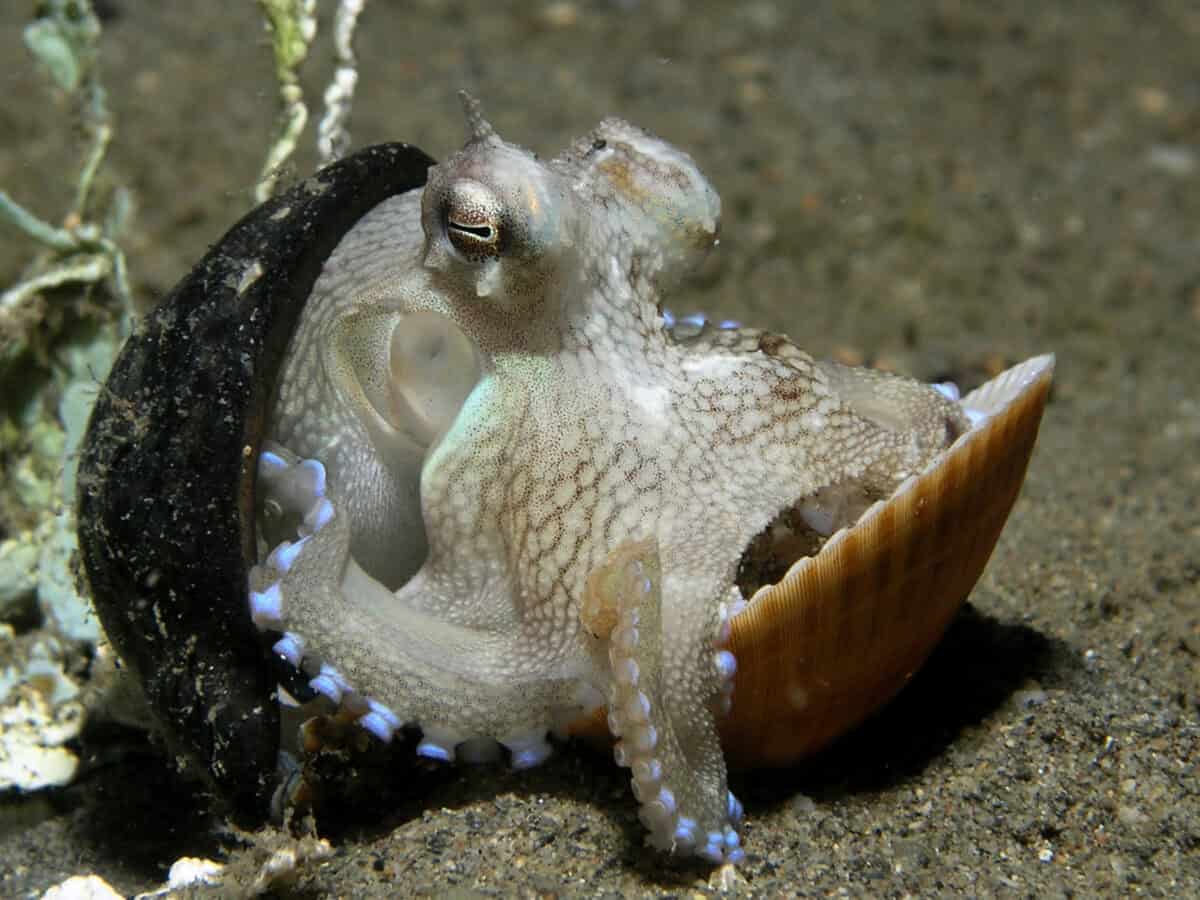
Octopuses are among the few invertebrates known to use tools in the wild, a behavior once thought to be exclusive to advanced vertebrates. Observations documented in Current Biology revealed that veined octopuses (Amphioctopus marginatus) collect coconut shell halves from the ocean floor and carry them for later use as portable shelters.
When threatened, these octopuses assemble the shells into protective capsules, effectively creating mobile homes. This behavior meets all the scientific criteria for true tool use: the object is obtained, carried (often at energetic cost, as the octopus must walk awkwardly while holding the shells), and then used for a specific purpose. Laboratory studies have further demonstrated octopuses using rocks to block the entrances to their dens when they feel threatened and wielding sticks to prod unfamiliar objects.
What distinguishes octopus tool use from many other animals is the apparent forethought involved—collecting items not for immediate use but in anticipation of future needs. This capacity for planning challenges long-held assumptions about the cognitive limitations of invertebrates and suggests a level of intelligence that includes conceptualization of future scenarios.
Memory and Learning: Cephalopod Cognition

Octopuses possess impressive learning capabilities and both short and long-term memory systems. Studies conducted at the Hebrew University of Jerusalem have demonstrated that octopuses can remember solutions to problems for at least several months, comparable to many vertebrates.
They excel at observational learning, remembering the outcomes of their own actions and modifying their behavior accordingly. In classical conditioning experiments, octopuses learn associations between stimuli after just a few repetitions—significantly faster than many other animals. Perhaps most remarkably, research published in the Proceedings of the Royal Society B showed evidence that octopuses can learn by watching other octopuses solve problems, despite being largely solitary creatures with limited natural social interaction.
Their memory capabilities extend to recognizing individual humans, with documented cases of octopuses in laboratories and aquariums reacting differently to various caretakers—squirting water at some while remaining calm around others. This ability to form complex memories and learn rapidly from experience facilitates their survival in challenging marine environments and enables them to adapt their behavior based on accumulated knowledge.
Personality and Emotional Intelligence
Contrary to traditional views of invertebrates as simple automata, octopuses display distinct individual personalities and complex emotional states. Research conducted at Seattle Aquarium and published in the Journal of Comparative Psychology identified consistent behavioral differences between individual octopuses when presented with the same stimuli.
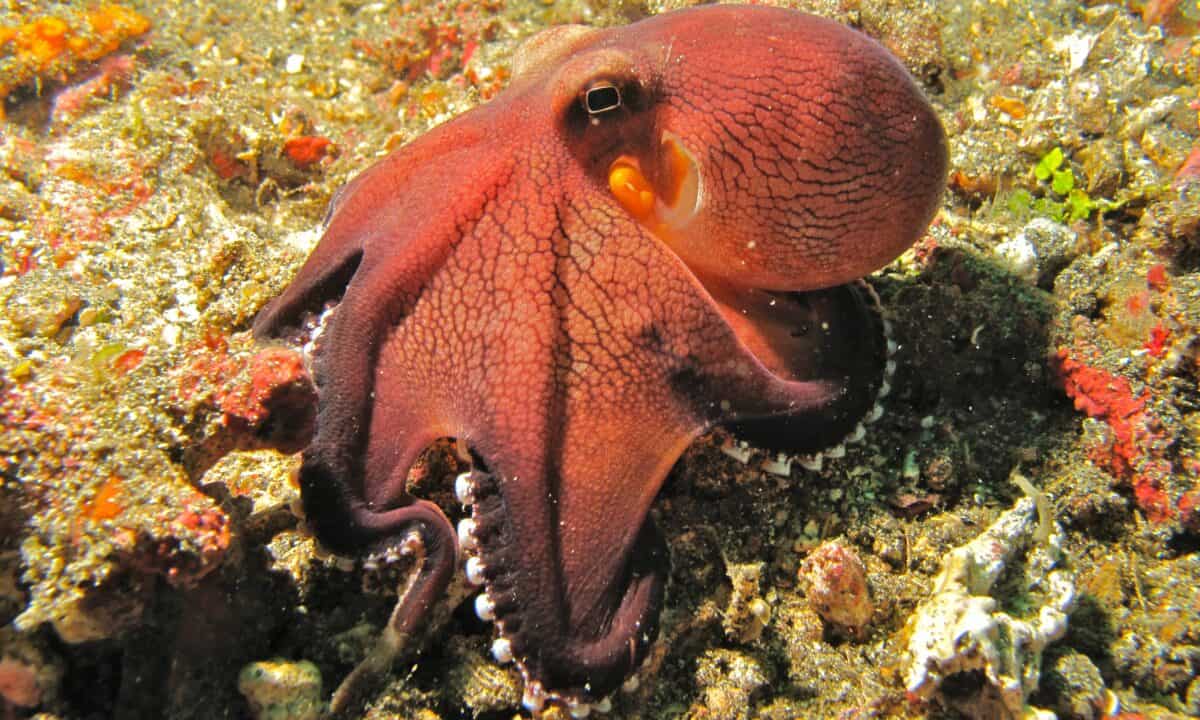
Some consistently show boldness and curiosity, while others display shyness and caution—differences that persist over time and across various situations. Octopuses also demonstrate emotional responses, including apparent excitement when anticipating food, fear when threatened, and what appears to be frustration when prevented from achieving goals. They change color not only for camouflage but also as apparent emotional responses, with rapid color changes occurring during interactions that suggest internal emotional states.
Some researchers, including Jennifer Mather at the University of Lethbridge, argue that octopuses may experience primary consciousness or sentience—awareness of their surroundings and bodily sensations. While measuring subjective experience in non-human animals remains challenging, the behavioral evidence strongly suggests that octopuses possess rich internal lives that go far beyond simple stimulus-response patterns.
Sensory Perception: A Different Way of Experiencing the World
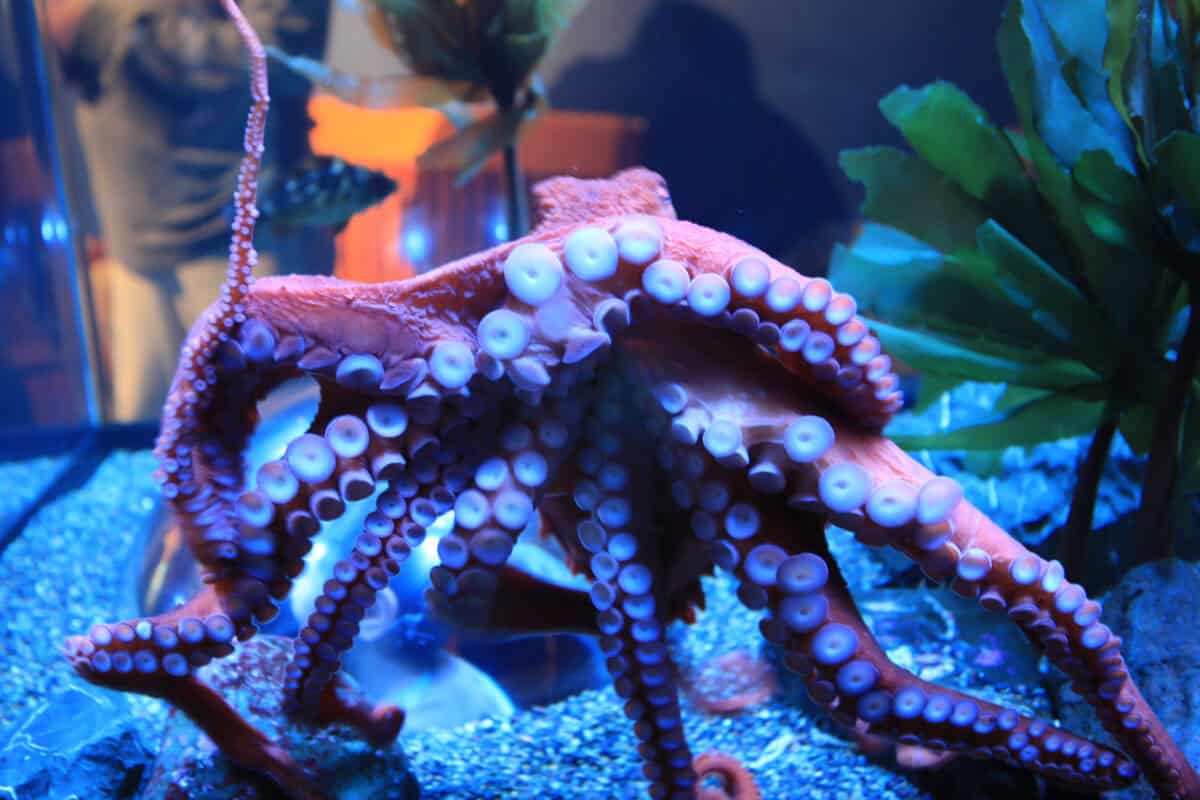
Octopus intelligence is built upon a sensory experience radically different from our own. Their arms contain approximately two-thirds of their nervous system and are lined with thousands of chemoreceptors and mechanoreceptors, essentially functioning as “tongues” that can both touch and taste simultaneously.
This means octopuses perceive their environment primarily through direct physical contact rather than through distance senses as humans do. Their remarkable vision, however, operates through a completely different evolutionary pathway than vertebrate eyes. Octopus eyes evolved independently but reached a similar camera-like structure to vertebrate eyes, though with significant differences in processing—they can detect polarized light, an ability humans lack. Research published in the Journal of Experimental Biology revealed that octopuses can discriminate between textures using both vision and touch, integrating these different sensory inputs to form comprehensive perceptions of objects.
Perhaps most extraordinarily, octopuses can taste with their entire skin surface, allowing them to perceive chemical signatures in their environment through mere contact. This alien sensory world forms the foundation for a type of intelligence fundamentally different from our own—one based on immediate physical interaction with the environment rather than abstract representation.
Play Behavior: Signs of Advanced Cognition

One of the most compelling indicators of advanced cognition in octopuses is their engagement in play behavior—activity performed for its intrinsic enjoyment rather than survival value. Research documented in the Journal of Comparative Psychology described octopuses repeatedly releasing and recapturing objects in their tanks, shooting jets of water to push objects around, and interacting with novel items with no apparent practical purpose.
At the Seattle Aquarium, octopuses were observed repeatedly blowing pill bottles to the water inlet of their tanks, letting the current carry the bottles to the other side, then retrieving them and repeating the process—behavior with all the hallmarks of play. Play behavior is particularly significant because it indicates that octopuses can engage in activities purely for stimulation or enjoyment, suggesting they experience something akin to boredom and seek out novel experiences.
In evolutionary terms, play represents a significant cognitive investment that usually appears only in animals with advanced problem-solving abilities and behavioral flexibility. The presence of play in octopuses reinforces the view that their intelligence represents a sophisticated adaptation enabling them to interact with their environment in complex ways beyond mere survival necessities.
Social Intelligence Despite Solitary Lives

Although octopuses are predominantly solitary creatures, research reveals surprising social capabilities when circumstances bring them together. In laboratory settings, octopuses demonstrate the ability to recognize other individuals, remember previous interactions, and modify their behavior accordingly.
A study published in Current Biology documented that octopuses can distinguish between familiar and unfamiliar conspecifics, treating each differently. During the brief mating season, male octopuses display sophisticated social strategies, with some smaller males impersonating females to avoid aggression from larger rivals while gaining mating opportunities. At “Octopolis” and “Octlantis,” rare natural aggregations of octopuses discovered off the coast of Australia, researchers observed complex social interactions including displays of dominance, eviction of competitors from dens, and what appears to be signaling through body posture and color changes.
These observations challenge the traditional view of octopuses as asocial animals and suggest that their limited sociality is not due to cognitive constraints but rather ecological factors. Their capacity for social intelligence despite having evolved in predominantly solitary ecological niches suggests that certain aspects of intelligence may develop independent of social pressures—a finding with significant implications for our understanding of cognitive evolution.
Adaptive Camouflage: Cognitive Control of Appearance

The octopus’s ability to change color, pattern, and skin texture represents one of the most remarkable examples of real-time neural control over bodily appearance in the animal kingdom. Unlike simple reflex-based color changes seen in some animals, octopus camouflage involves complex neural processing. Research published in the journal Nature demonstrated that octopuses can accurately match the color, brightness, contrast, and even texture of their surroundings with incredible precision—despite being colorblind themselves.
This apparent paradox was resolved when researchers discovered that octopus skin contains light-sensitive proteins similar to those in their eyes, essentially allowing their skin to “see” independently. The cognitive complexity required to process visual information, select appropriate patterns from their repertoire of displays, and coordinate the activation of millions of chromatophores (pigment-containing cells) speaks to sophisticated neural control and body awareness. Beyond camouflage, octopuses use their color-changing abilities for communication, with some species displaying up to 40 distinct patterns with specific meanings.
This control extends to creating three-dimensional textures by manipulating specialized muscles in their skin, allowing them to mimic rocks, corals, and even other marine creatures. Such sophisticated manipulation of appearance requires advanced sensory processing and neural integration, further evidencing the exceptional cognitive capabilities of these remarkable cephalopods.
Escape Artistry: Intelligence in Action

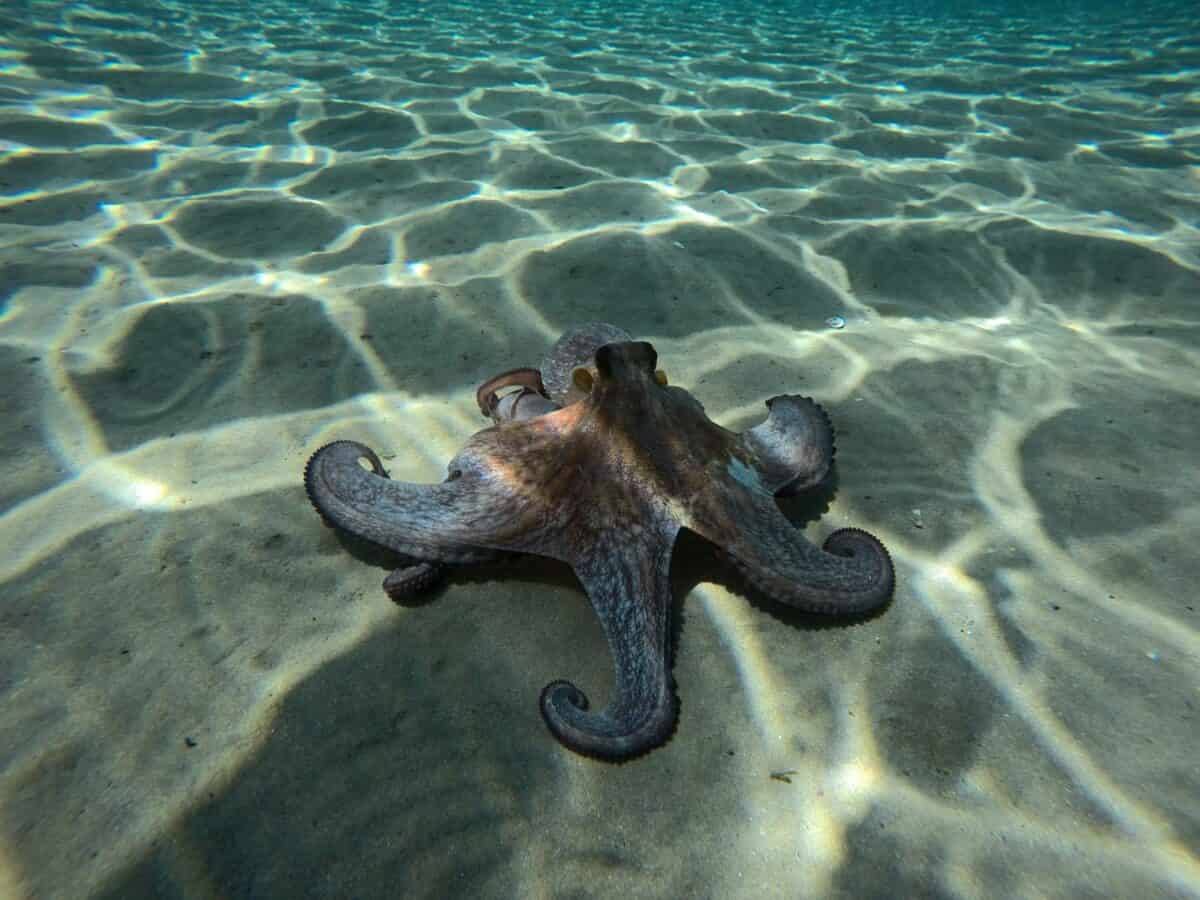
Perhaps no behavior better demonstrates octopus intelligence than their legendary escape abilities. Zookeepers and researchers worldwide have documented octopuses squeezing through incredibly small openings (any space large enough to accommodate their beaks—the only hard part of their bodies), opening locked tanks from the inside, navigating plumbing systems, and even crossing dry floors to reach other aquariums.
At the Santa Monica Pier Aquarium, an octopus dismantled a valve, flooding the facilities with hundreds of gallons of water. In New Zealand, an octopus named Inky famously escaped his tank, crawled across the floor, and disappeared down a 164-foot drainpipe leading to the ocean. These escapes require multiple cognitive abilities working in concert: spatial awareness to map environments, memory to retain information about potential exit routes, mechanical comprehension to manipulate latches and valves, and problem-solving to overcome obstacles. What makes these feats particularly impressive is that they appear to involve planning rather than simple trial-and-error.
Octopuses have been observed watching their human keepers unlock tanks, then replicating those actions when alone. This capacity for observation, planning, and execution of complex escape sequences provides compelling evidence of advanced cognitive processing that allows octopuses to understand and manipulate their environment in purposeful ways.
Ethical Implications of Octopus Intelligence
The growing body of evidence for advanced cognitive abilities in octopuses raises profound ethical questions about our treatment of these animals. Several countries, including the United Kingdom, Canada, Australia, and New Zealand, have extended special protections to octopuses not granted to other invertebrates, recognizing their unique cognitive status.
In 2012, the Cambridge Declaration on Consciousness explicitly included octopuses among animals possessing consciousness, placing them alongside mammals and birds. This recognition has led to changes in research protocols, with many institutions now requiring special ethical approval for experiments involving octopuses, similar to requirements for vertebrates. The ethical implications extend beyond research to aquaculture, with growing concerns about intensive octopus farming practices that may not accommodate their cognitive needs for stimulation and problem-solving opportunities.
Some philosophers and ethicists argue that the combination of advanced cognition with the ability to experience pain creates a moral obligation to consider octopus welfare in our interactions with them. As our understanding of octopus intelligence continues to expand, so too does our ethical responsibility to ensure these remarkably intelligent creatures are treated with appropriate consideration for their cognitive capabilities and subjective experiences.
Conclusion: Redefining Our Understanding of Intelligence
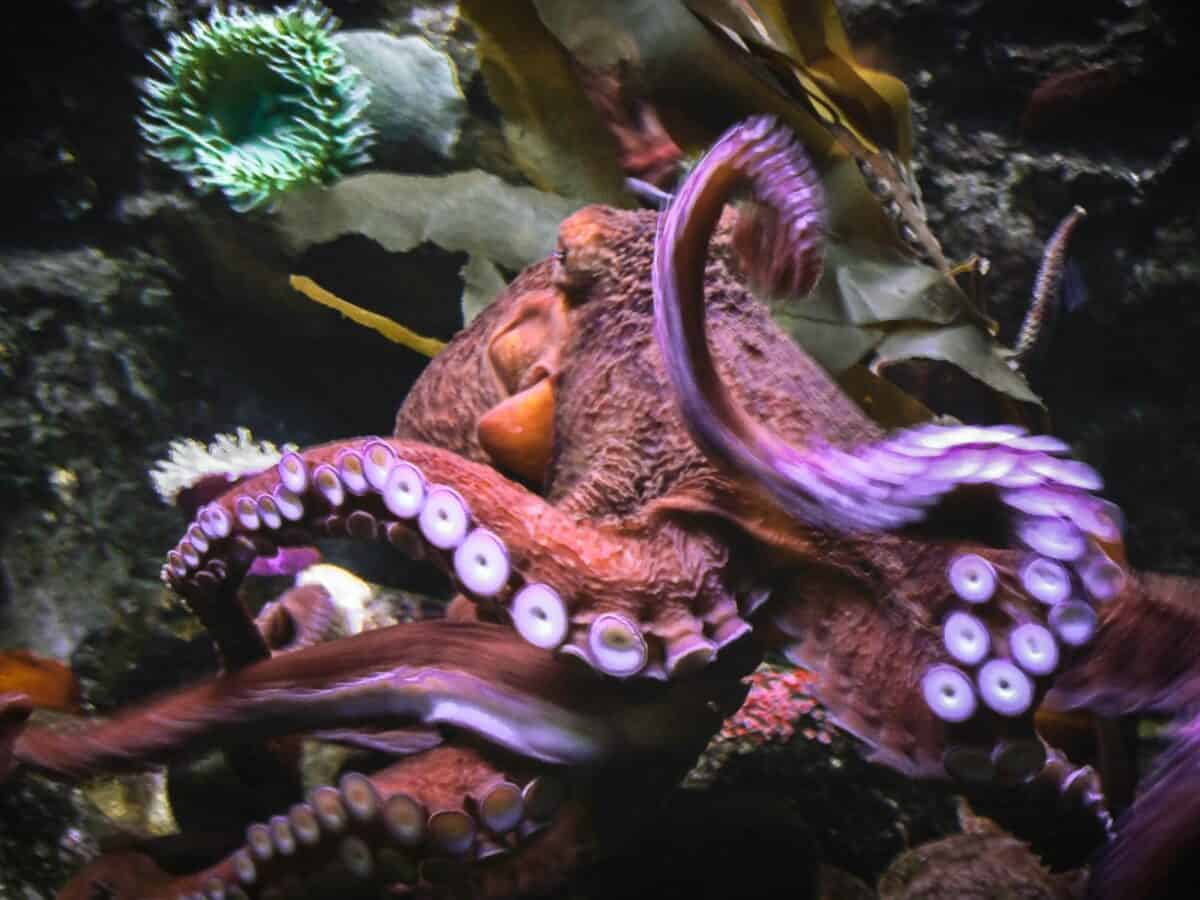
The extraordinary intelligence of octopuses challenges us to reconsider fundamental assumptions about the nature and evolution of cognition. Having developed sophisticated problem-solving abilities, tool use, learning capabilities, and possibly consciousness through an evolutionary pathway entirely separate from our own, octopuses demonstrate that advanced intelligence can emerge through multiple biological routes.
This convergent evolution of intelligence suggests that cognitive sophistication may be an inevitable outcome of adaptive pressure in complex environments, rather than a unique feature of the vertebrate lineage. As we continue to study these remarkable creatures, we are forced to expand our definitions of intelligence beyond anthropocentric models centered on human-like reasoning. The distributed intelligence of the octopus—with neurons spread throughout its body and arms capable of semi-autonomous function—presents an alternative architecture for cognition that works brilliantly for its ecological niche.
In the eight arms of the octopus, we find not just an intellectual equal to many vertebrates, but a profound reminder of the diverse forms intelligence can take in our world—compelling us to approach the concept of mind with greater humility and wonder.

From exploring the marine wonders in the Azores and witnessing the vast savannas of Kenya, to delving deep into the rich biodiversity of South Africa and traversing iconic landscapes in Australia and the US like Yellowstone, Chris's experiences are vast.
With a penchant for diving alongside sharks, the ocean holds a special place in his heart.
Through his academic insights, he champions wildlife conservation, striving with 'Animals Around The Globe' to cultivate a profound connection between humans and animals, enhancing our mutual appreciation.
Connect with him at Feedback@animalsaroundtheglobe.com.
- The Top 14 Most Endangered Animals and How We Can Save Them - June 21, 2026
- The Magic Fish That Grants Wishes in European Fairy Tales - June 21, 2026
- Where to See Giraffes - June 21, 2026