


Tigers, majestic apex predators of Asia’s diverse ecosystems, face unprecedented challenges to their survival in the 21st century. With fewer than 3,900 tigers remaining in the wild, these iconic big cats teeter on the precipice of extinction. Once roaming vast territories across Asia, tigers have lost 93% of their historic range and continue to face mounting pressures that threaten their existence. From the shadowy networks of illegal wildlife traders to the relentless expansion of human development into wild spaces, tigers confront a complex web of threats that have decimated their populations. This article explores the critical challenges facing wild tigers today, examining how poaching, habitat fragmentation, human-wildlife conflict, climate change, and other factors imperil these magnificent creatures—and what conservation efforts are underway to ensure they don’t disappear forever.
The Current State of Wild Tiger Populations

Today’s global tiger population stands at an estimated 3,726-5,578 individuals in the wild, according to the most recent assessments by the International Union for Conservation of Nature (IUCN). This represents a catastrophic decline from approximately 100,000 tigers that roamed Asia at the beginning of the 20th century. These remaining tigers are fragmented across 13 range countries: India, Nepal, Bhutan, Bangladesh, Myanmar, Thailand, Malaysia, Indonesia, China, Russia, Laos, Vietnam, and Cambodia. India harbors the largest population with approximately 3,167 tigers, accounting for roughly 75% of the world’s wild tigers.
The situation varies dramatically by subspecies and region. While some populations, particularly in India, Nepal, and Russia, have shown modest recovery in recent years, others face imminent extinction. The Malayan tiger has fewer than 200 individuals remaining, while the Sumatran tiger population has dwindled to fewer than 400. The South China tiger is considered functionally extinct in the wild, with no confirmed sightings for decades. These stark numbers underscore the precarious position of tigers globally, despite their status as one of the world’s most recognizable and culturally significant wildlife species.
Poaching: The Persistent Threat to Tiger Survival

Poaching remains the most immediate threat to tigers worldwide, driven by a lucrative black market for tiger parts. Every part of a tiger—from whiskers to tail—has value in illegal wildlife markets, with tiger products fetching extraordinary prices. A single tiger can be worth up to $50,000 when broken down into parts, creating powerful economic incentives for poaching. Tiger bones are ground into powder for traditional medicines believed to treat arthritis and improve sexual performance, despite no scientific evidence supporting these claims. Tiger skins become luxury decorations and status symbols, while teeth and claws are fashioned into jewelry and amulets.
The sophisticated criminal networks behind tiger poaching operate across international boundaries with alarming efficiency. Poachers employ increasingly advanced techniques, including poisoning water sources, setting electrified snares, and using firearms with night-vision technology. Between 2000 and 2018, parts from an estimated 2,359 tigers were seized in illegal wildlife trade operations, according to TRAFFIC, the wildlife trade monitoring network. However, experts believe this represents only a fraction of the actual number of tigers killed, as many poaching incidents go undetected or unreported. Despite strengthened anti-poaching efforts in many range countries, the enormous profits associated with tiger parts continue to fuel this devastating illegal trade.
Habitat Loss and Fragmentation

The dramatic reduction in tiger habitat represents one of the most fundamental threats to the species’ long-term survival. Tigers have lost approximately 93% of their historic range, which once stretched from Turkey in the west to the eastern coast of Russia. Today, tigers occupy just 1.2 million square kilometers of fragmented habitat, down from 30 million square kilometers historically. This catastrophic habitat loss has been driven primarily by agricultural expansion, infrastructure development, and resource extraction activities like logging and mining. In Indonesia and Malaysia, vast tracts of lowland forest—prime tiger habitat—have been converted to palm oil plantations, while in India and Bangladesh, human settlements have increasingly encroached on remaining tiger territories.
Beyond simple reduction in area, habitat fragmentation compounds the problem by isolating tiger populations from one another. Tigers require large, connected territories to maintain genetic diversity and fulfill their ecological roles. The average male tiger’s territory spans 60-100 square kilometers in most habitats. When habitats become fragmented by roads, agricultural lands, or human settlements, tigers become isolated in small forest patches that cannot support viable populations. This fragmentation leads to inbreeding depression, reduced reproductive success, and increased vulnerability to local extinction events. A 2018 study published in Nature Communications found that 70% of remaining tiger habitat exists in small, disconnected patches that can support only a few individual tigers, highlighting the critical need for habitat corridors and connectivity conservation.
Human-Tiger Conflict

As human populations expand into tiger territories, direct conflict between people and tigers has intensified, with devastating consequences for both species. Human-tiger conflict typically occurs when tigers prey on livestock or, in rare but highly publicized cases, attack humans. These conflicts create significant hardships for local communities living near tiger habitats. In the Sundarbans region spanning Bangladesh and India, for instance, approximately 50-60 people are killed by tigers annually. Meanwhile, in the Russian Far East, tigers occasionally prey on domestic dogs and livestock when natural prey is scarce. These encounters generate fear and resentment among local communities, often leading to retaliatory killings of tigers.
Economic losses from livestock predation can be substantial for rural communities already struggling with poverty. When a tiger kills livestock—often a family’s most valuable asset—the financial impact can be devastating. Studies in Nepal’s Chitwan National Park buffer zone found that the average economic loss from a livestock predation incident represented approximately 30% of a household’s annual income. This economic burden fuels negative attitudes toward tigers and conservation efforts. Without adequate compensation schemes and proactive conflict mitigation strategies, such as predator-proof livestock enclosures and sustainable alternative livelihoods, human-tiger conflict will continue to threaten both tiger conservation and human welfare in regions where their ranges overlap.
Depletion of Prey Species

Tigers are obligate carnivores requiring substantial amounts of prey to survive and reproduce. An adult tiger consumes approximately 50 large ungulates annually, equivalent to about 3,000 kilograms of meat. The widespread depletion of these prey species—including deer, wild pigs, and wild cattle—represents a significant but often overlooked threat to tiger conservation. Prey depletion occurs through several mechanisms, with unsustainable hunting for bushmeat being the primary driver. In many parts of Southeast Asia, commercial hunting has emptied forests of large mammals, creating what ecologists call “empty forest syndrome”—habitats that appear intact but lack the prey base needed to support tiger populations.
Research has demonstrated a direct correlation between prey density and tiger numbers. A 2009 study published in the Journal of Applied Ecology found that tiger density could be predicted with over 90% accuracy based solely on the abundance of available prey. Areas with depleted prey bases simply cannot support viable tiger populations, regardless of habitat quality or anti-poaching efforts. This phenomenon explains why some seemingly suitable tiger habitats remain unoccupied even when protected from poaching. In Cambodia’s Eastern Plains landscape, for example, intensive snaring has decimated prey populations, hampering tiger recovery despite substantial conservation investments. Effective tiger conservation must therefore address not only direct threats to tigers but also ensure healthy populations of prey species through anti-poaching measures specifically targeting ungulate hunting.
Climate Change Impacts on Tiger Habitats

Climate change poses an emerging threat to tiger conservation, with particularly severe implications for certain subspecies. Rising sea levels threaten the Sundarbans, the world’s largest mangrove forest spanning India and Bangladesh, which supports approximately 100 Bengal tigers. Scientific models predict that sea level rise could submerge up to 96% of the Sundarbans by 2070, effectively eliminating this unique tiger habitat. In Southeast Asia, changing precipitation patterns are altering forest composition and structure, potentially reducing habitat suitability for tigers and their prey. More frequent and intense extreme weather events, including droughts and floods, can directly impact tiger survival and reproductive success.
Climate change also exacerbates existing threats by intensifying human-tiger conflict. As agricultural productivity declines due to changing weather patterns, human communities may expand farming and livestock grazing activities into tiger habitats, increasing the potential for conflict. Water scarcity during prolonged droughts can concentrate both tigers and prey around remaining water sources, often bringing them into closer contact with human settlements. Additionally, climate-induced habitat shifts may force tigers to move into new areas with higher human population densities. A 2019 analysis published in Science Advances suggested that climate change could reduce suitable tiger habitat across Asia by up to 41% by 2070, underscoring the urgent need to incorporate climate resilience into tiger conservation planning.
The Tiger Parts Trade and Traditional Medicine

The demand for tiger parts in traditional medicine systems represents one of the most persistent drivers of tiger poaching. Despite the lack of scientific evidence supporting their efficacy, tiger parts have been used in traditional Asian medicine for centuries. Tiger bone wine, made by steeping tiger bones in rice wine, is believed to treat rheumatism and improve sexual performance. Tiger penis is sold as an aphrodisiac, while tiger eyes are prescribed for epilepsy and malaria. Tiger whiskers are thought to cure toothaches, and tiger fat is used as an ointment for joint pain. This deep cultural belief in the medicinal properties of tiger parts sustains demand despite international trade bans and the availability of alternatives.
China’s role in the tiger parts trade has evolved significantly over the decades. In 1993, China banned domestic trade in tiger bone, but subsequently permitted the establishment of commercial tiger farms, which now house over 6,000 captive tigers. These facilities ostensibly operate as tourist attractions, but conservation organizations have documented links between these farms and the illegal tiger parts trade. In 2018, China temporarily reversed its tiger bone ban before reinstating it following international pressure. However, loopholes permitting the use of captive-bred tiger parts for “scientific research” continue to blur the lines between legal and illegal trade. Other countries, including Vietnam, Thailand, and Laos, have similar tiger farming operations that conservation groups argue stimulate rather than satisfy demand for wild tiger parts, ultimately increasing poaching pressure on wild populations.
Governance Challenges and Wildlife Crime

Effective tiger conservation is frequently undermined by governance challenges including corruption, weak law enforcement, and inadequate judicial systems. In many tiger range countries, conservation laws exist on paper but fail in implementation due to limited resources, poor coordination between agencies, and corruption within enforcement bodies. Forest rangers and wildlife officials in these regions are often understaffed, undertrained, and underequipped to combat sophisticated poaching networks. A 2016 analysis by the Environmental Investigation Agency found that only 13% of tiger poaching cases in India resulted in convictions, highlighting significant gaps in judicial processes. Similar enforcement gaps exist across other range countries, with particularly severe challenges in conflict-affected regions like Myanmar’s Hukaung Valley.
Transnational organized crime has increasingly penetrated the illegal wildlife trade, with tiger parts now trafficked along the same routes used for drugs, weapons, and human trafficking. These criminal networks exploit weaknesses in international cooperation and cross-border enforcement. The United Nations Office on Drugs and Crime has identified wildlife crime, including tiger trafficking, as the fourth most profitable illegal business globally after narcotics, human trafficking, and arms dealing. A single criminal network may operate across multiple countries, making interdiction extremely challenging. Despite the existence of international agreements like CITES (Convention on International Trade in Endangered Species), inconsistent implementation and limited coordination between countries continue to hamper enforcement efforts. Without addressing these governance challenges, even well-designed conservation initiatives will struggle to protect tigers from poaching and illegal trade.
Captive Tigers and Their Conservation Implications
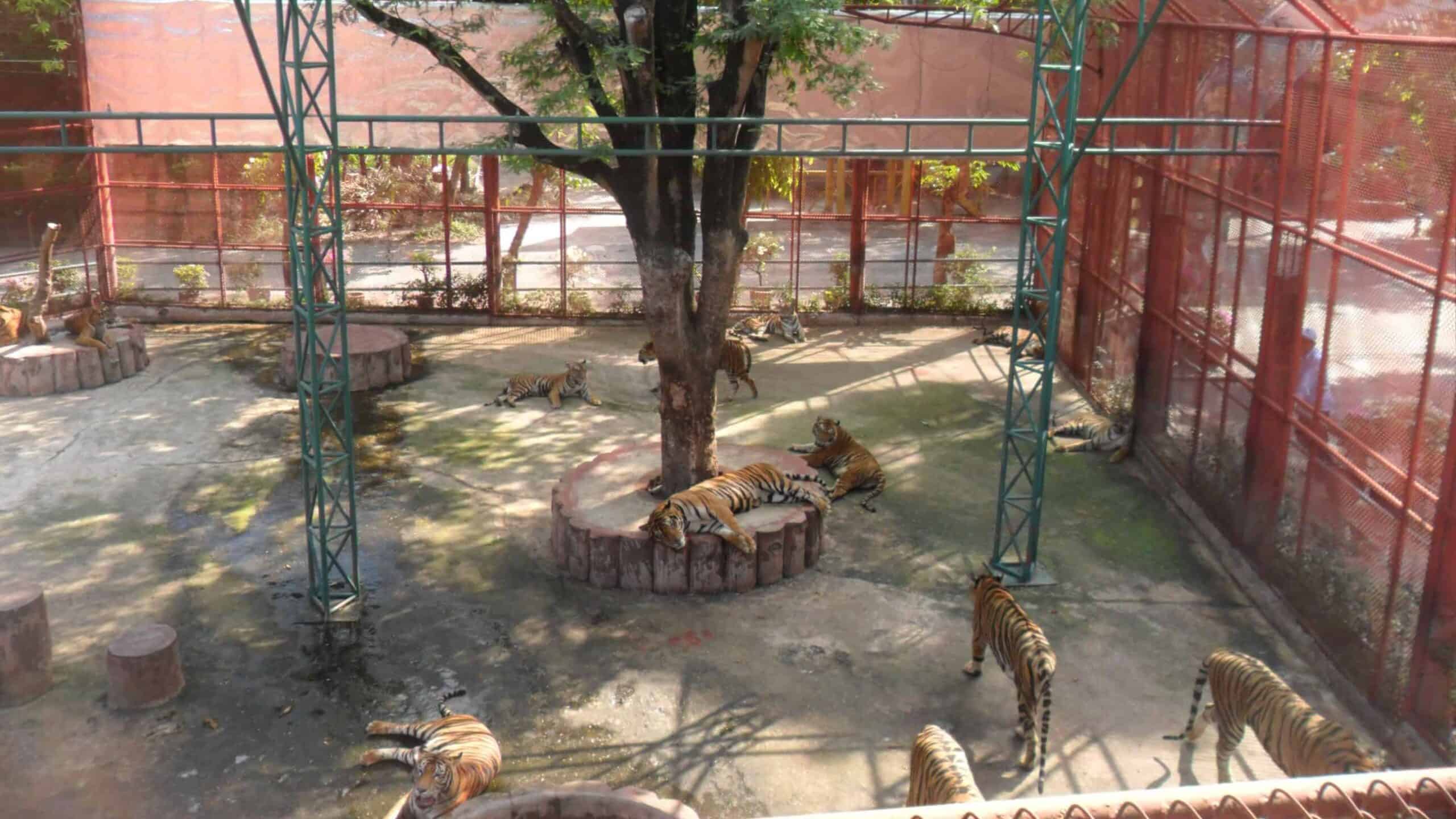
The global captive tiger population vastly outnumbers wild tigers, with an estimated 8,000-10,000 tigers held in captivity worldwide. These captive populations exist in a variety of facilities including accredited zoos, private menageries, commercial tiger farms, and even as pets in countries with lax exotic animal ownership laws. The United States alone is home to approximately 5,000 captive tigers, with fewer than 6% housed in accredited zoos. The remainder live in roadside attractions, private collections, and backyards, often in substandard conditions. This largely unregulated captive population creates significant conservation challenges by complicating enforcement efforts against illegal tiger trade and potentially stimulating demand for tiger products.
Commercial tiger farms in China, Vietnam, Thailand, and Laos represent a particularly controversial aspect of captive tiger management. These facilities breed tigers at industrial scales—some housing over 1,000 individuals—ostensibly for tourism and conservation purposes. However, numerous investigations have documented connections between these facilities and the illegal tiger parts trade. Conservation organizations argue that these farms undermine wild tiger conservation by maintaining demand for tiger products and creating avenues for laundering wild tiger parts. Additionally, virtually none of these captive tigers are suitable for reintroduction to the wild due to genetic issues, habituation to humans, and behavioral deficiencies. The World Wildlife Fund and other major conservation organizations have called for the phasing out of tiger farms, arguing that they serve no legitimate conservation purpose while exacerbating threats to wild tigers.
Conservation Success Stories and Effective Approaches

Despite the numerous threats facing tigers, several conservation success stories offer hope for the species’ future. Nepal has nearly doubled its wild tiger population since 2009, reaching an estimated 355 tigers in 2022. This remarkable achievement stems from a comprehensive approach combining strong political commitment, effective anti-poaching operations, community engagement, and habitat protection. Nepal’s enforcement model, which includes community-based anti-poaching units and specialized wildlife crime investigation teams, has resulted in multiple years of zero poaching of tigers. Similarly, India has increased its tiger population from 1,411 in 2006 to 3,167 in 2022 through expanded protected areas, improved monitoring systems, and innovative conflict mitigation programs.
Russia’s Amur tiger conservation program represents another success story, with populations increasing from fewer than 40 individuals in the 1940s to approximately 550 today. This recovery resulted from strict anti-poaching measures, habitat protection, and careful management of tiger-human conflict. In all these success stories, several common elements emerge: long-term political commitment, adequate funding, community involvement, evidence-based approaches, and cross-sectoral collaboration. The Global Tiger Recovery Program, launched in 2010 with the ambitious goal of doubling wild tiger numbers by 2022, has helped catalyze these efforts by providing a framework for international cooperation and standardized monitoring approaches. While the program did not achieve its doubling target, it has helped stabilize and increase tiger populations in several countries, demonstrating that recovery is possible with sustained, coordinated conservation action.
Innovative Technologies in Tiger Conservation

Advanced technologies are revolutionizing tiger conservation efforts across Asia. Camera trapping has evolved from basic photographic documentation to sophisticated systems using artificial intelligence to identify individual tigers from their unique stripe patterns. These automated identification systems allow researchers to monitor tiger populations with unprecedented accuracy and efficiency. Some protected areas now deploy camera trap networks covering hundreds of square kilometers, providing real-time data on tiger movements and behaviors. Similarly, DNA analysis from scat, hair, and other biological samples enables non-invasive monitoring of tiger populations, including assessments of genetic diversity, diet composition, and stress hormone levels.
On the enforcement front, technologies like SMART (Spatial Monitoring and Reporting Tool) have transformed anti-poaching operations. This software system allows rangers to collect, analyze, and respond to patrol data in real-time, optimizing resource allocation and patrol routes based on poaching risk models. In India’s Manas National Park, SMART implementation coincided with a significant increase in tiger numbers and a 95% reduction in poaching incidents between 2010 and 2020. Other innovative applications include acoustic monitoring systems that can detect gunshots in remote areas, satellite monitoring of habitat change, and mobile apps that allow local communities to report poaching activities and wildlife sightings. These technological advances, when combined with traditional conservation approaches and local knowledge, create powerful tools for protecting tigers in an increasingly complex threat landscape.
The future of wild tigers hinges on our collective ability to address multiple interconnected threats while adapting to emerging challenges. Conservation scientists increasingly recognize that protecting isolated protected areas is insufficient; effective tiger conservation requires landscape-level approaches that maintain habitat connectivity across large geographical areas. The concept of “tiger landscapes”—interconnected networks of protected areas, buffer zones, and wildlife corridors—has gained traction in recent years.

- How Crickets Chirp Using Their Wings - July 20, 2026
- The Largest Sea Turtle Ever Rescued Off North Carolina - July 20, 2026
- The Ocean’s Escape Artist: Why Octopuses Outsmart Us All - July 20, 2026