


The deep sea remains one of Earth’s final frontiers, a mysterious realm where sunlight fades to eternal darkness and crushing pressure creates an environment more alien than space. In these extreme conditions, evolution has crafted creatures that defy imagination—sporting bizarre adaptations that help them survive in one of the planet’s most challenging habitats. From fish with transparent heads to sea creatures that look like they’ve stepped out of a science fiction movie, the deep ocean houses some of nature’s most extraordinary designs.
What makes these creatures particularly fascinating isn’t just their unusual appearance, but how their strange features serve critical survival functions. Bioluminescent lures attract prey in the darkness, expandable stomachs allow for rare but substantial meals, and transparent bodies provide camouflage in a realm where hiding places are scarce. Join us as we dive into the abyss to discover the top 15 weirdest-looking creatures found in the deep sea—biological marvels that showcase the incredible diversity and adaptability of life on our planet.
The Barreleye Fish Nature’s Transparent-Headed Wonder
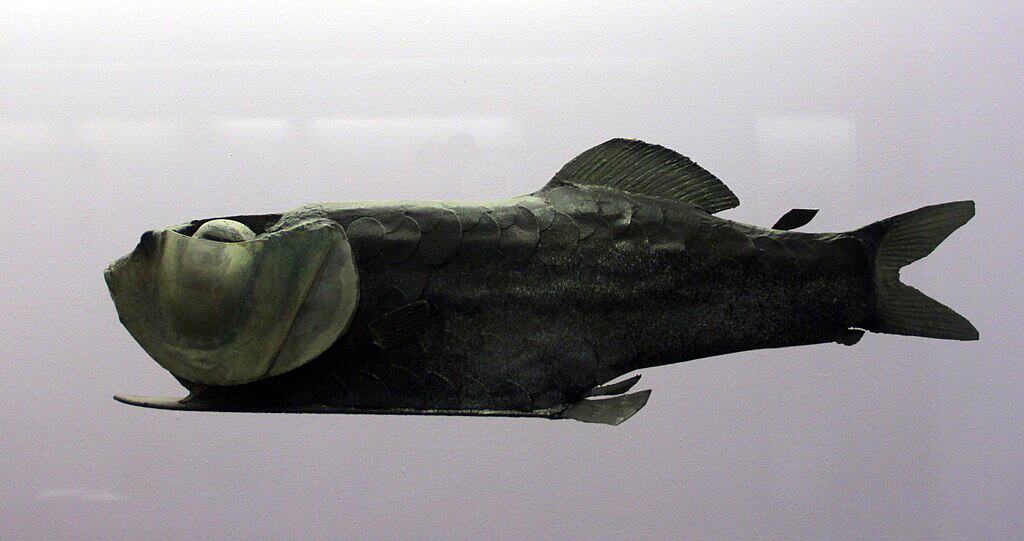
The Barreleye fish (Macropinna microstoma) possesses one of the most unusual adaptations in the animal kingdom—a transparent, fluid-filled dome that encases its head. This bizarre feature allows the fish to collect light from above while its tubular, highly sensitive eyes can rotate upward to spot potential prey or threats. What appears as green glowing spheres inside its head are actually the fish’s eyes, which can pivot to look forward or upward depending on what the fish is targeting.
Living at depths between 2,000 and 2,600 feet (600-800 meters), the Barreleye evolved this peculiar transparent head as a specialized hunting tool. The fish hovers motionless in the dark waters, detecting the silhouettes of small crustaceans and jellyfish above it. Scientists believe it may steal prey from the tentacles of siphonophores (colonial jellyfish-like organisms) without getting stung. First discovered in 1939, this fish remained a mystery until 2004 when researchers at the Monterey Bay Aquarium Research Institute captured the first video of a live specimen with its transparent shield intact, revealing how the creature functions in its natural habitat.
The Goblin Shark Living Fossil with an Extendable Jaw

The Goblin Shark (Mitsukurina owstoni) looks like something from prehistoric times—and for good reason. This rare deep-sea shark is often called a “living fossil” because it belongs to a family of sharks that has remained relatively unchanged for 125 million years. Its most distinctive feature is its protrusible jaw, which can extend forward from its face with remarkable speed to catch prey. This specialized jaw can launch outward at speeds comparable to some of the fastest known animal movements, creating an almost alien-like appearance when feeding.
With its flabby body, pink-gray skin, and long flattened snout that resembles a sword blade, the Goblin Shark bears little resemblance to its more familiar shark relatives. The elongated snout houses specialized sensory organs called ampullae of Lorenzini that detect the electrical fields produced by prey. Typically growing between 10 and 13 feet in length, these creatures inhabit depths from 890 to 3,150 feet (270-960 meters) and are rarely seen alive. Their ghostly appearance is enhanced by their semi-translucent skin—a common adaptation among deep-sea creatures where pigmentation offers little survival advantage in the perpetual darkness.
The Fangtooth Proportionally Largest Teeth in the Ocean

Despite measuring just 6 inches (15 cm) in length, the Fangtooth fish (Anoplogaster cornuta) boasts the largest teeth in the ocean relative to body size. These disproportionate fangs are so large that the fish has evolved special sockets in its brain cavity to accommodate them when its mouth is closed. Without this adaptation, the Fangtooth wouldn’t be able to close its mouth at all. These impressive dental weapons have earned it the scientific nickname “ogrefish” and made it one of the most recognizable deep-sea creatures despite its small size.
Inhabiting depths between 1,600 and 6,500 feet (500-2,000 meters), the Fangtooth’s intimidating appearance belies its relatively harmless nature—at least to humans. Its diet consists mainly of small fish and crustaceans, which it ambushes in the darkness. The Fangtooth’s body is covered in thick, spiny scales that provide protection in an environment where every encounter could be potentially dangerous. Interestingly, juvenile Fangtooths look remarkably different from adults, living in shallower waters and sporting less extreme features until they mature and descend to greater depths, demonstrating how their bizarre adaptations are specifically evolved for deep-sea survival.
The Blobfish Misunderstood Gelatinous Celebrity

Perhaps no deep-sea creature has achieved more internet fame than the Blobfish (Psychrolutes marcidus), voted the “world’s ugliest animal” in 2013 by the Ugly Animal Preservation Society. However, this fish is the victim of a severe misrepresentation. The infamous photos showing a sad, gelatinous blob with a large nose actually depict a fish suffering from severe decompression damage. In its natural habitat—depths of 2,000 to 3,900 feet (600-1,200 meters) off the coasts of Australia and New Zealand—the Blobfish looks much more like a conventional fish with firmer features.
The Blobfish’s unusual biology is actually a clever adaptation to extreme deep-sea conditions. Rather than having a gas-filled swim bladder like many fish (which would collapse under deep-sea pressure), the Blobfish’s body consists of a gelatinous mass with a density slightly less than water. This allows it to float above the seafloor with minimal energy expenditure—an important advantage in a food-scarce environment. The fish is an ambush predator, floating motionless as it waits for edible matter to drift within range. Despite its internet notoriety, scientists know relatively little about Blobfish behavior and biology due to the challenges of studying creatures in such extreme depths.
The Vampire Squid Neither Vampire Nor Squid
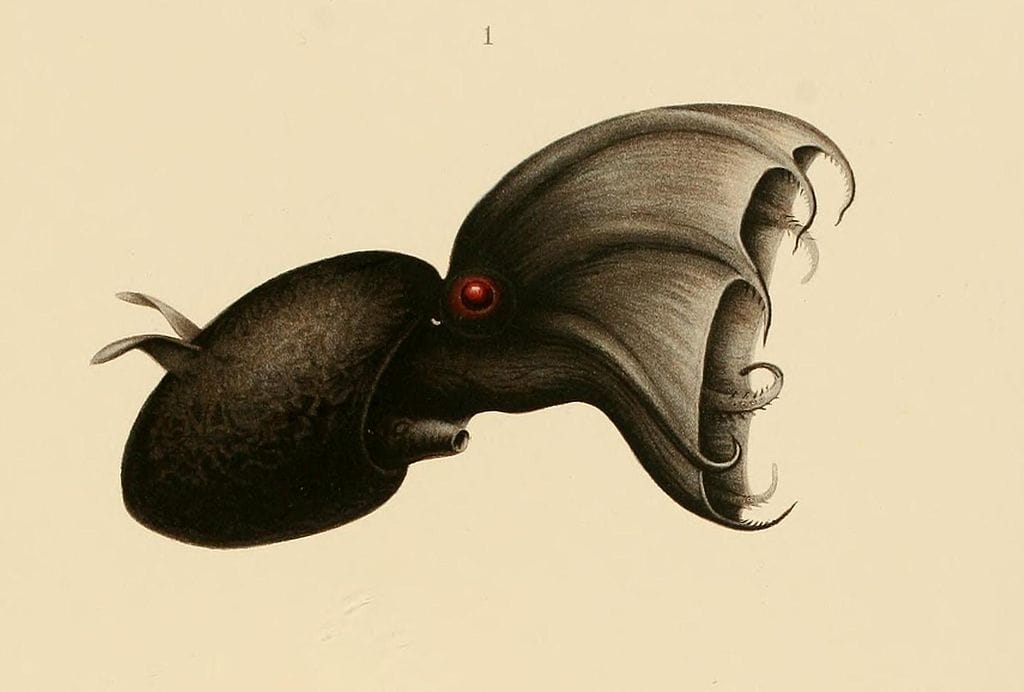
Despite its ominous name and appearance, the Vampire Squid (Vampyroteuthis infernalis—literally “vampire squid from hell”) is neither a vampire nor a squid. This ancient creature is actually the sole survivor of the order Vampyromorphida, representing a unique evolutionary lineage that’s over 300 million years old. Reaching just 12 inches (30 cm) in length, the Vampire Squid’s most distinctive features include its deep red coloration, webbed arms that resemble a cape, and large blue eyes that can appear red under certain light conditions—all contributing to its vampiric association.
Living at depths between 2,000 and 3,000 feet (600-900 meters) in oxygen-minimum zones where few predators venture, the Vampire Squid has evolved remarkable defensive mechanisms. When threatened, it can turn its webbed arms inside-out, exposing spiny projections that create a fearsome silhouette. It can also emit bioluminescent mucus from the tips of its arms, creating a disorienting cloud of light that allows it to escape. Unlike true squids, the Vampire Squid doesn’t hunt actively; instead, it feeds primarily on “marine snow”—a mixture of dead plankton, fecal matter, and other organic debris that drifts down from shallower waters. This relatively gentle creature’s terrifying name and appearance exemplify how deep-sea adaptations can evolve for practical purposes yet appear monstrous to human observers.
The Viperfish Master of Bioluminescent Deception

The Viperfish (Chauliodus sloani) embodies the perfect deep-sea predator with its fierce appearance and specialized hunting adaptations. Most notably, it possesses enormous fang-like teeth so large they don’t fit inside its mouth—instead, they curve back toward the eyes when the mouth is closed. These needle-sharp teeth, some of the largest in the animal kingdom relative to body size, lock prey in place once captured. Growing to about 12 inches (30 cm) in length, the Viperfish’s slender, metallic blue-green body helps it remain virtually invisible in the deep ocean.
What truly sets the Viperfish apart as a master predator is its sophisticated bioluminescent lure. The first dorsal spine has been modified into a long, flexible rod tipped with a light-producing photophore. The Viperfish dangles this glowing lure above its head to attract curious prey in the darkness before lunging with remarkable speed. Living at depths between 600 and 5,000 feet (200-1,500 meters), the Viperfish is a prime example of convergent evolution with anglerfish, as both have independently evolved light-based luring mechanisms. Interestingly, these fearsome predators migrate toward surface waters at night to hunt, then return to deeper, safer waters during daylight hours—a behavior known as diel vertical migration that allows them to access more abundant food sources while avoiding larger predators.
The Frilled Shark Prehistoric Serpent of the Deep

Often described as a “living fossil,” the Frilled Shark (Chlamydoselachus anguineus) has remained virtually unchanged for 80 million years, making it one of the most primitive shark species still in existence. With its elongated, eel-like body that can grow up to 6.6 feet (2 meters) in length, ruffled gills, and mouth positioned at the front of its head rather than underneath (unlike most modern sharks), the Frilled Shark bears little resemblance to its contemporary relatives. Its most distinctive feature is the arrangement of 300 trident-shaped teeth aligned in 25 rows, creating a trap-like mouth perfectly designed to seize soft-bodied prey like squid.
The Frilled Shark typically inhabits depths between 390 and 4,200 feet (120-1,280 meters), though it has occasionally been spotted in shallower waters, particularly during the colder months. Its unusual hunting strategy involves bending its body and striking forward like a snake, swallowing prey whole. Scientists believe it may use its dark coloration and flexibility to mimic the movements of wounded prey, potentially luring curious predators close enough to become prey themselves. Despite its ancient lineage and fearsome appearance, the Frilled Shark remains poorly understood, with most knowledge coming from specimens accidentally caught in deep-sea fishing operations rather than direct observation in its natural habitat.
The Giant Isopod Supersized Deep-Sea Pillbug

Imagine a roly-poly pillbug or woodlouse magnified to the size of a house cat, and you have the Giant Isopod (Bathynomus giganteus). These remarkable crustaceans are one of the most striking examples of deep-sea gigantism—a phenomenon where certain marine invertebrates grow much larger in the deep sea than their shallow-water relatives. Giant Isopods can reach lengths of up to 16 inches (40 cm) and weigh over 3.7 pounds (1.7 kg). Their segmented exoskeletons, multiple legs, and compound eyes give them a prehistoric appearance that both fascinates and unsettles many observers.
Found at depths ranging from 550 to 7,020 feet (170-2,140 meters) across the cold, oxygen-rich waters of the Atlantic, Pacific, and Indian Oceans, Giant Isopods have adapted to the scarce food resources of the deep sea through several remarkable strategies. They can go for extraordinary periods without eating—in one documented case, a specimen at a Japanese aquarium survived for five years without consuming any food. As opportunistic scavengers, they play a crucial ecological role by consuming dead animals that sink to the ocean floor, efficiently converting this “marine snow” into nutrients that sustain the deep-sea ecosystem. Their robust exoskeletons protect them from the crushing pressures of the deep, while their pale coloration—ranging from lilac to creamy yellow—reflects their existence in a world without light.
The Anglerfish Famous Face of the Abyss

Few deep-sea creatures have captured the public imagination quite like the Anglerfish, particularly the female Humpback Anglerfish (Melanocetus johnsonii) with its disproportionately large head, enormous crescent-shaped mouth lined with transparent, fang-like teeth, and the distinctive bioluminescent lure that dangles from its forehead. This fishing rod-like appendage, called an illicium, is actually a modified dorsal spine topped with a light-producing organ called an esca. The light is produced by symbiotic bacteria that live inside the esca—a remarkable example of biological cooperation in the deep sea.
What’s less well-known about Anglerfish is their extreme sexual dimorphism—one of the most pronounced in the animal kingdom. Males are tiny compared to females, often less than an inch long, and lack the distinctive lure. Instead, they have evolved to be parasitic mates. When a male finds a female, he bites into her body and physically fuses with her, connecting to her bloodstream for nourishment while his body atrophies until he’s nothing more than a pair of gonads that provide sperm when the female is ready to spawn. A single female may host multiple males, ensuring she always has fertilization available in an environment where encounters between individuals are extremely rare. Living at depths between 3,000 and 6,600 feet (914-2,000 meters), different anglerfish species have evolved various lure shapes and patterns, each specialized to attract the specific prey found in their particular depth zone.
The Dumbo Octopus Adorable Ear-Flapped Cephalopod

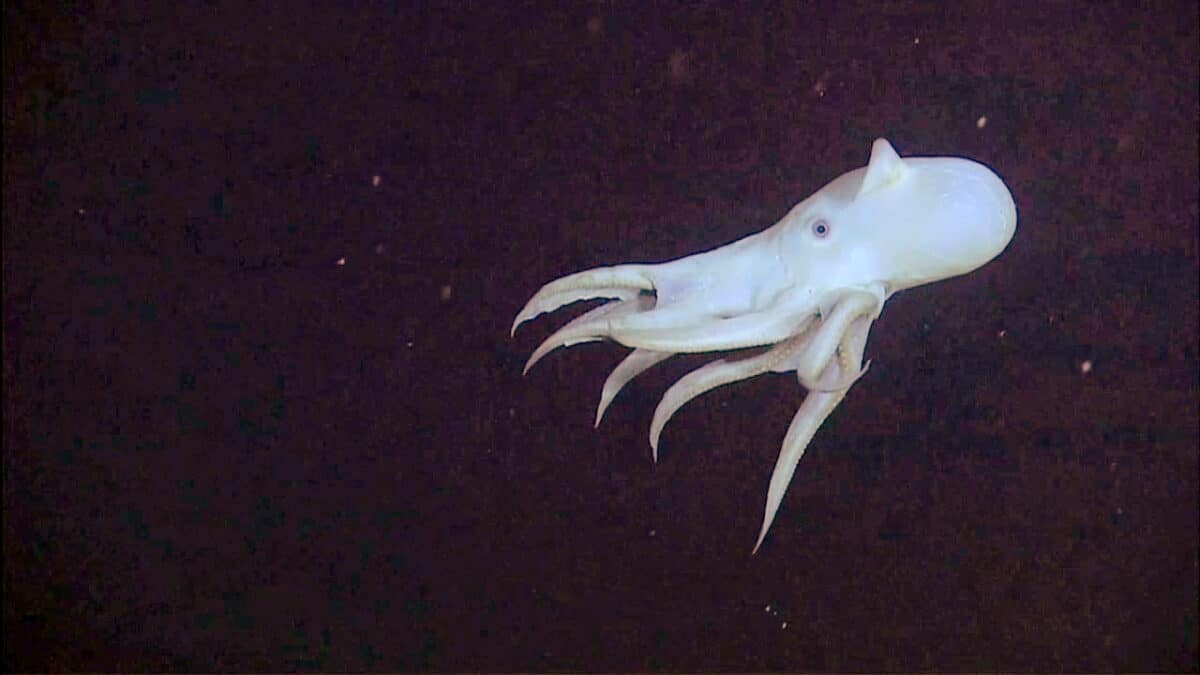
In stark contrast to the nightmarish appearance of many deep-sea creatures, the Dumbo Octopus (genus Grimpoteuthis) presents a rather endearing countenance. Named after Disney’s flying elephant, these rare cephalopods are distinguished by their prominent ear-like fins that protrude from the top of their mantle and flap gracefully as they move through the water. These fins, combined with their small size—typically 8 to 12 inches (20-30 cm) in length—and rounded body shape, give them an undeniably cute appearance that stands out among the often fearsome-looking denizens of the deep.
Dumbo Octopuses are among the deepest-dwelling of all octopus species, with some individuals found at astonishing depths of up to 23,000 feet (7,000 meters) below the surface. Unlike most octopuses, they don’t have ink sacs (there are few predators to hide from at such depths) and they’ve evolved a semi-transparent body that ranges from pale white to pink or brown. Their feeding strategy is equally unique—rather than actively hunting with their eight arms like shallow-water octopuses, Dumbo Octopuses use their umbrella-like webbing between their arms to “trap” small crustaceans, worms, and other invertebrates against the seafloor. Scientists estimate there are at least 17 different species of Dumbo Octopuses, though studying them remains challenging due to the extreme depths at which they live.
The Gulper Eel Expandable Jaws and Whip-like Tail

The Gulper Eel (Eurypharynx pelecanoides), also known as the Pelican Eel, possesses one of the most extreme mouth-to-body ratios in the animal kingdom. Despite its slender body that typically measures about 3 feet (1 meter) in length, its enormous mouth and highly expandable stomach allow it to consume prey much larger than itself. This extraordinary adaptation is possible thanks to its loosely hinged jaw and elastic skin that can stretch to accommodate large meals—a valuable trait in the deep sea where food encounters may be rare and must be capitalized upon when they occur.The Gulper Eel’s most distinctive feature beyond its massive mouth is its extremely long, whip-like tail that ends
Conclusion:
The deep sea is a realm of extremes—eternal darkness, crushing pressure, and scarce food—that has given rise to some of the most bizarre and awe-inspiring creatures on Earth. From the transparent-headed Barreleye to the terrifying jaws of the Goblin Shark and the glowing lures of the Anglerfish and Viperfish, each animal featured in this article showcases an evolutionary masterpiece uniquely adapted to survive where few others can. These adaptations are not just curiosities—they are functional innovations honed by millions of years of survival in one of the harshest environments imaginable.
Despite their alien appearance, deep-sea creatures are vital to our planet’s biodiversity and ecosystem health. As exploration technologies improve, we continue to uncover new species and behaviors that challenge our understanding of life itself. Yet, the deep ocean remains one of the least explored habitats on Earth, and its fragile ecosystems face increasing threats from climate change, pollution, and deep-sea mining. By learning about and appreciating these extraordinary life forms, we not only satisfy our curiosity but also foster a sense of stewardship for the hidden wonders that lie far beneath the waves. The deep sea reminds us just how much we still have to learn—and how much there is worth protecting.

As a little kid, I fell in love with nature, wildlife, and animals. Living in the USA, South Africa, Italy, China and Germany gave me the opportunity to discover the world's Wildlife. My favorite animals are Mountain Gorillas, Siberian Tigers, and Great White Sharks.
I'm a certified PADI Open Water Diver, went to Everest Base Camp and Trekked Gorillas in Uganda. I hold a Master of Science in Economics and Finance.
Please send any feedback to feedback@animalsaroundtheglobe.com
- Why the Great Barrier Reef Is the Best Place to Spot Sea Turtles - June 3, 2026
- 2 Animals With Super Sized Body Parts and What They are For - June 3, 2026
- Explore The Azores - June 3, 2026