

Space doesn’t always announce itself with fireworks and headlines. Sometimes it leaves its mark quietly, buried under centuries of forest growth, waiting for someone curious enough to look closely. That’s exactly what happened in China, where scientists have confirmed one of the most remarkable geological finds in recent memory.
This isn’t just another crater story. What makes this discovery genuinely exciting is the combination of factors at play – the age, the location, the incomplete evidence, and what it all means for how we understand Earth’s ongoing relationship with space rocks. Let’s dive in.
A Crater So Young, the Earth Barely Had Time to Forget It
Here’s the thing about impact craters – most of them are ancient. We’re talking millions, sometimes billions of years old. So when scientists confirm a crater that formed only about 49,000 years ago, that’s practically yesterday in geological terms. This newly confirmed site in China is now recognized as the youngest known impact crater on Earth.
To put that in perspective, 49,000 years ago, early modern humans were already walking the planet. Woolly mammoths still roamed. The idea that a space rock slammed into what is now a Chinese forest while our ancestors were out there living their lives? That’s both humbling and a little spine-tingling.
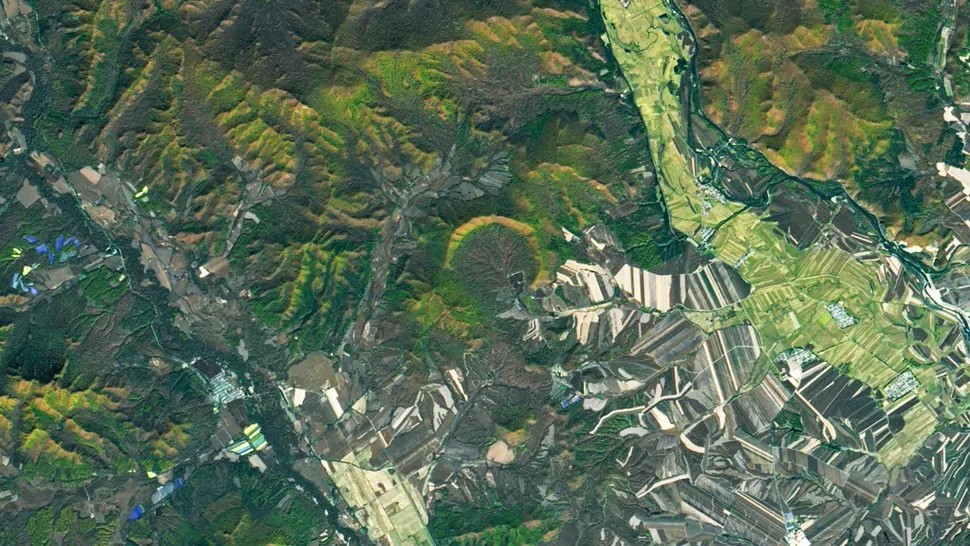
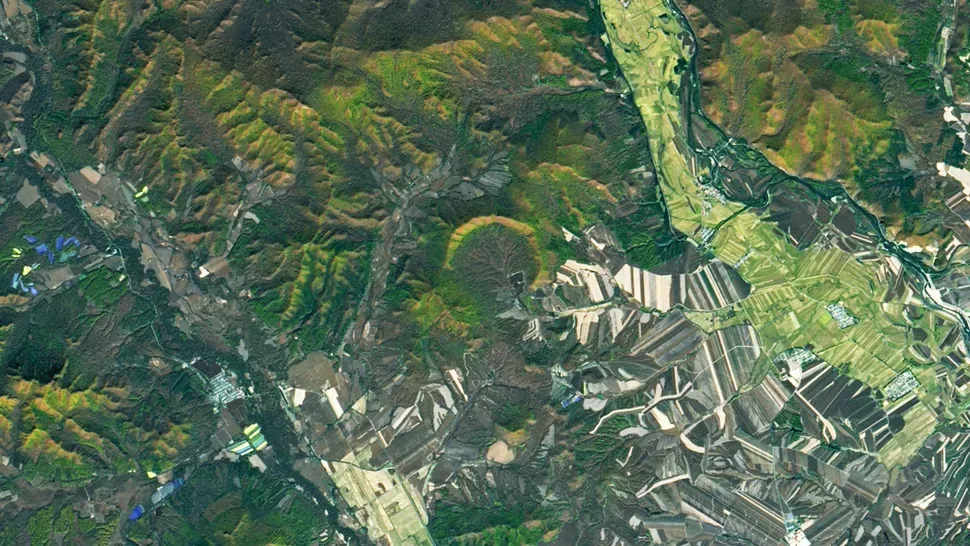
The crater, known as the Yilan crater, sits in the Heilongjiang province of northeastern China. It measures roughly 1.85 kilometers across, which sounds modest until you consider the sheer force required to carve that kind of scar into bedrock. This isn’t a pothole. This is the aftermath of something catastrophic.
Spotting the Invisible: How Satellite Imagery Changed Everything
Finding an impact crater hidden beneath dense forest cover is no easy task. From ground level, you might just think you’re walking through a bowl-shaped valley. It takes a certain elevated perspective, literally, to see the circular signature that screams “something hit here.” That’s where Earth observation satellites proved invaluable.
Researchers used satellite imagery to identify the telltale circular shape of the Yilan crater, which had been partially obscured by forest canopy and centuries of vegetation growth. The near-perfect circular geometry is one of the strongest visual indicators of an extraterrestrial impact, since natural geological formations rarely produce that kind of symmetry.
Honestly, it’s a bit wild that we’re still discovering features like this on our own planet. You’d think we’d have mapped everything by now. Yet Earth keeps revealing its secrets, and satellite technology is increasingly the tool that cracks them open.
Why the Remains Are Considered “Incomplete”
Here’s where things get scientifically fascinating. The Yilan crater doesn’t present itself as a clean, textbook-perfect impact structure. Researchers have described the visible remains as incomplete, meaning that significant portions of the crater’s original structure have been eroded, obscured, or simply harder to verify on the surface.
Erosion, vegetation, and time are relentless forces. Even a geologically young crater like this one has had nearly 50,000 years to be weathered, filled with sediment, and colonized by plant life. The northern rim of the crater, in particular, appears to have been significantly degraded compared to the southern portions.
This incompleteness actually makes the confirmation more impressive from a scientific standpoint. Researchers had to work harder to piece together the evidence. It’s a bit like solving a puzzle when someone has already thrown away a quarter of the pieces. The fact they could still confirm the impact origin says a lot about the quality of the geological detective work involved.
The Geological Clues That Sealed the Deal
Confirming a crater as an actual meteorite impact site requires more than just a suspicious circular shape. Scientists look for very specific geological fingerprints that can only be produced by the extreme pressures and temperatures of an extraterrestrial collision. The Yilan site delivered on several of those fronts.
Among the key evidence found at the site were shocked quartz grains. This type of quartz forms only under the extraordinary pressure of a hypervelocity impact, pressures that simply don’t occur in volcanic eruptions or any other natural Earth process. Finding shocked quartz is essentially a smoking gun in impact geology.
Researchers also identified glass-like materials and other impact-related minerals within the crater structure. These materials form when rocks are vaporized and then rapidly solidify, another process unique to cosmic collisions. Taken together, the evidence paints a clear picture of what happened at Yilan roughly 49,000 years ago.
What the Discovery Reveals About Impact Frequency on Earth
Earth gets hit by space rocks more often than most people realize. The planet’s surface, however, is incredibly good at erasing the evidence. Tectonic activity, erosion, water, and biology all conspire to erase craters over time. Scientists estimate there are likely many more impact structures on Earth that simply haven’t been found yet.
The Yilan discovery matters beyond just adding one more entry to the catalog. It reinforces the idea that impacts have continued to shape our planet throughout human prehistory, and theoretically continue to pose a risk today. It shifts the conversation from ancient history to something far more immediate.
I think what’s genuinely underappreciated here is how this finding contributes to understanding impact frequency over shorter geological timescales. The more confirmed young craters we find, the better we can model how often Earth experiences impacts of this size. That has real implications for planetary defense research.
The Yilan Crater in the Context of Global Impact Sites
The world currently has fewer than 200 confirmed impact structures, which might surprise you given how long Earth has existed and how frequently space debris crosses our path. The Yilan crater now joins a short but important list of confirmed sites, and its youth makes it particularly valuable for scientific study.
Compared to famous sites like the Barringer Crater in Arizona, which formed about 50,000 years ago and is remarkably well-preserved due to the arid desert climate, Yilan tells a different story. The humid forested environment of northeastern China has been far less kind to the crater’s preservation, which is precisely why it remained hidden for so long.
What’s striking is that these two craters, Barringer and Yilan, formed at roughly the same point in Earth’s history, yet they look dramatically different today. Environment is everything when it comes to preservation. It’s a reminder that the record of impacts we see is heavily biased toward the ones that happened in the right geological conditions to survive.
What Comes Next for Yilan Research
The confirmation of the Yilan crater is really just the beginning of its scientific story. Now that researchers have established its impact origin, a whole new phase of investigation can begin. Detailed drilling campaigns, sediment core analysis, and further geochemical studies are expected to follow.
One particularly exciting research avenue involves understanding what the impactor itself looked like. Was it an asteroid or a comet fragment? How large was the original object before it struck? These questions can sometimes be answered through the analysis of residual meteoritic material mixed into the crater’s rock record, though such material is often difficult to recover after tens of thousands of years.
There’s also meaningful potential in studying the environmental impact this collision had on the surrounding region. A nearly two-kilometer-wide impact would have had devastating local effects. Studying the ecological and atmospheric aftermath, even this far removed in time, could add nuance to our understanding of how impact events affect ecosystems.
Conclusion: The Planet Is Still Telling Its Story
The Yilan crater is a reminder that Earth is not a static, fully-known world. It is a dynamic, scarred, and constantly evolving planet with secrets still buried under forests, oceans, and ice. Finding the youngest confirmed impact crater hiding beneath Chinese woodland in 2026 feels almost poetic.
What strikes me most about this discovery is how it collapses time. A forest that looks peaceful and ordinary was, relatively recently in Earth’s long life, the site of a violent cosmic collision. The ground beneath those trees holds the memory of something extraordinary. Science just gave us the language to read it.
If a crater this young can hide in plain sight for this long, one has to wonder: what else is waiting to be found? What other cosmic fingerprints are buried just beneath the surface of the world we think we already know?

- Urban Coyotes Show Remarkable Adaptability, Learning to Thrive in City Environments - July 22, 2026
- Beavers Are Nature’s Engineers, Creating Vital Habitats for Other Wildlife Species - July 21, 2026
- The Recovery of the California Condor Offers Hope for Other Critically Endangered Birds - July 21, 2026