
We tend to think of intelligence as something reserved for mammals. Dolphins, chimpanzees, dogs – these are the creatures we instinctively associate with brainpower. Yet right outside your window, perched on a fence post or darting between oak trees, there are birds quietly outsmarting puzzles, recognizing faces, and planning ahead in ways that genuinely boggle the scientific community.
Honestly, the more researchers dig into avian cognition, the more humbling it becomes. Their brains may be tiny, but birds have been known to outsmart children and even apes. So which North American species sit at the very top of that cognitive ladder? The answers might surprise you more than you’d expect. Let’s dive in.
1. The American Crow: The Street-Smart Genius
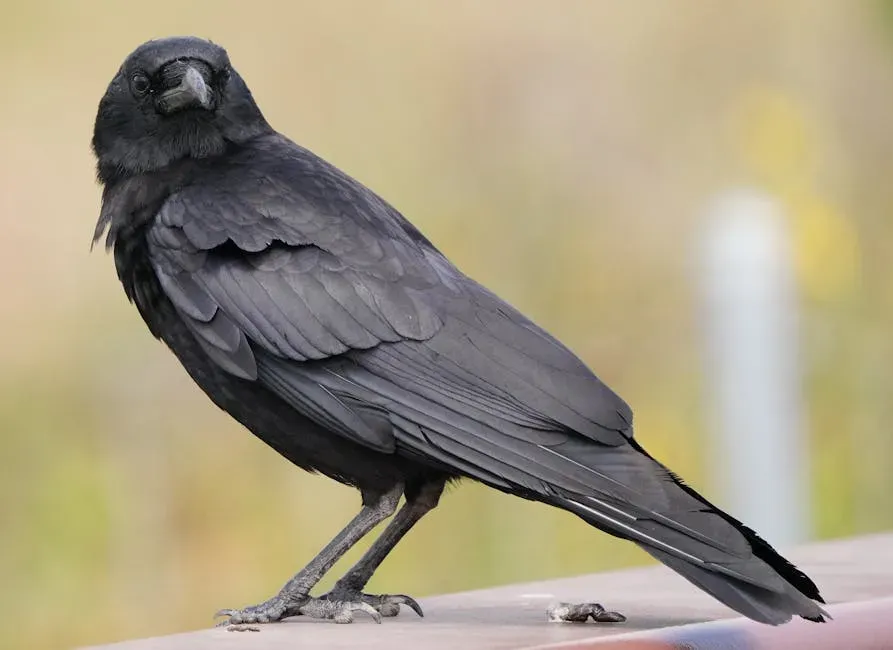
The American crow is one of the most familiar yet cognitively remarkable birds in North America, widely studied for its social intelligence, problem-solving skills, and ability to track threats across years. Think of it as the city kid of the bird world – adaptable, bold, and always a few moves ahead of everyone else.
In urban environments, American crows have adapted to use human tools and infrastructure to their advantage. They’ve been observed dropping nuts onto roads for cars to crack open, then retrieving the food once the traffic clears. That is not random behavior. That is deliberate, multi-step planning.
Louis Lefebvre, a behaviorist at McGill University in Montreal studying bird intelligence, has developed a test for gauging bird IQ based on how innovative birds are when faced with different challenges. His winner for the smartest bird of all is the American Crow, and other researchers agree.
While crows do nearly as well as ravens solving intelligence tests, experts stress that crows have an uncanny memory for human faces and can remember if that particular person is a threat. There is something almost eerie about being remembered by a bird. These birds are incredibly perceptive of their environment and can even recognize individual humans, remembering those who have treated them poorly. This ability to identify and remember people highlights just how keen their minds are. Crows also have complex social behaviors, with sophisticated communication systems that allow them to interact and coordinate with one another.
2. The Common Raven: The Deep Thinker of the Sky
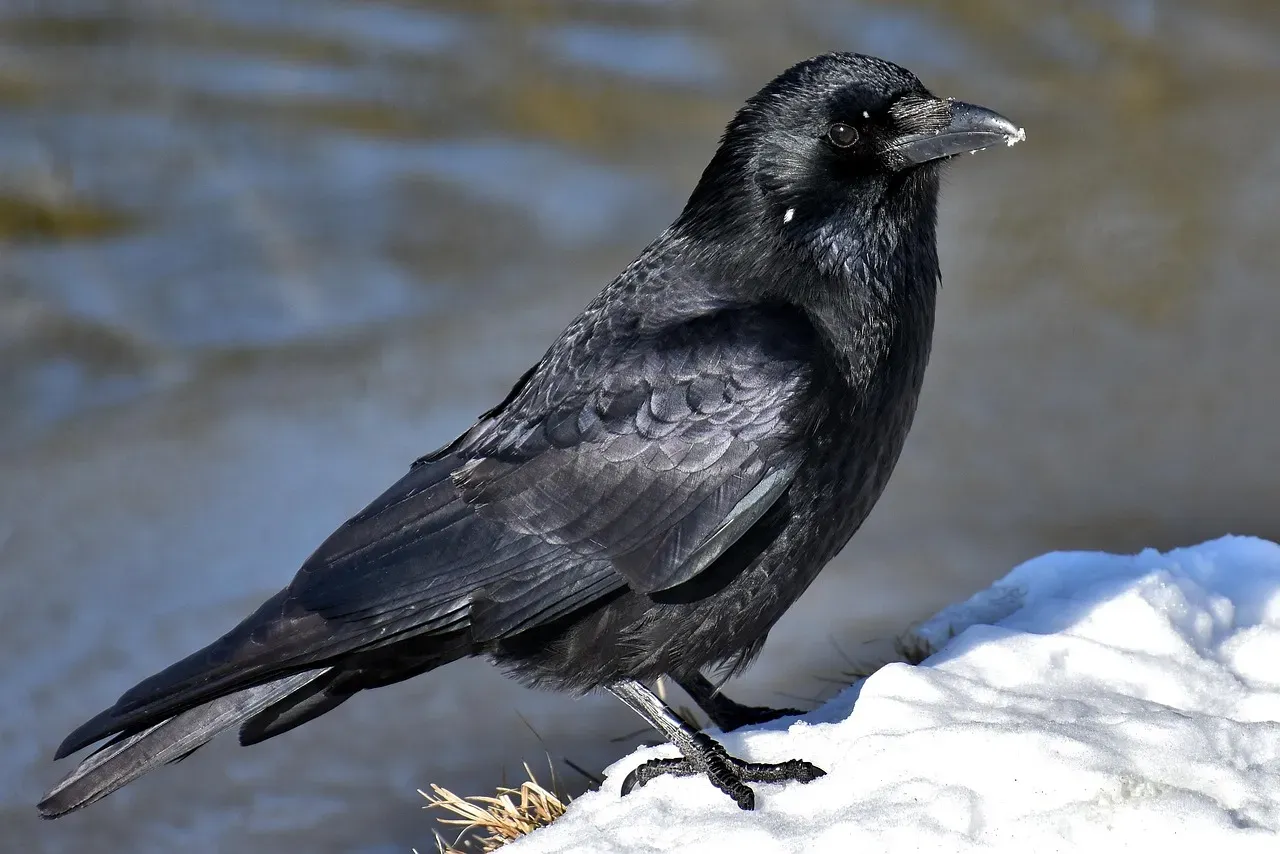
If the crow is the street-smart one, the raven is the philosopher. Members of the corvid family are among the most intelligent birds, though common ravens may have the edge on tackling tough problems. Ravens don’t just react to the world around them. They seem to think it through first.
Recent research has shown ravens are more technically successful in planning ahead than four-year-old children. Let that sink in for a moment. A bird – one that weighs less than most smartphones – routinely out-plans a human preschooler on certain cognitive tasks.
Ravens have been noted for their ability to learn from each other. This kind of social learning is rare and powerful. It means knowledge spreads through raven communities the way it spreads through ours, through observation and imitation.
Ravens are cooperative hunters who often work in pairs, one to distract a bird or mammal parent and the other to grab the bird’s egg or newborn offspring. That level of coordinated deception demands real mental modeling of another animal’s behavior. It’s hard to say for sure where the line between instinct and true reasoning falls, but ravens keep pushing it further than we expect.
3. The Blue Jay: The Bold Schemer with a Hidden Genius
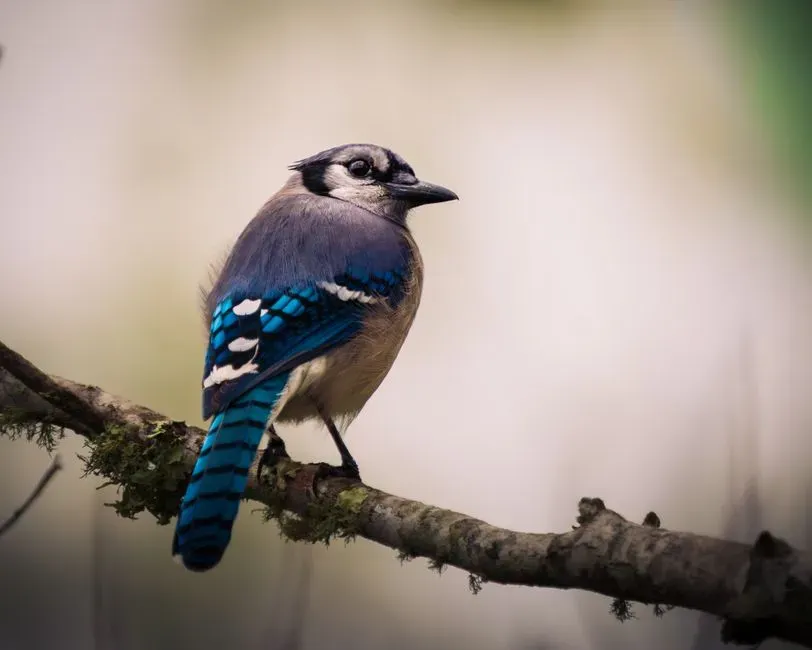
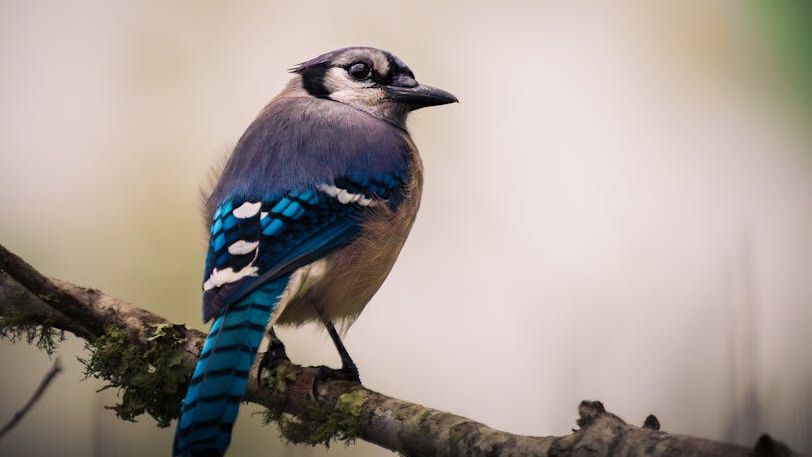
Blue jays get a bad reputation. People call them aggressive, loud, and pushy at bird feeders. All true. Here’s the thing though: those qualities are often just expressions of a seriously sharp mind.
Blue jays possess relatively large brains for their size, particularly a region called the hippocampus, which is crucial for spatial memory and learning. This larger hippocampus is directly linked to their food caching behavior. That is the same brain region that powers human navigation and episodic memory. No wonder these birds are so good at finding food they hid months ago.
Blue jays can remember the locations of thousands of seeds they’ve hidden, retrieving them months later when food becomes scarce. This spatial memory allows them to create extensive food caches across their territory, effectively planning for future needs. Beyond food storage, blue jays can remember specific people who have threatened or fed them, sometimes for years, allowing them to adjust their behavior accordingly.
Blue jays are well-known for their mimicry abilities, including the ability to imitate hawks. This behavior is thought to deter predators and can also deceive other birds. They learn these calls by listening to their environment. Using a hawk’s cry as a weapon of intimidation? Honestly, that’s a little genius. When caching food, blue jays have been observed taking precautions only when they believe they’re being watched, suggesting they understand the concept of another bird’s awareness being directed toward them. This rudimentary self-awareness represents a sophisticated cognitive ability that few animal species demonstrate.
4. Clark’s Nutcracker: The Memory Champion of the Mountains
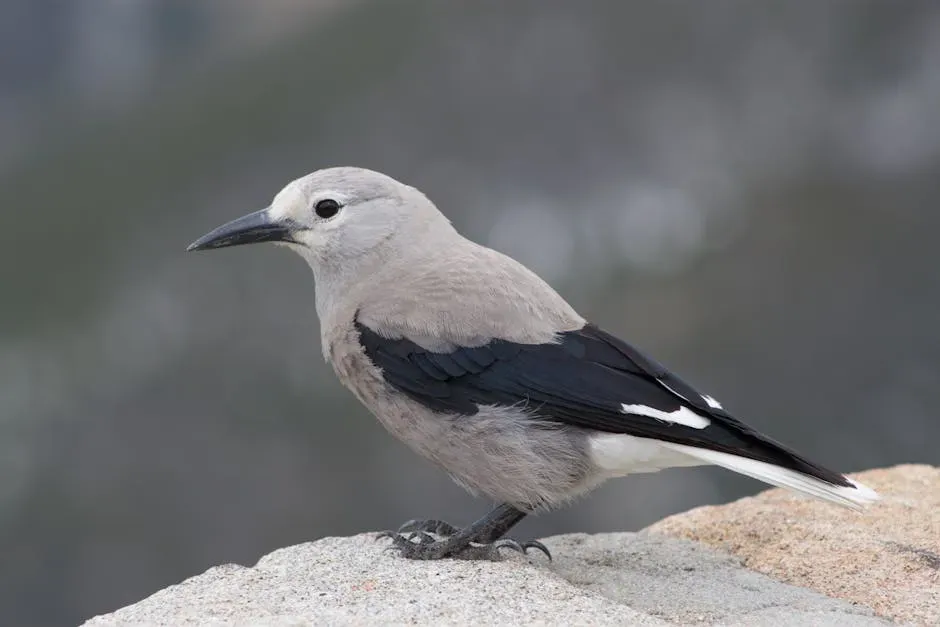
This one tends to fly under the radar, so to speak. Clark’s Nutcracker doesn’t have the cultural fame of the crow or the raven. Yet in one specific cognitive category, it leaves almost every other bird on Earth in the dust.
Clark’s nutcracker is renowned for its extraordinary spatial memory, which allows it to survive in harsh mountainous environments across North America. These birds can hide up to 30,000 seeds in thousands of separate locations over large areas, and they can recall these cache sites with remarkable precision months later, even under snow. Thirty thousand locations. Under snow. Think about how many times you’ve lost your car keys.
Studies have shown that Clark’s nutcrackers use landmarks and mental mapping techniques to navigate back to their caches, demonstrating cognitive skills comparable to those of mammals known for their spatial abilities, like squirrels and even some primates.
Like many birds in the crow family, Clark’s Nutcrackers have a rich vocal range. They use distinct calls to signal danger from predators and are capable of mimicking various sounds. One of their most impressive tricks is imitating the tapping noise of a woodpecker, likely to trick these birds and keep them out of their territory. That last one is I think particularly clever. Using acoustic mimicry as a territorial bluff is something that takes real cognitive creativity to pull off.
5. The Northern Mockingbird: The Urban Survivor with Shocking Social Smarts
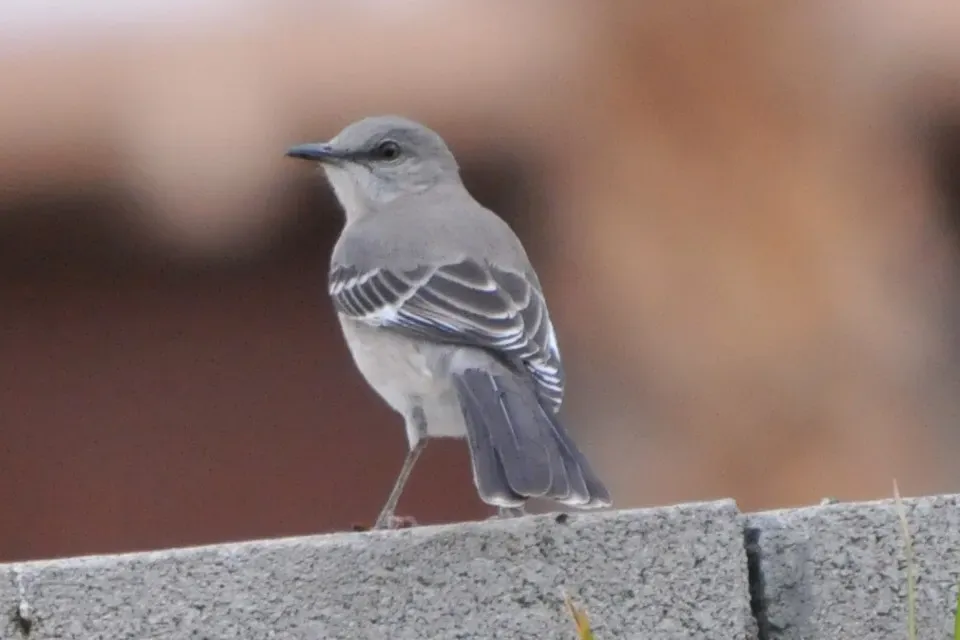
The Northern Mockingbird is often celebrated purely for its vocal abilities. And those abilities are extraordinary. The northern mockingbird is famous for its extraordinary vocal mimicry abilities, capable of imitating the songs of other bird species, mechanical noises, and even human sounds. A single mockingbird can learn and reproduce up to 200 different songs throughout its lifetime, showcasing advanced auditory learning and memory.
Yet the truly jaw-dropping thing about mockingbirds isn’t their singing. It’s what they do with people. Northern Mockingbirds nesting on the campus of a large university rapidly learn to assess the level of threat posed by different humans, and to respond accordingly. In a controlled experiment, researchers found that as the same human approached and threatened a nest on four successive days, mockingbirds flushed from their nest at increasingly greater distances from that human.
These results demonstrate a remarkable ability of a passerine bird to distinguish one human from thousands of others. Mockingbirds learned to identify individual humans extraordinarily quickly, after only two 30-second exposures of the human at the nest. Two 30-second encounters. That is less than a minute of total exposure, and the bird has you locked into memory.
The mockingbird has the remarkable ability to tell the difference between individual humans, regardless of the clothes they wear. After less than a minute, they can tell one person from another and adjust their responses according to the threat they pose to its nest. This ability suggests that these birds are both intelligent and very flexible in their behavior, two traits that must surely stand them in good stead in the urban jungle. This is not a bird outsmarting a lab puzzle. This is a bird thriving in one of the most cognitively demanding environments on Earth, the modern city.
What These Five Birds Tell Us About Intelligence Itself
Looking at these five species together, a pattern emerges that goes beyond individual tricks and party pieces. The difficulty of defining or measuring intelligence in non-human animals makes the subject difficult to study scientifically in birds. In general, birds have relatively large brains compared to their head size. Furthermore, bird brains have two-to-four times the neuron packing density of mammal brains, for higher overall efficiency. More neurons packed tighter means more processing power per gram of brain tissue.
Scientists use behavioral tests, brain-to-body ratios like the encephalization quotient, and real-world studies to rank the most intelligent bird species. What makes the North American contenders so remarkable is that they don’t just pass laboratory tests. They thrive in the wild precisely because of their intelligence, adapting to cities, weather, predators, and unpredictable humans with extraordinary flexibility.
Though corvids and parrots get most of the credit for being brainy, experts note there are “sleeper birds out there” we haven’t fully appreciated. Great-tailed grackles, for instance, belong to the same family as blackbirds and orioles, a group not often considered particularly smart. The truth is, the more we study birds, the more we realize we’ve been underestimating them for centuries. The term “bird-brained” deserves to be retired once and for all.
Perhaps the most humbling thought is this: some of these birds have been quietly watching us, memorizing our faces, studying our patterns, and responding with more nuance than we ever gave them credit for. So the next time a crow tilts its head and seems to look right through you, consider that it probably already knows more about you than you think. What would you do if you found out a mockingbird remembered your face after only seeing you once?

- What Nocturnal Animal Are You According to Your Zodiac Sign - July 19, 2026
- The Fastest Bird in Level Flight Is Not the Peregrine Falcon – That Record Belongs to a Species That Almost No One Can Identify on Sight - July 19, 2026
- 12 Architectural Wonders From The Ancient World That Inspire Us Today - July 18, 2026