
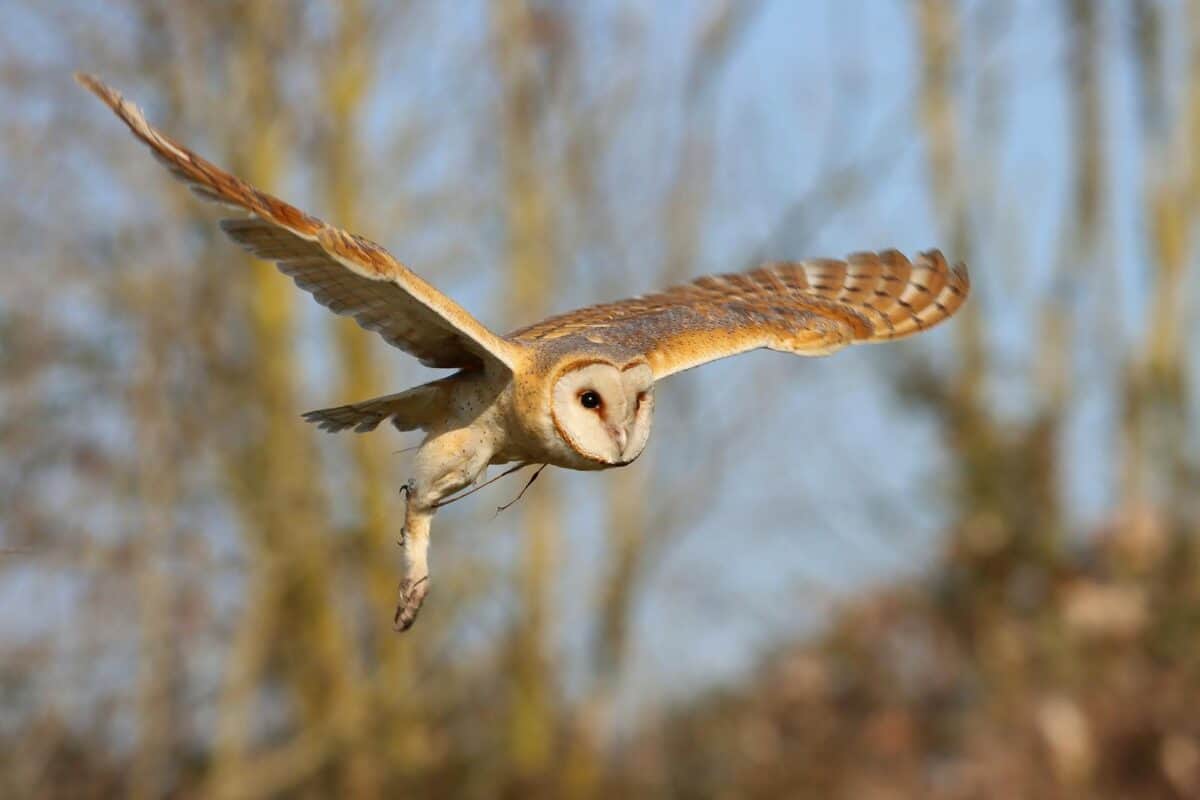
In the vast pantheon of airborne predators, few can match the hunting prowess of the owl. While eagles, hawks, and falcons—collectively known as raptors—are celebrated for their remarkable predatory abilities, certain owl species have evolved hunting adaptations so specialized and effective that they make even the most accomplished daytime raptors seem clumsy by comparison. The barn owl (Tyto alba), in particular, stands as nature’s perfect nocturnal hunter, with adaptations honed over millions of years that allow it to detect, pursue, and capture prey with astonishing precision in complete darkness. Its hunting efficiency rate often exceeds 85% in certain conditions—a success rate that would make any apex predator envious. This article explores the extraordinary hunting capabilities that have earned this unassuming owl its reputation as perhaps the most lethal precision hunter in the avian world.
The Evolutionary Marvel of Asymmetrical Ears

Perhaps the most extraordinary adaptation in the barn owl’s hunting arsenal is its asymmetrical ear placement—a feature unique among birds and crucial to its hunting success. Unlike most animals, the barn owl’s ears are positioned at different heights on its skull; the left ear opening is higher and angled downward, while the right is lower and angled upward. This unusual arrangement creates a three-dimensional sound map that allows the owl to pinpoint prey with remarkable accuracy. When a sound reaches the owl, the time and intensity differences between what each ear detects are processed by specialized neurons in the brain, creating what scientists call a “sound map” of the environment. This gives the barn owl the ability to locate prey within one degree horizontally and vertically in complete darkness—essentially providing three-dimensional hearing. Research at Stanford University has demonstrated that barn owls can accurately locate and strike prey based solely on sound cues, even when the prey is buried under snow or leaf litter.
The Facial Disc: Nature’s Acoustic Satellite Dish

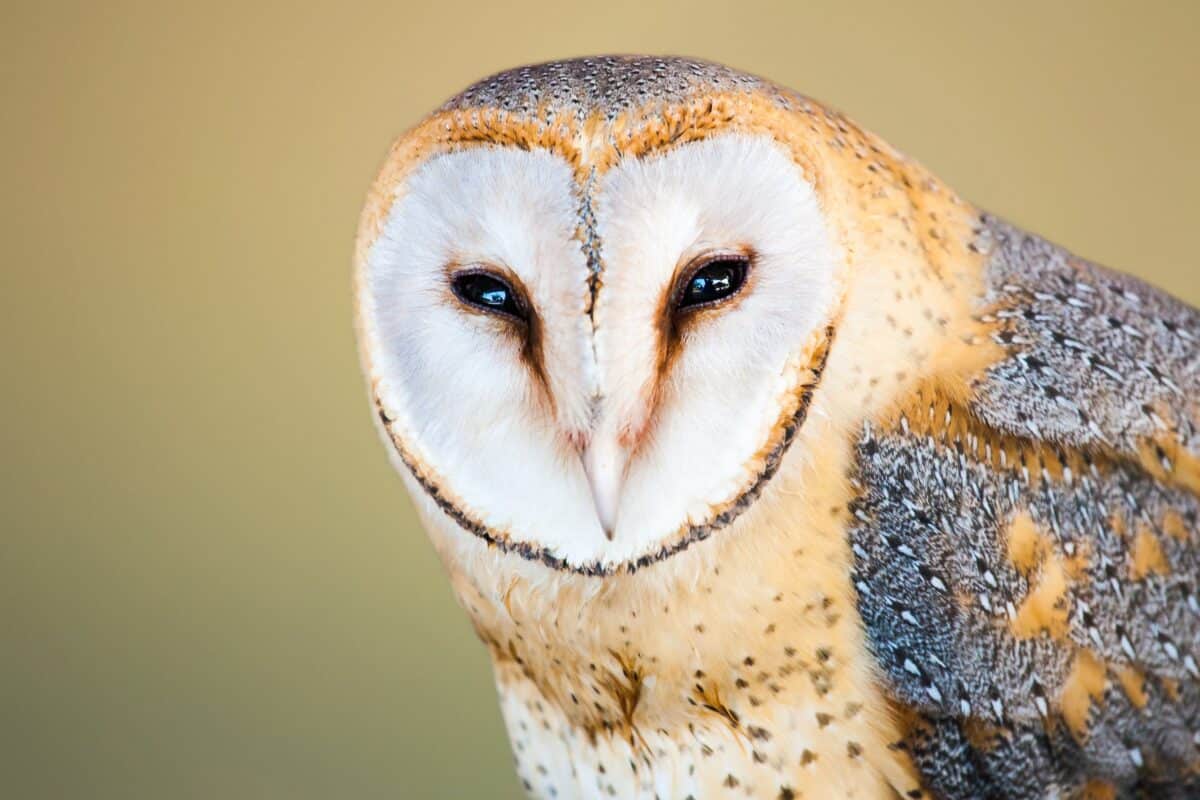
Complementing the asymmetrical ears is the owl’s distinctive heart-shaped facial disc—far more than just a charming feature giving owls their characteristic appearance. This specialized arrangement of stiff feathers functions as an acoustic satellite dish, collecting and funneling sound waves toward the ear openings. The facial ruff feathers are densely packed and arranged in a concave fashion, creating a parabolic reflector that amplifies sound up to ten times before it reaches the ear canals. The owl can also adjust these feathers to focus on specific sounds, effectively “tuning” its hearing to target particular frequencies associated with prey movement. This adaptation is especially valuable when hunting small mammals that produce high-frequency sounds when moving through vegetation. High-speed camera studies have revealed that barn owls can make minute adjustments to their facial disc feathers in milliseconds, instantly optimizing their sound-gathering capability as they zero in on prey.
Silent Flight: The Ultimate Stealth Technology

While diurnal raptors rely heavily on speed and visual acuity, the barn owl has evolved perhaps the most sophisticated stealth technology in the animal kingdom: truly silent flight. This remarkable adaptation comes from several specialized feather modifications. The leading edge of the owl’s primary flight feathers features a comb-like fringe that breaks up the turbulent air that would normally create sound. The trailing edges have soft, flexible fringes that eliminate the whistling sound typical of other birds’ wings. Additionally, the owl’s feathers are covered with a velvety down that absorbs what little sound might be produced by feathers rubbing against each other. Scientific measurements using sensitive microphones in anechoic chambers have confirmed that barn owl flight produces sound levels below the threshold of human hearing—and more importantly, below what their prey can detect. This silent approach gives the owl a critical advantage, allowing it to hear its prey without its own flight noise creating interference, and preventing prey from receiving any warning of the impending attack.
Night Vision Beyond Compare

Though the barn owl’s hearing capabilities are its primary hunting tool, its visual adaptations for low-light conditions further enhance its predatory efficiency. The owl possesses extraordinarily large eyes relative to its skull—so large that they cannot move in their sockets like human eyes. Instead, the owl must turn its entire head. These oversized eyes contain a high density of rod cells—photoreceptors specialized for low-light vision—with approximately 56,000 rods per square millimeter compared to the 200,000 per square millimeter in the human eye. Additionally, the owl’s retina contains a reflective layer called the tapetum lucidum that gives the owl a second chance to capture any photons that pass through the retina, effectively doubling the available light. This combination of adaptations gives the barn owl vision approximately 100 times more sensitive than human vision in low-light conditions. While hawks and eagles have superior daytime visual acuity, the barn owl’s night vision capabilities give it an unmatched advantage in its nocturnal hunting niche.
The Remarkable Head Rotation

The barn owl’s ability to rotate its head up to 270 degrees (nearly three-quarters of a full circle) represents another hunting adaptation that surpasses the capabilities of diurnal raptors. This extreme rotation is made possible by specialized adaptations in the owl’s cervical vertebrae and vascular system. The owl has 14 neck vertebrae—twice the number humans have—with specialized articulation points that allow for extraordinary range of motion. Most remarkably, the owl’s blood vessels include enlarged cavities that collect blood to maintain brain function during extreme head rotations, preventing the interruption of blood flow that would occur in other animals attempting such movements. This adaptation allows barn owls to maintain their fixed gaze on prey while adjusting their body position for the optimal strike angle, without creating movement that might alert prey. The head rotation also compensates for the fixed position of the owl’s eyes, effectively expanding its field of vision without requiring it to reposition its entire body, which would create noise and potentially alert prey.
Precision Talons: Designed for Lethal Efficiency
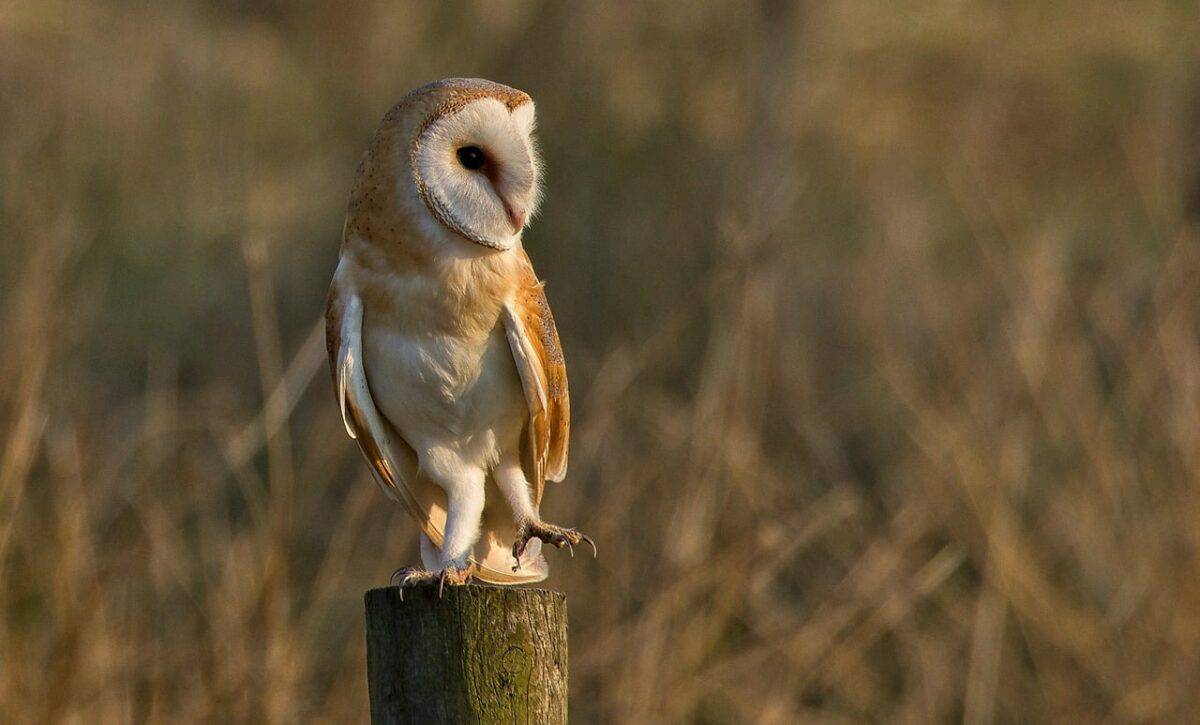
The barn owl’s feet and talons represent specialized adaptations designed specifically for capturing small, fast-moving prey in low-visibility conditions. Unlike eagles and other large raptors that have proportionally massive talons designed to kill large prey instantly, the barn owl has developed a different specialization. Its outer toe is reversible, allowing the owl to switch between having three toes forward and one back (like most birds) to a configuration with two toes forward and two back. This adaptation, called zygodactyl feet, provides superior grasping ability when catching small, nimble prey like mice and voles. The owl’s talons are needle-sharp and proportionally longer than those of similarly sized diurnal raptors, enabling them to penetrate dense vegetation and substrate to reach concealed prey. Additionally, the tendons in the owl’s feet have a ratchet-like locking mechanism that maintains grip pressure without continuous muscular effort, allowing the owl to maintain a secure hold on struggling prey while flying. This specialized gripping mechanism can exert pressure up to 30 pounds per square inch—more than enough to instantly immobilize small mammals.
Memory and Learning: The Cognitive Edge

Beyond physical adaptations, barn owls possess cognitive abilities that enhance their hunting efficiency. Research conducted at the University of Oxford has demonstrated that barn owls develop detailed mental maps of their hunting territories, memorizing the location of productive hunting grounds, regular prey movement pathways, and optimal perching locations. This spatial memory allows them to develop highly efficient hunting strategies customized to specific environments. Additionally, barn owls exhibit remarkable learning capabilities, adjusting their hunting techniques based on previous success rates. Studies have shown that young barn owls improve their hunting success rate from approximately 10% on their first independent hunts to over 85% within just a few months—a learning curve steeper than that observed in most raptors. Most impressively, barn owls have demonstrated the ability to anticipate the future location of moving prey, calculating trajectory and interception points with precision that suggests advanced cognitive processing beyond simple reactive hunting.
The Perfect Storm: Weather-Based Hunting Advantages
While most raptors see their hunting efficiency dramatically reduced during adverse weather conditions, the barn owl often exhibits the opposite pattern—a phenomenon that further distinguishes its hunting capabilities. During light rain, the barn owl’s acoustic hunting advantages become even more pronounced, as the sound of prey movements through wet vegetation becomes more distinct against background noise. Additionally, many small mammals become more active during light precipitation as they take advantage of predators’ typically reduced hunting activity. Research from the British Trust for Ornithology has documented that barn owl hunting success rates can increase by up to 30% during light rain compared to clear conditions. This weather-based advantage extends to moderate winds as well, which can mask the already minimal sounds of the owl’s approach. The combination of enhanced sound detection, prey activity, and stealth in certain weather conditions creates situations where barn owl hunting efficiency can reach its peak—sometimes approaching a nearly perfect success rate that far exceeds what even the most proficient diurnal raptors can achieve.
Record-Breaking Prey Detection
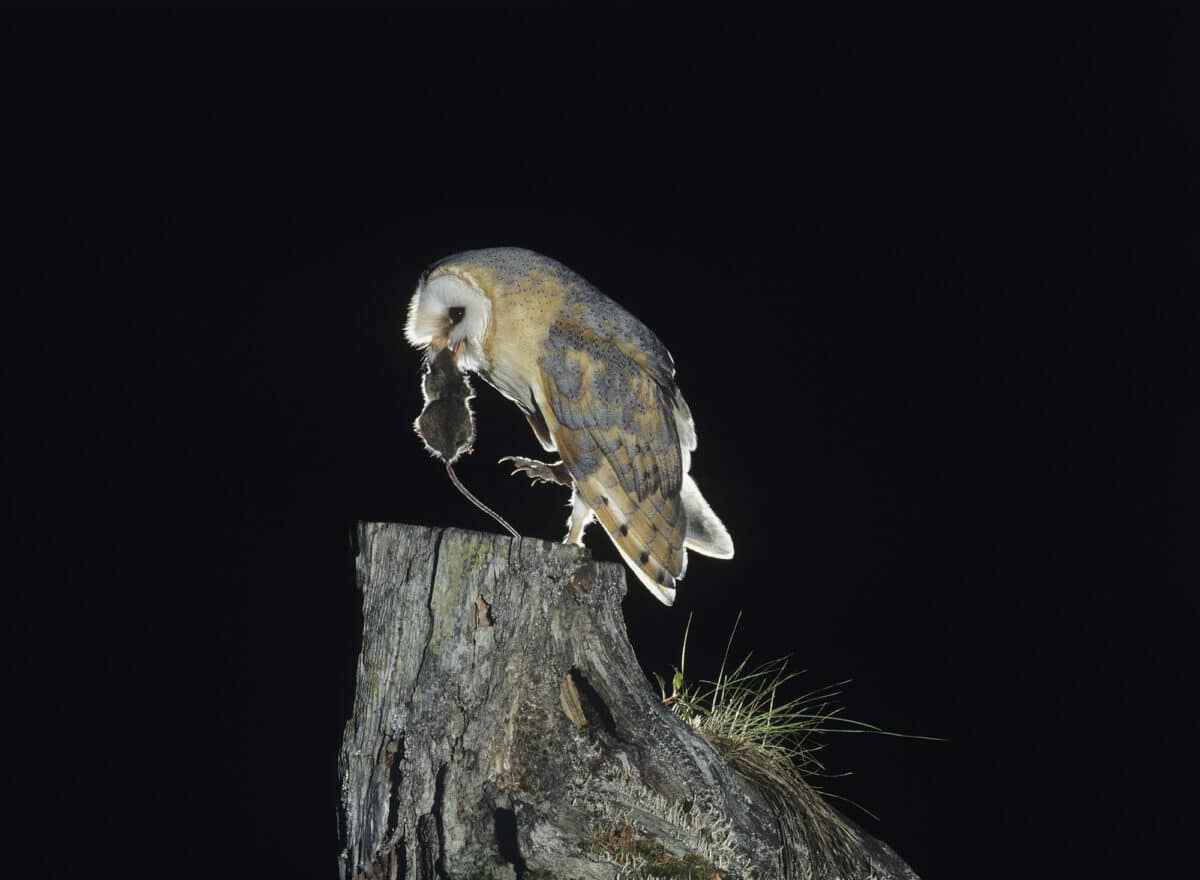
The barn owl’s ability to detect prey stretches the boundaries of what biologists once thought possible, establishing records for prey detection that no other raptor can match. In controlled scientific studies, barn owls have demonstrated the ability to detect and precisely locate mice solely by the sound of their heartbeats at distances up to 10 meters away in completely dark, sound-controlled environments. Even more remarkably, research at the University of Lausanne has shown that barn owls can detect the high-frequency sounds produced by mice moving through grass at distances exceeding 20 meters—a range far beyond the capabilities of other predatory birds. Perhaps most impressive is the barn owl’s ability to detect and accurately strike prey completely hidden under up to 30 centimeters of snow, using only the faint sounds of movement as guidance. This capability far exceeds that of other avian predators, including specialized arctic hunters like the snowy owl, which must rely at least partially on visual cues or surface movements. The barn owl’s unparalleled sensory range gives it access to prey that remains completely undetectable to other predators, expanding its effective hunting territory and success rate.
Metabolic Efficiency: The Energy Conservation Master

Another aspect of the barn owl’s hunting superiority lies in its extraordinary metabolic efficiency—a crucial advantage for any predator. Unlike many raptors that expend tremendous energy in high-speed pursuit of prey, the barn owl has evolved a hunting strategy that minimizes energy expenditure while maximizing returns. Studies measuring oxygen consumption during hunting activities have shown that barn owls use approximately 35% less energy per successful prey capture than comparably sized hawks. This efficiency comes from several adaptations: the owl’s slow, methodical flight pattern conserves energy compared to the rapid wing beats of falcons; its ability to hunt from stationary perches allows for extended periods of low-energy expenditure while waiting for prey; and its high success rate means fewer unsuccessful hunting attempts that waste precious calories. Additionally, barn owls have a lower basal metabolic rate than most similarly sized birds of prey, requiring less energy for basic body functions. This metabolic efficiency translates to a predator that can survive and maintain hunting activities even during periods of relative prey scarcity, when other raptors might be forced to abandon territories or face starvation.
Global Adaptability: The Ultimate Generalist Hunter

While many raptor species are specialists adapted to particular habitats or prey types, the barn owl has achieved hunting success across an astonishing range of environments—a testament to the versatility and effectiveness of its hunting adaptations. As one of the most widely distributed birds in the world, barn owls have established successful hunting territories in environments ranging from desert margins to tropical rainforests, from sea level to elevations exceeding 4,500 meters. This remarkable adaptability stems from the universal effectiveness of their acoustic hunting method, which works regardless of the specific habitat structure or prey species available. Barn owls successfully hunt over 50 different genera of small mammals worldwide, alongside birds, reptiles, amphibians, and even insects when necessary. Research comparing hunting success rates across different habitat types has found that while the specific prey and hunting techniques may vary, the barn owl maintains consistently high success rates between 70-85% across diverse environments. This contrasts sharply with many raptor species whose hunting efficiency drops dramatically when outside their specialized habitats or when forced to target unfamiliar prey. The barn owl’s hunting methodology represents a rare case of a generalist approach that sacrifices little in terms of efficiency.
The Conservation Implication: Protecting Nature’s Perfect Hunter
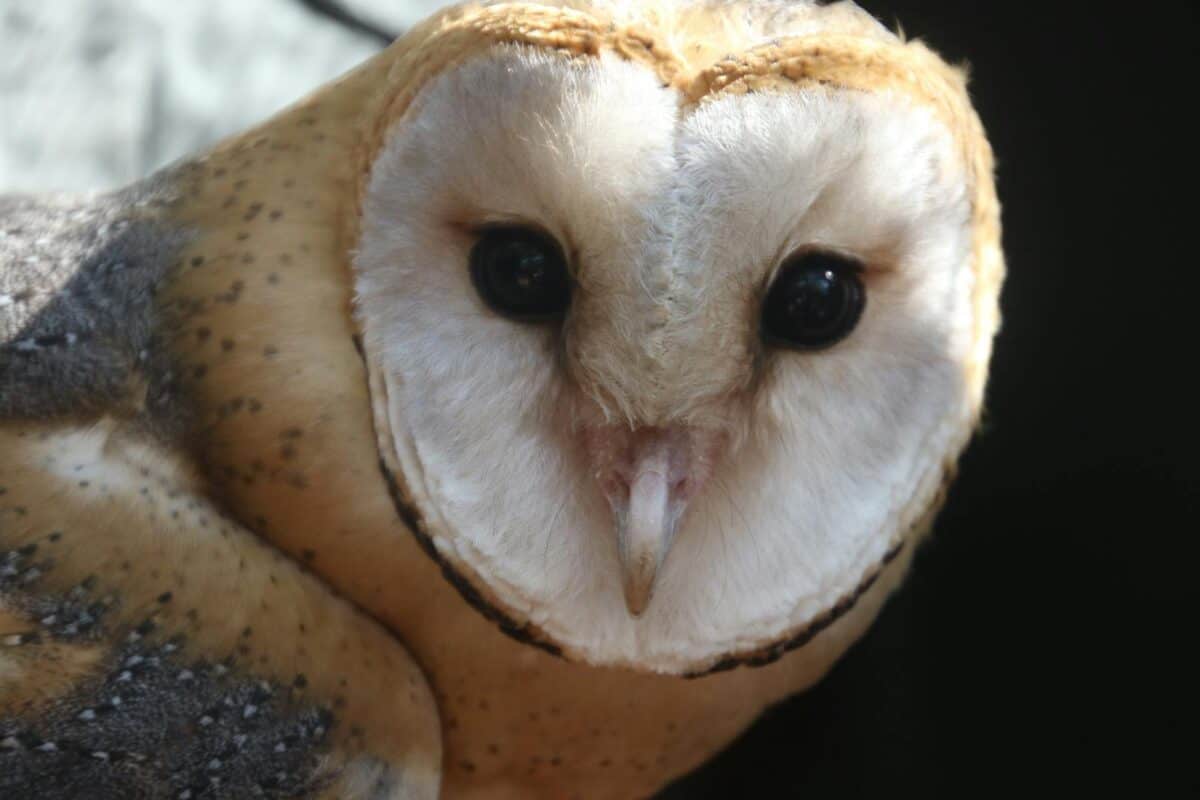
Understanding the barn owl’s extraordinary hunting capabilities has significant implications for conservation efforts. As agricultural intensification, habitat fragmentation, and rodenticide use have increased globally, barn owl populations have declined by an estimated 50% in parts of Europe and North America over the past century. This decline represents not just the loss of a remarkable evolutionary achievement, but also the removal of a critical ecosystem service provider. A single barn owl family can consume over 3,000 rodents annually, providing natural pest control valued at thousands of dollars per owl territory in agricultural settings. Conservation initiatives focusing on the installation of nest boxes in agricultural landscapes have shown promising results, with documented increases in both barn owl populations and natural rodent control. Recognizing the barn owl’s hunting superiority also highlights the importance of preserving the acoustic environment—limiting noise pollution that can interfere with the owl’s hunting capabilities. As we come to appreciate the perfection embodied in the barn owl’s hunting adaptations—adaptations that indeed put many other raptors to shame—we gain additional motivation to ensure this evolutionary marvel continues to hunt our night skies for generations to come.
Conclusion: Nature’s Unmatched Nocturnal Predator

When evaluating the full spectrum of adaptations that enable the barn owl’s hunting success, it becomes clear why this species stands apart even among the impressive roster of avian predators. While eagles may command the daytime skies with their power and falcons with their speed, the barn owl has evolved into perhaps the most perfectly adapted hunter for its ecological niche. Its combination of asymmetrical ears, facial disc, silent flight, specialized vision, remarkable head rotation, precision talons, cognitive abilities, and metabolic efficiency creates a predatory profile that achieves levels of hunting success rarely matched in the animal kingdom. The barn owl reminds us that evolutionary success is not always about being the largest or most visible predator, but rather about achieving the most perfect integration of adaptations for a specific predatory lifestyle. In the darkness of night, when most diurnal raptors are rendered ineffective, the barn owl reigns supreme—a testament to nature’s endless capacity for specialized perfection. Its hunting prowess truly does put other raptors to shame, not through competition, but through specialization in a domain where others cannot follow.

- Rare Shark Sighting Alarms Scientists Near Baja California - July 15, 2026
- 12 Deadliest Predators You’ll Find in US States - July 15, 2026
- This Newly Found Fox in New England Has Scientists Talking - July 15, 2026