


In the quiet world of plant life, an extraordinary discovery has emerged that challenges our understanding of these seemingly passive organisms. While plants don’t have ears in the traditional sense, research has revealed that some species can detect and respond to the sounds of being consumed. The common mustard plant, Arabidopsis thaliana, has demonstrated an ability to “hear” the vibrations of caterpillars eating its leaves and mount a chemical defense in response.
This remarkable capability suggests that plants possess a form of auditory perception that has evolved as a survival mechanism, allowing them to prepare for and defend against herbivory. As we delve into this fascinating phenomenon, we’ll explore how plants perceive sound, the scientific studies that have uncovered this ability, and what this means for our understanding of plant intelligence.
The Discovery of Plant “Hearing”

The groundbreaking research that first demonstrated plants’ ability to “hear” was conducted by a team of scientists at the University of Missouri in 2014. Led by Dr. Heidi Appel and Dr. Rex Cocroft, the study revealed that Arabidopsis thaliana could distinguish between the vibrations caused by wind or harmless sounds and those created by a caterpillar chewing on its leaves.
When the plants detected the feeding vibrations, they responded by producing more mustard oil, a chemical compound that deters caterpillars. This discovery fundamentally challenged the traditional view of plants as passive organisms incapable of sensing and responding to their environment in sophisticated ways. The study opened a new frontier in plant biology, suggesting that plants have evolved sensory mechanisms that allow them to perceive and react to their surroundings in ways previously thought impossible.
How Plants Perceive Sound Without Ears

Unlike animals, plants don’t have specialized organs for detecting sound. Instead, they use mechanoreceptors—cells sensitive to mechanical changes—to perceive vibrations. These receptors can detect minute movements and pressure changes, translating them into biochemical signals. In Arabidopsis thaliana, these mechanoreceptors are particularly sensitive to vibrations in the frequency range produced by feeding caterpillars (around 40-80 Hz).
The plant’s cells can detect these vibrations as they travel through tissues, triggering complex signaling pathways that ultimately lead to defensive responses. Interestingly, plants also possess structures called plasmodesmata, channels that connect plant cells and may facilitate the rapid transmission of these signals throughout the plant. This system allows plants to effectively “listen” to their environment without conventional hearing organs, demonstrating nature’s remarkable ability to evolve alternative solutions to sensory challenges.
The Arabidopsis Experiment: Methodology and Results

The landmark experiment by Appel and Cocroft involved exposing Arabidopsis thaliana plants to recordings of caterpillar feeding vibrations. Using specialized equipment, the researchers recorded the subtle vibrations produced by cabbage butterfly caterpillars as they chewed on leaves. They then played these recordings back to one group of plants by placing small piezoelectric actuators on the leaves, which converted the audio signals into physical vibrations that mimicked caterpillar feeding. A control group received similar treatment but with vibrations that didn’t match the feeding pattern.
Following this exposure, the researchers allowed actual caterpillars to feed on both groups of plants and measured the difference in caterpillar growth. The results were striking: caterpillars feeding on plants previously exposed to feeding vibrations grew up to 30% smaller than those feeding on control plants, indicating that the pre-exposed plants had increased their chemical defenses in anticipation of an attack. This experiment demonstrated not only that plants could detect specific vibrations, but that they could respond proactively to protect themselves from future damage.
Chemical Defense Mechanisms Triggered by Sound

When Arabidopsis thaliana “hears” the vibrations of a feeding insect, it initiates a sophisticated biochemical response. The plant increases production of glucosinolates, compounds that contain sulfur and nitrogen and are characteristic of the mustard family. When plant tissue is damaged, these glucosinolates mix with enzymes called myrosinases, creating toxic compounds that deter herbivores. This “mustard oil bomb” is an effective chemical defense mechanism that makes the plant less palatable and can even be toxic to some insects.
In addition to glucosinolates, plants exposed to feeding vibrations also produce more anthocyanins and other phenolic compounds that have both antioxidant properties and anti-herbivore effects. The plant’s ability to distinguish between threatening and non-threatening sounds allows it to activate these energy-intensive defense mechanisms only when necessary, conserving resources while maintaining readiness against potential attackers. This targeted response indicates a sophisticated level of sensory discrimination that helps plants survive in environments where they face constant threat from herbivores.
Beyond Arabidopsis: Other Plants with Sound Perception

While Arabidopsis thaliana has been the focus of the most well-known research on plant hearing, it’s not the only species that demonstrates this remarkable ability. Studies have shown that corn seedlings respond to sound vibrations by adjusting the growth direction of their roots. Similarly, pea plants appear to detect and move toward the sound of running water, a behavior that could help them locate moisture in the soil. Beach evening primrose has shown responses to the specific frequencies of buzzing bees, potentially preparing the plant for pollination.
Even trees demonstrate responses to sound: some species increase sap flow when exposed to certain frequencies, possibly as a stress response. These diverse examples suggest that sound perception may be widespread in the plant kingdom, though the specific mechanisms and evolutionary advantages may vary between species. As research in this field continues to expand, scientists expect to discover more plants with these capabilities, potentially revealing new dimensions of plant sensory perception that have remained hidden from human observation.
The Evolutionary Advantage of Acoustic Sensitivity

The ability to perceive and respond to sound vibrations offers plants several significant evolutionary advantages. In a world where they cannot flee from danger, early detection of threats becomes crucial for survival. By sensing the vibrations of feeding insects before extensive damage occurs, plants can activate defense mechanisms more quickly and effectively, reducing overall tissue loss. This preemptive defense strategy is particularly valuable since even a small reduction in leaf area can significantly impact a plant’s photosynthetic capacity and reproductive success.
Additionally, the ability to distinguish between different types of vibrations—such as those caused by wind versus those caused by herbivores—allows plants to conserve energy by only mounting defenses when truly necessary. From an evolutionary perspective, this selective pressure likely refined plants’ vibration sensitivity over millions of years, resulting in the sophisticated detection systems we observe today. The fact that this trait appears in multiple unrelated plant lineages suggests that acoustic sensitivity has evolved independently multiple times, underscoring its value as a survival strategy in the plant kingdom.
Plant Communication: From Sound Perception to Signaling
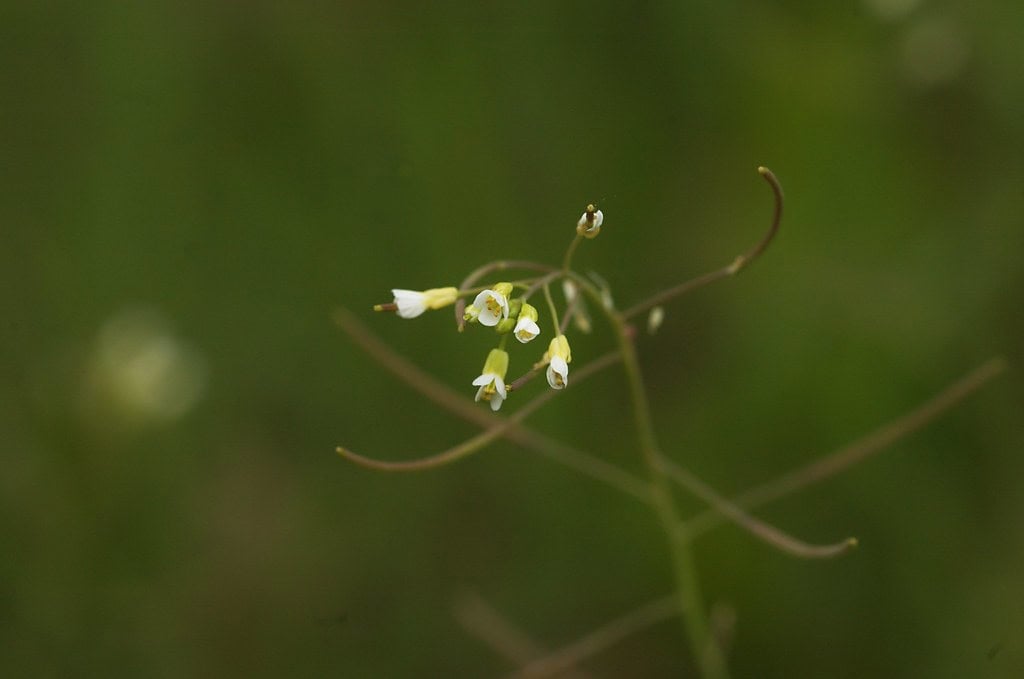
The discovery that plants can perceive sound vibrations adds another fascinating dimension to our understanding of plant communication. When threatened, plants don’t just respond individually; many species also warn neighboring plants of danger. When an Arabidopsis plant detects feeding vibrations, it not only prepares its own defenses but may release volatile organic compounds (VOCs) that serve as airborne warning signals to other plants. Nearby plants can detect these chemical messengers and preemptively activate their own defense systems before being attacked.
This communication network extends beyond plant-to-plant interactions. Some plants release VOCs that attract predatory insects that feed on herbivores, essentially “calling for help” from their allies. The integration of acoustic perception into this complex communication system demonstrates how plants have evolved multiple, complementary strategies for survival. This sophisticated signaling network challenges the traditional view of plants as simple organisms and reveals a hidden world of complex interactions happening constantly in forests, fields, and gardens around us. The ability to perceive sound thus serves not only as a direct defense mechanism but as a trigger for broader ecological communications.
Scientific Challenges and Controversies

The field of plant acoustics and bioacoustics is not without its scientific challenges and controversies. Some researchers remain skeptical about interpreting plants’ responses to vibration as a form of “hearing,” arguing that it represents a mechanical sensitivity rather than a true auditory capability. Critics point out that plants lack centralized organs for processing sensory information, making it difficult to compare their perception to animal hearing. Additionally, replicating studies on plant acoustic sensitivity requires highly specialized equipment to produce and measure the subtle vibrations involved, leading to methodological challenges and debates about experimental design.
Some scientists also question whether laboratory findings translate to natural environments where multiple vibrations occur simultaneously. Despite these challenges, the growing body of evidence supporting plants’ ability to detect and respond to specific sound vibrations continues to gain acceptance in the scientific community. As research techniques improve and more studies emerge, many of these controversies may be resolved. The field exemplifies how scientific understanding advances through a process of hypothesis testing, skepticism, and accumulating evidence, gradually revealing nature’s previously hidden complexities.
Practical Applications of Plant Acoustic Research

The discovery that plants can perceive and respond to sound vibrations opens up intriguing possibilities for practical applications in agriculture and conservation. Farmers could potentially use specific sound frequencies to trigger plants’ natural defense mechanisms, reducing the need for chemical pesticides. Some preliminary studies suggest that exposing crops to certain sound frequencies can increase growth rates, improve disease resistance, and enhance yield, though more research is needed to confirm these effects and determine optimal treatments.
In precision agriculture, sensors could monitor the acoustic signatures of pest infestations, allowing for early intervention before significant damage occurs. Beyond agriculture, this research may have implications for forest management and conservation, potentially helping to protect vulnerable ecosystems from invasive species. There’s even interest from the field of bioinspired engineering, where plant sensory mechanisms could inform the development of new types of sensors and materials. As our understanding of plant acoustics continues to grow, so too will the range of potential applications, offering promising new approaches to sustainable food production and environmental stewardship in an era of increasing ecological challenges.
Music and Plant Growth: Science or Myth?

The idea that playing music benefits plant growth has persisted in popular culture for decades, but how does this concept relate to plants’ ability to perceive sound vibrations? Scientific evidence on this topic presents a mixed picture. While some studies have suggested that certain sound frequencies can influence plant growth and development, many of these experiments lack the rigorous controls necessary for definitive conclusions. The mechanisms proposed for how music might affect plants typically involve the vibrations stimulating protein movement within cell membranes or influencing gene expression patterns.
What’s important to distinguish is that plants’ response to specific vibrations, like those from feeding insects, is fundamentally different from a generalized response to music. The former represents an evolved, adaptive capability tied directly to survival, while the latter, if it exists, would be incidental. Recent research using more controlled methodologies has shown that some sound frequencies can indeed influence plant growth parameters, but these are typically pure tones rather than complex musical compositions. As research in plant bioacoustics continues to advance, we may gain more definitive answers about whether your houseplants truly appreciate that classical music playlist—and if so, through what biological mechanisms this response occurs.
The Future of Plant Perception Research

The field of plant perception research stands at an exciting frontier, with new technologies enabling increasingly sophisticated investigations. Advanced imaging techniques now allow scientists to visualize electrical signals moving through plant tissues in real-time, potentially revealing how acoustic information is processed and transmitted. Genetic research is identifying the specific genes activated when plants detect feeding vibrations, which could lead to breeding crops with enhanced defensive responses. As interdisciplinary collaboration grows between plant biologists, physicists, and computer scientists, we’re likely to see more comprehensive models of how plants integrate multiple sensory inputs—including sound, light, touch, and chemical signals—to respond to their environment.
Some researchers are exploring whether plants might perceive sounds beyond the frequency range associated with immediate threats, potentially detecting signals from beneficial organisms like pollinators or even other plants. Perhaps most intriguing is the emerging field of plant neurobiology, which investigates whether plants possess something analogous to a nervous system. While plants lack neurons, they do have complex signaling networks that coordinate responses across the organism. As these research directions develop, our understanding of plant sensory capabilities will continue to evolve, likely revealing even more surprising aspects of plant biology that challenge our preconceptions about these remarkable organisms.
Rethinking Plant Intelligence

The discovery that plants can “hear” being eaten invites a profound reconsideration of plant intelligence and consciousness. While plants lack brains in the conventional sense, they exhibit many behaviors that suggest a form of intelligence: they can remember past events, learn from experience, make decisions based on multiple inputs, and communicate with other organisms. Their ability to perceive and respond specifically to feeding vibrations demonstrates a sophisticated environmental awareness previously unrecognized.
Some researchers in the field of plant neurobiology suggest that we should view plant intelligence not as a lesser version of animal intelligence, but as a different form altogether—one evolved to meet the unique challenges faced by organisms that cannot flee from danger. This perspective shift challenges the anthropocentric hierarchy that places animals above plants in terms of cognitive capacity. Instead, it suggests a more nuanced view where different organisms have evolved different but equally remarkable forms of intelligence suited to their ecological niches. As we continue to discover plants’ sensory capabilities, we may need to expand our very definition of intelligence to encompass the remarkable ways that plants perceive and respond to their world—a world that, as it turns out, they experience much more richly than we once believed.
Conclusion: The Hidden Sensory World of Plants

The remarkable discovery that plants can detect and respond to the sounds of being eaten reveals just how much remains to be learned about the sensory world of organisms we’ve long considered simple and passive. From the common mustard plant’s ability to distinguish between threatening and non-threatening vibrations to the sophisticated chemical defenses triggered by this perception, plants demonstrate an environmental awareness that challenges our fundamental understanding of these organisms.
This research not only transforms our scientific knowledge but also invites a philosophical reconsideration of our relationship with the plant kingdom. As we continue to unveil the hidden capabilities of plants—their ability to communicate, remember, learn, and now “hear”—we develop a deeper appreciation for the complexity and interconnectedness of life on Earth. Perhaps most importantly, these discoveries remind us of the humility required in science: many of nature’s most extraordinary phenomena remain hidden until we develop the right questions and tools to reveal them.

From exploring the marine wonders in the Azores and witnessing the vast savannas of Kenya, to delving deep into the rich biodiversity of South Africa and traversing iconic landscapes in Australia and the US like Yellowstone, Chris's experiences are vast.
With a penchant for diving alongside sharks, the ocean holds a special place in his heart.
Through his academic insights, he champions wildlife conservation, striving with 'Animals Around The Globe' to cultivate a profound connection between humans and animals, enhancing our mutual appreciation.
Connect with him at Feedback@animalsaroundtheglobe.com.
- Top 10 Baby Animals That Will Make You Go Aww - August 18, 2026
- The Best Places to See the Big 5 - August 18, 2026
- Best Places to Swim with Dolphins - August 18, 2026