
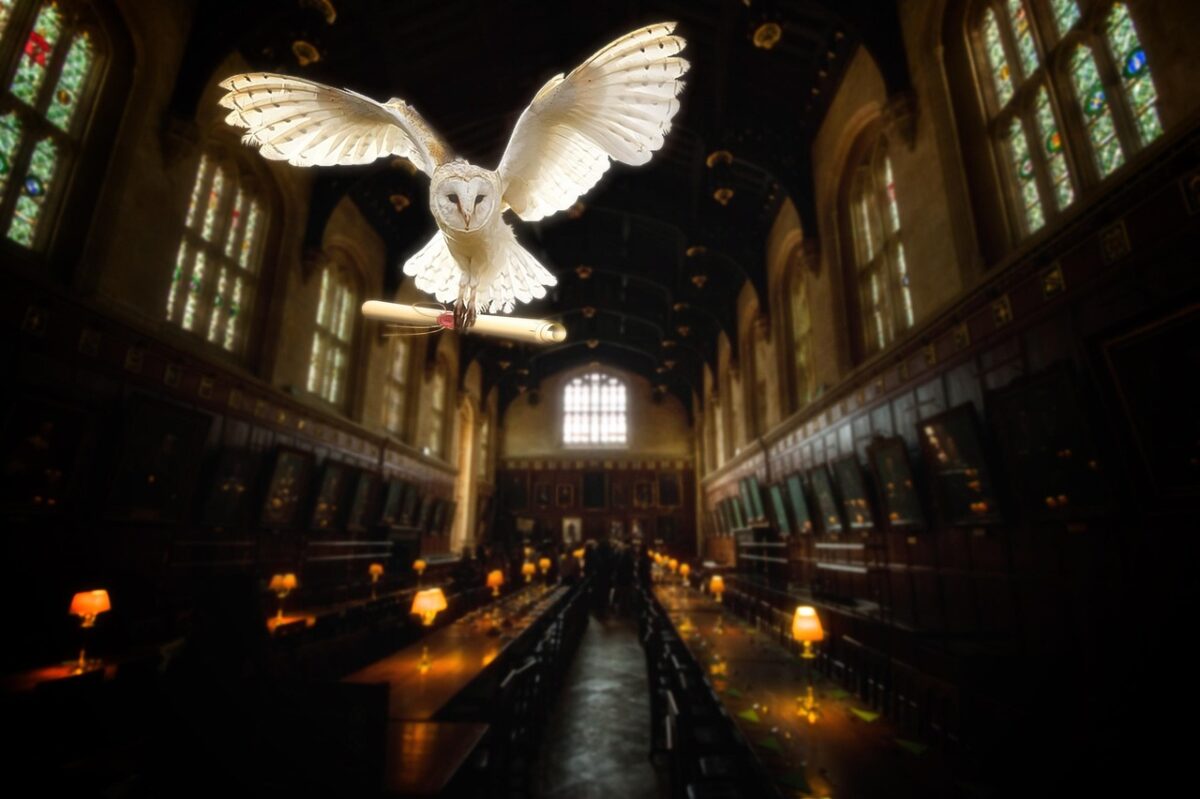
The magical world of Harry Potter gave us many unforgettable characters, and among them were some truly remarkable owls. From the loyal Hedwig to the clumsy Errol, these feathered friends captured our hearts and played crucial roles in the wizarding world’s communication system. But here’s something fascinating that most fans don’t realize: while J.K. Rowling created a magical universe, she based many of these owls on real species that exist in our world today. What makes this exploration even more intriguing is discovering how closely these fictional owls match their real-world counterparts – and where Rowling took creative liberties that would make any ornithologist chuckle. So let’s dive in and discover which Harry Potter owl comes closest to mimicking the behaviors, characteristics, and abilities of its real-life inspiration.
The Scientific Foundation Behind Magical Owls
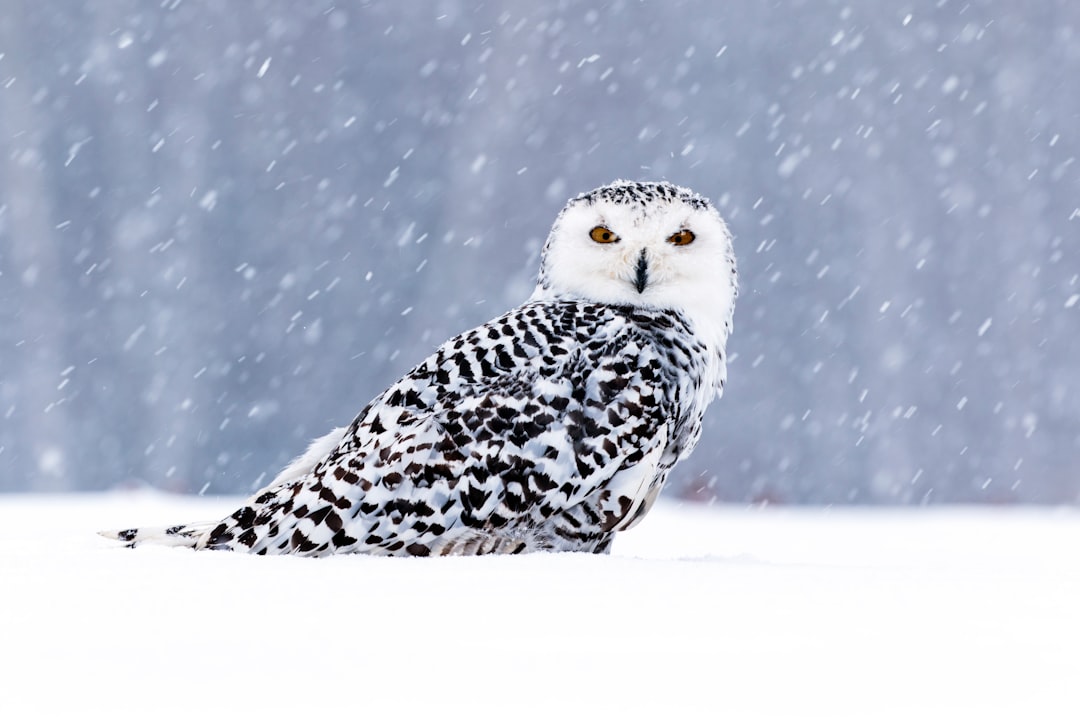
Owl breeds shown within the Harry Potter books include the eagle owl (large, tufted and fierce-looking, owned by Draco Malfoy); the Little Owl (tiny, cute, but perhaps not very impressive, like Pigwidgeon, owned by Ron); and the Snowy Owl, which is also known as the Ghost Owl (Harry’s Hedwig). Rowling didn’t just make up these owl types – she borrowed directly from existing species that ornithologists study every day. The fascinating thing about Rowling’s approach is that she acknowledged her mistakes after the fact. She made a few elementary mistakes when it came to her depiction of Hedwig. Firstly, Snowy Owls are diurnal (ie, they fly by day). Secondly, they are virtually mute, so Hedwig’s frequent hoots and chirrups of approval and comfort should be taken as signs of her magically enhanced abilities. Thirdly, as countless well-meaning owl-lovers and experts kept writing to her in the early days, owls do not eat bacon.
Hedwig: The Beloved Snowy Owl’s Real-World Reality
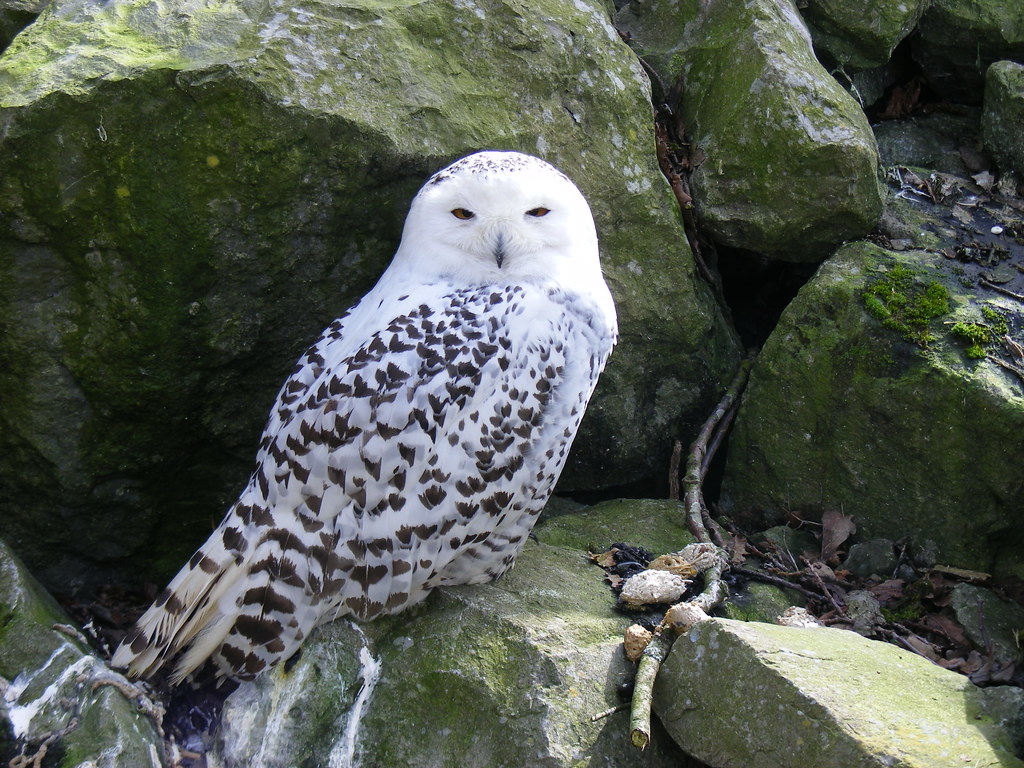
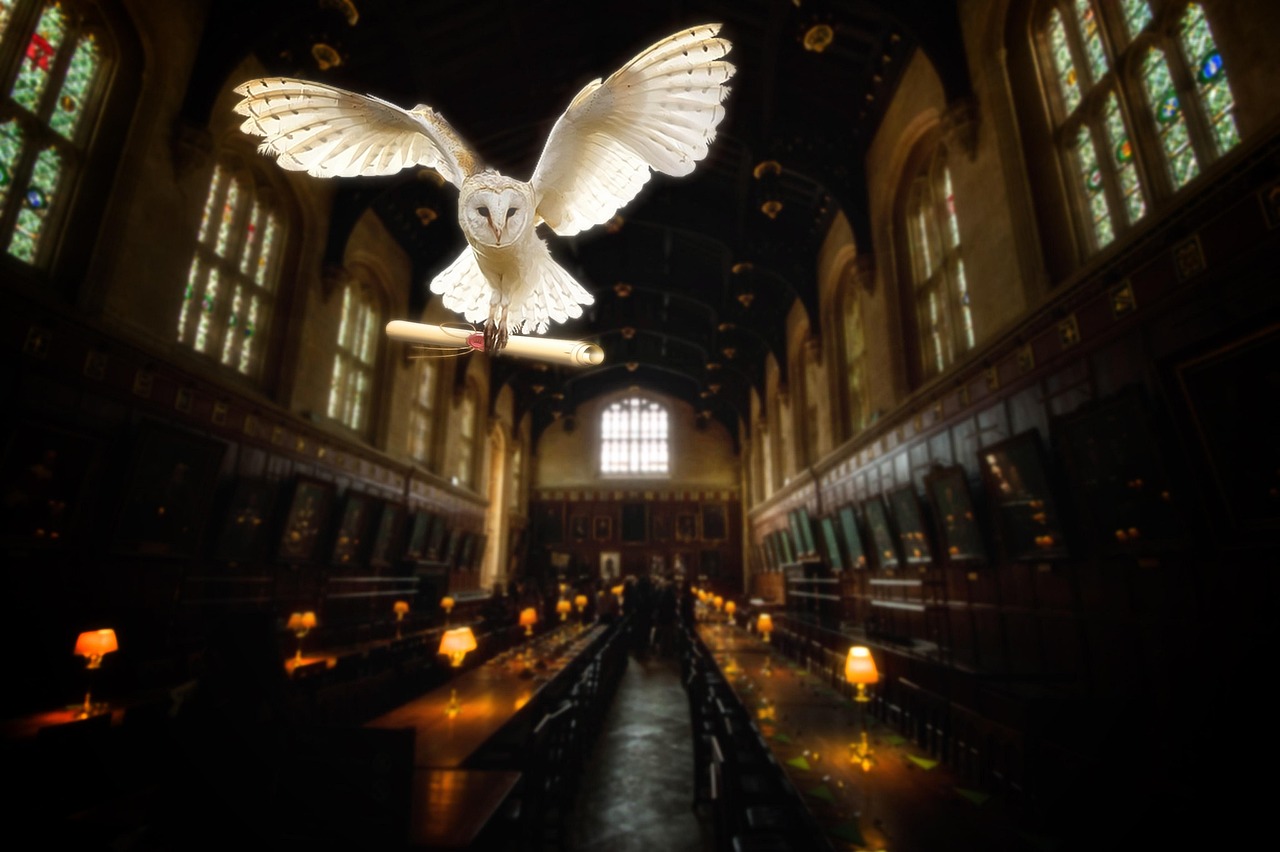
Harry’s faithful companion Hedwig is probably the most recognizable owl in popular culture, but she’s also one of the least accurate when compared to real Snowy Owls. Harry’s owl, Hedwig, is a beautiful Snowy Owl. Although Hedwig is portrayed as a female, “she” is actually a pure white, male Snowy Owl. Female Snowies are dusky brown. This detail alone shows how the movies prioritized visual appeal over biological accuracy. Real Snowy Owls are remarkable Arctic hunters with some unique characteristics that would surprise Harry Potter fans. The snowy owl does have some of the noise-canceling serrations and comb-like wing feathers that render the flight of most owls functionally silent, but they have fewer than most related Bubo owls. Therefore, in combination with its less soft feathers, the flight of a snowy owl can be somewhat audible at close range. The flight of snowy owls tends to be steady and direct and is reminiscent to some of the flight of a large, slow-flying falcon. Unlike Hedwig’s nighttime mail deliveries, Snowy Owls are awake and active during the day, making them quite different from most other owl species.
Draco’s Eurasian Eagle-Owl: A Perfect Villain’s Companion
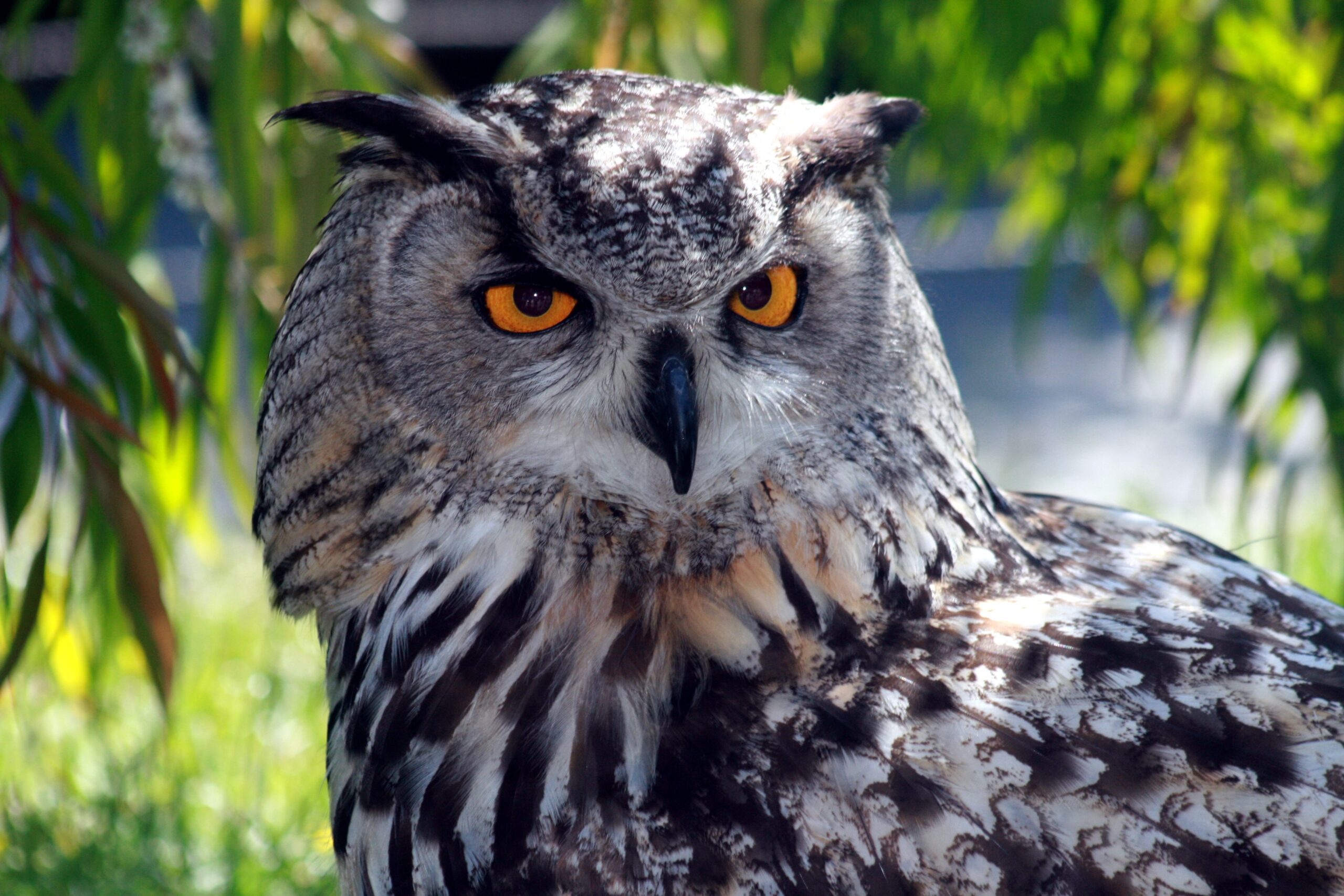
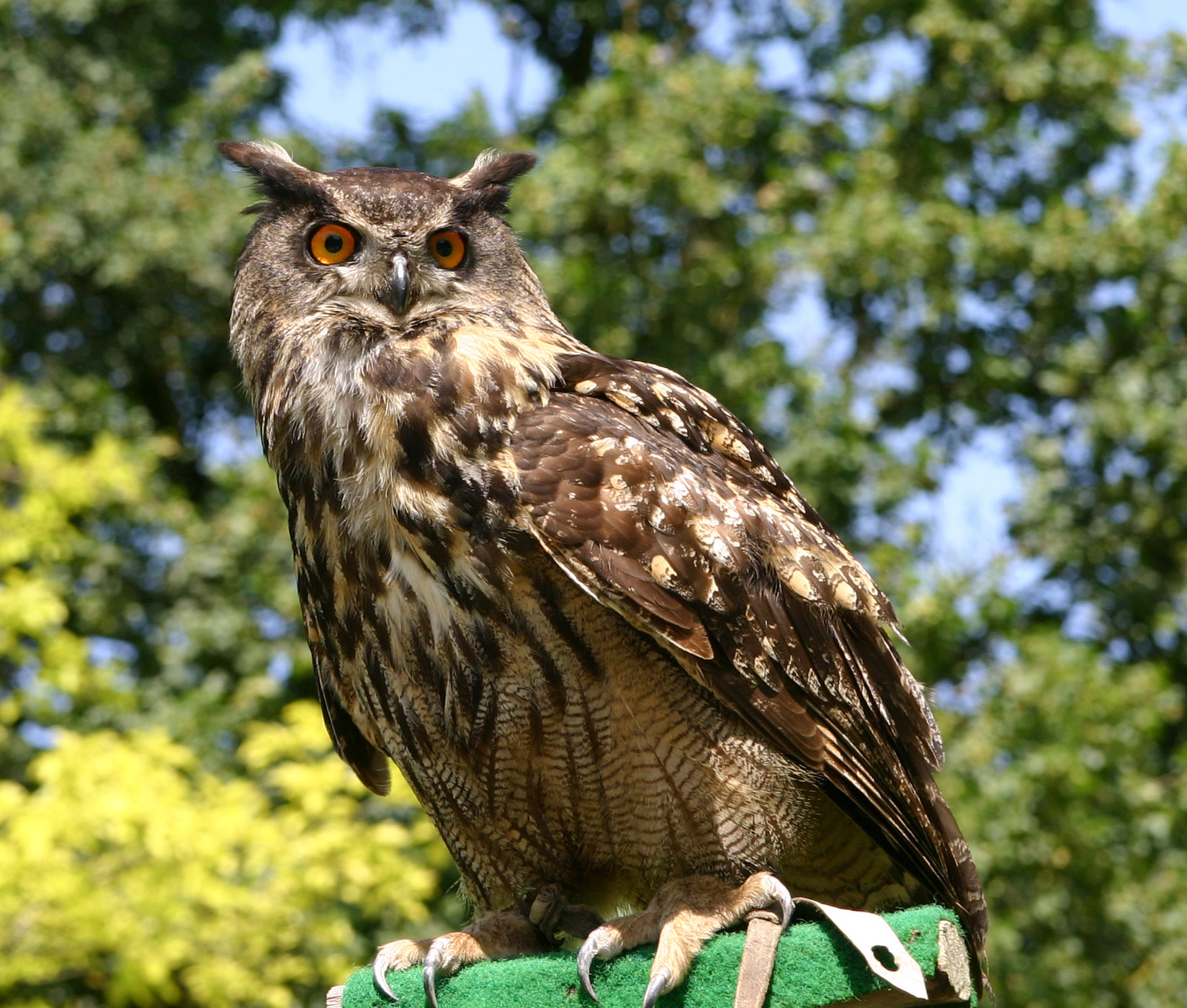
The evil Draco Malfoy, Harry’s rival, has the biggest owl of all in England, the Eurasian Eagle-Owl. With sinister orange-red eyes, he makes a perfect pet for a villain. This choice by Rowling was actually quite brilliant from both a storytelling and biological perspective. The Eurasian Eagle-Owl is genuinely impressive and somewhat intimidating in real life. The Eurasian Eagle-owl is among the largest owls in the world with a wingspan up to six feet. These magnificent birds are apex predators in their natural habitats. Like many raptors, these owls are top predators – they hunt other animals for food but no animals hunt them on a regular basis. For most top predators, their only threat is humans. Top predators, such as the Eurasian Eagle-owl, play an important role in nature by helping to control populations of prey animals and maintain a balance in the ecosystems where they live. What makes them particularly suitable for Draco’s character is their territorial nature and impressive hunting abilities. Eurasian eagle owls are solitary birds, except when paired for mating. They are generally monogamous with pairs typically staying together for life. Their hunting prowess is remarkable, as they mainly eat small mammals such as voles, rats, and rabbits, but also hunt woodpeckers, herons, and other birds, including other raptors. They also prey on amphibians, reptiles, fish, and insects.
Ron’s Pigwidgeon: The Tiny Powerhouse
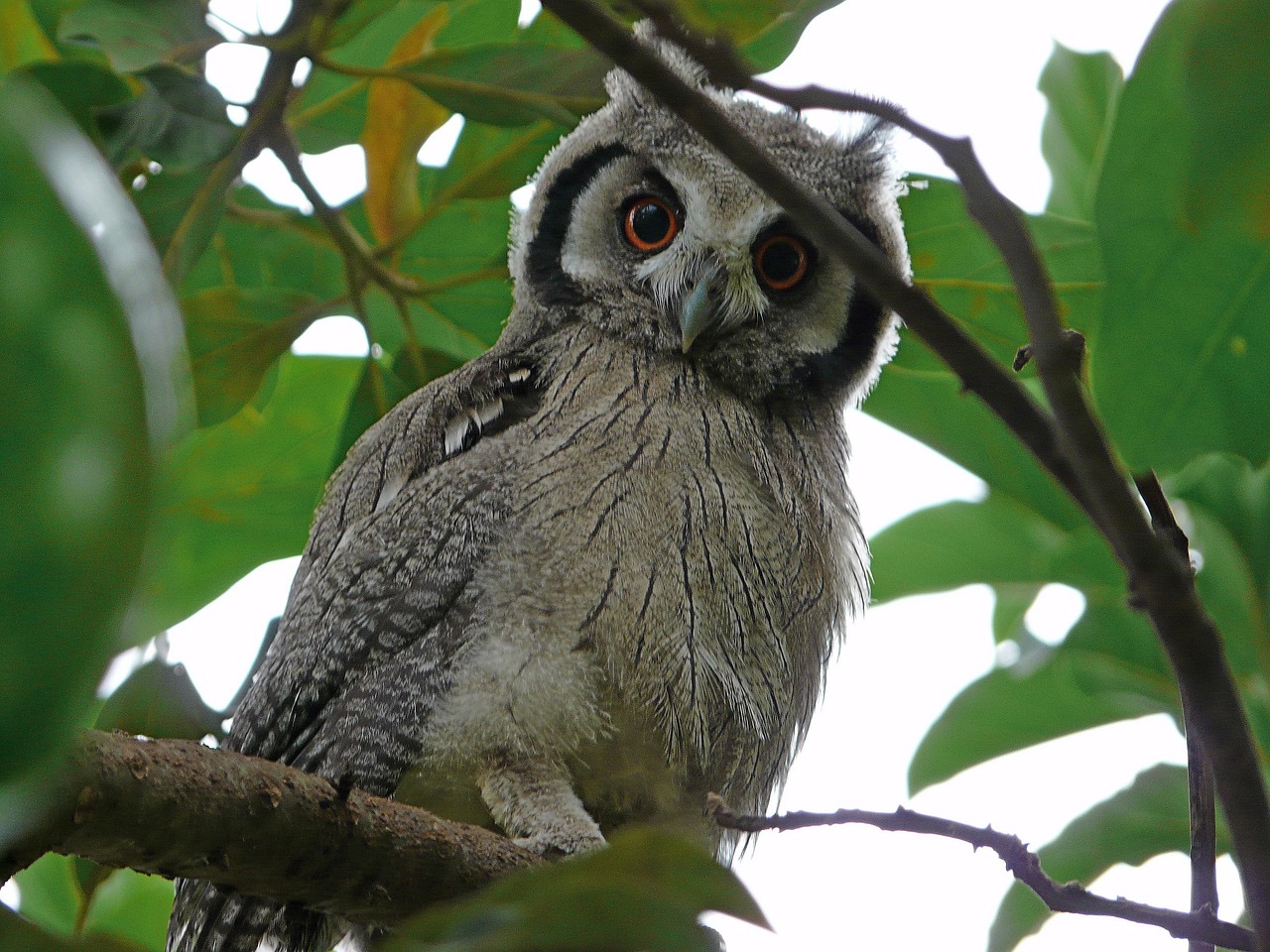
According to J.K. Rowling’s own website, and supported by Mary Grandpre’s lovely illustration in Chapter 22 of Harry Potter and the Prisoner of Azkaban, Pigwidgeon is a Eurasian (Common) Scops Owl. This owl, even tinier than a Little Owl and more closely related to the screech owls of America, has “ear tufts” – feathers that stick up on the head and look like ears. Sadly, movie fans never got to meet this energetic little character, which was a big disappointment to many others. Ron Weasley has an owl named Pigwidgeon – a Scops-Owl, strictly a bird of Europe and Northern Africa. The choice of a Scops Owl for Ron’s pet was quite fitting, as these tiny owls pack a lot of personality into their small frames. In the books, Pigwidgeon’s hyperactive and somewhat annoying behavior would match well with the energetic nature of real Scops Owls, which are known for their distinctive calls and active nighttime behavior.
The Weasley Family’s Errol: Aging Gracefully or Not So Much
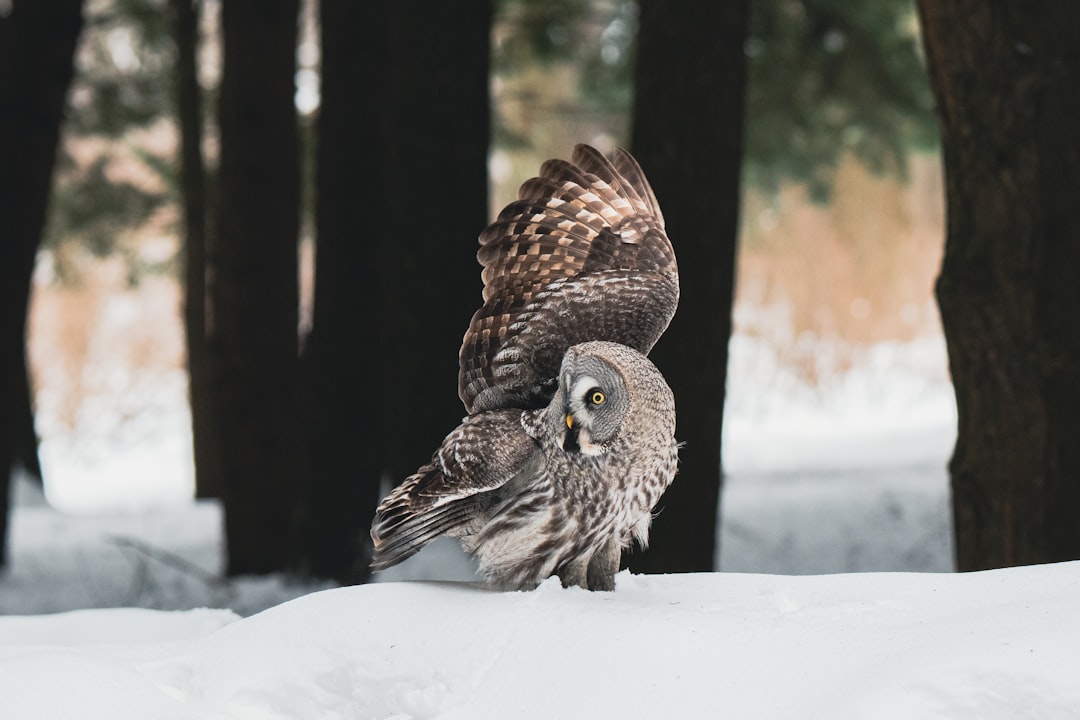
Poor old Errol, the Weasley family’s ancient Great Gray Owl, represents one of the more endearing but problematic characters in the series. He was a great grey owl, or Strix nebulosa. He was “ancient” by 1992, and his poor eyesight caused him to hit objects in flight. According to Harry Potter, he resembled a moulting feather duster. The choice of a Great Gray Owl for the Weasley family creates some interesting biological contradictions. The Great Gray Owl is the longest owl in the world. But even though they’re an inch or so longer than Snowy Owls and look just as big, they weigh much less than Snowy Owls – sometimes less than half! Also, their wingspan isn’t as long as that of Snowy Owls, probably because their wings don’t carry nearly as much weight. More problematically, Great Gray Owls aren’t found in Great Britain, making Errol’s presence there biologically impossible without magical intervention. Real Great Gray Owls are actually quite different from Errol’s bumbling portrayal. Real Great Gray Owls cannot carry very heavy items because they themselves are so light (usually less than 3 pounds!), and their feet are fairly weak. This actually makes Errol’s frequent mail-delivery failures more believable from a biological standpoint.
Little Owls in the Wizarding World
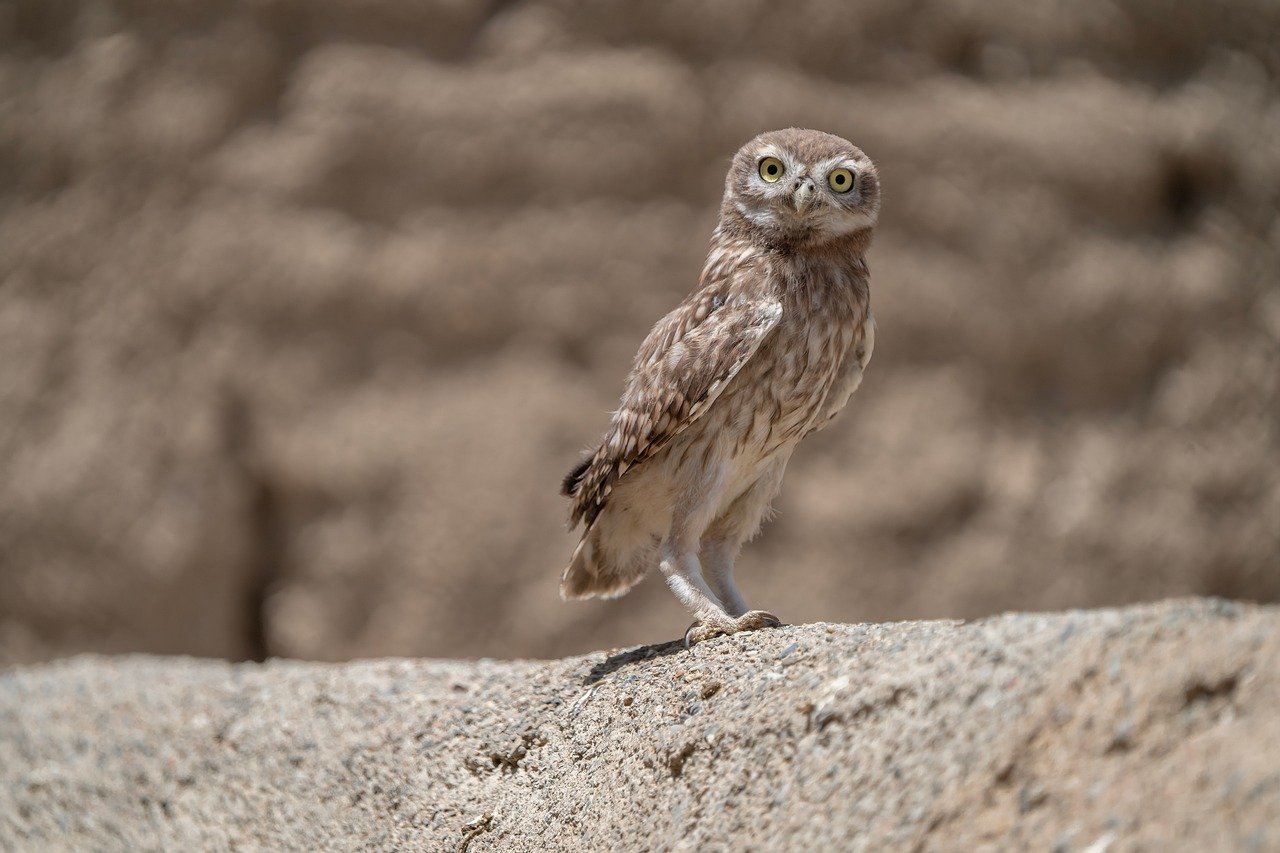
Some people have suggested that Pigwidgeon might be a Little Owl, one very small owl found in England. This owl’s scientific name is Athene noctua, and it is fairly common in much of its range, in southern and central Europe and Asia, and northern Africa. Little Owls aren’t native to England, but were introduced there in the 1870s-1880s. This detail shows Rowling’s attention to the historical accuracy of Britain’s owl populations. Little Owls have some interesting characteristics that would make them suitable for wizarding mail service. Like the Burrowing Owl, the Little Owl is found in open habitats, and is often active in the daytime as well as the night. The Little Owl often perches on posts and other look-outs. Like most tiny owls, the Little Owl eats many insects, which it can catch on the wing. Their ability to be active during both day and night would make them more versatile for magical mail delivery than strictly nocturnal species.
The Intelligence Factor: Magic vs. Reality
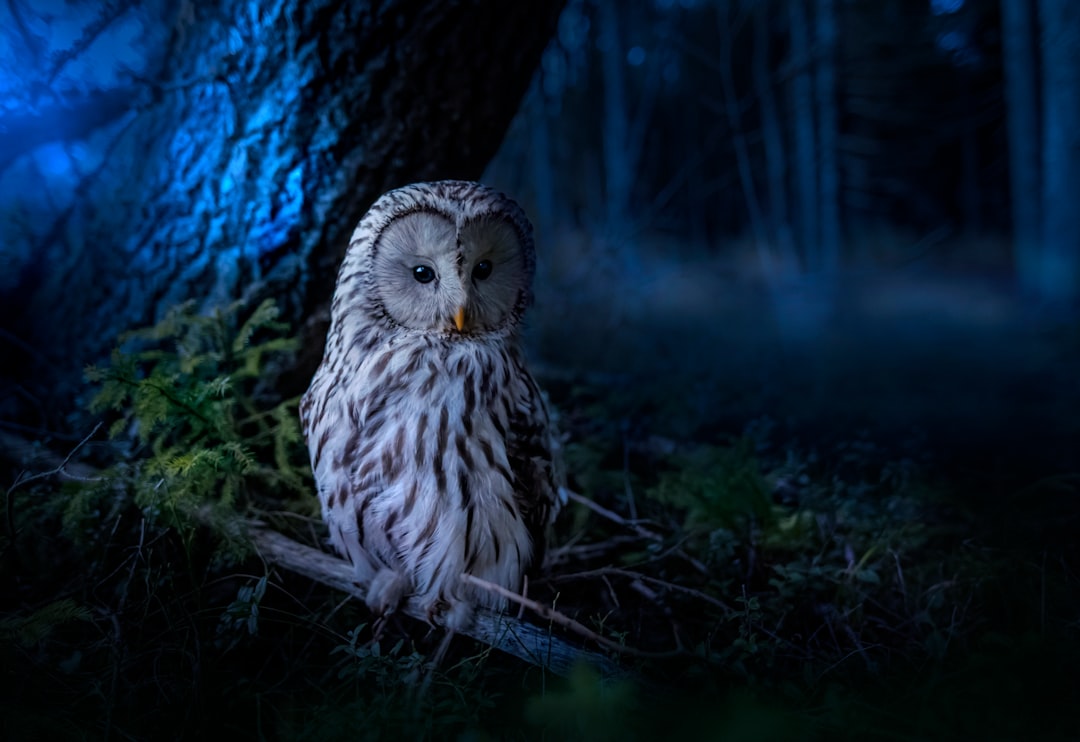
One of the most remarkable aspects of owls in the Harry Potter universe is their apparent intelligence and ability to understand human speech. In real life, owls are no smarter than any other bird; with some considering them to be of low intelligence, as a large portion of the head is taken up by the eyes. However, the books suggest that wizarding owls might have some magical enhancements. Wizarding owls have some magical powers and are generally very intelligent. It is clear they understand instructions in English, and they even seem to be able to read – generally wizards have only to write the name of the recipient on an envelope for owls to understand where to take it. This tracking ability goes far beyond anything real owls could accomplish, suggesting that the magical world has somehow enhanced these creatures’ natural abilities.
Regional Accuracy and Biological Constraints
Rowling’s choice of owl species reflects a mix of British wildlife reality and creative license. While some species like the Eurasian Eagle-Owl and Little Owl can actually be found in Britain, others were chosen for dramatic effect rather than geographical accuracy. They make it to Great Britain only in the magical world of Harry Potter, referring to Great Gray Owls. The author’s attention to some biological details shows her research, even when she chose to ignore others for story purposes. In reality, the brown owl and the tawny owl are the same species (Strix aluco), but the Harry Potter books treat them as different types of owl. This kind of creative liberty helped create a more diverse and interesting magical ecosystem.
The Winner: Draco’s Eurasian Eagle-Owl Takes Flight
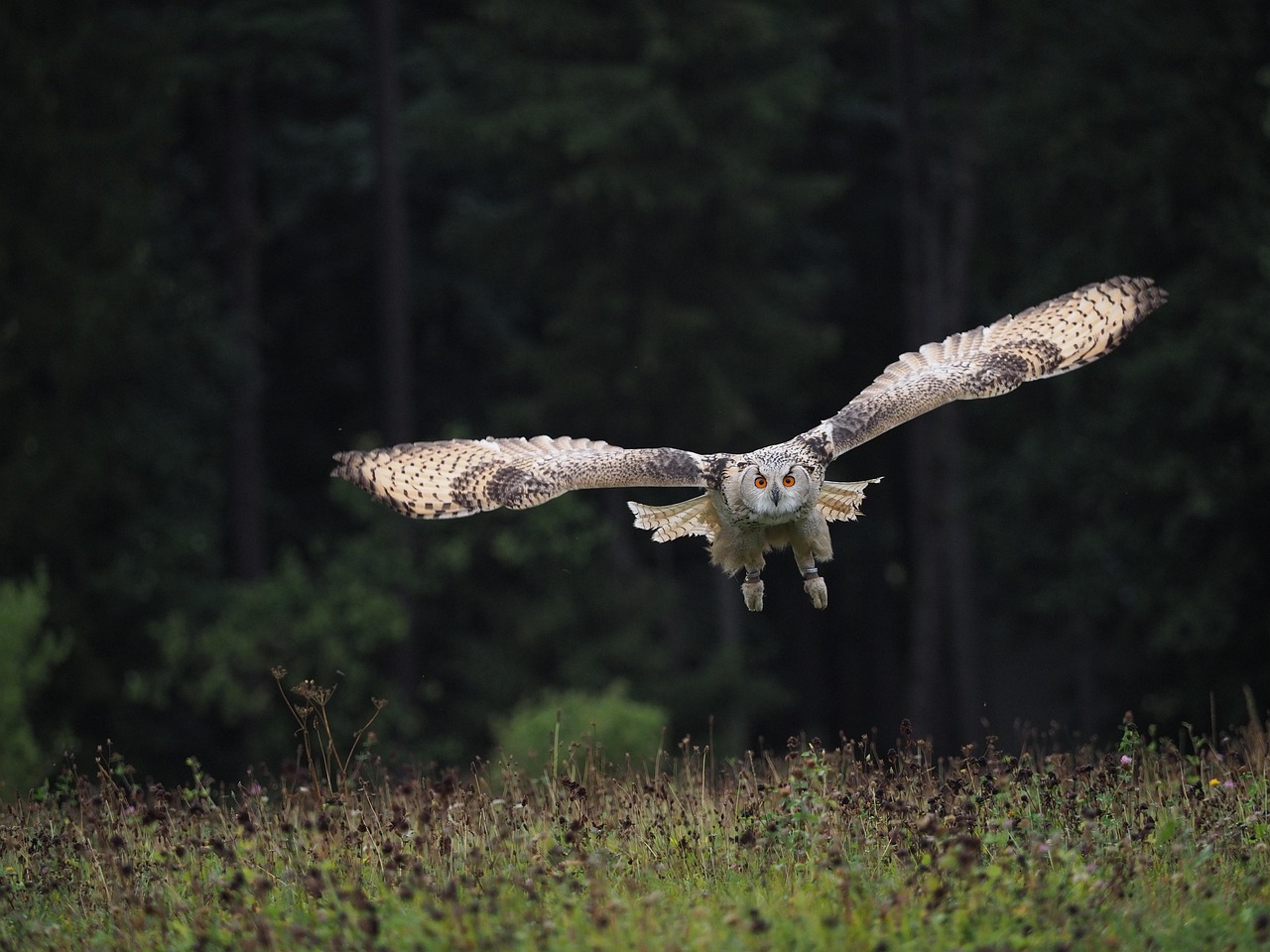
After examining all the major owls in the Harry Potter series, Draco Malfoy’s Eurasian Eagle-Owl emerges as the closest match to its real-world counterpart. Unlike Hedwig’s numerous biological inaccuracies or Errol’s impossible geographical presence in Britain, the Eurasian Eagle-Owl’s portrayal aligns remarkably well with the actual species’ characteristics and behaviors. Very large and powerful owl with obvious ear tufts, deep orange eyes, and finely streaked pale buffy underparts. Active mainly at night, but can be seen perched up on prominent lookouts at dusk, searching for prey. This description matches perfectly with how Draco’s owl is portrayed in the books – imposing, fierce-looking, and perfectly suited for a wealthy family that wants to make a statement. The behavioral traits also align well. These owls tend to be solitary but form monogamous pairs during mating season. They are quite territorial, and even more so during nesting season. This territorial and somewhat antisocial nature fits perfectly with the Malfoy family’s personality and their owl’s role in the story as an intimidating presence.
Conclusion
While J.K. Rowling took creative liberties with owl biology throughout the Harry Potter series, her choice of the Eurasian Eagle-Owl for Draco Malfoy represents the most accurate portrayal of a real owl species. From their impressive size and distinctive orange eyes to their territorial behavior and powerful hunting abilities, these magnificent birds embody everything Rowling wrote about Draco’s owl without requiring magical explanations for biological impossibilities. This accuracy makes the Eurasian Eagle-Owl not just the most realistic Harry Potter owl, but also a testament to how real wildlife can be just as impressive as any magical creature. The fact that these apex predators actually exist in our world makes them even more fascinating than their fictional counterpart. What do you think about the magical world reflecting our natural one so closely? Tell us in the comments.
