


Elephants stand as living monuments to evolution’s ingenuity, with their remarkable adaptations shaped by millions of years of environmental pressures. Among the most striking differences between the two surviving elephant species—African (Loxodonta) and Asian (Elephas)—are their distinctively shaped ears and divergent behavioral patterns. These differences aren’t merely cosmetic but reflect profound evolutionary adaptations to their respective habitats, climates, and ecological niches. While both species share a common ancestor from roughly 7.6 million years ago, they have since evolved into distinctly different animals with specialized features and behaviors. This article explores the fascinating evolutionary journey that has led to these differences, examining how geography, climate, and ecology have shaped these magnificent creatures into the distinct species we recognize today.
Evolutionary Divergence: How Two Species Emerged

The evolutionary paths of African and Asian elephants diverged approximately 7.6 million years ago when their common ancestor split into two distinct lineages. This separation occurred during the late Miocene epoch, a period of significant climate change and habitat transformation across Africa and Asia. As forests retreated and grasslands expanded, elephant populations became geographically isolated from one another, setting the stage for independent evolutionary trajectories.
The African elephant would later split again into two distinct species around 4 million years ago: the larger savanna elephant (Loxodonta africana) and the smaller forest elephant (Loxodonta cyclotis). The Asian elephant (Elephas maximus) developed as a separate species adapted to the diverse habitats of South and Southeast Asia. This long period of separation allowed natural selection to work independently on each population, gradually sculpting their physical features and behaviors to optimize survival in their respective environments—a perfect example of allopatric speciation in action.
The Remarkable Ear Difference: Size and Shape

Perhaps the most immediately noticeable difference between African and Asian elephants is the dramatic contrast in their ears. African elephants possess enormous ears that can span up to 6 feet across—roughly the size and shape of the African continent itself, a helpful identification feature. These massive ears extend far beyond the animal’s head and neck, creating a distinctive silhouette that’s unmistakable even from a distance. In contrast, Asian elephants have significantly smaller, rounded ears that rarely extend beyond the neck, giving them a more compact appearance.
This stark difference in ear morphology represents one of the clearest visual markers for distinguishing between the species. The shape difference is equally telling: African elephant ears typically have a more pointed lobe at the bottom that resembles the outline of Africa, while Asian elephant ears are more uniformly rounded and proportionally smaller relative to their head size. These distinct ear characteristics have evolved over millions of years in response to specific environmental pressures and thermoregulatory needs.
Thermal Regulation: How Ear Size Affects Body Temperature

The dramatic difference in ear size between African and Asian elephants primarily reflects their different thermoregulatory needs. African elephants evolved in the hot savannas and grasslands of Africa, where temperatures regularly soar above 100°F (38°C). Their massive ears function as efficient cooling devices, packed with a network of blood vessels close to the skin surface. When an African elephant flaps its ears, blood flowing through these vessels is cooled as heat dissipates into the surrounding air—functioning much like a car radiator.
Asian elephants, evolving primarily in more forested, sometimes mountainous regions with more moderate temperatures and higher humidity, didn’t develop the same extreme need for heat dissipation. Research suggests that an African elephant can reduce its body temperature by up to 10°F (5.5°C) through ear-flapping alone. Scientists have calculated that African elephant ears can dissipate up to 100 times more heat than they would generate without these specialized structures. This remarkable adaptation allows them to remain active during the heat of the day in their harsh savanna environment, while Asian elephants often seek shade during peak temperatures.
Habitat Influence: Forests versus Savannas

The contrasting habitats of African and Asian elephants have profoundly shaped not just their ears but their entire morphology and behavior. African elephants, particularly the savanna species, evolved in open grasslands and savannas where visibility extends for miles and predator detection relies heavily on sight and sound. Their larger ears not only help with cooling but also with detecting subtle sounds across vast distances. The open habitat also allowed for the evolution of larger body size, as maneuverability through dense vegetation wasn’t a primary concern.
Asian elephants, by contrast, evolved primarily in more densely vegetated environments ranging from tropical forests to scrubland. In these habitats, smaller ears presented less risk of getting caught or damaged by branches while moving through dense foliage. The forest environment also created different selective pressures regarding food sources, social structures, and predator avoidance strategies. These habitat differences explain why Asian elephants are generally more comfortable in forests and why African elephants have adapted to thrive in more open landscapes—though both species can utilize a range of habitats within their respective ranges.
Size and Structural Differences Beyond Ears

The differences between African and Asian elephants extend well beyond their distinctive ears. African elephants are generally larger, with savanna elephants standing 11-13 feet tall at the shoulder and weighing 8,000-13,000 pounds. Their Asian counterparts typically reach 6.5-11.5 feet and weigh 4,500-11,000 pounds. The African elephant’s back forms a distinctive concave or saddle-shaped profile, while the Asian elephant’s back is convex or dome-shaped. Even their heads differ noticeably: African elephants have fuller, more rounded foreheads, while Asian elephants display a twin-domed head with an indentation in the middle.
Tusk development varies significantly between the species as well. In African elephants, both males and females typically grow tusks. However, among Asian elephants, only males consistently develop tusks, and even then, many males in certain populations are tuskless. When present, the tusks of African elephants tend to be larger and more curved. The trunk also shows subtle but important differences, with African elephants having two finger-like projections at the tip for grasping objects, while Asian elephants have just one finger-like projection, leading to slightly different feeding techniques and object manipulation abilities.
Social Structures and Herd Dynamics

The social organizations of African and Asian elephants reflect both their evolutionary history and environmental adaptations. African elephants typically form larger, more fluid social groups centered around maternal family units led by the oldest female, or matriarch. These family units often join with other related groups to form clans or bond groups that can number 50 or more individuals during certain seasons. The matriarch’s experience and knowledge—particularly regarding water sources, migration routes, and predator avoidance—is crucial for the herd’s survival in the sometimes harsh and unpredictable savanna environment.
Asian elephant social structures tend to be smaller and somewhat less rigid, with typical family units consisting of 8-20 related females and their offspring. Their forest habitat, with more reliable year-round food and water sources, doesn’t necessitate the same extensive knowledge networks required for survival in African savannas. Interestingly, research suggests Asian elephants demonstrate greater behavioral flexibility, with females sometimes choosing to forage alone or in small groups depending on resource availability. Male elephants of both species typically leave their natal herds during adolescence, but African elephant males may form bachelor groups while Asian males are more likely to remain solitary or form temporary associations.
Communication Differences: Vocal and Non-vocal

The different ear sizes between African and Asian elephants influence not just their cooling abilities but also their communication capabilities. African elephants, with their larger ears, can detect infrasonic sounds (below human hearing range) from greater distances—up to several miles in ideal conditions. These low-frequency rumbles allow them to coordinate movements across the vast expanses of the savanna. Research has documented over 70 distinct vocalizations in African elephants compared to about 30 in Asian elephants, suggesting a more complex vocal communication system potentially linked to their more fluid social structures.
Asian elephants, while also using infrasonic communication, appear to rely more heavily on visual and tactile signals within their more densely vegetated habitats where sound transmission is more limited. They display a rich repertoire of trunk touches, body postures, and visual displays particularly important in dense forests where visibility is restricted. Studies of captive elephants suggest Asian elephants may exhibit greater facility with tool use and problem-solving in certain contexts, which some researchers hypothesize may relate to different selective pressures in their more complex forest environments, though this remains an area of ongoing research.
Feeding Behaviors and Dietary Preferences

African and Asian elephants have evolved different feeding strategies that reflect their distinct habitats and available vegetation. African elephants are primarily grazers in open savannas, though they’re adaptable mixed feeders. Their diet consists of roughly 70% grasses in many populations, supplemented by browsing on trees and shrubs. Their larger body size and higher energy requirements mean an adult African elephant can consume 300-600 pounds of vegetation daily. They use their tusks extensively for stripping bark from trees, digging for water and roots, and sometimes toppling entire trees to access otherwise unreachable foliage.
Asian elephants, adapted to more forested environments, are predominantly browsers, with grasses making up only about 15-30% of their diet in most habitats. They consume a more diverse array of plant species—up to 112 different plant species have been documented in the diet of some populations—and show a particular preference for bamboo where available. Their feeding strategy tends to be less destructive to large trees compared to their African counterparts, though they still modify their habitat significantly. An adult Asian elephant typically consumes 200-400 pounds of vegetation daily and spends 12-18 hours feeding, depending on food quality and availability.
Intelligence and Problem-Solving Abilities
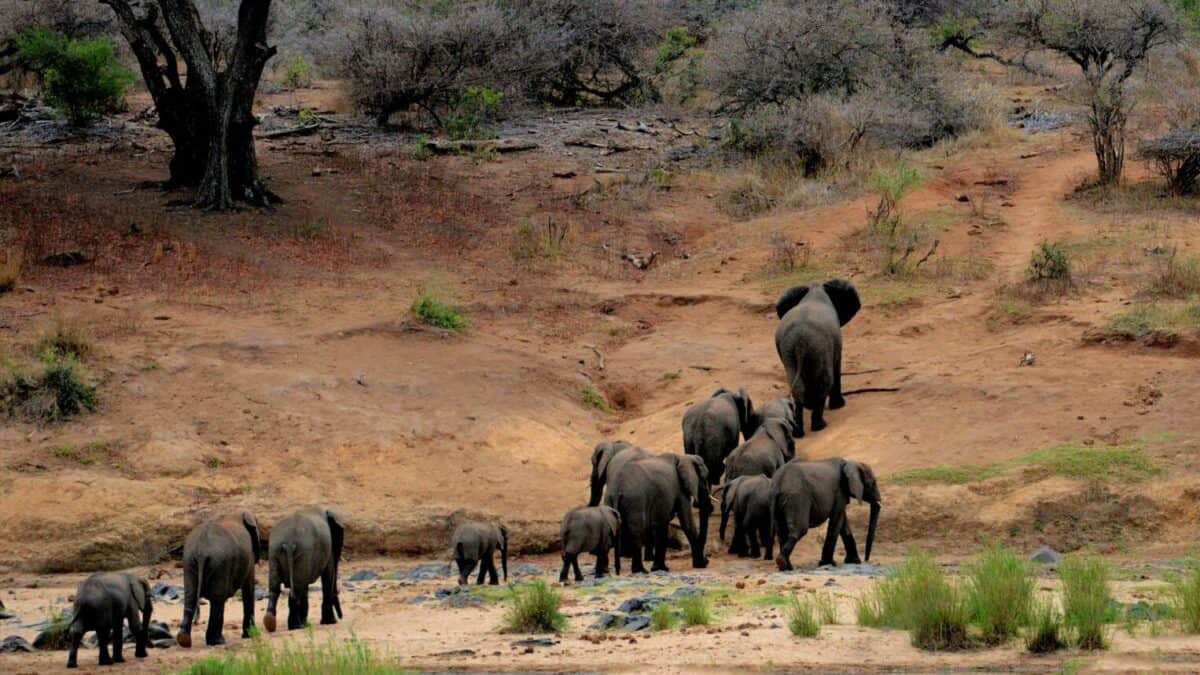
Both African and Asian elephants display remarkable intelligence, but research suggests subtle differences in their cognitive specializations. Asian elephants have demonstrated exceptional performance in cooperative problem-solving tasks, where individuals must work together to retrieve a reward that neither could access alone. In controlled studies, Asian elephants outperformed chimpanzees on certain cooperative tasks, showing an intuitive understanding of when cooperation is necessary. They also excel at tool manipulation, using branches to swat flies or scratch inaccessible body parts, and have been observed modifying tools for specific purposes.
African elephants, while also highly intelligent, appear to particularly excel in spatial memory and navigation—crucial adaptations for their vast home ranges and sometimes unpredictable resources. Studies show they can remember the locations of hundreds of water sources across thousands of square miles and can track the movements of up to 30 different family groups, remembering which individuals belong to which groups. Both species show self-awareness (recognizing themselves in mirrors), empathetic behaviors toward distressed herd members, and complex problem-solving abilities, cementing their reputation as among the most intelligent non-human animals. These cognitive differences likely reflect the different ecological challenges each species faced throughout their evolutionary history.
Water Interaction and Swimming Behaviors
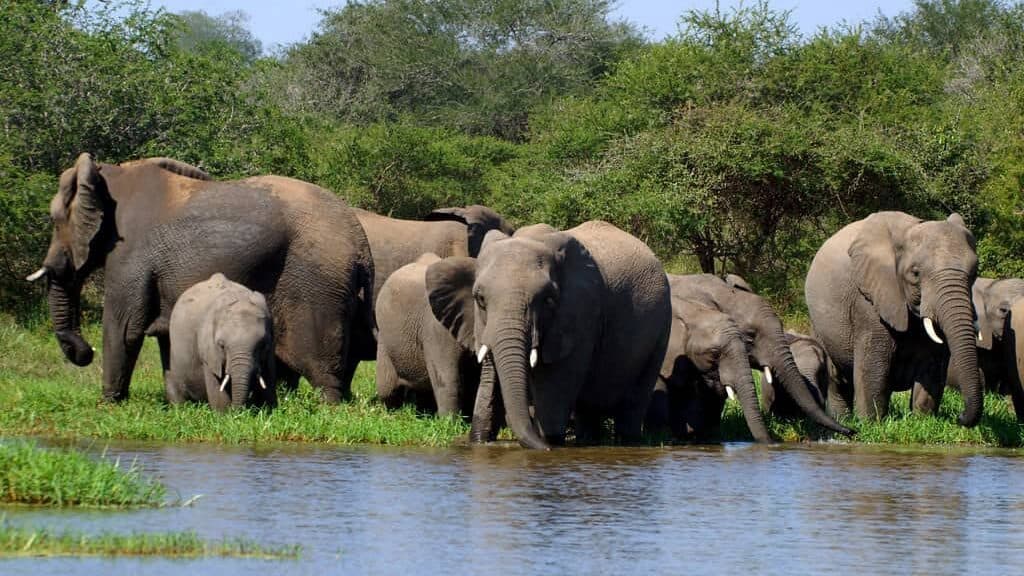
The relationship with water differs markedly between African and Asian elephants, influenced by their evolutionary history and habitat availability. African elephants, particularly those in arid regions, have evolved exceptional abilities to locate water, including sensing underground water sources and digging wells up to three feet deep with their trunks and feet. During droughts, they undertake spectacular migrations spanning hundreds of miles to reach reliable water sources, guided by the matriarch’s memory of traditional water routes. When water is plentiful, they engage in elaborate bathing rituals, spraying themselves thoroughly and teaching calves these important cooling behaviors.
Asian elephants, evolving in regions with more consistent rainfall and perennial rivers, developed a stronger affinity for deep water. They are excellent swimmers who readily cross deep rivers and lakes, using their trunks as natural snorkels while completely submerged. In parts of Southeast Asia, Asian elephants have been observed swimming between islands, sometimes several miles apart. Their forest habitat often features more predictable water sources, so they typically don’t need to undertake the extreme water-seeking migrations observed in some African elephant populations. This closer relationship with deep water may explain why Asian elephants have historically been more successfully domesticated for river work and logging operations compared to their African counterparts.
Conservation Challenges and Population Status

Both African and Asian elephants face severe conservation challenges, though the specific threats differ somewhat between the species. African elephants have been devastated by ivory poaching, with population estimates showing a decline from approximately 10 million a century ago to roughly 415,000 today. The savanna elephant is classified as Endangered while the forest elephant is Critically Endangered according to the IUCN Red List. Their expansive habitat requirements bring them into frequent conflict with expanding human populations, particularly farmers whose crops present an irresistible food source for these intelligent animals.
Asian elephants face an even more precarious situation, with only 40,000-50,000 remaining in the wild—less than a tenth of the African elephant population. Classified as Endangered, Asian elephants contend with the most severe habitat fragmentation of any megafauna, with their range reduced by over 85% historically. Their forest habitats are disappearing at alarming rates due to logging, palm oil plantations, and human development. Additionally, because only male Asian elephants typically develop tusks, poaching has created severely skewed sex ratios in some populations, further threatening reproductive potential. Conservation strategies for both species must address these distinct challenges while acknowledging the cultural significance elephants hold in many human societies across Africa and Asia.
The remarkable differences between African and Asian elephants—from their distinctive ears to their complex social behaviors—illustrate the profound impact of environmental adaptation over evolutionary time. These differences are not random but represent specific solutions to the unique challenges presented by their respective habitats over millions of years of separate evolution. The larger ears of African elephants provide crucial cooling in hot savanna environments while enhancing their ability to detect sounds across vast distances, advantages not as critical for forest-dwelling Asian elephants. Similarly, their different social structures, feeding strategies, and communication methods all reflect adaptations to their distinctive ecological niches.
Understanding these adaptations offers valuable insights not just about elephant biology but about evolution itself, demonstrating how similar animals can develop dramatically different features when exposed to different selective pressures. As we work to conserve these magnificent creatures for future generations, this knowledge helps inform habitat protection strategies and conservation approaches tailored to each species’ unique needs. By appreciating the evolutionary story written in the differences between African and Asian elephants, we gain a deeper understanding of nature’s remarkable ability to craft specialized solutions to environmental challenges—a lesson in adaptation that resonates far beyond elephantology.

- 21 Scary Creatures You Might Run Into While Hiking In The U.S - June 3, 2026
- The Difference Between Turtles and Tortoises—Explained - June 3, 2026
- What Makes Owls the Silent Predators of the Night? - June 3, 2026