
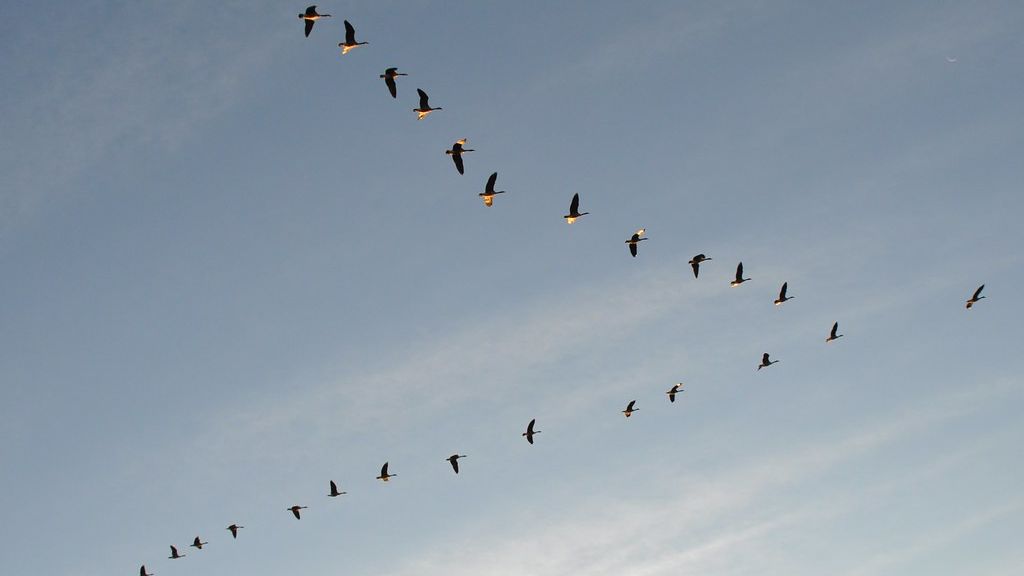
Every autumn, you look up and there they are. A perfectly shaped ‘V’ cutting silently across a gray sky, dozens of geese moving together like one living, breathing machine. It’s one of those sights that feels almost too elegant to be accidental. And honestly, it isn’t accidental at all.
What looks like a beautiful natural spectacle is actually one of the most sophisticated aerodynamic strategies in the animal kingdom. There’s hard science behind every flap, every position, every honk you hear from above. So let’s dive in, because what you’re about to learn might just change the way you look at the sky forever.
The Invisible Force That Makes It All Work: Upwash
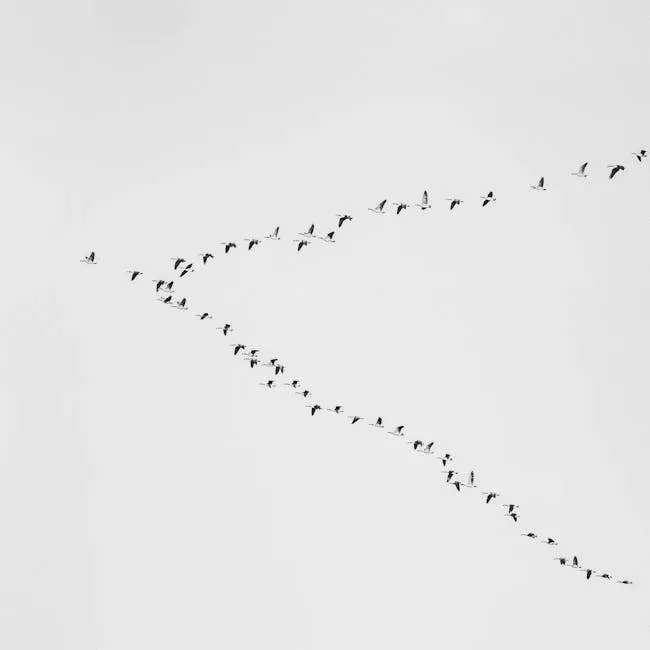
Here’s the thing most people don’t know: the ‘V’ isn’t just about staying organized. It’s about riding an invisible river of air. Each bird generates a wake of air behind and beneath its wings, similar to a small vortex. A following bird flies about a metre behind and to the side, positioning itself just outside this vortex, gaining upward lift from the air currents created by the bird in front.
Think of it like drafting in cycling, where a rider tucks behind another to cut through less wind. This aerodynamic trick reduces air resistance and makes flying easier, like drafting in cycling or car racing. The physics are almost identical, just happening hundreds of feet above your head.
Birds with large wingspans, like geese and cranes, produce an exceptionally strong upwash. It is this upwash that provides the bird additional lift for their flapping, thus conserving energy. Smaller birds simply can’t generate enough upwash to make the formation useful, which is why you never see sparrows doing this.
The upwash is caused by the birds’ wing tips. Flying just off-center, to either the left or the right of the bird in front, has the greatest rewards. Flying directly behind another bird, in a straight line, would actually be far less effective.
What the Numbers Actually Tell Us
Scientists have been studying this formation for decades, and the data is genuinely jaw-dropping. I think most people assume it’s a modest energy saving, maybe a small improvement. It’s much more than that.
In 2001 scientists fitted pelicans with heart-rate monitors and showed that birds flying at the back of a V-formation had lower heart rates and so were using less energy. It’s thought that flying in a V like this can increase the range of large migrating birds like geese by up to 70% compared to flying solo. Seventy percent. That is not a minor efficiency gain, that is the difference between surviving a migration and not.
A 2025 study published in Physics of Fluids demonstrates that the trailing bird improves its aerodynamic efficiency by 32% when positioning its wingtip in the upwash region of the leading bird’s wingtip vortex. Furthermore, wingbeat synchronization between the leading and trailing birds is confirmed as crucial for energy gain.
Resultant data showed that when the birds aligned in a V formation, their heart rates decreased by 10%, using considerably less energy and getting more mileage. The data also showed that the birds beat their wings less frequently and could glide for longer periods when they flew as a group. Less effort, more distance. Nature figured out fuel efficiency long before engineers did.
The Art of the Wingbeat: Timing Is Everything
Here’s where it gets genuinely mind-bending. The position in the formation is only half the story. The timing of each wing flap matters just as much, and the precision involved is almost hard to believe.
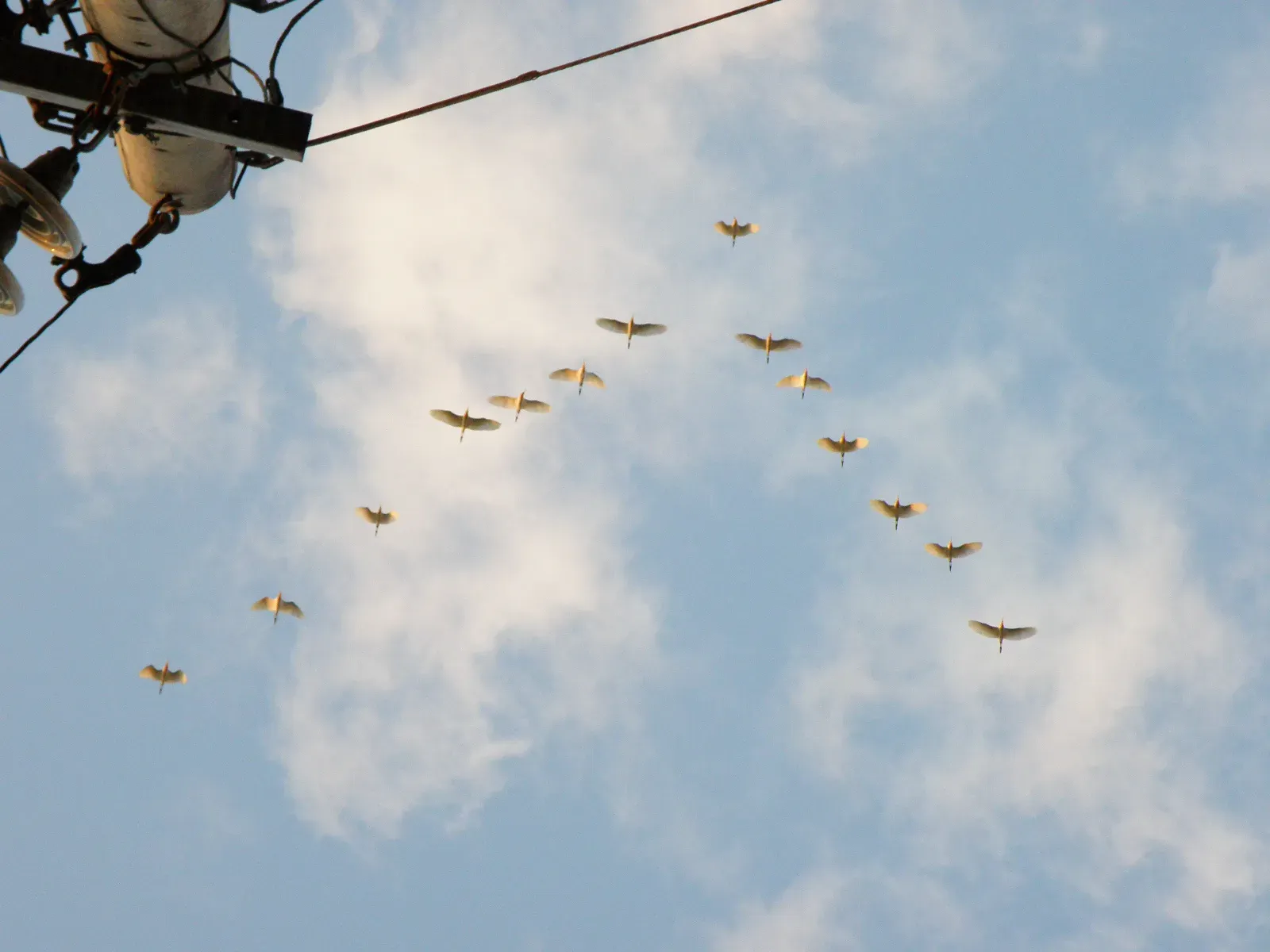
Flying in V formation is not only about position but also about the timing of flapping. The birds behind will sync with the flapping pattern of the leading bird to follow the trail of upwash left by the bird at front. It is observed that a bird will reverse the flapping pattern when flying directly behind another, in order to avoid the downwash.
To take maximum advantage of the V’s aerodynamics, each bird would have to position its wing in the upward-moving part of the vortex of air swirling off the end of the wingtip of the bird in front. But that vortex moves up and down because the bird in front is flapping. So the bird behind must not only put itself in the right place, but must also flap at just the right time, which changes depending on the distance between the birds, to keep riding the upwash.
Research suggests that energy saving could be increased by 20% when wing flapping is performed optimally in a spatial phase compared to out-of-phase wing flapping. Twenty percent more savings just from getting the timing right. It’s like a perfectly rehearsed orchestra, except no one handed out sheet music.
Leadership, Fairness, and the Goose That Carries the Load
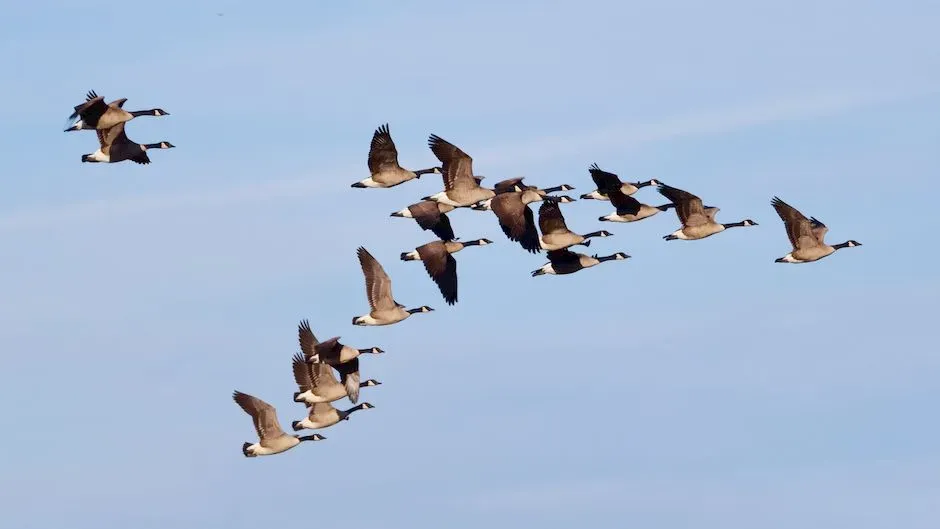
Let’s be real: being at the front of the ‘V’ is a raw deal. It’s important to note that the lead goose doesn’t gain any benefit from the lift generated by other birds. The leader expends the most energy and takes responsibility for guiding the group.
So what happens? The flock takes turns. The goose at the front doesn’t get any aerodynamic benefit and must work the hardest. That’s why geese take turns leading the V-formation. When the lead goose gets tired, it drops back into a trailing position, and another goose takes over. This cooperative leadership ensures the flock maintains maximum efficiency for long migratory journeys.
Studies show that leadership positions may not be shared equally among all birds flying in the V-formation. Studies of geese flying in small family groups have shown that typically the more experienced flyers tend to take the lead. Because young birds can be more strongly affected by the strenuous migration and are less experienced flyers, it’s thought it might be more essential for them to save energy by following and relying on the guidance of a leading parent.
Researchers calculated the energy required for migration and the total drag of the flock, demonstrating the benefits of position rotation in increasing flight time and distance. Their study revealed that changing position within the flock can improve flight time and distance travelled by over 44.5%. That is a staggering return on something as simple as taking turns.
More Than Just Energy: Communication, Visibility, and What Humans Have Learned
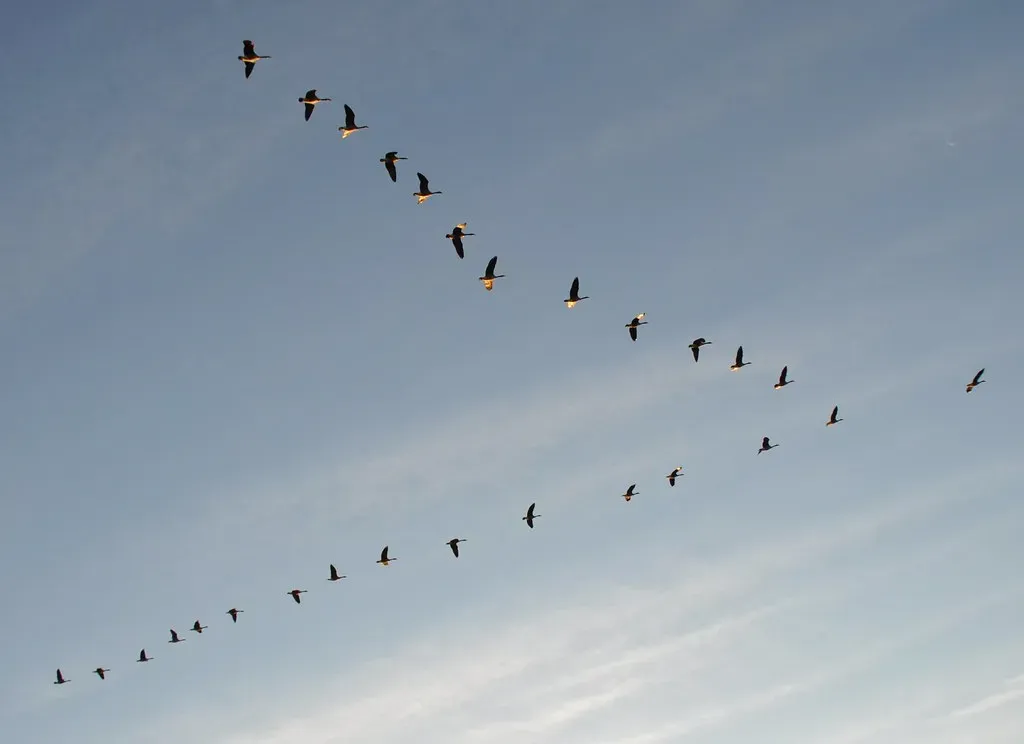
The aerodynamics are the headline act, but there’s more going on inside that ‘V’ than just physics. Geese make honking sounds to maintain contact with each other. Research into Canada geese has estimated that their repertoire includes 13 different calls for adults and they are most vocal during flight, with more socially dominant individuals observed to be far more vocal than submissive members of the flock.
The formation also helps keep the birds from getting lost or separated, especially over long distances or during challenging weather conditions. Geese use vocal calls to communicate with each other during flight, particularly to maintain the formation and alert others to changes in direction or speed.
There is evidence that while the instinct to migrate is partially innate, flying in a perfect V-formation is largely learned behaviour. Young geese watch and mimic adults during their first migration, gradually perfecting their timing, spacing, and coordination. It’s a skill passed down through generations, like a cultural inheritance written in wingbeats.
The aerodynamic efficiency of the V formation has influenced advancements in technology and transportation. Engineers have studied how birds position themselves to reduce air resistance and conserve energy. This research has inspired innovations in aviation, particularly in the design of fighter jets and commercial aircraft. Planes flying in formation can reduce fuel consumption by taking advantage of the upwash created by the lead aircraft, similar to how birds benefit from the lift generated by their leader.
Conclusion: A Masterclass in Nature’s Intelligence
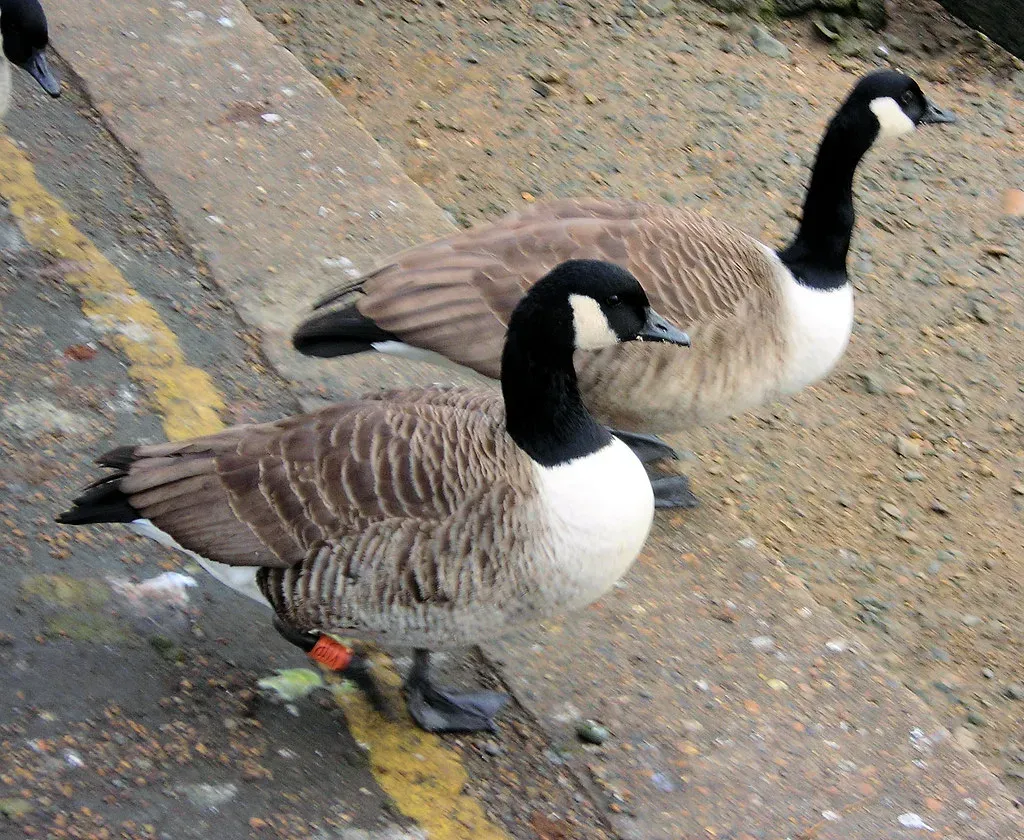
The humble ‘V’ shape scratched across an autumn sky is anything but simple. It is an evolved, practiced, scientifically remarkable system that combines fluid dynamics, social cooperation, precise timing, and learned behavior into one seamless act of migration.
The spacing requirements explain why only certain birds fly in V-formations. Only birds with large wingspans and slow beats can achieve the energy saving. Rapid or erratic flapping creates too much wake turbulence, which disrupts the formation. Nature, it turns out, is extremely selective about who gets to use this trick.
Every goose in that formation is contributing to something bigger than itself. The leader works hardest so others can rest. The followers ride invisible currents so the flock can fly farther. It’s one of the most efficient travel strategies in the animal kingdom, allowing geese to fly thousands of miles with less effort while staying organised and safe. Scientists have studied V-formations for decades, and the results are astonishing: the shape of the flock, the position of each bird, and even their wingbeats are carefully coordinated to maximise energy efficiency.
Next time you hear that familiar honking overhead, look up. You’re not watching birds fly south for the winter. You’re watching millions of years of aerodynamic evolution in perfect action. What would you have guessed was powering that iconic shape across the sky?
