
Have you ever wondered why certain animals make your skin crawl while others seem to comfort you instantly? That spider dangling in the corner of your room, the snake coiled under a rock, or even the gentle mouse scurrying across your kitchen floor might trigger an unexplainable fear that feels disproportionate to any real danger. What if these creatures that terrify you most aren’t just random phobias, yet something far more profound?
Deep within the human psyche lies a fascinating concept that connects our deepest fears to the animal kingdom. This isn’t just about being scared of creepy crawlers or predators. It’s about understanding that the animals we fear most often hold the keys to our personal growth and hidden strengths. Let’s dive into this mysterious world where psychology meets spirituality, and discover why your shadow animal might be your greatest teacher.
The Shadow Lives in Every Corner of Your Mind
Carl Jung’s revolutionary concept of the shadow describes it as an unconscious aspect of personality that doesn’t correspond with our ego ideal. This psychological territory houses everything we’ve rejected, denied, or pushed away about ourselves.
Think about it like this: imagine your personality as a beautifully lit room, with the shadow being everything lurking just outside the light. Jung observed that everyone carries a shadow, and the less it is integrated into conscious life, the more problematic it becomes. The more we ignore these hidden aspects, the more powerful and disruptive they become.
What’s particularly fascinating is that the shadow doesn’t just contain negative traits – it also holds “normal instincts, appropriate reactions, realistic insights, creative impulses” and other qualities that, if not recognized and owned, maintain “a state of impoverishment in the personality.” Your shadow isn’t your enemy; it’s an untapped reservoir of potential.
When Animals Become Mirrors of Our Deepest Selves
In some spiritual traditions, a shadow totem is described as the animal we fear most, which may represent our deepest fears while potentially offering resources when embraced. This isn’t just spiritual folklore – it’s a powerful psychological phenomenon that reveals how our unconscious mind projects fears onto specific animals.
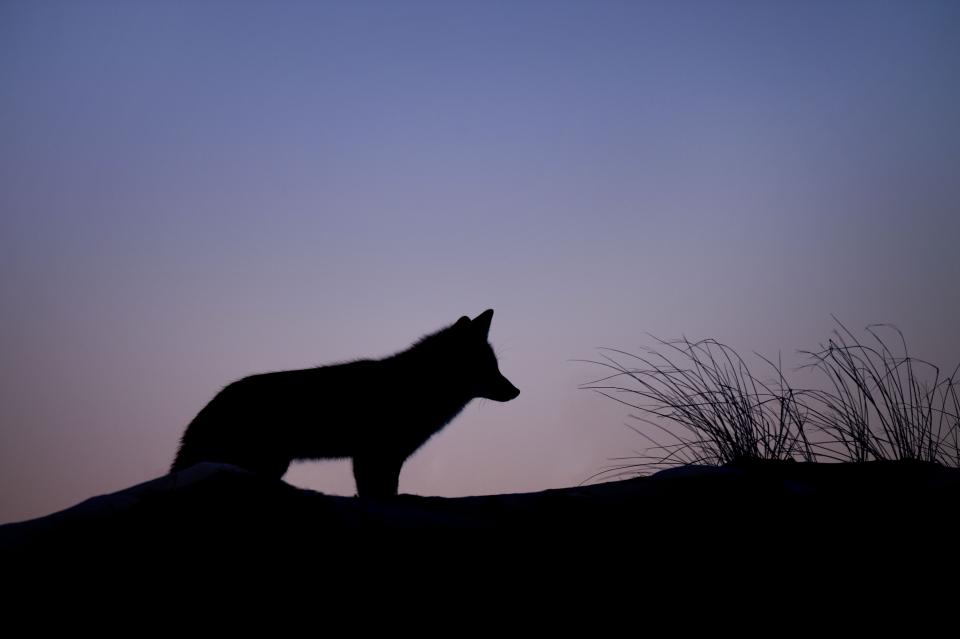
In various cultures, the wolf has been associated with archetypal qualities of untamed nature, fertility, and primal instincts. Yet these same qualities, when integrated consciously, can become sources of vitality and authentic power.
Consider someone terrified of spiders. The spider represents “feminine energy and weaving” and “is related to creativity and manifesting our reality.” That person’s fear might actually be masking an unconscious rejection of their own creative power or feminine aspects.
Why Your Feared Animal Keeps Showing Up
Our power animals offer us “just what the name suggests – POWER. True spiritual power that helps us decondition from false constructs and remember that we have far more ability to steer the direction of our lives than we may realize.” When an animal consistently appears in our life – whether physically, in dreams, or thoughts – it’s often trying to deliver a message we’re not ready to hear.
The shadow has the capacity to “override our conscious ego and take possession of our being, exerting control over our thoughts, emotions, and behaviors,” and “when this happens we can be unconsciously driven into hard times, all the while remaining ignorant that these troubled periods were self-imposed.”
That recurring nightmare about bears? The panic when you see a snake? These “scary animals” are often the very creatures that serve as people’s Spirit Animals, raising the question: “If you are afraid of an animal, is it your Spirit Animal?”
The Wisdom Hidden in Wings, Scales, and Claws
Animals represent archetypes – “universal symbols that capture human qualities and emotional truths” – and “these symbolic animal traits continue to shape art, literature, and even modern psychology, where animals are used as metaphors for human behavior and inner journeys.” Each feared creature carries specific wisdom that our conscious mind finds threatening.
The bat, often feared for its association with darkness, actually represents “ego, community, fear, keen-observation, inner-depth, illusion, and transformation” and “helps you to face fear.” While Western culture sees bats as “symbols of death, superstition, fear, night, and cult,” other cultures view them completely differently.
Similarly, the panther “encourages us to understand the power within the shadows and to acknowledge these powers to help eliminate our fear of the dark and unknown.” The very animals that terrify us often possess the exact qualities we need to develop for our psychological wholeness.
Breaking Free from Childhood Programming
Many aspects of our shadow form during childhood when “personality traits and impulses that elicited fear or anxiety in our parents or teachers” caused them to “punish or criticize us,” leading us to repress these characteristics by putting up “psychological defenses to ensure they were not allowed expression.”
Your fear of certain animals might stem from these early experiences of rejection. One woman’s terror of frogs originated from childhood trauma when “neighbor boys would take large bullfrogs and throw them at her, blow them up with firecrackers, and throw body parts in her hair.” Yet this intense emotional response often signals that the feared animal holds particular significance for that person’s healing journey.
The truth is, “it is JUST PROGRAMMING that makes us so fearful.” Our ego, which “wants to keep you small and safe and in the realm of the known,” uses fear as a way to “keep you separate from your power.” Recognizing this pattern is the first step toward reclaiming your authentic strength.
The Transformation That Comes Through Facing Fear
To avoid being victim to “shadow-possession,” we must become conscious of our shadow qualities and integrate them, accepting them “not as abhorrent aspects of our self, but as necessary and vital parts of our being,” realizing that “the task in life is not to become perfect, but to become whole.”
When we understand our feared animal’s “true relationship” with us, we can “begin to work more intentionally” with it as a spirit guide, often discovering that what seemed like a threat was actually “initiating” us “into its medicine.” This process transforms terror into empowerment.
Integration “reincorporates the shadow into the personality, producing a stronger, wider consciousness than before” and assimilation of the shadow can strengthen one’s sense of wholeness, providing a foundation for further personal development. Your feared animal becomes a gateway to personal evolution.
Practical Steps to Meet Your Shadow Animal
Spirit animals are “often viewed as guides or protectors that reflect a person’s inner strengths, challenges, or life journey” and “carry symbolic qualities” that “appear in myths, dreams, or spiritual practices to offer wisdom and direction.” The key is learning to recognize and work with them consciously.
Start by paying attention to animals that consistently trigger strong reactions – whether fear, disgust, or intense fascination. A spirit animal is “characterized by a personal relationship to the individual it is associated with” and “you can have one or several spirit animals throughout your life, during a specific phase of your life, or at specific occasions.”
Notice patterns in your dreams, unexpected encounters with certain creatures, or animals that keep appearing in media you consume. Spirit animals “travel through life with us helping us to navigate challenges” and “may change as we grow and face different life experiences.” Your shadow animal’s message might be exactly what you need to hear right now.
The Gift That Fear Disguises
The shadow contains “not just destructive aspects of the personality, but also potent, creative, and powerful capabilities” that were “condemned by our family, peers, and educators, not out of care but out of envy, fear, ignorance or jealousy,” causing us to repress “talents, innate abilities, and impulses which if cultivated and developed had the potential to make us more effective beings in the world.”
Your shadow animal holds these rejected gifts. The person terrified of snakes might be unconsciously rejecting their own capacity for transformation and rebirth. Someone who fears wolves could be denying their need for authentic wildness and independence. These “symbolic connections show how humans project values and emotions onto animals to better understand the mysteries of life.”
When you finally embrace your shadow animal, you don’t just overcome a fear – you reclaim lost parts of yourself. At the heart of animal symbolism lies “the human desire to connect with something greater than ourselves” as we “find guidance” through associating animals with traits like “power, wisdom, freedom, or resilience.”
Remember, every fear contains a gift waiting to be unwrapped. Your shadow animal isn’t trying to harm you – it’s trying to return something precious that you lost long ago. The courage to face what scares you most might be the very thing that sets you free.
What animal makes your heart race with fear? What if that creature is actually your wisest teacher in disguise?
