

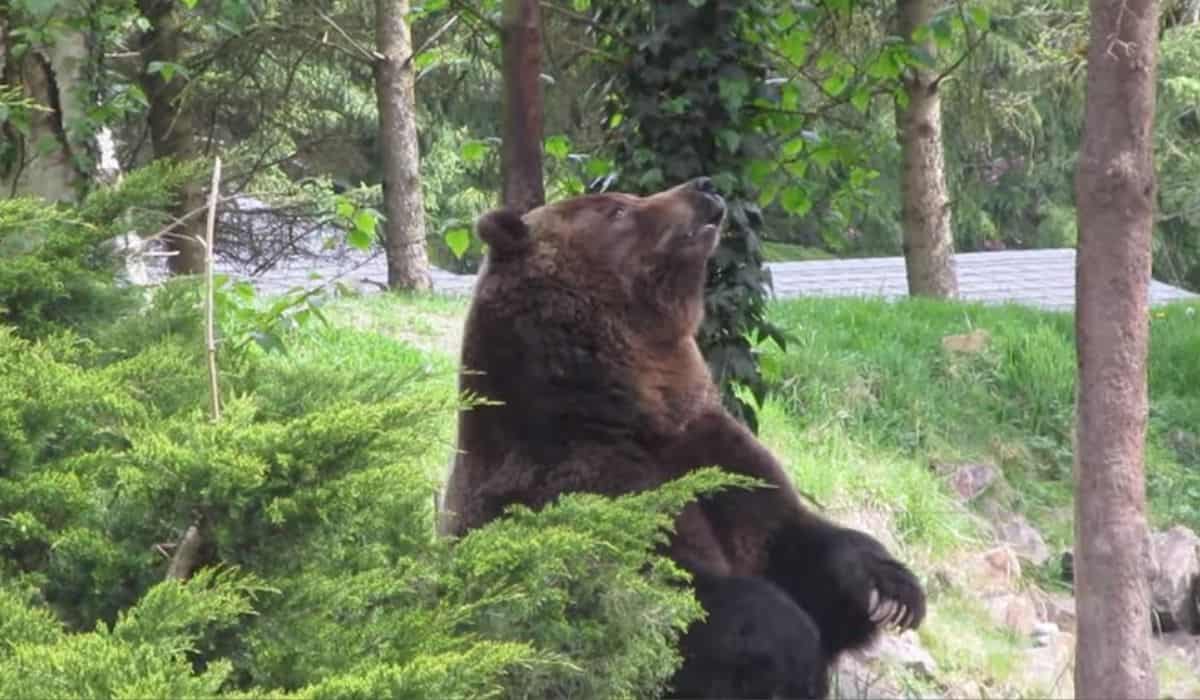
In the dense forests of North America, a peculiar behavior unfolds as massive grizzly bears approach certain trees, rise up on their hind legs, and rhythmically scratch their backs against the rough bark. This seemingly simple action—tree rubbing—is actually a complex behavior that serves multiple crucial functions in bear society. Far from just relieving an itch, these “bear trees” become communication hubs, territorial markers, and even play roles in mating and social hierarchy. Through decades of research and observation, scientists have uncovered the fascinating reasons behind this distinctive behavior, revealing the sophisticated communication system of these iconic mammals. Let’s explore the multifaceted reasons why grizzly bears engage in this curious and captivating ritual.
The Basics of Tree Rubbing Behavior

Tree rubbing is a deliberate behavior where grizzly bears (Ursus arctos horribilis) rub their backs, necks, heads, and shoulders against trees, leaving behind scent, hair, and sometimes visible marks. This behavior typically involves a bear approaching a selected tree, standing on its hind legs, and making repetitive rubbing motions against the trunk. Bears often return to the same trees repeatedly, creating what researchers call “rub trees” that become established communication points within their habitat.
Both male and female bears engage in this behavior, though with different frequencies and motivations. The behavior is most commonly observed during mating season but occurs year-round, suggesting it serves multiple purposes beyond reproduction. Bears show remarkable selectivity in choosing trees, often preferring those with distinctive characteristics that make them stand out in the landscape.
Chemical Communication Through Scent Marking

The primary function of tree rubbing is chemical communication through scent marking. When a grizzly bear rubs against a tree, it deposits secretions from specialized scent glands located on its face, neck, and back. These secretions contain pheromones and other chemical compounds that carry specific information about the bear, including its sex, reproductive status, individual identity, and even emotional state. This creates a chemical signature as unique as a fingerprint.
Research conducted by Dr. Owen Nevin at the University of Cumbria revealed that these chemical messages can persist on trees for weeks or even months, allowing bears to communicate asynchronously across time. This sophisticated form of “chemical bulletin board” enables bears, which are primarily solitary animals, to maintain a social network without direct contact, reducing potential conflicts while still exchanging vital information within their population.
Territorial Marking and Spatial Awareness

Grizzly bears use tree rubbing as a form of territorial marking that helps establish and maintain spatial organization within their habitat. Unlike many other territorial animals that aggressively defend exclusive territories, grizzlies operate on a system of “spatio-temporal separation” where they share large home ranges but avoid direct confrontation by using time and space strategically. Tree rubs serve as boundary markers that help bears recognize areas frequented by other individuals.
GPS collar studies by the Interagency Grizzly Bear Study Team have shown that bears often concentrate their rubbing activities along travel corridors, trail junctions, and the peripheries of their home ranges. This spatial distribution of rub trees creates an invisible landscape of information that allows bears to monitor the movements of others and make informed decisions about where and when to travel, feed, or rest, ultimately reducing direct competition and potentially dangerous encounters.
The Role in Mating and Reproduction

Tree rubbing plays a critical role in grizzly bear reproduction by facilitating mate selection and breeding coordination. During the mating season (May to July), the frequency of tree rubbing increases dramatically, particularly among male bears. Males deposit scent that advertises their presence, size, and genetic quality to potential mates. Female bears, meanwhile, can assess these chemical signals to make informed choices about potential mates.
Research by Dr. Kate Kendall of the U.S. Geological Survey has documented how female bears in estrus will visit multiple rub trees, essentially “shopping” for the best genetic match by evaluating the scent profiles left by different males. The timing of this scent marking is also crucial, as female grizzlies are receptive to mating for only a brief window of about 1-2 weeks per year. This synchronized communication system helps bears, which roam across vast territories, locate compatible mates during the narrow breeding window, increasing reproductive success in these otherwise solitary animals.
Social Hierarchy and Dominance Display

Tree rubbing serves as a mechanism for establishing and maintaining social hierarchy among grizzly bears. Dominant males typically rub trees more frequently and often select the most prominent trees in high-traffic areas. By analyzing hair samples collected from rub trees, researchers at the Northern Continental Divide Ecosystem Research Program found that the most dominant males contribute disproportionately more hair samples to community rub trees. This suggests they invest more energy in advertising their presence and status.
Subordinate bears can detect these chemical signals and may avoid areas recently marked by dominant individuals, particularly during periods of resource competition. This non-confrontational method of establishing dominance helps reduce physical conflicts that could result in serious injuries or death. The system acts as a social “pressure valve” that maintains order within the bear community while minimizing the need for dangerous physical confrontations between these powerful predators.
Grooming and Parasite Removal

Beyond communication, tree rubbing serves practical physical maintenance functions for grizzly bears. The abrasive surface of tree bark helps bears remove loose fur during seasonal shedding periods, particularly in spring when they shed their thick winter coats. This mechanical action also helps dislodge ectoparasites like ticks and lice that commonly infest bears. A study published in the Journal of Zoology found that bears with access to rub trees had significantly lower parasite loads than those in environments where suitable rubbing surfaces were scarce.
The scratching sensation likely provides relief from irritation while simultaneously improving coat condition. Trees with particular bark textures seem to be preferred, with rough-barked species like Douglas fir and ponderosa pine being selected more frequently than smooth-barked trees. Some bears even appear to seek out trees with specific resinous properties, as certain plant compounds may have insecticidal effects that enhance the parasite-removal benefits of the rubbing behavior.
Tree Selection Criteria and Preferences

Grizzly bears demonstrate remarkable selectivity when choosing trees for rubbing. Research conducted in Glacier National Park identified several key characteristics that make certain trees more likely to become established rub sites. Bears prefer trees with distinctive visual characteristics that make them easy to relocate, often selecting trees near prominent landscape features or at trail intersections. Diameter is another important factor, with bears typically choosing trees between 20-40 cm in diameter—large enough to support their weight but not so large that they can’t effectively wrap their bodies around the trunk.
The species of tree matters as well, with conifers like Douglas fir being selected at rates disproportionate to their abundance in the forest. The presence of a nearby clearing also appears important, possibly providing bears with better visibility while engaged in the potentially vulnerable standing position required for rubbing. These preferences demonstrate that tree selection for rubbing is not random but rather a deliberate choice based on multiple environmental and tree-specific factors.
Seasonal Patterns in Rubbing Behavior

Grizzly bear tree rubbing follows distinct seasonal patterns that correlate with their annual life cycle. Long-term monitoring by the Montana Grizzly Bear DNA Project has documented clear seasonal trends in rubbing frequency. Spring (April-May) sees moderate rubbing activity as bears emerge from hibernation and begin shedding winter coats. Activity peaks dramatically during the mating season (May-July), particularly among male bears seeking to advertise their presence to potential mates.
A secondary peak often occurs in late summer and fall (August-October) when bears are intensively foraging to gain weight before hibernation and establishing feeding territories. Winter months show virtually no rubbing activity as bears are in hibernation. These seasonal patterns demonstrate how tree rubbing is integrated into the broader ecological and biological rhythms of bear life. The seasonal variation also suggests that while mating is a primary driver of rubbing behavior, it serves multiple functions throughout the year, adapting to the changing needs and priorities of bears as they move through their annual cycle.
Differences Between Male and Female Rubbing Patterns

Male and female grizzly bears display significant differences in their tree rubbing behavior, reflecting their distinct reproductive strategies and social roles. Research using motion-triggered cameras by Dr. Robert Stenhouse documented that adult males rub trees approximately three times more frequently than females. Males also tend to rub more vigorously and for longer durations, often spending up to five minutes at a single tree compared to the typical one-minute visit by females.
The distribution of rubbing activity differs as well, with males concentrating their efforts along travel corridors and territory boundaries, while females more commonly rub trees near denning areas and food resources. Female rubbing increases significantly only when they are in estrus or traveling with new cubs, suggesting their rubbing serves more specific purposes related to reproduction and offspring protection. These gender-based differences highlight how the same behavior has been adapted to serve different biological imperatives based on sex-specific needs and reproductive strategies within grizzly bear society.
The Cultural Transmission of Rubbing Behavior

Evidence suggests that tree rubbing behavior in grizzly bears involves elements of cultural transmission and learned behavior. Observational studies by wildlife biologists in Yellowstone National Park have documented how cubs carefully watch their mothers engage in tree rubbing and often mimic the behavior, initially with playful, uncoordinated attempts that become more refined with age. This pattern suggests a combination of innate predisposition and social learning. Some researchers propose that specific rubbing techniques and even tree preferences may be passed down through generations, creating local “traditions” within bear populations.
DNA analysis of hair collected from rub trees shows that certain family lines use specific clusters of trees across generations, further supporting the idea of cultural transmission. This social learning component adds another layer of complexity to bear communication systems and suggests that bear societies possess rudimentary cultural elements that help maintain community knowledge across generations, similar to what has been observed in some primate and cetacean species.
Conservation Implications of Rub Trees

Rub trees have become valuable tools in grizzly bear conservation efforts. Hair samples collected from these trees provide a non-invasive method for genetic monitoring, population estimation, and tracking individual bears over time. The Northern Divide Grizzly Bear Project used DNA extracted from hair samples collected at over 4,000 rub trees to identify 545 individual bears, allowing for the first accurate population estimate in the region without the need for capturing bears. Conservation biologists now recognize rub trees as critical communication infrastructure for bear populations and incorporate their protection into habitat management plans.
The distribution of rub trees also helps identify important movement corridors between habitat fragments, guiding conservation efforts to maintain landscape connectivity. In areas where human development has disrupted traditional movement patterns, conservationists have even experimented with creating artificial rub trees to help maintain communication networks within displaced bear populations. This integration of behavioral ecology into conservation practice represents an important advance in bear management approaches.
Human Interactions and Safety Considerations

Understanding tree rubbing behavior has important implications for human safety in bear country. Identified rub trees often indicate active bear travel corridors, providing valuable information for hikers, campers, and park managers about areas with higher probabilities of bear encounters. Park services in regions like Glacier National Park now incorporate rub tree locations into their trail risk assessments and visitor education programs. Rangers advise visitors to be particularly alert near identified rub trees, especially during peak rubbing seasons.
Wildlife managers also caution against interfering with rub trees, as disrupting these communication hubs may force bears to seek alternative methods of establishing territories and hierarchies, potentially increasing direct confrontations. Some bear researchers recommend that humans create noise when approaching known rub tree areas to avoid surprising bears engaged in rubbing, as bears are particularly focused on the task and may be less aware of their surroundings during this behavior. This knowledge helps promote coexistence by allowing humans to better interpret and respect bear communication systems.
Conclusion: The Complex Social Language of Tree Rubbing

The seemingly simple act of a grizzly bear rubbing its back against a tree reveals itself as a sophisticated form of communication that helps maintain the complex social fabric of bear society. Through this behavior, bears exchange vital information about identity, reproductive status, territorial boundaries, and social hierarchy without the need for direct and potentially dangerous confrontations. The seasonal and gender-based patterns in rubbing behavior demonstrate how this communication system adapts to the changing needs of bears throughout their annual cycle and life stages.
Beyond its communicative functions, tree rubbing serves practical purposes related to physical maintenance and parasite control, highlighting the elegant efficiency of evolved behaviors that serve multiple beneficial functions simultaneously. As we continue to study and understand this remarkable behavior, we gain not only insights into bear ecology but also greater appreciation for the hidden complexity of animal communication systems that operate beyond human perception. In the end, each scarred and hair-laden tree stands as testament to the rich social lives of these magnificent but often misunderstood creatures.

From exploring the marine wonders in the Azores and witnessing the vast savannas of Kenya, to delving deep into the rich biodiversity of South Africa and traversing iconic landscapes in Australia and the US like Yellowstone, Chris's experiences are vast.
With a penchant for diving alongside sharks, the ocean holds a special place in his heart.
Through his academic insights, he champions wildlife conservation, striving with 'Animals Around The Globe' to cultivate a profound connection between humans and animals, enhancing our mutual appreciation.
Connect with him at Feedback@animalsaroundtheglobe.com.
- This Monkey Has a Mustache - July 21, 2026
- How Steve Irwin Changed the World’s View of Wildlife - July 21, 2026
- The Catfish That Caused Earthquakes in Japanese Folklore - July 21, 2026