
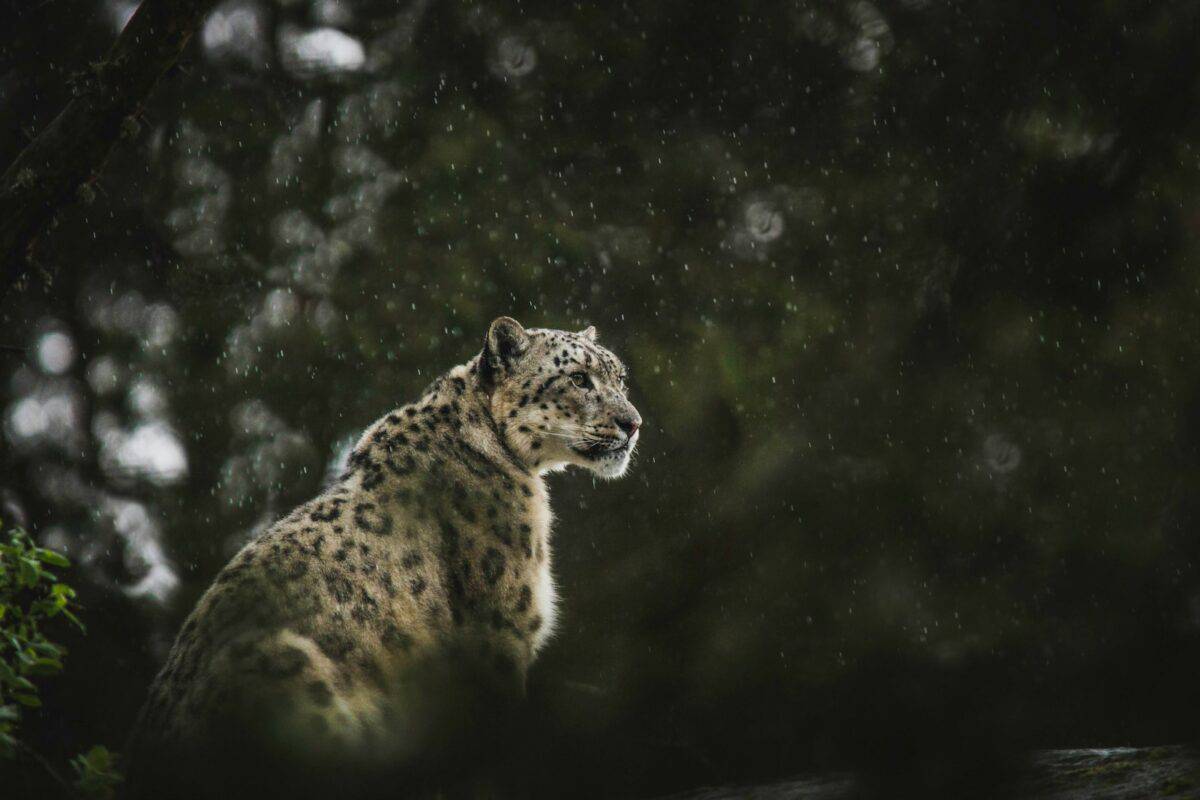
Deep within the rugged, snow-covered peaks of Central Asia’s mountain ranges lives one of nature’s most elusive predators—the snow leopard. These magnificent big cats have earned the poetic nickname “Ghosts of the Mountain” through centuries of barely-glimpsed encounters with humans and their almost supernatural ability to vanish into their surroundings. Their phantom-like nature isn’t merely folklore; it’s a testament to their remarkable evolutionary adaptations and the extreme environments they call home. From their smoke-gray fur that blends perfectly with rocky landscapes to their secretive behavior and remarkable hunting skills, snow leopards embody the very essence of a ghost—present yet unseen, powerful yet ethereal. This article explores the fascinating reasons behind this evocative nickname and delves into the mysterious world of these endangered mountain spirits.
The Perfect Camouflage Artists

Snow leopards possess one of the most effective camouflage systems in the animal kingdom, which significantly contributes to their ghostly reputation. Their base coat color—a pale gray to creamy yellow—mirrors the rocky, snow-dusted terrain of their high-altitude habitat. This fur is overlaid with distinctive dark gray to black rosettes and spots, creating a disruptive pattern that breaks up their outline against the mountains’ mottled landscape. Unlike other big cats whose patterns might be more regular, snow leopards’ markings are specifically evolved to match the irregular shapes of rocks, shadows, and snow patches in their environment. When a snow leopard remains still against a mountainside, even experienced observers often fail to spot them until movement reveals their presence—if they move at all. This remarkable camouflage isn’t just for hunting; it’s also essential protection in a landscape with few hiding places, allowing them to melt into their surroundings like true mountain specters.
Masters of Mountainous Terrain

Perhaps no big cat navigates extreme landscapes with the same ghostly grace as the snow leopard. Their powerful, compact bodies are specifically adapted for high-altitude living in some of Earth’s most forbidding environments—the mountains of Central Asia, where oxygen is scarce and temperatures can plummet to -40°F (-40°C). Snow leopards possess the largest chest cavity relative to body size of any big cat, housing outsized lungs that extract maximum oxygen from the thin mountain air. Their short front limbs and longer hind legs create a body structure perfectly designed for ascending and descending steep slopes. When climbing, their disproportionately large paws act like natural snowshoes, distributing their weight across soft snow. Perhaps most remarkable is their long, thick tail—nearly equal to their body length—which functions as both a balance mechanism when leaping between rocks and a wrap-around facial blanket during sleep in subzero temperatures. These adaptations allow snow leopards to traverse terrain that would exhaust or kill most predators, moving like spirits through landscapes humans consider almost uninhabitable.
The Solitary Shadows

Snow leopards’ ghost-like reputation is further enhanced by their intensely solitary nature. These cats typically live, hunt and travel alone, coming together primarily during the brief breeding season. Their naturally low population density—with individual territories spanning hundreds of square kilometers—means encounters between snow leopards are rare events. This solitary existence contributes significantly to their phantom-like status, as even in regions where they’re present, there might be only one snow leopard in a vast area. Scientists studying these elusive cats often rely on camera traps rather than direct observation, as a researcher might spend years in snow leopard territory without a single sighting. Their preference for moving at dawn, dusk, and during the night further reduces human encounters. Even local herders who have lived among snow leopards their entire lives often report having seen them only a handful of times, if at all. This combination of low density, solitary behavior, and crepuscular activity patterns means that snow leopards exist as shadows in the human imagination—known to be present yet perpetually unseen.
Silent Hunters

Unlike many big cats known for their vocalizations, snow leopards are remarkably silent predators, adding to their ghostly mystique. They lack the ability to roar due to an anatomical difference in their throat structure—the hyoid bone is fully ossified rather than partially elastic as in roaring cats. Instead, snow leopards communicate through subtle vocalizations including a non-aggressive puffing sound called a “chuff,” soft mews, and in rare cases, a high-pitched yowl during mating season. Their hunting strategy emphasizes stealth over speed, typically involving patient stalking followed by a powerful ambush from above. Snow leopards can leap up to 50 feet (15 meters) in a single bound when pouncing on prey, seeming to materialize out of nowhere before disappearing just as quickly with their kill. They move with extraordinary silence across snow and rocky terrain, their thick fur pads muffling any sound their footfalls might make. This silent existence, where even their breathing seems hushed against the mountain winds, reinforces their phantom-like presence in their high-altitude kingdom.
Cultural Significance and Mythology

Throughout the mountain ranges of Central Asia, snow leopards have woven themselves into the cultural and spiritual fabric of indigenous communities, further cementing their ghostly reputation. In many traditional belief systems across the Himalayas, Tibetan Plateau, and other regions within their range, snow leopards are considered spiritual beings rather than mere animals. Mongolian shamanic traditions view them as mountain spirits and protectors of sacred peaks. In Tibetan Buddhism, snow leopards sometimes appear in religious artwork as companions to deities or as symbolic guardians of mountain temples. The Wakhi people of the Pamir Mountains believe snow leopards possess supernatural powers, including the ability to transform into mist. These cultural associations aren’t surprising given how rarely humans encounter these animals—when something is glimpsed so fleetingly and possesses such power and beauty, it naturally acquires a supernatural dimension. The “ghost” nickname thus reflects not only their physical elusiveness but also their prominent place in the spiritual landscape of mountain peoples who have shared their territory for millennia.
Extreme Habitat Isolation

Snow leopards inhabit some of Earth’s most remote and inaccessible regions, further contributing to their phantom status in the human imagination. Their range spans approximately 1.2 million square miles (2 million square kilometers) across 12 countries, including parts of Afghanistan, Bhutan, China, India, Kazakhstan, Kyrgyzstan, Mongolia, Nepal, Pakistan, Russia, Tajikistan, and Uzbekistan. However, within this vast area, snow leopards are confined primarily to rugged alpine environments between 9,800 and 17,000 feet (3,000-5,200 meters) above sea level—elevations where human settlements are sparse and temporary. These high-altitude habitats are characterized by extreme conditions: thin air, bitter temperatures, minimal vegetation, and challenging terrain. Such environmental extremes create natural barriers that have historically limited human interaction with snow leopards, shrouding them in mystery. While modern technology like camera traps and GPS collars has revealed more about their lives, the physical remoteness of their habitat ensures that most people will never encounter a snow leopard in the wild, preserving their status as near-mythical creatures that haunt the world’s highest places.
Nocturnal and Crepuscular Behavior

Adding to their ghostly reputation, snow leopards are primarily active during periods of low light, when human visibility is most limited. While not strictly nocturnal, they show strong crepuscular tendencies, preferring to hunt and travel during dawn and dusk. This behavior pattern has evolved partly as an adaptation to their prey species’ habits and partly to avoid the extreme daytime temperatures of their mountain habitat. During the harshest daylight hours, snow leopards often rest in rocky crevices or caves, becoming active as the mountain light fades into twilight. Their specialized vision is adapted for low-light conditions, with larger eyes relative to their head size than other big cats and a higher concentration of rod cells in their retinas, allowing them to see in near-darkness. Their night vision is estimated to be six times better than that of humans. This preference for moving through the mountains during twilight hours means that even when humans are present in their territory, snow leopards remain largely invisible, materializing briefly in the half-light before dissolving back into the gathering darkness like true mountain ghosts.
Remarkable Hunting Strategies

Snow leopards employ hunting techniques that emphasize their ghost-like qualities, relying on patience, stealth, and surprise rather than sustained pursuit. Unlike cheetahs or lions that might chase prey across open terrain, snow leopards are ambush predators that can remain motionless for hours, becoming virtually indistinguishable from the rocks around them. When stalking, they move with extraordinary deliberation, placing each paw with precision to avoid dislodging rocks or creating noise. Their preferred attack method involves positioning themselves above prey along narrow mountain paths or near water sources, then launching downward in a powerful surprise pounce that can cover distances of up to 50 feet. This hunting strategy creates the impression among local shepherds that snow leopards appear from nowhere and vanish just as quickly. Their ability to take down prey three times their own weight—including large mountain ungulates like ibex, blue sheep, and argali—adds to their supernatural reputation. Perhaps most ghost-like is their habit of sometimes following nomadic herders at a distance for days, undetected, taking advantage of the disturbed wildlife the humans flush from cover.
The Vanishing Act: Population Decline

The “ghost” nickname has taken on a more ominous meaning in recent decades as snow leopard populations have declined dramatically, making these already elusive cats even more phantom-like in their rarity. Current estimates suggest only 4,000-6,500 snow leopards remain in the wild, with their numbers continuing to decrease across much of their range. This population decline results from multiple threats: habitat fragmentation due to human development, reduction of prey species through competition with livestock, retaliatory killings when leopards prey on domestic animals, poaching for their valuable fur and body parts used in traditional Asian medicine, and the accelerating impacts of climate change on their mountain ecosystems. Conservation organizations warn that without significant intervention, snow leopards could disappear entirely from large portions of their historical range within decades. The IUCN Red List classifies them as “Vulnerable,” just one category away from “Endangered.” This ongoing vanishing act adds a tragic dimension to their ghost moniker—they are becoming specters not just in appearance and behavior, but in their increasingly rare presence in mountains where they once ruled as apex predators.
Scientific Elusiveness

Even to researchers dedicated to studying them, snow leopards remain among the most challenging big cats to observe and understand, earning them ghostly status in scientific circles as well. Their remote habitat, combined with their camouflage and secretive behavior, created significant obstacles to scientific study until relatively recent technological advances. The first photographs of wild snow leopards weren’t captured until the 1970s, and the first successful radio-collaring didn’t occur until 1982. Even today, with sophisticated camera traps, satellite collars, and environmental DNA sampling, snow leopards provide only brief glimpses into their lives. Many basic aspects of their biology and behavior remain poorly documented compared to other big cats. This scientific elusiveness is reflected in their taxonomic history—they were once classified in their own genus (Uncia) before genetic analysis revealed their relationship to other big cats and placed them in the Panthera genus. Their genetic uniqueness, with adaptations for high-altitude survival not seen in other felines, adds to their mysterious nature. For field biologists, encountering a snow leopard remains a rare privilege, with many dedicated researchers spending their entire careers studying an animal they may never observe directly in the wild.
The Long Tail Mystery
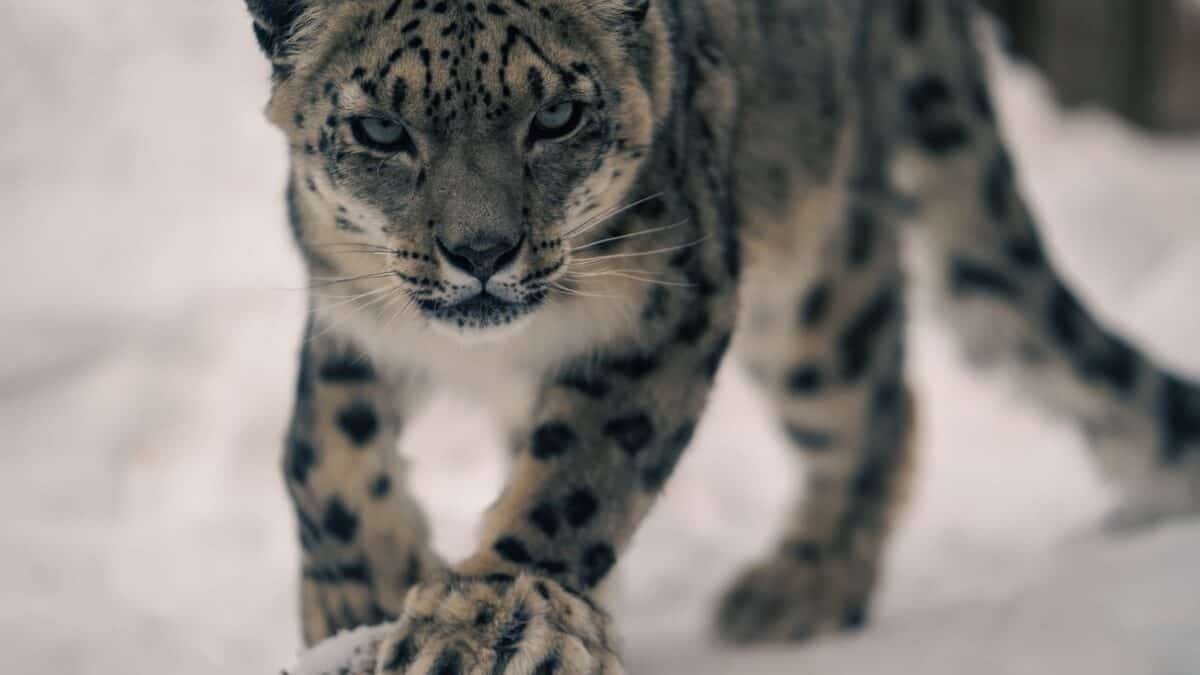
One of the snow leopard’s most distinctive physical features—its extraordinarily long, thick tail—adds to its mysterious appearance and ghost-like reputation. Measuring nearly as long as the cat’s entire body (up to 3 feet/90 cm), the snow leopard’s tail is proportionally the longest of any big cat species. This remarkable appendage serves multiple functions critical to survival in their harsh mountain environment. Beyond providing balance when navigating precarious slopes and ledges, the tail acts as a wrapped facial covering during sleep, protecting the leopard’s sensitive nose and face from extreme cold. When moving, particularly during hunting or territorial patrols, snow leopards often carry their tails in a distinctive upward curve, creating a flowing silhouette against the mountain backdrop that enhances their spectral appearance. Local folklore in several Central Asian cultures includes stories of snow leopards using their tails to hypnotize prey or sweep away their tracks in the snow to remain untraceable. While these tales are not scientifically accurate, they reflect how the unusual proportions of this magnificent appendage contribute to the animal’s supernatural reputation among mountain communities.
Conclusion: Preserving the Mountain Phantoms

The “Ghosts of the Mountain” nickname encapsulates everything that makes snow leopards one of nature’s most extraordinary and enigmatic creations—their remarkable camouflage, solitary nature, silent movements, and their ability to thrive in landscapes that seem beyond the reach of life itself. As human activity increasingly encroaches on their remote habitat, conservation efforts become critical to ensuring these mountain phantoms don’t transition from biological reality to mere legend. Organizations like the Snow Leopard Trust and the Snow Leopard Conservancy work with local communities to reduce human-wildlife conflict and create sustainable coexistence models that protect both the cats and the livelihoods of people sharing their territory. Perhaps the most powerful conservation tool is the very mystique that earned snow leopards their ghostly nickname—their ability to capture human imagination and inspire wonder serves as motivation to preserve both the species and the wild mountain ecosystems they inhabit. In protecting these elusive cats, we preserve not just a remarkable evolutionary achievement but also the possibility that somewhere high in Asia’s greatest mountain ranges, the ghosts will continue their silent patrol for generations to come.

- The Secret Language of Dolphins Decoded by Researchers - July 20, 2026
- 7 Animals That Can Survive Extreme Environments You Couldn’t - July 20, 2026
- The Longest Snake Ever Found in the U.S. - July 20, 2026