

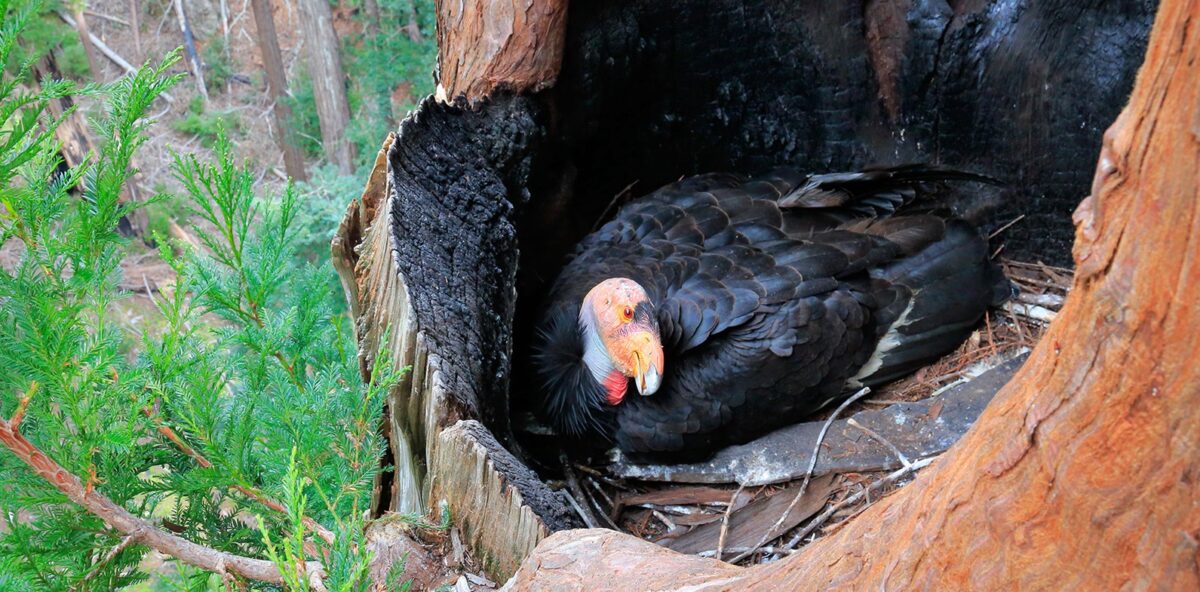
Biologists Spot Nesting Behavior in Remote Canopy (Image Credits: Wikimedia)
Northern California – A pair of endangered California condors has captured attention by showing signs of incubating an egg high in a remote redwood tree, possibly the first wild nest in the region since the late 1800s.[1][2]
Biologists Spot Nesting Behavior in Remote Canopy
Wildlife officials first noticed unusual patterns in late February. GPS data from the birds revealed one condor arriving at a specific high perch in Redwood National and State Parks as the other departed, a classic incubation shift. Researchers interpreted this as evidence of egg-tending, with both birds lingering far longer than usual at the site.[1]
The pair consists of Ney-gem’ ‘Ne-chween-kah, hatched at the Oregon Zoo, and Hlow Hoo-let, both released through targeted restoration efforts. If the egg hatched around early April, it would mark a pivotal moment. Officials remain cautious, as direct confirmation proves challenging without disturbing the site. Still, the behavior closely matches known condor parenting rituals.
Decades of Recovery Pave the Way
California condors once ranged widely across western North America but vanished from Northern California by the late 1800s. Habitat destruction, hunting, and collisions with power lines decimated numbers. By the early 1980s, fewer than two dozen survived in the wild, prompting a full-scale captive breeding rescue.[1]
Conservationists captured the remnants and built a breeding program that now sustains hundreds of birds. Releases began in southern California, Arizona, and Baja California. The Northern California Condor Restoration Program, launched by the Yurok Tribe in partnership with parks, started in 2022. More than two dozen captive-raised condors now roam the skies here, setting the stage for this potential nesting success.[3]
Threats Linger Despite Progress
These massive scavengers, with wingspans nearing 10 feet, face ongoing dangers. Lead poisoning from ingested ammunition fragments remains a top killer. Microtrash and power line electrocutions also claim lives. Conservation measures include lead-free ammunition mandates and habitat protections.
- Lead poisoning: Primary cause of death in many released birds.
- Power lines: Frequent collision hazards during flight.
- Habitat loss: Historical driver of regional extinction.
- Microtrash: Ingested during scavenging, leading to starvation.
- Low reproduction rates: Slow maturation delays population growth.
The Yurok Tribe views the condor, or prey-go-neesh, as sacred, using its feathers in ceremonies. Restoration blends science with cultural stewardship, strengthening ties to ancestral lands.
Monitoring Charts Uncertain Path Forward
Teams track every released bird via GPS, analyzing data for health and behavior. First-time parents often struggle with incubation and chick-rearing. Survival odds hover low, yet success stories from southern populations inspire confidence. Future releases will bolster the flock if this nest succeeds.
Officials from the Smithsonian Magazine report highlights the blend of tribal leadership and federal support.[2] The Lost Coast Outpost notes the nest’s location in old-growth redwoods adds to its rarity.[3]
Key Takeaways
- Potential first wild nest since late 1800s in Northern California redwoods.
- Yurok Tribe released 26 condors since 2022, enabling this milestone.
- GPS tracking confirms incubation-like behavior; hatching possible soon.
This development underscores decades of dedicated work pulling condors from the brink. As monitoring continues, the skies over the redwoods hold promise for a true comeback. What does this mean for other endangered species? Share your thoughts in the comments.

- Urban Coyotes Show Remarkable Adaptability, Learning to Thrive in City Environments - July 22, 2026
- Beavers Are Nature’s Engineers, Creating Vital Habitats for Other Wildlife Species - July 21, 2026
- The Recovery of the California Condor Offers Hope for Other Critically Endangered Birds - July 21, 2026