

Throughout history, women have played pivotal yet often underrecognized roles in wildlife conservation efforts across the globe. These trailblazers confronted gender barriers, political obstacles, and scientific skepticism to protect endangered species and habitats when such work was predominantly male-dominated. Their groundbreaking research, passionate advocacy, and innovative approaches to conservation have fundamentally altered our understanding of animal behavior and transformed our collective approach to protecting biodiversity. From dense African forests to remote ocean depths, these women risked personal safety, sacrificed comfort, and dedicated their lives to creating a more sustainable relationship between humans and wildlife. Their legacies continue to inspire new generations of conservationists tackling increasingly complex environmental challenges in the 21st century.
Jane Goodall: Revolutionizing Primate Research and Conservation

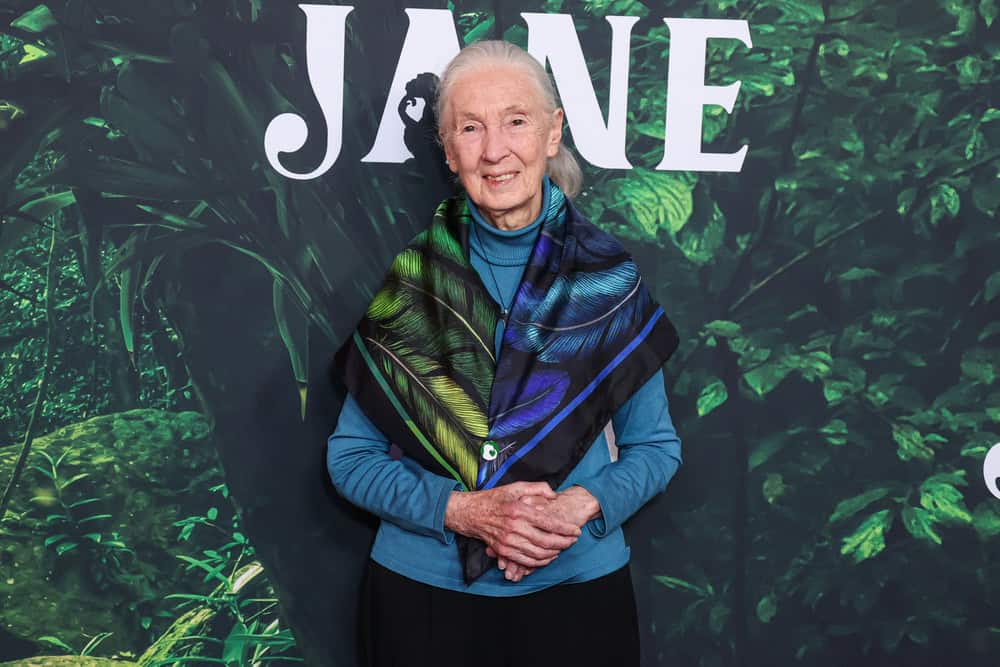
Dr. Jane Goodall began her groundbreaking work with chimpanzees in Tanzania’s Gombe Stream National Park in 1960, fundamentally changing our understanding of our closest relatives. Without formal scientific training initially, Goodall’s patient observation led to the revolutionary discovery that chimpanzees make and use tools – a finding that forced scientists to reconsider the very definition of humanity. Her immersive research approach, giving names rather than numbers to the chimps she studied, challenged scientific conventions but yielded profound insights into chimpanzee social structures, communication, and emotional lives.
Beyond her scientific contributions, Goodall transformed herself from researcher to global conservation advocate. In 1977, she founded the Jane Goodall Institute to support ongoing research and conservation efforts. Her Roots & Shoots program, launched in 1991, has engaged young people in community service and conservation across more than 100 countries. At 89, Goodall continues to travel extensively, delivering over 300 lectures annually to advocate for endangered species, animal welfare, and environmental sustainability, demonstrating how determined individuals can catalyze worldwide conservation movements.
Dian Fossey: Protecting Mountain Gorillas Against All Odds
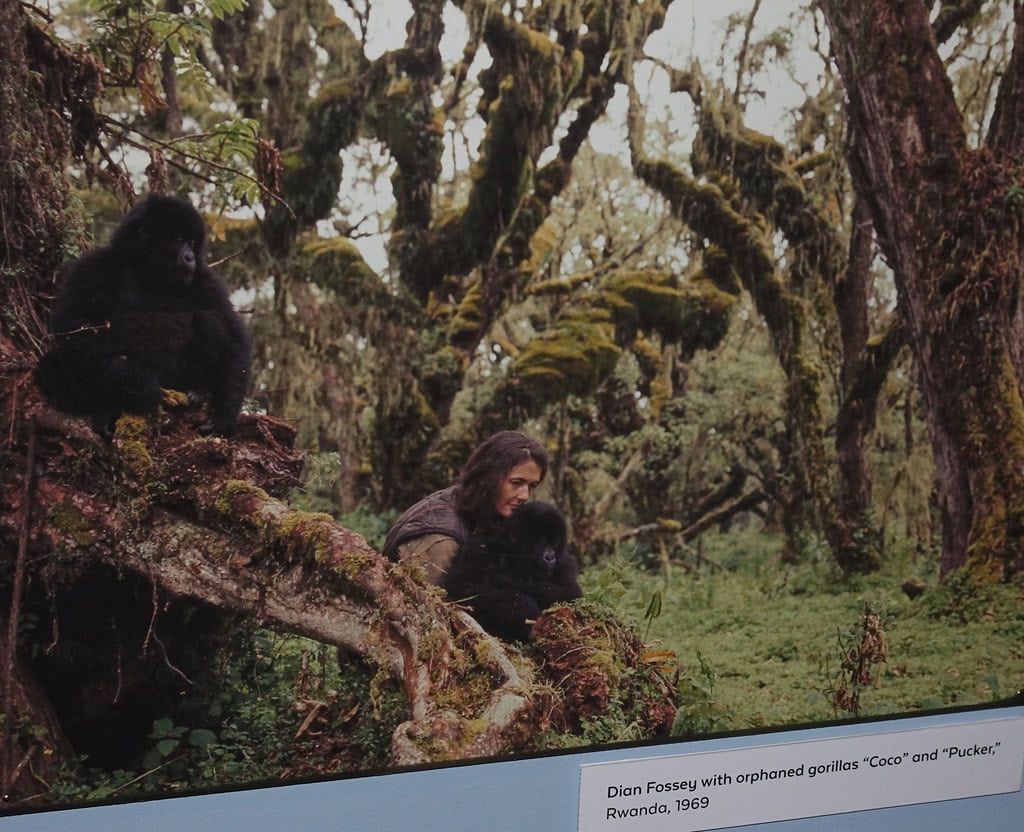
Dian Fossey’s fierce dedication to mountain gorilla conservation in Rwanda’s Virunga Mountains stands as one of conservation’s most powerful and ultimately tragic stories. After meeting famed anthropologist Louis Leakey in 1963, Fossey established the Karisoke Research Center in 1967, where she conducted groundbreaking behavioral studies of endangered mountain gorillas. Her intensive research revealed the complex social structures and gentle nature of these often misunderstood primates. Through patient habituation techniques, Fossey gained unprecedented acceptance among gorilla groups, allowing for close observations that contradicted prevailing notions of gorillas as dangerous beasts.
Fossey’s conservation approach became increasingly militant as she confronted poachers directly, destroying traps, confronting hunters, and advocating against gorilla tourism she felt threatened the animals. Her controversial tactics made enemies, but her work was instrumental in bringing mountain gorillas back from the brink of extinction. Tragically, Fossey was murdered in her cabin in 1985, a crime that remains officially unsolved. Her autobiography, “Gorillas in the Mist,” later adapted into a film starring Sigourney Weaver, and the continued work of the Dian Fossey Gorilla Fund International ensure her legacy lives on. Today, mountain gorilla populations have rebounded from fewer than 250 individuals in Fossey’s time to over 1,000 – a testament to her enduring impact.
Biruté Galdikas: Champion of Orangutan Conservation

Dr. Biruté Mary Galdikas completes the renowned trio of female primatologists mentored by Louis Leakey (alongside Goodall and Fossey), dedicating her life to studying and protecting orangutans in the rainforests of Borneo. In 1971, Galdikas established Camp Leakey in what is now Tanjung Puting National Park, Indonesia, embarking on what would become the longest continuous study of any wild orangutan population. Her pioneering research illuminated orangutan behavior, intelligence, and social structures, revealing their remarkable cognitive abilities and documenting their extensive use of medicinal plants – knowledge that transformed scientific understanding of these great apes.
Beyond research, Galdikas has been at the forefront of confronting the severe threats facing orangutans, including habitat destruction from palm oil plantations, illegal logging, and the wildlife trade. In 1986, she founded Orangutan Foundation International (OFI), which operates rehabilitation programs for orphaned and displaced orangutans while working to protect critical forest habitat. Her rehabilitation center has successfully returned hundreds of orangutans to the wild. Despite facing significant resistance from logging and palm oil interests, Galdikas continues her conservation work well into her 70s, advocating for sustainable practices and protected areas that balance human needs with orangutan survival. Her memoir, “Reflections of Eden,” chronicles her extraordinary life’s work among Indonesia’s “people of the forest.”
Eugenie Clark: The Shark Lady Breaking Oceanic Boundaries

Dr. Eugenie Clark, affectionately known as “The Shark Lady,” revolutionized marine conservation through her pioneering research on sharks and other fish species during an era when women were largely excluded from oceanography. Beginning in the 1950s, Clark’s work challenged prevailing negative perceptions of sharks, demonstrating their intelligence, complex behaviors, and importance to marine ecosystems. As founder of the Cape Haze Marine Laboratory in Florida (now the Mote Marine Laboratory), she conducted groundbreaking experiments proving that sharks could be trained and possess significant learning capabilities – findings that contradicted their portrayal as mindless predators.
Clark’s research took her on over 70 deep-sea submersible dives and thousands of scuba expeditions across the world’s oceans. She discovered several fish species, including the Red Sea Moses sole, which produces a natural shark repellent, and documented the first known case of a fish using a tool when she observed triggerfish manipulating sea urchins. Throughout her career spanning over 50 years, Clark authored over 175 scientific articles and several books, including the bestselling “Lady With a Spear.” Her work laid crucial foundations for shark conservation efforts at a time when systematic culling was common practice. Until her death at 92 in 2015, Clark continued diving and researching, demonstrating that passion for conservation recognizes no age limits.
Rachel Carson: Sparking the Modern Environmental Movement

Rachel Carson fundamentally transformed conservation consciousness through her masterful blend of scientific rigor and poetic prose. Though primarily known for her revolutionary book “Silent Spring” (1962), which exposed the dangers of pesticides like DDT, Carson’s earlier works, including “The Sea Around Us” and “Under the Sea-Wind,” revealed her deep understanding of marine ecosystems. As a marine biologist working for the U.S. Fish and Wildlife Service in the 1940s, Carson observed firsthand the interconnectedness of species and habitats, developing ecological perspectives that were ahead of her time. Her writings emphasized the delicate balance of natural systems long before ecosystem approaches became standard in conservation science.
“Silent Spring” faced fierce opposition from chemical companies and portions of the scientific establishment, yet Carson’s meticulous research withstood scrutiny. The book’s publication helped launch modern environmentalism, directly influencing the creation of the Environmental Protection Agency and the banning of DDT in the United States. Though Carson died of breast cancer in 1964, just two years after her landmark book’s publication, her legacy lives on in contemporary conservation approaches that recognize the complex relationships between human activities and wildlife health. Carson’s work represents a critical bridge between traditional species-focused conservation and modern integrated approaches that consider entire ecosystems and human impacts.
Joy Adamson: Pioneer of Wildlife Rehabilitation

Joy Adamson transformed wildlife conservation through her groundbreaking work rehabilitating and releasing orphaned animals back to the wild in Kenya, most famously documented in her book “Born Free.” After relocating to Kenya in 1937, Adamson developed a deep appreciation for African wildlife, initially expressing this through detailed paintings of indigenous plants, birds, and tribal members. Her life changed dramatically in 1956 when her husband George, a game warden, shot a lioness in self-defense, leaving three cubs orphaned. Joy hand-raised one cub, Elsa, and developed innovative techniques to prepare her for eventual release into the wild – a concept considered impossible at the time.
Elsa’s successful return to the wild, where she eventually raised her own cubs, demonstrated that rehabilitated animals could readapt to natural environments with proper preparation. Adamson documented this remarkable journey in “Born Free,” published in 1960, which became an international bestseller and later an Academy Award-winning film. The Adamsons used their fame to advocate for conservation, establishing the Elsa Wild Animal Appeal and other conservation initiatives. Though Joy’s life ended tragically when she was murdered in 1980, her pioneering rehabilitation techniques continue to influence wildlife conservation practices worldwide. The Born Free Foundation, established in her honor, continues working to prevent animal suffering and protect threatened species across the globe.
Wangari Maathai: Connecting Conservation with Community Empowerment
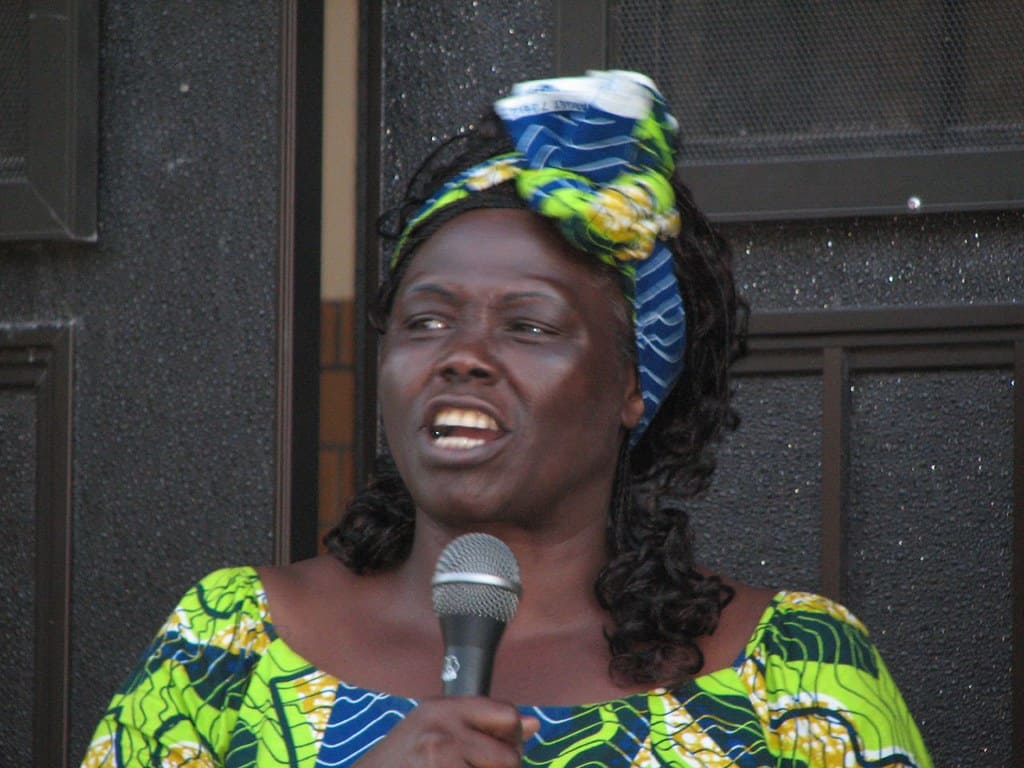
Professor Wangari Maathai revolutionized conservation by explicitly connecting environmental protection with human rights, democracy, and women’s empowerment. In 1977, she founded the Green Belt Movement in Kenya, an initiative that trained rural women to plant trees as a response to environmental degradation, deforestation, and resulting water scarcity. This approach was radical in recognizing that conservation cannot succeed without addressing the needs of local communities and the political structures that impact both people and ecosystems. Under Maathai’s leadership, the movement planted over 51 million trees across Kenya, restoring watersheds and creating sustainable wood sources while providing income for thousands of women.
Maathai’s conservation work frequently put her in direct opposition to powerful political interests, resulting in harassment and even imprisonment. Nevertheless, she persisted in advocating for forest protection, particularly fighting commercial development in Nairobi’s Uhuru Park and Karura Forest. Her courage in connecting environmental destruction with governmental corruption expanded the boundaries of conservation work. In 2004, Maathai became the first African woman to receive the Nobel Peace Prize, recognition that legitimized the crucial connections between environmental sustainability, democracy, and peace. Until her death in 2011, she continued advocating for holistic approaches to conservation that address root causes of environmental degradation while empowering marginalized communities – a model now widely adopted in conservation projects worldwide.
Ruth Patrick: Pioneering Freshwater Conservation Science

Dr. Ruth Patrick revolutionized aquatic conservation through her development of methods to assess the health of freshwater ecosystems, creating a scientific framework that continues to guide water quality protection worldwide. Beginning her career in the 1930s when women were rarely accepted in scientific fields, Patrick persevered to earn her Ph.D. in botany and secure a position at the Academy of Natural Sciences in Philadelphia. There, she developed what became known as the “Patrick Principle” – the revolutionary idea that biological diversity provides the most accurate measurement of an ecosystem’s health. This approach contradicted prevailing methodologies that relied solely on chemical analyses to determine water quality.
Patrick’s watershed studies in the 1940s and 1950s, particularly on Pennsylvania’s Conestoga Creek and the Savannah River, established the interdisciplinary approach to freshwater ecology that forms the backbone of modern stream assessment. By examining entire communities of organisms – from microscopic diatoms to fish – Patrick demonstrated how different species respond to various pollutants, creating biological indicators of ecosystem health. Her work directly influenced the 1972 Clean Water Act and established methodologies still used by environmental agencies worldwide. Throughout her remarkable 97-year life (1907-2013), Patrick advised presidents, trained generations of scientists, and published over 200 scientific papers, transforming how we understand, monitor, and protect freshwater ecosystems – the lifeblood of terrestrial wildlife conservation.
Rosalie Edge: Militant Defender of Birds and Wilderness
Rosalie Barrow Edge transformed conservation advocacy through her fearless confrontation of established organizations and unyielding defense of endangered birds and wilderness areas. After becoming involved in conservation in her 50s, Edge founded the Emergency Conservation Committee (ECC) in 1929, challenging the complacency she perceived in groups like the Audubon Society, which she criticized for cooperating with gun and hunting interests while failing to protect rapidly declining bird species. Her provocative pamphlets, backed by rigorous research, forced established conservation organizations to adopt stronger protection stances and greater transparency with their members. This accountability revolution fundamentally changed how conservation organizations operate.
Edge’s most enduring achievement came in 1934 when she established Hawk Mountain Sanctuary in Pennsylvania – the world’s first preserve dedicated to protecting birds of prey. Purchasing the property after learning thousands of migrating hawks were being slaughtered there for sport, Edge transformed a killing field into a scientific research center and public education site. Her militant approach to conservation extended to successfully advocating for the creation of Olympic and Kings Canyon National Parks against significant timber industry opposition. Though largely forgotten after her death in 1962, recent scholarship has recognized Edge as one of the most effective conservation advocates of the 20th century, whose confrontational tactics and insistence on scientific integrity set new standards for environmental activism.
Terri Irwin: Continuing a Conservation Legacy
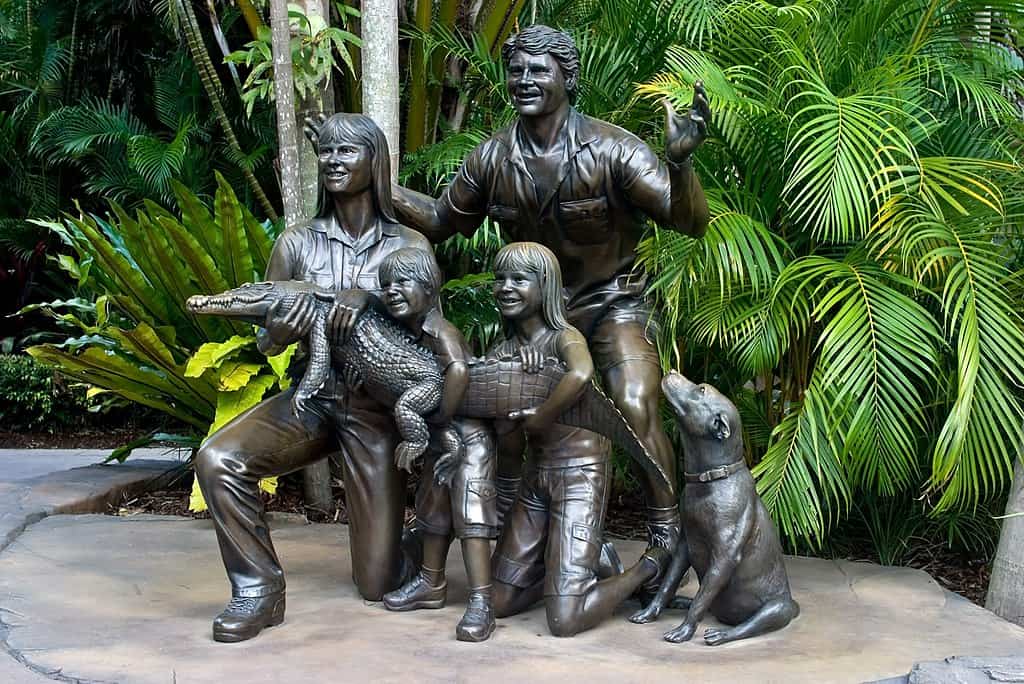
Terri Irwin transformed her personal tragedy into a powerful conservation force after the death of her husband, “Crocodile Hunter” Steve Irwin, in 2006. As co-founder of Australia Zoo and Wildlife Warriors Worldwide, Terri has expanded their conservation footprint to include wildlife hospitals, research programs, and habitat protection initiatives across multiple continents. American-born Terri met Steve while visiting his wildlife park in 1991, and together they built not just a relationship but a conservation empire focused on changing public perceptions of feared animals like crocodiles, snakes, and spiders. Their television programs reached over 500 million viewers globally, using entertainment to deliver conservation messages and generate funding for protection programs.
Following Steve’s death, Terri has demonstrated remarkable resilience in advancing their shared vision, establishing the Wildlife Hospital at Australia Zoo, which treats over 10,000 injured native animals annually. Under her leadership, Wildlife Warriors expanded conservation projects in Tasmania, Sumatra, South Africa, and Namibia, while continuing scientific research on crocodiles that Steve began. Terri also mentored her children, Bindi and Robert, into becoming conservation advocates in their own right, ensuring the family’s impact spans generations. Her approach combines emotional connection to individual animals with science-based conservation strategies and innovative use of media platforms – a model increasingly adopted by conservation organizations seeking to engage public support in a digital age.
Sylvia Earle: Her Deepness and Ocean Conservation

Dr. Sylvia Earle has revolutionized marine conservation through her extraordinary exploration achievements, scientific research, and tireless advocacy for ocean protection. As a pioneering marine biologist and oceanographer, Earle broke numerous barriers for women in science, including leading the first all-female team of aquanauts in the 1970 Tektite II underwater habitat mission. Her remarkable career includes setting the women’s depth record for solo diving (1,000 meters), logging over 7,500 hours underwater, and leading more than 100 expeditions. These firsthand experiences in the deep ocean have given Earle unique authority in advocating for marine protection, earning her the nickname “Her Deepness” among fellow scientists.
Beyond exploration, Earle has transformed conservation through her concept of “Hope Spots” – special places that are critical to the health of the ocean – which she introduced after receiving the 2009 TED Prize. Through her organization Mission Blue, Earle has helped identify over 140 Hope Spots worldwide, catalyzing new marine protected areas and heightened protection for existing ones. As the first female chief scientist of the National Oceanic and Atmospheric Administration (NOAA) and a National Geographic Explorer-in-Residence, Earle has consistently used her platforms to communicate the ocean’s rapid degradation and urgent need for protection. Her books, films, and lectures emphasize that ocean conservation is fundamentally about human survival, connecting marine ecosystem health to climate stability, food security, and the planet’s capacity to sustain life.
The Enduring Impact of Women Conservationists
The pioneering women who have shaped wildlife conservation demonstrate that transformative impact often comes from those working against established norms and systems. From Jane Goodall’s revolutionary approach to studying animals as individuals to Wangari Maathai’s integration of environmental protection with social justice, these women fundamentally reimagined humanity’s relationship with the natural world. Their collective legacy extends far beyond the species and habitats they directly protected to include new methodologies, ethical frameworks, and cross-disciplinary approaches that continue to influence conservation science and policy today. By breaking barriers in male-dominated fields and advocating for community involvement, education, and sustainable development, these women proved that environmental stewardship is inseparable from social equity and human wellbeing.
Their work inspires new generations of conservationists—both women and men—to approach ecological challenges with empathy, resilience, and innovation. As the global environmental crisis deepens, the enduring impact of these trailblazers reminds us that bold, inclusive leadership is essential for meaningful change. The legacy of women conservationists is not only a testament to their courage and vision but also a call to action, urging us all to protect the planet with the same determination, compassion, and hope.

From exploring the marine wonders in the Azores and witnessing the vast savannas of Kenya, to delving deep into the rich biodiversity of South Africa and traversing iconic landscapes in Australia and the US like Yellowstone, Chris's experiences are vast.
With a penchant for diving alongside sharks, the ocean holds a special place in his heart.
Through his academic insights, he champions wildlife conservation, striving with 'Animals Around The Globe' to cultivate a profound connection between humans and animals, enhancing our mutual appreciation.
Connect with him at Feedback@animalsaroundtheglobe.com.
- The Largest Clam Ever Dredged Up From U.S. Waters - July 22, 2026
- How Animated Films Shape What Kids Believe About Animals - July 22, 2026
- The Most Iconic Animals Saved from Extinction in the U.S. - July 22, 2026