

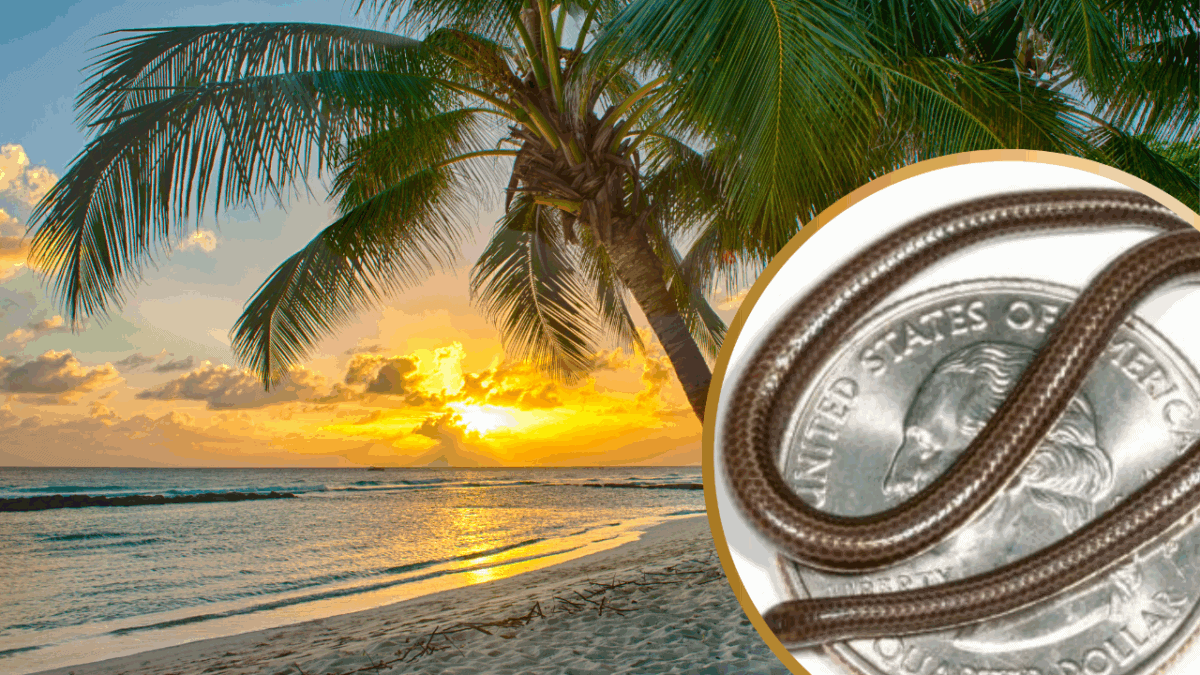
On March 20, 2025, environmental officer Connor Blades knelt down during a routine survey and uncovered what scientists had feared was lost forever: the world’s smallest known snake. Tetracheilostoma carlae, or the Barbados threadsnake, hadn’t been seen in nearly two decades and had quietly slipped off scientific radar, feared extinct. But against all odds, it wriggled back into the light, alive and real.
The rediscovery, confirmed by researchers with Rewild and the University of the West Indies, sent ripples through the herpetology community and brought a sense of awe to conservationists around the world. Not only is the snake tiny — just four inches long and weighing less than a paperclip — but its entire known habitat has been reduced to fragmented slivers of forest on a heavily developed island. In a world where biodiversity loss often makes headlines for all the wrong reasons, this small but mighty moment offers a rare spark of hope.
The Moment of Discovery: When and Where
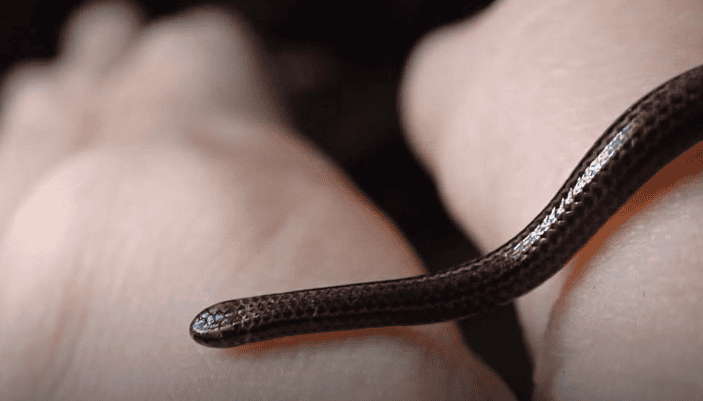
On the morning of March 20, 2025, while surveying a small patch of woodland beneath a jack‑in‑the‑box tree in central Barbados, environmental officer Connor Blades, part of the Ministry of Environment and National Beautification, lifted a rock and spotted something wriggling. Beneath it lay a tiny snake, no longer than roughly 4 inches (10 cm) and thinner than a spaghetti strand.
Joining him was Justin Springer of the conservation group Re:wild. After over a year of intensive searching, their persistence paid off. The specimen was taken to the University of the West Indies, where microscopic examination and imagery confirmed it to be the elusive threadsnake.
“Barbados threadsnakes are blind snakes, so they’re very cryptic,” said Connor Blades. “They’re quite rare also, it seems. There have only been a handful of confirmed sightings since 1889, so there are not many people who have ever seen it, unfortunately.” He added.
Why This Snake Matters More Than Its Size
At just 3–4 inches long and weighing about 0.6 grams, the Barbados threadsnake is easily mistaken for an earthworm. Yet despite its tiny stature, it has enormous scientific and ecological significance. The species had been last officially recorded in 2005, with prior sightings stretching back to 1889. Its long absence led many to fear its extinction.
Now confirmed as still extant, the threadsnake has transitioned from a species “lost to science” to Critically Endangered, spotlighting the fragility of its remaining habitat.
Biology and Challenges of Survival
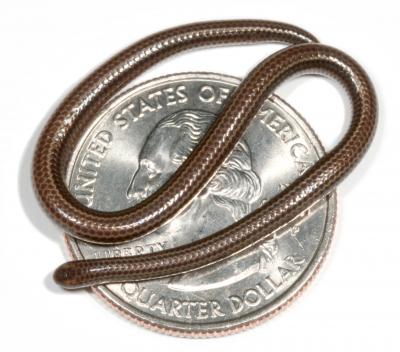
This blind, burrowing snake spends most of its life beneath leaf litter or soil, feeding on ants and termite larvae. It reproduces by laying just one egg at a time, a trait that severely limits its capacity for population growth. In contrast, invasive look‑alikes like the Brahminy blind snake can reproduce without mating.
Identification is especially tricky because of its similarity to the Brahminy blind snake, which lacks the threadsnake’s distinctive pale dorsal lines. Researchers relied on microscopic features and video‑still images to confirm the species.
Snake Conservation: Protecting the Thread of Biodiversity
The rediscovery signals more than just the survival of a minuscule reptile—it represents a call to safeguard Barbados’s dwindling primary forest, which today makes up less than 2 % of its original cover. Much of the threadsnake’s habitat exists in the rugged Scotland District and its network of gullies.
Conservationists now aim to expand surveys across potential habitat patches, assess population density, and map its full range. These steps are essential to designing protective measures.
If the threadsnake survives in fragile remnant forests, protecting it could also benefit other endemic species that remain under threat.
Looking Ahead: From Rediscovery to Action
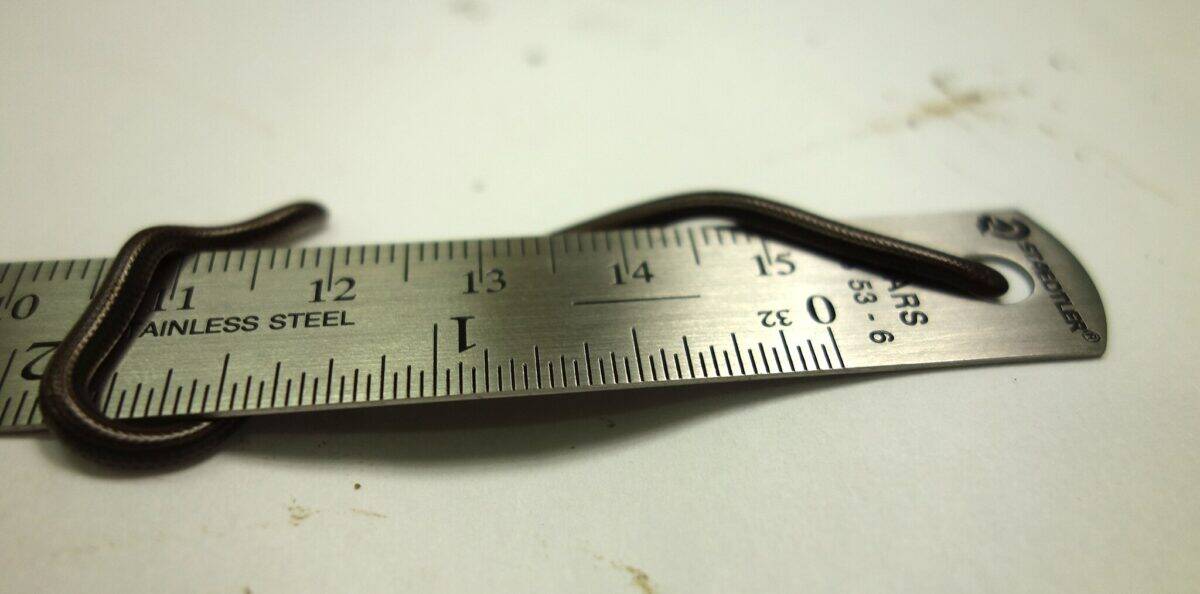
The rediscovery of Tetracheilostoma carlae has energized the Conserving Barbados’ Endemic Reptiles (CBER) initiative, led by the Ministry of Environment and Re:wild. Field teams are now developing monitoring programs and outreach campaigns to raise public awareness of these rare forest ecosystems.
This tiny snake has become a flagship for biodiversity advocacy, reminding us that even the smallest species play vital roles—and protecting them demands both science and political will.
