
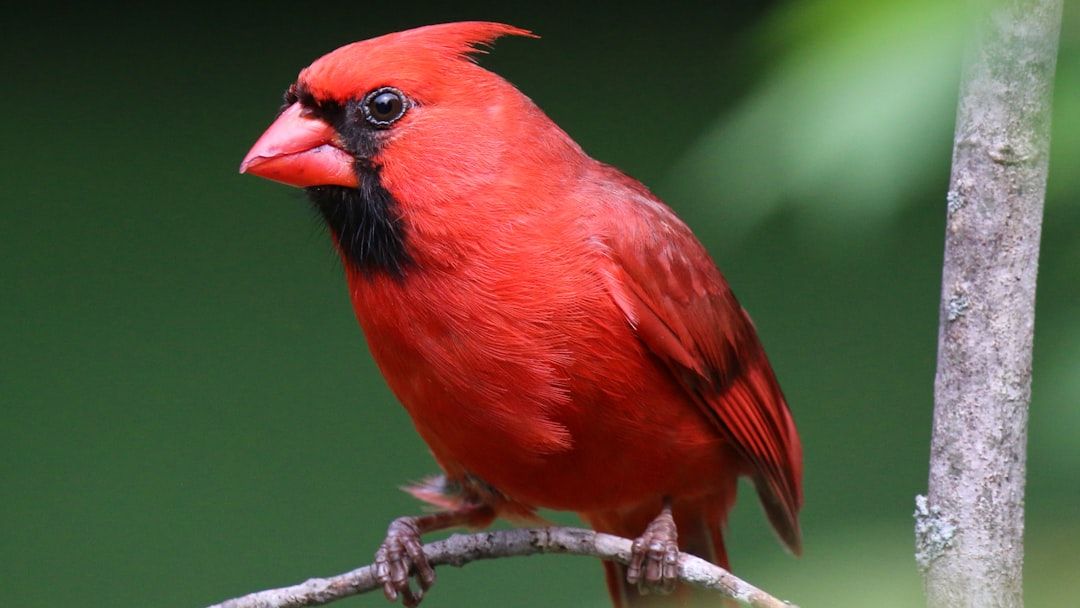
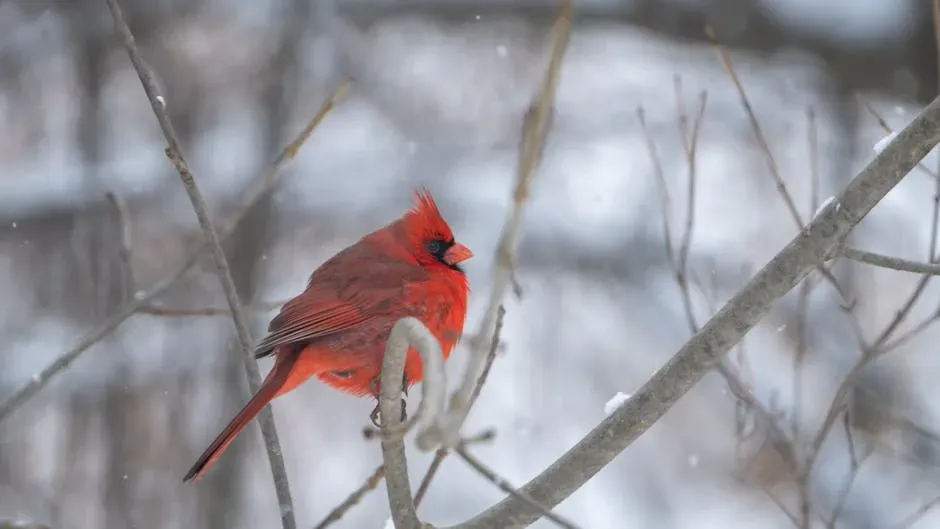
There’s something quietly remarkable about the cardinal. Most people notice the red. Hard not to. A male northern cardinal perched against fresh snow is practically a painting. But the color is almost a distraction, because behind that famous crimson exterior lives one of the most behaviorally rich, biologically surprising birds in North America.
Renowned for its striking red plumage, the Northern Cardinal is among the most abundant and cherished songbirds in North America. Yet despite being a backyard fixture for millions of people, the cardinal keeps a lot of its secrets in plain sight. The facts below go well past “it’s pretty” and get into the genuinely strange, charming, and unexpected.
#1: Their Red Color Is Literally Made From Food
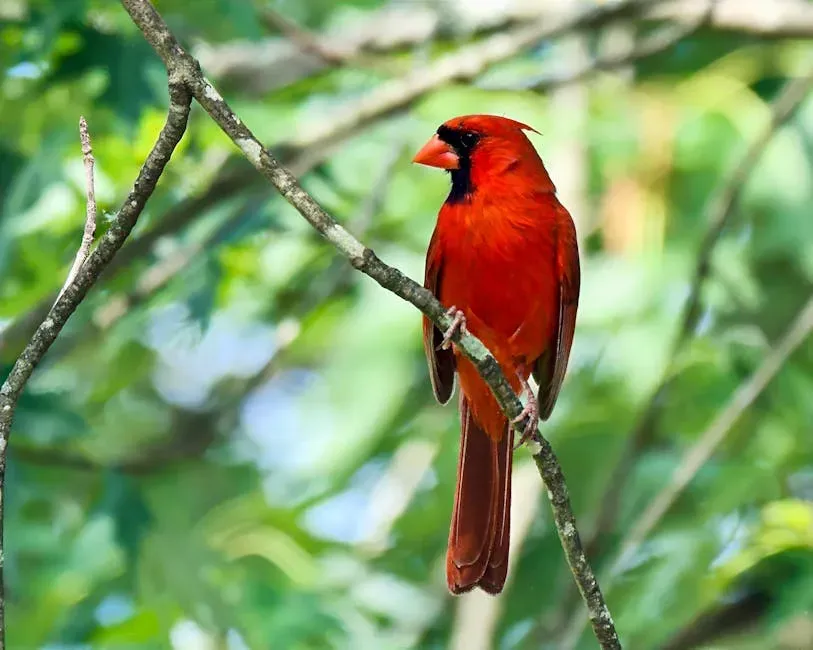
Cardinals get their trademark red plumage from their food. While they are mostly granivorous, or grain and seed eating, cardinals also eat insects and a wide variety of fruits like wild grapes, dogwood berries, and mulberries. These fruits contain carotenoids that can create the reds, oranges, yellows, and pinks found in avian feathers.
Cardinals cannot produce carotenoids on their own; they get them from their diet. Males with carotenoid-rich foods are redder, while those with a poor diet are duller. Females actually prefer the redder males, as this signals they can find good food. The color is essentially a living advertisement of health. A dull red male isn’t just less attractive. He’s likely eating less well.
#2: Some Cardinals Are Yellow, Not Red
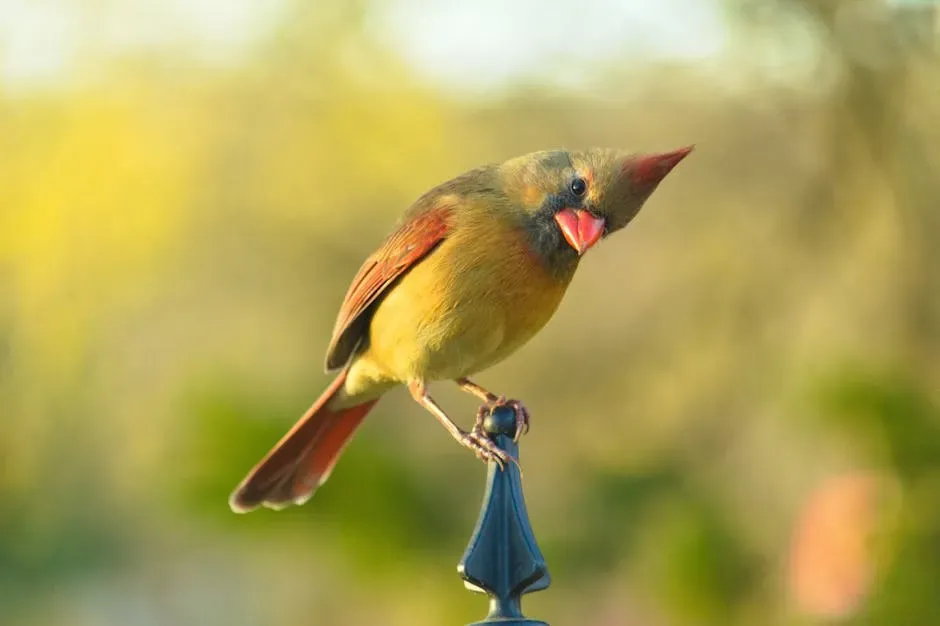
Different from the actual Yellow Cardinal species, there can also be a yellow version of the Northern Cardinal. Cardinals with an orangish-yellow hue have been reported for decades. This deviation in coloration is caused by a genetic mutation that results in a bird missing the enzyme that converts yellow pigments in their food to red.
This mutation only affects an estimated one in a million birds, so seeing a yellow cardinal is truly a once-in-a-lifetime event. When sightings do occur, they tend to attract significant attention from birders across the country. The appearance of vibrant yellow Northern Cardinals is typically caused by a genetic plumage variation called xanthochroism. It’s incredibly rare to see a yellow cardinal, but when it happens, it becomes a national news story for bird lovers.
#3: The Female Sings From the Nest – On Purpose
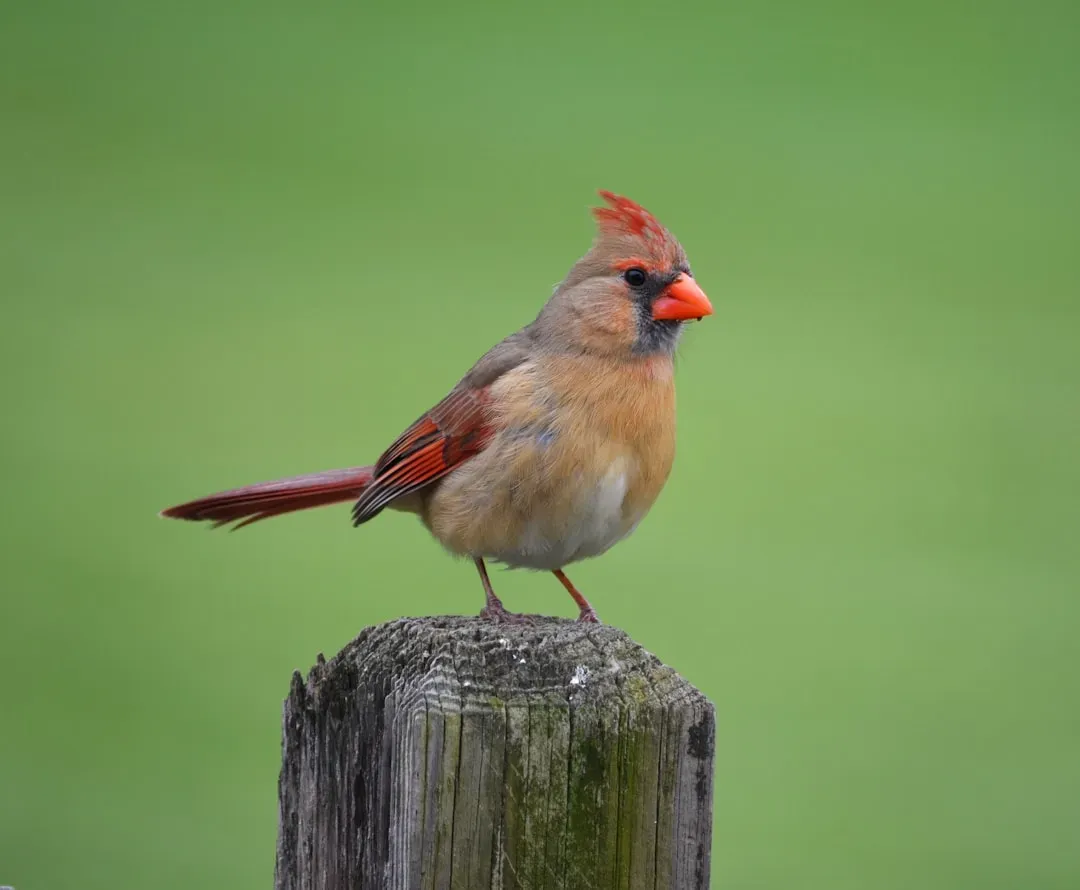
Only a few female North American songbirds sing, but the female Northern Cardinal does, and often while sitting on the nest. This may give the male information about when to bring food to the nest. A mated pair shares song phrases, but the female may sing a longer and slightly more complex song than the male.
They often sing while sitting on the nest to tell their male when to bring food and stay away, as the male’s bright red plumage might expose the nest to predators. Think about that for a moment. The female is managing both communication and camouflage simultaneously. Northern Cardinals sing more than 24 different songs, and during the breeding season, males may sing 200 or more per hour.
#4: They Go Bald Every Summer
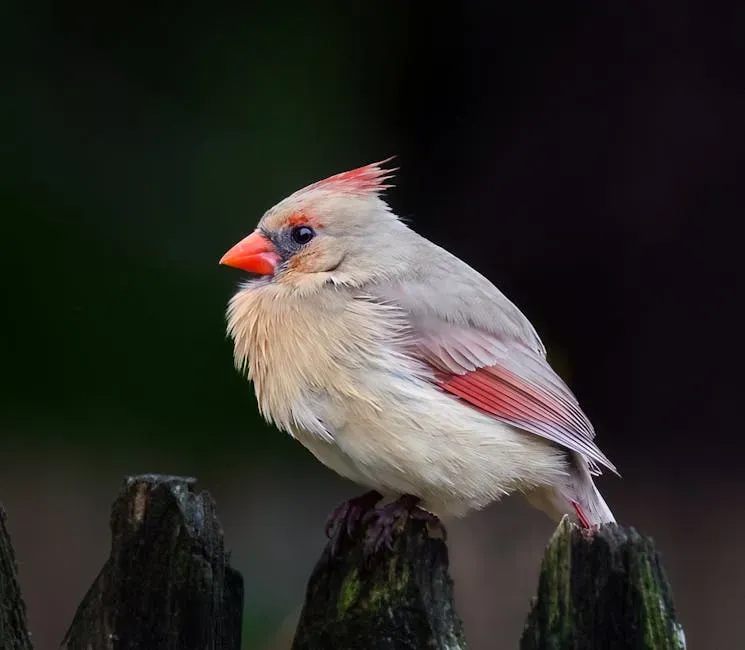
If you ever see a bald Northern Cardinal, do not worry. Though the bird might look sickly, it’s actually just molting. Every year birds replace their worn-out feathers for fresh ones, typically replacing a few feathers at a time, but cardinals can often lose all their head feathers at once, giving them a decidedly punk-inspired look in late summer after breeding.
While most birds replace a few feathers at a time, some cardinals lose all their head feathers at once. It’s a natural process to get rid of old, damaged feathers and grow a fresh, strong set for the coming winter, but it definitely looks a little strange for a while. Bald cardinal sightings tend to alarm new birdwatchers. Once you know what’s happening, it’s actually a sign that the bird is doing exactly what it should.
#5: They Attack Their Own Reflection for Weeks
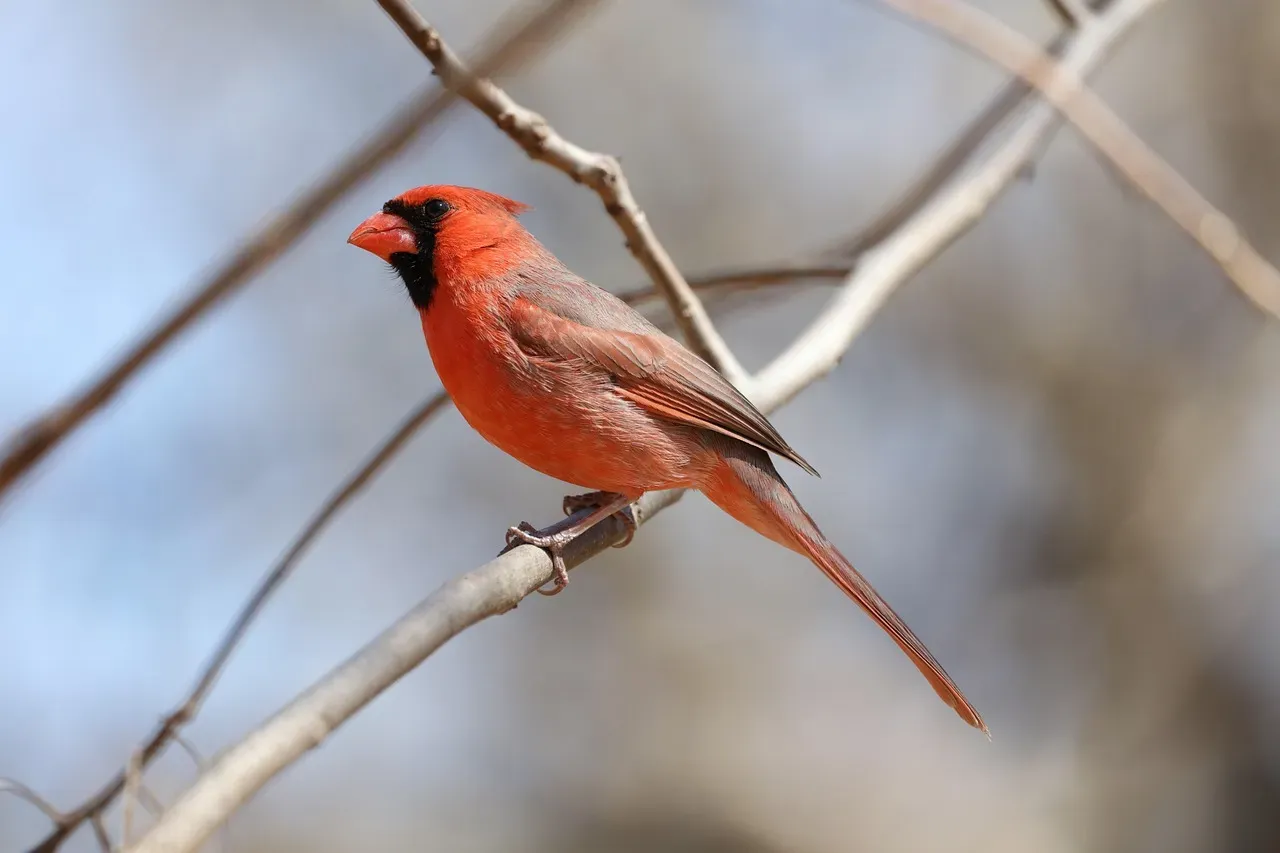
Many people are perplexed each spring by the sight of a cardinal attacking its reflection in a window, car mirror, or shiny bumper. Both males and females do this, and most often in spring and early summer when they are obsessed with defending their territory against any intruders. Birds may spend hours fighting these intruders without giving up.
A few weeks later, as levels of aggressive hormones subside, these attacks should end, though one female kept up this behavior every day or so for six months without stopping. That’s not a quirk. That’s dedication. The instinct to defend territory is so deeply wired that some individuals literally cannot stop, even when the “rival” never fights back.
#6: The Crest Is a Mood Indicator
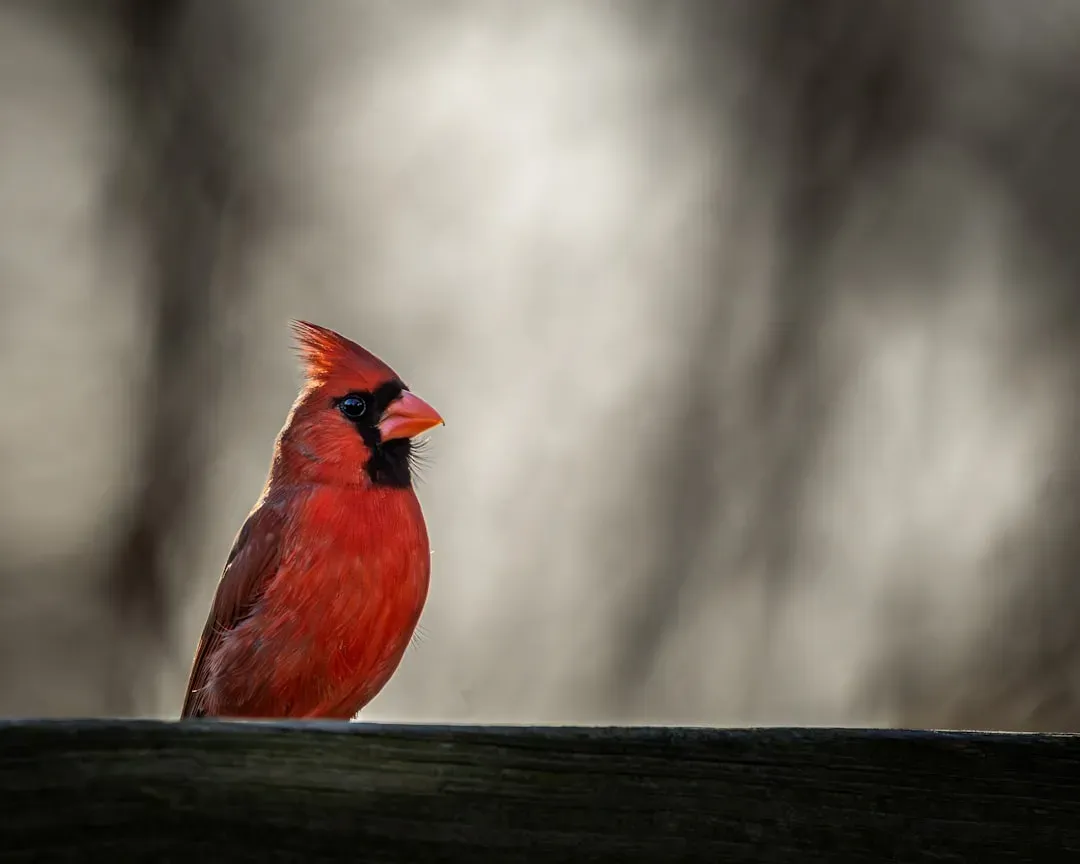
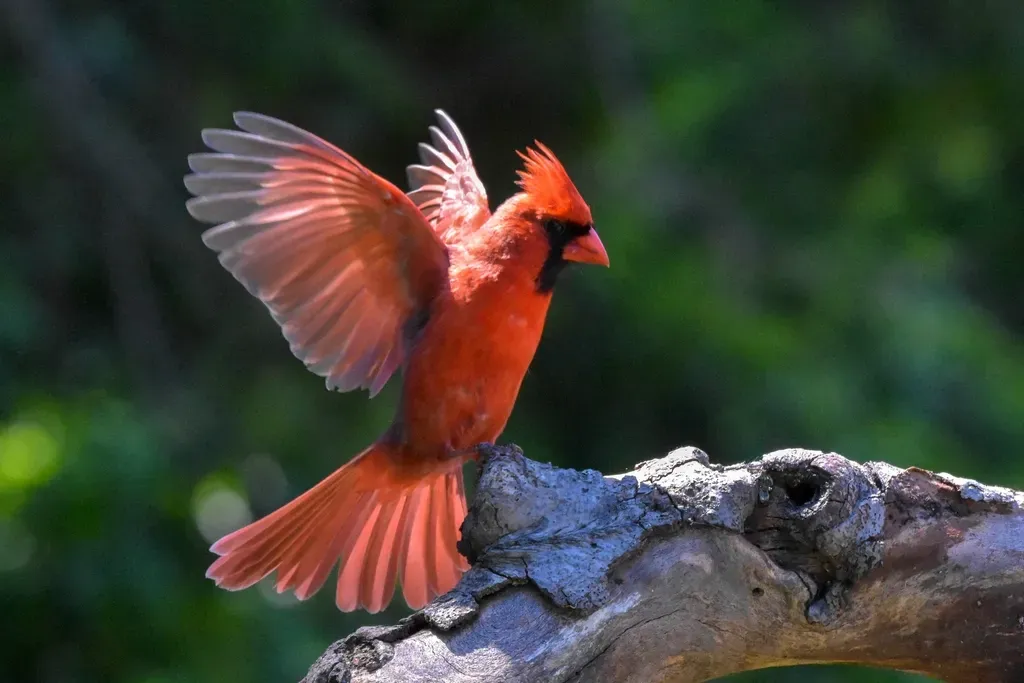
Both male and female cardinals have a pointed crest of feathers atop their heads, which they can raise and lower depending on their mood. It works in a way that’s surprisingly intuitive once you know to look for it. You can tell the mood of a northern cardinal by observing its head. Its distinctive crest acts like an eyebrow for humans. The feathers go higher when agitated and stay low when calm.
The distinctive crest can be raised and pointed when agitated or lowered and barely visible while resting. Most backyard observers never register this. They’re too busy admiring the color to notice the real-time emotional display happening right above the bird’s eyes. Watch the crest next time, and you’ll realize cardinals are far more expressive than they first appear.
#7: They Don’t Migrate – Ever
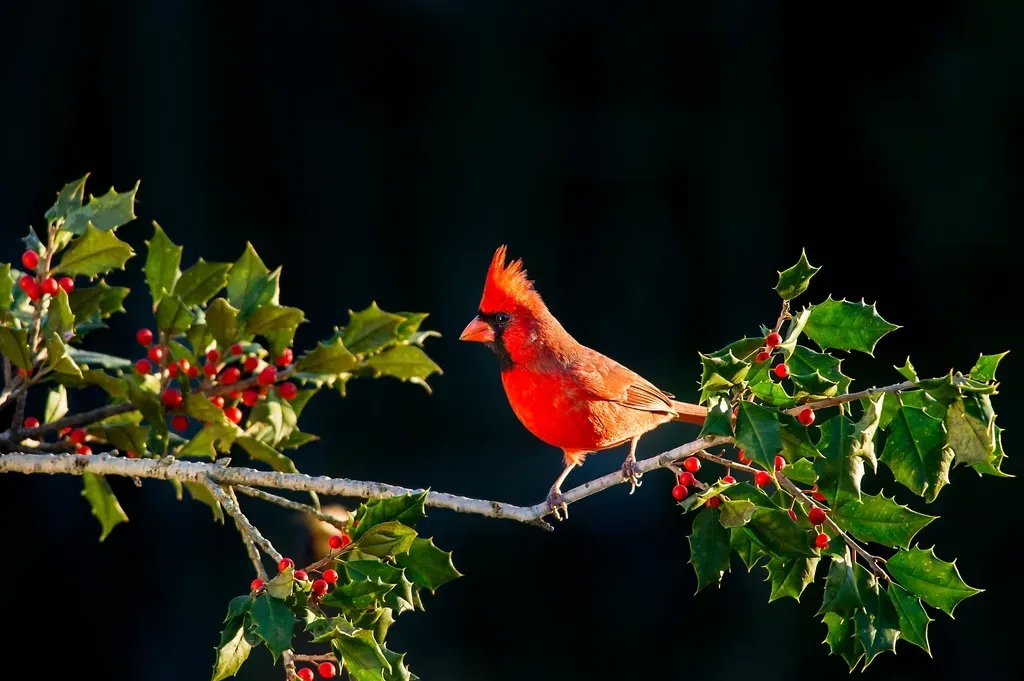
Cardinals don’t migrate and they don’t molt into a dull plumage, so they’re still breathtaking in winter’s snowy backyards. This means the same individual birds that visit your feeder in July are, in all likelihood, the exact same ones pecking at seeds in January. Because they stay in cold climates, they rely heavily on backyard bird feeders during snowy months. Their bright red feathers create a stunning contrast against the white snow, making them very easy to spot.
In cold temperatures, cardinals will shiver and tense their muscles, especially breast muscles, to generate heat. Cardinals have the ability to drop their body temperature 3 to 6 degrees Fahrenheit if needed in order to survive cold temperatures. That’s a meaningful physiological adaptation. Rather than fleeing the cold like so many other species, cardinals have evolved to endure it directly.
#8: A Group of Cardinals Can Be Called a “Vatican”
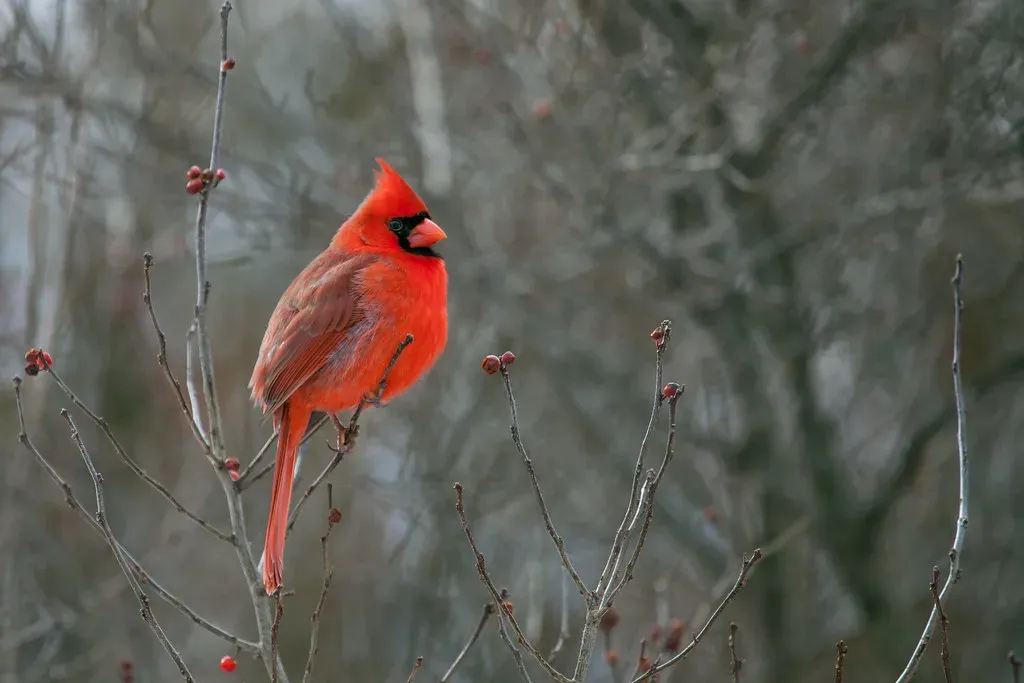
Flocks of cardinals can be called a college, conclave, deck, radiance, or Vatican of cardinals. That’s a genuinely unusual range of collective nouns for a single species, and it reflects how deeply cardinals have woven themselves into human culture and language. The church-inspired names trace back to the bird’s most obvious feature.
The Northern Cardinal’s common name has long been inspired by the bird’s bright red plumage, which reminded people of the crimson robes and caps worn by the cardinals of the Roman Catholic Church. Even its scientific name, Cardinalis cardinalis, reflects this history. There aren’t many birds whose name, collective noun, and scientific classification all point back to the same origin story.
#9: Males Feed Females Beak-to-Beak During Courtship
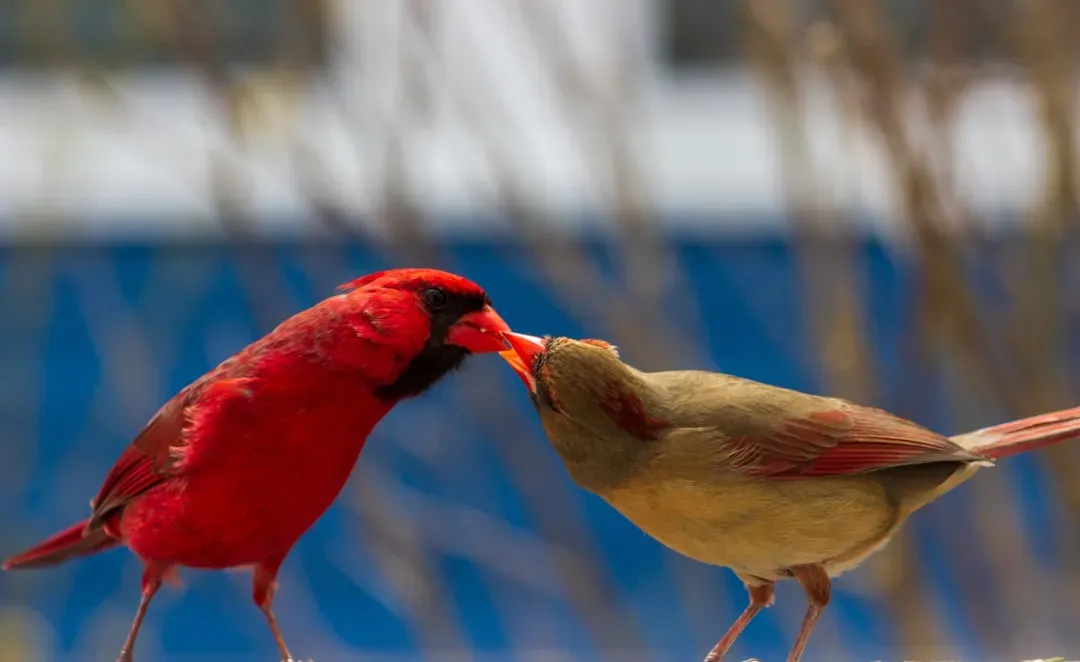
During courtship, the male feeds seed to the female beak-to-beak. It’s a behavior that looks, to any honest observer, like a kiss. This behavior, called “mate-feeding,” shows off the male’s foraging skills and helps strengthen their bond. The female is essentially evaluating a potential partner’s ability to provide, right there at the feeder.
During courtship, females may not need to forage for food as much. They can sit and wait for their partner. Males often bring them edible gifts to win their affection. Once paired, that dynamic continues into nesting. Males sometimes bring nest material to the female, who does most of the building. It’s a partnership, divided clearly by role from the very beginning.
#10: They Were Once Kept as Caged Pets
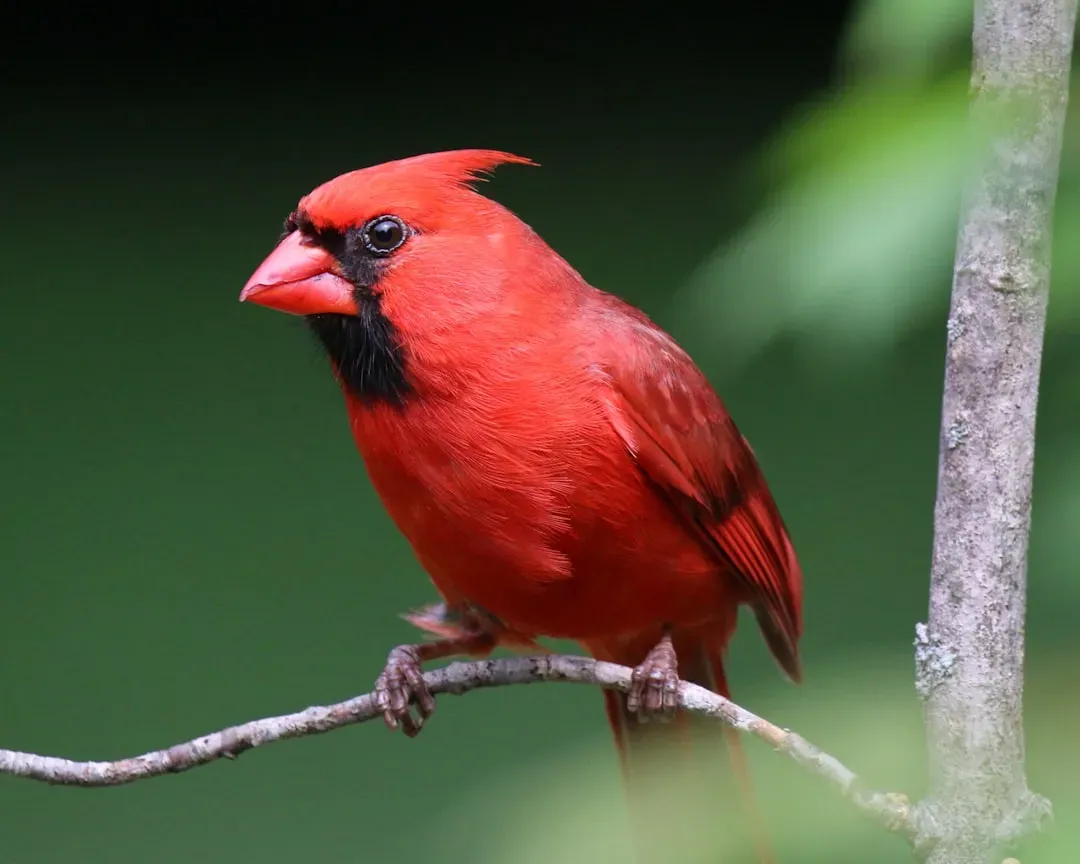
These birds were so popular for their color and song that people used to keep them as pets in cages during the 1800s until laws protected them. It’s difficult to imagine now, given how familiar and wild-seeming cardinals feel in their natural habitat. It was once prized as a pet, but its sale was banned in the United States by the Migratory Bird Treaty Act of 1918.
The Northern Cardinal was a popular cage bird in the 1800s, but is now protected in the U.S. by the Migratory Bird Treaty Act. The shift from caged novelty to protected species is worth pausing on. The same qualities that made people want to own them, their color, song, and presence, are now what draw millions of people outside with binoculars instead.
#11: Cardinals Are the State Bird of Seven States
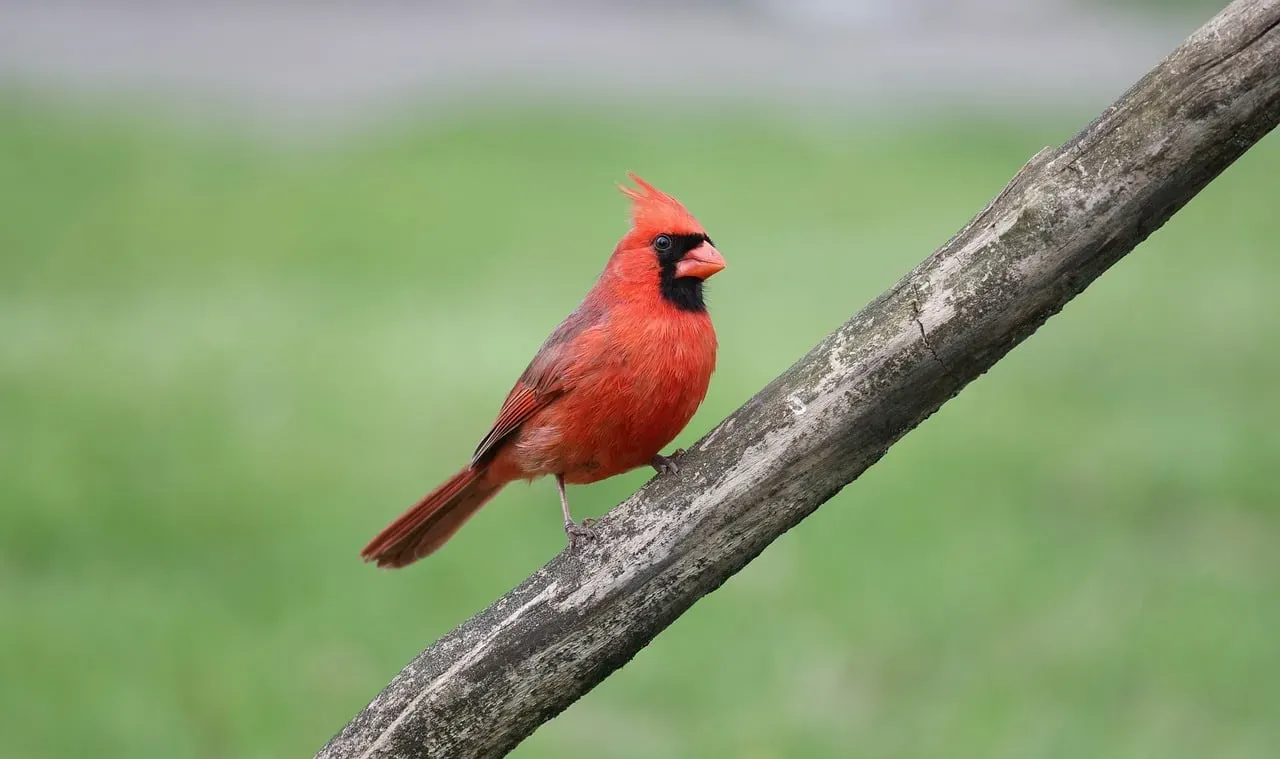
A perennial favorite among people, the Northern Cardinal is the state bird of seven states: Illinois, Indiana, Kentucky, North Carolina, Ohio, Virginia, and West Virginia. No other bird holds that distinction across as many states. First designated as Kentucky’s state bird in 1926, Illinois, Indiana, North Carolina, Ohio, Virginia, and West Virginia have also assigned it that title.
The Northern Cardinal is a popular mascot for many sports teams. They represent two professional teams: the St. Louis Cardinals baseball team and the Arizona Cardinals NFL team. The cardinal also represents many colleges, including Ball State University, Concordia University, Lamar University, the University of Louisville, and Wesleyan University. For a bird, that’s a remarkable cultural footprint. Few other species have managed to embed themselves so thoroughly into both the natural and civic identity of a country.
#12: Their Range Has Dramatically Expanded Northward
Surprisingly, the Northern Cardinal’s original U.S. range was mostly southern, with the species beginning its expansion northward in the early 1900s. Experts believe a warming climate combined with the growth of towns and suburbs across the eastern U.S., which increased edge habitat and introduced yard feeders during winter, were the main drivers of this expansion.
Northern Cardinals were considered rare in 1929, found mostly in the southern region, but by 1955 records indicated they were “pushing northward,” likely due to climate change, the loss of dense forest to agriculture and suburban uses, as well as the increased use of birdfeeders. Today its range extends from Maine to Minnesota to Texas, south into Mexico, and north into Canada, from Ontario to Quebec, New Brunswick, Nova Scotia, and Cape Breton Island.
The Bird That Rewards a Second Look
Cardinals are one of those rare species that most people feel they already know. They’re on Christmas cards, team jerseys, and kitchen curtains across the country. That familiarity, though, tends to stop people from actually watching.
The oldest recorded Northern Cardinal was a female, and was 15 years, 9 months old when she was found in Pennsylvania. A wild bird quietly living through more than fifteen winters, raising multiple broods, singing dozens of distinct songs, and navigating the same neighborhood year after year. That’s not a decoration. That’s a life.
The next time a cardinal lands near you, take a moment before reaching for your phone. Watch the crest. Notice whether it raises or lowers. Check if the color is deep crimson or slightly washed out. You might be looking at a young male still building his plumage, or an old female who’s been singing from that same shrub for a decade. The details are all there. Most people just never slow down long enough to catch them.

- These Endangered Species Are Making Remarkable Comebacks Thanks to Dedicated Efforts - July 17, 2026
- 10 Fascinating Facts About the Badlands: America’s Ancient Fossil Kingdom - July 17, 2026
- 10 Fascinating Facts About Monument Valley: The Ancient Landscape That Shaped the American West - July 17, 2026