


Snakes are remarkable creatures with incredible adaptations that allow them to thrive in various environments. While many people assume snakes are strictly ground-dwellers, numerous species possess the remarkable ability to climb vertical surfaces, including walls. This surprising capability enables them to access food sources, escape predators, and explore habitats that would otherwise be inaccessible. Whether you’re a snake enthusiast, a homeowner concerned about potential serpentine visitors, or simply curious about these fascinating reptiles, this article explores 12 snake species that have mastered the art of scaling vertical surfaces, explaining their techniques, adaptations, and what makes their climbing abilities so impressive.
12. Rat Snakes (Pantherophis spp.)

Rat snakes are perhaps the most accomplished wall-climbers in the snake world. These non-venomous constrictors, found throughout North America, Europe, and Asia, possess remarkable climbing abilities that often surprise homeowners who discover them scaling the sides of buildings. They utilize a combination of their muscular bodies and rough ventral scales to create friction against vertical surfaces. The Eastern Rat Snake (Pantherophis alleghaniensis), for example, can climb up virtually any textured surface, including brick walls, vinyl siding, and even relatively smooth concrete. Their exceptional climbing skills serve them well when hunting birds and rodents that nest in elevated locations, allowing them to access prey that other predators cannot reach.
11. Common House Geckos (Hemidactylus frenatus)

Although technically lizards rather than snakes, Common House Geckos deserve honorable mention for their extraordinary wall-climbing abilities that have influenced the evolution of certain snake species. These small reptiles can effortlessly scale completely smooth surfaces, including glass, thanks to microscopic hairs on their toe pads that create molecular bonds with surfaces. Several snake species have evolved similar, though less advanced, adaptations to climb walls in habitats where they compete with or prey upon geckos. This evolutionary pressure has resulted in some snakes developing specialized ventral scales that can achieve greater surface contact and friction on vertical planes, allowing them to occupy similar ecological niches.
10. Brown Tree Snakes (Boiga irregulars)
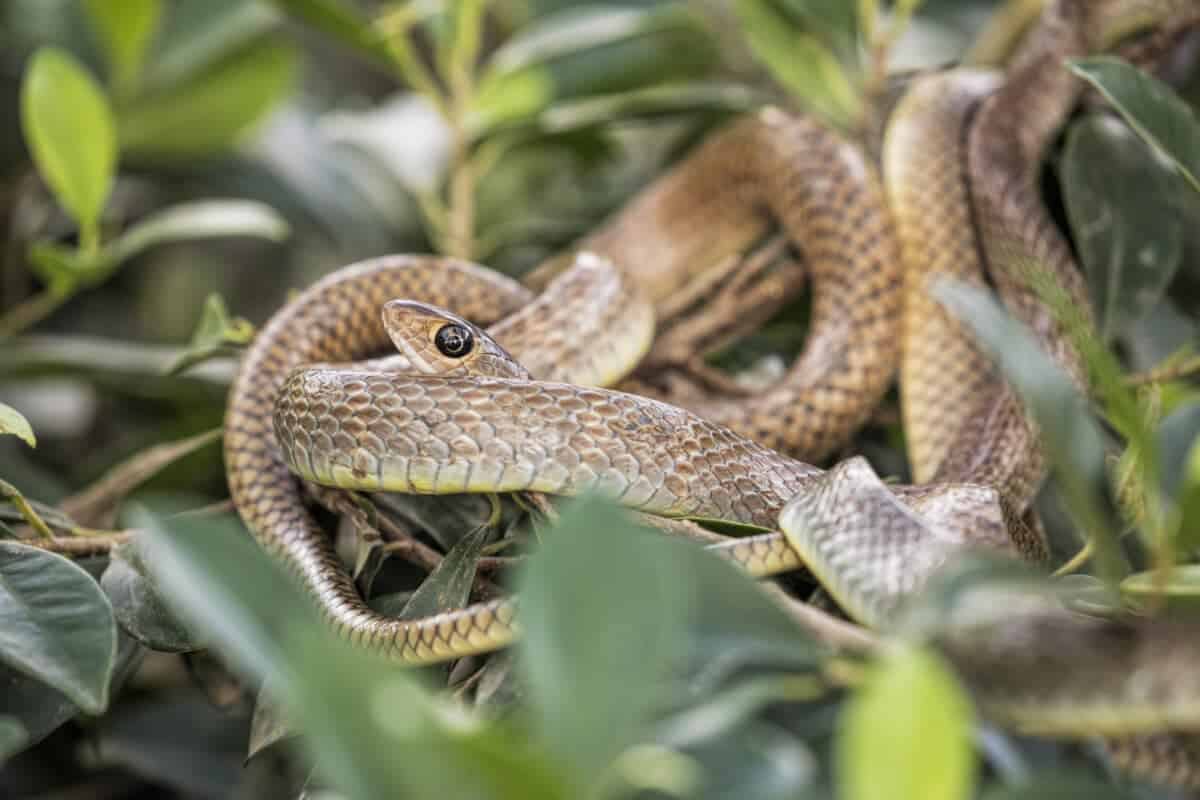
The Brown Tree Snake has earned notoriety as an invasive species in Guam, where its climbing abilities have contributed to the extinction of several native bird species. These mildly venomous colubrids are exceptional climbers, capable of ascending smooth walls by creating a series of S-shaped curves in their body to generate friction points. Their slender build and specialized ventral scales allow them to exploit even tiny imperfections in seemingly smooth surfaces. Brown Tree Snakes can climb vertical concrete walls, metal poles, and even the trunks of palm trees that lack branches. Their nocturnal climbing habits make them particularly effective predators, as they can silently ascend to bird roosts and nests under the cover of darkness.
9. Green Tree Pythons (Morelia viridis)

Native to New Guinea and northern Australia, the Green Tree Python is an arboreal specialist with climbing abilities that extend to walls and vertical surfaces. Their bright emerald coloration provides perfect camouflage in their natural rainforest habitat, where they spend most of their lives above ground. These pythons possess a prehensile tail that acts as a fifth limb, allowing them to anchor themselves while climbing. When scaling walls, they utilize their muscular body to create pressure points against the surface, slowly inching upward in a deliberate, controlled manner. Their specialized ventral scales have microscopic ridges that increase friction against vertical surfaces, enabling them to climb even relatively smooth walls when motivated to reach prey or find suitable resting spots.
8. Common Kingsnakes (Lampropeltis getula)

Common Kingsnakes are versatile climbers found throughout North America. While not as specialized for arboreal living as some species, these constrictors can nevertheless ascend walls with remarkable efficiency. They employ a concertina locomotion method, in which portions of the body alternately anchor against the surface while other sections extend forward. Their muscular bodies and keeled ventral scales provide the necessary friction for climbing textured surfaces like brick walls, stucco, and wooden structures. Kingsnakes are particularly motivated climbers when tracking rodent scent trails that lead upward. Homeowners in the southern United States occasionally discover these beneficial predators climbing exterior walls in pursuit of rats and mice that have established nests in attics or wall voids.
7. Asian Vine Snakes (Ahaetulla prasina)

The Asian Vine Snake, with its incredibly slender body and pointed head, is a specialized climber that can navigate vertical surfaces with graceful precision. Native to tropical forests across Southeast Asia, these mildly venomous snakes have evolved a body plan perfectly suited for vertical movement. Their extremely lightweight frame allows them to climb even on thin vines and stems without causing them to bend – and this same adaptation enables them to scale textured walls. When climbing walls, Asian Vine Snakes use lateral undulation, creating S-shaped curves that provide multiple points of contact with the surface. Their ventral scales feature microscopic projections that catch on tiny irregularities in the climbing surface, allowing them to maintain their position even on near-vertical planes without sliding downward.
6. Common Garter Snakes (Thamnophis sirtalis)

Garter snakes, among North America’s most familiar serpents, possess surprising climbing abilities that often go unnoticed. These relatively small, non-venomous snakes can scale rough walls by using their muscular bodies to press against irregularities in the surface. While not as specialized for climbing as some other species, garter snakes are opportunistic and will ascend walls to escape predators or access food sources. They’re particularly adept at climbing stone walls, brick exteriors, and wooden fences. Researchers have observed garter snakes climbing to heights of over 10 feet on building exteriors, particularly in areas where the walls receive morning or evening sun, as these locations provide optimal thermoregulation opportunities. Their climbing capabilities demonstrate the remarkable adaptability that has made garter snakes one of the most successful serpent species in North America.
5. Black Racers (Coluber constrictor)

Black Racers are among the fastest snakes in North America, and their speed translates to remarkable climbing abilities as well. These non-venomous colubrids can rapidly ascend textured walls using a combination of lateral undulation and their keeled ventral scales, which provide crucial traction. Black Racers typically climb in a burst of speed, moving much faster on vertical surfaces than most other snake species. Their slender, muscular build allows them to exploit small ledges and irregularities in walls that might not support heavier snakes. Black Racers are particularly likely to climb walls surrounding gardens or yards where they hunt for small lizards, which they can pursue up vertical surfaces if necessary. Their climbing behavior is most commonly observed during the warmer months when they are most active and their prey is abundant.
4. Flying Snakes (Chrysopelea spp.)

Perhaps the most spectacular wall-climbers are the flying snakes of Southeast Asia. Despite their name, these snakes don’t truly fly but instead perform controlled gliding descents from heights – abilities that require exceptional climbing skills to reach launch positions. Flying snakes, particularly the Paradise Flying Snake (Chrysopelea paradisi), can climb virtually any textured surface using a unique form of concertina locomotion. Their ventral scales have specialized ridges that create exceptional friction against climbing surfaces. Once they’ve ascended a wall or tree, these remarkable reptiles can launch themselves into the air, flattening their bodies to create a crude wing-like surface that allows them to glide distances of up to 100 feet. Their wall-climbing abilities are therefore essential to their distinctive locomotion strategy, enabling them to repeatedly ascend structures to facilitate their aerial movements.
3. King Cobras (Ophiophagus hannah)
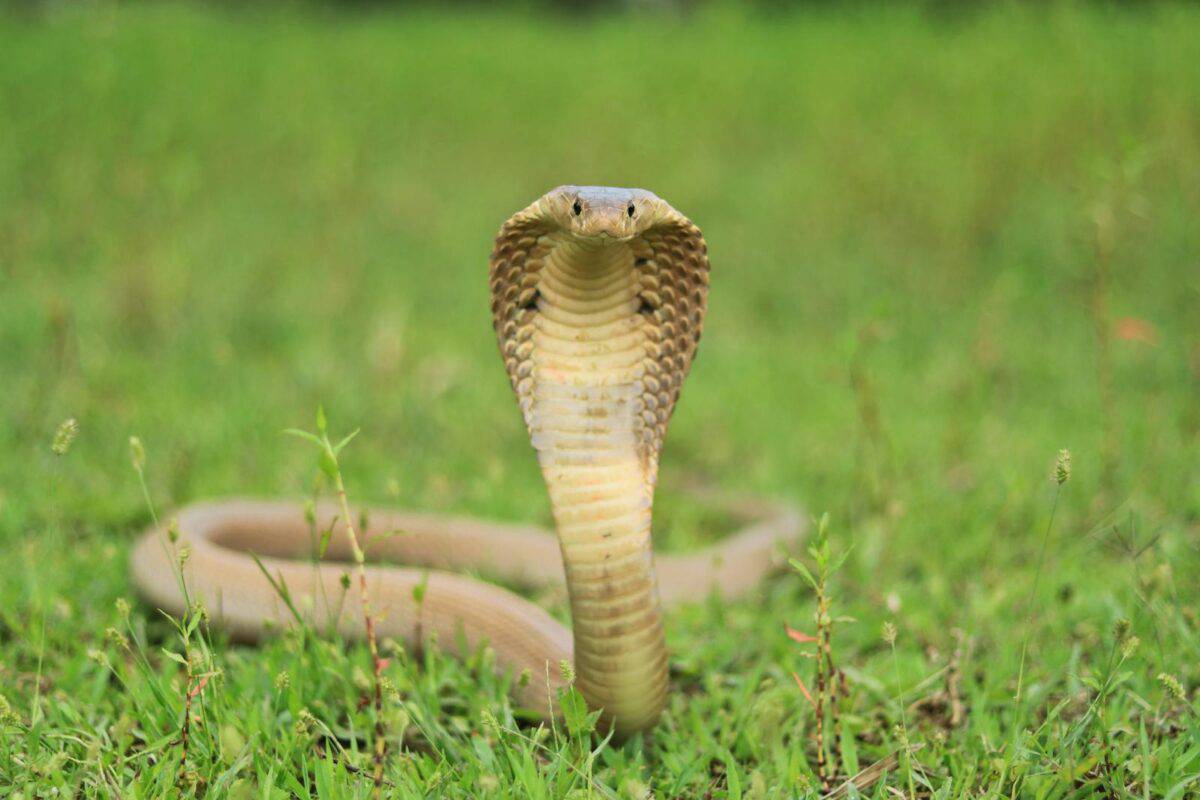
The King Cobra, the world’s longest venomous snake, possesses surprising climbing abilities despite its substantial size. These impressive reptiles, which can exceed 18 feet in length, are capable of ascending rough walls using their powerful muscles and specialized ventral scales. Unlike many other climbing snakes that rely on lateral undulation, King Cobras often employ a more direct vertical approach, using their anterior body to reach upward while the posterior sections provide anchoring support. Their climbing abilities are particularly evident during the breeding season when males may scale walls to access potential mates or establish territory. In their native Southeast Asian habitats, King Cobras have been documented climbing the walls of structures adjacent to forests, sometimes alarming local residents. While they prefer trees for climbing, their ability to scale vertical surfaces demonstrates their remarkable adaptability.
2. California Kingsnakes (Lampropeltis californiae)
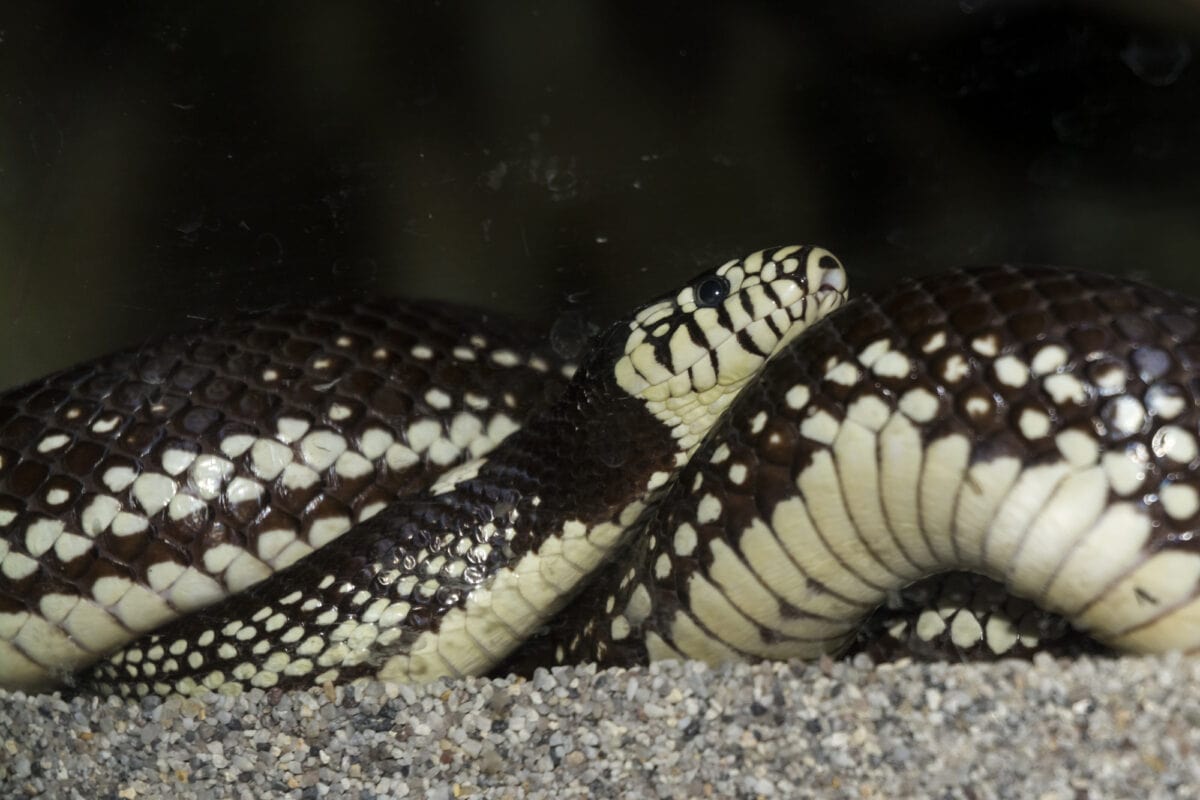
California Kingsnakes are renowned for their adaptability and problem-solving abilities, which extend to impressive wall-climbing skills. These non-venomous constrictors use their muscular bodies to create friction against vertical surfaces, allowing them to ascend stucco walls, brick exteriors, and other textured surfaces commonly found in residential areas throughout the western United States. Their climbing technique involves creating a series of loops with their body, with each section providing counterbalance and support as they move upward. California Kingsnakes are particularly motivated to climb walls when following scent trails of rodents that have taken refuge in upper portions of structures. Their persistence and strength enable them to overcome gravitational challenges that would defeat many other snake species, making them frequent visitors to second-story windows and roof edges in areas where their range overlaps with human habitation.
1. Ball Pythons (Python regius)

While not typically known as prolific climbers, Ball Pythons possess the physical capability to scale textured walls when motivated. These popular pet snakes, native to West and Central Africa, have muscular bodies and specialized ventral scales that allow them to generate sufficient friction against rough surfaces to ascend vertically. In captivity, escaped Ball Pythons have surprised owners by climbing walls to reach warm spots near ceiling fixtures or to explore elevated areas. Their climbing technique relies heavily on their considerable muscular strength, as they press their body against the wall in a series of S-curves that distribute their weight and create multiple contact points. While they climb more slowly and deliberately than specialized arboreal species, their ability to scale vertical surfaces demonstrates the remarkable adaptability that characterizes all snake species, even those not typically associated with climbing behaviors.
Conclusion: The Remarkable Adaptability of Climbing Snakes

The ability of certain snake species to climb walls represents one of the most fascinating adaptations in the reptile world, showcasing the remarkable evolutionary solutions these animals have developed to exploit vertical habitats. From specialized ventral scales with microscopic ridges to unique locomotion techniques and muscular adaptations, wall-climbing snakes demonstrate nature’s ingenuity in overcoming the challenges of gravity. Understanding these climbing capabilities has practical implications for homeowners seeking to snake-proof their properties, wildlife managers tracking invasive species, and conservation biologists working to protect native snake populations. As we continue to study these remarkable reptiles, we’re likely to discover even more species with previously undocumented climbing abilities, further expanding our appreciation for the incredible diversity and adaptability of snakes around the world.

As a little kid, I fell in love with nature, wildlife, and animals. Living in the USA, South Africa, Italy, China and Germany gave me the opportunity to discover the world's Wildlife. My favorite animals are Mountain Gorillas, Siberian Tigers, and Great White Sharks.
I'm a certified PADI Open Water Diver, went to Everest Base Camp and Trekked Gorillas in Uganda. I hold a Master of Science in Economics and Finance.
Please send any feedback to feedback@animalsaroundtheglobe.com
- The 14 Fastest Dog Breeds That Can Outrun Anything - July 16, 2026
- 12 Snakes That Can Climb Walls - July 16, 2026
- 10 Habits That Please Cats And 5 That Stress Them Out - July 16, 2026
Leave a comment
You must be logged in to post a comment.