

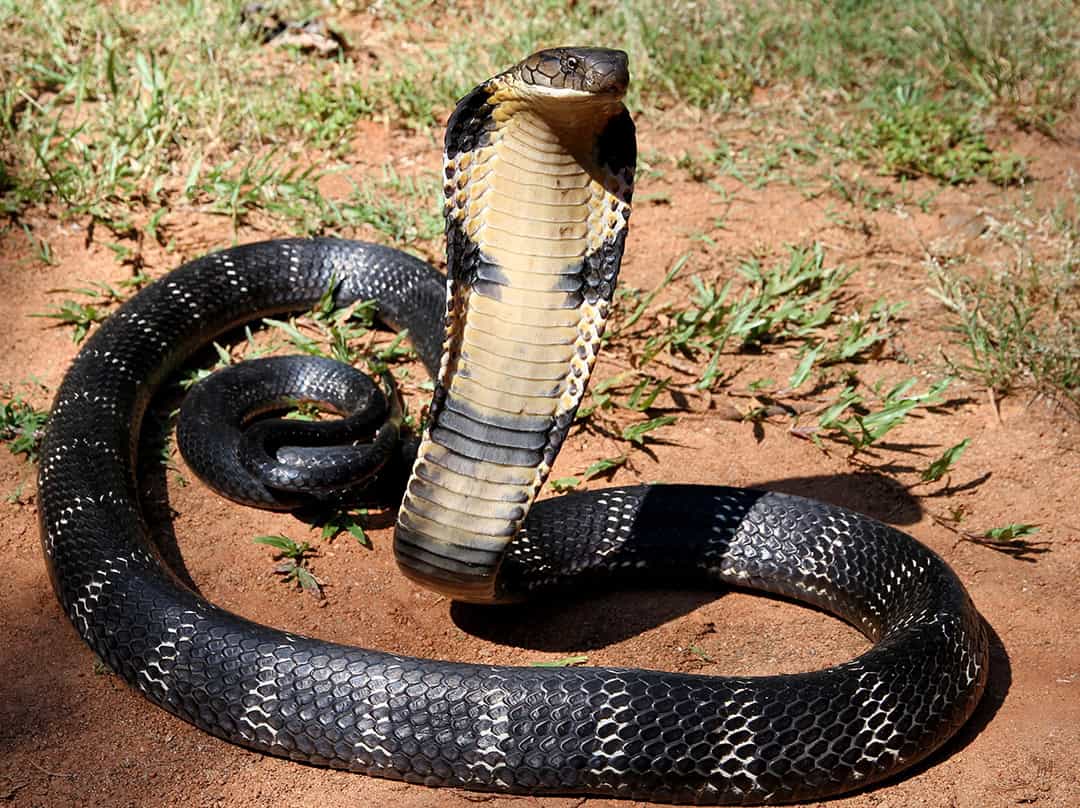
Snakes are among nature’s most versatile predators, having evolved remarkable abilities to navigate diverse environments. While we often picture snakes slithering across the ground, many species have developed impressive locomotion skills that allow them to swim through water, climb trees, and in rare cases, even glide through the air. This adaptability has enabled snakes to colonize nearly every habitat on Earth except the most extreme polar regions. Let’s explore 12 remarkable snake species that demonstrate extraordinary mobility across multiple domains, showcasing the incredible evolutionary adaptations that make these reptiles such successful survivors.
12. Paradise Tree Snake (Chrysopelea paradise)

The Paradise Tree Snake is perhaps the most famous “flying” snake in the world. Native to Southeast Asia, this slender reptile can glide impressive distances of up to 100 feet between trees. When preparing to glide, the snake flattens its body by spreading its ribs, effectively transforming its cylindrical shape into a concave wing. It then launches from a high branch and uses subtle body undulations to stabilize its flight path. Research has shown that these snakes can even make mid-air turns, demonstrating remarkable control during their aerial journeys. Though mildly venomous, the Paradise Tree Snake poses little threat to humans and primarily preys on lizards, frogs, and small birds that it hunts in the forest canopy.
11. Yellow-Bellied Sea Snake (Hydrophis platurus)

The Yellow-Bellied Sea Snake stands out as one of the few truly pelagic snake species, meaning it spends its entire life in the open ocean, never needing to return to land. With a paddlelike tail and laterally compressed body, this snake is perfectly adapted for marine life and can hold its breath for up to three hours while diving for prey. Their distinctive coloration—black on top and yellow underneath—serves as camouflage from both predators above and prey below. Despite producing some of the most potent venom among sea snakes, documented human envenomations are extremely rare due to their offshore habitat and generally docile nature. These remarkable swimmers can be found across the Pacific and Indian Oceans, making them one of the most widely distributed snake species on Earth.
10. Brown Tree Snake (Boiga irregulars)
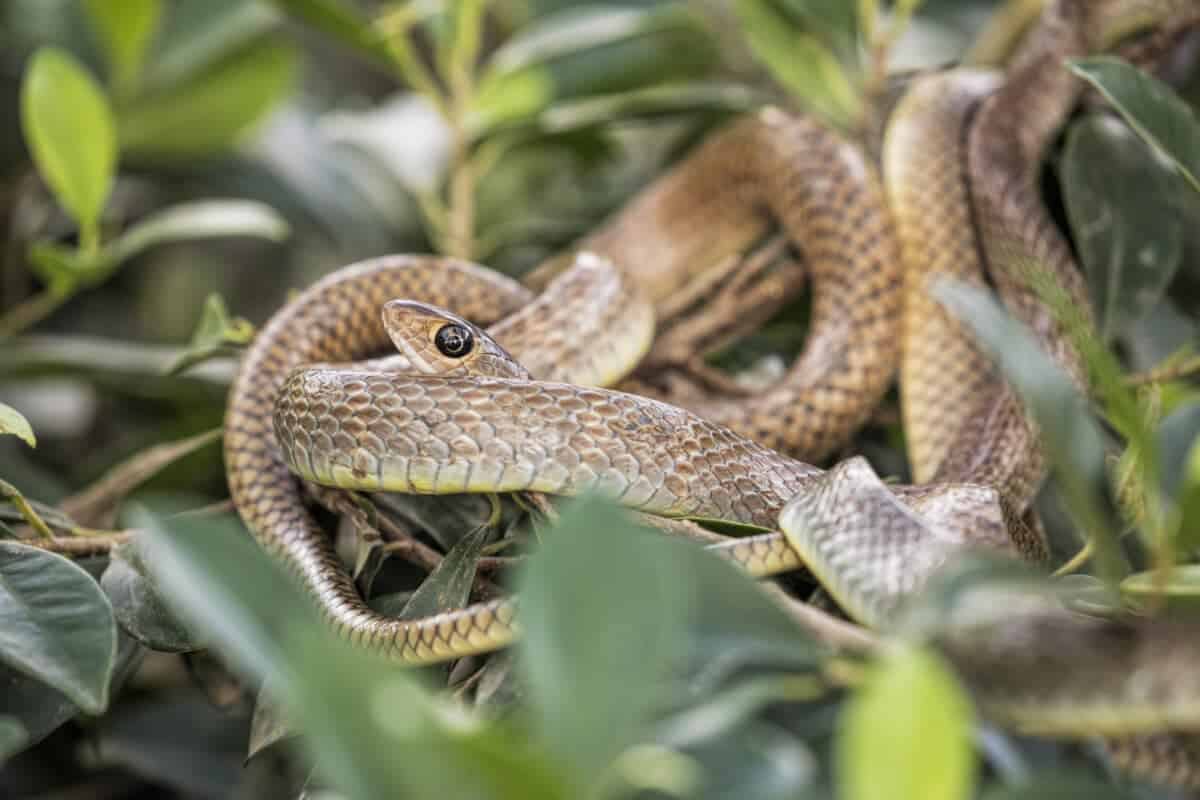
The Brown Tree Snake has gained notoriety as one of the world’s most problematic invasive species after its accidental introduction to Guam following World War II. This nocturnal predator possesses exceptional climbing abilities, using its slender body and slightly compressed sides to ascend vertical surfaces with remarkable agility. In addition to climbing, these snakes are competent swimmers that can cross significant water gaps between islands. Their infamous impact on Guam demonstrates their adaptive prowess—they have caused the extinction of most of the island’s native bird species and continue to cause ecological and economic damage. Though venomous, their rear-fanged delivery system makes them less dangerous to humans than many other venomous species, though their bite can cause significant discomfort and possible allergic reactions.
9. Black Mamba (Dendroaspis polylepis)

The Black Mamba may be primarily known for being one of Africa’s deadliest snakes, but it’s also among the most versatile in terms of locomotion. These formidable predators can move at speeds up to 12.5 miles per hour across flat ground—making them the fastest land snake in the world. Less known is their impressive climbing ability; Black Mambas frequently ascend trees to hunt birds and small mammals, using their length (up to 14 feet) and muscular body to navigate branches with precision. They’re also capable swimmers when necessary, though they generally prefer terrestrial habitats. The combination of speed, climbing ability, aquatic competence, and highly potent neurotoxic venom makes the Black Mamba one of Africa’s most successful and respected predators. Unlike many other snakes, when threatened, they can maintain their elevated head position even while moving rapidly.
8. Common Watersnake (Nerodia sipedon)

The Common Watersnake exemplifies aquatic specialization while maintaining versatility across multiple terrains. These non-venomous North American natives are exceptionally powerful swimmers, often seen basking on branches overhanging water bodies before diving in to hunt fish and amphibians. They employ an unusual hunting technique underwater—they create a slight negative pressure by quickly opening their jaws near prey, effectively sucking fish directly into their mouth. Despite their aquatic preference, Common Watersnakes are also competent climbers, frequently ascending trees and shrubs near shorelines, particularly when seeking safe basking spots. Though often mistaken for the venomous Cottonmouth due to their chunky build and aquatic habits, these beneficial predators play important roles in controlling fish and amphibian populations in freshwater ecosystems throughout eastern North America.
7. Reticulated Python (Python reticulatus)
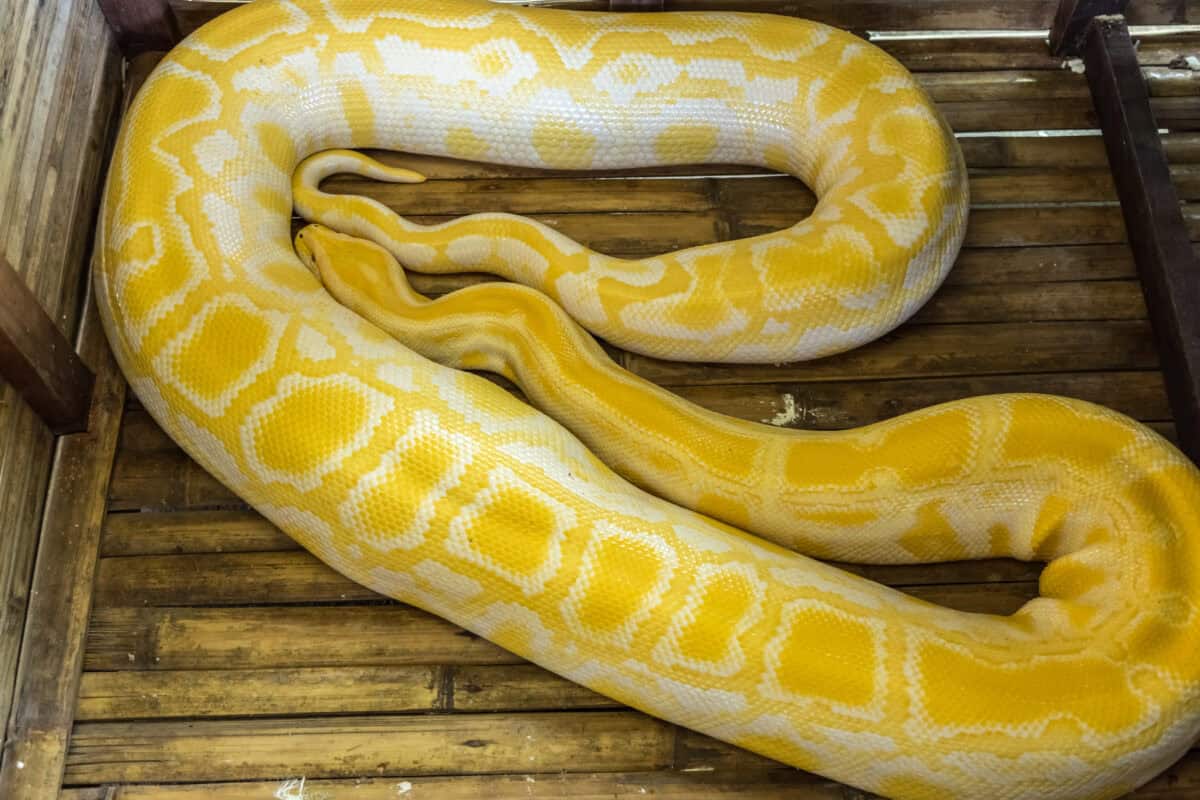
The Reticulated Python, one of the world’s longest snake species, demonstrates remarkable mobility despite its massive size. These Southeast Asian giants can grow beyond 20 feet and weigh over 200 pounds, yet maintain impressive swimming and climbing abilities throughout their lives. Young reticulated pythons are particularly adept climbers, using their prehensile tails and muscular bodies to ascend rainforest trees in search of birds and mammals. Even large adults regularly cross rivers and other water bodies, swimming with efficient serpentine movements that propel them surprisingly quickly through water. This combination of size and mobility makes them apex predators across their range. Their complex geometric pattern, which gives them their name, provides effective camouflage in dappled forest light, whether on the ground, in trees, or partially submerged in water, showcasing how their physical adaptations support movement across diverse environments.
6. Mangrove Snake (Boiga dendrophila)

The Mangrove Snake, also known as the Gold-ringed Cat Snake, is a master of multiple environments as suggested by its habitat preferences. These strikingly beautiful nocturnal hunters, adorned with black scales highlighted by bright yellow bands, navigate the complex mangrove ecosystems of Southeast Asia with remarkable versatility. As accomplished climbers, they use their slender bodies and slightly compressed sides to move effortlessly through tangled mangrove roots and branches. Their semi-aquatic nature is equally impressive—they swim with confidence through brackish waters in search of fish, frogs, and other prey. This rear-fanged venomous species exemplifies evolutionary adaptation to challenging transitional ecosystems. Though their venom is mild to humans, it’s highly effective against their preferred prey. Their capability to function across terrestrial, arboreal, and aquatic environments makes them perfectly suited to the dynamic mangrove forests where land meets sea.
5. Green Anaconda (Eunectes murinus)
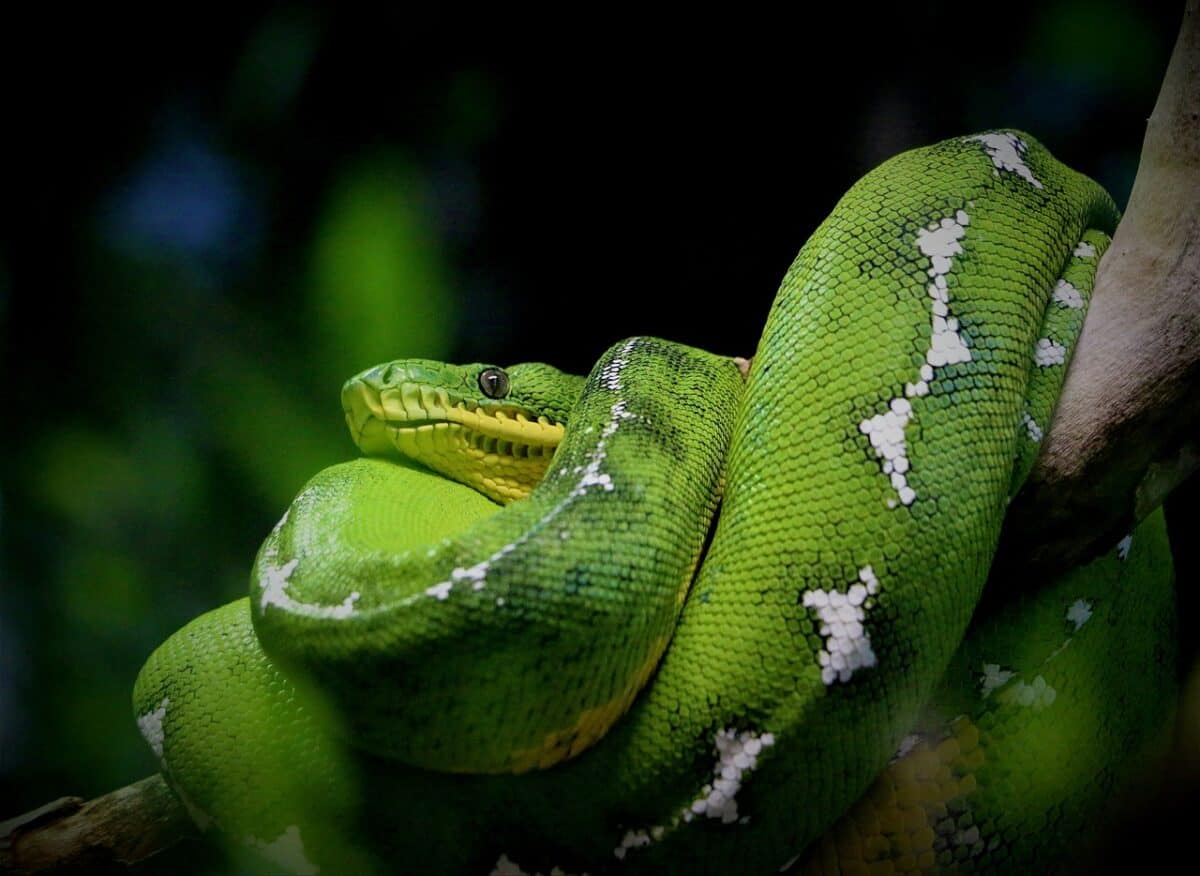
The Green Anaconda stands as nature’s paradox—the heaviest snake in the world (sometimes exceeding 500 pounds) that is also one of the most proficient swimmers. Native to South America’s Amazon and Orinoco basins, these massive constrictors spend much of their lives in slow-moving waters, with their eyes and nostrils positioned on top of their heads allowing them to remain nearly completely submerged while breathing and watching for prey. Despite their enormous bulk, anacondas move through water with surprising grace, using powerful muscle contractions to propel their massive bodies efficiently. Though less adept on land, they can still climb onto low-hanging branches and fallen logs, particularly when younger and lighter. Their swimming prowess allows them to hunt prey as formidable as caimans, capybaras, and occasionally even jaguars that come to drink. Green anacondas represent the pinnacle of aquatic adaptation among the world’s heaviest snakes.
4. Cottonmouth (Agkistrodon piscivorus)

The Cottonmouth, also known as the Water Moccasin, combines potent venom with impressive multi-terrain capabilities. These heavy-bodied pit vipers are native to the southeastern United States and are most often associated with aquatic habitats, where they hunt fish, amphibians, and small mammals along the water’s edge. Cottonmouths are excellent swimmers, keeping their entire body on the water’s surface with their head held high—a distinctive trait that helps distinguish them from non-venomous watersnakes, which typically swim with only their head above water. Despite their stocky build, they’re also surprisingly adept climbers, often found basking on branches overhanging water. Their common name derives from the white lining of their mouth, which they display as a warning when threatened. This behavioral adaptation, combined with their locomotion versatility and hemotoxic venom, makes Cottonmouths formidable predators across multiple environments.
3. King Cobra (Ophiophagus hannah)
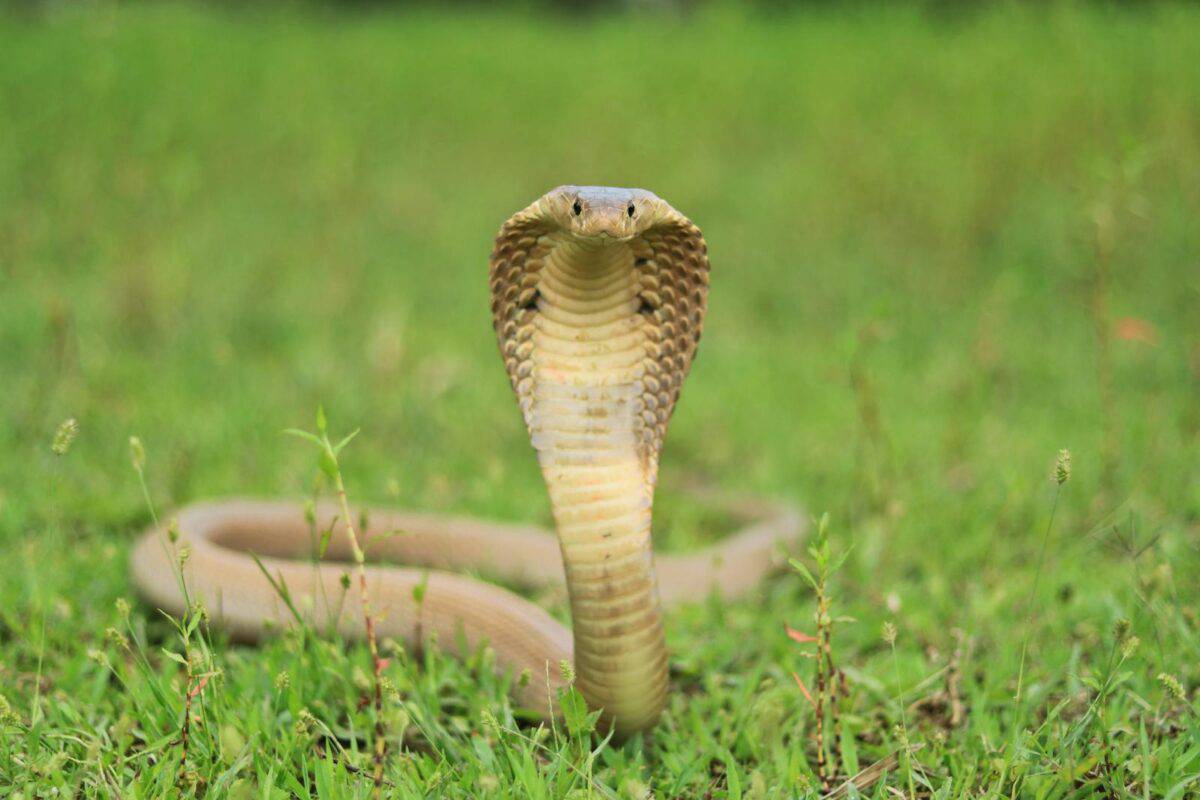
The King Cobra, the world’s longest venomous snake, possesses a versatility that matches its regal name. Reaching lengths up to 18 feet, these intelligent predators navigate the diverse terrains of Southeast Asian forests with remarkable adaptability. Though primarily terrestrial, King Cobras are excellent climbers when pursuing prey or escaping flood conditions. Their swimming ability is equally impressive—they cross rivers and lakes with powerful, deliberate movements, keeping their characteristic hood and head well above water. Unlike many snakes that flee when threatened, King Cobras often stand their ground, rising to one-third of their body length while producing a distinctive hiss that sounds almost like a growling dog. Their venom is potent enough to kill an elephant, and they’re the only snake species known to build nests for their eggs, which the female actively guards—unusual maternal behavior that demonstrates their complex adaptations beyond mere locomotion capabilities.
2. Oriental Flying Snake (Chrysopelea ornata)

The Oriental Flying Snake, a close relative of the Paradise Tree Snake, demonstrates equally impressive gliding abilities with a more dramatic appearance. Adorned with intricate geometric patterns in black, green, and yellow, these arboreal hunters can launch themselves from heights and glide distances up to 330 feet—more than twice the length of a professional baseball field. Their remarkable aerial control comes from a combination of flattening their body by spreading their ribs and making subtle movements that generate lift and stability. When swimming, which they do with confidence when necessary, their colorful patterns become even more vibrant against the water. Though mildly venomous, they pose little threat to humans while being effective predators of lizards and small mammals. Research into their gliding mechanics has even inspired designs in aerospace engineering, demonstrating how this snake’s unique adaptations transcend biological importance.
1. Arafura File Snake (Acrochordus arafurae)
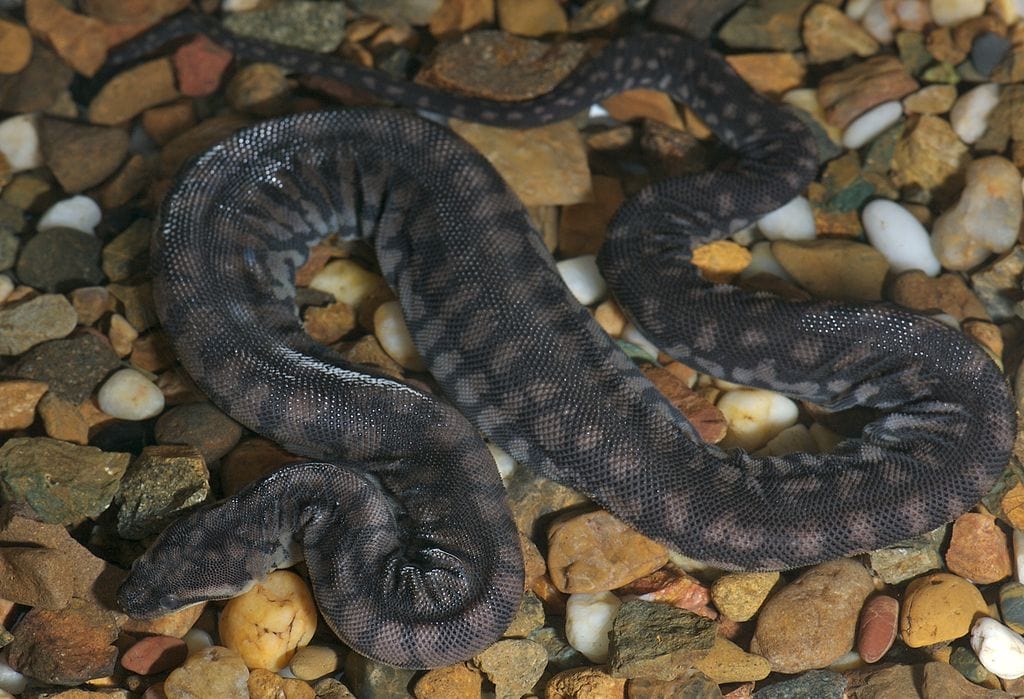
The Arafura File Snake represents one of nature’s most specialized aquatic adaptations while maintaining surprising versatility. Native to northern Australia and parts of New Guinea, these unusual-looking snakes have baggy, loose skin covered in tiny, file-like scales that give them their name. This adaptation allows them to grab slippery fish in the murky waters where they spend most of their time. Unlike many aquatic snakes, they’re almost entirely aquatic, rarely venturing onto land except during heavy flooding or when moving between water bodies. Despite their aquatic specialization, they can move effectively, if somewhat awkwardly, on land when necessary, and can even climb low vegetation during floods. Their remarkable breathing adaptations allow them to remain submerged for up to 40 minutes before surfacing for air. Though non-venomous, their highly specialized anatomy and behavior showcase how evolution can create multi-terrain capabilities even in highly specialized species.
Conclusion: The Remarkable Adaptability of Serpents
The diverse locomotive abilities of these 12 snake species demonstrate the incredible adaptability that has made serpents successful across nearly every environment on Earth. From the gliding prowess of flying snakes to the powerful swimming capabilities of anacondas and the climbing agility of tree-dwelling species, snakes have evolved specialized body structures and movement techniques that allow them to thrive in multiple domains. These adaptations reveal not only the remarkable diversity within the world of snakes but also showcase evolution’s capacity to create specialized solutions to environmental challenges. As research continues, we’re likely to discover even more fascinating details about how these remarkable reptiles navigate their world, reminding us that snakes represent some of nature’s most versatile and successful evolutionary designs despite lacking limbs entirely.

As a little kid, I fell in love with nature, wildlife, and animals. Living in the USA, South Africa, Italy, China and Germany gave me the opportunity to discover the world's Wildlife. My favorite animals are Mountain Gorillas, Siberian Tigers, and Great White Sharks.
I'm a certified PADI Open Water Diver, went to Everest Base Camp and Trekked Gorillas in Uganda. I hold a Master of Science in Economics and Finance.
Please send any feedback to feedback@animalsaroundtheglobe.com
- Why the Great Barrier Reef Is the Best Place to Spot Sea Turtles - June 3, 2026
- 2 Animals With Super Sized Body Parts and What They are For - June 3, 2026
- Explore The Azores - June 3, 2026