

Imagine a world where animals transform themselves into something almost unrecognizable, all in the name of survival. Nature is full of surprises—some so strange, they seem torn from the pages of fantasy. From creatures that wield tools to others that can regrow entire limbs, these adaptations aren’t just odd… they’re ingenious. Ready to be amazed by the animal kingdom’s weirdest success stories? Let’s dive into fourteen of the most bizarre animal adaptations that prove just how wild evolution can be.
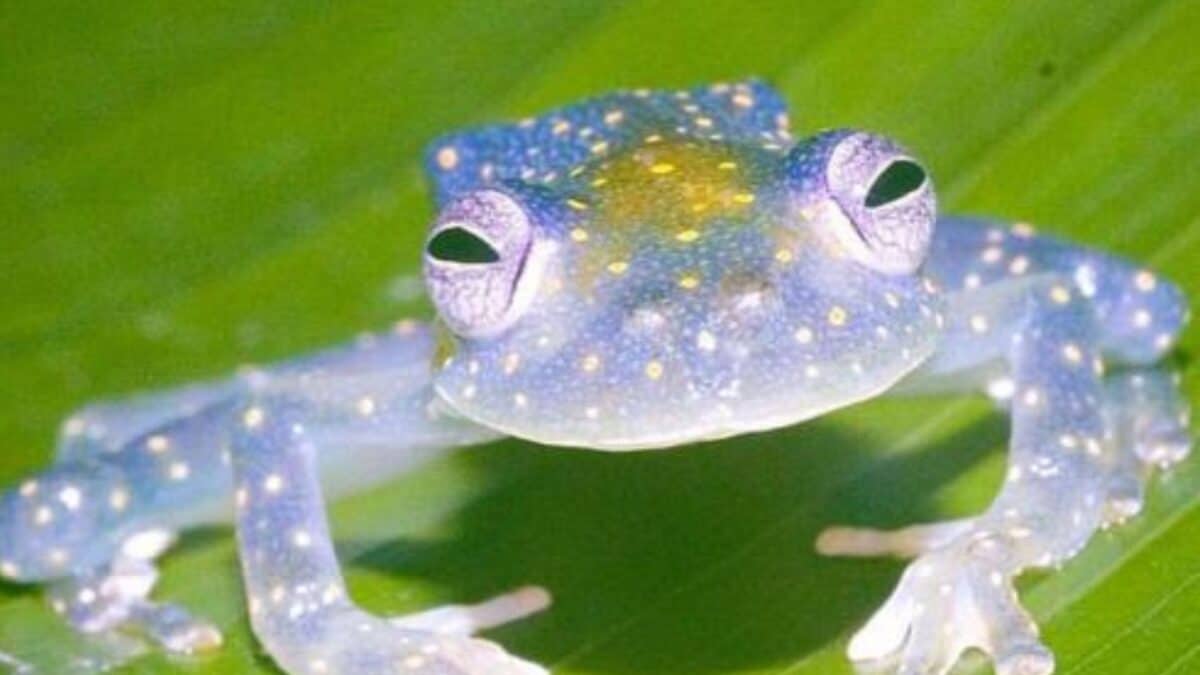
14 The Glass Frog’s Invisible Belly Trick

The glass frog might look ordinary from above, but its underside tells a different story. Its skin is so transparent that you can peer right through its belly and see the organs inside. This adaptation is more than just a neat party trick—it’s a survival strategy. By blending in with leaves and letting predators see the green background through their bodies, glass frogs become almost invisible. This transparency acts like a living camouflage, making it hard for snakes, birds, or other hungry creatures to spot them. It’s a perfect example of how being able to “disappear” can mean the difference between life and death. The glass frog’s see-through skin is a marvel of nature’s creativity.
13 The Axolotl’s Astonishing Regeneration

Meet the axolotl, often called the “Mexican walking fish.” This quirky salamander has a talent that would make superheroes envious—it can regrow limbs, tail, heart, and even parts of its brain and spinal cord. If a predator bites off a leg, the axolotl simply grows it back, good as new. Scientists are fascinated by this power, hoping it could one day help humans heal injuries that currently leave permanent scars. The axolotl’s regenerative ability is so effective, it can repeat the process multiple times without any signs of damage or age. In the wild, this means a second chance after a narrow escape, turning what could be a fatal injury into just another day.
12 The Pistol Shrimp’s Bullet Bubble

Don’t let the small size of the pistol shrimp fool you—it’s packing one of the most powerful weapons in the ocean. With a snap of its oversized claw, this shrimp creates a bubble that travels faster than a bullet. When the bubble bursts, it generates a shockwave strong enough to stun or kill prey. The sound is so loud it can break glass in an aquarium and briefly reaches temperatures as hot as the sun’s surface. This adaptation allows the pistol shrimp to hunt efficiently and defend itself against much larger threats. Who would have thought such a tiny creature could wield so much explosive power?
11 The Leaf-Tailed Gecko’s Perfect Disguise

The leaf-tailed gecko is a master of deception. Its body mimics a dead leaf so convincingly that even the sharpest-eyed predator can be fooled. The gecko’s rough-edged tail, mottled coloration, and even the presence of “bite marks” make it blend seamlessly into the leaf litter of Madagascar’s forests. This camouflage isn’t just for hiding; it’s also for ambushing unsuspecting insects. By staying motionless and blending in, the gecko avoids danger and waits for dinner to land right in front of it. This adaptation is so effective that it often takes a trained human eye to spot one, even when standing just inches away.
10 The Saiga Antelope’s Oddly Shaped Nose

At first glance, the saiga antelope’s bulging, trunk-like nose looks downright comical. But this strange feature is a clever adaptation to the harsh environments of the Eurasian steppe. The saiga’s nose acts like a built-in air filter, warming and humidifying the frigid, dusty air before it enters the lungs. During the dry summer, it helps filter out dust, and in the winter, it prevents icy air from chilling the animal’s body. This adaptation allows the saiga to travel long distances across extreme landscapes and survive where many other animals cannot. Sometimes, looking a little odd is the perfect way to thrive.
9 The Mantis Shrimp’s Supervision

The mantis shrimp is the superhero of the sea when it comes to eyesight. While humans have three color receptors, mantis shrimp boast up to sixteen. This means they can see colors and patterns that are invisible to us, including ultraviolet and polarized light. Their eyes move independently, scanning their surroundings in a way that gives them a 360-degree view. This spectacular vision helps them hunt, avoid predators, and communicate using secret color codes. The mantis shrimp’s eyes are so advanced, engineers study them for inspiration in new camera and optical technologies. It’s mind-blowing to think how differently the world must look through their eyes.
8 The Lyrebird’s Masterful Mimicry

The lyrebird is the world’s greatest impressionist, able to mimic almost any sound it hears—from chainsaws to camera shutters and other bird calls. Male lyrebirds use this remarkable vocal ability to attract mates, weaving together a symphony of borrowed sounds during their courtship displays. Scientists have recorded lyrebirds imitating car alarms, barking dogs, and even the clicks of a camera. This bizarre adaptation helps them stand out in the dense Australian forests, where being unique is key to finding love. The lyrebird’s talent is so legendary that it often leaves listeners in disbelief, wondering if their ears are playing tricks on them.
7 The Immortal Turritopsis Jellyfish

What if you could start life over again every time you aged? The turritopsis jellyfish almost can. When faced with stress, injury, or old age, this tiny jellyfish reverses its development, turning its cells back into a youthful state and starting life anew. This cycle can theoretically go on forever, making the turritopsis one of the closest things to an “immortal” animal. While it’s not truly invincible—predators and disease can still kill it—this adaptation gives it a remarkable edge in survival. The jellyfish’s ability to cheat aging is the stuff of legend and a source of ongoing fascination for scientists hoping to unlock the secrets of longevity.
6 The Bombardier Beetle’s Chemical Defense

If you think insects are defenseless, think again. The bombardier beetle has one of the most dramatic defense mechanisms in the animal kingdom. When threatened, it mixes chemicals in its abdomen that react violently, shooting out a scalding, noxious spray at attackers. The spray reaches temperatures near boiling and creates a popping sound, startling and driving away predators. This adaptation is so effective that few creatures dare challenge the beetle twice. It’s as if the beetle carries its own tiny chemical lab, always ready to unleash a fiery surprise.
5 The Flying Dragon Lizard’s Gliding Wings

The flying dragon lizard, found in Southeast Asia, doesn’t just run from danger—it soars. Flaps of skin along its ribs can be extended to form “wings,” allowing the lizard to glide between trees for distances up to 30 feet. This adaptation helps it escape predators, travel quickly through the forest, and even impress potential mates with aerial displays. Watching a flying dragon launch itself into the air is like seeing a living, breathing paper airplane. It’s a spectacular reminder that sometimes, the best way to survive is to take to the skies.
4 The Star-Nosed Mole’s Sensory Superpower

The star-nosed mole might not win any beauty contests, but its weird star-shaped nose is a wonder of evolution. Covered in more than 25,000 tiny sensory receptors, this nose is the most sensitive touch organ in the animal world. The mole uses it to identify and eat prey in less than a quarter of a second, even in complete darkness. Living underground, where sight is useless, the star-nosed mole’s adaptation allows it to “see” by touch, detecting vibrations and textures with breathtaking speed and accuracy. It’s as if the mole swapped eyesight for a superpower in its nose.
3 The Arctic Woolly Bear Caterpillar’s Freeze Survival

The Arctic woolly bear caterpillar has an incredible way to survive the freezing temperatures of the far north. Each winter, it literally freezes solid, its heart stopping and its body turning to ice. When spring returns, the caterpillar thaws out and resumes life as if nothing happened. This process can repeat for up to fourteen years before the caterpillar finally pupates and becomes a moth. The adaptation to survive being frozen and thawed multiple times is almost unbelievable. It’s nature’s ultimate “pause button,” allowing the caterpillar to outlast even the harshest winters.
2 The Shoebill’s Death Stare and Hunting Technique

The shoebill is a bird that looks like it flew out of prehistoric times, with a massive, shoe-shaped bill and a reputation for being eerily still. Its bizarre hunting technique involves standing motionless for hours, waiting for fish, eels, or even baby crocodiles to come close. Then, with astonishing speed, it strikes, using its bill to grab and crush prey. Its unblinking, intense stare wards off rivals and intimidates potential threats. This adaptation makes the shoebill a top predator in the swamps of central Africa, and its spooky demeanor is both fascinating and unsettling to those who encounter it.
1 The Naked Mole Rat’s Pain Resistance and Longevity

Naked mole rats are some of the strangest mammals on Earth. They live underground in large colonies, resembling tiny, wrinkled sausages with teeth. Their bizarre adaptation? They don’t feel certain types of pain, such as acid or capsaicin burns, due to unique nerve structures. Naked mole rats are also highly resistant to cancer and can live for more than 30 years—unusually long for a rodent. Their ability to survive in low-oxygen environments and avoid pain makes them a subject of intense scientific research. This weirdness isn’t just skin-deep; it’s a blueprint for survival against the odds.
Conclusion

Nature is never short on surprises, and these fourteen bizarre animal adaptations are proof that weirdness can be a winning strategy. Each trait, no matter how odd it seems, is a masterstroke in the game of survival. Did you expect such strangeness to be so successful?

As a little kid, I fell in love with nature, wildlife, and animals. Living in the USA, South Africa, Italy, China and Germany gave me the opportunity to discover the world's Wildlife. My favorite animals are Mountain Gorillas, Siberian Tigers, and Great White Sharks.
I'm a certified PADI Open Water Diver, went to Everest Base Camp and Trekked Gorillas in Uganda. I hold a Master of Science in Economics and Finance.
Please send any feedback to feedback@animalsaroundtheglobe.com
- Why the Great Barrier Reef Is the Best Place to Spot Sea Turtles - June 3, 2026
- 2 Animals With Super Sized Body Parts and What They are For - June 3, 2026
- Explore The Azores - June 3, 2026