


In the vast tapestry of Earth’s biodiversity, certain organisms stand out for their extraordinary abilities, bizarre physiological adaptations, or mysterious evolutionary paths. These remarkable creatures push the boundaries of our scientific understanding, challenging researchers to rethink established biological principles. From animals that can survive in space to organisms that appear to defy aging, these living enigmas continue to perplex scientists and inspire wonder. In this exploration of nature’s most puzzling inhabitants, we’ll discover fourteen creatures whose existence seems to bend the rules of biology as we know them.
13. Tardigrades The Nearly Indestructible Micro-Animals

Perhaps no creature defies scientific expectations more dramatically than the tardigrade, or water bear. These microscopic eight-legged animals, barely visible to the naked eye at less than 1mm long, possess survival capabilities that seem almost supernatural. Tardigrades can withstand environments that would instantly kill any other known life form: they survive temperatures from near absolute zero (-458°F/-272°C) to well above boiling (300°F/150°C), pressure six times greater than the deepest ocean trenches, radiation levels a thousand times what would kill a human, and the vacuum of space. Most remarkably, tardigrades can enter a state called cryptobiosis where they expel almost all water from their bodies, retracting their heads and legs to form a barrel-shaped structure called a tun. In this dehydrated state, they can survive for decades without food or water, essentially suspending their metabolism until conditions improve. Scientists are still unraveling the mechanisms behind these extraordinary survival abilities, which include unique proteins that protect their DNA from radiation damage and prevent their cells from rupturing when frozen.
12. Axolotls The Regeneration Marvels

The axolotl (Ambystoma mexicanum), a salamander native to Mexico, possesses regenerative abilities that continue to astound scientists. Unlike most vertebrates, axolotls can regrow entire complex body parts, including limbs, parts of their heart, spinal cord, and even portions of their brain—all without scarring. Even more remarkably, they can accept transplanted organs from other axolotls without rejection. This neotenic creature (meaning it retains juvenile features throughout adulthood) never undergoes metamorphosis, permanently maintaining its aquatic larval form with external gills. The axolotl’s genome, sequenced in 2018, is extraordinarily large—about ten times the size of the human genome—containing many duplicated genes associated with tissue regeneration. Researchers are intensely studying these amphibians hoping to unlock secrets that might someday help humans regenerate damaged tissues or organs. The contrast between the axolotl’s primitive appearance and its sophisticated cellular regeneration mechanisms represents one of biology’s most fascinating paradoxes.
11. Immortal Jellyfish Reversing the Aging Process

The immortal jellyfish (Turritopsis dohrnii) performs a biological feat once thought impossible: it can reverse its life cycle. When facing environmental stress, illness, or old age, this tiny jellyfish—only about 4.5mm wide—can revert from its mature medusa stage back to its juvenile polyp stage through a process called transdifferentiation. This remarkable transformation is equivalent to a butterfly turning back into a caterpillar, or a human reverting to an embryonic state. During this process, the jellyfish’s cells transform from one type to another, essentially resetting the organism’s biological clock. Theoretically, this cycle can repeat indefinitely, making the creature biologically immortal. While predation and disease still kill these jellyfish in the wild, their cellular mechanism for age reversal has profound implications for understanding cellular plasticity and aging. Scientists studying the immortal jellyfish hope to identify genetic pathways that might someday help address human age-related conditions, though the gap between jellyfish and human biology remains vast.
10. Naked Mole-Rats Cancer-Resistant Centenarians
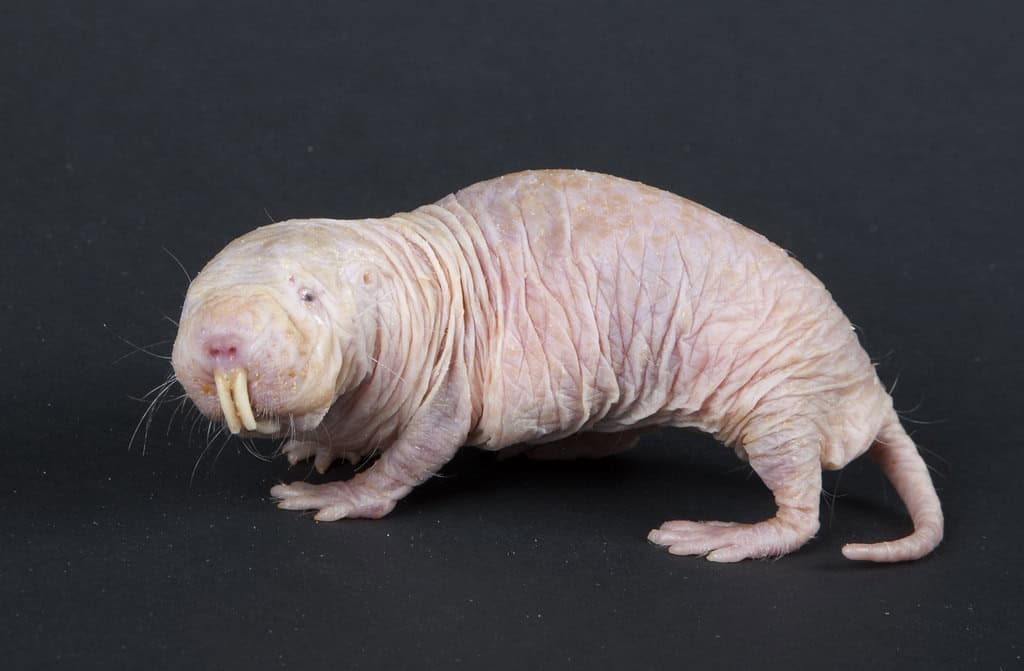
Despite their unfortunate appearance, naked mole-rats (Heterocephalus glaber) possess biological superpowers that make them one of science’s most valuable research subjects. These wrinkled, hairless rodents native to East Africa can live up to 30 years—nearly ten times longer than similar-sized rodents—and show virtually no signs of aging until very late in life. Even more remarkably, they appear almost completely resistant to cancer, a phenomenon attributed to the unique composition of their hyaluronan (a sugar-rich substance between cells) and multiple tumor suppression mechanisms. Naked mole-rats also defy mammalian conventions in other ways: they’re cold-blooded (unusual for mammals), can survive with extremely low oxygen levels (18 minutes without oxygen causes no harm), feel no pain from acid or capsaicin (the chemical that makes peppers spicy), and live in eusocial colonies with insect-like social structures featuring a breeding queen. Their extraordinary resistance to aging, cancer, and oxygen deprivation has made naked mole-rats central to research on longevity and disease prevention, potentially holding clues to treating human age-related conditions and cancer.
9. The Greenland Shark The Methuselah of Vertebrates

Swimming slowly through the icy North Atlantic waters is a creature that may have been alive during the Renaissance. The Greenland shark (Somniosus microcephalus) has been verified to live at least 272 years, with some individuals estimated to be 400-500 years old—making them the longest-lived vertebrates on Earth by a significant margin. These sharks grow at an excruciatingly slow rate of less than 1 cm per year and don’t reach sexual maturity until around 150 years of age. Their extraordinary longevity defies conventional understanding of vertebrate aging, particularly given that larger animals typically accumulate cellular damage over time. Scientists believe their extreme longevity relates to their extremely slow metabolism, an adaptation to life in near-freezing waters. Their bodies contain high levels of trimethylamine N-oxide (TMAO), which stabilizes proteins against the distorting effects of pressure and cold. Researchers studying Greenland sharks hope to understand how they avoid the cellular deterioration and cancer that typically limits vertebrate lifespan, potentially offering insights into human aging processes.
8. Ctenophores Rethinking Evolutionary History

Ctenophores, or comb jellies, have forced scientists to reconsider fundamental assumptions about animal evolution. Despite their jellyfish-like appearance, genetic studies suggest these gelatinous marine predators may have been the first branch to split from the animal family tree—before sponges, which were long considered the most primitive animals. This revolutionary finding has profound implications, as ctenophores possess complex features like muscles, nervous systems, and digestive tracts that appear to have evolved independently from all other animals. Even more puzzlingly, they lack many genes considered essential for neural development in other animals, yet have sophisticated nervous systems, suggesting they developed neurons through an entirely different genetic pathway. Some species, like Mnemiopsis leidyi, can regenerate their brains in less than four days if damaged. Their unusual bioluminescent displays, created not by chemical reactions but by light refraction through moving cilia, and their unique adhesive cells called colloblasts (different from the stinging cells of true jellyfish) further highlight their biological uniqueness. These gelatinous creatures challenge our understanding of how complex features like nervous systems evolved and whether some fundamental biological structures might have multiple evolutionary origins.
7. Mantis Shrimp Nature’s Living Hyperspectral Imager

The mantis shrimp possesses what may be the most sophisticated visual system in the animal kingdom, so complex it initially defied scientific understanding. While humans have three types of color-receptive cones in our eyes, mantis shrimp have 12 to 16 different photoreceptor types, perceiving ultraviolet and polarized light in ways we can barely comprehend. Their compound eyes move independently and can focus on objects with three different parts of the same eye, giving them trinocular vision from each eye. But the mantis shrimp’s extraordinary features don’t end with vision. The peacock mantis shrimp (Odontodactylus scyllarus) possesses specialized forelimbs that can strike with the acceleration of a .22 caliber bullet—so fast they create cavitation bubbles that produce temperature flashes nearly as hot as the sun’s surface and release photons in a phenomenon called sonoluminescence. The impact force can reach 1,500 newtons, easily shattering aquarium glass. Their limb structure, composed of specialized mineralized chitin arranged in a helicoidal architecture, is so effective at absorbing and distributing impact that it has inspired new designs for body armor and football helmets. These remarkable crustaceans represent one of nature’s most perplexing combinations of sensory and physical capabilities.
6. Zombie Parasites: Mind-Controlling Organisms
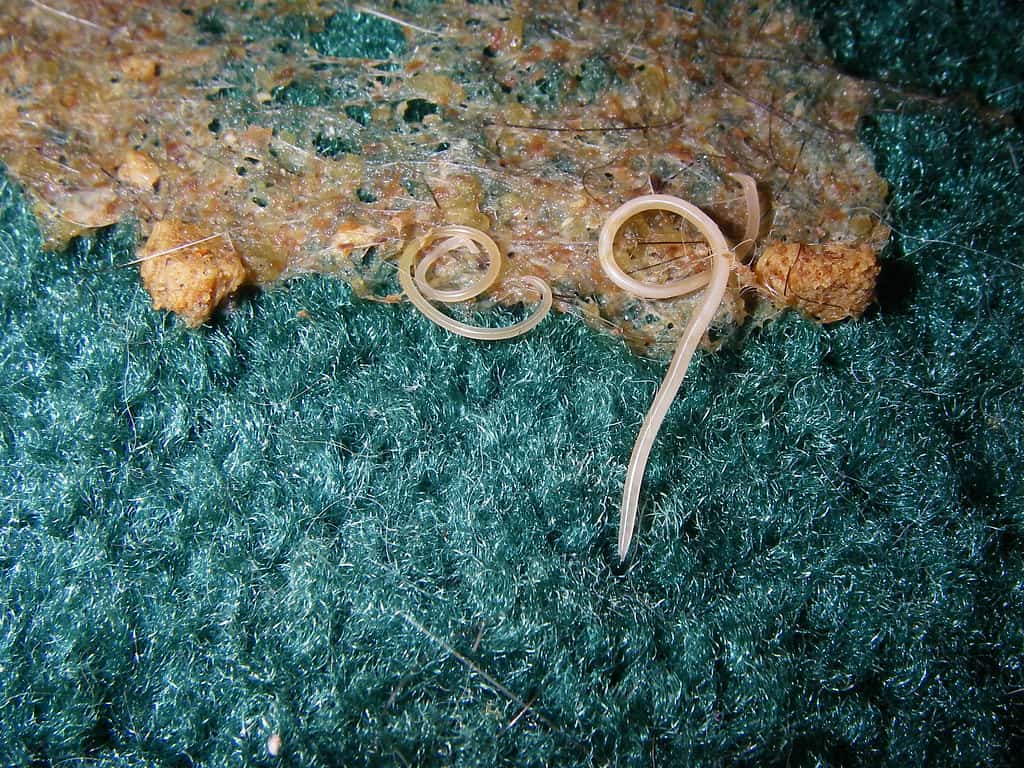
Several parasitic organisms possess the seemingly science-fiction ability to hijack the nervous systems of their hosts, manipulating behavior in ways that benefit the parasite while often leading to the host’s demise. Ophiocordyceps unilateralis, the “zombie ant fungus,” infects carpenter ants and controls their movements, compelling infected ants to climb vegetation and bite into leaves at specific heights and orientations that optimize fungal spore dispersal. Toxoplasma gondii, a protozoan parasite that can only reproduce sexually in cat intestines, causes infected rodents to lose their innate fear of cat odors and sometimes actively attract feline attention, increasing the likelihood of predation and completing the parasite’s life cycle. The lancet liver fluke forces infected ants to climb grass blades each evening and clamp their mandibles onto the tips, positioning them to be eaten by grazing mammals like sheep, where the parasite completes its reproductive cycle. The jewel wasp (Ampulex compressa) delivers precisely targeted venom into specific cockroach brain ganglia, disabling the escape response while leaving other functions intact, creating a docile host that the wasp leads to its nest like a dog on a leash before using it as living incubation for its eggs. These mind-controlling parasites challenge our understanding of neural function and the boundaries of behavioral autonomy, revealing sophisticated biochemical mechanisms that can override complex nervous systems.
5. Mimic Octopus The Ultimate Shape-Shifter

The mimic octopus (Thaumoctopus mimicus) discovered in 1998 in the waters of Indonesia, represents nature’s pinnacle of dynamic camouflage and behavioral mimicry. Unlike other cephalopods that change color and texture to blend with their surroundings, the mimic octopus actively impersonates other dangerous marine animals to deter predators. It can contort its flexible body and adjust its coloration to convincingly mimic at least 15 different species, including venomous lionfish, sea snakes, and flatfish. What makes this ability scientifically remarkable is the apparent intelligence behind it—the octopus seems to select the most appropriate disguise for specific threats. When confronted by damselfish, it mimics sea snakes, their natural predator. This suggests a sophisticated cognitive process where the octopus identifies its observer and selects a corresponding impersonation that would most effectively deter that particular species. Even more puzzling is how the mimic octopus “knows” to imitate animals it may never have encountered, raising questions about whether this behavior is innate or learned. With a distributed nervous system where two-thirds of its neurons reside in its arms rather than its central brain, the mimic octopus challenges traditional understandings of cognition and intelligence, suggesting alternative evolutionary pathways to complex adaptive behaviors.
4. The Immortal Hydra Eternal Youth Through Cellular Regeneration
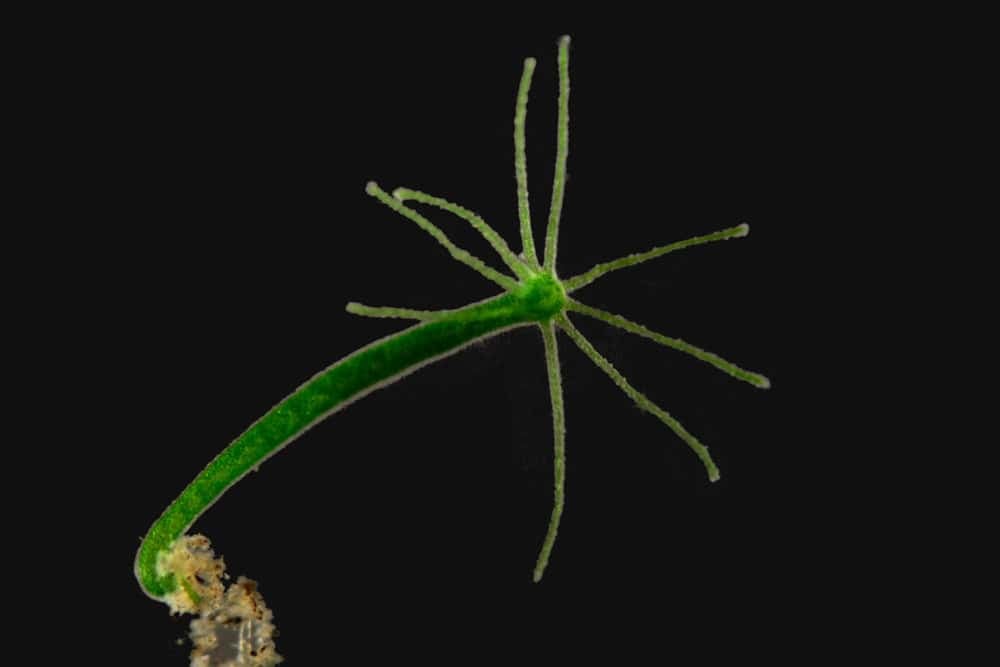
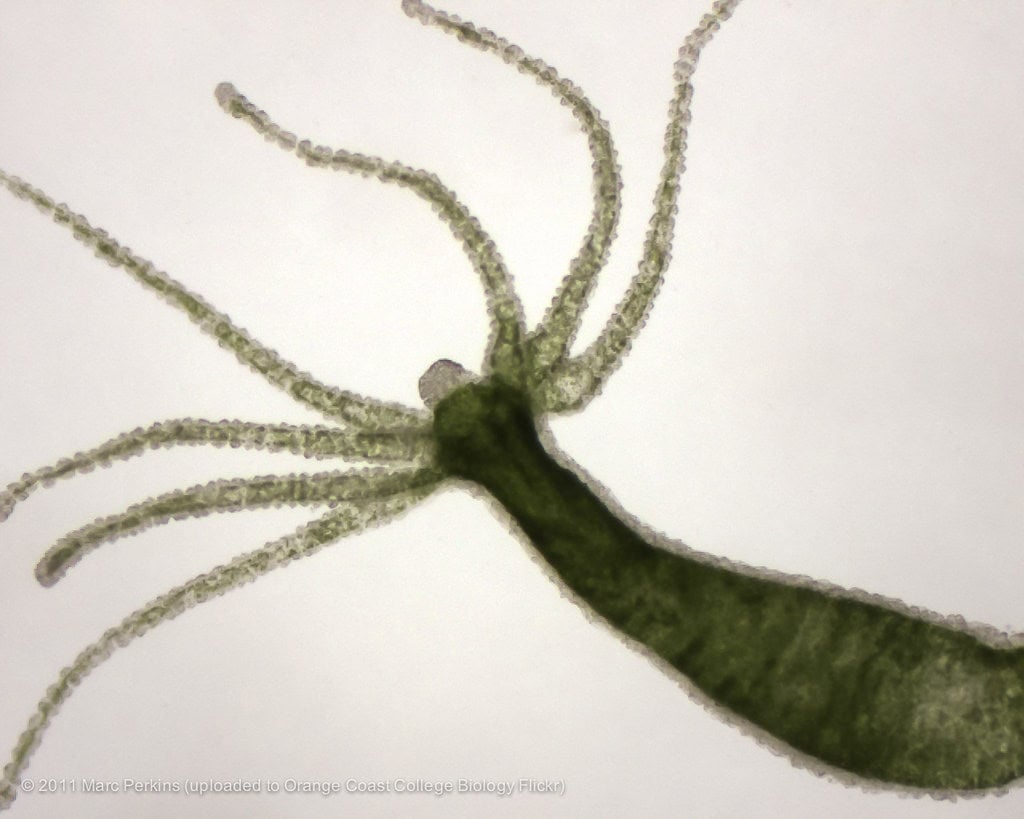
The humble hydra, a tiny freshwater relative of jellyfish barely visible to the naked eye, possesses biological immortality through a remarkable continuous cellular renewal process. Unlike most animals whose stem cells gradually lose functionality with age, hydra maintain three distinct stem cell populations that continuously divide and differentiate, replacing every cell in their bodies roughly every 20 days. This perpetual renewal prevents the accumulation of the cellular damage and mutations that typically drive aging. Researchers studying hydras have found no evidence of senescence (biological aging) or increased mortality over time, even after observing them for over four years in laboratory conditions. The secret to their eternal youth lies partly in extraordinary telomerase activity—the enzyme that maintains the protective caps on chromosomes which typically shorten with age in other organisms. Additionally, hydra possess remarkable regenerative abilities; even when completely dissociated into individual cells and then centrifuged into a pellet, these cells can reorganize themselves to form a complete new animal. The FoxO gene, a key regulator of stem cell activity highly expressed in hydra, has been identified as critical to their non-aging biology. Remarkably similar FoxO genes exist in humans, where they’re associated with longevity, making hydra valuable models for understanding fundamental mechanisms of aging and regeneration.
3. Loricifera Life Without Oxygen
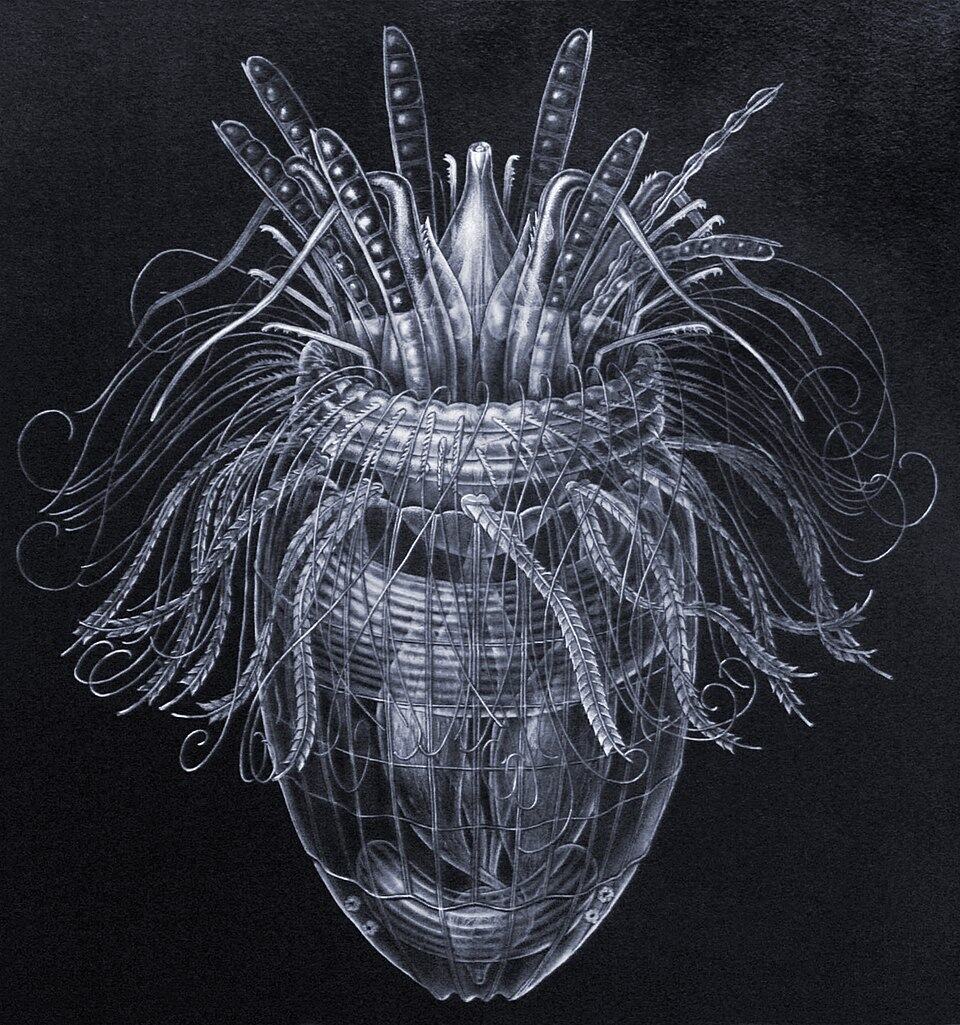
The discovery of loriciferans—microscopic multicellular animals—living in the oxygen-free sediments of the Mediterranean’s L’Atalante Basin in 2010 fundamentally challenged a principle once considered absolute: that all complex animals require oxygen for survival. These tiny creatures, less than 1mm in size, represent the first known example of multicellular organisms that complete their entire life cycle in entirely anoxic conditions. Instead of mitochondria (the oxygen-using powerhouses of typical animal cells), these loriciferans possess hydrogenosomes—organelles that generate energy through anaerobic pathways previously seen only in single-celled organisms. This evolutionary adaptation allows them to thrive in an environment saturated with toxic hydrogen sulfide that would be lethal to virtually all other known animals. Their discovery expanded science’s understanding of the metabolic possibilities for complex life and the extreme environments where animals might exist. The implications extend beyond Earth science, influencing astrobiological considerations about potential habitats for extraterrestrial life. The ability of multicellular organisms to adapt to completely anaerobic environments suggests that complex life might evolve in oxygen-poor environments on other worlds, significantly expanding the range of potentially habitable environments in our search for extraterrestrial life.
2. The Platypus Nature’s Evolutionary Puzzle
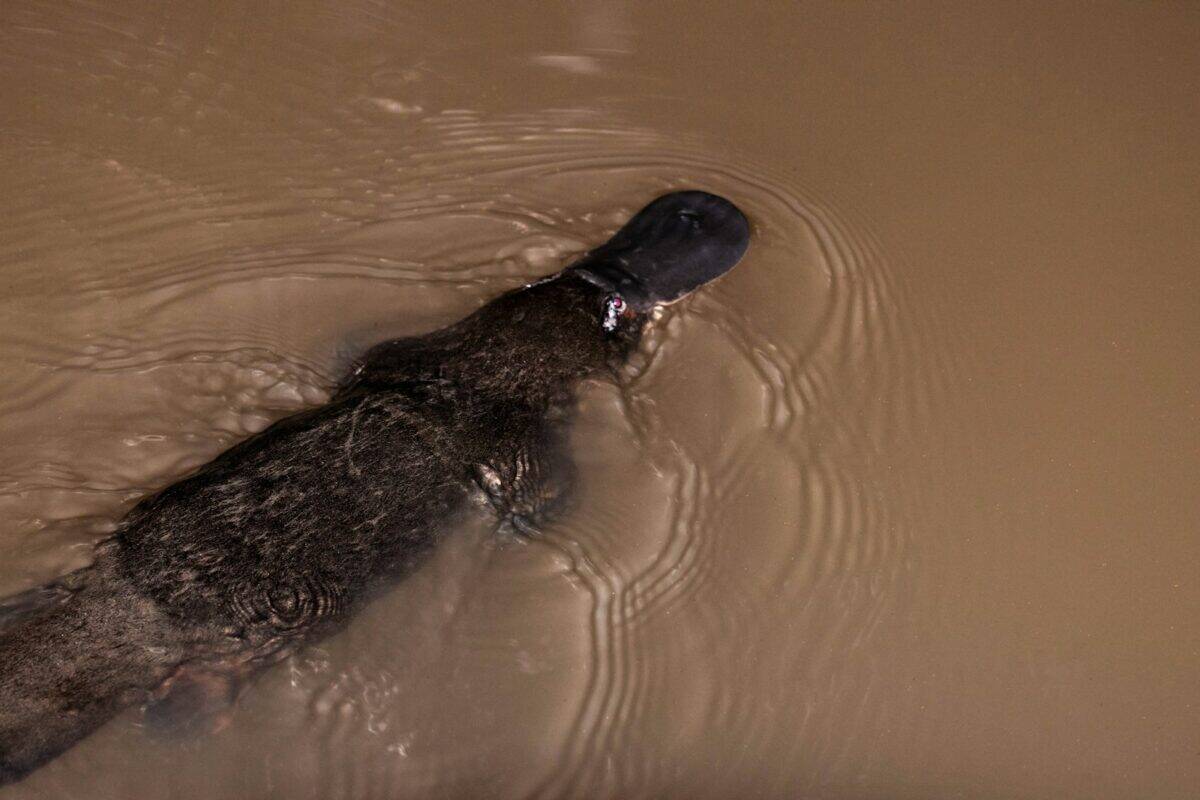
The platypus (Ornithorhynchus anatinus) has confounded scientists since its discovery, presenting a seemingly impossible combination of mammalian, reptilian, and avian characteristics. As one of only five extant monotremes (egg-laying mammals), the platypus produces milk without nipples (it seeps through specialized skin patches), lays leathery eggs like reptiles, and possesses a duck-like bill that serves not as a mouth but as an electroreceptive organ capable of detecting the electrical fields generated by prey muscles. Male platypuses have venomous ankle spurs—the only venomous mammals—producing toxin complex enough to kill small animals and cause excruciating pain in humans. Their genome, sequenced in 2008, proved equally bizarre, containing genes associated with reptiles, birds, and mammals, including remnants of the genes for egg yolk proteins typically found only in reptiles. Perhaps most remarkably, platypuses have ten sex chromosomes (compared to humans’ two), and their system of sex determination remains incompletely understood. They also exhibit biofluorescence, glowing blue-green under ultraviolet light. The platypus represents one of evolution’s most unusual experiments, preserving characteristics from ancestral lineages that diverged hundreds of millions of years ago, and challenging our understanding of mammalian evolution and taxonomy.
1. Pompeii Worms Thriving in Temperature Extremes

The Pompeii worm (Alvinella pompejana) inhabits one of the most extreme thermal gradient environments on Earth—hydrothermal vents along the Pacific Ocean floor—where it constructs papery tubes attached directly to vent chimneys. What makes these creatures scientifically perplexing is their ability to thrive with their heads exposed to cool seawater around 50°F (10°C) while their tails withstand scorching temperatures up to 176°F (80°C)—hot enough to kill most proteins in other animals. This temperature differential would be equivalent to a human having their feet in boiling water while keeping their head in ice water. The worm’s remarkable heat tolerance stems from specialized hemoglobins that function across this extreme temperature range and heat-shock proteins that prevent other proteins from denaturing.
Conclusion:
From the icy depths where Greenland sharks glide silently for centuries to the scorching hydrothermal vents hosting heat-resistant worms, the natural world is replete with organisms that seem to defy biological logic. These fourteen extraordinary creatures each represent a radical exception to the rules of life as we once understood them—whether by surviving in outer space, regenerating complex organs, living without oxygen, or reversing the aging process. Their unique adaptations are not just curiosities; they are windows into the full spectrum of life’s potential, challenging scientists to reevaluate long-held assumptions about physiology, evolution, and the conditions necessary for survival. As research into these biological outliers continues, they may unlock transformative insights into human medicine, aging, resilience, and even the search for life beyond Earth. In studying the most enigmatic inhabitants of our planet, we may ultimately come to better understand life itself.

As a little kid, I fell in love with nature, wildlife, and animals. Living in the USA, South Africa, Italy, China and Germany gave me the opportunity to discover the world's Wildlife. My favorite animals are Mountain Gorillas, Siberian Tigers, and Great White Sharks.
I'm a certified PADI Open Water Diver, went to Everest Base Camp and Trekked Gorillas in Uganda. I hold a Master of Science in Economics and Finance.
Please send any feedback to feedback@animalsaroundtheglobe.com
- Why the Great Barrier Reef Is the Best Place to Spot Sea Turtles - June 3, 2026
- 2 Animals With Super Sized Body Parts and What They are For - June 3, 2026
- Explore The Azores - June 3, 2026