


The ocean depths harbor some of nature’s most extraordinary masters of disguise. In the underwater world, where survival often depends on not being seen, marine creatures have evolved remarkable camouflage abilities that can confound predators and prey alike. From shape-shifting octopuses to fish that blend seamlessly with coral reefs, these animals represent the pinnacle of evolutionary adaptation. Their techniques go far beyond simple color matching—many can change texture, shape, and behavior to become virtually invisible in their environments. Let’s dive into the fascinating world of 18 sea creatures with truly mind-blowing camouflage abilities that showcase nature’s ingenuity at its finest.
The Common Octopus Master of Transformation

The common octopus (Octopus vulgaris) stands as perhaps the ocean’s ultimate camouflage artist. These remarkable cephalopods possess specialized cells called chromatophores, iridophores, and leucophores that allow them to change color, pattern, and even skin texture in less than a second. But their disguise abilities go beyond mere color-changing—octopuses can contort their soft bodies to mimic the shape and movements of other sea creatures like sea snakes or lionfish. They can also manipulate the texture of their skin to replicate coral, rocks, or plants, creating tiny bumps and ridges that match their surroundings. This sophisticated combination of color, texture, and shape-shifting makes the common octopus nearly undetectable when it chooses to hide, allowing it to ambush prey or avoid becoming prey itself.
The Mimic Octopus The Ocean’s Impersonator

Discovered only in 1998, the mimic octopus (Thaumoctopus mimicus) elevates camouflage to an art form. Native to the coastal waters of Southeast Asia, this intelligent cephalopod doesn’t just blend into its surroundings—it actively impersonates other marine species. Scientists have documented the mimic octopus imitating at least 15 different creatures, including sea snakes, lionfish, flatfish, and mantis shrimp. When threatened, it can select which dangerous animal to mimic based on the specific predator it’s facing. For example, when confronted by damselfish, it may impersonate a banded sea snake, a known predator of damselfish. This behavioral camouflage represents one of the most sophisticated defense mechanisms in the animal kingdom, as it requires not just physical transformation but the intelligence to choose the most effective disguise for each situation.
The Leafy Seadragon Living Marine Foliage

The leafy seadragon (Phycodurus eques) resembles a piece of floating seaweed so convincingly that it seems more plant than animal. Endemic to the southern and western coasts of Australia, these relatives of seahorses have evolved elaborate leaf-like appendages that extend from their bodies, creating perfect mimicry of the seaweed in their habitat. These appendages aren’t used for swimming—the seadragon relies on nearly transparent pectoral and dorsal fins that are almost invisible as they propel it slowly through the water. Their yellowish-brown to olive coloration enhances the disguise, complete with irregular spots and markings that mimic the patterns of aging or decaying seaweed. This exceptional camouflage allows leafy seadragons to remain motionless among seaweed beds, where they wait for tiny crustaceans to drift within striking distance, unaware of the predator hiding in plain sight.
The Pygmy Seahorse Coral Clone
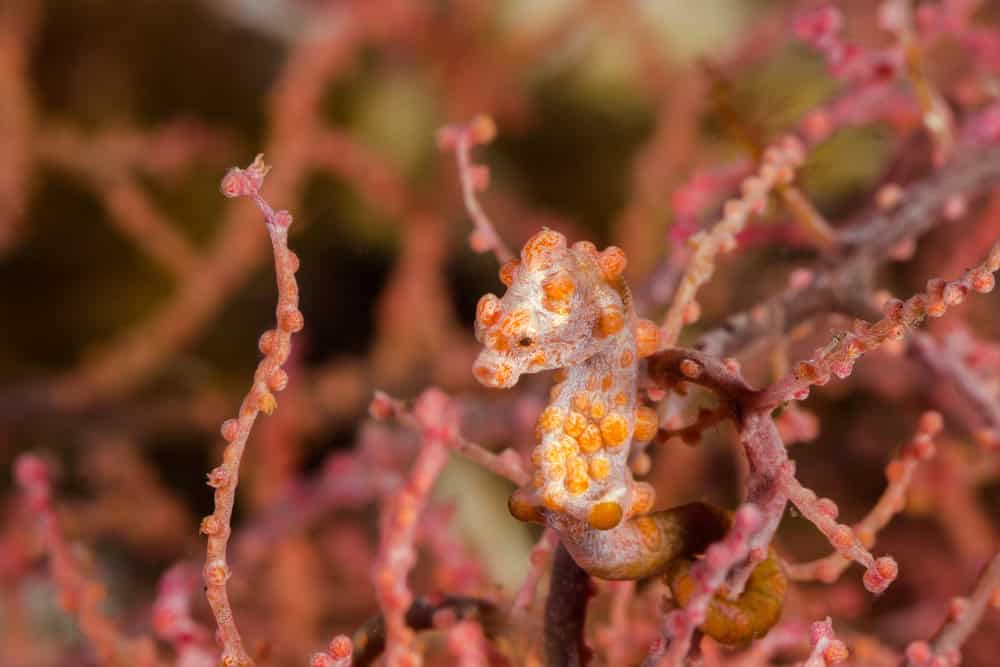
The pygmy seahorse (Hippocampus bargibanti) demonstrates one of the most specialized forms of camouflage in the marine world. These tiny creatures, measuring less than an inch in length, live exclusively on gorgonian coral fans of the genus Muricella. Their bodies have evolved to match their host coral perfectly—not just in color (either purple with red tubercles or yellow with orange tubercles, depending on the coral species), but also in texture. Their bodies are covered with tubercles (bumps) that precisely match the polyps of their host coral. This extreme specialization makes pygmy seahorses virtually undetectable, even to trained observers. The camouflage is so perfect that these miniature seahorses weren’t scientifically discovered until 1969, when a researcher was examining a gorgonian coral sample in a laboratory and noticed the tiny seahorses attached to it. Their discovery highlights how effective their camouflage truly is—hiding not just from predators but from scientific detection for centuries.
The Stonefish Deadly Disguise

The stonefish (Synanceia genus) combines exceptional camouflage with lethal defense mechanisms, making it one of the ocean’s most dangerous masters of disguise. These fish have evolved skin that mimics the color, texture, and irregular surface of stones or coral encrusted with algae. Their warty, mottled appearance helps them blend perfectly with rocky sea bottoms, where they lie motionless waiting for prey. What makes the stonefish particularly dangerous is that this excellent camouflage conceals not just a predator but also the world’s most venomous fish. Along its back, the stonefish has 13 sharp dorsal fin spines, each connected to venom glands. When stepped on—a common occurrence due to their near-perfect disguise—these spines deliver excruciating pain and potentially fatal venom. The stonefish’s camouflage serves a dual purpose: allowing it to ambush prey and creating dangerous encounters with unwary humans, demonstrating how camouflage can be both a feeding strategy and a defense mechanism.
The Decorator Crab Living Art Installation
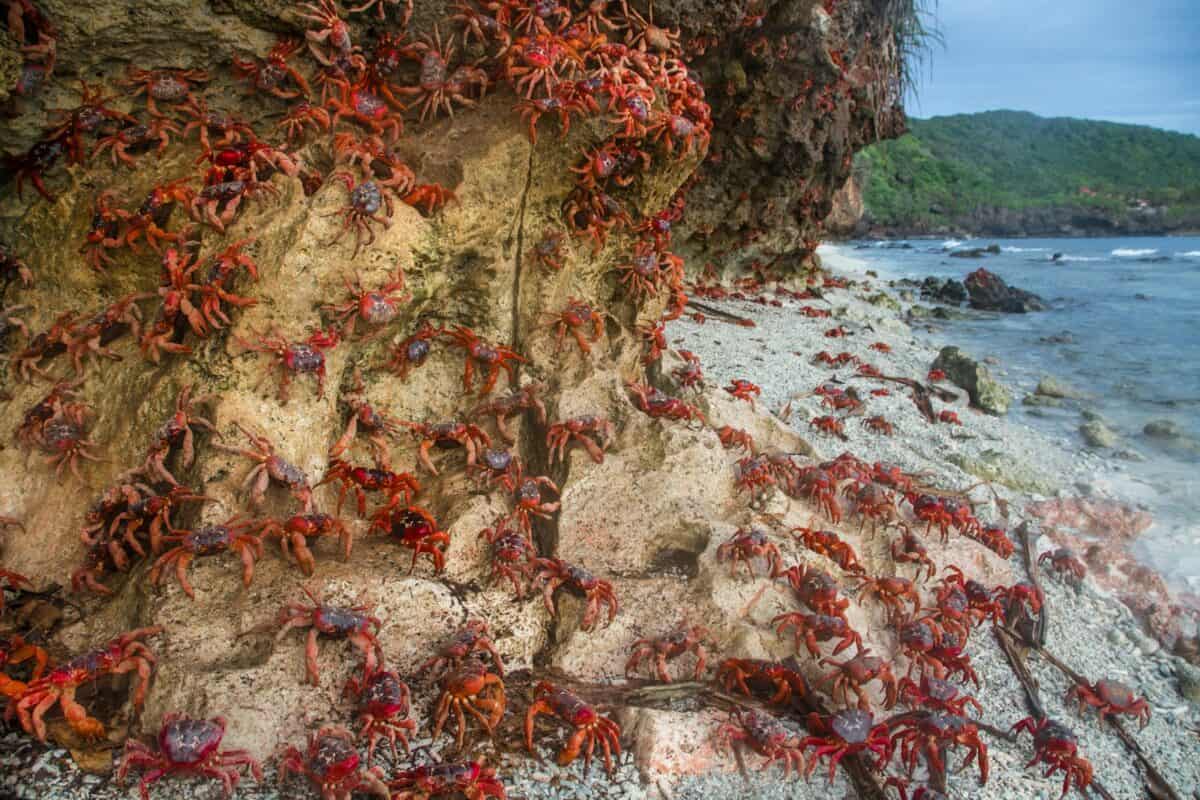
Decorator crabs (family Majidae) take a unique approach to camouflage by actively crafting their own disguises. These ingenious crustaceans have specialized hooked setae (hair-like structures) on their shells that allow them to attach pieces of their environment to their bodies. A decorator crab will meticulously select and attach living organisms such as sponges, algae, hydroids, and small anemones to its shell, creating a living garden that conceals its true identity. This behavior, called decorating or masking, makes the crab appear to be nothing more than a moving clump of marine growth. Beyond mere visual camouflage, this technique provides chemical camouflage as well, as the attached organisms release scents that mask the crab’s own odor from predators that hunt by smell. Even more remarkably, decorator crabs show selectivity in their decorating materials, often choosing organisms with chemical defenses that further protect them from predators, demonstrating a sophisticated understanding of their environment’s resources.
The Frogfish Ambush Specialist
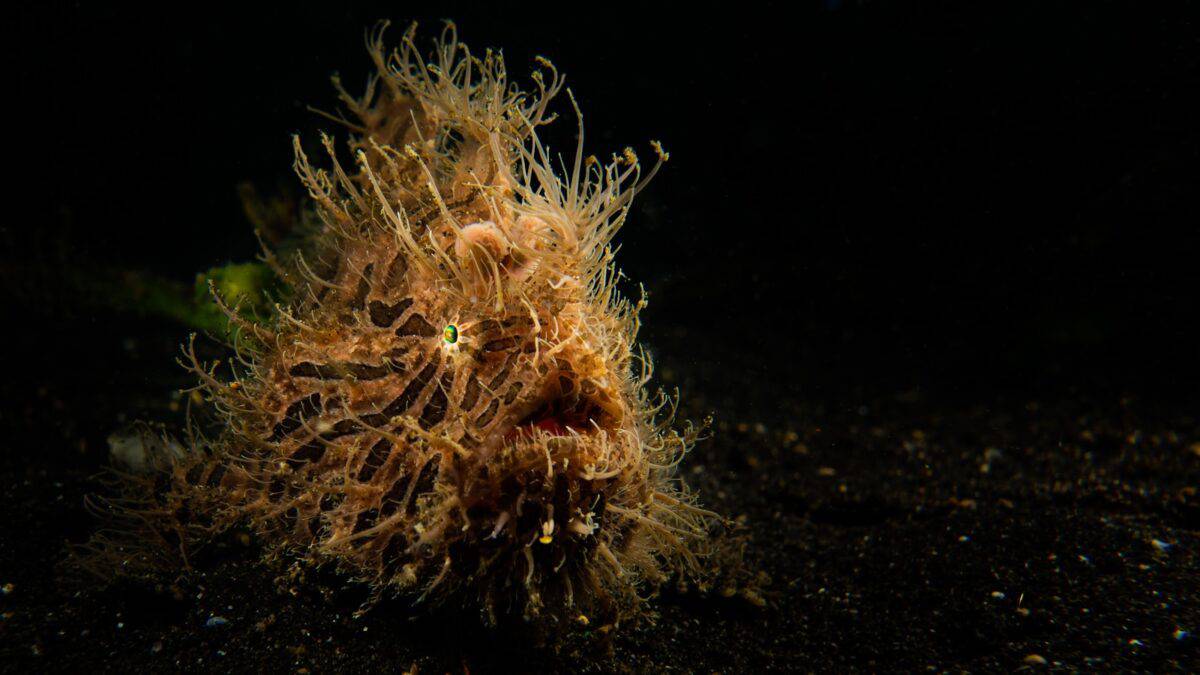
Frogfish (family Antennariidae) have evolved some of the most elaborate camouflage adaptations in the ocean, allowing these ambush predators to disappear completely against their chosen backgrounds. These strange-looking anglerfish relatives come in a stunning variety of colors and textures that mimic sponges, coral heads, rocks covered with algae, or clumps of seaweed. Some species, like the hairy frogfish (Antennarius striatus), have developed skin appendages that resemble strands of hair, creating the illusion of a fuzzy sponge or algae-covered rock. Others have warty protuberances or smooth skin with intricate color patterns that match their surroundings with uncanny precision. Frogfish enhance their disguise by moving very rarely, sometimes spending days in the same position. When they do move, they often use a slow, rocking motion that mimics seaweed or other objects swaying in ocean currents. Combined with their modified first dorsal spine that functions as a fishing lure, frogfish represent the perfect fusion of camouflage and specialized hunting adaptation.
The Flounder Master of Metamorphosis
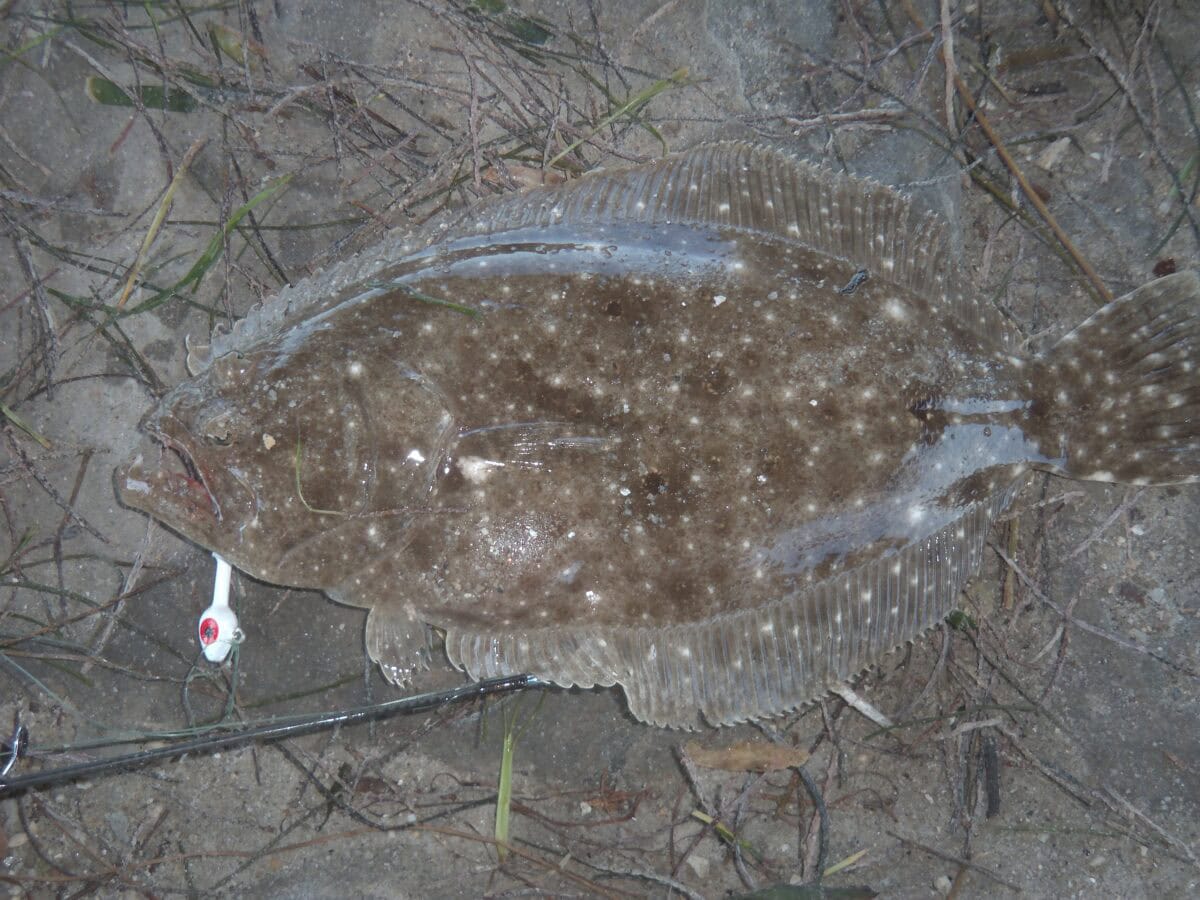
Flounders (order Pleuronectiformes) undergo one of the most dramatic physical transformations in the animal kingdom as part of their camouflage strategy. Born as typical symmetrical fish swimming upright in the water column, young flounders undergo a remarkable metamorphosis as they mature. One eye migrates across the head to join the other eye on a single side, and the fish begins to swim on its side, eventually settling on the ocean floor. This bizarre adaptation allows both eyes to face upward while the fish lies flat against the seafloor. What makes flounders truly exceptional camouflage artists is their ability to change their coloration and pattern to match almost any substrate they rest upon. Their skin contains specialized pigment cells that can replicate an astonishing range of colors, patterns, and textures—from sand to gravel to complex patterns like checkerboards—often in just a few minutes. This remarkable adaptability allows flounders to disappear against virtually any ocean bottom, making them nearly invisible to both predators and prey.
The Ghost Pipefish Spectral Disguise
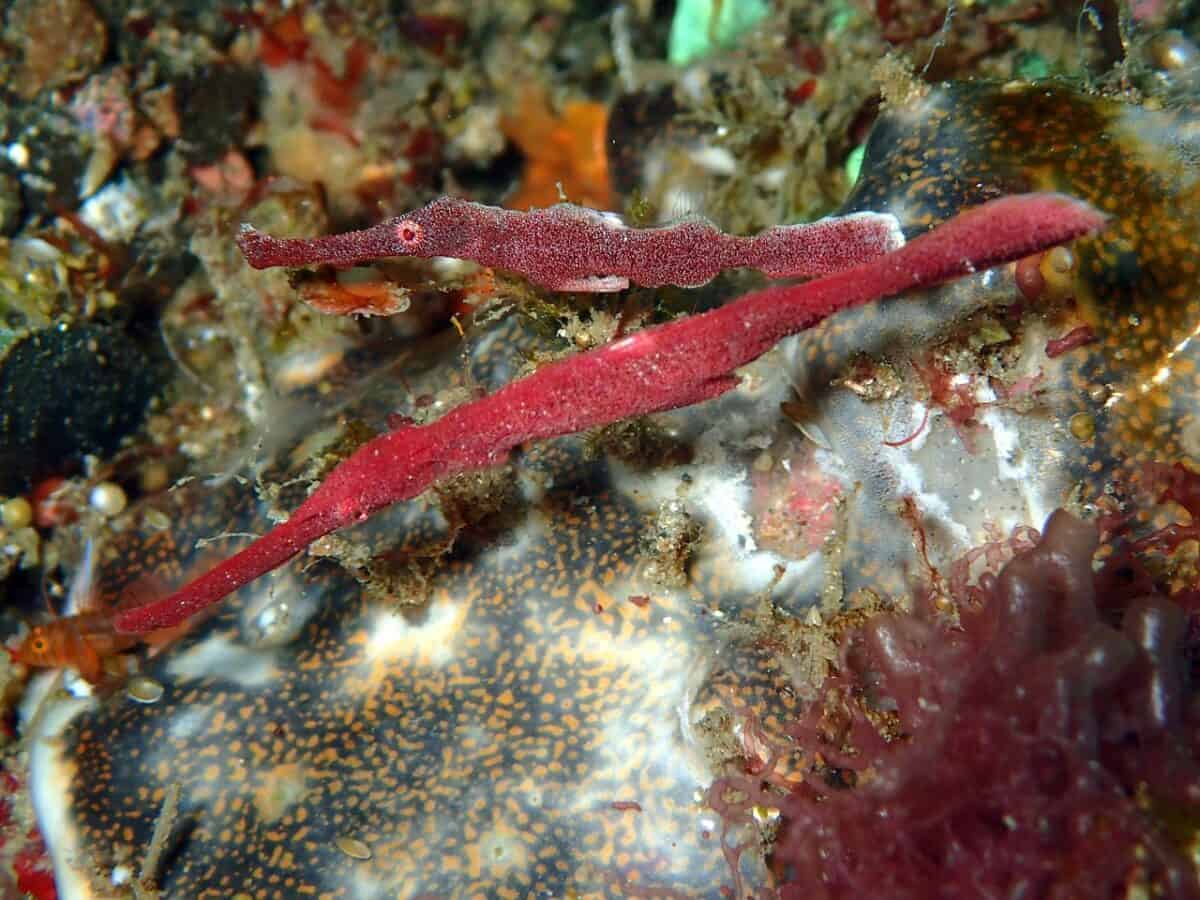
Ghost pipefish (family Solenostomidae) represent some of the ocean’s most ethereal masters of disguise. These delicate relatives of seahorses have evolved body shapes and coloration that mimic specific elements in their environment with extraordinary precision. The ornate ghost pipefish (Solenostomus paradoxus) resembles floating bits of seaweed or coral debris, while the robust ghost pipefish (Solenostomus cyanopterus) often mimics dead leaves or seagrass. Perhaps most remarkable is the halimeda ghost pipefish (Solenostomus halimeda), which has evolved a flattened, leaf-shaped body with jagged edges that perfectly mimics the segments of halimeda algae. Their camouflage is so effective that ghost pipefish are often completely overlooked even by experienced divers specifically searching for them. Adding to their ghostly quality is their habit of hovering motionless, often upside down, among the very items they mimic. Female ghost pipefish have evolved modified pelvic fins that form a brood pouch, allowing them to carry their eggs while maintaining their perfect disguise—a rare example of camouflage that accommodates reproductive behavior.
The Scorpionfish Reef Phantom
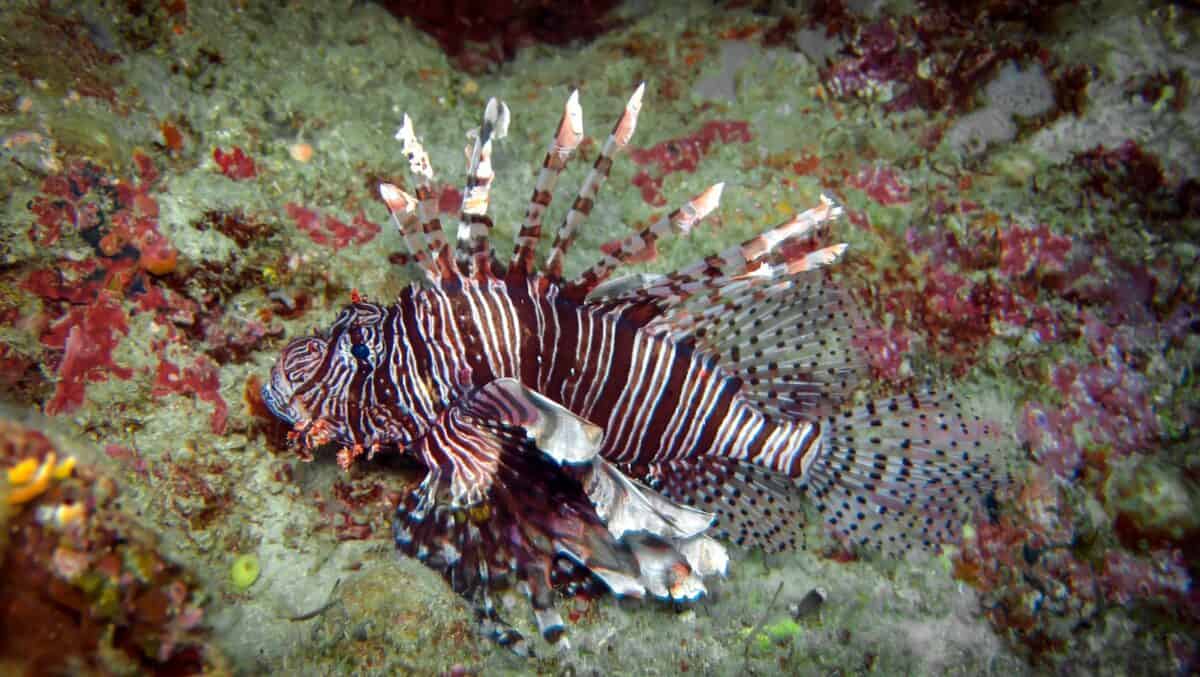
Scorpionfish (family Scorpaenidae) have mastered the art of becoming one with the reef, developing some of the most effective camouflage among fish. Their bodies are adorned with numerous skin flaps, spines, and filaments that break up their outline and mimic the complex structures of coral reefs. Species like the rhinopias, sometimes called the lacy scorpionfish, possess elaborate fin extensions and skin textures that resemble soft corals or sponges with astonishing accuracy. Their camouflage isn’t limited to physical structures—scorpionfish have remarkable control over their coloration, able to match red, brown, yellow, or even purple hues depending on their surroundings. This color-matching ability works in concert with their patience; scorpionfish can remain perfectly still for hours or even days, becoming functionally invisible on the reef. When prey ventures too close, they strike with explosive speed, opening their mouths to create powerful suction that engulfs their victim in milliseconds. This combination of perfect disguise and lightning-fast attack makes scorpionfish formidable ambush predators whose presence on a reef often goes completely undetected.
The Cuttlefish Pixel-Perfect Camouflage

Cuttlefish (order Sepiida) possess perhaps the most sophisticated color-changing abilities in the animal kingdom, creating camouflage displays of almost unbelievable complexity. Their skin contains up to 10 million color-changing cells called chromatophores, arranged in layers that allow these mollusks to produce dynamic patterns that can match virtually any background. What makes cuttlefish truly extraordinary is their ability to analyze their surroundings and create appropriate camouflage despite being colorblind themselves. They can also manipulate the texture of their skin, raising and lowering papillae (small protuberances) to match rough or smooth surfaces. The giant Australian cuttlefish (Sepia apama) demonstrates perhaps the most remarkable application of this ability, with males sometimes displaying female coloration patterns on one side of their body to deceive rival males while simultaneously courting females with the other side. Cuttlefish can change their appearance completely in less than a second, allowing them to disappear against changing backgrounds even while swimming. Their neurological control over these complex displays represents one of the most sophisticated visual systems in nature.
The Peacock Flounder Living Canvas
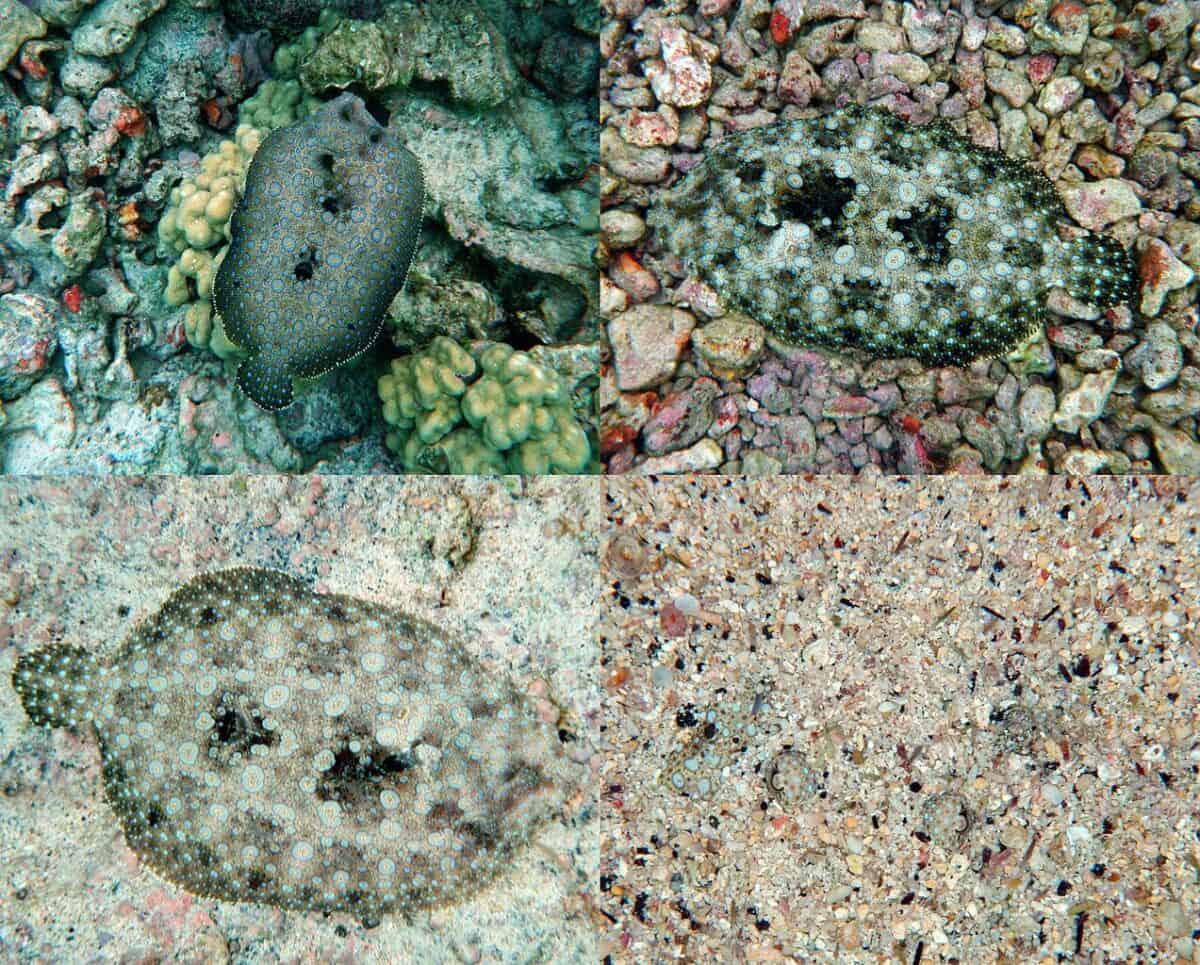
The peacock flounder (Bothus mancus) demonstrates perhaps the most visually striking camouflage adaptations among flatfish. Unlike many animals that evolve fixed patterns to match common backgrounds, the peacock flounder possesses remarkable neurological control over its chromatophores (pigment-containing cells), allowing it to replicate almost any pattern it rests upon. In laboratory studies, researchers have observed peacock flounders successfully matching checkerboard patterns that don’t even exist in nature, demonstrating the extraordinary plasticity of their camouflage system. This adaptive coloration occurs rapidly, with significant changes visible within seconds and complete pattern adaptation within minutes. The peacock flounder’s eyes work independently of each other, constantly scanning its surroundings to ensure its camouflage remains effective as lighting conditions change. This precise control over body patterning is so effective that predators can swim directly over a peacock flounder without detecting it. The peacock flounder’s camouflage serves both defensive and offensive purposes, allowing it to avoid predation while also ambushing prey that fails to distinguish the flounder from the seafloor.
The Sargassum Fish Seaweed Doppelgänger
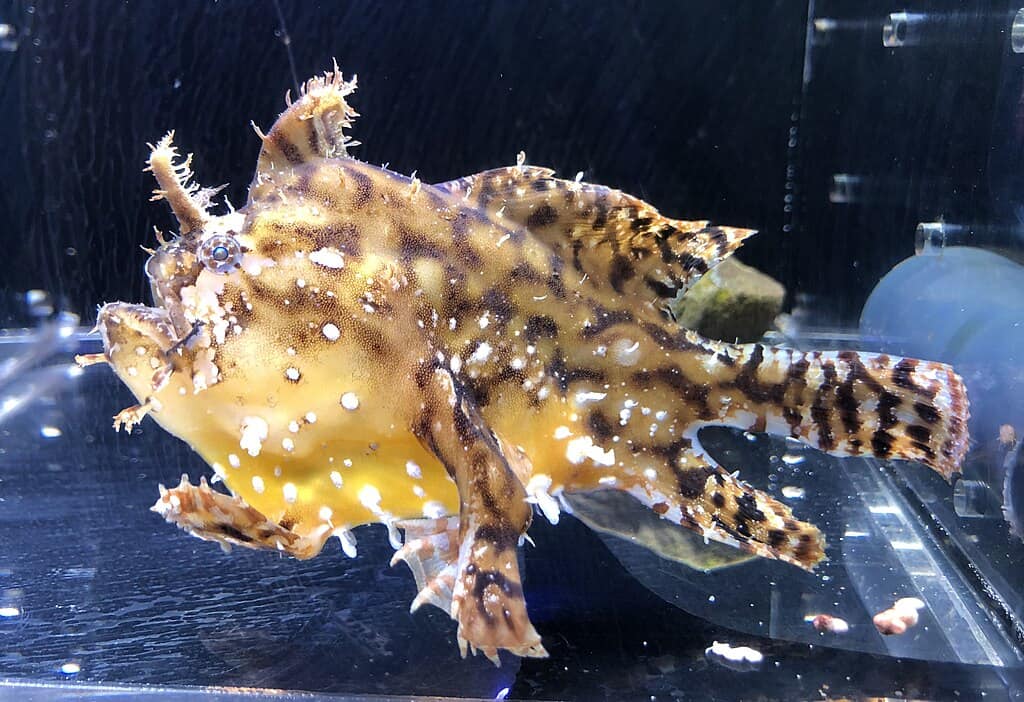
The sargassum fish (Histrio histrio) has evolved one of the most specialized forms of camouflage, perfectly adapted to life in floating sargassum weed mats. These members of the frogfish family have yellowish-brown bodies covered with weed-like appendages and irregular markings that precisely mimic the sargassum seaweed they inhabit. Their fins have evolved to resemble fronds of seaweed, with the pectoral fins modified to function like arms that allow the fish to crawl through the dense weed mats. The sargassum fish’s body is covered with small skin tags and protuberances that match the texture of the small, round air bladders characteristic of sargassum weed. This disguise is so effective that predators and prey alike overlook them completely. As ambush predators, sargassum fish remain motionless among the weeds until suitable prey approaches, then strike with explosive speed, expanding their mouths to create a vacuum that sucks in victims. Their specialized camouflage allows them to thrive in the unique floating ecosystem of the Sargasso Sea, demonstrating how highly specialized camouflage can evolve to exploit specific ecological niches.
The Painted Frogfish Color-Changing Artist

The painted frogfish (Antennarius pictus) showcases some of the most variable and elaborate camouflage among marine creatures, allowing it to disappear against an astonishing range of backgrounds. Unlike some ambush predators that specialize in specific habitats, the painted frogfish has evolved remarkable color versatility, appearing in hues ranging from yellow, red, and green to brown, black, or white, often with intricate patterns that break up its outline. They can even change their base color over several days to better match their surroundings, though not with the rapid color changes seen in octopuses or cuttlefish. Beyond color, painted frogfish have skin covered with spinules and wart-like protuberances that mimic the texture of sponges, algae-covered rocks, or coral surfaces. They enhance their disguise by remaining motionless for extended periods, sometimes swaying gently as if they were merely a piece of debris moved by ocean currents. This comprehensive approach to camouflage—combining color, texture, pattern, and behavior—makes the painted frogfish a master of disappearance in diverse reef environments.
Conclusion:

From the cunning mimicry of the octopus to the nearly invisible elegance of the pygmy seahorse, the ocean’s masters of disguise reveal the astonishing lengths to which evolution can go in the battle for survival. These creatures demonstrate that camouflage is far more than just a visual trick—it’s a complex suite of adaptations involving color, texture, shape, and even behavior. Whether used for ambush, protection, reproduction, or deception, these camouflage strategies are a testament to nature’s boundless creativity and resilience. In the shadowy realms of the sea, where being seen can mean being eaten, invisibility becomes the ultimate superpower. And in that silent underwater theater, these 18 species remind us that some of the most extraordinary marvels of adaptation are hidden in plain sight.

As a little kid, I fell in love with nature, wildlife, and animals. Living in the USA, South Africa, Italy, China and Germany gave me the opportunity to discover the world's Wildlife. My favorite animals are Mountain Gorillas, Siberian Tigers, and Great White Sharks.
I'm a certified PADI Open Water Diver, went to Everest Base Camp and Trekked Gorillas in Uganda. I hold a Master of Science in Economics and Finance.
Please send any feedback to feedback@animalsaroundtheglobe.com
- 12 Most Powerful Winds Ever Recorded Across America - July 16, 2026
- 10 Things That Trigger a Shark Curiosity And 3 That Do Not - July 16, 2026
- 15 Cutest Baby Animals Born in the Wild - July 16, 2026