


The bald eagle, America’s national bird and a symbol of freedom and strength, is one of North America’s most magnificent raptors. After nearly becoming extinct in the continental United States during the late 20th century, these majestic birds have made a remarkable comeback thanks to conservation efforts. Their striking appearance, impressive hunting abilities, and complex behaviors make them fascinating subjects of study and admiration. From their massive nests to their incredible vision, bald eagles possess numerous remarkable characteristics that have captivated humans for centuries. Let’s explore 17 stunning facts about these magnificent birds in their natural habitat.
17. Not Actually Bald
🔥 Would you like to save this?
We'll email this post to you, so you can come back to it later!
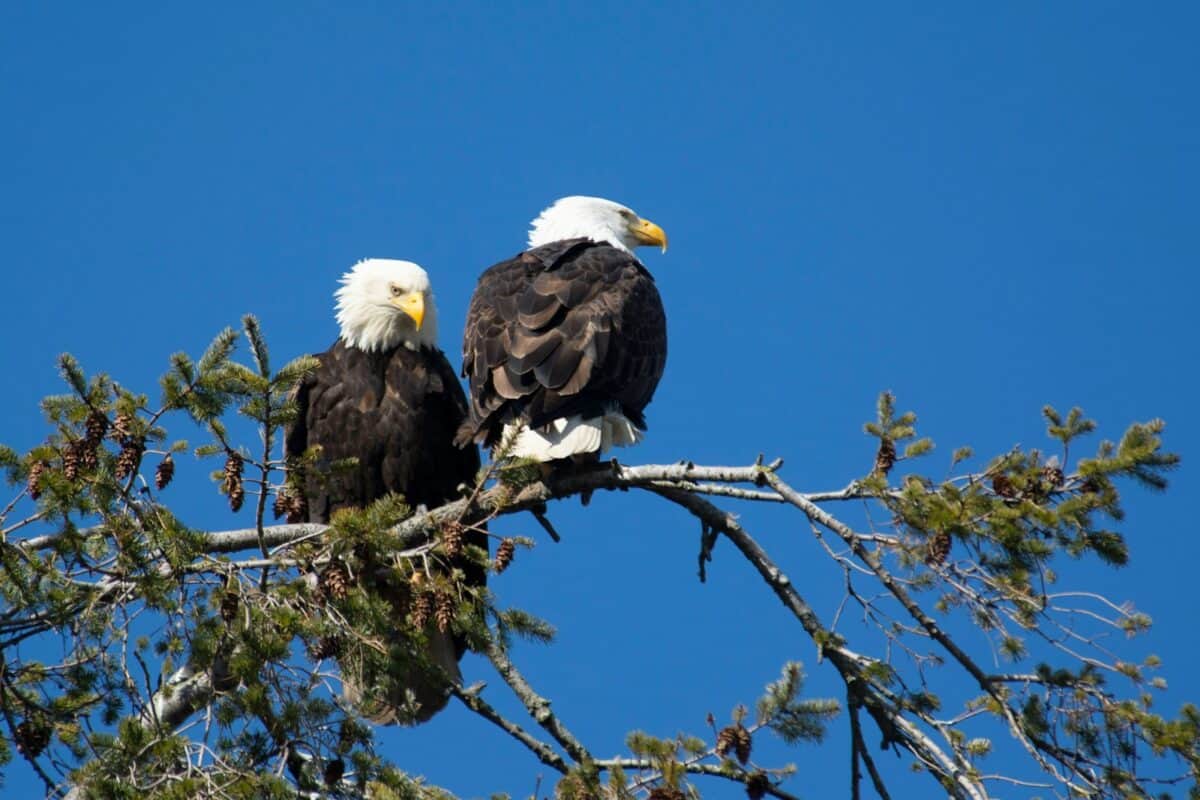
Despite their name, bald eagles are not bald at all. The term “bald” derives from an old English word “balde,” meaning white, referring to their distinctive white head feathers that contrast sharply with their dark brown body. This white plumage doesn’t develop until the eagles reach maturity at around 4-5 years of age. Before that, juvenile bald eagles have mottled brown heads and bodies with varying amounts of white, making them easily confused with golden eagles by inexperienced observers. This dramatic transformation from a predominantly brown juvenile to the iconic white-headed adult represents one of nature’s most striking avian makeovers.
16. Record-Breaking Nests

🔥 Would you like to save this?
We'll email this post to you, so you can come back to it later!
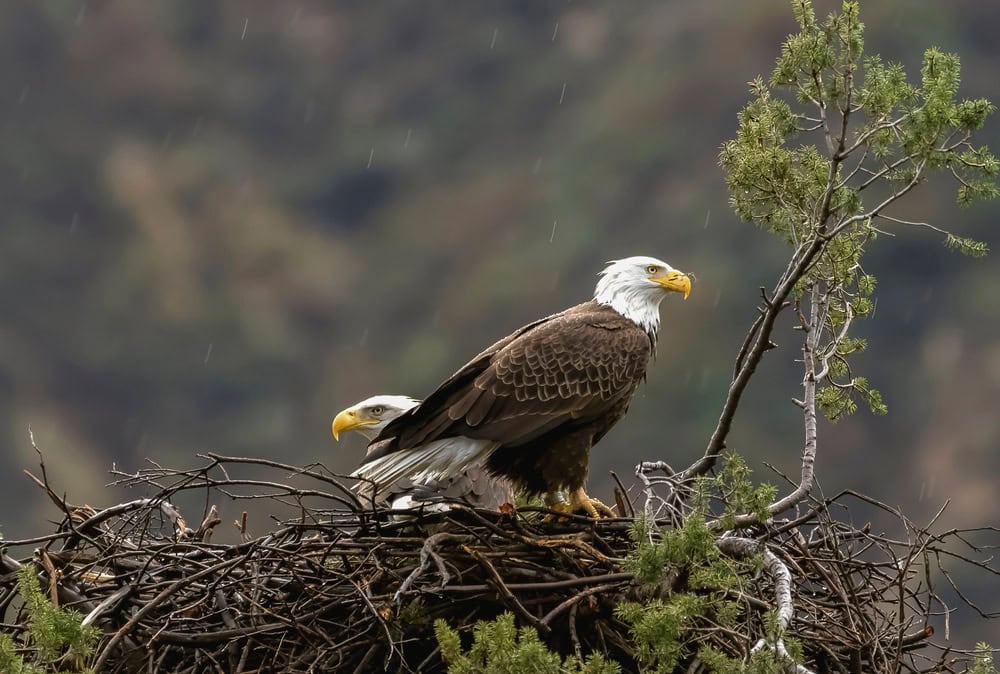
Bald eagles build the largest nests of any North American bird, and among the largest in the world. Their nests, called eyries, are truly architectural marvels. Eagles typically add material to their nests each year, causing them to grow increasingly larger over time. The largest documented bald eagle nest was found in St. Petersburg, Florida, measuring 9.5 feet in diameter and 20 feet deep, weighing an estimated two tons. This particular nest was used for over 30 years before the tree collapsed. On average, bald eagle nests measure about 5 feet in diameter and 2-4 feet deep, weighing hundreds of pounds. These massive structures are engineering feats that can withstand harsh weather conditions while providing safe havens for raising young.
15. Extraordinary Vision

🔥 Would you like to save this?
We'll email this post to you, so you can come back to it later!
Bald eagles possess some of the sharpest vision in the animal kingdom, with eyesight estimated to be four to eight times stronger than that of humans. They can spot a rabbit-sized animal from over a mile away. This remarkable visual acuity comes from having a higher concentration of visual cells in their retinas, along with a specialized central fovea that provides detailed central vision. Additionally, bald eagles have two foveae in each eye (compared to our single fovea), giving them both forward-facing and peripheral high-definition vision. Their eyes are also proportionally much larger than human eyes relative to head size, allowing more light to enter and creating a larger visual image on the retina. This exceptional vision is crucial for hunting, enabling eagles to spot fish swimming near the water’s surface from considerable heights.
14. Impressive Wingspans

🔥 Would you like to save this?
We'll email this post to you, so you can come back to it later!
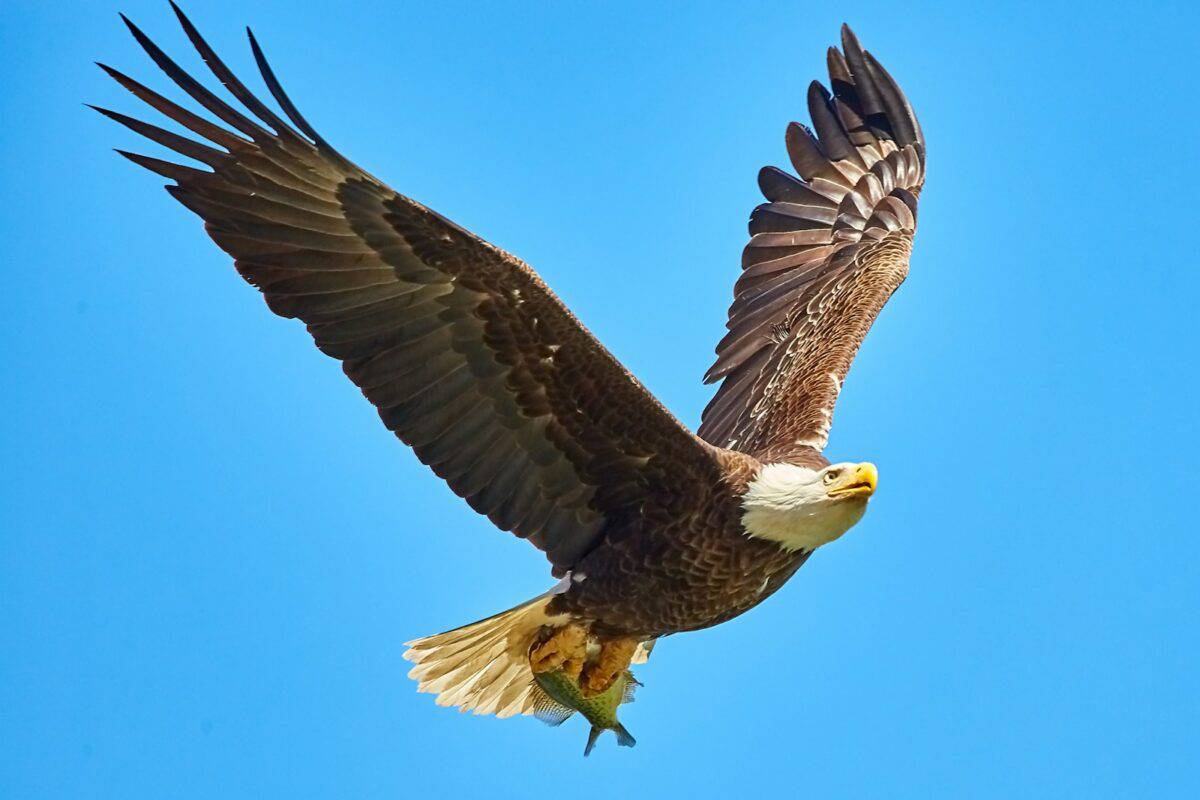
With wingspans ranging from 6 to 7.5 feet (1.8 to 2.3 meters), bald eagles are imposing birds in flight. Female bald eagles, which are typically about 25% larger than males, can have wingspans at the upper end of this range. These massive wings enable the birds to soar effortlessly on thermal currents at altitudes of up to 10,000 feet. Their wing structure is specially adapted for their hunting and flying style, with broad surfaces that create lift and slotted feathers at the tips that reduce drag. When spread wide, their wings can catch rising columns of warm air, allowing eagles to glide for hours with minimal energy expenditure. This efficient flight mechanism helps bald eagles cover vast hunting territories, sometimes spanning over 100 square miles in productive habitats.
13. Powerful Talons
🔥 Would you like to save this?
We'll email this post to you, so you can come back to it later!
A bald eagle’s talons are fearsome weapons, capable of exerting pressure of approximately 400 pounds per square inch (psi). This grip strength is roughly ten times stronger than the average human hand. Each foot has four powerful toes, three facing forward and one backward, equipped with sharp, curved talons that can grow up to two inches long. The talons are composed of keratin, the same material as human fingernails, but are significantly harder and more durable. When hunting, bald eagles use these talons to pierce their prey’s vital organs or to maintain a grip on slippery fish. Their feet also feature specialized scales and small spikes called spicules that help secure their hold on prey. This combination of strength and specialized adaptations makes their talons one of the eagle’s most effective hunting tools.
12. Fish-Focused Diet

🔥 Would you like to save this?
We'll email this post to you, so you can come back to it later!
While bald eagles are opportunistic feeders that will consume a variety of prey, fish constitute approximately 60-90% of their diet in most regions. Their preference for fish has shaped many of their physical adaptations, including their excellent vision for spotting underwater movement and specialized talons for gripping slippery prey. Bald eagles often hunt by soaring over water bodies, diving feet-first when they spot a fish near the surface, and sometimes submerging themselves partially to catch deeper-swimming prey. They primarily target fish that swim near the water’s surface or those that are sick or dying, which are easier to catch. Common fish species in their diet include salmon, trout, bass, and catfish. During times when fish are scarce, bald eagles readily switch to other food sources, including waterfowl, small mammals, and carrion.
11. Masters of Theft

🔥 Would you like to save this?
We'll email this post to you, so you can come back to it later!
Bald eagles frequently engage in kleptoparasitism, a behavior where they steal food from other birds rather than catching it themselves. Their primary targets are often osprey, which are skilled at catching fish but less physically imposing than eagles. When an osprey makes a catch, a watchful eagle will often pursue it, harassing the smaller bird until it drops its meal. The eagle then performs an impressive aerial maneuver, diving to catch the falling fish in mid-air before it hits the water. This behavior isn’t limited to stealing from osprey—bald eagles will also take food from other eagles, herons, gulls, and other fishing birds. While seemingly opportunistic, this strategy is actually energy-efficient, allowing eagles to obtain food without expending the energy required for hunting. Some studies suggest that in certain areas, up to 35% of an eagle’s diet may come from stolen prey.
10. Monogamous Relationships

🔥 Would you like to save this?
We'll email this post to you, so you can come back to it later!
Bald eagles typically mate for life, forming bonds that can last 20-30 years until one partner dies. These monogamous relationships are reinforced through elaborate courtship displays that include spectacular aerial acrobatics. One dramatic courtship behavior, known as “cartwheeling,” involves two eagles flying high into the sky, locking talons, and spinning downward in a free-fall, separating just before hitting the ground. Once paired, couples work together to build and maintain their nests, incubate eggs, and raise their young. The strength of their pair bond is evident in their coordinated parenting, with both males and females taking turns incubating eggs and hunting for food. However, if one mate dies, the surviving eagle will typically seek a new partner rather than remaining single. This life-long partnership strategy increases reproductive success by creating stable, experienced parenting teams.
9. Impressive Comeback Story

🔥 Would you like to save this?
We'll email this post to you, so you can come back to it later!
The bald eagle represents one of the most successful wildlife conservation stories in American history. In the mid-20th century, their population plummeted due to habitat destruction, hunting, and the widespread use of DDT, a pesticide that caused eagles to lay eggs with shells too thin to support developing embryos. By 1963, only 417 nesting pairs remained in the lower 48 states. The species was listed under the Endangered Species Preservation Act in 1967 (a precursor to the Endangered Species Act). After DDT was banned in 1972 and protection measures were implemented, bald eagle populations began to recover. By 2007, their numbers had rebounded so successfully that they were removed from the endangered species list. Today, there are estimated to be more than 300,000 bald eagles in the United States, with over 70,000 nesting pairs. This remarkable recovery demonstrates the potential effectiveness of well-implemented conservation measures.

Portable Dog Water Bottle Foldable Dog Travel Water Bottle
Check Price on AmazonAs an Amazon Associate, we earn from qualifying purchases.
10/7/2026 1:29 pm GMTi

Glass Hummingbird Feeder for Outdoors Hanging
Check Price on AmazonAs an Amazon Associate, we earn from qualifying purchases.
10/7/2026 1:21 pm GMTi

Halloween Dog Collar with Bow, Orange Cute Ghost Collar,
Check Price on AmazonAs an Amazon Associate, we earn from qualifying purchases.
10/9/2026 2:43 pm GMTi

Hand Blown Glass Hummingbird Feeders for Outdoors Hanging, 24oz Wild Bird Nectar Feeder
Check Price on AmazonAs an Amazon Associate, we earn from qualifying purchases.
10/7/2026 1:23 pm GMTi

2 Pcs Halloween Pet Hat Bandana Set, Witch Pumpkin Costumes for Dogs
Check Price on AmazonAs an Amazon Associate, we earn from qualifying purchases.
10/9/2026 2:45 pm GMTi
8. Impressive Lifespan
🔥 Would you like to save this?
We'll email this post to you, so you can come back to it later!
In the wild, bald eagles can live remarkably long lives compared to many bird species, with an average lifespan of 20-30 years. The oldest confirmed wild bald eagle lived to be 38 years old, though captive eagles have been known to live even longer, sometimes exceeding 50 years. This longevity is particularly impressive considering the challenges of life in the wild, including predation risks, disease, environmental hazards, and competition for resources. Several factors contribute to their long lives, including their position at the top of the food chain (meaning few natural predators), their ability to adapt their diet when preferred food sources are scarce, and their tendency to form stable, lifelong pair bonds that enhance reproductive success. Their long lifespan also means individual eagles can potentially produce many offspring over their reproductive years, helping population recovery when conditions are favorable.
7. Unique Vocalizations

🔥 Would you like to save this?
We'll email this post to you, so you can come back to it later!
Despite their fierce appearance and status as powerful predators, bald eagles don’t produce the powerful, piercing cry often attributed to them in movies and television. In reality, their call is a relatively weak-sounding series of high-pitched whistling or piping notes. The classic screech most people associate with bald eagles in media is actually the call of a red-tailed hawk, which sound designers often substitute because it sounds more impressive and matches our expectations for such a majestic bird. Bald eagles use their calls primarily for territorial communication and during breeding season. They have a repertoire of about three to five distinct calls, including a peal call (a series of high-pitched, staccato notes falling in pitch), a chatter call (used during nest exchanges), and various contact calls between mates. Eagles also communicate through body language and displays, particularly around their nests and during courtship.
6. Swimming Capabilities

🔥 Would you like to save this?
We'll email this post to you, so you can come back to it later!
Though primarily known for their impressive flying abilities, bald eagles are also surprisingly competent swimmers. This skill becomes evident when they catch fish too heavy to lift out of the water. Rather than abandoning their prize, eagles will use their powerful wings in a rowing motion to swim to shore, sometimes dragging large fish for considerable distances. Their hollow bones and air sacs, which make flight possible, also provide buoyancy in water. Young eagles sometimes fall from nests into water and must swim to safety. There have been documented cases of eagles swimming across bodies of water up to a mile wide. This adaptability demonstrates the eagle’s versatility and determination when pursuing prey or facing challenges, adding another dimension to their already impressive suite of survival skills.
5. Impressive Hunting Speed

🔥 Would you like to save this?
We'll email this post to you, so you can come back to it later!
When diving to catch prey, bald eagles can reach speeds of up to 100 miles per hour (160 km/h). This remarkable velocity, combined with their precision and powerful talons, makes them formidable hunters. Their hunting dives, called stoops, are carefully calculated attacks that rely on the element of surprise and overwhelming speed. The eagle’s aerodynamic body shape, with its sleek profile and specialized feather structure, enables these high-speed dives while maintaining control. Interestingly, while their diving speed is impressive, their level flight speed is more modest at 35-45 mph (56-72 km/h). Eagles are built more for soaring efficiency than for sustained rapid flight, with their broad wings creating significant drag at high speeds. This combination of soaring ability and diving speed represents an optimal balance for their hunting strategy, allowing them to conserve energy while patrolling large territories and strike quickly when prey is spotted.
4. Remarkable Egg Incubation

🔥 Would you like to save this?
We'll email this post to you, so you can come back to it later!
Bald eagle eggs require intensive care during the 35-day incubation period. Both parents take turns sitting on the eggs, though the female typically handles about 65-70% of incubation duties. During winter nesting in northern regions, eagles must keep their eggs at approximately 105°F (40.5°C) despite outside temperatures that can drop well below freezing. To accomplish this, eagles develop a brood patch—an area of bare skin on their bellies rich with blood vessels that transfers body heat directly to the eggs. Parents are incredibly dedicated, sometimes remaining on the nest during heavy snowfall until completely covered in snow, with only their heads visible. Eagle eggs are vulnerable to temperature fluctuations; if left uncovered for too long in cold weather, they can become hypothermic and fail to develop. This dedication to incubation demonstrates the remarkable parental investment that helps ensure the survival of the next generation.

Earth Rated XL Dog & Puppy Pee Pads, Discreet Top, Max Absorbency
Check Price on AmazonAs an Amazon Associate, we earn from qualifying purchases.
10/7/2026 1:28 pm GMTi

Professional 7 in 1 Dog Paw Cleaner for Dogs & Cats - Includes 1 Portable Paw Washer, 1 Bath Brush
Check Price on AmazonAs an Amazon Associate, we earn from qualifying purchases.
10/7/2026 1:26 pm GMTi

PetSafe Oasys Pet Fountain, 1/2 Gallon (64 oz), Small Dogs & Cats
Check Price on AmazonAs an Amazon Associate, we earn from qualifying purchases.
10/8/2026 8:14 am GMTi

Glass Hummingbird Feeder for Outdoors Hanging, 16 oz Leak-Proof Nectar Feeder with Bee Guards & Ant Moat
Check Price on AmazonAs an Amazon Associate, we earn from qualifying purchases.
10/7/2026 1:22 pm GMTi

Orthopedic Extra Large Dog Bed, Waterproof Washable XL Pet Bed 44"
Check Price on AmazonAs an Amazon Associate, we earn from qualifying purchases.
10/7/2026 1:32 pm GMTi
3. Impressive Juvenile Growth Rate

🔥 Would you like to save this?
We'll email this post to you, so you can come back to it later!
Young bald eagles experience one of the most dramatic growth rates among North American birds. Hatching from eggs roughly the size of a chicken egg (about 3 inches long), eagle chicks weigh only about 3 ounces (85 grams) at birth. Within just 12 weeks, they transform into full-sized eagles weighing 9-14 pounds (4-6.5 kg)—an astonishing weight increase of approximately 50 times their hatching weight. During peak growth periods, eaglets can gain more than 150 grams (5.3 ounces) per day. This rapid development requires tremendous amounts of food; parents must provide up to 5 pounds of food daily to the nest during this period. Despite reaching adult size quickly, young eagles require 4-5 years to develop the characteristic white head and tail feathers that identify adult bald eagles. This extended maturation period allows juveniles to develop the hunting and survival skills they’ll need before establishing territories and finding mates.
2. Cultural Significance

🔥 Would you like to save this?
We'll email this post to you, so you can come back to it later!
The bald eagle holds profound cultural significance across North America, particularly among Native American tribes and in American national symbolism. For many indigenous peoples, eagles are considered sacred messengers between humans and the divine, with their feathers used in important ceremonial and spiritual contexts. The U.S. adopted the bald eagle as its national emblem in 1782, when it was included in the Great Seal of the United States. Congress chose the eagle for its long life, great strength, majestic looks, and because it was native to North America. Today, the bald eagle appears on numerous official items, including the presidential seal, military insignia, and the one-dollar bill. Beyond official symbolism, the eagle has become a powerful cultural icon representing freedom, strength, and the American wilderness. Special federal laws, including the Bald and Golden Eagle Protection Act of 1940, make it illegal to possess eagle parts, including feathers, without special permits—with exceptions for Native American religious purposes.

Smart Bird Feeder with Camera Solar Powered, 2K HD Live Video, 10,000+ Bird Species AI Identification
Check Price on AmazonAs an Amazon Associate, we earn from qualifying purchases.
10/7/2026 1:22 pm GMTi

Air Purifiers for Home Pets Large Room Up to 3000 Ft²,HEPA Air Cleaner with Washable Double-Side Filter, PM2.5 Air Quality Monitor,15dB Sleep Mode for Bedroom Odor Dust Pollen,White
Check Price on AmazonAs an Amazon Associate, we earn from qualifying purchases.
10/8/2026 8:23 am GMTi

Halloween Cat Costume Cloak Witch Hat Pet Accessories
Check Price on AmazonAs an Amazon Associate, we earn from qualifying purchases.
10/9/2026 2:44 pm GMTi

Dog Stairs for Bed 18" H, 4-Step Dog Steps for High Bed
Check Price on AmazonAs an Amazon Associate, we earn from qualifying purchases.
10/9/2026 2:42 pm GMTi
1. Remarkable Migratory Patterns

🔥 Would you like to save this?
We'll email this post to you, so you can come back to it later!
While some bald eagle populations are relatively sedentary, others undertake impressive seasonal migrations. Eagles nesting in northern regions like Alaska and Canada often migrate south when water bodies freeze, making their primary food source—fish—inaccessible. Some tagged eagles have been documented traveling more than 1,700 miles between summer breeding grounds and winter territories. Unlike many migratory birds that follow narrow, defined routes, bald eagles often migrate along broader corridors that follow river valleys and coastlines where food is available. Interestingly, juvenile eagles tend to wander more extensively than adults, sometimes exploring territories thousands of miles from their hatching location before eventually establishing their own nesting territories. This exploratory behavior helps prevent inbreeding and promotes genetic diversity across the population. Migration patterns are also changing in response to climate change, with some traditionally migratory eagle populations becoming more sedentary as northern waters remain ice-free for longer periods each year.
Conclusion: The Enduring Majesty of America’s Bird

🔥 Would you like to save this?
We'll email this post to you, so you can come back to it later!
The bald eagle stands as a testament to both nature’s ingenuity and humanity’s capacity for conservation. From their near-extinction to their triumphant recovery, these magnificent birds have reclaimed their rightful place in North America’s skies and continue to inspire awe in all who witness them. Their remarkable adaptations—from powerful talons and extraordinary vision to massive nests and complex social behaviors—highlight the specialized evolution that has made them such successful apex predators. As symbols of wilderness and freedom, bald eagles remind us of our responsibility to protect natural habitats and the species that depend on them. Their story offers hope that with proper protection and management, even species on the brink can recover and thrive once again in their natural environments.

As a little kid, I fell in love with nature, wildlife, and animals. Living in the USA, South Africa, Italy, China and Germany gave me the opportunity to discover the world's Wildlife. My favorite animals are Mountain Gorillas, Siberian Tigers, and Great White Sharks.
I'm a certified PADI Open Water Diver, went to Everest Base Camp and Trekked Gorillas in Uganda. I hold a Master of Science in Economics and Finance.
Please send any feedback to feedback@animalsaroundtheglobe.com
- 17 Stunning Facts About Bald Eagles in the Wild - November 9, 2026
- 15 Animals You had Never Guess Are Venomous - November 9, 2026
- 15 Animals That Are Masters of Disguise - November 9, 2026
Leave a comment
You must be logged in to post a comment.