
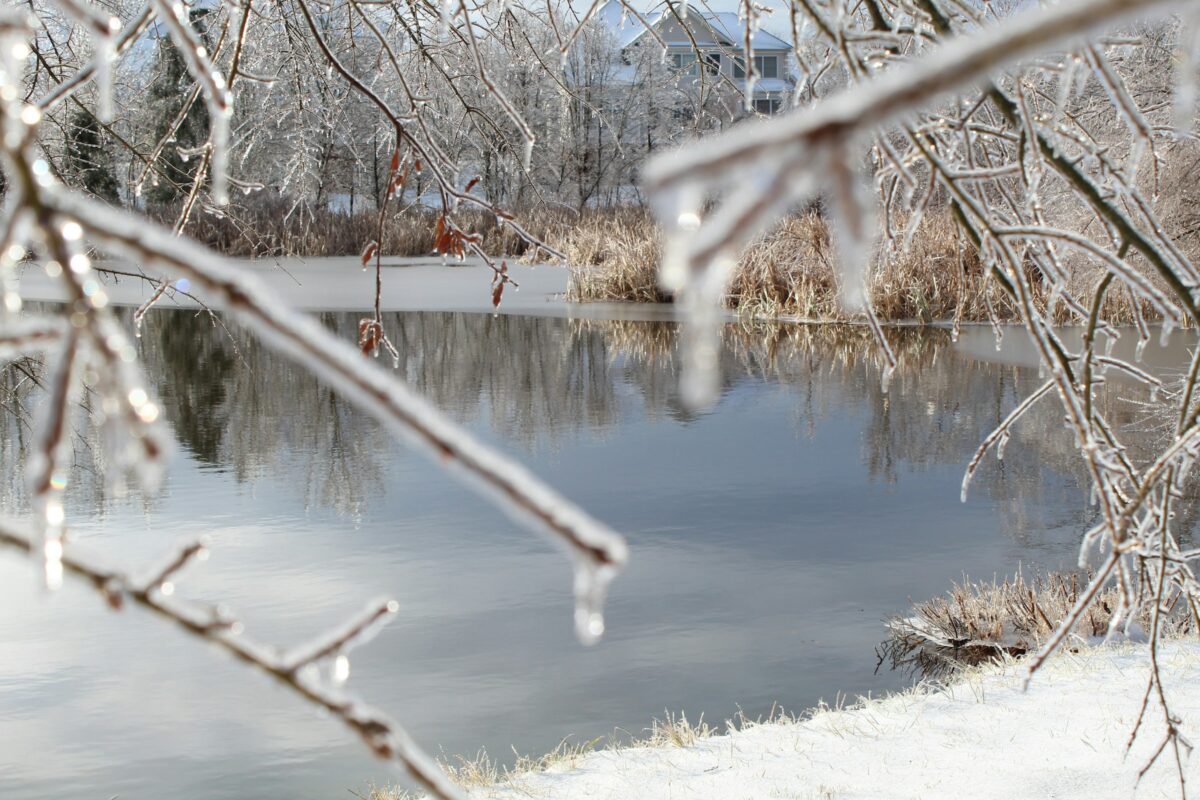


Your phone says 36°F, and your lawn is covered in frost anyway. That isn’t a glitch. It’s the first clue that your yard plays by a different rulebook once winter nights set in.
Most people assume a backyard simply “goes to sleep” in winter, but the reality is far busier. Once nights fall below 32°F, soil, plants, birds, insects, frogs and even the pipe behind your garden faucet start doing things you’ve probably never noticed. Some creatures survive by freezing solid. Others shiver all night long, and one tiny bird deliberately chills itself. Here’s what the science says about the 19 shifts happening outside your window, counting down to the one that sounds like science fiction.
#19 – Frost Appears Even When the Forecast Says “Above Freezing”
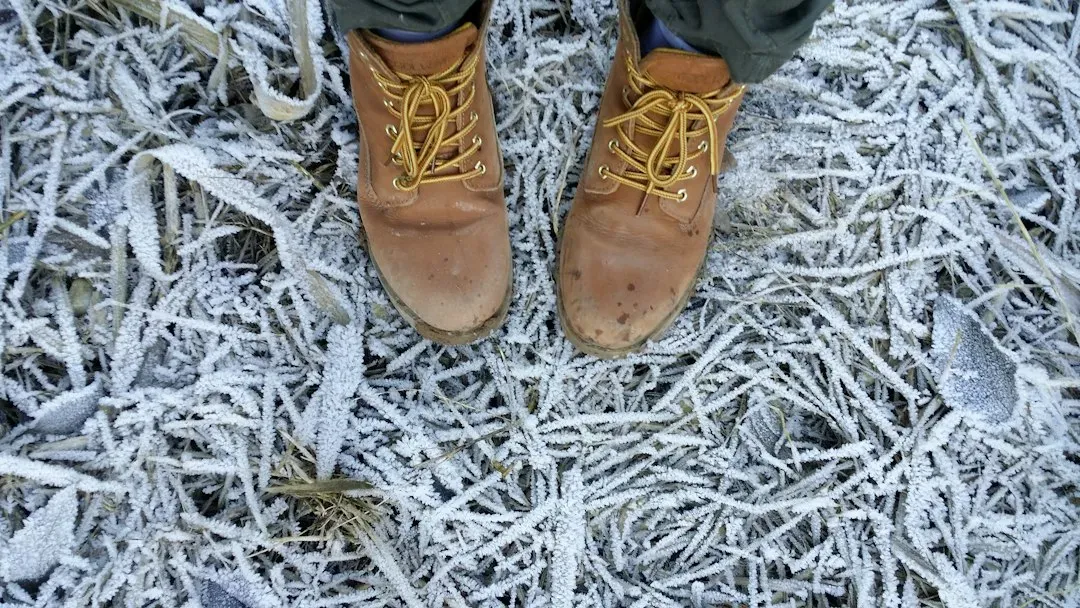
Your backyard can frost over on a night the weather app calls safe.
The official air temperature is measured about five feet off the ground. Grass blades sit much lower, and on clear, calm nights they radiate heat into the sky and cool several degrees below the air around them.
That is why a reading of 35°F or 36°F can still leave a white crust on the lawn and a dead tomato plant by morning. Cloud cover works like a blanket and slows this heat loss, which is why cloudy nights are gentler.
It also explains why the car parked under a tree or carport is often clear while the one at the curb is crusted white. Overhead cover blocks some of that heat escaping to the sky.
Frost risk climbs when three things line up:
- A clear sky
- Little to no wind
- Dry air
And the coldest spot in your yard probably isn’t where you think it is, as #18 shows.
#18 – Cold Air Flows Downhill Like Water
Your yard has secret frost pockets, and cold air pours into them overnight.
Cold air is denser than warm air. On still nights it slides downslope and pools in low spots, so the bottom of a gentle slope can run several degrees colder than the top. You can’t see it happening, but it behaves a lot like an invisible stream of water.
Gardeners call these “frost pockets.” A fence, hedge or wall at the low end of a yard can dam that cold air and trap it, which turns a minor dip into a plant-killing one. A gap at the bottom of a barrier gives the cold air somewhere to drain.
Worth Knowing
- Cold air drains downhill on calm, clear nights, much like water.
- Solid fences and dense hedges at the low edge can trap it.
- Slightly higher ground or an open gap lets cold air slip away.
- Fruit trees and early bloomers are the plants most worth moving out of a pocket.
Most people plant by sunlight alone. Experts who study microclimates argue that cold drainage matters just as much, especially for fruit trees and early bloomers.
Next time there’s a clear, frosty morning, walk the yard at dawn. The corner where frost lingers longest is usually your pocket.
Meanwhile, the ground itself is doing something just as sneaky, and #17 explains it.
#17 – The Soil Freezes From the Top Down, But Not Evenly
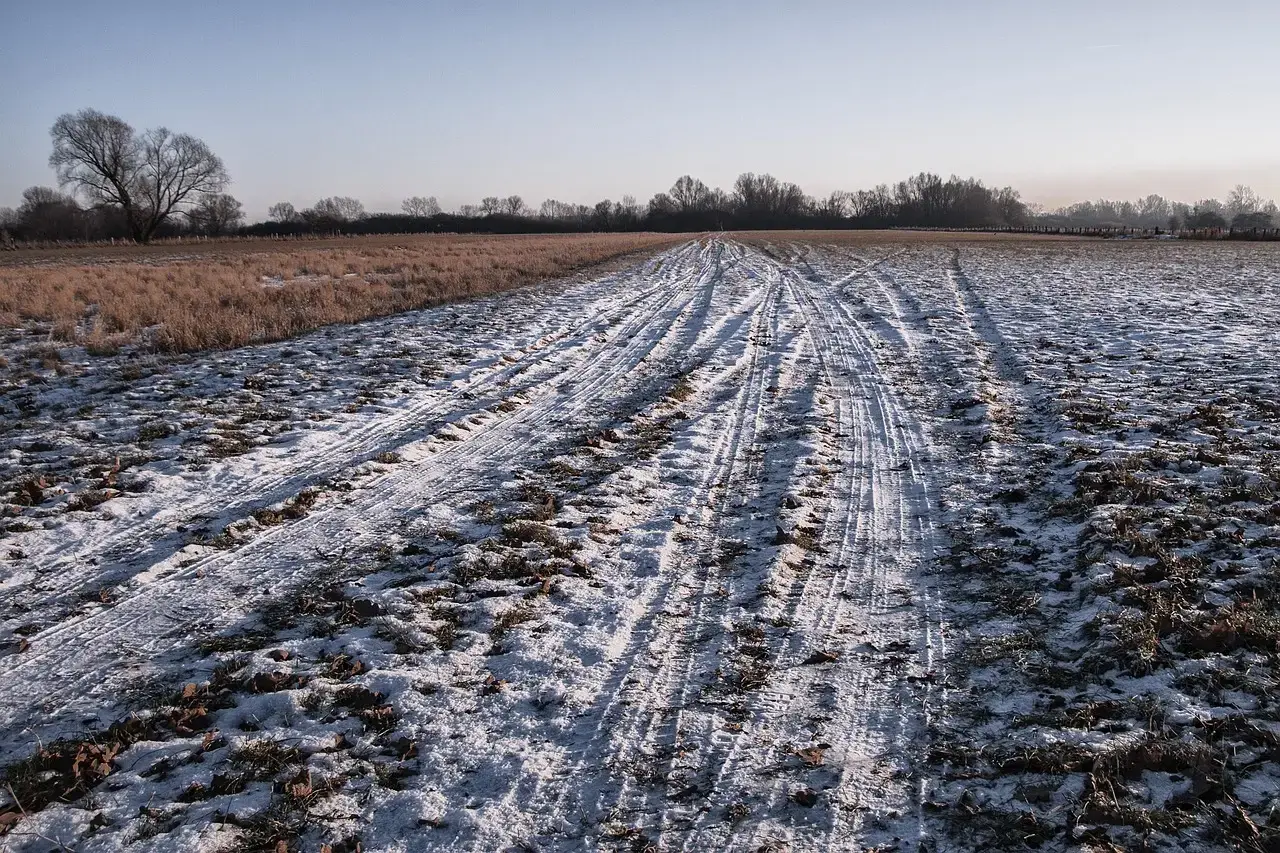
Frost doesn’t take over your soil all at once.
Soil holds onto summer warmth longer than the air does, so it usually takes a run of cold nights before the ground starts to freeze. From there the frost creeps downward from the surface. How deep it goes depends on how long the cold lasts, how wet the soil is, and what is covering it. Bare, packed soil can freeze far deeper than soil under snow or mulch.
Snow is a surprisingly good insulator because of the air trapped between flakes. A steady snow blanket can keep the soil beneath it much milder than the air above, which is one reason plants often survive a snowy cold snap better than a dry, windy one.
The same yard can have frozen soil in one corner and workable soil in another. Shade, drainage and soil type all play a part, so your backyard is really a patchwork of frozen and unfrozen zones.
But once soil freezes, it starts moving, and not quietly, as #16 explains.
#16 – Plants Get Pushed Out of the Ground
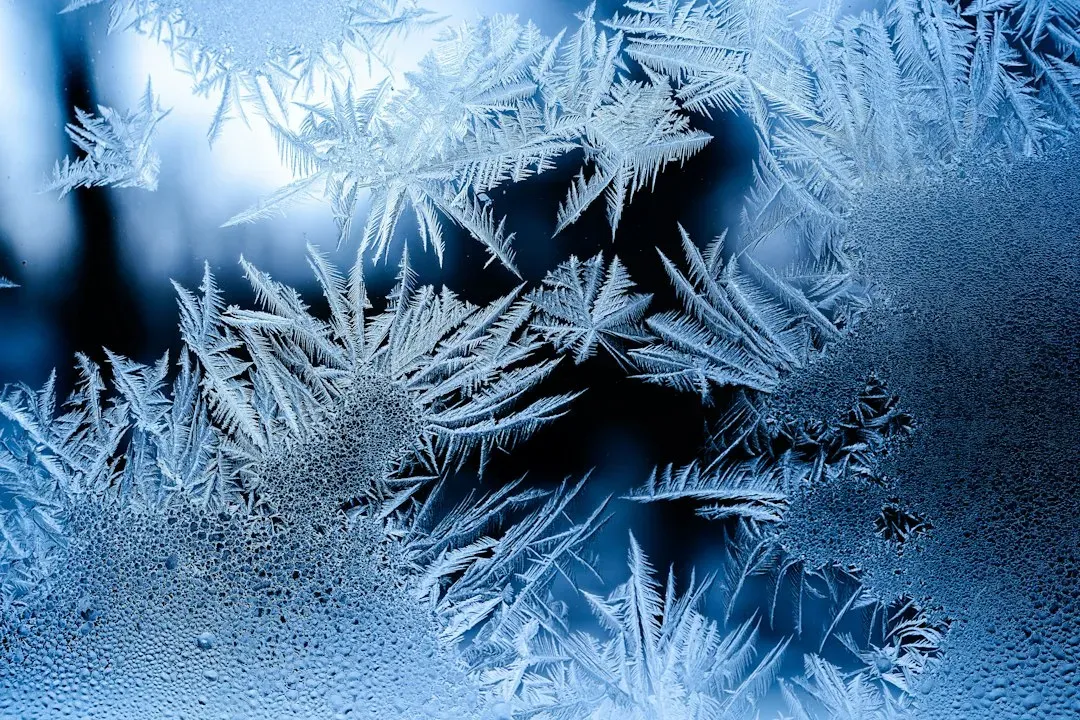
Frozen soil can physically shove plants upward.
Water in the soil expands as it freezes. Ice then grows in layers, sometimes as little vertical “needles” that lift soil particles and tiny seedlings along with them. When the ground thaws, the plant doesn’t settle back down.
This is called frost heave. Shallow-rooted perennials and newly planted shrubs are the usual victims, and you may find them sitting half out of the ground by late winter, roots exposed to wind and dry air.
Plants most at risk include:
- Coral bells and similar shallow-rooted perennials
- Fall-planted perennials that haven’t anchored yet
- Strawberry crowns
Inside the plants themselves, something even stranger is happening, as #15 shows.
#15 – Ice Forms Outside the Cells First
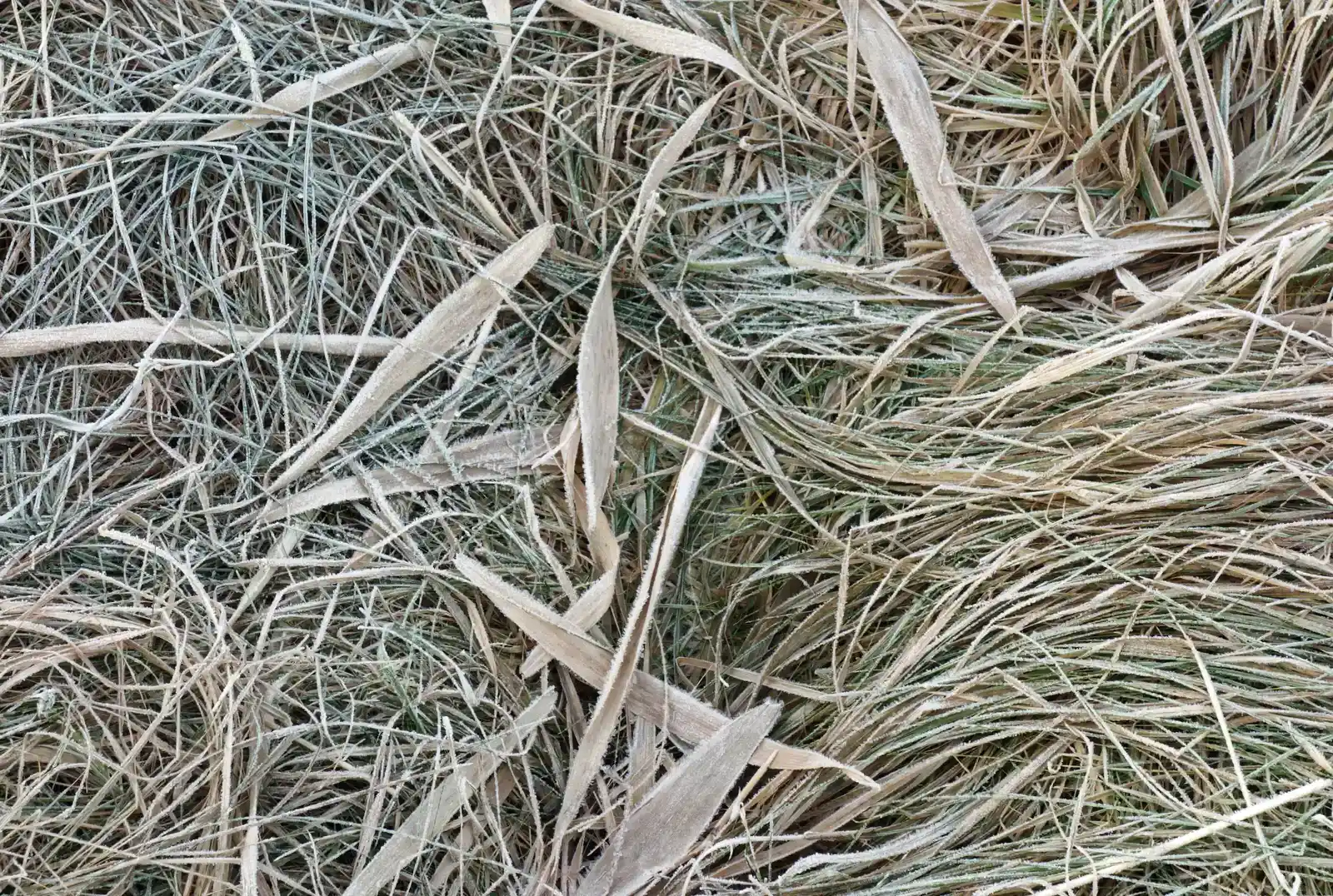
A plant that survives freezing is often being dehydrated on purpose.
When temperatures drop, ice usually starts forming in the spaces between plant cells, not inside them. That fluid is less concentrated than the cell contents, so it freezes first.
Ice then draws water out of the cells, a process known as freeze dehydration. Hardy plants tolerate this. Tender plants don’t, because ice crystals can pierce and rupture their cells.
That difference explains why one plant stays green after a hard frost while its neighbor turns to mush. It comes down to how well each species handles losing water and how fast the freeze happens.
Hardy plants also get ready well before the first frost, which is #14.
#14 – Hardy Plants Make Their Own Antifreeze
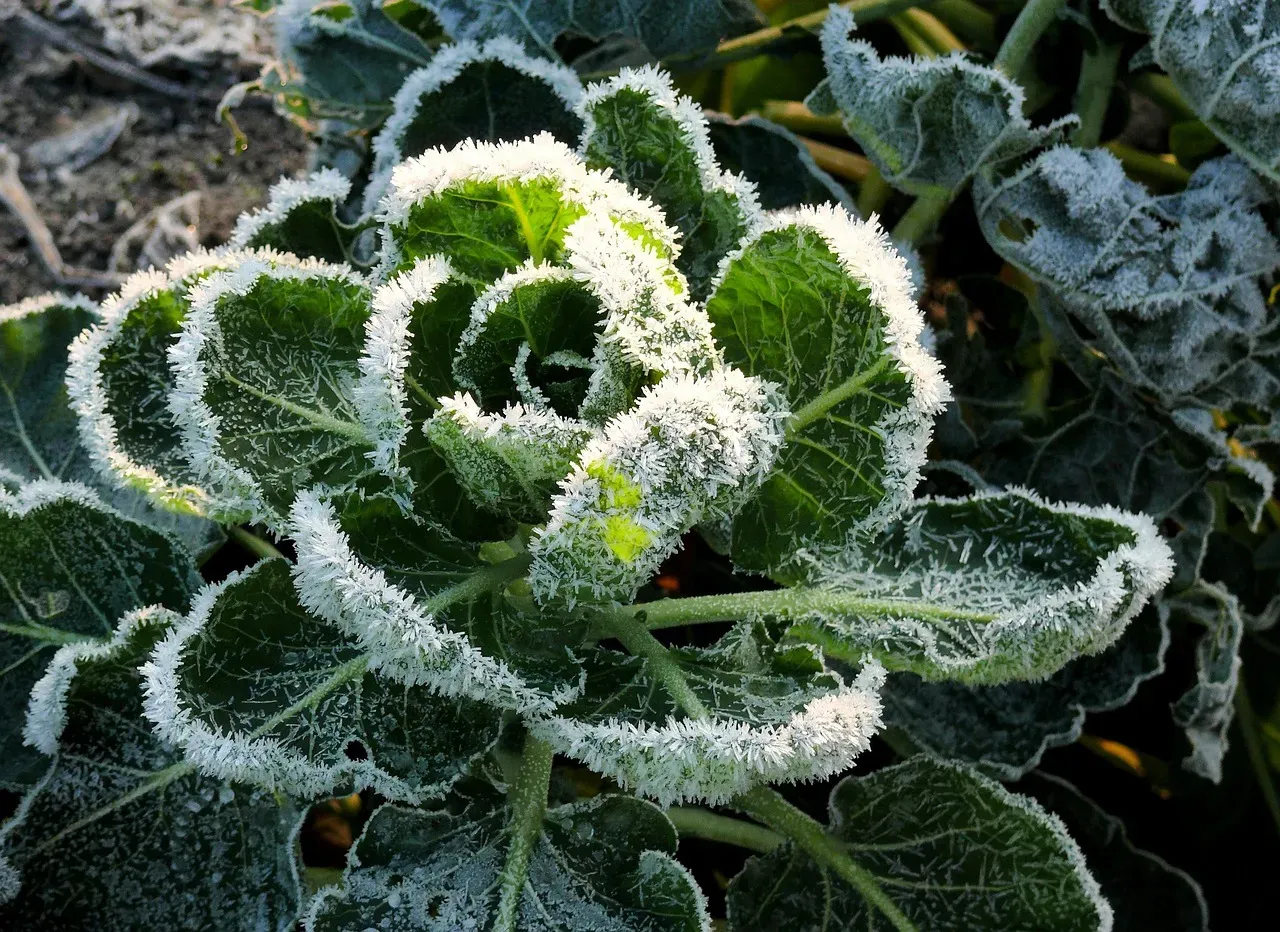
Winter-hardy plants spend autumn quietly preparing for the cold.
Shorter days and cooler nights trigger a process called cold acclimation. Cells build up sugars and protective proteins, which lowers the point at which their contents freeze and helps stabilize cell membranes.
That’s the real reason kale, Brussels sprouts, collards and carrots taste noticeably sweeter after a frost. Part of that sweetness is the plant protecting itself.
Gardeners often wait until after a frost to harvest cold-tolerant crops for this reason. It’s one of the few times a cold snap actually improves the harvest.
Not every plant is so prepared, as #13 makes painfully clear.
#13 – Tender Plants Collapse Overnight
One frosty night can end a summer garden.
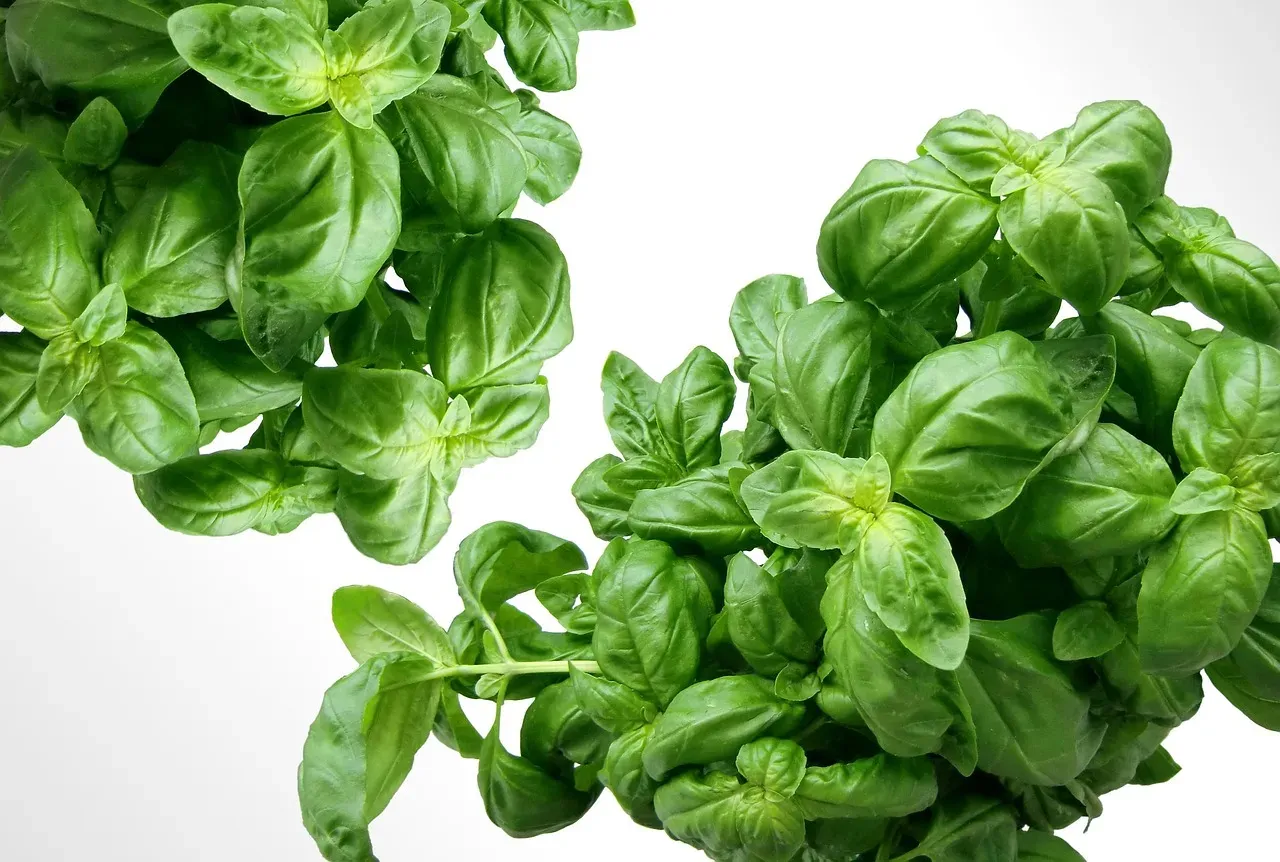
Tomatoes, peppers, cucumbers, squash, basil and many annual flowers have no cold defenses. When ice forms inside their tissue, the cells rupture and leak, and the leaves turn dark and water-soaked by morning.
Many of these plants look fine at dawn and fall apart once the sun hits them. The damage is already done, even though it appears hours later.
Basil is especially fragile and can suffer from simple chilly nights well before a true frost. Experts often point out that a covered plant can survive when an uncovered one doesn’t, but only if the cover is cloth or fabric. Plastic touching the leaves can conduct cold and cause its own damage.
Some plants take a very different approach, which brings us to #12.
#12 – Rhododendron Leaves Curl Up Like Cigars
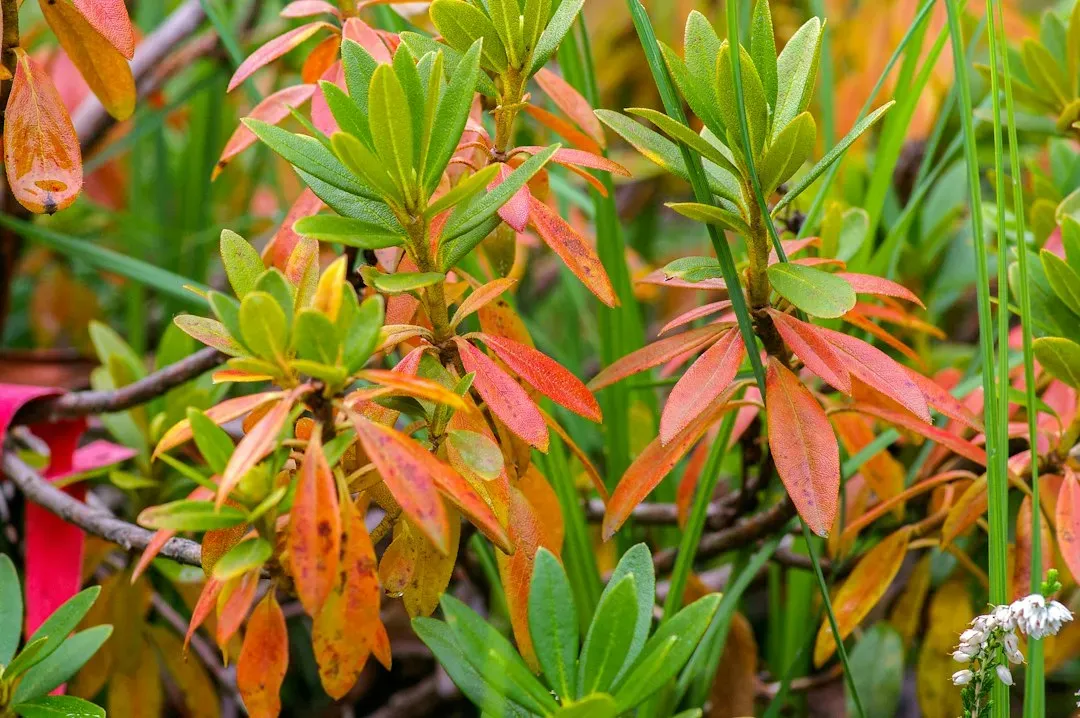
Some shrubs signal the cold with their leaves.
When temperatures fall, rhododendron leaves droop and roll inward. Gardeners have long used this as a rough, informal thermometer: the tighter the curl, the colder it is.
The curling is thought to be a protective response to cold and dry winter conditions. It’s also reversible, and the leaves flatten back out when it warms up.
This is normal winter behavior, not a sign of disease. Many homeowners panic and over-water, which can do more harm than the cold ever would.
Evergreens, though, have a hidden weakness in winter, as #11 reveals.
#11 – Evergreens Secretly Dry Out
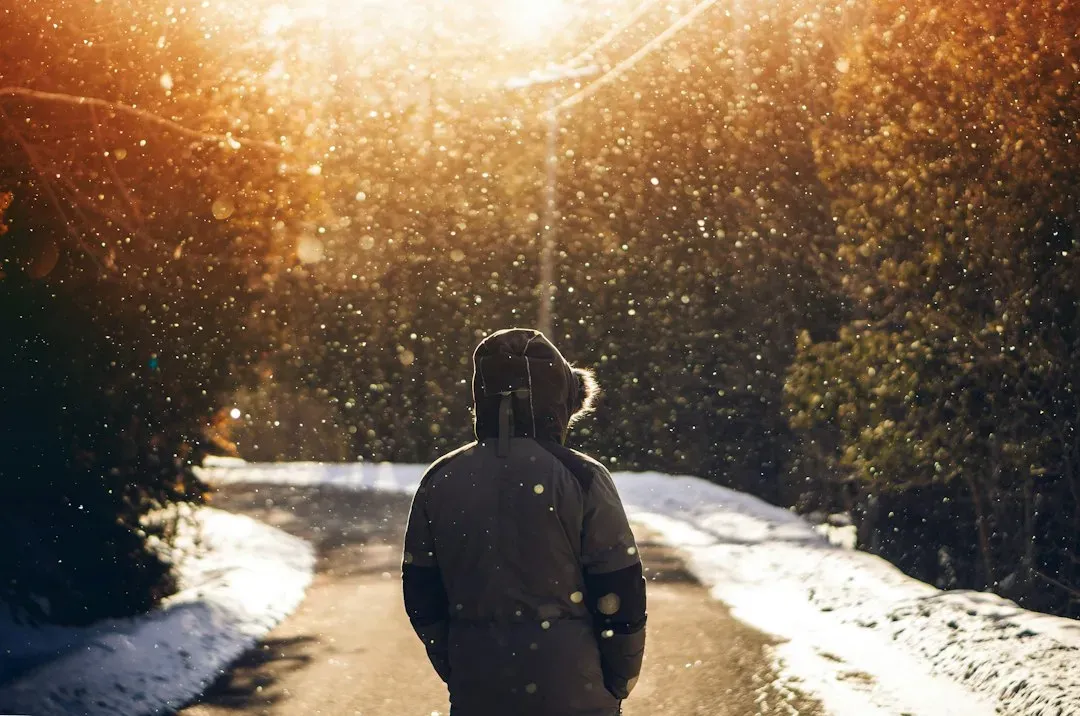
Evergreens can die of thirst in the middle of winter.
Their leaves and needles keep losing small amounts of water through the cold months. If the soil is frozen, the roots can’t replace it.
The result is winter burn, with brown, scorched-looking tips, usually on the side facing sun and wind. The plant is dehydrated, not frozen.
Many people blame the cold itself, but the cause is often a dry autumn. Experts commonly recommend deep watering before the ground freezes.

Professional 7 in 1 Dog Paw Cleaner for Dogs & Cats - Includes 1 Portable Paw Washer, 1 Bath Brush
Check Price on AmazonAs an Amazon Associate, we earn from qualifying purchases.
10/7/2026 1:26 pm GMTi

Halloween Dog Collar with Bow, Orange Cute Ghost Collar,
Check Price on AmazonAs an Amazon Associate, we earn from qualifying purchases.
10/9/2026 2:43 pm GMTi

PetSafe Oasys Pet Fountain, 1/2 Gallon (64 oz), Small Dogs & Cats
Check Price on AmazonAs an Amazon Associate, we earn from qualifying purchases.
10/8/2026 8:14 am GMTi

Glass Hummingbird Feeder for Outdoors Hanging, 16 oz Leak-Proof Nectar Feeder with Bee Guards & Ant Moat
Check Price on AmazonAs an Amazon Associate, we earn from qualifying purchases.
10/7/2026 1:22 pm GMTi

Earth Rated XL Dog & Puppy Pee Pads, Discreet Top, Max Absorbency
Check Price on AmazonAs an Amazon Associate, we earn from qualifying purchases.
10/7/2026 1:28 pm GMTi
Quick Compare
- Freeze damage: sudden, with dark, water-soaked leaves after a hard frost night.
- Winter burn: brown or scorched tips, often on the sun-and-wind side, and usually showing up late in winter.
- The fix differs: covers and timing for frost, moisture and wind shelter for burn.
My take, and a debated one: the standard burlap-wrapped shrub does less than people think, because it only breaks the wind and the real fix is moisture and planting location. Lots of gardeners disagree.
Even your lawn changes its behavior, which is #10.
#10 – Frozen Grass Leaves Footprints
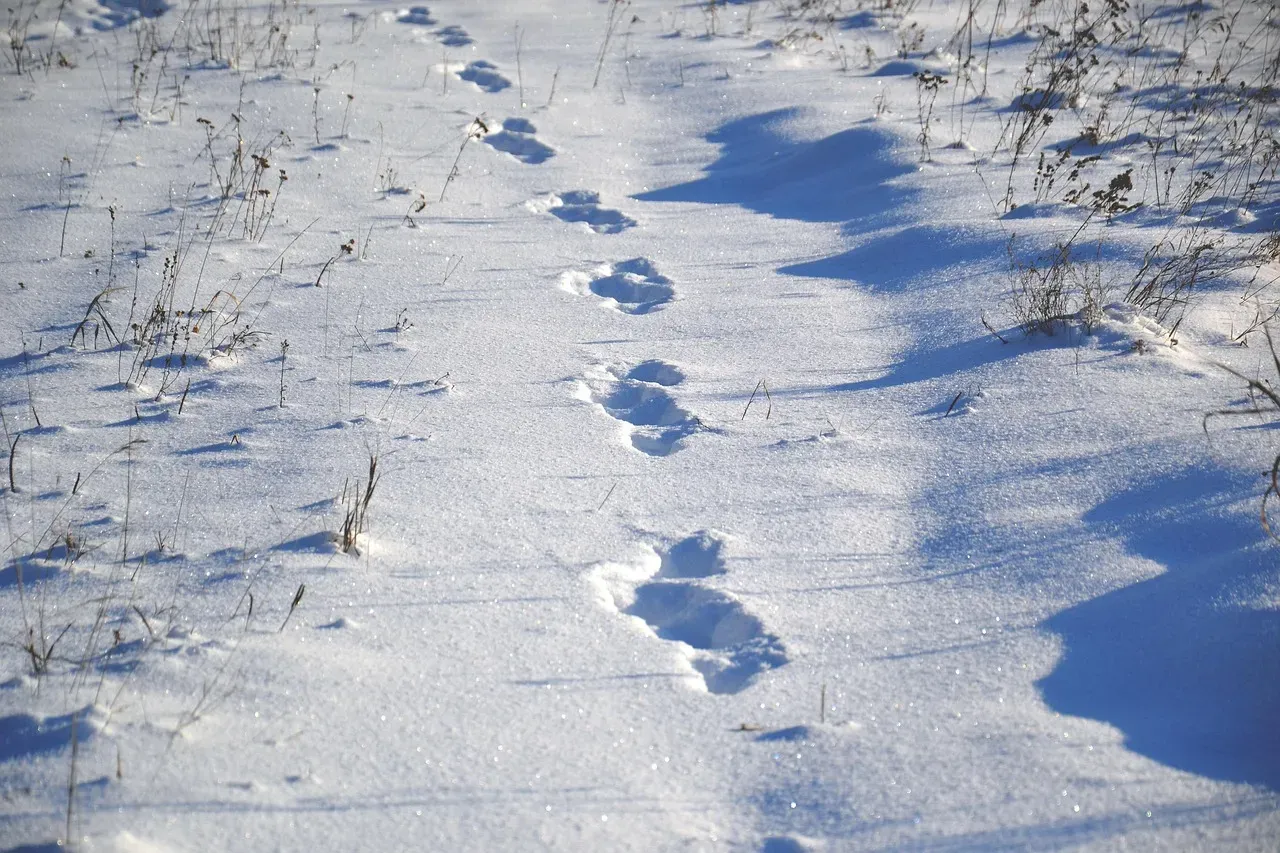
Walk across a frosty lawn and you may leave a map of your steps behind.
Frozen grass blades are brittle. Stepping on them can break cells inside the leaf, and the damage shows up as dark or straw-colored footprints a day or two later.
Dormant turf is tougher than actively growing grass, but it still gets bruised, especially on repeated paths such as the route to the mailbox or the dog’s favorite spot.
Quick fixes:
- Stay off frosted grass until it thaws
- Rotate the paths you walk
- Keep heavy traffic and equipment off frozen turf
Trees take the bigger gamble with temperature swings, as #9 shows.
#9 – Warm Spells Make Plants Walk Into a Trap
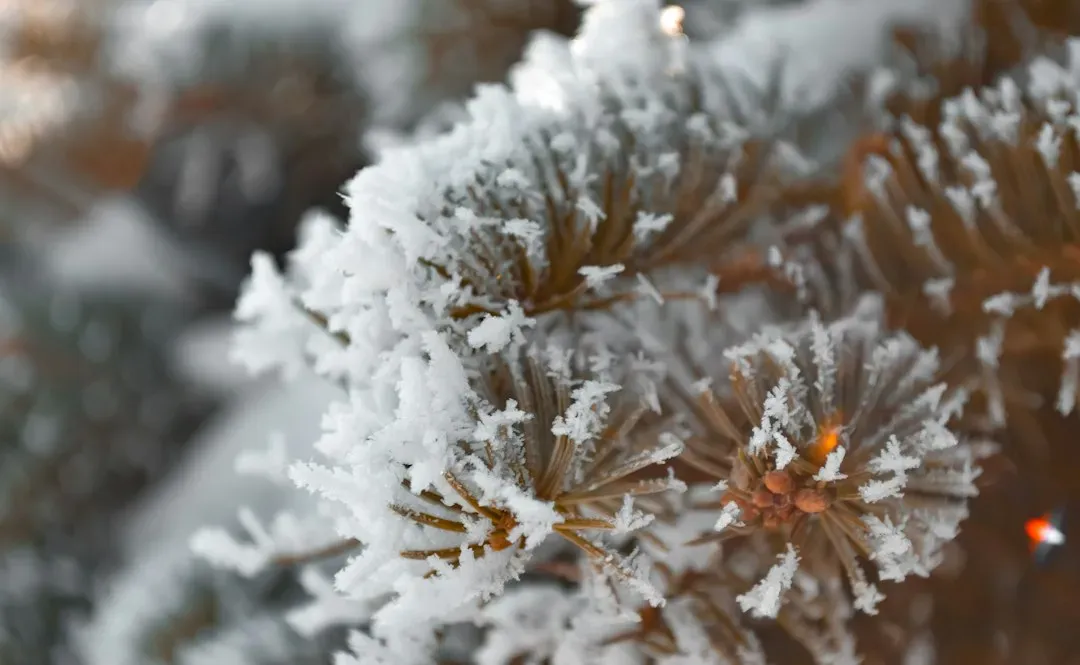
The most dangerous freeze isn’t the coldest one. It’s the one that follows a warm spell.
Plants rely on cold to stay dormant. A string of mild days can start loosening that protection, and buds begin to swell.
A hard freeze afterward can then hit tissue that is no longer prepared. Fruit trees, magnolias and other early bloomers are classic casualties, and a flower bud that looked fine can brown out within a day.
This is also why timing matters more than the lowest number on the thermometer. Experts watching climate trends note that wild swings make this kind of damage harder to predict.
Birds notice the cold too, and they change their routines in #8.
#8 – Bird Feeders Suddenly Get Crowded
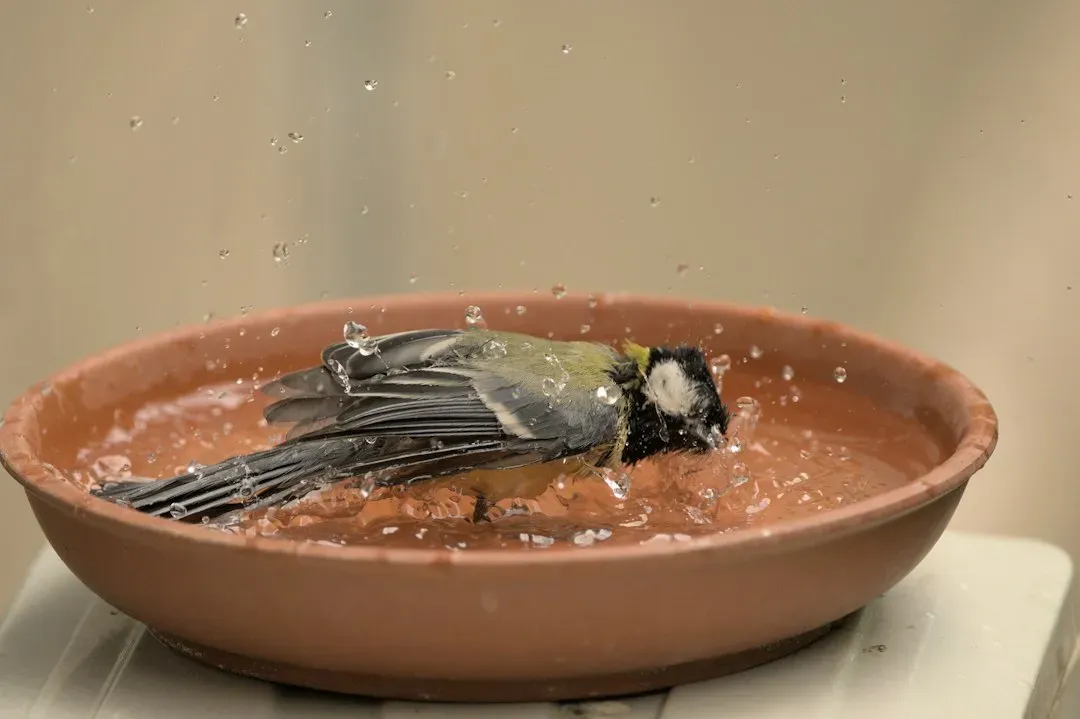
Cold nights turn your backyard feeder into a lifeline.
Staying warm takes fuel, and birds can’t store much. They head for calorie-dense food like suet and black oil sunflower seeds, and activity often peaks around dawn after a long cold night.
Water is a bigger problem than most people realize. A frozen bird bath can leave birds with no liquid water at all, and snow doesn’t replace it well.
This is where opinions split. Some backyard birders say heated baths are the best winter upgrade you can make. Others say feeders are overrated and that native shrubs and seed heads do more good.
But the real survival tricks happen in the dark, and #7 is the one to know.
#7 – Chickadees Turn Down Their Own Thermostat
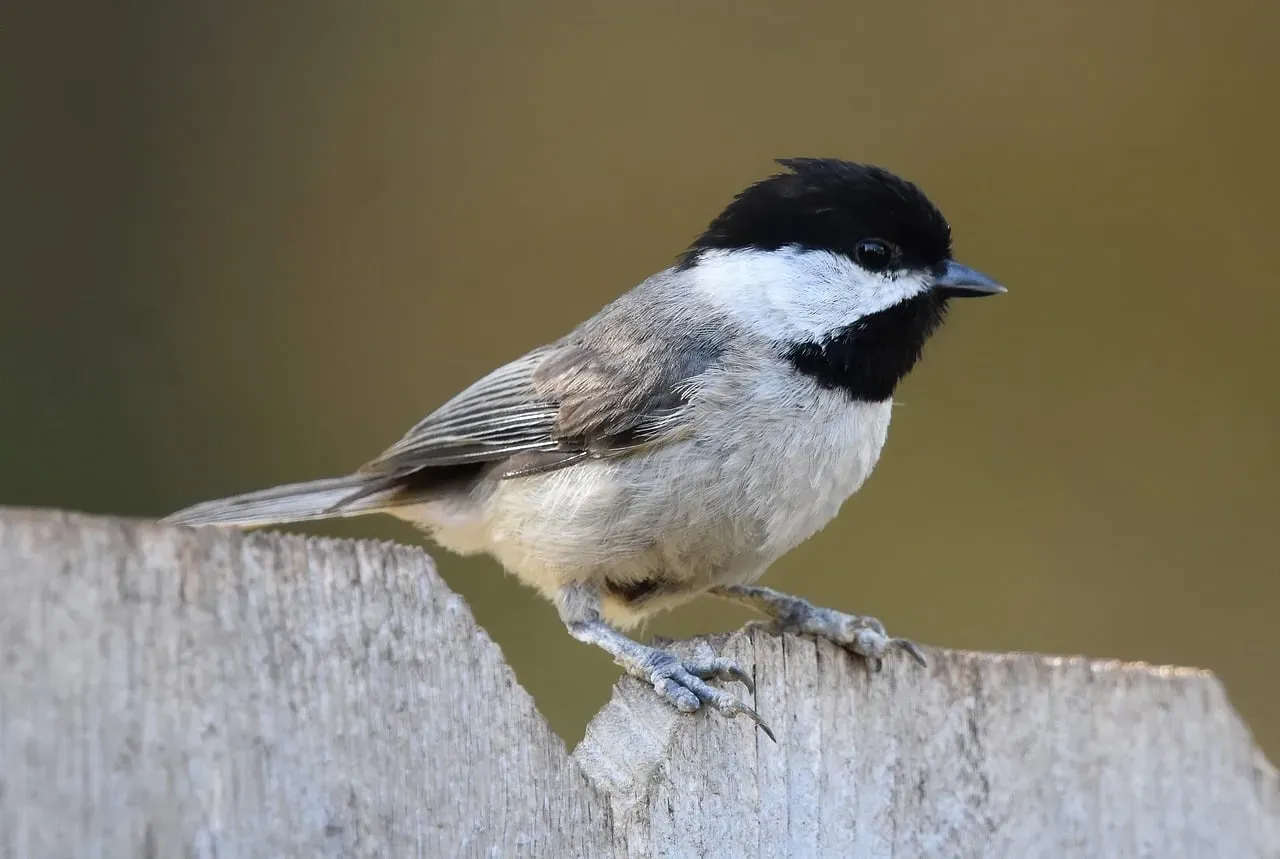
Some tiny birds survive freezing nights by making themselves colder.
Chickadees weigh about as much as a few coins. They shiver to generate heat, fluff their feathers to trap warm air, and roost in cavities or dense evergreens.
On the coldest nights they can also enter a state of controlled hypothermia, deliberately lowering their body temperature to save energy. It’s a risky trade, but it works.
That makes the small birds at your feeder tougher than they look. Dense conifers and brush piles give them the shelter they need, so a very tidy yard can quietly cost them.
Insects use a different strategy entirely, as #6 shows.
#6 – The “Dead” Leaves Are Actually a Nursery
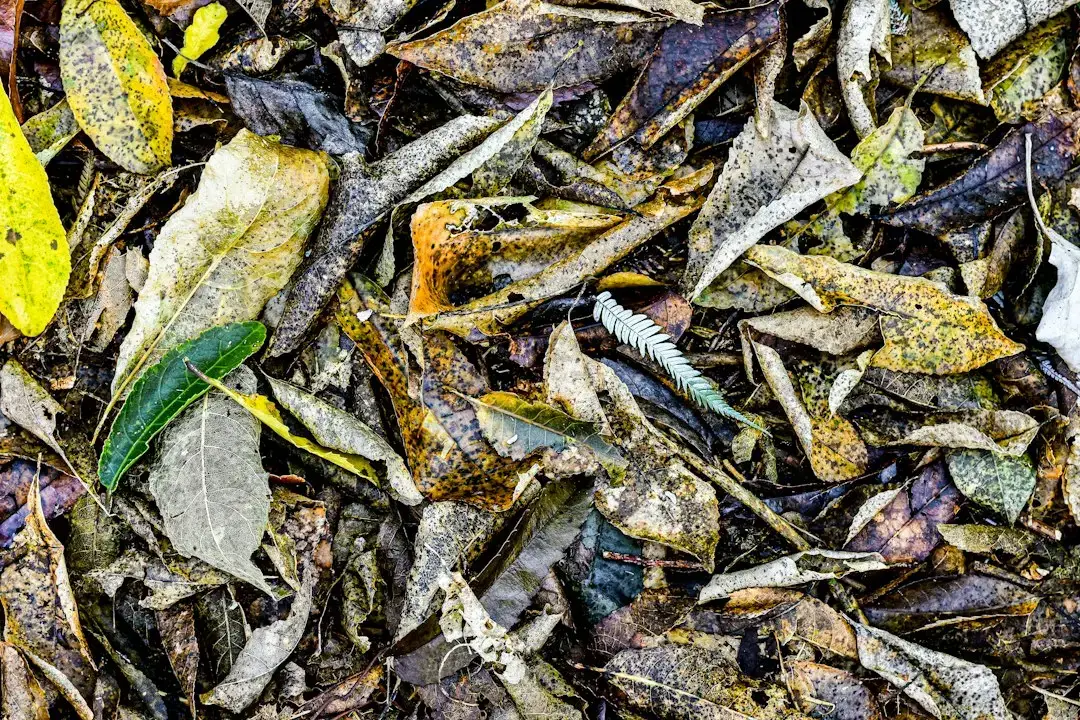
A leaf pile is a winter hotel for insects.
Many insects don’t migrate or die in winter. Some spend the season as eggs, larvae, pupae or adults tucked into leaf litter, hollow stems and bark. Luna moths overwinter in cocoons in the leaves, and bumble bee queens burrow underground.
Even the famous woolly bear caterpillar can survive being frozen. And the myth that its stripes predict the winter’s severity doesn’t hold up.
Here’s the controversial part. Experts increasingly say that raking every leaf and cutting every stem in fall is one of the most common backyard mistakes.
Not every freezer-proof survivor is alive and wriggling, though. Some are microscopic, and #5 may surprise you.

Halloween Cat Costume Cloak Witch Hat Pet Accessories
Check Price on AmazonAs an Amazon Associate, we earn from qualifying purchases.
10/9/2026 2:44 pm GMTi

Smart Bird Feeder with Camera Solar Powered, 2K HD Live Video, 10,000+ Bird Species AI Identification
Check Price on AmazonAs an Amazon Associate, we earn from qualifying purchases.
10/7/2026 1:22 pm GMTi

Dog Stairs for Bed 18" H, 4-Step Dog Steps for High Bed
Check Price on AmazonAs an Amazon Associate, we earn from qualifying purchases.
10/9/2026 2:42 pm GMTi

Glass Hummingbird Feeder for Outdoors Hanging
Check Price on AmazonAs an Amazon Associate, we earn from qualifying purchases.
10/7/2026 1:21 pm GMTi

2 Pcs Halloween Pet Hat Bandana Set, Witch Pumpkin Costumes for Dogs
Check Price on AmazonAs an Amazon Associate, we earn from qualifying purchases.
10/9/2026 2:45 pm GMTi
#5 – The Compost Pile Slows Down, But Doesn’t Quit
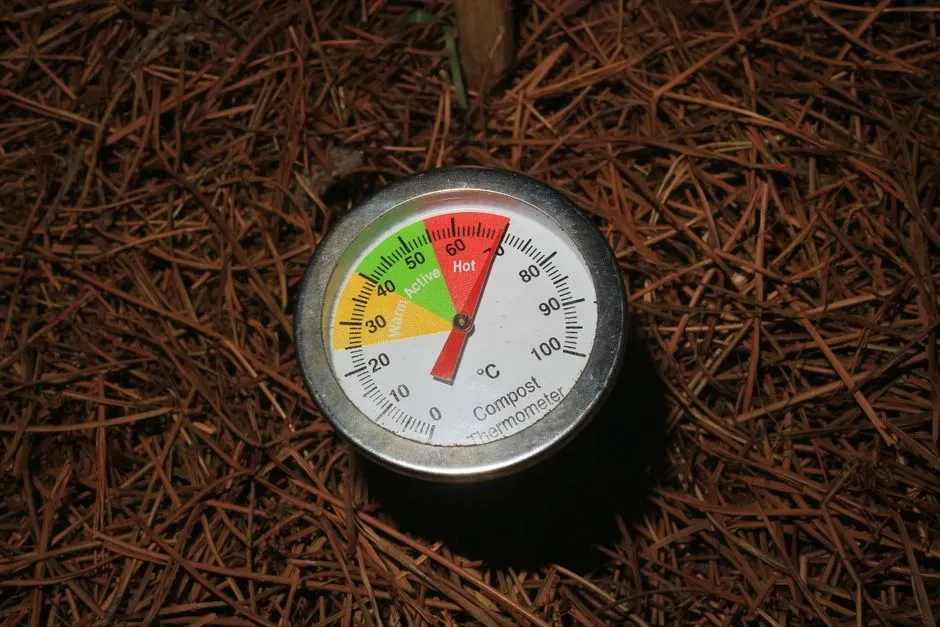
Your compost heap goes quiet in winter, and the microbes inside are the reason.
Decomposition depends on microbes, and cold makes them sluggish. Small piles can freeze through and stall until spring.
Larger, well-built piles behave differently. The center of a big pile can stay warmer than the air for a while, because the microbes there generate heat and the outer layers insulate it.
Gardeners often keep adding kitchen scraps through winter and bury them in the middle. Turning it less and adding a lid or straw cover helps keep that warm core going.
Fast Facts
- A pile about 3 feet wide, deep and tall is the common rule of thumb for holding heat.
- Active hot composting can reach roughly 130°F to 160°F in milder weather.
- Winter piles run cooler and slower, so expect a pause rather than a finished batch.
- Burying scraps in the center keeps food where the warmth is.
Next, the mammals around your yard are making their own calls, and #4 explains how.
#4 – Mammals Pick Very Different Winter Strategies
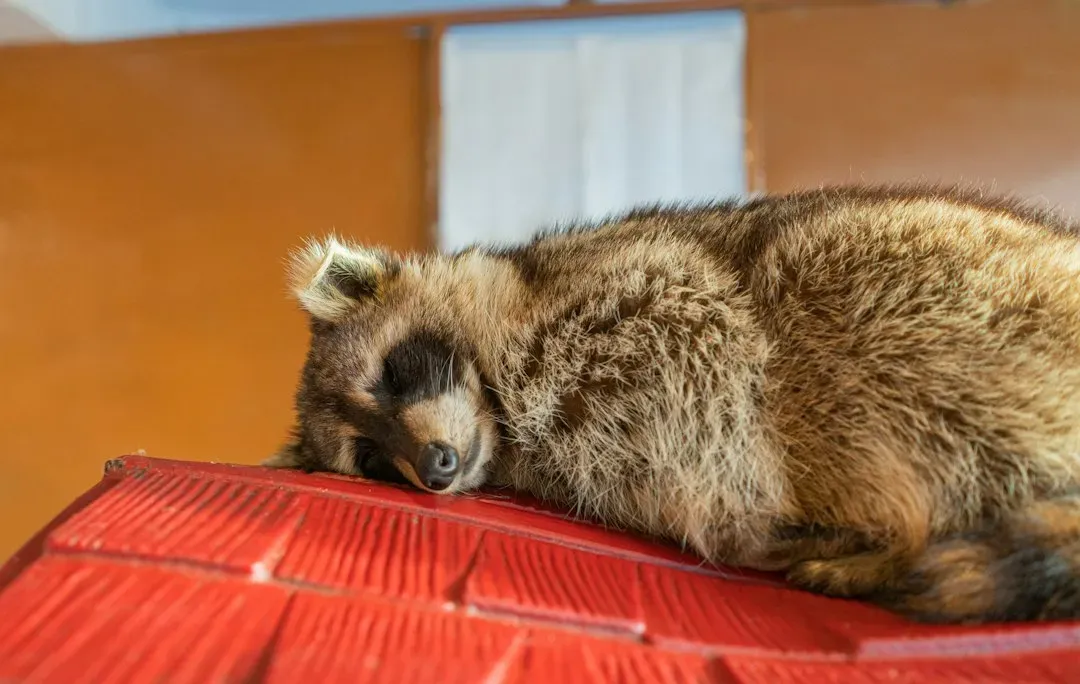
Not every “hibernating” animal actually hibernates.
Groundhogs are true hibernators and their body temperature drops dramatically. Chipmunks go into deep sleep too, but wake periodically to eat from their stored food.
Raccoons and skunks do something looser. They den up during cold spells and sleep for long stretches, but they aren’t true hibernators and may wander out on milder nights.
Gray squirrels stay active all winter, living off cached nuts. Some of those caches get forgotten, which is why oaks pop up in odd places.
Fast summary:
- True hibernators: groundhogs
- Intermittent sleepers: chipmunks
- Cold-weather denners: raccoons, skunks
- Active all winter: squirrels
Water, meanwhile, behaves strangely in winter, as #3 shows.
#3 – Ponds Freeze From the Top, Not the Bottom
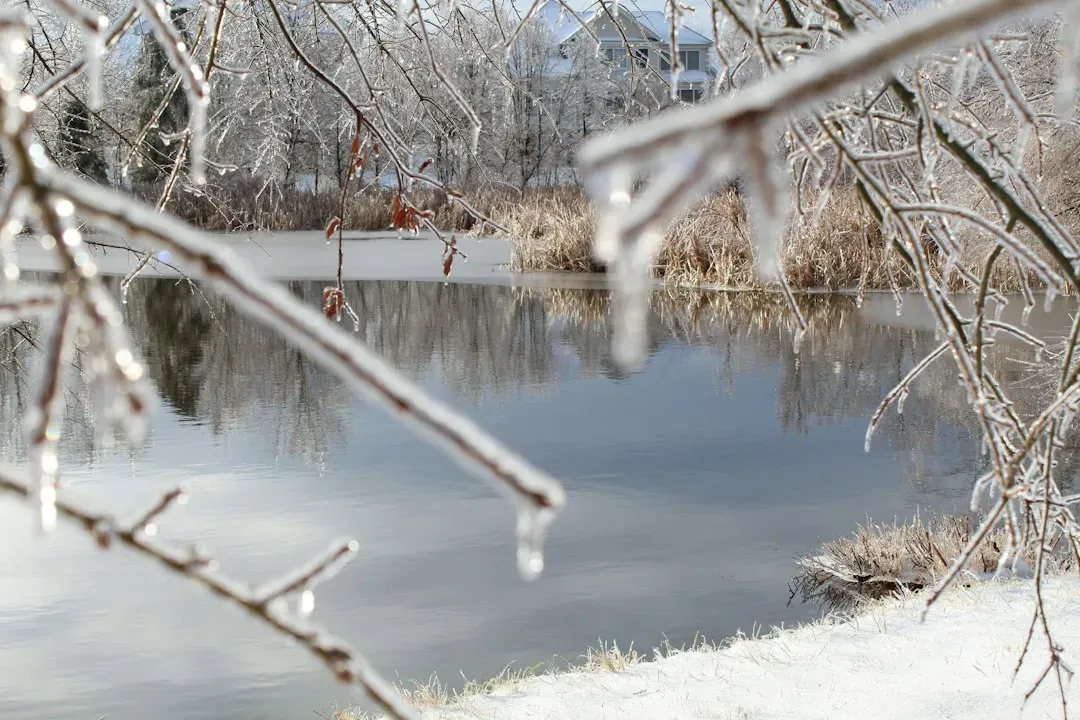
Ice forms on the surface, which is exactly why pond life survives.
Most liquids sink when they get colder. Water is odd: it’s densest at about 39°F, so slightly warmer water sits at the bottom while the coldest layer stays up top and freezes first.
Because ice floats, it forms a lid over the pond. Fish and other pond life can wait out winter in the deeper, slightly warmer water below.
Problems arise when the pond freezes solid or the surface seals completely. Gases can build up under the ice, which is why many pond owners keep a small opening in the ice.
But the most costly freezing happens next to the house, as #2 shows.

Air Purifiers for Home Pets Large Room Up to 3000 Ft²,HEPA Air Cleaner with Washable Double-Side Filter, PM2.5 Air Quality Monitor,15dB Sleep Mode for Bedroom Odor Dust Pollen,White
Check Price on AmazonAs an Amazon Associate, we earn from qualifying purchases.
10/8/2026 8:23 am GMTi

Orthopedic Extra Large Dog Bed, Waterproof Washable XL Pet Bed 44"
Check Price on AmazonAs an Amazon Associate, we earn from qualifying purchases.
10/7/2026 1:32 pm GMTi

Portable Dog Water Bottle Foldable Dog Travel Water Bottle
Check Price on AmazonAs an Amazon Associate, we earn from qualifying purchases.
10/7/2026 1:29 pm GMTi

Hand Blown Glass Hummingbird Feeders for Outdoors Hanging, 24oz Wild Bird Nectar Feeder
Check Price on AmazonAs an Amazon Associate, we earn from qualifying purchases.
10/7/2026 1:23 pm GMTi
#2 – Your Outdoor Faucet Becomes a Ticking Time Bomb
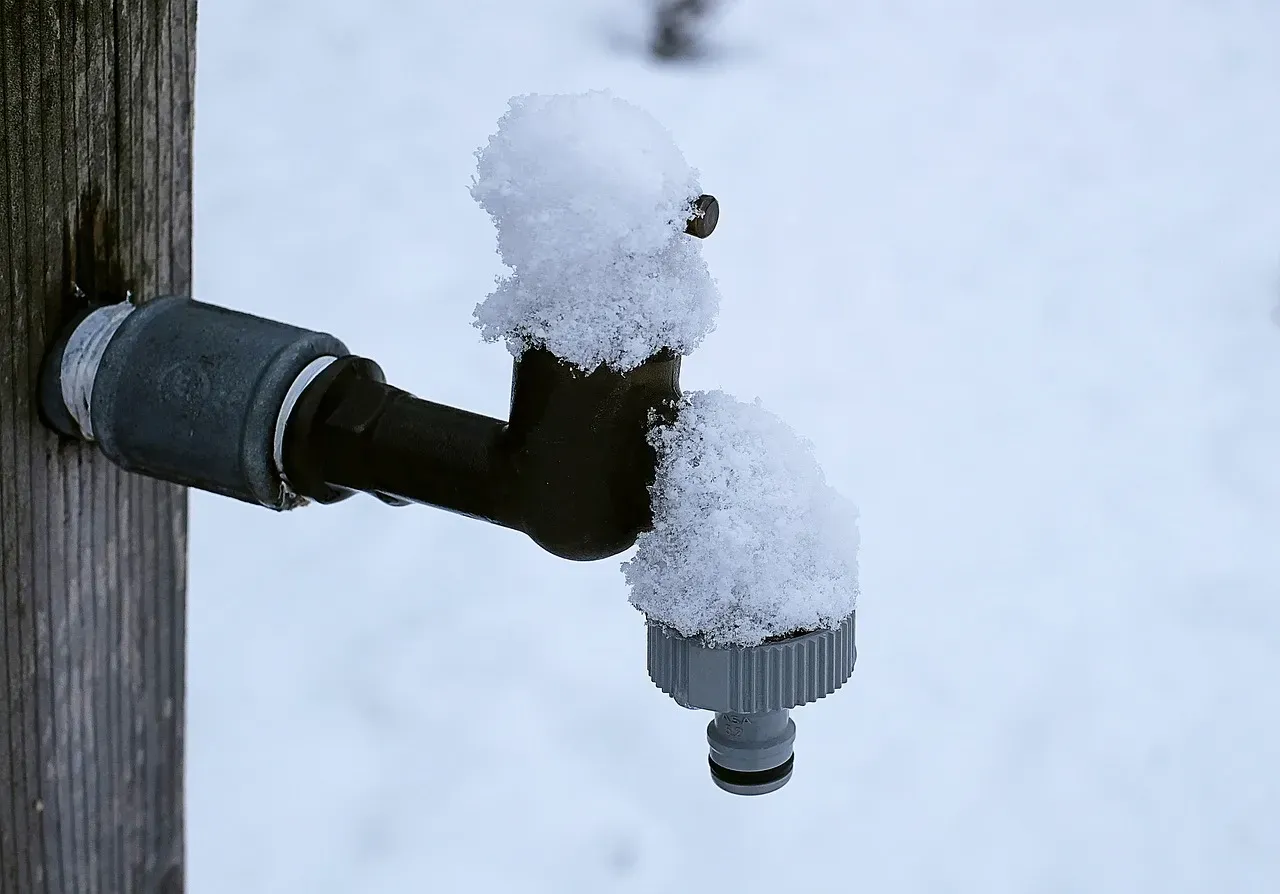
The priciest winter damage in many yards starts with a forgotten garden hose.
Water expands as it freezes. A hose left attached traps water in the faucet, and the expanding ice can crack the pipe, often inside the wall where you can’t see it.
The damage usually only shows up when the water is turned back on in spring. By then it can mean a leak in a place that’s expensive to reach.
Before the first hard freeze:
- Disconnect and drain every hose
- Shut off the interior valve to outdoor faucets, if you have one
- Open the outdoor faucet to let it drain
But nothing in the yard is stranger than what some frogs do, and it’s #1.
#1 – Some Frogs Freeze Solid and Come Back to Life
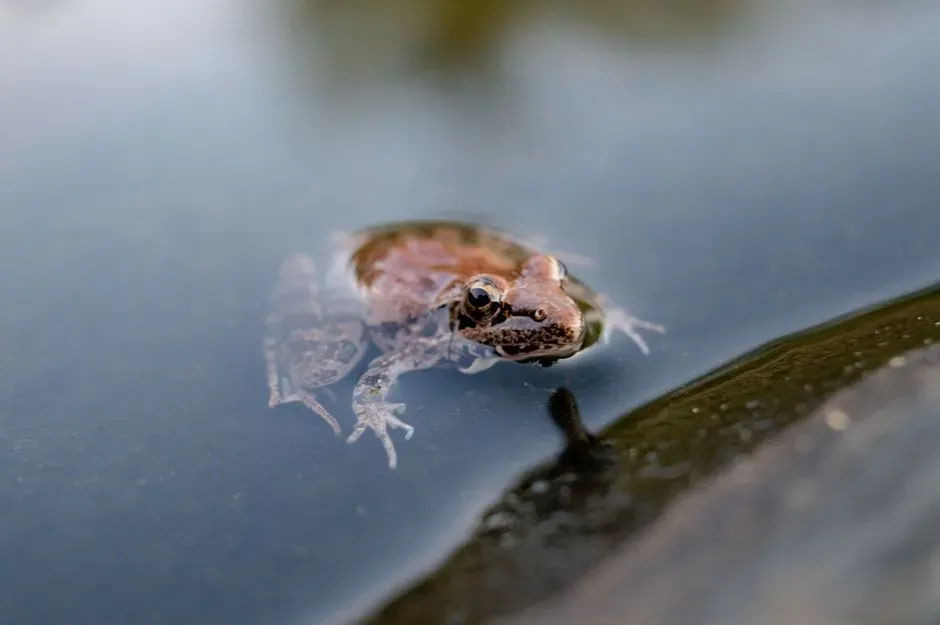
Under your leaf litter, a frog may be frozen like a statue and technically not alive.
The wood frog, found across much of the eastern US and into Alaska, survives winter by freezing. Its heart stops and its breathing stops. Roughly 65% of its body water can turn to ice.
It survives because its body floods its cells with sugars, which protect them while ice forms in the spaces outside. When the weather warms, it thaws and the heart restarts.
Other small frogs, including spring peepers and gray treefrogs, also tolerate freezing. The “dead” backyard is full of animals doing something that seems impossible.
A freezing backyard is not asleep. Frost appears on “safe” nights, cold air pools in low corners, soil heaves plants out of the ground, and plants sweeten themselves or collapse, depending on how prepared they were. Birds, insects, mammals and frogs each run their own survival plan, and some of those plans look like science fiction.
My opinion: the tidy winter yard is overrated. Leave the leaves, keep some stems standing, protect your pipes, and stop wrapping everything in plastic. The best winter yard works with the cold, not against it.
Which one of these 19 would you argue with first?

Please send any feedback to feedback@animalsaroundtheglobe.com
- 19 Ways an American Backyard Behaves Differently Once Night Temperatures Drop Below Freezing - November 12, 2026
- How to Prevent Wasps from Nesting Around Your Home Naturally - November 10, 2026
- The AMES Foundation and Their Fight Against Rhino Poaching - November 8, 2026