

Most people believe they’ve seen the full extent of nature’s creativity through National Geographic specials, but the truth is that we have only cataloged a fraction of the bizarre evolutionary experiments hiding in our oceans and jungles. Evolutionary biology isn’t always about “survival of the fittest” in a way that looks logical to the human eye; sometimes, it’s about specialized adaptations that result in creatures so structurally defiant they look like CGI assets from a big-budget sci-fi film. While you might be familiar with a platypus, the reality is that there are organisms currently walking, swimming, and crawling on Earth that break every known rule of symmetry and aesthetics. Here is what the biological data actually says about the world’s most alien inhabitants.
#1 — The Venezuelan Poodle Moth

This creature looks more like a high-end plush toy than a functioning insect. Discovered as recently as 2009, this moth possesses a dense coating of “fur” that actually serves as a highly sophisticated sensory array for detecting pheromones and vibrations.
While most people assume all moths are drab pests, the Poodle Moth sports a mane that would make a lion jealous. Scientists still haven’t officially classified it as a specific species, leading some to speculate it might be a rare subspecies of the Muslin moth. Its bulging black eyes and “furry” antennae make it look like something designed for a space-fantasy epic rather than a South American forest.
But as strange as this moth is, it’s nothing compared to the deep-sea nightmare we found at #2…
#2 — The Glaucus Atlanticus (Blue Dragon)

Don’t let the ethereal beauty of this “Blue Dragon” fool you; it is a cold-blooded killer that steals weapons from its prey. This tiny sea slug floats upside down on the ocean surface, using the tension of the water to “walk” while its bright blue belly camouflages it against the sky for predators below.
The most incredible part of its biology is its diet. It feeds on the venomous Portuguese Man o’ War, but instead of being killed by the toxins, it stores the prey’s stinging nematocysts in its own finger-like cerata to use as a primary defense. Touching one can result in a sting more powerful than the creature it ate. Many tourists mistake these for beautiful shells, which is a painful, often hospital-worthy mistake.
If you think a stinging dragon is odd, wait until you see the bird at #3…
#3 — The Shoebill Stork

Standing nearly five feet tall with a prehistoric “shoe-shaped” beak, this bird looks like a leftover animatronic from Jurassic Park. Found in the marshes of East Africa, the Shoebill is known for its “statue-like” behavior, standing motionless for hours before launching a lethal, decapitating strike at a lungfish or baby crocodile.
The most unsettling thing about this bird isn’t its size, but its sound. The Shoebill performs a “machine-gun” display by rattling its beak, creating a sound identical to heavy gunfire that echoes through the swamps. Despite their terrifying appearance and intimidating height, they are surprisingly docile toward humans, though their intense, unblinking glare suggests otherwise.
Wait until you see the “glass” creature at #4…
#4 — The Glass Frog

Most frogs rely on green or brown skin for camouflage, but the Glass Frog of Central and South America took a radically different evolutionary path. The skin on its underside is completely transparent, allowing you to see its heart beating, its liver functioning, and its entire digestive tract in real-time.
This isn’t just a party trick; researchers believe this transparency obscures the frog’s silhouette from predators looking up from below. By making their edges “fuzzy” and translucent, they blend into the light filtering through the leaves, making them nearly invisible to snakes and birds. It is one of the only vertebrates on Earth to utilize actual transparency as a primary survival mechanism.
But you haven’t seen true transparency until you see the deep-sea dweller at #5…
#5 — The Macropinna Microstoma (Barreleye Fish)

This fish is the ultimate proof that nature has a sense of humor. Living in the “twilight zone” of the ocean, the Barreleye has a completely transparent, fluid-filled dome on its head. Within this dome sit two glowing green tubes that look like alien power cores.
Most people assume the two holes on the front of its face are eyes, but those are actually olfactory organs—similar to nostrils. Its actual eyes are the large green orbs inside its transparent forehead, which rotate upward to spot the silhouettes of prey against the faint sunlight from the surface. This allows the fish to look “through” its own skull to stay safe.
The Barreleye stays in the dark, but #6 lives in plain sight and looks like a walking nightmare…
#6 — The Lowland Streaked Tenrec

Hailing from Madagascar—the capital of weird biology—the Lowland Streaked Tenrec looks like a cross between a bumblebee and a very angry hedgehog. It is covered in barbed quills that it can vibrate to create a sound, a process known as stridulation.
This is a behavior usually reserved for insects like crickets, making the Tenrec the only known mammal to communicate this way. But here is the real kicker: they are the only mammals known to use ultrasound for echolocation besides bats and shrews, though they do it while walking on the ground. Their neon-yellow racing stripes are nature’s way of saying “don’t touch,” and for good reason—those quills are incredibly difficult to remove.
It looks like a toy, but #7 looks like a literal dragon…
#7 — The Thorny Devil
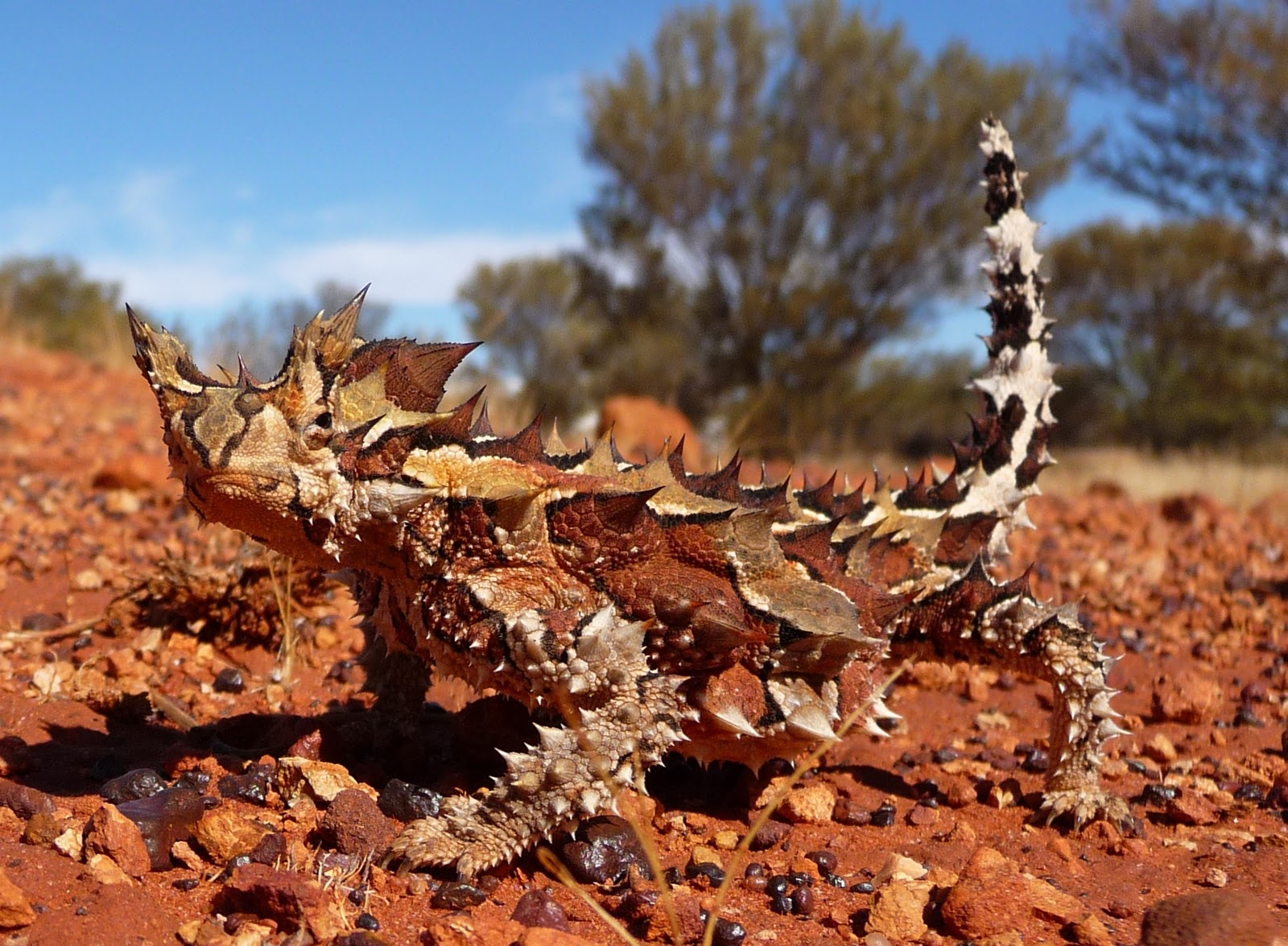
In the harsh Australian outback, the Thorny Devil has evolved to look like a spiky cactus with legs. Every inch of its body is covered in hard, sharp scales that make it unpalatable to any predator brave enough to try a bite.
However, its most “alien” feature is how it drinks. The Thorny Devil can drink water through its feet. Using microscopic grooves between its scales, it uses capillary action to “suck” moisture from damp sand or morning dew, funneling the water directly into the corners of its mouth without ever taking a sip. It’s a biological plumbing system that engineers are still trying to replicate.
If you thought that was specialized, check out the “ant” at #8…
#8 — The Panda Ant
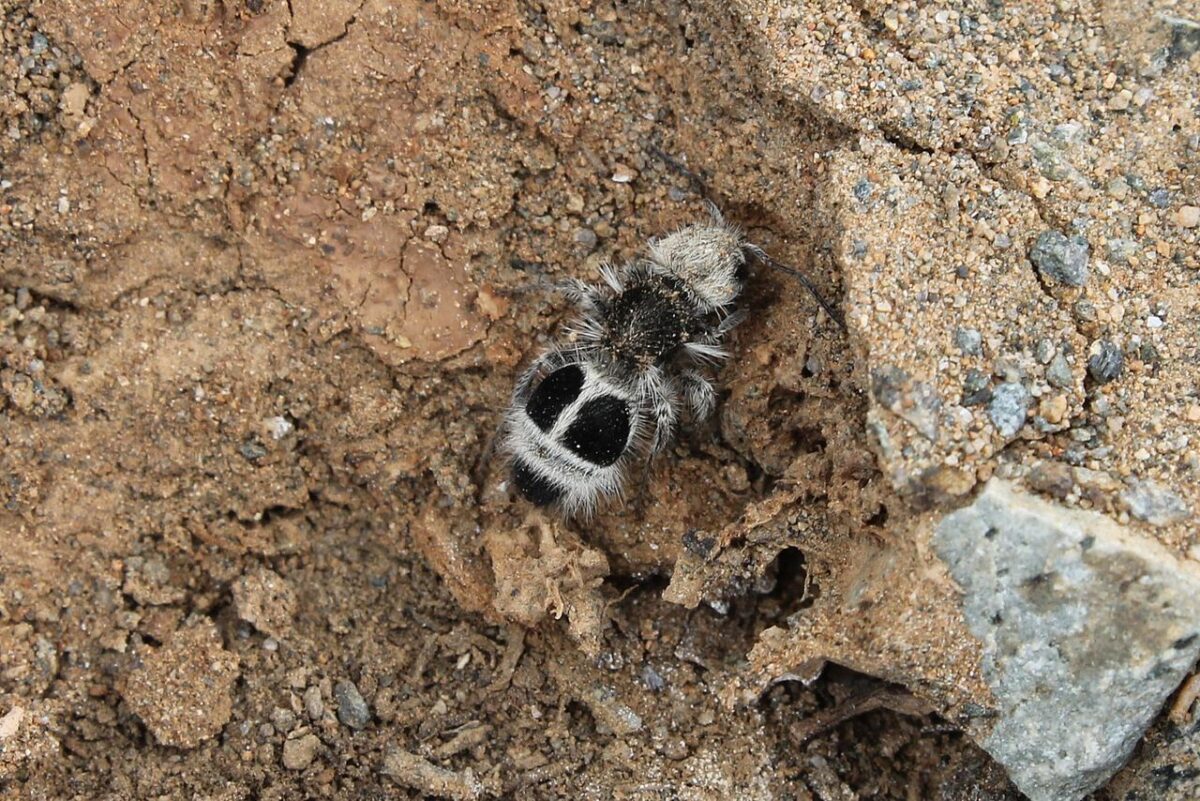
Despite its name and its adorable black-and-white patterns, this creature is neither a panda nor an ant. It is actually a species of wingless wasp found in South America. The “fuzz” that gives it its cute appearance hides a devastating secret.
These insects are nicknamed “cow killers” in their local regions. The Panda Ant possesses one of the most painful stings in the insect kingdom, capable of knocking out much larger animals. Their white-and-black coloration is a form of aposematism, a warning to predators that they are not a snack, but a high-voltage nightmare.
Next up is #9, a fish that literally walks on land…
#9 — The Red-Lipped Batfish

Found near the Galapagos Islands, the Red-Lipped Batfish looks like it’s wearing a thick coat of Chanel lipstick and is perpetually unimpressed with your choices. It is a terrible swimmer; instead, it uses its pectoral fins to “walk” along the ocean floor.
This fish features a built-in fishing rod on its head, known as an illicium, which it uses to lure prey closer before striking. Scientists are still baffled by the bright red lips, with some theorizing they help males attract mates, while others think it might just be a bizarre evolutionary fluke. Either way, it’s one of the few fish that would rather take a stroll than a swim.
The batfish walks, but #10 is a “living rock”…
#10 — The Pyura Chilensis

If you saw this on a beach, you would swear it was a rock with red moss. But if you cut it open, it “bleeds.” The Pyura Chilensis is a tunicate that looks exactly like a stone but is actually a complex marine organism with a heart and a digestive system.
They are often called “living rocks,” and they are a delicacy in Chile. Most fascinatingly, these creatures are born male, then become hermaphrodites at puberty, and can reproduce by shooting clouds of sperm and eggs into the surrounding water. If you’re looking for a creature that truly redefines what “life” looks like, this is it.
But hold on, because #11 moves like a ghost…
#11 — The Sea Swallow

Similar to the Blue Dragon, the Sea Swallow (or Glaucus atlanticus) is a master of disguise. It spends its life floating upside down on the surface of the open ocean. Because of its blue ventral side, it is invisible to birds flying above, and its silver dorsal side makes it blend in with the sun’s reflection for fish swimming below.
While they look delicate, they are fearsome predators of the deep. They are immune to the stings of venomous jellyfish and actually prefer to eat their tentacles. They are nomadic, traveling wherever the ocean currents take them, often washing up on Australian beaches in “blue fleets” that terrify local swimmers.
Think that’s weird? #12 looks like a half-finished Pokémon…
#12 — The Axolotl

Commonly known as the “Mexican Walking Fish,” the Axolotl is actually a salamander that suffers from a condition called neoteny. This means it reaches adulthood without ever undergoing metamorphosis, keeping its larval gills and staying underwater for its entire life.
The Axolotl is a scientific miracle. It can regenerate not just its tail, but its limbs, heart, and even parts of its brain without any scarring. Scientists are obsessed with their DNA, hoping to unlock the secret to human tissue regeneration. Sadly, they are nearly extinct in the wild, found only in the lake complex of Xochimilco near Mexico City.
#13 is a primate that will haunt your dreams…
#13 — The Aye-Aye

The Aye-Aye is a lemur from Madagascar that looks like a gremlin, and local legends often claim they are harbingers of doom. It is the world’s largest nocturnal primate and possesses a very specialized tool: a long, skeletal middle finger.
This finger is used for “percussive foraging.” The Aye-Aye taps on trees up to eight times per second to find hollow channels filled with grubs, then uses its massive ears to listen for the movement of the larvae. Once it finds a snack, it uses its specialized finger to hook the grub out. It’s the primate version of a sonar-guided fishing hook.
If that sounds like sci-fi, wait until you see the “invisible” bird at #14…
#14 — The Great Potoo

By day, the Great Potoo is a master of camouflage. It perches on high branches, stretching its neck upward and closing its eyes to look exactly like a jagged, broken tree stump. You could stand two feet away and never realize you’re looking at a bird.
But by night, the Potoo reveals its “alien” side. It has massive, gaping mouths and giant yellow eyes that occupy nearly its entire skull, designed to catch insects in mid-air. Their call is a haunting, mournful “wa-hoo-hoo” that many locals believe is the sound of spirits in the forest.
#15 is a deer that looks like it belongs in a vampire movie…
#15 — The Tufted Deer

At first glance, the Tufted Deer looks like a standard, adorable forest herbivore. But look closer at the males, and you’ll see a pair of prominent, “vampire” fangs protruding from their upper jaws.
These aren’t for drinking blood; they are used by males during the mating season to duel for territory and females. Despite having small antlers, these deer prefer to use their sharp tusks as their primary weapons. Found in high-altitude forests in China, they are incredibly shy and rarely seen by humans, adding to their mysterious, gothic reputation.
Coming up at #16 is a mole with a “star” for a face…
#16 — The Star-Nosed Mole

If you ever saw a Star-Nosed Mole in your garden, you might think you’d found a miniature Lovecraftian horror. This mole has 22 pink, fleshy tentacles ringing its snout, which it uses to navigate the pitch-black tunnels of its underground world.
This “star” is actually the most sensitive touch organ in the entire animal kingdom. The mole can touch and identify 13 different items in a single second, making it the fastest-eating mammal on the planet. Its brain processes the information from these tentacles so quickly that it’s faster than the human eye can track.
But if you think that’s fast, #17 has a weapon that breaks the speed of sound…
#17 — The Mantis Shrimp
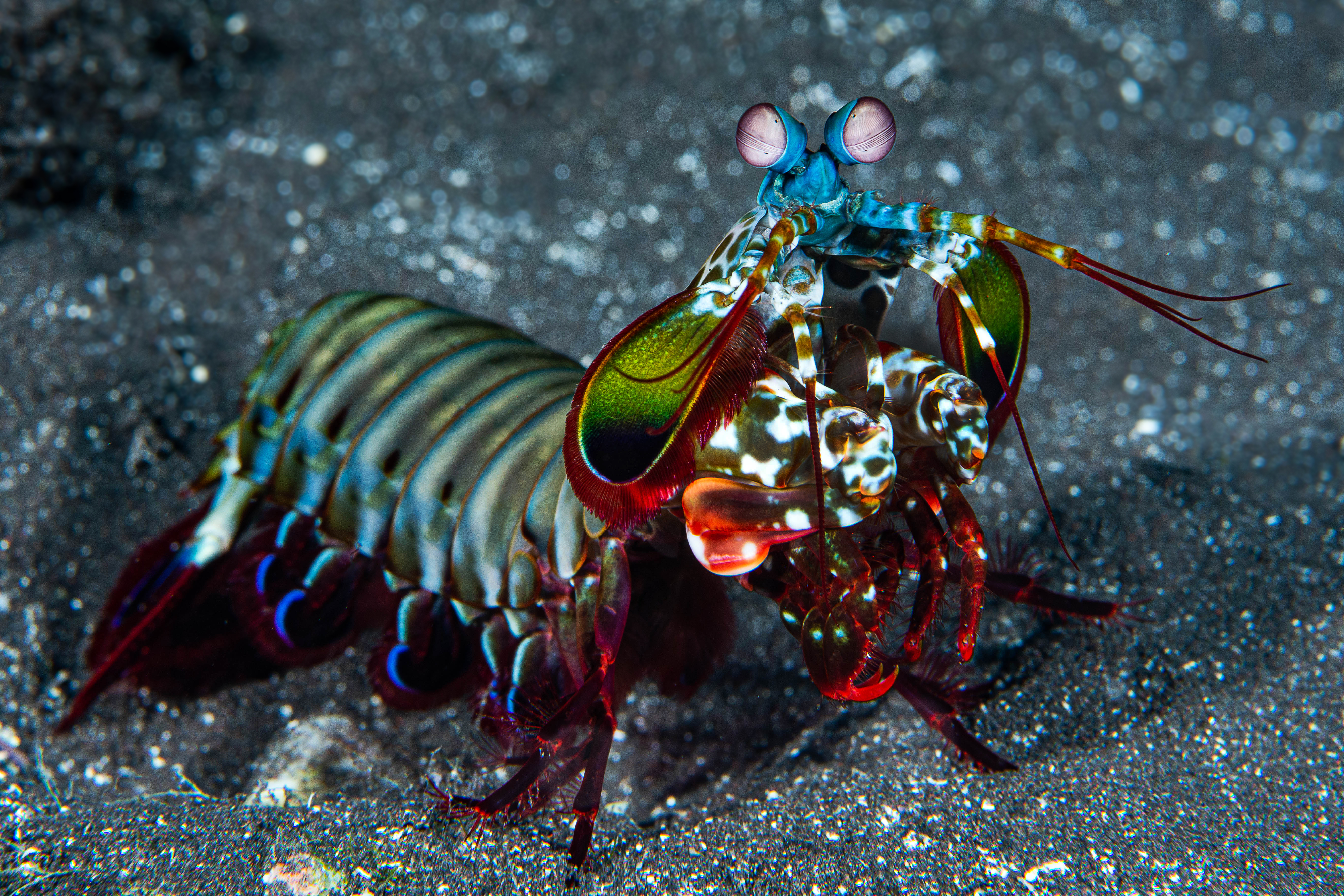
The Mantis Shrimp is the ultimate “alien” warrior. It doesn’t just see the world differently—it sees colors humans can’t even imagine, thanks to its 16 color-receptive cones (we only have three).
But its real power is its punch. The Mantis Shrimp strikes with the force of a .22 caliber bullet, moving so fast that it creates “cavitation bubbles” in the water that generate heat nearly as hot as the surface of the sun. They have been known to shatter aquarium glass with a single strike, earning them a “do not touch” warning from every marine biologist on Earth.
#18 looks like it was assembled from spare parts…
#18 — The Okapi

Found deep in the rainforests of the Democratic Republic of Congo, the Okapi looks like a hybrid created in a lab. It has the striped legs of a zebra, the body of a horse, and the long, prehensile blue tongue of a giraffe.
In fact, it is the only living relative of the giraffe. The Okapi’s tongue is so long (up to 14 inches) that it can use it to wash its own eyelids and ears. They weren’t even known to the Western world until 1901, leading many early explorers to believe they were mythical creatures like the unicorn.
Next is #19, a lizard that can literally disappear…
#19 — The Satanic Leaf-Tailed Gecko

Don’t let the name scare you; this gecko isn’t evil, just a genius of disguise. Found in Madagascar, its body is shaped like a dead leaf, complete with notches in its tail that mimic rot and veins that look like leaf midribs.
When threatened, it opens its mouth wide to reveal a terrifying blood-red interior and lets out a loud, sudden hiss. While it looks like a piece of forest floor debris, it is one of the most efficient nocturnal hunters in the canopy, blending in so perfectly that even its own prey doesn’t see it coming until it’s too late.
#20 is a crab so big it eats birds…
#20 — The Coconut Crab

The Coconut Crab is the largest land-living arthropod in the world. They can grow up to three feet across and weigh nine pounds. While they mainly eat coconuts (which they can crack open with their massive claws), they aren’t strictly vegetarians.
In recent years, researchers have documented Coconut Crabs hunting and eating large birds, including boobies and seagulls. They have an incredible sense of smell and can climb trees with ease. If you’re camping on an island in the Indo-Pacific, sleep with your tent zipped tight—these “alien” giants are known to steal shiny objects like silverware and pots.
Think a bird-eating crab is scary? #21 is basically a swimming nightmare…
#21 — The Goblin Shark

Often called a “living fossil,” the Goblin Shark has been around for 125 million years, and it looks every bit its age. This deep-sea predator has a long, protruding snout and a pink, flabby body that looks like it’s melting.
But its most alien feature is its mouth. The Goblin Shark can catapult its entire jaw forward to catch prey at lightning speed, acting like a biological hydraulic press. When its jaws are retracted, it looks relatively normal (for a shark), but when it strikes, it looks like a scene from an Alien movie.
#22 is a moth that thinks it’s a hummingbird…
#22 — The Hummingbird Hawk-Moth

This insect is a classic example of convergent evolution. It looks, moves, and even sounds exactly like a hummingbird, but it is actually a moth. It hovers over flowers, sipping nectar with a long proboscis, and is active during the day.
Most people who see them in their gardens think they’ve spotted a rare bird. The Hummingbird Hawk-Moth has a remarkably high metabolism and is one of the fastest-flying insects, capable of reaching speeds of 12 mph. They are also incredibly smart for bugs, possessing a strong visual memory for specific flower patches.
Wait until you see the “penis snake” at #23—yes, that’s its nickname…
#23 — The Atretochoana (Penis Snake)
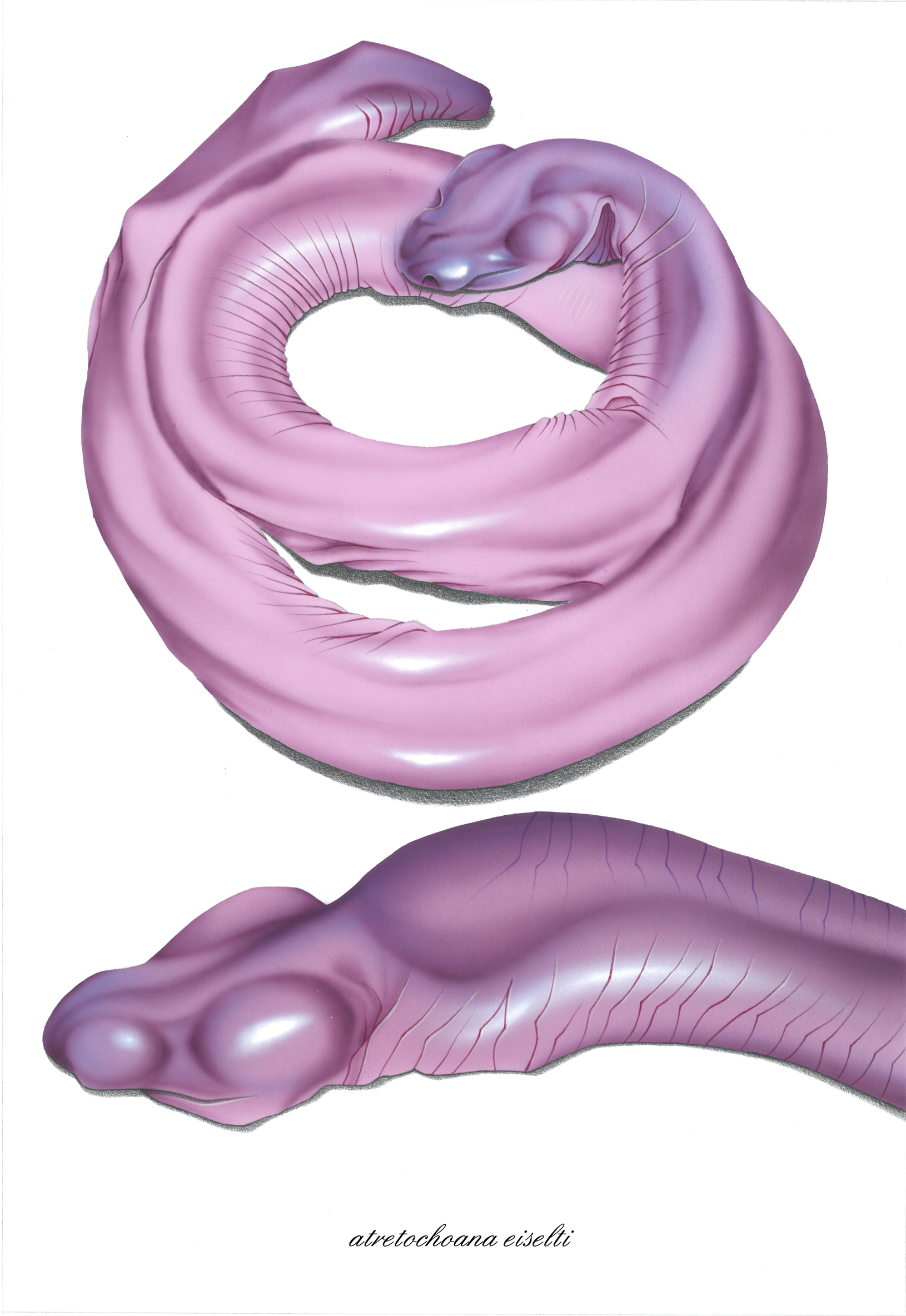
Discovered in the Amazon, this creature gained instant internet fame for its… unfortunate appearance. Despite the nickname, it is not a snake or a mammal, but a species of caecilian—a type of limbless amphibian.
Its biology is even stranger than its looks. The Atretochoana is the largest lungless tetrapod known to science, meaning it breathes entirely through its skin. It lives in fast-flowing water, where it survives by absorbing oxygen through its fleshy, wrinkled body. It remained undiscovered until a dam project in Brazil accidentally turned a few up in 2011.
Coming up, #24 is a pig that looks like a deer…
#24 — The Babirusa

The Babirusa, also known as the “deer-pig,” is found on the Indonesian island of Sulawesi. The males possess four massive, curving tusks that grow upward and backward, often piercing their own skulls if they aren’t ground down or broken.
These tusks serve very little purpose in fighting; instead, they seem to be purely for display during mating rituals. Local legends say the Babirusa hangs from trees by its tusks at night to rest its legs, though modern science has debunked this as a myth. Still, the sight of a pig with horns growing through its forehead is enough to make anyone do a double-take.
#25 is a caterpillar that looks like a literal jewel…
#25 — The Jewel Caterpillar

If you saw this crawling on a leaf, you’d think it was a piece of expensive Venetian glass. The Acraga Coa caterpillar is translucent, covered in shimmering, “gem-like” nodules that look like gelatinous diamonds.
But these “jewels” serve a defensive purpose. The gummy bumps are extremely sticky and can easily break off in a predator’s mouth, gumming up a wasp or ant’s mandibles while the caterpillar makes its slow escape. It eventually turns into a fluffy orange moth, which—while cute—is nowhere near as spectacular as its larval form.
#26 is a fish that is literally “transparent” in the wild…
#26 — The Glass Catfish

While many animals have transparent parts, the Glass Catfish is almost entirely see-through. Found in the rivers of Southeast Asia, you can see its skeletal structure and its internal organs bunched up near its head.
In the wild, this makes them nearly invisible to predators. They live in large schools, utilizing their transparency to create a shimmering effect that confuses the eyesight of larger fish. Because they have no pigment, they are highly sensitive to light and prefer the shaded, murky parts of the riverbed.
But #27 looks like it belongs in a Victorian horror novel…
#27 — The Saiga Antelope
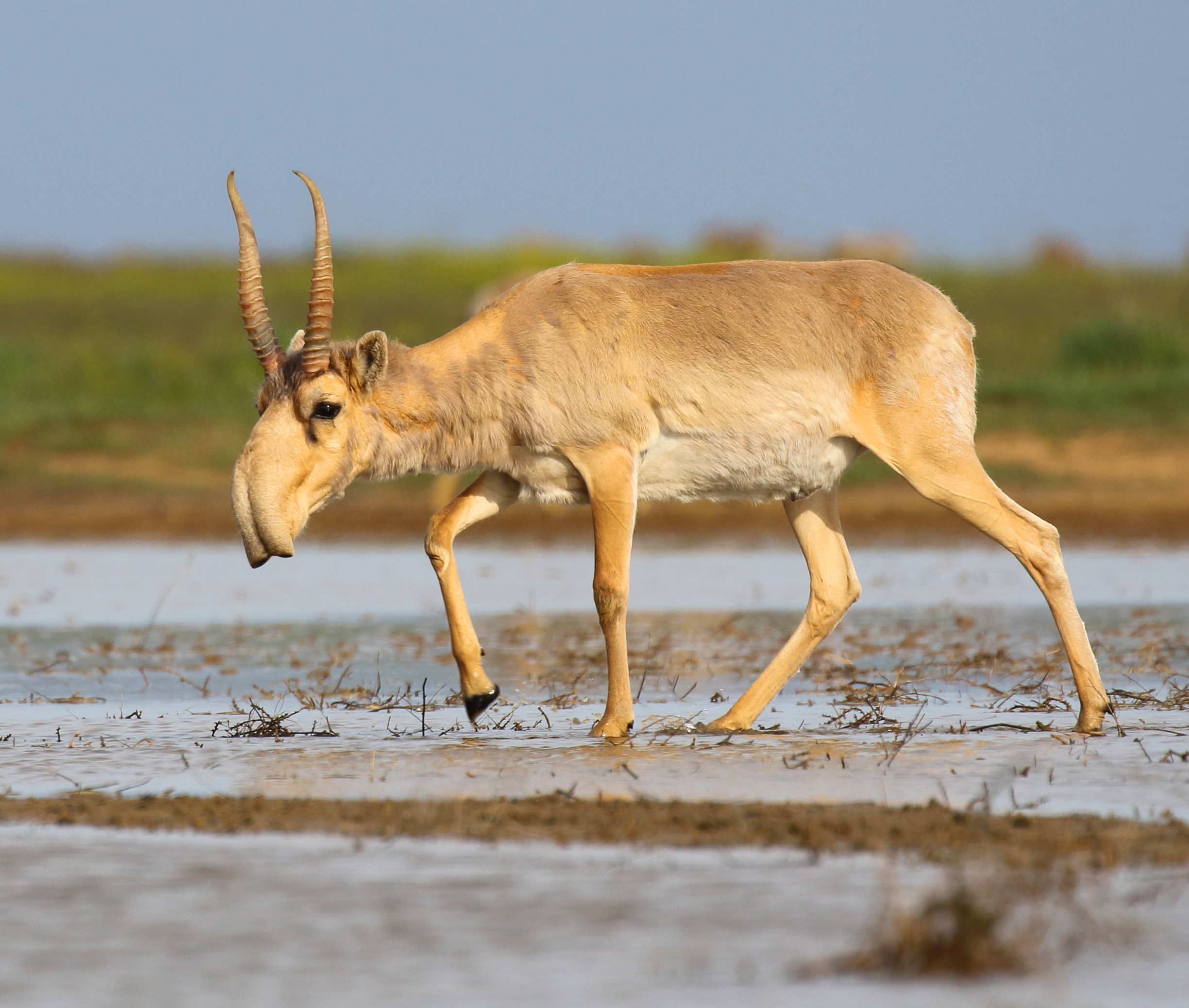
The Saiga Antelope looks like a creature from a fantasy novel set in a frozen wasteland. It has an oversized, flexible, trunk-like nose that hangs over its mouth, making it look like a miniature elephant-antelope hybrid.
This nose is a marvel of engineering. During the dusty summer migrations, the nose filters out grit, and in the freezing winter, it heats the air before it reaches the lungs. Despite having survived since the Ice Age alongside woolly mammoths, the Saiga is now critically endangered due to poaching for its translucent horns.
#28 is a sea creature that looks like a “leaf” floating in the water…
#28 — The Leafy Seadragon

A relative of the seahorse, the Leafy Seadragon is the ultimate master of camouflage. Its entire body is covered in leaf-like protrusions that serve no purpose for swimming; they are purely for decoration to fool predators.
They are found only in the waters off southern and western Australia. They move so slowly and look so much like drifting seaweed that they can even fool marine biologists. Unlike seahorses, they cannot grip things with their tails, so they are entirely at the mercy of the current, literally “going with the flow” to stay hidden.
Next is #29, the “Blue-Footed” bird everyone loves…
#29 — The Blue-Footed Booby

The Blue-Footed Booby is famous for its vibrant, turquoise-blue feet. Found in the subtropical and tropical regions of the Pacific Ocean, these birds take their feet very seriously—the blue-er the feet, the more attractive the mate.
During their courtship dance, the males high-step and stomp their feet to show off their hue. The color actually comes from carotenoid pigments obtained from their diet of fresh fish, meaning the brightest feet belong to the healthiest, best hunters. If a male is sick or hungry, his feet will quickly fade to a dull grey, ending his chances of finding a partner.
#30 is a “dragon” that lives in your garden…
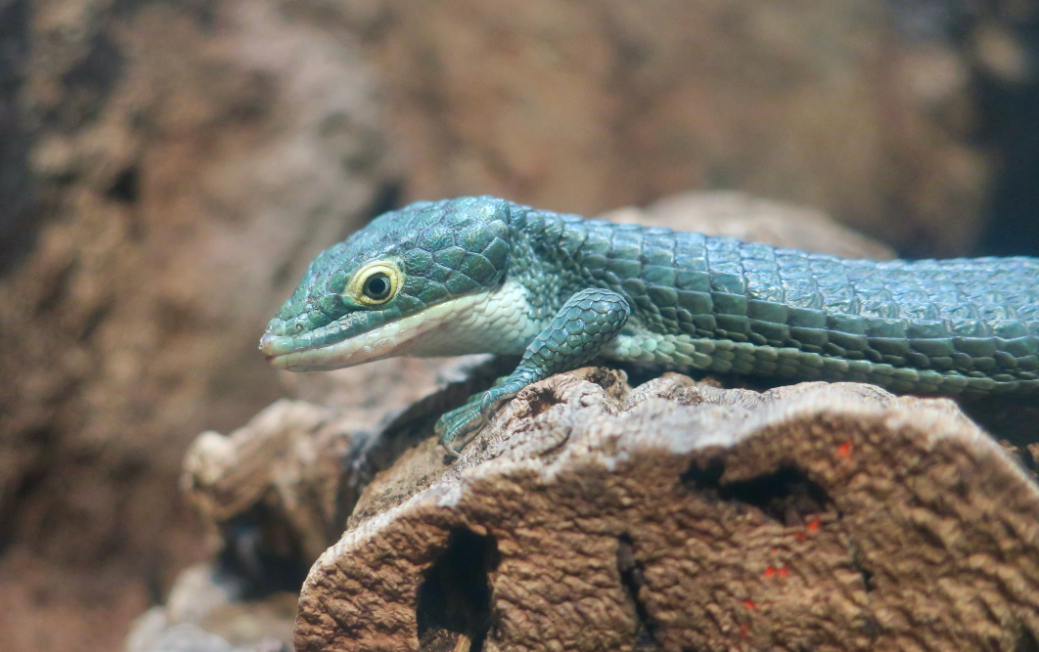
#30 — The Mexican Alligator Lizard

Looking like a dragon carved out of emerald, the Mexican Alligator Lizard (Abronia graminea) is one of the most beautiful reptiles on the planet. Its vibrant green scales and prehensile tail make it look like a mythical forest guardian.
Unfortunately, their beauty is their downfall. Because they look so much like “pet dragons,” they are heavily targeted by the illegal pet trade, leading to their status as an endangered species. They live high in the canopy of cloud forests and are rarely seen in the wild by humans.
Now for the one you won’t believe: #31…
#31 — The Umbonia Spinosa (Thorn Bug)

This isn’t a piece of a plant; it’s a living, breathing insect. The Thorn Bug has evolved a massive, pointed dorsal horn that makes it look exactly like a thorn on a branch. When they sit in a row on a stem, they are completely invisible to birds.
But here is the truly “alien” part: The mother Thorn Bug is one of the few insects that actively “talks” to her babies via vibrations. When she senses a predator, she sends a physical “thump” through the branch that tells her nymphs to stay perfectly still. If a bird tries to eat one, the sharp “thorn” makes it a painful and mistake-prone meal.
If you thought that was weird, check out #32…
#32 — The Superb Bird-of-Paradise

When this bird is “resting,” it looks like a standard black bird with a blue chest. But when it’s time to impress a female, it transforms into a “smiling” black-and-blue disc that looks more like a 2D emoji than a feathered creature.
The transformation is so complete that the bird’s head and eyes disappear into a black velvet “void” that absorbs 99.5% of light. This creates a “super-black” background that makes its bright blue feathers shimmer with impossible intensity. The female just sees a floating, dancing blue face—the ultimate avian optical illusion.
#33 is a “blob” that looks better in the water…
#33 — The Blobfish
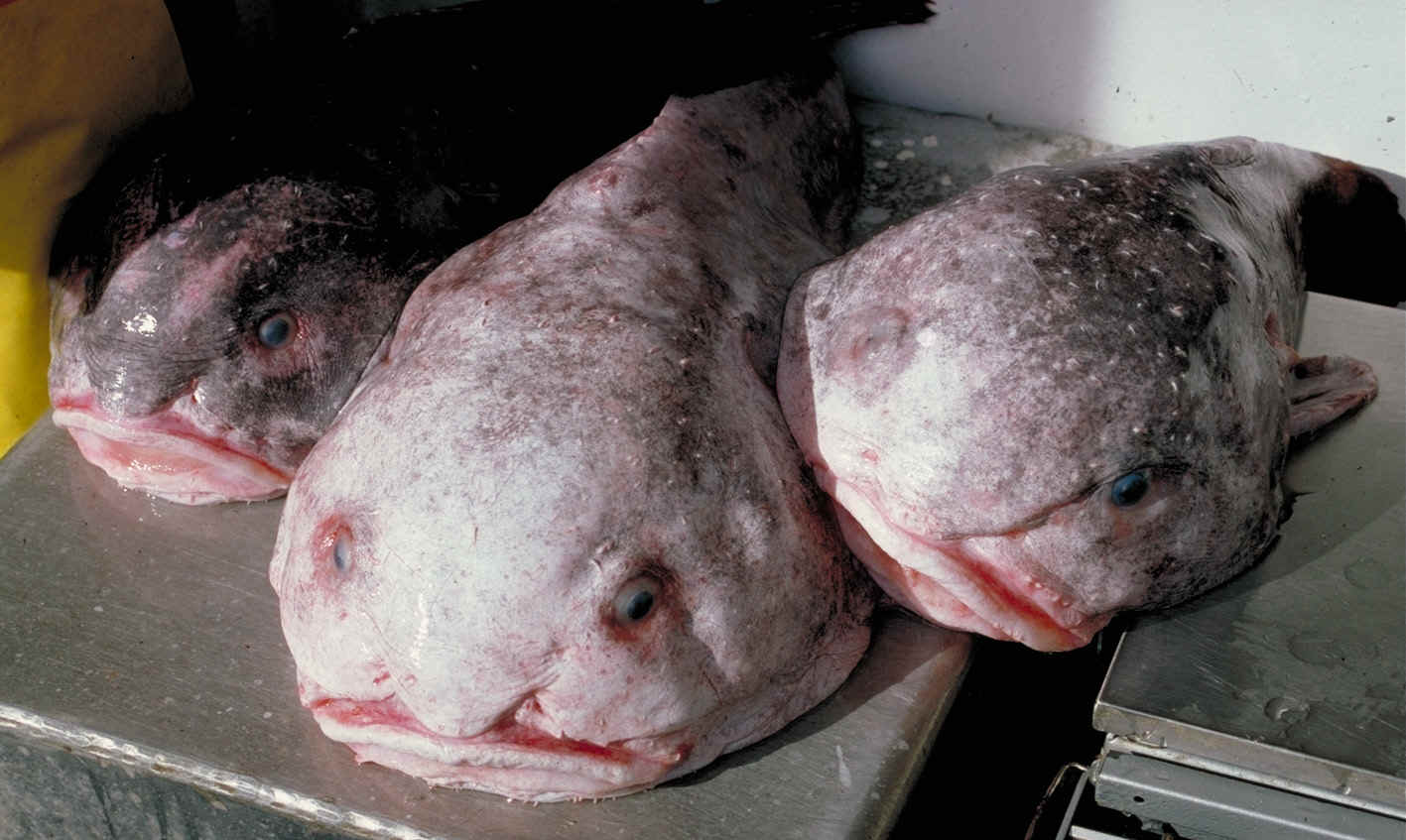
Voted the “World’s Ugliest Animal,” the Blobfish has a bit of a PR problem. On land, it looks like a melting, grumpy human face. But in its natural habitat—4,000 feet below sea level—it looks like a perfectly normal, streamlined fish.
It doesn’t have a traditional skeleton or muscles because the extreme pressure of the deep ocean does the work of holding its body together. The Blobfish is made of a gelatinous mass that is slightly less dense than water, allowing it to float effortlessly above the sea floor without spending any energy swimming. It’s the ultimate low-effort predator.
#34 is a “rabbit” with giant ears and a pig snout…
#34 — The Bilby

The Greater Bilby looks like a cross between a rabbit, a kangaroo, and a pig. Found in the Australian outback, these desert-dwellers are master excavators, digging long, complex tunnels that provide homes for dozens of other species.
They have incredibly long, silk-like ears that help them regulate their body temperature in the searing heat. Unlike most mammals, Bilbies don’t need to drink water; they get all the hydration they need from the bulbs, seeds, and insects they eat. In Australia, they have even replaced the “Easter Bunny” in local tradition.
#35 is a crab that likes to “dress up”…
#35 — The Decorator Crab
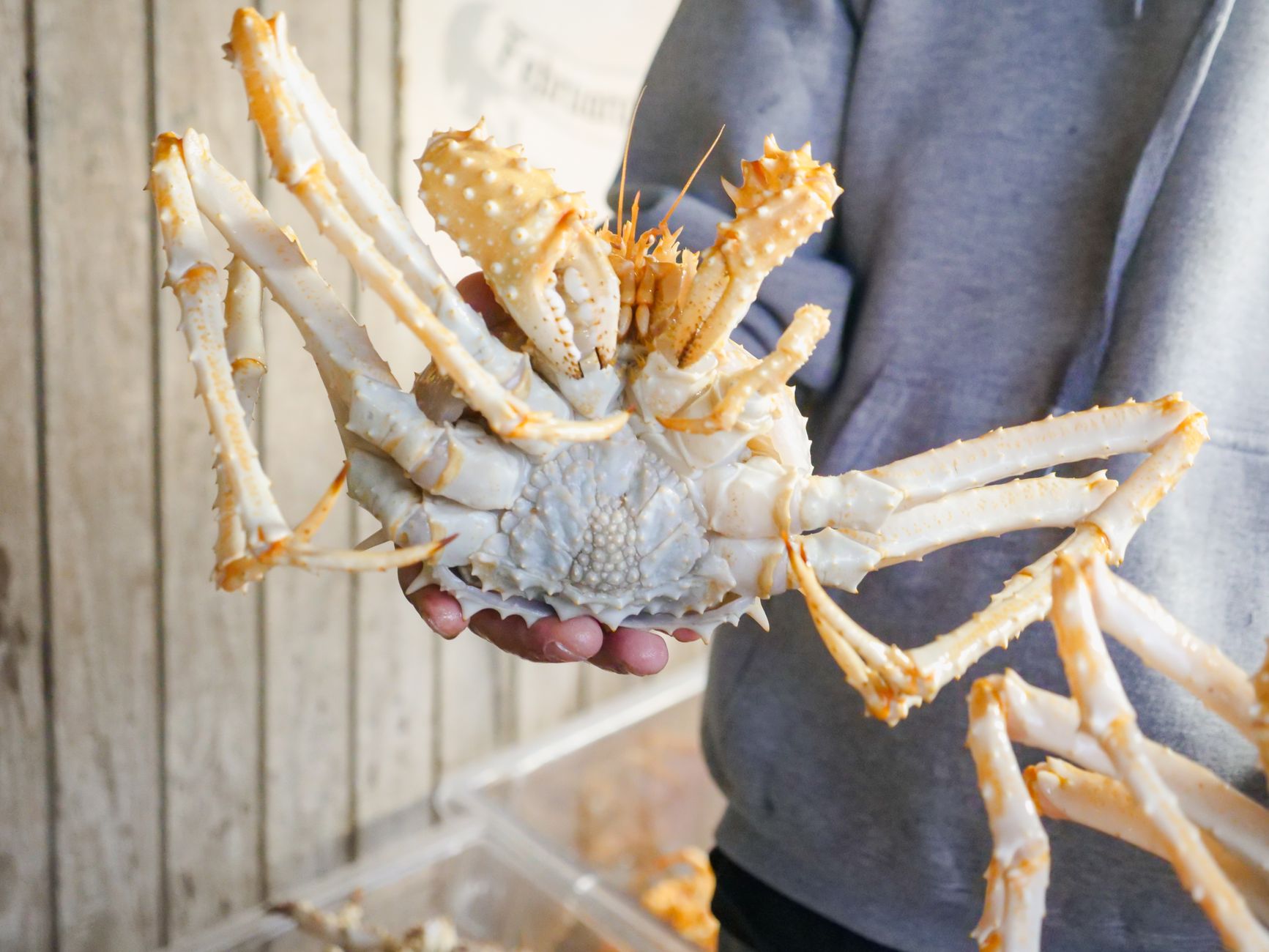
The Decorator Crab is the ocean’s most committed cosplayer. It uses tiny hooks on its shell to attach “decorations” from its environment, including seaweed, sponges, and even live stinging anemones.
This isn’t just about fashion; it’s a highly sophisticated defense. If the crab moves to a new environment with different colors, it will meticulously strip off its old “outfit” and put on a new one to match the new background. If they find a particularly effective piece of “clothing,” like a poisonous sponge, they will guard it fiercely.
#36 is a “walking stick” that can be over 2 feet long…
#36 — The Giant Stick Insect

Phasmids, or stick insects, are the masters of camouflage, but the Giant Stick Insect takes it to the extreme. Some species can grow up to 25 inches long, making them look like a literal branch that has come to life.
They are nocturnal and spend their days hanging perfectly still, swaying slightly to mimic a twig in the breeze. If a predator does bite them, many species can shed a leg to escape and then grow it back later. Some also release a chemical spray that smells like peppermint but is strong enough to blind a curious bird or lizard.
#37 is a “shrew” with an elephant’s trunk…
#37 — The Elephant Shrew
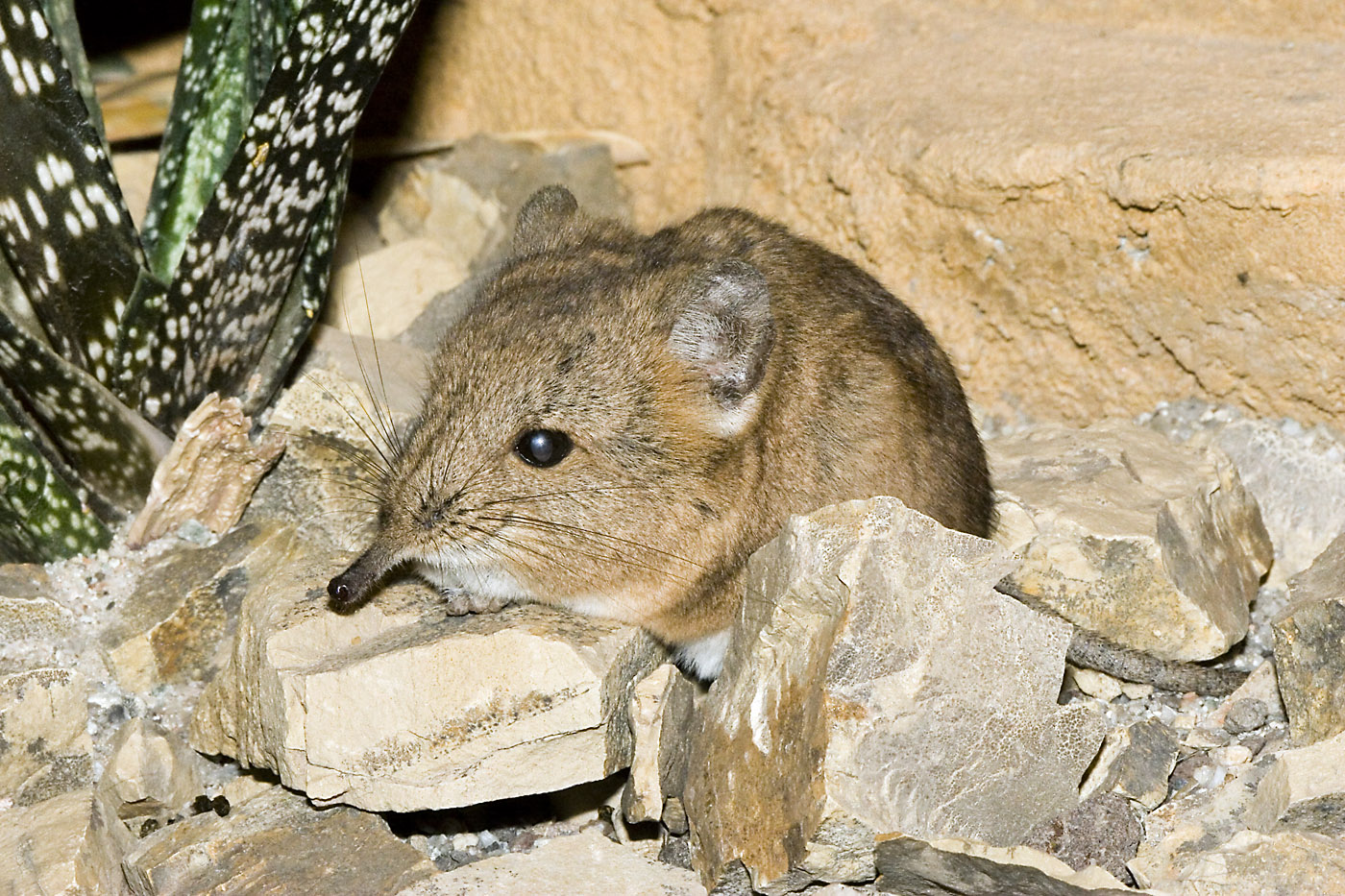
Found across Africa, the Elephant Shrew (or Sengi) is not actually a shrew. Genetic testing has revealed that they are more closely related to elephants and manatees than to the common garden shrew.
They have a long, flexible snout that they use to probe the ground for insects. Despite their tiny size, they are incredibly fast, reaching speeds of up to 18 mph. They also build elaborate “superhighway” systems through the leaf litter, which they memorize perfectly so they can escape predators at high speeds without even looking.
#38 is a “wasp” that looks like a beautiful blue jewel…
#38 — The Cuckoo Wasp

The Cuckoo Wasp is a vibrant, metallic green and blue insect that looks like it was fashioned out of gemstones. But its name hints at its darker side—it is a “cleptoparasite,” much like the cuckoo bird.
They sneak into the nests of other wasps to lay their eggs. When the Cuckoo Wasp larva hatches, it eats the host’s egg and then consumes all the food left behind by the unsuspecting “parents.” Because they have no stinger, they defend themselves by curling into a hard, armor-plated ball that even the strongest jaws can’t penetrate.
#39 is a “lemur” that can glide through the air…
#39 — The Sunda Flying Lemur

First thing’s first: the Flying Lemur is not a lemur, and it doesn’t technically fly. It is a Colugo, and it glides using a massive skin membrane that extends from its neck to its tail and out to its fingertips.
They are the most capable gliders of all mammals, often traveling over 300 feet in a single leap without losing much altitude. Mothers will even glide with their babies clinging to their bellies, making them look like a living, furry kite. On the ground, however, they are incredibly clumsy, looking like a wet blanket trying to crawl.
And finally, #40 is the most “alien” of them all…
#40 — The Blanket Octopus

The Female Blanket Octopus is one of the most visually stunning creatures in the sea. She possesses large, iridescent capes of skin that she can unfurl to look massive and ward off predators. The size difference between genders is the most extreme in the animal kingdom.
While the female can grow up to 6 feet long, the male is only about an inch long. The male’s entire existence is dedicated to finding a female, handing her his specialized “mating arm,” and then essentially ceasing to exist. It’s a bizarre, high-stakes reproductive strategy that belongs in a science fiction novel.
The Bottom Line
Nature is far weirder than our imaginations dare to be. From the see-through heads of the Barreleye fish to the “machine-gun” calls of the Shoebill stork, the 40 animals we’ve explored prove that “alien” life is already here on Earth. These evolutionary oddities remind us that the planet is still full of secrets, many of which are currently under threat from habitat loss and climate change. Protecting these bizarre creatures isn’t just about saving animals—it’s about preserving the most creative “glitches” in the matrix of life.
Did we miss a creature that looks like it’s from another planet? Drop your favorite “alien” animal in the comments!

- Which Animals Inspired the Design of Real Robots - June 3, 2026
- 12 Calm, Low-Maintenance Dogs Ideal for Retirement Years - June 3, 2026
- The Wild Cat That Best Represents Each Zodiac Sign - June 3, 2026