
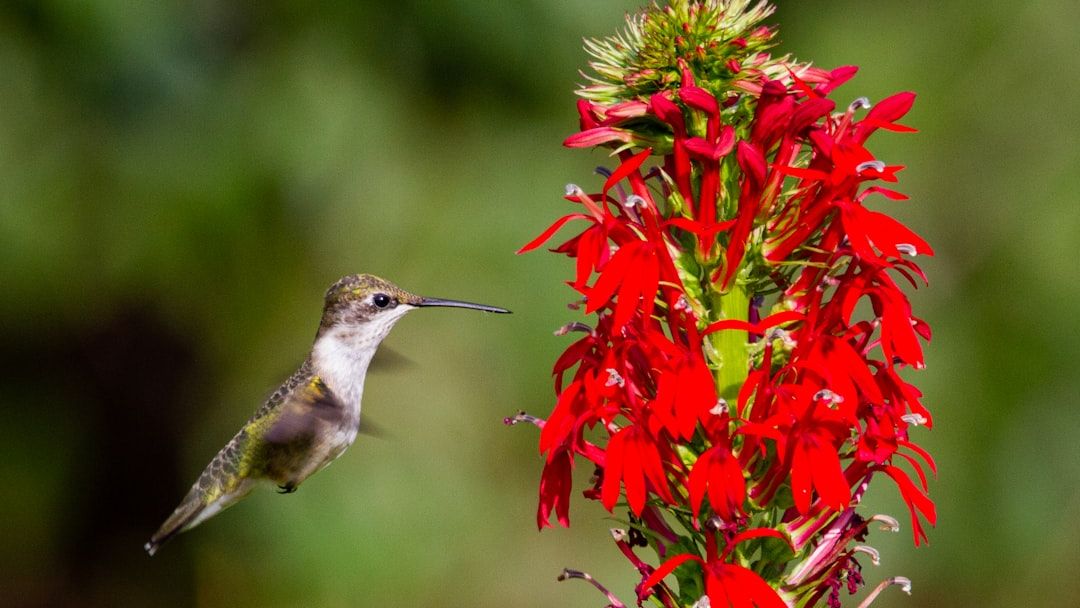
Everyone tells you the same thing: plant something red and the hummingbirds will show up. It sounds simple, almost too simple, and that’s exactly the problem.
Hummingbirds don’t actually care about color the way most gardeners assume. They’re chasing nectar, shape, and access, and a garden full of red petunias can still leave them hovering somewhere else entirely. Get the flower choices right, though, and you won’t just see the occasional visitor. You’ll get a backyard that hums, literally, from spring through fall. Here are the five that actually work, ranked from solid to spectacular.
5. Bee Balm (Monarda): The Fan Favorite With a Wild Streak
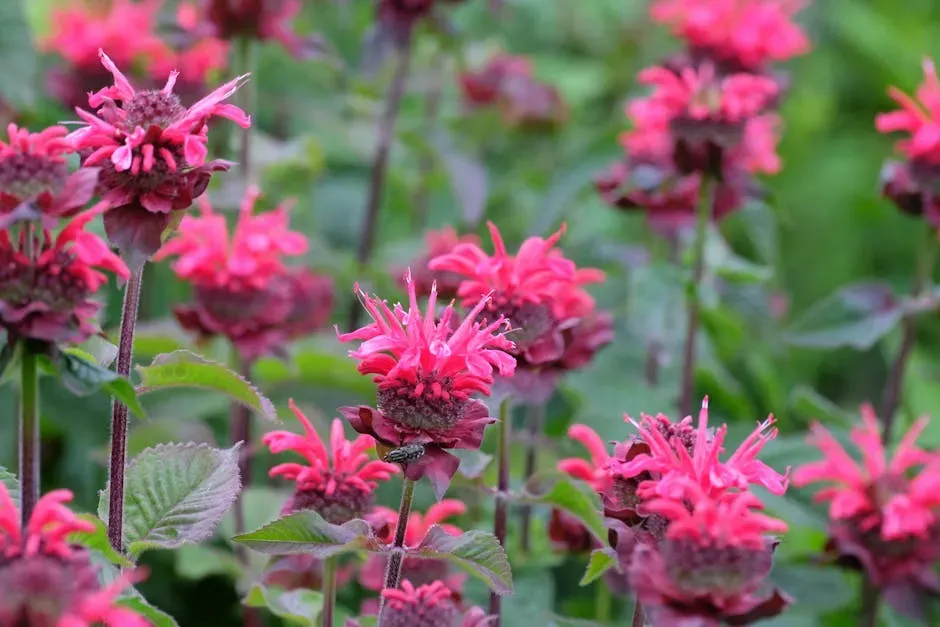
Bee Balm is the flower hummingbirds seem almost obsessed with. Those shaggy, firework-shaped blooms in red, pink, and purple aren’t just pretty from a distance, they’re loaded with nectar that keeps birds coming back visit after visit. Plant it in full sun with moist, well-drained soil and it rewards you with color that lasts most of the summer.
Here’s the catch nobody mentions at the garden center: Bee Balm is in the mint family, and it behaves like it. Left alone, it will spread through your garden bed with zero regard for your original layout. Stay ahead of it with regular deadheading and division, and you get a hummingbird favorite instead of a takeover situation.
Fast Facts
- Native to North America and hardy in USDA zones 4-9
- Blooms from early summer into early fall
- Grows in dense clumps 2 to 4 feet tall
- Also called bergamot, a close relative of mint
4. Trumpet Vine: The Climber That Refuses to Be Ignored
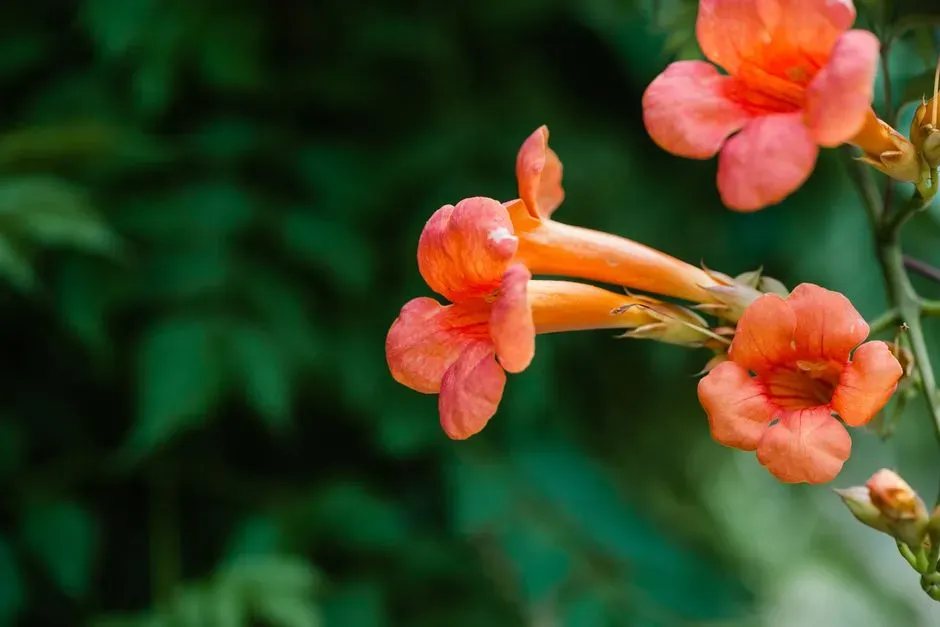
Trumpet Vine earns its nickname, “the hummingbird vine,” honestly. Its long, flared, trumpet-shaped blooms in red, orange, and yellow seem custom-built for a hummingbird’s beak, and the birds treat it like a personal buffet. Give it a fence, trellis, or arbor and it will happily climb 20 to 30 feet while covering itself in flowers all summer into fall.
But this is not a plant-it-and-forget-it vine. Trumpet Vine grows aggressively and will swallow anything nearby if you let it, from fences to smaller shrubs. Plant it somewhere it can climb freely, prune it hard every year, and it stays a showstopper instead of a problem you inherited.
3. Cardinal Flower: The Late-Summer Lifeline
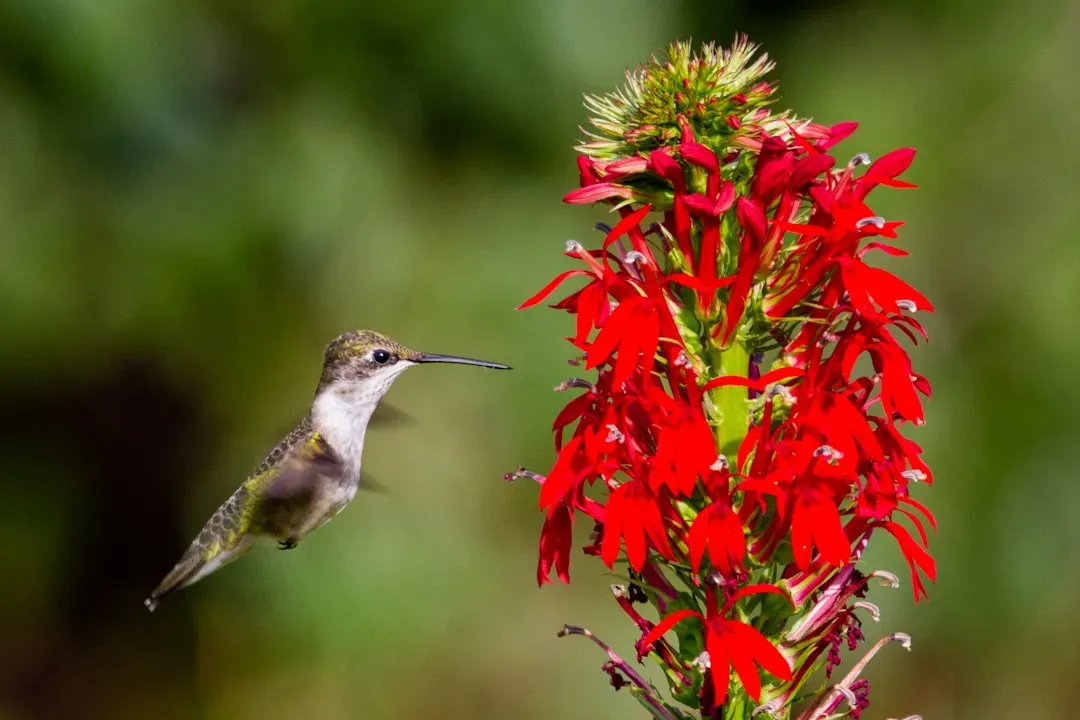
By late summer, a lot of nectar sources start drying up, and that’s exactly when Cardinal Flower steps in. Its brilliant red, tubular blooms rise on spikes up to four feet tall, blooming from mid-summer into early fall when hummingbirds need it most. It’s less of a nice-to-have and more of a lifeline during a season when options thin out.
This one thrives near moisture, so think pond edges, stream banks, or a rain garden rather than a dry, sunny border. Keep the soil rich and consistently damp, deadhead as blooms fade, and you’ll extend the flowering window even longer, giving migrating hummingbirds one more reason to stop at your yard specifically.
Worth Knowing
- Hardy in USDA zones 3-9, though often short-lived without division
- Reaches 2 to 4 feet tall on upright, spiky stems
- Prefers consistently moist to wet soil
- Draws swallowtail butterflies in addition to hummingbirds
2. Salvia: The Low-Maintenance Workhorse
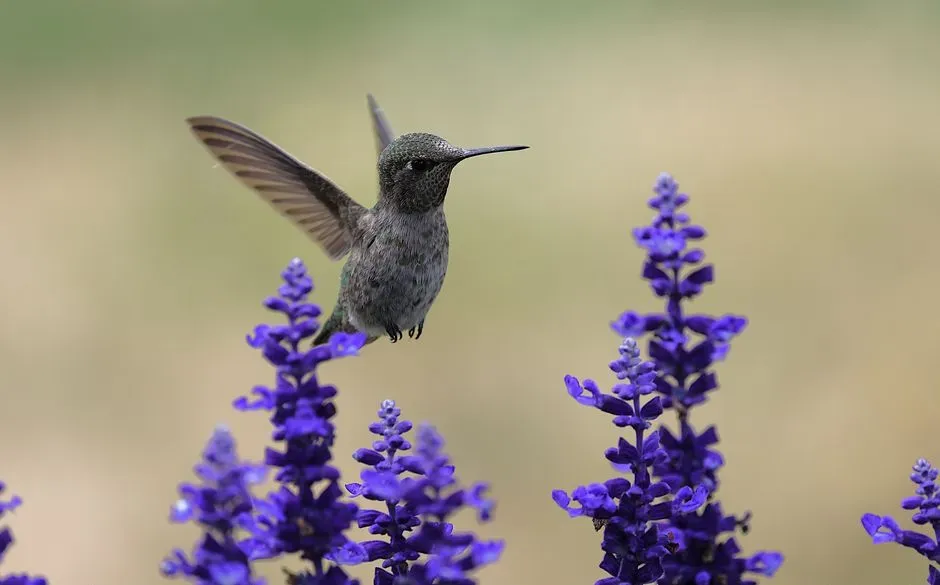
If Bee Balm and Trumpet Vine feel like a bit much, Salvia is the flower for gardeners who still want serious hummingbird traffic without the drama. Its tubular blooms in red, pink, purple, and blue open from late spring all the way through fall, giving you one of the longest nectar windows of any plant on this list. Varieties like Salvia guaranitica and Salvia coccinea are hummingbird favorites for a reason.
It’s also refreshingly low-maintenance. Salvia tolerates drought, thrives in full sun, and doesn’t demand constant babysitting the way some showier bloomers do. A little pruning encourages bushier growth and more flowers, which means more hummingbirds, with a fraction of the effort.
Quick Compare
- Salvia guaranitica: Deep blue-purple blooms, grows 3 to 5 feet tall, loves full sun
- Salvia coccinea: Fiery red blooms, stays compact at 1 to 3 feet, self-seeds readily
- Both bloom from late spring straight through the first fall frost
1. Fuchsia: The Quiet Showstopper
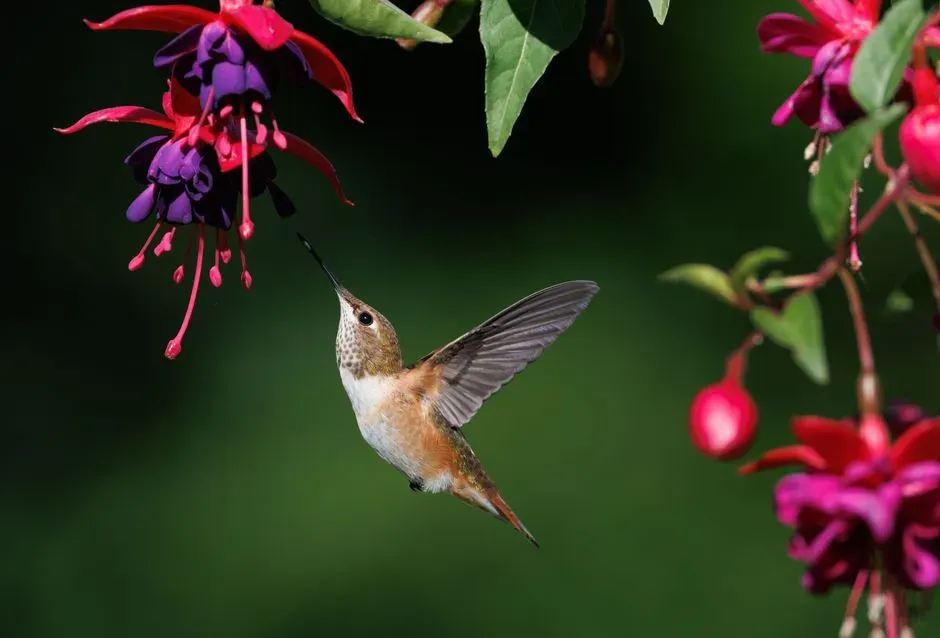
Fuchsia doesn’t get the same hype as Bee Balm or Trumpet Vine, and that’s honestly a shame, because hummingbirds treat it like a delicacy. Its pendulous, tubular blooms in pink, purple, and red dangle almost like ornaments, and that unusual shape gives hummingbirds an easy, almost effortless way to feed. It’s one of the few flowers on this list that feels as elegant to humans as it is irresistible to birds.
Fuchsia prefers partial to full shade and consistently moist soil, which makes it perfect for hanging baskets or those shadier corners of the yard that other hummingbird flowers ignore. In cooler climates, treat it as an annual or bring it indoors for winter, and you’ll get to enjoy that quiet, dangling beauty year after year.
Why It Stands Out
- Thrives in partial to full shade, unlike most hummingbird favorites
- Pendulous blooms make nectar easy to reach without extra hovering effort
- Ideal for hanging baskets, window boxes, and shaded patios
- Often overwintered indoors or grown as a tender annual in cold climates
The Bottom Line
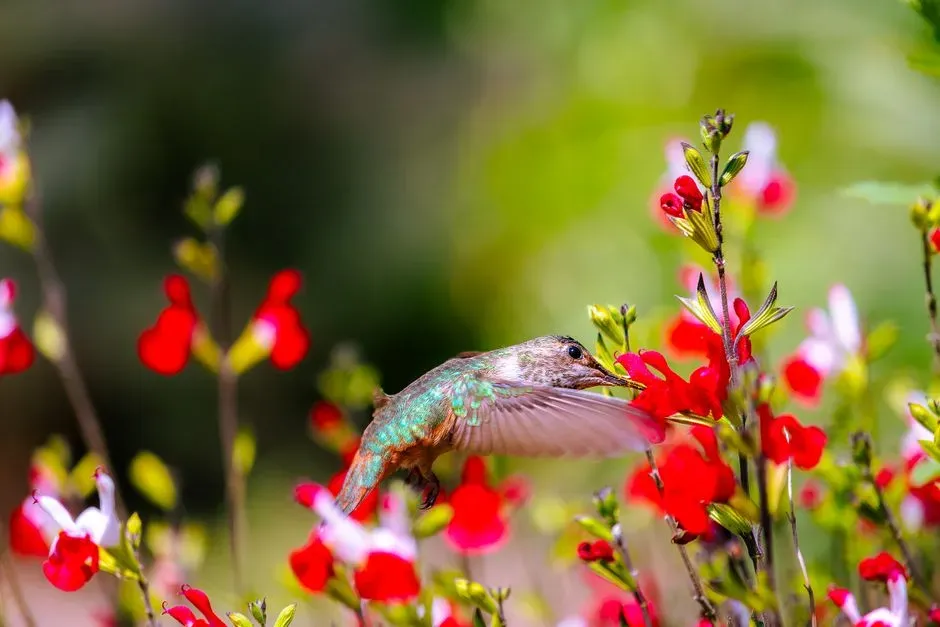
If you take one thing from this list, let it be this: the red-flower myth is holding your garden back. Real hummingbird magnetism comes from variety, bloom timing, and flower shape, not a single color scheme repeated across your yard.
Plant Bee Balm and Salvia for volume, Trumpet Vine and Fuchsia for drama, and Cardinal Flower for the late-season stretch when other blooms fade out. Do that, and you’re not hoping hummingbirds show up. You’re giving them no real reason to go anywhere else. Think we left one out? Tell us in the comments.

- The Pet Your Zodiac Sign Would Rescue Without Hesitation - August 16, 2026
- 7 US States Where Mountain Lions Are Closer Than You Think - August 16, 2026
- 10 US States With the Highest Black Bear Populations - August 16, 2026