

Worried about unexpected vet bills?
Pet insurance can cover thousands in unexpected vet costs. Get a free quote from Lemonade in under 2 minutes.
Get My Free Quote →Sponsored · Opens Lemonade.com
Most people know that having a pet around lifts the mood. That part is obvious. What tends to surprise people is just how deep that influence goes, operating not only on emotions but on measurable biology, clinical outcomes, and even disease detection. The relationship between humans and animals has been studied seriously for decades now, and the findings keep pointing in one direction.
The bond between humans and companion animals extends over millennia, with documented instances of companion animals enhancing human health from the 19th century onwards. Yet the mechanisms behind that bond are still being mapped, and many of them turn out to be far more sophisticated than anyone assumed.
Animals Rewire the Brain’s Stress Response

One of the most well-documented but still underappreciated effects of animal interaction is what happens inside the body on a hormonal level. Studies have revealed that interacting with animals can lower cortisol levels, boost oxytocin, and produce endorphins, creating feelings of happiness and well-being. These aren’t small or fleeting shifts.
When people play with dogs or engage in animal-assisted therapy, researchers believe the hypothalamus-pituitary-adrenal axis activity decreases as the oxytocin signal increases. In short, the body produces less of the stress hormone cortisol. That chain reaction has real downstream health consequences.
Among the well-documented effects of human-animal interaction are benefits for social attention, interpersonal interactions, and mood, as well as stress-related parameters such as cortisol, heart rate, and blood pressure. The breadth of that list is telling. It’s not just “feeling better,” it’s measurable physiological change across multiple systems.
Research assessed changes in plasma cortisol in dog owners when petting their own or an unfamiliar dog, or quietly reading a book. The interaction with their own dog, and also with the unfamiliar dog, but not the reading condition, led to a significant decrease in cortisol levels. The animal, not just the act of relaxing, was doing the work.
Dogs as Living Medical Diagnostic Tools
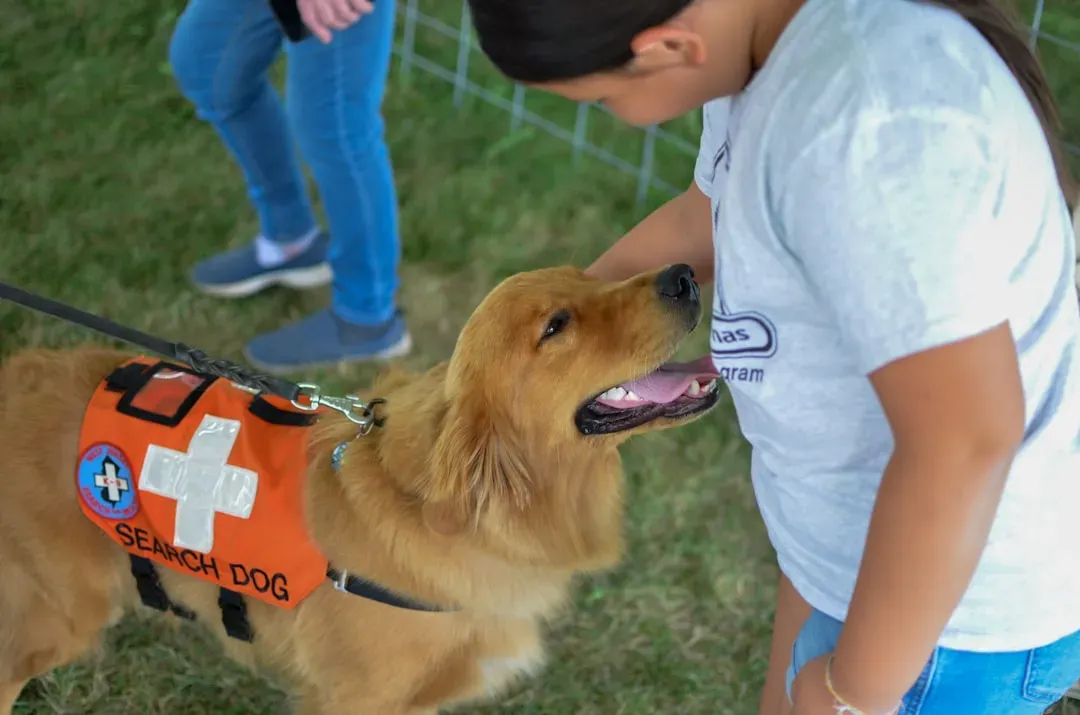
The idea of dogs detecting illness sounds almost like folklore, but it has moved firmly into the realm of published science. With approximately 300 million scent receptors compared to our mere 5 to 6 million, dogs can detect odors at concentrations as low as parts per trillion. That capability is now being systematically applied to human medicine.
Scent dogs have been trained to alert for seizures, hypoglycemia related to diabetes mellitus, and to screen for viruses, bacterial infections, and numerous cancers including mammary, prostate, lung, ovarian, colorectal, and melanoma. What links all of these seemingly different conditions is the same underlying chemistry.
The most likely explanation is that dogs’ olfactory receptors detect volatile organic compounds (VOCs). VOCs are produced by metabolic processes and transported around the body via blood vessels, released when we breathe out, sweat, or urinate. Pathological processes can alter the VOC profile by changing the concentration of normally produced compounds or by synthesizing disease-specific ones.
Beyond research settings, medical detection dogs are already making real-world impacts. In the UK, the charity Medical Detection Dogs has partnered with several NHS hospitals for pilot programs where detection dogs screen samples for various cancers, with promising preliminary results. The science is still developing, but the early signals are hard to ignore.
Animals as Anchors for Mental Health Recovery
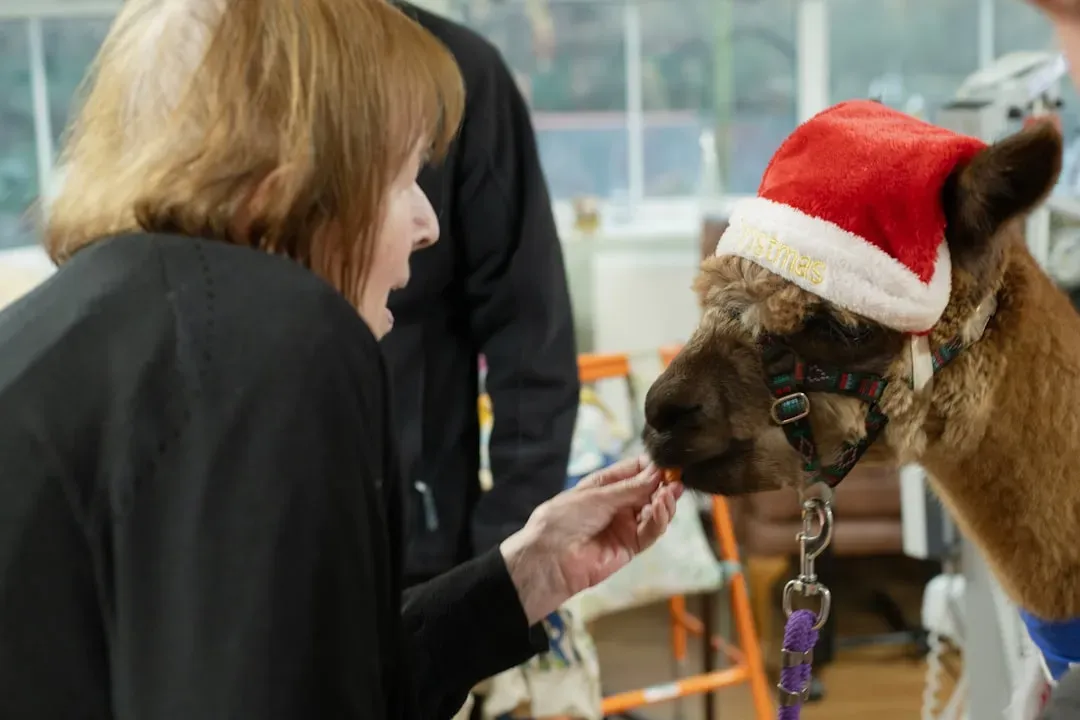
Animal-assisted therapy has moved well beyond the novelty stage. Mental health disorders like depression, anxiety, PTSD, and schizophrenia significantly reduce daily functioning and quality of life. Traditional treatments often fall short, opening interest in complementary therapies like animal-assisted therapy, which encourages the human-animal bond and provides emotional and psychological support.
Interacting with animals increases the concentration of neurohormones associated with a sense of well-being in humans. Animal-assisted interventions have also shown the ability to strengthen social bonds, regulate mood, enhance motivation, and reduce stress. These effects are why such programs are increasingly incorporated into formal psychiatric care.
In humans with mental health disorders including schizophrenia, depression, and anxiety, several clinical trials have documented that animal-assisted interventions contribute to reducing negative symptoms such as apathy, social withdrawal, and anhedonia. In depression specifically, positive effects are reflected in mood changes, especially in older adults.
Horses have been employed since the 1960s to enhance the motor skills and sensory processing of adults and children with a wide variety of conditions, ranging from Down’s syndrome to cerebral palsy. The therapeutic range here is broader than most people realize, stretching across conditions that have little else in common.
Companion Animals and Heart Health

Cardiovascular disease is among the leading causes of death globally, and an unlikely area of research suggests that companion animals may offer a modest but genuine protective effect. Companion animals may improve heart health by lowering blood pressure and regulating heart rate during stressful situations. In a 2002 study, researchers measured changes in heart rate and blood pressure among people who had a dog or cat, compared to those who did not, when participants were under stress.
People with a dog or cat had lower resting heart rates and blood pressure at the beginning of the experiment than non-pet owners. They were also less likely to have spikes in heart rate and blood pressure during the task, and their numbers returned to normal more quickly. The recovery speed is particularly interesting, since slow cardiovascular recovery is a known risk marker.
Research found that cat owners have a roughly 30 per cent lower risk of death from heart attack than individuals who do not own a cat. While this result is not necessarily proof of a causal link, it does strengthen the case for a possible association between cat ownership and well-being, with stress reduction most likely serving a key mediating role.
Children’s Development and Early Immune Protection

The benefits of animals don’t start in adulthood. Growing evidence suggests that exposure to animals in childhood shapes both physical health and social development in ways that carry lasting effects. Recent studies suggest that early exposure to pets may help protect young children from developing allergies and asthma. The timing of that exposure appears to matter.
Researchers are looking into how animals might influence child development, including studying animal interactions with kids who have autism and attention deficit hyperactivity disorder. These aren’t fringe investigations. They’re funded research programs examining specific neurological and developmental outcomes.
Research supports the hypothesis that oxytocin pathways may shape and respond to social interactions between children and dogs, highlighting an important role for companion animals in child development. That points to something fairly significant: the social bonding chemistry triggered by animal interaction during childhood may actively shape how the developing brain handles relationships and stress.
Pets may decrease stress, improve heart health, and even help children with their emotional and social skills. Taken together with the immune and developmental evidence, this forms a picture where early animal contact is not just pleasant, but potentially health-forming in a quite literal biological sense.
Conclusion

The story here isn’t that animals are a substitute for medicine or that owning a pet guarantees better health. The evidence is more nuanced than that. While evidence for a direct causal association between animals and human health is still not conclusive, the literature is largely supportive of the long-held belief that pets are good for us, contributing to both physical and mental well-being.
Governments and medical institutions are beginning to consider incorporating animal-assisted interventions into mental health and rehabilitation programs, especially for conditions such as autism spectrum disorder and dementia, where therapeutic effects are well supported. That shift from anecdote to policy is meaningful.
What the science does confirm, even in its cautious and ongoing form, is that the bond between humans and animals does something real to the body and the mind. Whether it’s a dog lowering cortisol after a difficult day, a therapy horse helping a child with cerebral palsy build strength, or a trained sniffer dog detecting a cancer others missed, animals are operating in our health in ways that go far beyond companionship. The depth of that relationship, it turns out, is still being discovered.
Worried about unexpected vet bills?
Pet insurance can cover thousands in unexpected vet costs. Get a free quote from Lemonade in under 2 minutes.
Get My Free Quote →Sponsored · Opens Lemonade.com

- What It Means When a Raccoon Keeps Visiting the Same Backyard at Night - June 10, 2026
- What It Means When a Blue Jay Appears in Your Yard Every Morning (According to American Folklore) - June 10, 2026
- The Yellowstone Supervolcano Did Something in Early 2026 That It Has Not Done in 640000 Years of Recorded Geological Activity - June 10, 2026