
Nature is brutal, beautiful, and honestly a little bit shocking. Every single day, millions of animals wake up facing one terrifying question: how do I avoid becoming someone else’s breakfast? It is a life-or-death arms race that has been running for hundreds of millions of years, and the results are nothing short of extraordinary.
Evolution has gifted animals with extraordinary tools – intelligence, adaptation, and ingenuity. Every species is shaped by millions of years of trial and error, sculpted by the invisible hand of natural selection. Those that survive are not always the strongest or the fastest, but the cleverest. The tricks some creatures pull off would make even the most cunning illusionist blush.
From faking death to deploying chemical weapons, from disappearing in plain sight to hijacking another creature’s dangerous reputation, the animal kingdom is packed with survival strategies that are equal parts jaw-dropping and wildly entertaining. Let’s dive in.
1. The Art of Playing Dead: Thanatosis and the Opossum’s Oscar-Worthy Performance
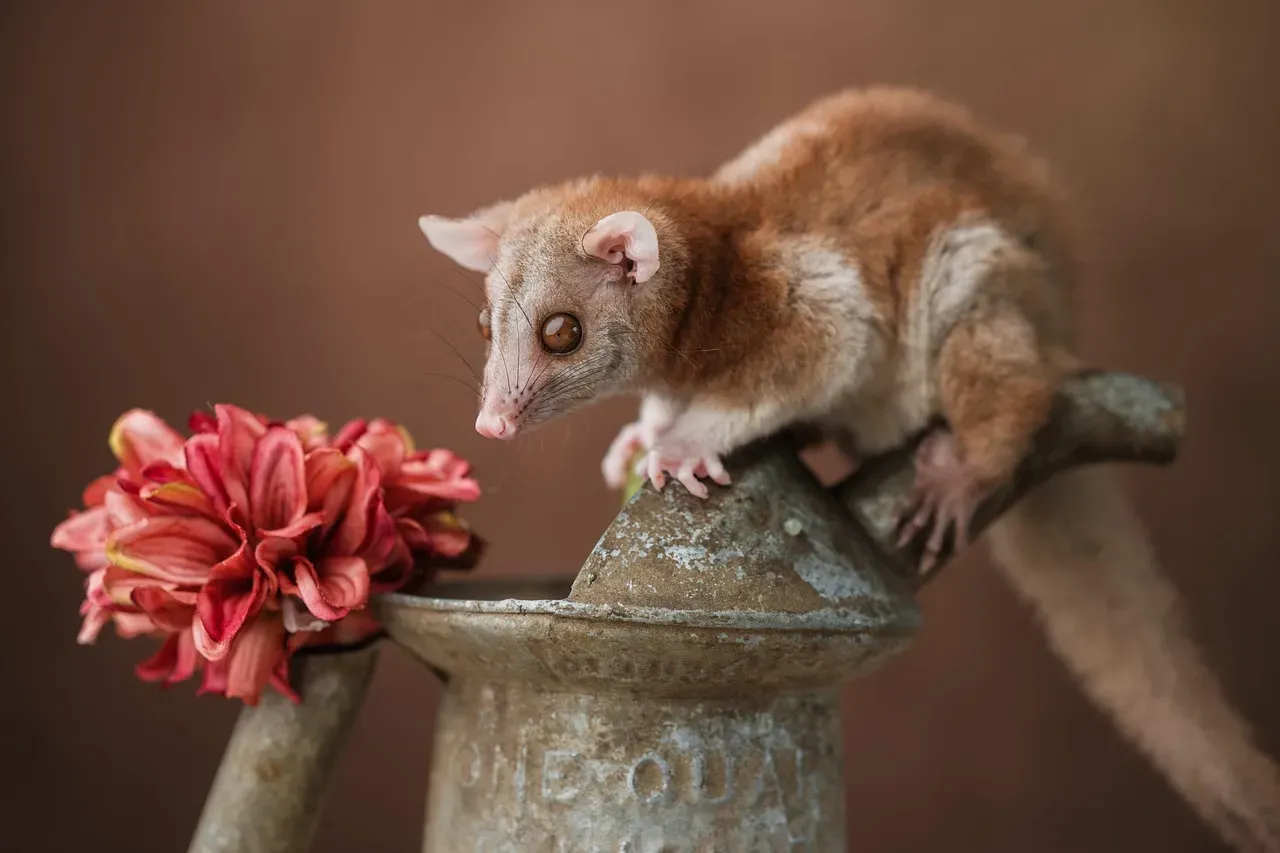
Here’s the thing – dying on purpose might just be the smartest thing you ever do. Known scientifically as thanatosis, playing dead is one of the most ingenious tactics in the animal world. This behavior can instantly turn a predator’s interest into indifference.
The opossum, famously referred to as “playing possum,” goes limp, rolls onto its side, and becomes completely unresponsive, giving the impression of being deceased. Alongside this act, it emits a foul odor from its anal glands, further convincing potential predators of its demise. This remarkable behavior can last for a few minutes to several hours until the perceived danger has passed.
Thanatosis is a form of bluff in which an animal mimics its own dead body, feigning death to avoid being attacked by predators seeking live prey. Think about the sheer audacity of that strategy – it does not run, it does not fight. It simply collapses and bets its life on the predator’s disgust.
Honestly, I think it might be the most underrated survival trick in the entire animal kingdom. No claws, no venom, no speed. Just pure theatrical brilliance.
2. Master of Disguise: How the Mimic Octopus Becomes Fifteen Different Animals
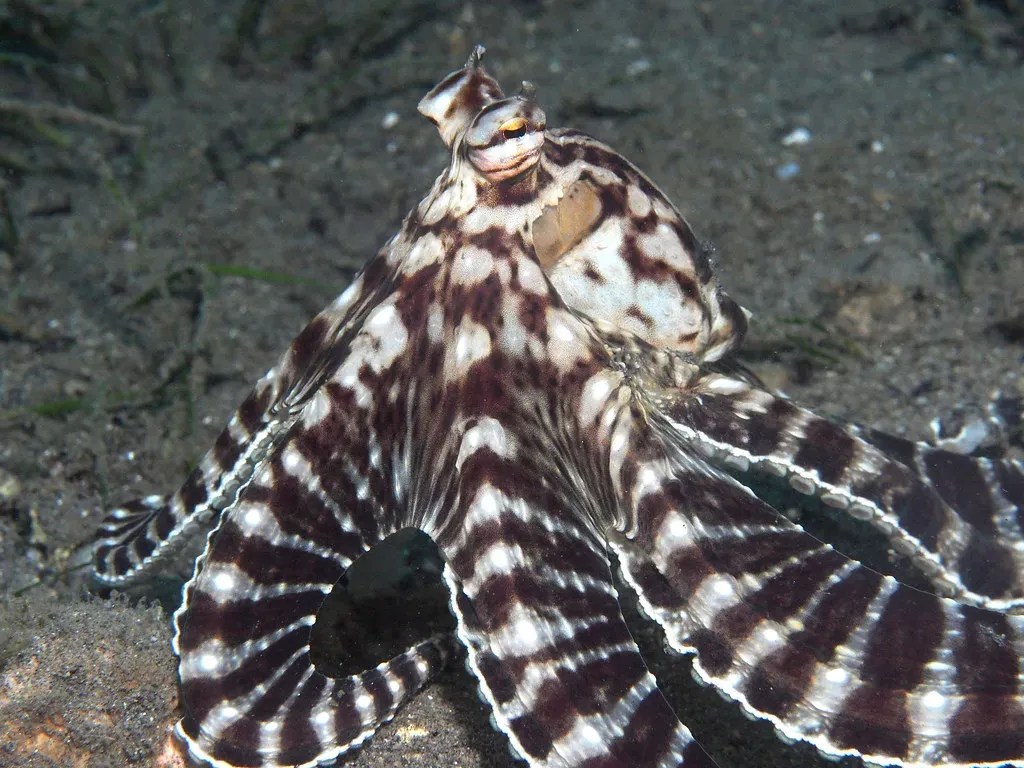
Imagine being able to transform yourself into a completely different creature whenever danger approaches. That is not science fiction. That is just Tuesday for the mimic octopus.
The mimic octopus is an extraordinary marine animal capable of imitating the appearance and behavior of more than fifteen different species, including lionfish, flatfish, and sea snakes. This ability allows it to deter predators by taking on the appearance of more dangerous creatures. The mimic octopus’s understanding of its marine environment and its inhabitants is a testament to its intricate survival strategy and advanced problem-solving abilities.
With an artist’s flair, the cuttlefish is also the ocean’s master of disguise. Able to change color and texture in an instant, it baffles predators and mesmerizes prey. Using chromatophores, these cephalopods can create dynamic patterns that mimic surrounding coral and rocks. Such visual trickery serves as both a defense mechanism and a hunting strategy.
Marine molluscs such as sea hares, cuttlefish, squid, and octopuses give themselves a last chance to escape by distracting their attackers. To do this, they eject a mixture of chemicals that may mimic food or otherwise confuse predators. In response to a predator, animals in these groups release ink, creating a cloud, while opaline affects the predator’s feeding senses, causing it to attack the cloud.
It is like being a quick-change artist, a chemical weapons expert, and a getaway driver all wrapped into one squishy, boneless body.
3. Chemical Warfare: The Bombardier Beetle’s Boiling Hot Surprise
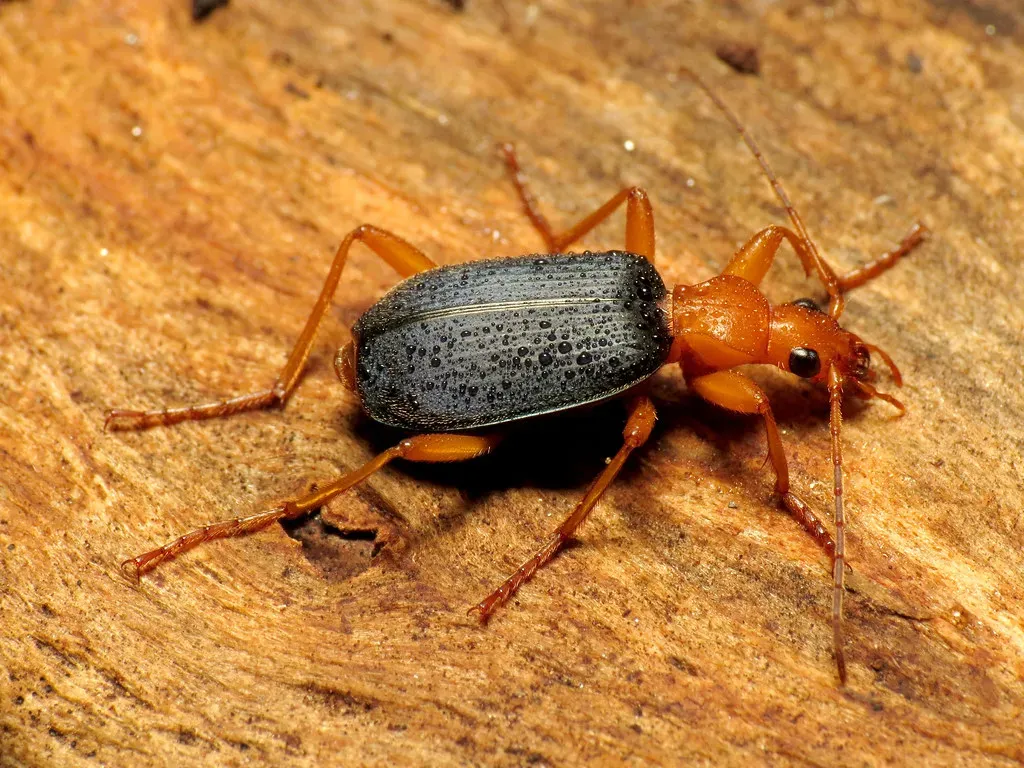
Let’s be real – some animals do not try to hide or trick you. They just cook you. The bombardier beetle is one of the most shockingly equipped creatures on the planet, and it is roughly the size of your thumbnail.
Bombardier beetles possess an incredible defense mechanism that involves shooting a boiling, noxious chemical spray from their abdomen. This explosive reaction is not merely a deterrent; it is a precise defensive strategy that targets attackers with pinpoint accuracy. The beetle’s ability to produce such a potent chemical mixture at a moment’s notice is an extraordinary adaptation that ensures its survival against numerous predators.
When threatened, this beetle releases a hot, noxious chemical spray from its abdomen, startling predators. This explosive defense is a result of a unique chemical reaction, providing an effective deterrent. Its ability to aim and spray makes it a formidable survivor, and bombardier beetles can fire their chemical spray multiple times in quick succession.
Chemical warfare as a defense mechanism is employed by certain organisms to deter predators through the use of toxic substances or chemical compounds. Many animals have evolved to produce toxins or noxious chemicals that serve as deterrents. For instance, some amphibians, like poison dart frogs, secrete toxins through their skin, making them unpalatable or even deadly to potential predators.
It is hard to say for sure which is more remarkable – the chemistry or the courage it takes to stand your ground against something a hundred times your size.
4. Strength in Numbers: How Meerkats and Group Animals Turn Teamwork Into a Security System
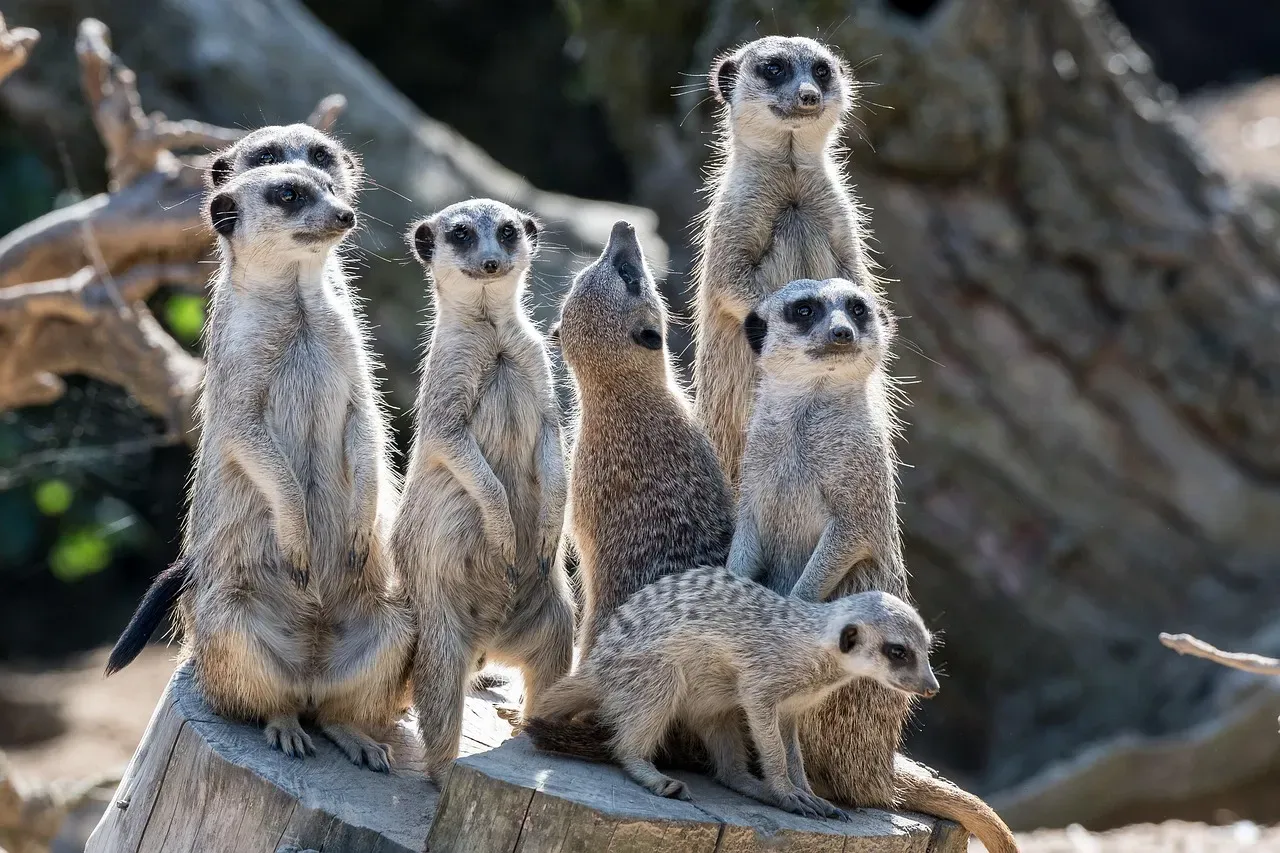
Some animals are simply too small, too slow, or too vulnerable to take on predators alone. So they did something genuinely brilliant. They built a community.
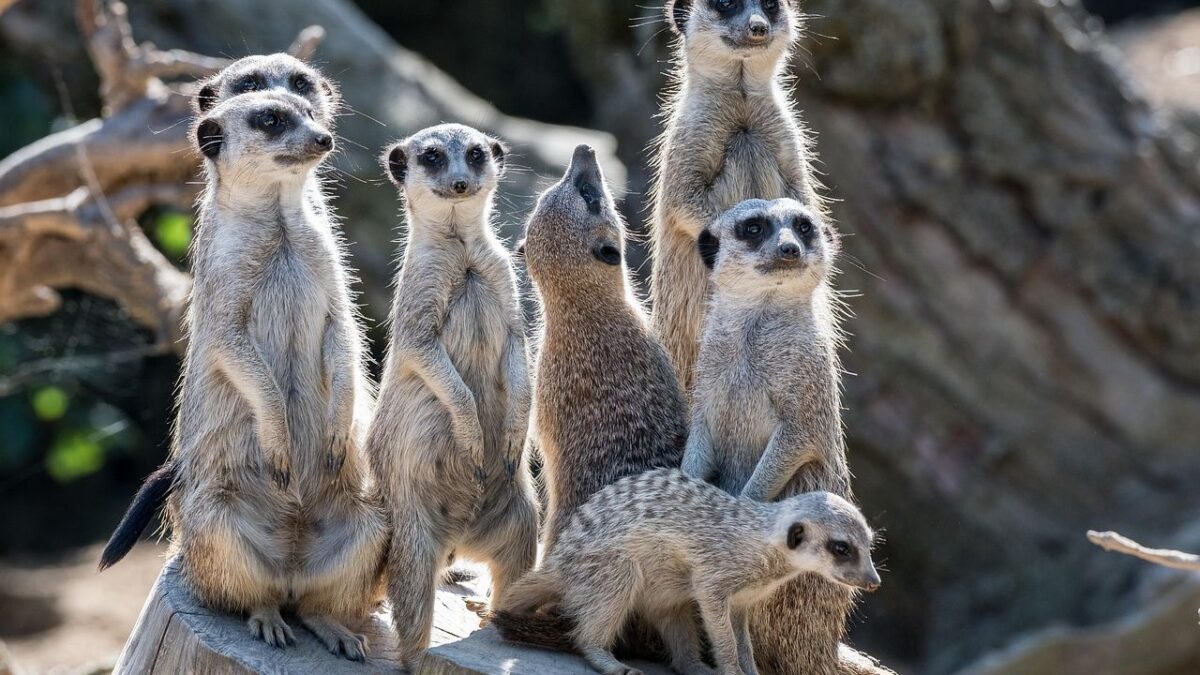
Social animals like meerkats and elephants rely on group dynamics to protect themselves. Meerkats post sentinels that watch for danger while others forage. When a threat is spotted, the sentinel gives an alarm call, sending the group into their burrows for safety.
Prey that live in large groups can intimidate a predator by simultaneously mobbing it, driving it away before it can attack. Prey can also use behavior to signal to a predator that it would be a waste of time and energy attempting an attack. For example, stotting in gazelles acts as a signal of physical fitness and likelihood of escaping. These are honest signals, as they are energetically demanding and only physically fit animals can perform these vigorous displays.
Members of groups are at reduced risk of predation, despite the increased conspicuousness of a group, through improved vigilance, predator confusion, and the like. Think of it like a neighborhood watch program, except the stakes are infinitely higher and no one is handing out pamphlets.
Think of a school of fish moving like a single silver wave. Or a murmuration of starlings twisting through the sky in patterns no single predator can track. There is something deeply moving about the idea that survival itself can be a collective act.
5. The Vanishing Act: Camouflage, Stripes, and the Science of Disappearing in Plain Sight
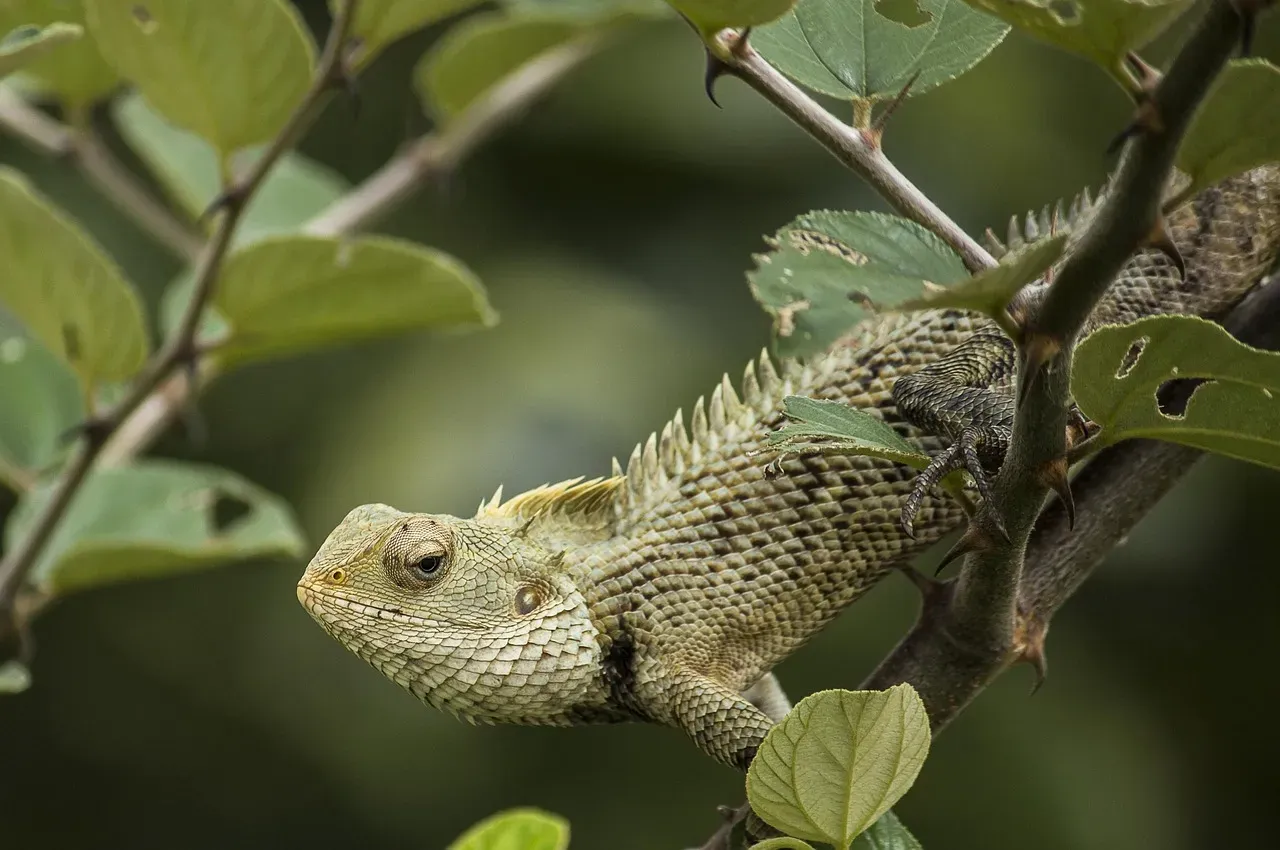
Disappearing without moving a single inch is perhaps the oldest trick in the book. Yet it still works with stunning consistency millions of years after it first evolved.
One of the most effective ways animals avoid detection by predators is by blending into their surroundings. Chameleons are renowned for their color-changing abilities, which help them blend seamlessly with their environment. Similarly, the snowshoe hare turns white in winter to match the snowy landscapes, making it nearly invisible to predators.
Animals can hide in plain sight by masquerading as inedible objects. For example, the potoo, a South American bird, habitually perches on a tree, convincingly resembling a broken stump of a branch, while a butterfly called Kallima looks just like a dead leaf.
Zebras have bold stripes, and scientists have debated the function of their patterns since Darwin’s time. A recent modelling study suggested that when zebras move, their stripes create contradictory signals about their direction of movement that is likely to confuse predators.
Many animals use the colours and patterns on their bodies to help them blend into the background and avoid the attention of predators. This strategy, crypsis, is far from perfect though. As soon as the animal moves, the camouflage is broken, and it is much easier for a predator to see and catch it. The zebra’s stripes essentially solve that problem by turning motion itself into the deception.
6. Borrowed Danger: The Genius of Mimicry and Pretending to Be Deadly
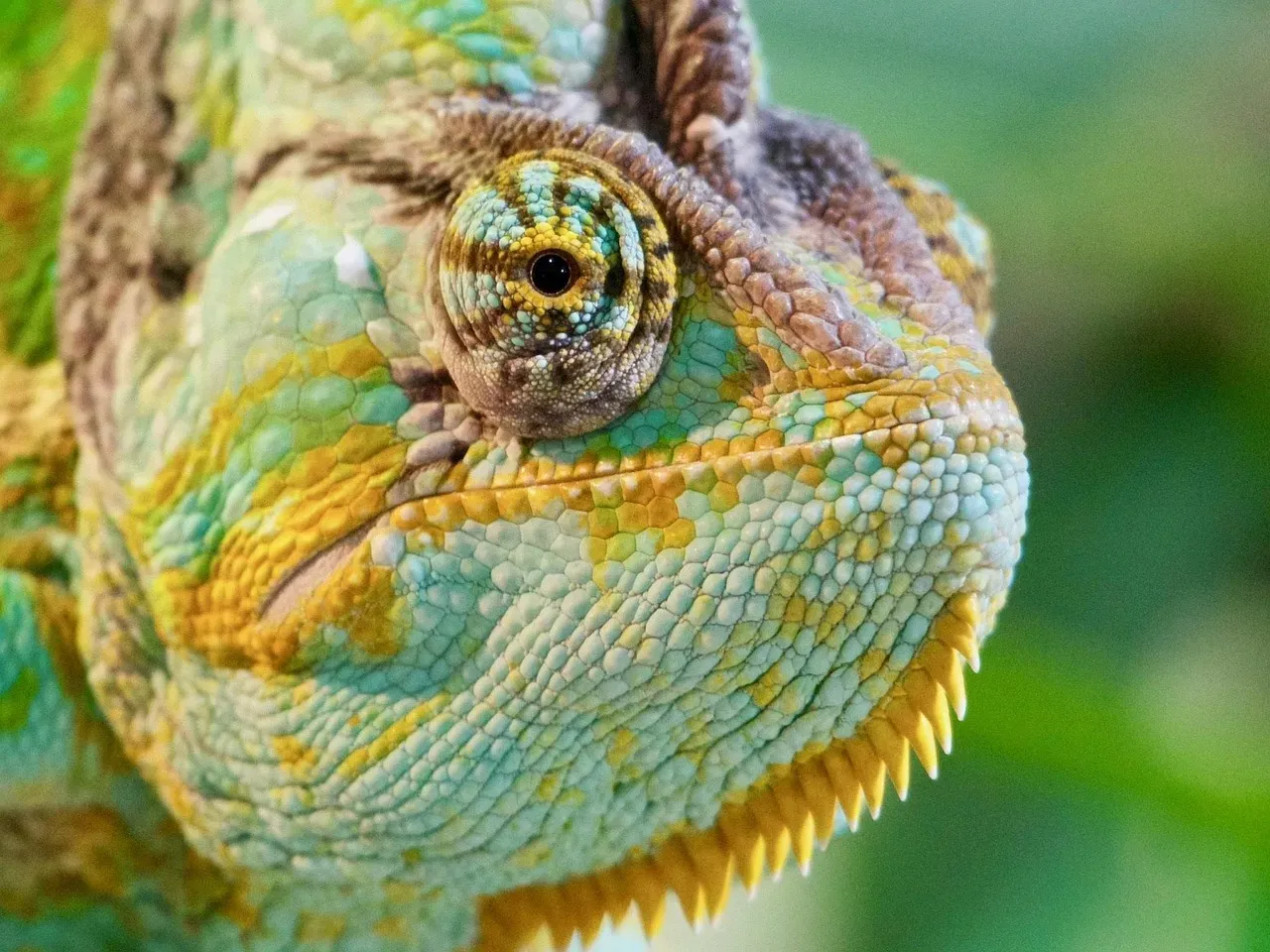
I know it sounds crazy, but some of the most effective survival strategies involve absolutely zero actual weapons. The trick is simply to look like you have some. That is the magic of mimicry, and evolution has perfected it to a startling degree.
Mimicry involves species imitating the appearance, behavior, or characteristics of other organisms to gain protection or deceive predators. Batesian mimicry occurs when a harmless species evolves to resemble a toxic or dangerous one, deterring potential predators. This is observed in butterflies and certain snakes.
If an animal is not noxious to potential predators, why not look like an animal that is? A number of harmless snakes closely mimic the bright warning coloration of the coral snake, the most poisonous snake in the United States.
The bumblebee moth perfected the art of fooling predators by getting a little buzzed. It sports a stunning resemblance to an actual bee, with its furry, yellowish body and a bold black band. The bumblebee moth, however, is not harmful at all. It is what we call a Batesian mimic – a master of imitating the warning signals of harmful species to avoid being devoured.
Mullerian mimicry involves multiple unpalatable species evolving to resemble each other, collectively reinforcing their warning signals to predators. Both camouflage and mimicry serve as crucial survival strategies, allowing organisms to evade predators by either blending in seamlessly or appearing as something they are not. It is the ultimate bluff, and the predator never gets to call it.
7. Sacrificing a Body Part: Detachable Tails, Exploding Organs, and Other Shocking Escapes
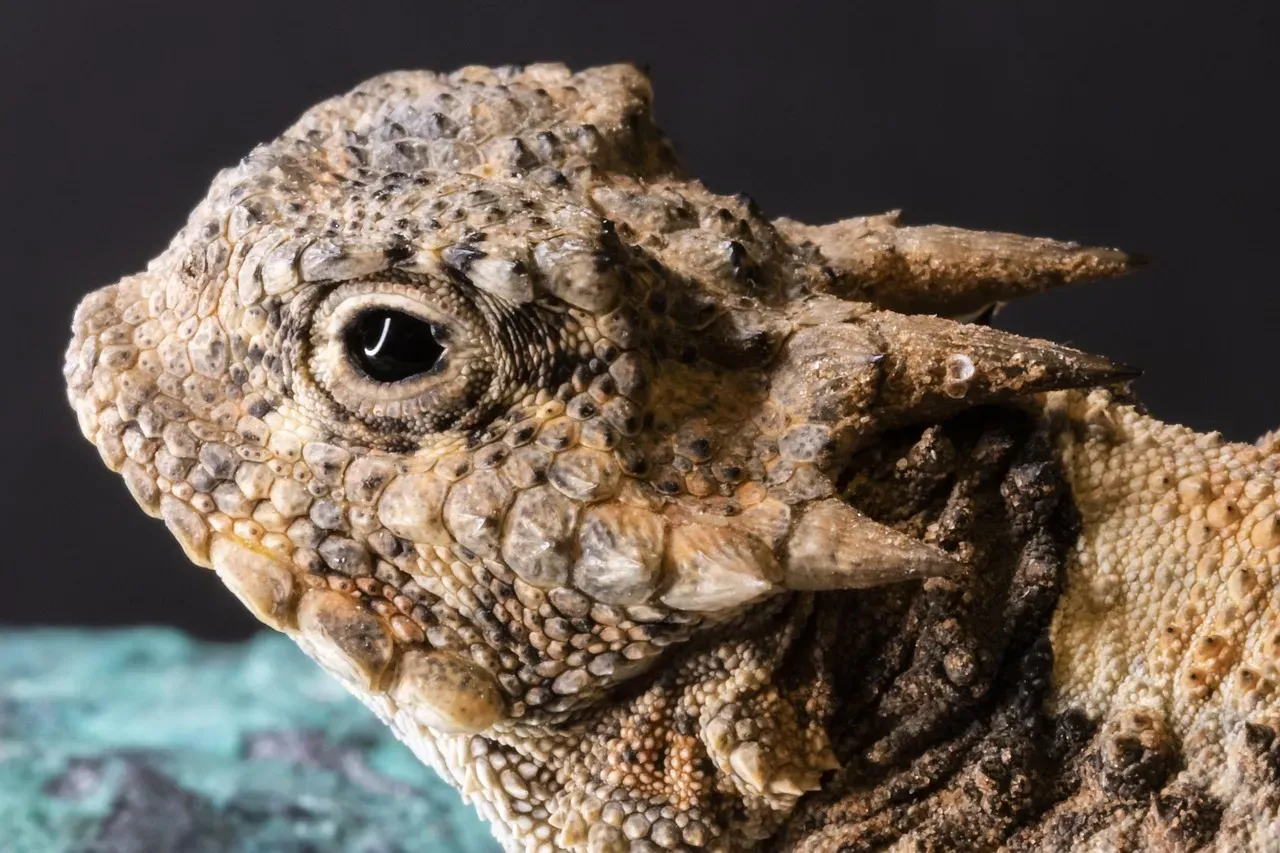
This final trick might be the most viscerally shocking one on this list. Some animals, when all else fails, simply leave part of themselves behind and run. The sheer evolutionary audacity of this approach is genuinely mind-blowing.
Certain lizards have evolved detachable tails – a brilliant escape trick. When grabbed, the tail breaks off and continues to wiggle violently, confusing the predator long enough for the lizard to escape. Later, the tail regrows.
Threatened animals may also sacrifice nonessential body parts to distract the predator and permit them to escape. Such tactics include autotomy of tails or limbs by some reptiles, insects and sea stars, and ejection of internal organs by sea cucumbers.
Horned lizards have developed one of the most bizarre defensive strategies in the animal kingdom. When cornered by a predator, some species can squirt blood from their eyes. This startling behavior is not just alarming to attackers but is also reported to leave a foul taste in the mouths of certain predators. While visually shocking, the mechanism serves as an effective means of defense, making it a remarkable example of nature’s creativity.
The sea cucumber can expel its internal organs to distract attackers, later regenerating them. The cuttlefish releases a dark cloud of ink, creating a smokescreen while it slips away unseen. When you think about it, sacrificing a tail or a handful of organs to live another day is a remarkably rational trade. Expensive, yes. But effective.
Conclusion: Nature’s Cleverest Survivors Are Writing the Rules
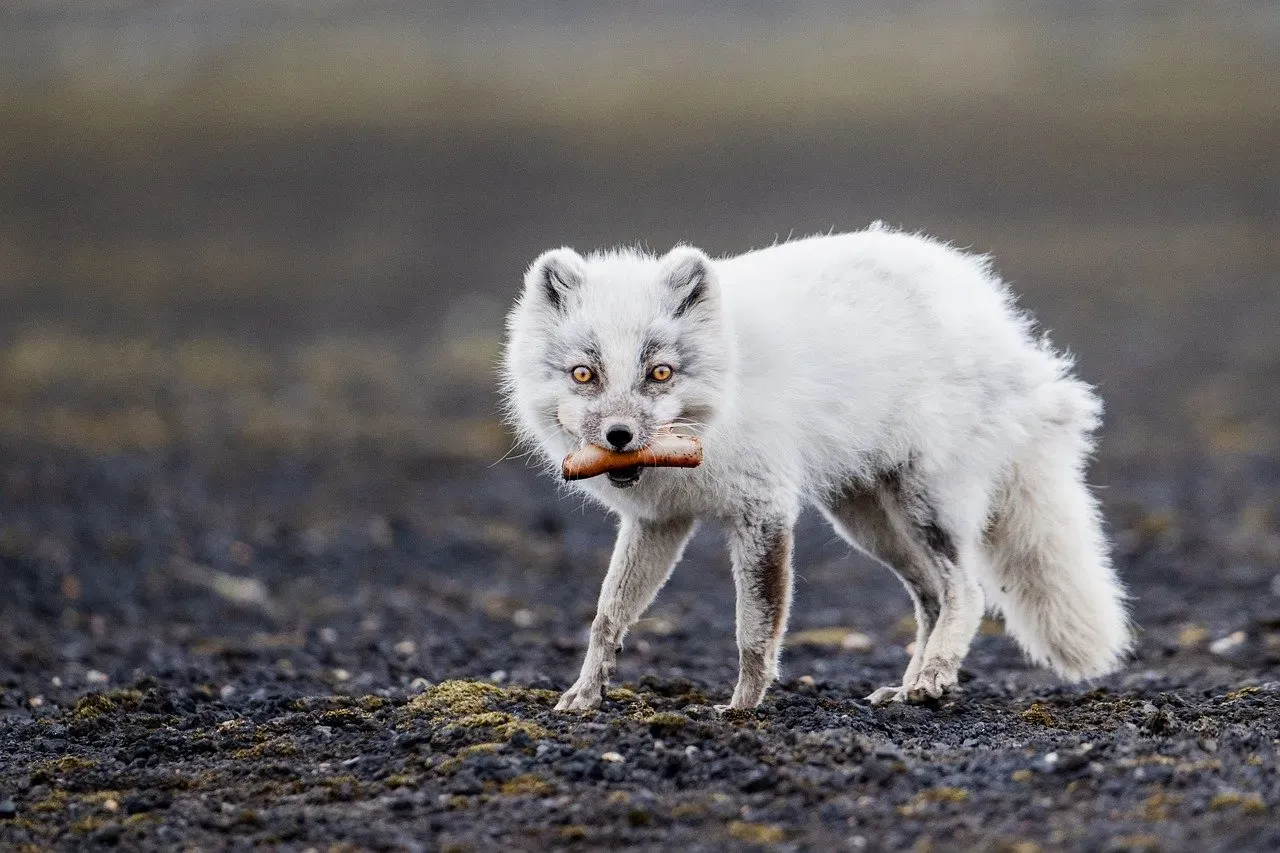
The animal kingdom, at its core, is one long improvised experiment in survival. Most animals face the risk of being eaten. The threat of predation imposes strong selective pressure on organisms, resulting in a myriad of behavioral strategies that allow them to survive. Every trick on this list represents millions of years of refinement, failure, adaptation, and eventually, breathtaking success.
Animals have developed a fascinating array of strategies to outwit their pursuers, ensuring their continued existence. These strategies highlight the intelligence and adaptability found throughout the animal kingdom. Whether it is the opossum’s theatrical collapse, the bombardier beetle’s boiling chemical spray, or the mimic octopus quietly shapeshifting into something terrifying, the theme is consistent: brains and creativity beat brute force, more often than you might expect.
Survival is not just about strength. It never has been. The next time you think of the wild as simply a place of tooth and claw, remember the small lizard calmly dropping its tail, the tiny moth pretending to be dangerous, and the meerkat standing watch on a termite mound so the rest of its family can eat in peace. What survival trick surprised you the most? Tell us in the comments.
