

When it comes to hunting patterns, snakes exhibit fascinating behavioral adaptations that have evolved over millions of years. While many people assume all snakes are nocturnal predators slithering through the darkness, the reality is far more diverse. Some species have adapted to hunt during daylight hours, taking advantage of visual cues and warmer temperatures, while others have specialized in nighttime hunting, using heat-sensing pits and exceptional olfactory abilities to track prey in complete darkness.
Understanding whether a snake is diurnal (day-active) or nocturnal (night-active) not only provides insight into their ecological niche but can also be crucial information for hikers, gardeners, and snake enthusiasts. In this comprehensive guide, we’ll explore seven snake species that primarily hunt during daylight hours and five that prefer the cover of darkness, examining how their hunting strategies, physical adaptations, and behaviors have evolved to suit their preferred time of activity.
The Science Behind Snake Hunting Patterns
Snake activity patterns are primarily governed by thermoregulation needs and predator-prey relationships. Being ectothermic (cold-blooded), snakes rely on external heat sources to regulate their body temperature and metabolic processes. This fundamental biological constraint significantly influences when different snake species choose to hunt. Diurnal snakes have evolved to function optimally at higher temperatures, while nocturnal species have adapted to conserve energy during hot days and hunt when temperatures drop.
Evolutionary pressures have also shaped these patterns, with some species developing specialized adaptations for their preferred hunting time. For instance, nocturnal snakes often possess larger eyes with specialized rod cells for enhanced night vision, while many diurnal species have developed excellent color vision to spot prey against varied backgrounds. Some nocturnal vipers and pythons have heat-sensing pit organs that act as infrared detectors, allowing them to locate warm-blooded prey in complete darkness—a remarkable adaptation absent in most diurnal species.
11. Garter Snake The Daylight Garden Hunter

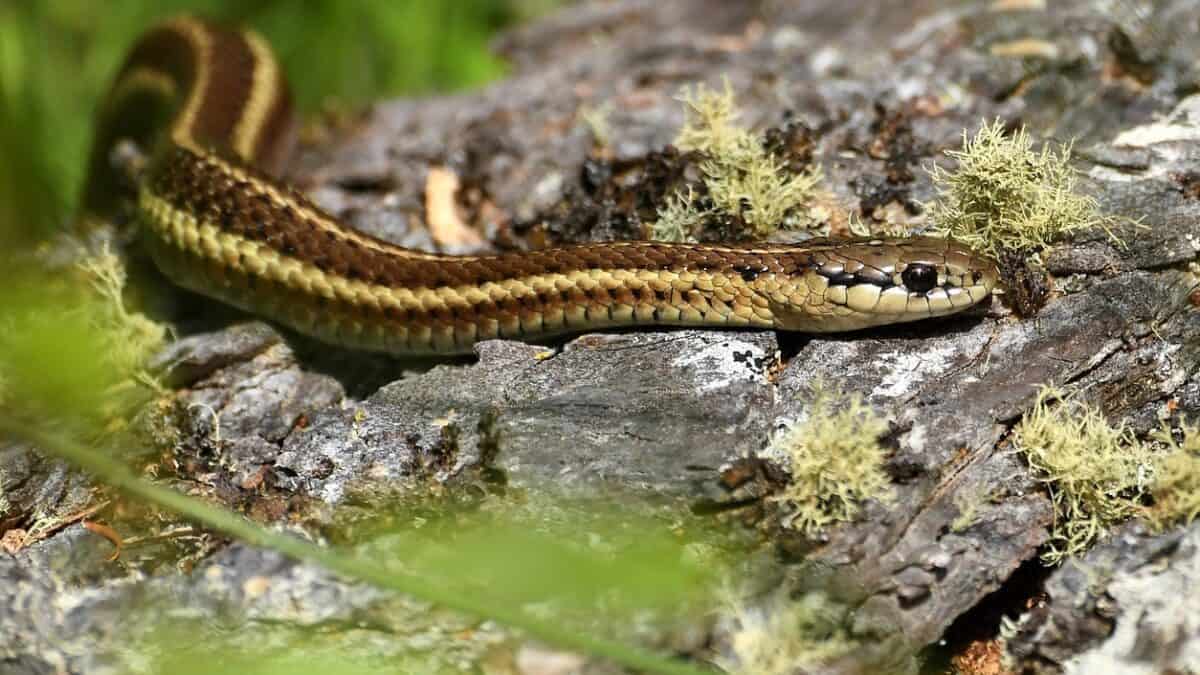
The common garter snake (Thamnophis sirtalis) is perhaps North America’s most familiar diurnal serpent, frequently spotted in gardens, parks, and wetlands during daylight hours. These relatively small, non-venomous snakes typically display distinctive longitudinal stripes running down their bodies, though coloration varies widely across their range. Primarily active during daylight hours, especially in the morning and late afternoon, garter snakes hunt a diverse menu of prey including amphibians, small fish, earthworms, and occasionally small rodents.
What makes garter snakes successful daytime hunters is their excellent vision and ability to track prey through multiple sensory systems. Unlike many nocturnal species that rely heavily on chemical and heat sensing, garter snakes actively use visual hunting techniques, scanning their surroundings for movement while flicking their tongues to sample airborne scent particles. Their diurnal nature makes them common sightings for humans, contributing to their cultural familiarity despite being relatively harmless to people. In colder northern regions, they’re often among the first snakes to emerge from brumation (reptilian hibernation) in spring, sometimes forming massive aggregations at communal hibernacula.
10. Black Racer The High-Speed Daylight Pursuer

True to its name, the North American black racer (Coluber constrictor) is among the fastest snakes in the world, capable of reaching speeds up to 8-10 mph when pursuing prey or escaping threats. These elegant, slender snakes are characterized by their uniform glossy black or dark blue-black coloration and smooth scales that contribute to their streamlined movement. Almost exclusively diurnal, black racers rely heavily on their exceptional vision to spot prey from a distance, then employ their impressive speed to chase down and capture their quarry.
Unlike ambush predators, black racers actively forage throughout daylight hours, covering significant territory in search of lizards, small mammals, birds, eggs, and even other snakes. Their hunting style is distinctly different from nocturnal species—rather than patiently waiting or using specialized heat detection, they’re opportunistic hunters that use speed and agility to their advantage. Interestingly, black racers don’t constrict their prey despite their scientific name; instead, they overpower victims by pressing them against the ground before swallowing them whole. Their preference for open, sunlit areas means they’re commonly encountered by humans in fields, forest edges, and suburban environments throughout the eastern United States.
9. King Cobra The Diurnal Apex Predator
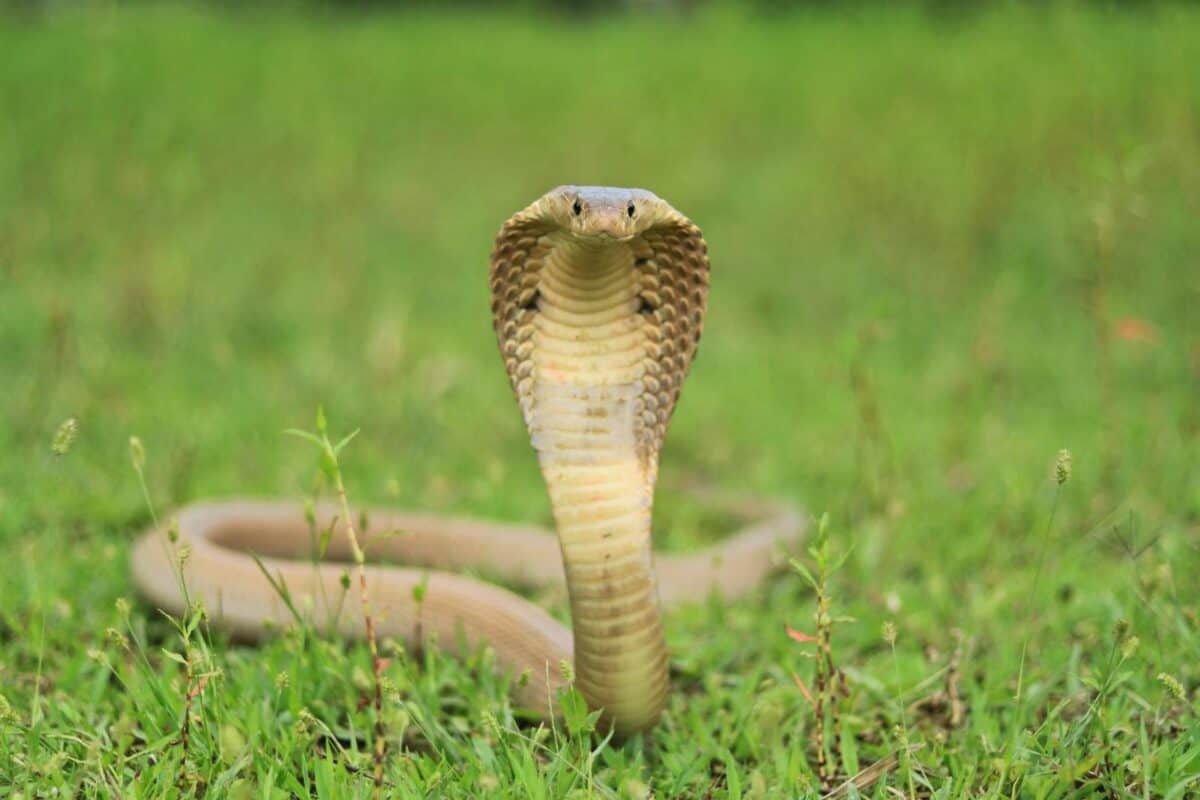
The king cobra (Ophiophagus hannah) stands as one of the most impressive diurnal hunters in the snake world. As the longest venomous snake globally, reaching lengths up to 18 feet, this formidable predator reigns in the forests and plains of Southeast Asia. Unlike many venomous snakes that hunt at night, king cobras are primarily active during daylight hours, using their excellent vision to track prey and potential threats. Their name “Ophiophagus” literally means “snake-eater,” reflecting their specialized diet that consists primarily of other snakes, including venomous species.
King cobras demonstrate remarkable intelligence for reptiles, with complex hunting behaviors that involve actively tracking prey through visual and chemical cues. When hunting, they move deliberately through their territory with their head raised above ground level, scanning for movement and tasting the air with their forked tongue. Unlike nocturnal pit vipers that rely heavily on heat detection, king cobras depend on their keen eyesight and acute sense of smell. They’re also one of few snake species known to create nests for their eggs, with females guarding their clutch until hatching—unusual maternal behavior that further demonstrates their complex daytime activity patterns and advanced cognitive abilities compared to many other snake species.
8. Green Mamba The Arboreal Daylight Assassin

The eastern green mamba (Dendroaspis angusticeps) epitomizes the perfect daytime hunter in African rainforests and coastal thickets. With its brilliant emerald-green coloration providing exceptional camouflage among foliage, this highly venomous elapid is perfectly adapted for arboreal daytime hunting. Typically growing to lengths of 6-7 feet, green mambas are slender, agile climbers that spend most of their lives in trees and bushes. Their diurnal lifestyle allows them to take advantage of visual hunting opportunities in their complex three-dimensional environment.
Unlike nocturnal tree-dwelling snakes that might rely more heavily on ambush tactics, green mambas actively patrol their arboreal territory during daylight hours, using their excellent vision to spot birds, eggs, bats, and small mammals. Their hunting strategy combines stealth with quick strikes—they can remain perfectly still for long periods before delivering lightning-fast, precisely aimed bites. The potent neurotoxic venom immobilizes prey quickly, an important adaptation for hunting agile birds and mammals that might otherwise escape into the complex canopy. While primarily diurnal, green mambas may occasionally hunt during early evening hours in hot weather, demonstrating some flexibility in their activity patterns while remaining predominantly day-active hunters.
7. California Kingsnake The Daylight Constrictor
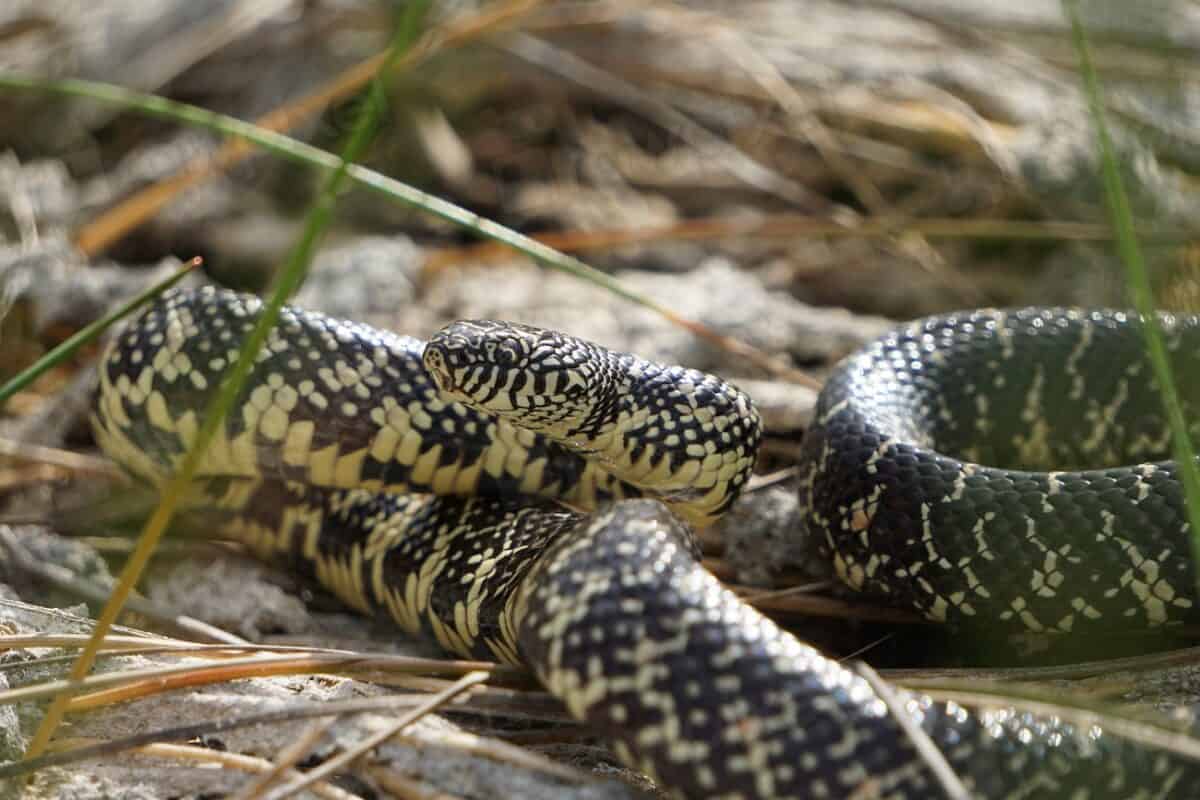
The California kingsnake (Lampropeltis californiae) represents one of North America’s most successful diurnal constrictors, recognized by its striking pattern of alternating dark and light bands or stripes. These medium-sized constrictors typically reach 3-4 feet in length and are renowned for their docile nature toward humans despite being formidable predators in their ecosystem. California kingsnakes are most active during daylight hours, particularly in morning and late afternoon, when they actively forage through their habitat searching for prey.
What makes these snakes particularly remarkable among diurnal hunters is their diet, which includes other snakes—even venomous rattlesnakes, against whose venom they possess natural immunity. Their hunting strategy combines active searching with opportunistic ambushing, using excellent vision to spot prey while also investigating rodent burrows, rock crevices, and hollow logs. California kingsnakes kill by constriction, coiling around prey and applying steady pressure until suffocation occurs. Their preference for daylight hunting has made them popular in the pet trade, as their activity patterns align with human schedules, allowing owners to observe their natural behaviors. In the wild, their diurnal nature means they occupy a distinct ecological niche from nocturnal snake species in the same habitats.
6. Coachwhip Snake The Desert Daytime Hunter
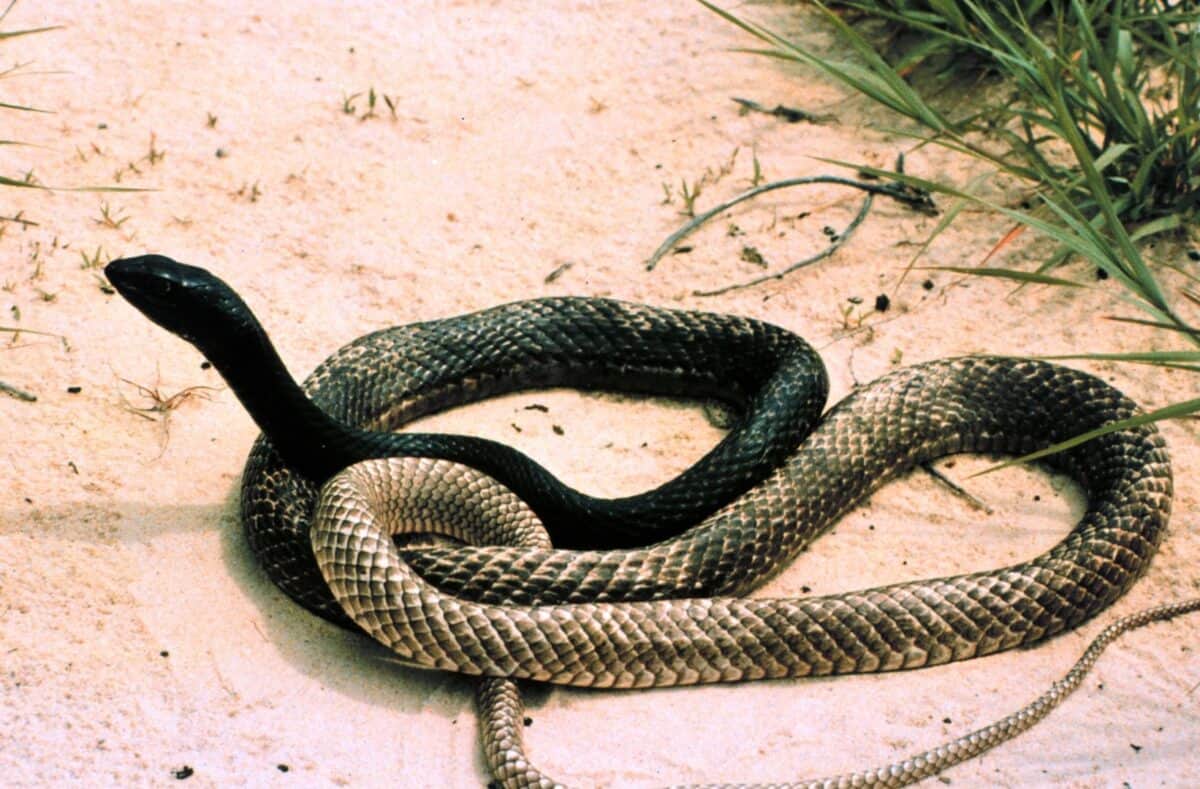
The coachwhip snake (Masticophis flagellum) exemplifies specialized adaptation for daytime hunting in harsh, open environments. Named for its resemblance to an old-fashioned braided whip, these slender snakes can grow up to 8 feet long and are among North America’s fastest serpents. Their coloration typically transitions from dark anterior (front) to lighter posterior (rear) sections, providing effective camouflage in the grasslands, deserts, and scrublands they inhabit. Strictly diurnal, coachwhips are most active during the hottest parts of the day when many other snakes seek shelter—a remarkable adaptation that gives them access to prey with less competition.
Unlike nocturnal desert snakes that avoid scorching temperatures, coachwhips have evolved exceptional heat tolerance, allowing them to hunt when surface temperatures exceed 100°F (38°C). Their hunting strategy is notably different from ambush predators; coachwhips actively pursue prey with their head held high above the ground, using their exceptional vision to spot movement across open terrain. When prey is detected, they launch into high-speed pursuits, capturing lizards, small mammals, birds, and insects with precision strikes. Interestingly, they’ve been observed climbing trees and shrubs to raid bird nests and using their acute vision to spot potential meals from impressive distances—behaviors that would be impossible for strictly nocturnal species relying primarily on chemical or heat sensing.
5. Rough Green Snake The Daylight Insectivore

The rough green snake (Opheodrys aestivus) represents a highly specialized diurnal hunter with a diet unlike most other snakes on our list. These slender, brilliantly green serpents typically reach lengths of 2-3 feet and spend most of their time in shrubs, vines, and low tree branches. Their vibrant coloration provides near-perfect camouflage among foliage, making them virtually invisible to both predators and prey during daylight hours. Almost exclusively diurnal, rough green snakes are most active on warm, sunny days when their insect prey is abundant and active.
What sets rough green snakes apart from many other diurnal hunters is their specialized diet consisting almost entirely of insects and other invertebrates—primarily grasshoppers, caterpillars, spiders, and crickets. This dietary specialization requires keen daylight vision to spot tiny, fast-moving prey items that would be difficult to locate at night. Their hunting technique involves slow, deliberate movements through vegetation, scanning leaves and branches for insects before striking with surprising precision. Unlike many snakes that rely on constriction or venom, rough green snakes simply grasp prey with their jaws and swallow it alive. Their completely harmless nature toward humans, combined with their beautiful appearance and daylight activity pattern, makes them popular subjects for nature photographers and wildlife enthusiasts.
4. Ball Python The Nocturnal Constrictor

The ball python (Python regius), native to West and Central Africa, represents one of the most popular pet snakes globally and exemplifies classic nocturnal hunting behavior. Named for their defensive habit of coiling into a tight ball when threatened, these stocky, muscular constrictors typically reach 3-5 feet in length and display beautiful patterns of black, brown, and gold. In their natural habitat, ball pythons spend daylight hours sheltered in abandoned rodent burrows, termite mounds, or hollow logs, emerging after sunset to begin hunting when temperatures cool and their mammalian prey becomes active.
Ball pythons employ a hunting strategy perfectly suited to nocturnal activity, relying primarily on chemical sensing and infrared detection rather than vision. Their labial pits (specialized heat-sensing organs along their lips) allow them to create a thermal image of their surroundings, detecting warm-blooded prey even in complete darkness. Rather than actively foraging over large areas, ball pythons typically establish ambush positions near rodent trails or burrow entrances, remaining motionless for hours until prey approaches. This patience-based hunting strategy conserves energy and minimizes exposure to predators. When prey comes within strike range, they launch a lightning-fast ambush, seizing victims with recurved teeth before rapidly coiling around them to induce unconsciousness through constriction—a hunting method optimized for the cover of darkness.
3. Sidewinder Rattlesnake The Desert Night Hunter

The sidewinder rattlesnake (Crotalus cerastes) represents one of nature’s most specialized nocturnal hunters, perfectly adapted for life in North American desert environments. Immediately recognizable by their distinctive sidewinding locomotion—a specialized movement that minimizes contact with hot sand—and the horn-like supraocular scales above their eyes, these small but formidable pit vipers typically reach only 1.5-2.5 feet in length. Sidewinders are almost exclusively nocturnal, particularly during hot summer months when daytime desert temperatures would be lethal, emerging from burrows after sunset to begin hunting when the sand cools.
Sidewinders possess an impressive arsenal of specialized adaptations for nocturnal hunting. Their highly developed facial pit organs detect infrared radiation (heat) from warm-blooded prey, creating a thermal image that allows precise striking in complete darkness. This ability, combined with exceptional olfactory sensing through their vomeronasal (Jacobson’s) organ, makes vision almost unnecessary for successful hunting. Their distinctive hunting posture involves partially burying themselves in cool sand with only their eyes, nostrils, and top of head exposed—a strategy that both conceals them from prey and helps regulate body temperature. When a kangaroo rat, lizard, or small bird approaches, sidewinders strike with remarkable accuracy, injecting hemotoxic venom that quickly immobilizes prey. This highly specialized nocturnal hunting strategy has allowed sidewinders to thrive in extreme desert environments where diurnal snakes would struggle to survive.
2. Eastern Coral Snake The Secretive Night Forager

The eastern coral snake (Micrurus fulvius) embodies the secretive, nocturnal lifestyle that many people mistakenly attribute to all venomous snakes. Instantly recognizable by their vibrant pattern of red, yellow, and black bands (remembered by the rhyme “red touch yellow, kill a fellow”), these relatively small elapids typically reach lengths of 2-3 feet and possess some of North America’s most potent neurotoxic venom. Despite their dangerous reputation, coral snakes are rarely encountered by humans because of their primarily nocturnal and secretive nature, spending daylight hours hidden beneath leaf litter, logs, or in underground burrows.
Unlike the ambush-style hunting of many nocturnal vipers, coral snakes actively forage during nighttime hours, constantly moving through their habitat in search of their specialized prey—primarily other snakes, including small venomous species, along with lizards and occasionally small rodents. Their hunting strategy relies heavily on chemical sensing, flicking their forked tongue to collect airborne molecules that are then analyzed by their vomeronasal organ. When prey is located, coral snakes deliver a series of quick chewing bites rather than a single strike, working their short, permanently erect fangs into the victim to deliver venom. This specialized nocturnal hunting behavior, combined with their fossorial (burrowing) tendencies, explains why these brightly colored snakes can remain so elusive despite their eye-catching appearance—they conduct most of their hunting activities under the cover of darkness when human observers are absent.
1. Burmese Python The Nocturnal Giant
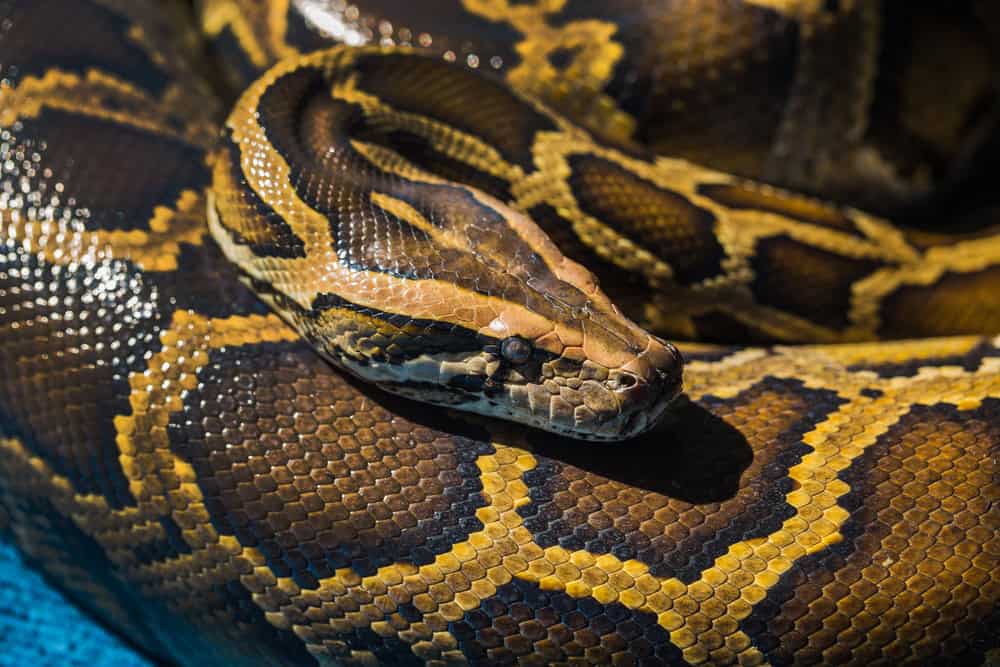
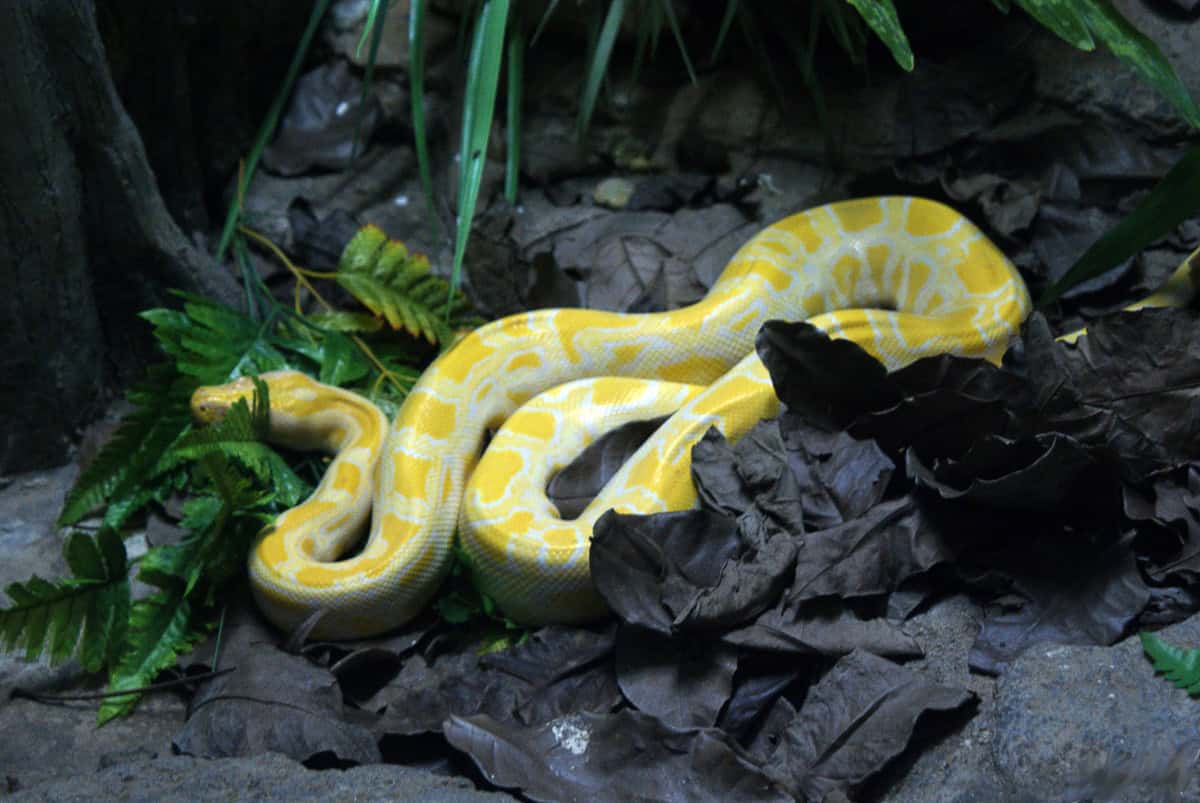
The Burmese python (Python bivittatus) is one of the largest snakes in the world, and despite its imposing size, it’s a largely nocturnal predator. Native to the jungles and marshes of Southeast Asia, this massive constrictor prefers the cover of darkness to launch its ambushes. As a stealthy nighttime hunter, the Burmese python relies heavily on its heat-sensing pits to detect warm-blooded prey like birds, rodents, and even small deer. Its camouflaged scales and slow, silent movements make it virtually invisible at night, allowing it to strike with deadly precision when prey ventures too close.
In the invasive populations found in the Florida Everglades, Burmese pythons have become dominant nocturnal predators, dramatically impacting native wildlife. Their preference for hunting at night gives them a strategic advantage, as many of their prey species are less alert or active in the dark. This nocturnal behavior also helps them avoid daytime predators and human detection. While they may occasionally bask in the sun during the day to regulate body temperature, their hunting activity peaks at night—making the Burmese python a true giant of the nocturnal world.
Conclusion:
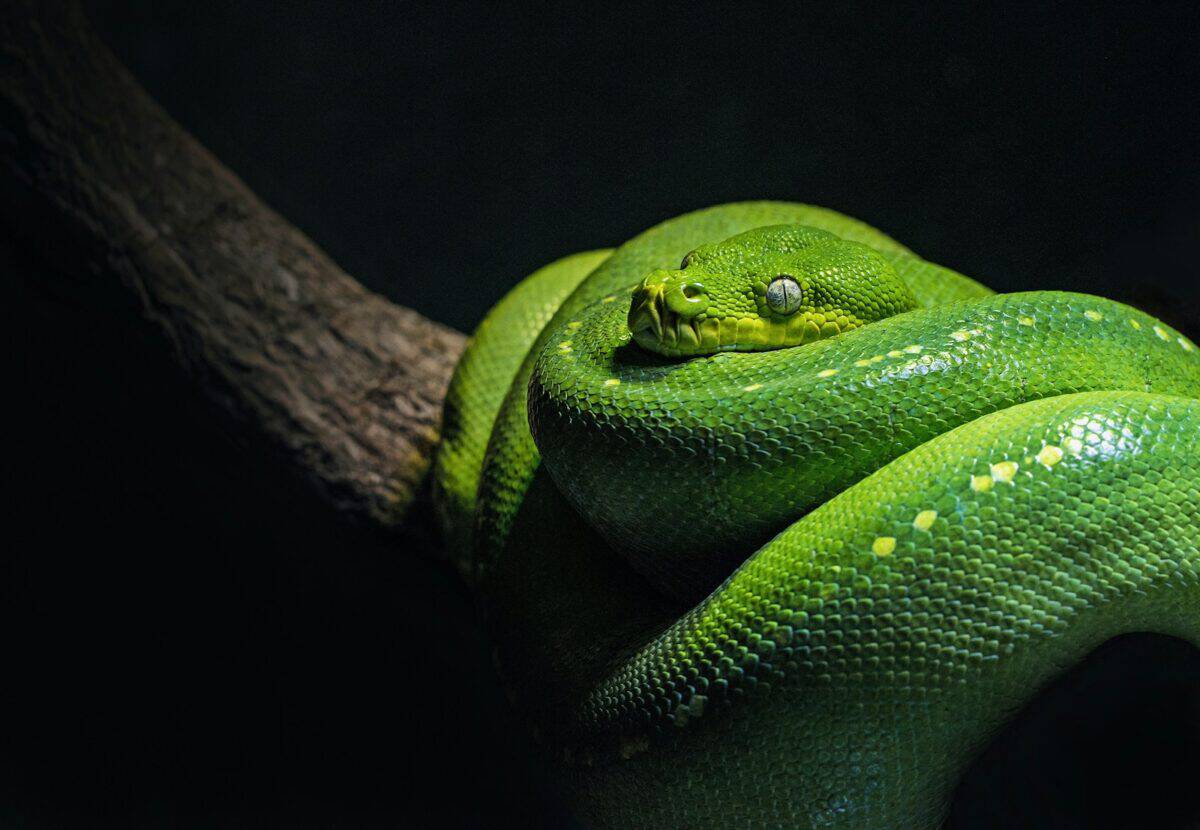
Snakes have evolved a wide range of hunting schedules to suit their environments, prey, and survival strategies. Diurnal hunters like the eastern indigo snake or the boomslang rely on sharp vision and warm daytime temperatures to actively pursue prey. These snakes are often more visible and easier to spot, making daylight hours a prime time for observing their fascinating behaviors in the wild.
In contrast, nocturnal species such as the ball python or the banded krait emerge under the cover of darkness, using heat-sensing abilities or chemical cues to ambush unsuspecting prey. Understanding when different snakes are active not only adds depth to our knowledge of their ecology but also helps minimize unwanted encounters in snake-prone regions. Whether they slither by sun or stalk by moonlight, snakes are masters of timing in the art of survival.

As a little kid, I fell in love with nature, wildlife, and animals. Living in the USA, South Africa, Italy, China and Germany gave me the opportunity to discover the world's Wildlife. My favorite animals are Mountain Gorillas, Siberian Tigers, and Great White Sharks.
I'm a certified PADI Open Water Diver, went to Everest Base Camp and Trekked Gorillas in Uganda. I hold a Master of Science in Economics and Finance.
Please send any feedback to feedback@animalsaroundtheglobe.com
- 5 Unexpected Things That Make Your Dog Feel Loved - July 18, 2026
- 7 Snakes That Hunt in Daylight And 4 That Only Come Out at Night - July 18, 2026
- 10 Emotional Things Dogs Remember About Their Humans Forever - July 18, 2026
Leave a comment
You must be logged in to post a comment.