

Picture this: total darkness. No sun, no moon, no artificial light. Yet somehow, in the depths of caves and oceans, thousands of living things produce their own radiant glow. It sounds like something from a fantasy novel.
Actually, this phenomenon exists all around us, though most of us rarely witness it. Bioluminescence is a chemical reaction inside living things that produces light. These creatures have evolved one of nature’s most extraordinary abilities: transforming chemical energy into pure luminescence. Some use it to hunt, others to hide, and many to find love in the pitch black. What follows are eight stunning examples that demonstrate just how creative evolution can be when the lights go out.
Fireflies
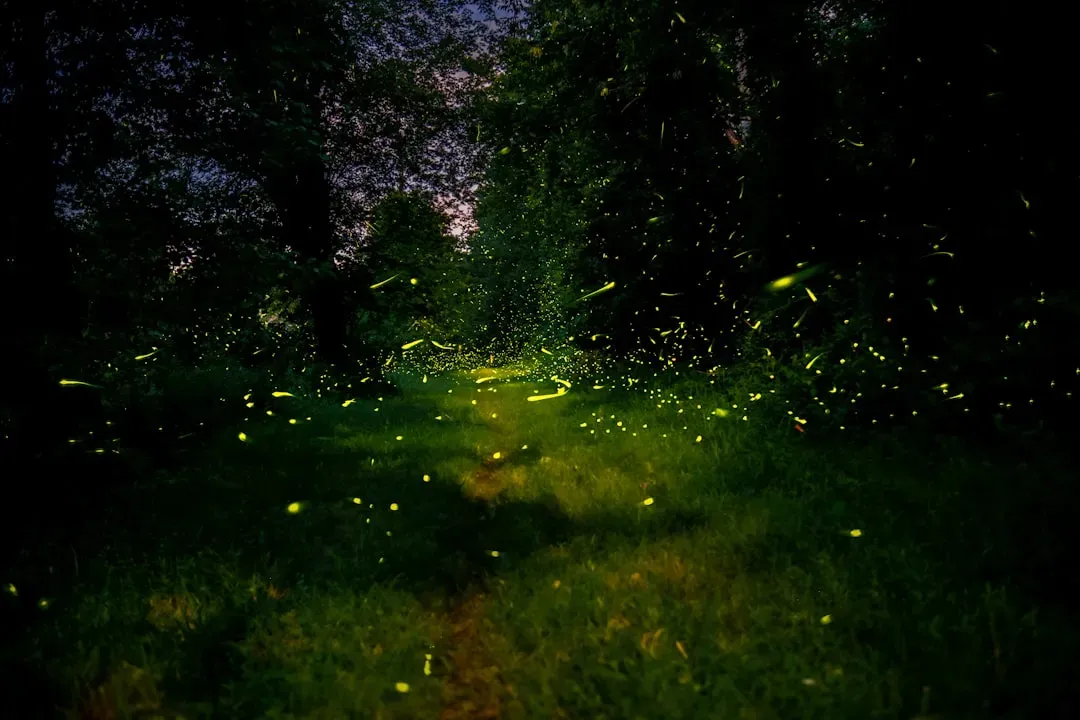
Let’s be real, fireflies are probably the most beloved glowing creatures on the planet. These tiny beetles light up summer evenings with their enchanting flash patterns, creating what looks like floating fairy lights across meadows and forests. Fireflies produce a chemical reaction inside their bodies that allows them to light up. This type of light production is called bioluminescence. Here’s the thing: they’re not just showing off for fun.
The main purpose of a firefly’s light show is to attract a mate. Males fly around flashing specific patterns while flightless females wait in the grass below, watching for the right signals. Each firefly species has its own signaling system. In most North American species, the males fly around at the right height, in the right habitat and at the right time of night for their species, and flash a signal unique to their kind.
The chemical magic happening inside them is surprisingly efficient. This cold, living light is almost 100 percent efficient, losing only a fraction of its energy to heat. By comparison, a standard incandescent light bulb is less than 10 percent efficient, and an LED ranges between 40 and 50 percent efficient! Nature basically perfected energy conversion millions of years before humans even invented electricity. Fireflies probably originally evolved the ability to light up as a way to ward off predators, but now they mostly use this ability to find mates.
Interestingly, not all fireflies glow. Many fireflies do not produce light. Non-bioluminescent fireflies use pheromones to signal mates. Roughly about two thousand species exist worldwide, each with distinctive flash timing. It’s essentially morse code written in light.
Crystal Jellyfish
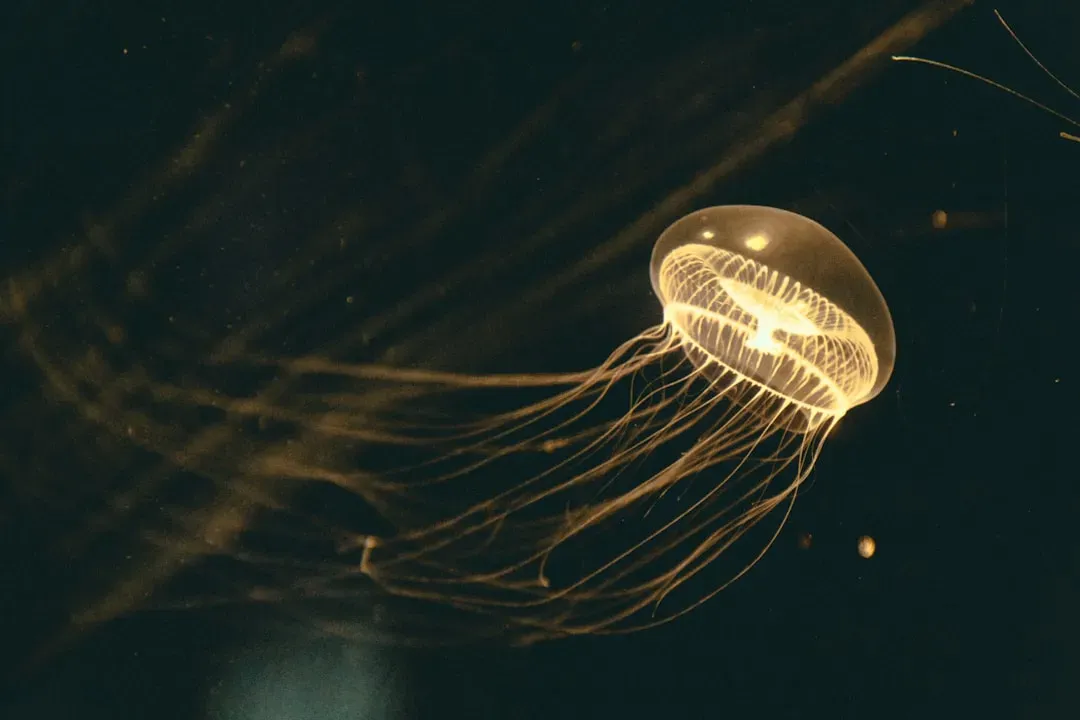
Aequorea victoria, also sometimes called the crystal jelly, is a bioluminescent hydrozoan jellyfish, or hydromedusa, that is found off the west coast of North America. Most people have no idea these translucent drifters changed modern medicine forever. Honestly, their impact goes far beyond their mesmerizing appearance.
This jellyfish is capable of producing flashes of blue light by a quick release of calcium, which interacts with the photoprotein aequorin. The blue light produced is in turn transduced to green by the now famous green fluorescent protein. Scientists isolated this protein and discovered it could be used to track biological processes in living cells. Their discoverers, Osamu Shimomura and colleagues, won the 2008 Nobel Prize in Chemistry for their work on GFP.
The discovery happened somewhat by accident. When the fluid hit the sink, there was a sudden bright blue flash. Shimomura quickly found that it wasn’t the sink itself, but sea water – specifically the calcium in the sea water – that reacted with the samples from the crystal jelly to create the blue flash. Today, this protein allows researchers to watch cancer cells migrate, observe viruses spreading, and illuminate countless other invisible biological mysteries.
It is estimated that about 50% of jellyfish are bioluminescent. These gelatinous beings use light primarily as defense. Jellyfish use bioluminescence mainly to defend against predators. Comb jellies, for instance, produce bright flashes of light to startle their predators and give them time to escape.
Deep Sea Anglerfish
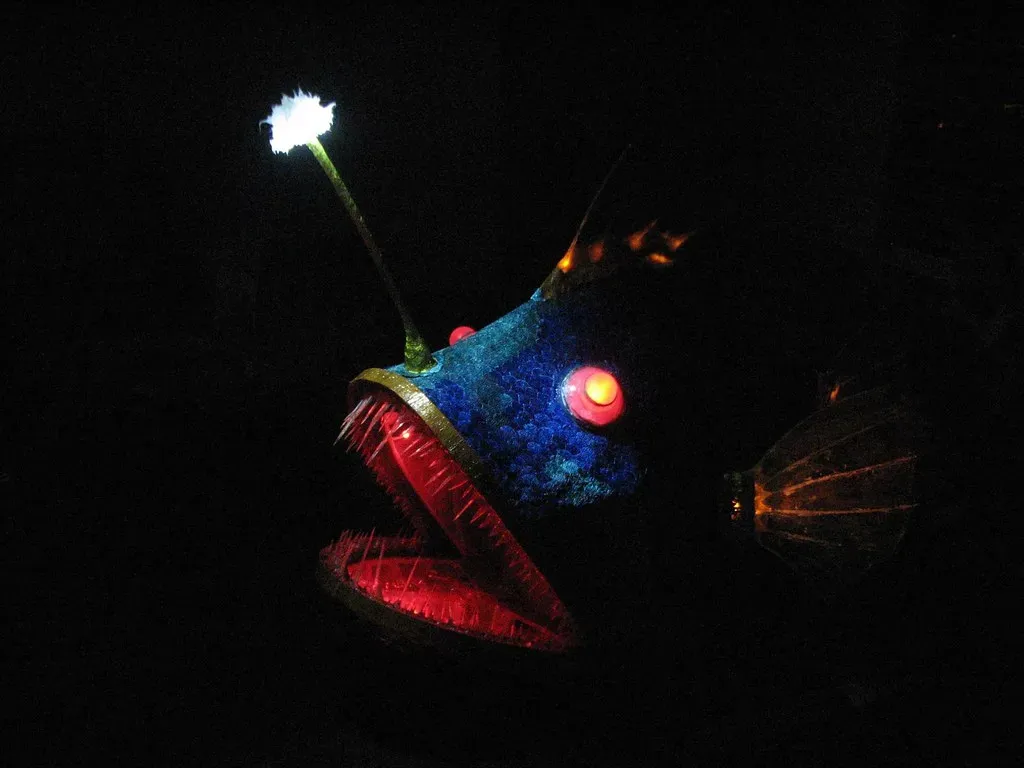
The anglerfish looks like something from your worst nightmare. Few creatures embody the haunting beauty of the deep ocean like the anglerfish. Drifting through the inky blackness thousands of meters below the surface, the female anglerfish carries a glowing orb suspended from a fleshy filament that extends from her forehead – a biological lantern, lighting her way and luring her prey.
Arguably one of the most well-recognized creatures of the deep, some species of anglerfish have developed a creative workaround capitalizing off “borrowed” bioluminescence to attract and capture prey. Here’s where it gets fascinating: the anglerfish doesn’t actually produce its own light. The deep sea anglerfish’s lure is filled with bacteria that make their own light. It’s pure partnership. The bacteria get a safe home, and the fish gets a deadly fishing rod.
Instead of expending energy to chase food, a hungry anglerfish merely sets out its bioluminescent bait and waits. The glowing tip entices small fishes and crustaceans to come closer, then the anglerfish’s massive mouth and sharp teeth snap shut for a meal.
Only female anglerfish possess this glowing lure. The blobby, softball-sized anglerfishes spotted by MBARI’s remotely operated vehicles are females. The males are dwarfs, growing just a few centimeters long. In some species, males permanently fuse to females, living as parasites. Talk about commitment issues. Among the 166 identified species of deep-sea ceratioid anglerfishes, 25 species are known to have males that parasitize the females’ body surface. After attaching itself, the male receives nourishment from the female and continues to grow and mature.
Glowworms
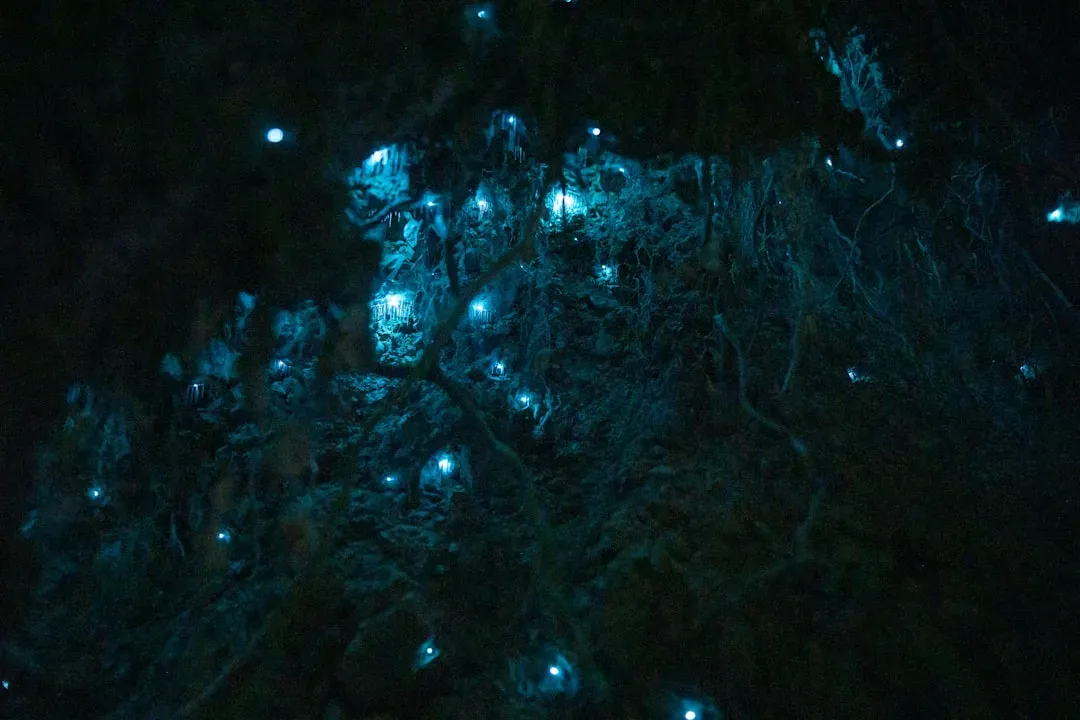
Don’t be fooled by the name. Arachnocampa luminosa, commonly known as New Zealand glowworm or simply glowworm, is a species of fungus gnat solely endemic to New Zealand. The larval stage and the imago produce a blue-green bioluminescence. These aren’t worms at all but the larvae of a specialized gnat species.
The famous glowworm caves of New Zealand showcase one of nature’s most breathtaking bioluminescent displays, where thousands of glowworms create a living starscape on cave ceilings. Visitors float through darkness on boats, gazing upward at what appears to be a star-filled sky underground. It’s hard to say for sure, but witnessing this spectacle might be one of the most surreal natural experiences on Earth.
The glowworms create elaborate death traps. Using their dark, damp and cool environment to their advantage, glowworms construct vertical silk threads coated with mucus to trap flying insects. Alongside this, they use their bluish-green glow to attract the small flying insects and lure the prey into the snares of their sticky threads. Flying insects mistake the glow for moonlight or an exit and fly straight into the sticky lines. The glowworm then reels in its catch like a tiny fisherman.
The species is known to dwell in caves and on sheltered banks in the native bush where humidity is high, as moisture helps to maintain their silk structures that capture prey. The Waitomo Glowworm Cave in New Zealand receives many thousands of visitors each year to see the colony of the glowworm, Arachnocampa luminosa. These caves are now protected tourist attractions.
Bioluminescent Dinoflagellates
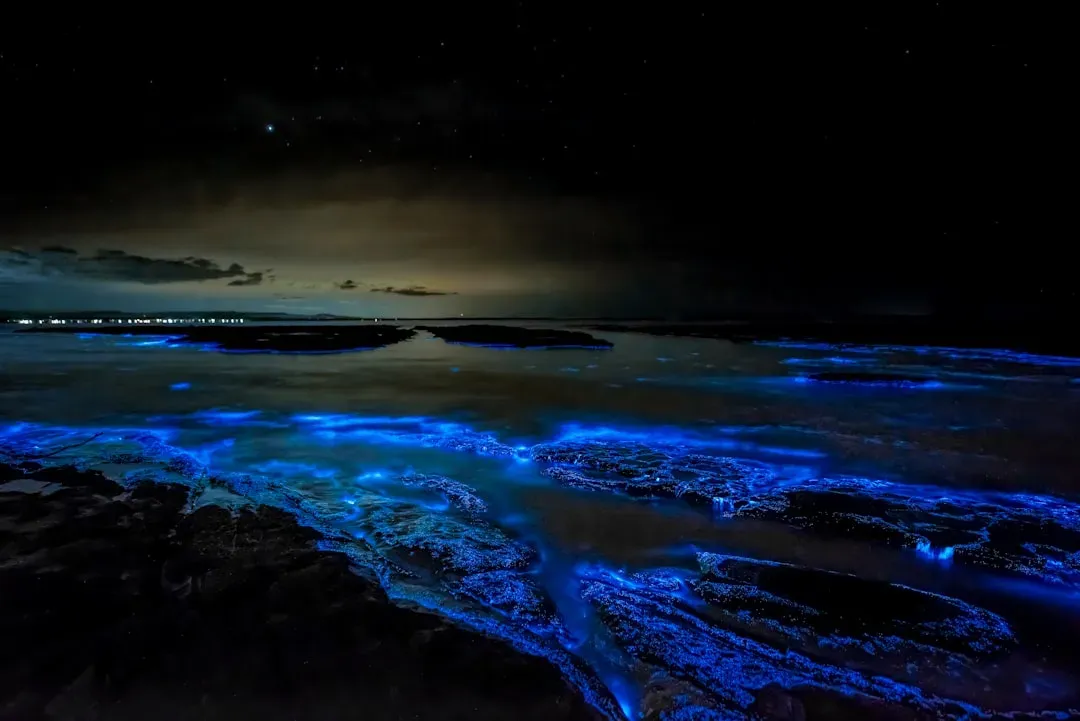
Ever seen waves crash against a shore and light up electric blue? That’s dinoflagellates at work. These microscopic organisms gather in massive concentrations and create one of the ocean’s most magical phenomena. When agitated by movement, dinoflagellates produce a chemical reaction between a substrate called luciferin and the enzyme luciferase, resulting in the release of energy as blue light. This “burglar alarm” mechanism likely evolved to startle predators or attract larger animals that might eat whatever is disturbing the dinoflagellates.
Walk along certain beaches at night during the right season and every footstep sparkles. Kayak through bioluminescent bays and your paddle leaves trails of glowing blue swirls. Dolphins and fish become outlined in neon as they move through the water. It’s nature’s version of a light show.
Species like Noctiluca scintillans (commonly called sea sparkle) can gather in such concentrations that they turn coastal waters a glowing electric blue at night. The effect is strongest when billions of these single-celled organisms cluster together. When disturbed by waves, boats, or swimmers, they flash simultaneously. The result looks absolutely otherworldly.
Puerto Rico, Florida, and locations around the world host bioluminescent bays where tourists can witness this phenomenon firsthand. Many locations now protect these areas since the dinoflagellates require specific environmental conditions to thrive.
Vampire Squid
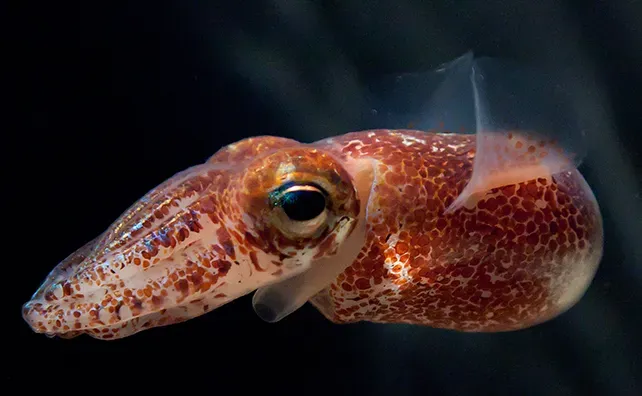
Despite its terrifying name, this deep-sea dweller is actually pretty harmless. Despite its fearsome name, the Vampire Squid is a relatively small and gentle deep-sea dweller with remarkable bioluminescent capabilities. It lives in the oxygen-minimum zones of the deep ocean where few other creatures can survive.
The vampire squid’s entire body is covered with light-producing organs called photophores, giving it precise control over its bioluminescence. It can basically turn itself into a living light show whenever threatened. When threatened, it can perform a unique defensive display by wrapping its webbed arms around its head and exposing the spines, creating what researchers call a “pineapple posture.” Most impressively, it can eject a cloud of bioluminescent mucus instead of ink, creating a confusing display of glowing particles that distracts predators while it escapes.
Picture this: a predator approaches in total darkness, and suddenly its prey explodes into a cloud of glowing particles. The predator attacks the light while the vampire squid slips away into the blackness. It’s basically a smoke bomb made of light.
This mysterious creature has existed relatively unchanged for over 300 million years, representing one of the oldest lineages of cephalopods. It has survived multiple mass extinctions by adapting to one of Earth’s most extreme environments. Neither true squid nor octopus, it occupies its own unique branch on the evolutionary tree.
Dragonfish
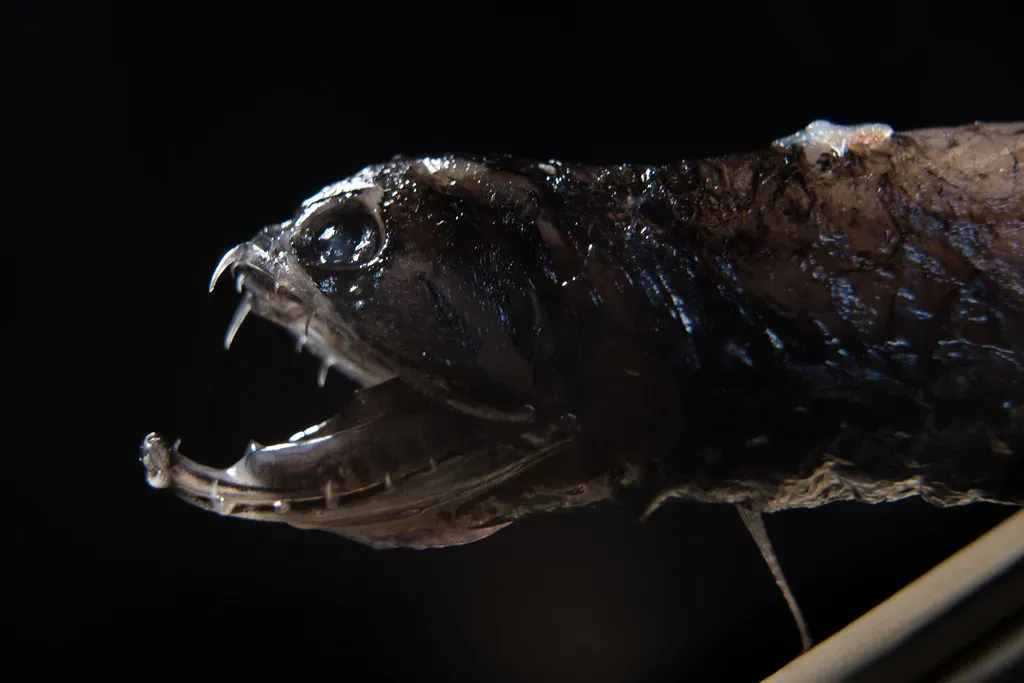
The deep-sea dragonfish is a creature that seems forged in myth – sleek, slender, and armed with a terrifying smile of needle-like teeth. But its most extraordinary weapon is invisible: it glows with red bioluminescence, a color that most deep-sea creatures cannot see. Let’s think about that for a moment. It has essentially developed infrared night vision goggles.
What truly sets it apart is its ability to produce red light – a wavelength invisible to most deep-sea creatures. This stealth adaptation gives the black dragonfish a remarkable advantage as it stalks prey ness. Most deep-sea animals can only see blue and green light wavelengths. Red light is essentially invisible to them. The dragonfish uses this to illuminate prey without being detected.
Using specialized photophores beneath its eyes, it emits red light to illuminate prey without being detected. It’s a biological stealth flashlight, allowing the dragonfish to hunt in total secrecy. Imagine hunting with a flashlight that only you can see. That’s the dragonfish’s evolutionary superpower.
Some species also produce blue and green light for communication and camouflage. The combination of bioluminescent abilities makes them incredibly effective predators in the deepest parts of the ocean where sunlight never reaches.
Railroad Worms

Very few organisms can produce light in more than one color – the glow-worm is a striking exception. Its head glows red, while its body shines fiery green from eleven paired light spots, like the glowing windows of a tiny train gliding through the dark. This is why people often refer to these beetles as railroad worms. The visual effect is genuinely stunning: a creature that looks like a miniature train with lit windows crawling through South American forests.
These bioluminescent beetles are found primarily in Central and South America. The larvae are the ones producing this multicolored display, with red bioluminescence on the head and green along the body segments. Scientists believe different colors serve different purposes, though the exact functions remain somewhat mysterious.
The red light on the head may help the railroad worm see without alerting prey, similar to how dragonfish use red bioluminescence. The green lights along the body could serve as warning signals to predators or possibly for species recognition. What’s remarkable is having two distinct bioluminescent systems operating in one organism.
Unlike many bioluminescent creatures that live in water or caves, railroad worms inhabit forest floors and leaf litter. They’re predatory, hunting other invertebrates in the undergrowth. Finding them requires patience and luck since they’re relatively rare and active mainly at night. But spotting one gliding through the darkness with its multicolored glow is reportedly unforgettable.
Conclusion
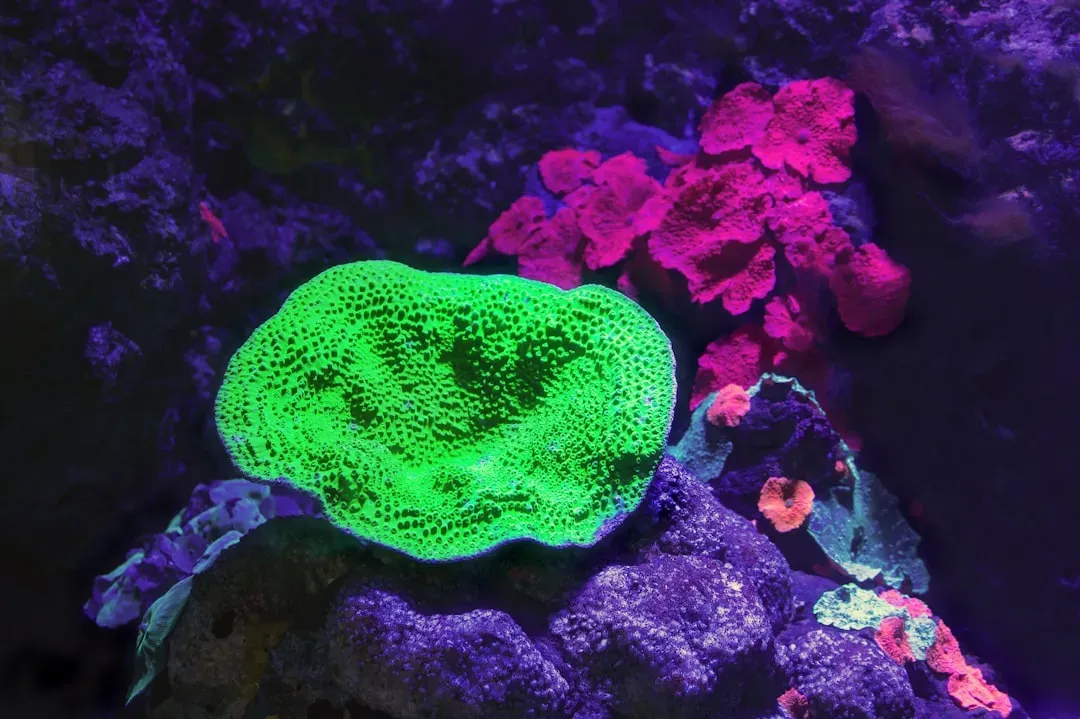
Bioluminescence represents one of evolution’s most elegant solutions to survival in darkness. Different organisms have evolved distinct types of luciferins and luciferases, a testament to the independent evolution of bioluminescence in at least 40 separate lineages. From microscopic dinoflagellates to massive jellyfish, these creatures have independently discovered the power of living light.
The purposes vary wildly: hunting, hiding, communicating, confusing predators, attracting mates. Unlike incandescent bulbs, which waste most of their energy as heat, bioluminescent systems are nearly 100% efficient – nearly all energy is converted into light. Evolution achieved what human engineers are still trying to perfect.
These glowing creatures remind us how much mystery still exists in our world. Deep oceans, dark caves, and nighttime forests hold wonders we’re only beginning to understand. Many bioluminescent species remain undiscovered, and scientists continue uncovering new functions for this remarkable adaptation.
Next time you see a firefly blinking through summer darkness or hear about glowing waves on distant shores, remember you’re witnessing millions of years of evolutionary innovation. Pretty incredible when you think about it, right? What other secrets might be hiding corners of our planet, just waiting to light up?

- The Hidden World of Backyard Insects: They Play a Crucial Role in Our Gardens - July 18, 2026
- 7 Apex Predators That Are Actually Afraid of One Specific Animal Smaller Than Themselves and the Encounters That Confirmed It - July 18, 2026
- 10 Animals That Researchers Confirmed Can Recognize Themselves in a Mirror – and the One Near the Bottom of the List That Rewrote the Criteria Entirely. - July 18, 2026