


Cats have been our companions for thousands of years, yet these independent creatures remain somewhat mysterious. Unlike dogs, who wear their hearts on their sleeves, cats communicate their needs and boundaries in subtle ways that humans often misinterpret. Understanding what your feline friend truly wants from you—and recognizing when you might be crossing the line—can strengthen your bond and ensure a harmonious relationship. This comprehensive guide explores nine essential things cats genuinely desire from their human companions, as well as five common human behaviors that most cats find intrusive or uncomfortable. By respecting both their needs and boundaries, you’ll create a relationship based on mutual trust and appreciation.
The Feline Perspective: Understanding Cat Psychology

Before diving into specific wants and boundaries, it’s important to understand the feline mindset. Cats are descendants of solitary hunters who formed loose social structures when resources allowed. Unlike dogs, who evolved as pack animals with clear hierarchies, cats developed a more independent social system. This evolutionary background explains why cats approach relationships differently than dogs do.
Domestic cats retain many behaviors of their wild ancestors, including territorial instincts, hunting drives, and self-sufficiency. However, thousands of years of domestication have also created a capacity for social bonding with humans that’s unique among felids. Modern house cats essentially view their human companions as a combination of parent, roommate, and fellow cat—a complex relationship that requires understanding on the human’s part to navigate successfully.
1. A Consistent Routine and Safe Environment

Cats are creatures of habit who thrive on predictability. Research has shown that environmental consistency significantly reduces stress-related behaviors in domestic cats. Your feline companion wants daily routines they can count on—regular feeding times, play sessions, and quiet periods. This predictability helps cats feel secure and in control of their environment.
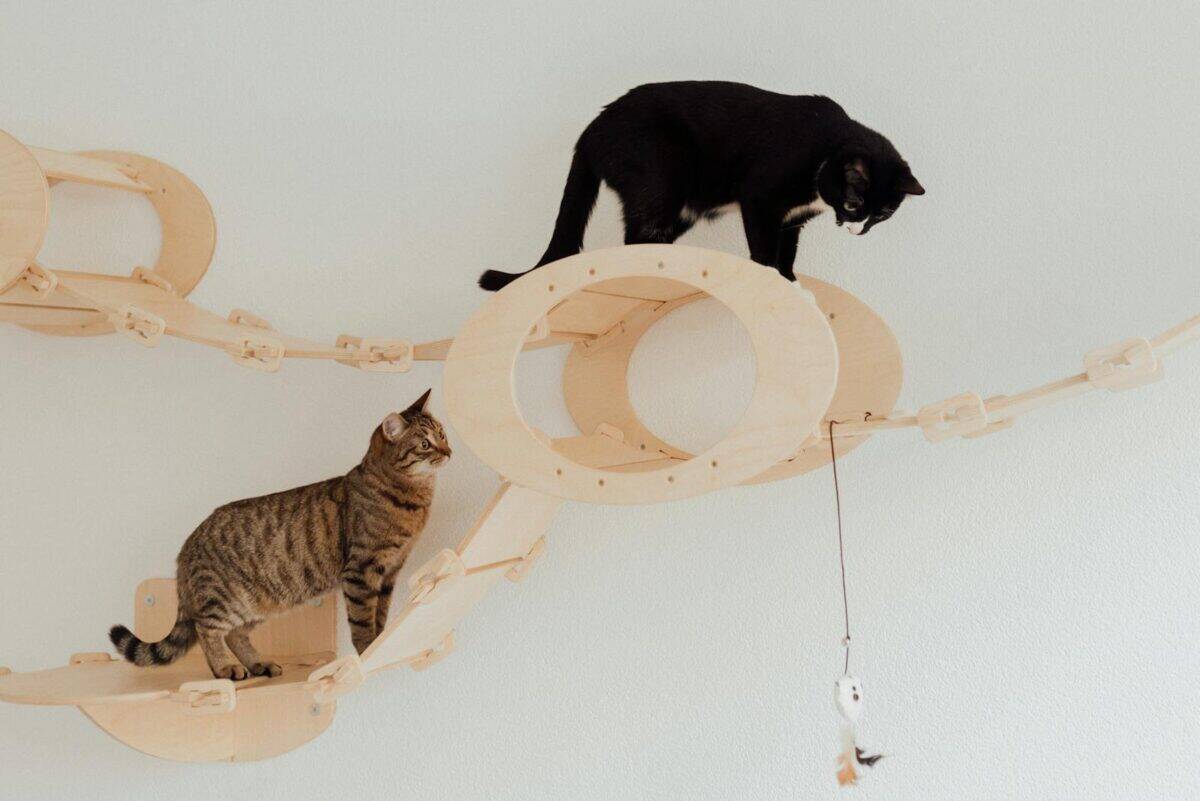
Creating a physically safe space is equally important. Cats need secure hiding spots, elevated resting areas, and escape routes throughout your home. Environmental enrichment specialists recommend providing at least one hiding spot per cat plus one extra in multi-cat households. These sanctuaries allow cats to retreat when they feel threatened or overwhelmed, reducing anxiety and preventing behavioral problems.
2. Proper Nutrition and Fresh Water

Quality nutrition tailored to your cat’s specific needs is a fundamental expectation. Cats are obligate carnivores, meaning they require a diet rich in animal protein. Unlike many other mammals, cats cannot produce certain amino acids (like taurine) on their own and must obtain them through diet. A deficiency in these essential nutrients can lead to serious health problems, including heart disease and vision issues.
Hydration is equally crucial, though many cats have a low thirst drive—an adaptation from their desert-dwelling ancestors. Many veterinary behaviorists recommend multiple water stations throughout your home, with some distance from food bowls. Running water fountains can encourage drinking, as cats instinctively prefer moving water sources. Some cats also prefer wide, shallow dishes that don’t irritate their sensitive whiskers during drinking.
3. Appropriate Outlets for Natural Behaviors

Cats have strong instinctual drives that need appropriate outlets. Scratching, for example, isn’t just a furniture-destroying habit—it’s a multifunctional behavior that helps cats maintain claw health, mark territory, and stretch their muscles. Providing multiple scratching surfaces with different textures (sisal, cardboard, wood) and orientations (vertical, horizontal, angled) allows cats to satisfy this natural urge appropriately.
Hunting behaviors also need an outlet, even for indoor cats who never catch actual prey. Interactive play sessions that mimic the hunting sequence (stalk, chase, pounce, and “kill”) fulfill this need while strengthening your bond. Behavioral studies suggest that short, frequent play sessions of 5-15 minutes several times daily are more effective than one long session, as they better match a cat’s natural hunting patterns of multiple small prey captures throughout the day.
4. Respect for Their Independence

Unlike dogs, who have been selectively bred for dependence on humans, cats retain much of their ancestral independence. Your cat wants the freedom to choose when interactions occur and when they need solitude. Respecting their autonomy is crucial for building trust. Feline behavior experts emphasize that forced interaction almost always damages the human-cat relationship rather than strengthening it.
This independence doesn’t mean cats don’t form strong attachments. Studies using modified versions of tests developed for human infant attachment show that cats form secure attachment bonds with their caregivers, similar to children and dogs. However, they express this attachment differently, often through subtle behaviors like proximity-seeking without constant physical contact. Learning to recognize these quieter expressions of affection allows you to appreciate your cat’s unique way of showing love.
5. Mental Stimulation and Environmental Enrichment

Cats have active minds that need regular stimulation to prevent boredom and associated behavioral problems. Environmental enrichment—the process of enhancing a captive animal’s surroundings to promote natural behaviors—is particularly important for indoor cats. Rotating toys, providing puzzle feeders, creating vertical spaces, and offering novel experiences can help satisfy their curiosity and problem-solving instincts.
Window perches with bird feeders in view, cat-safe plants to investigate, and periodically rearranging furniture can provide passive enrichment that keeps your cat engaged even when you’re not actively playing with them. Research indicates that environmentally enriched cats show fewer stress-related behaviors and have stronger immune systems than those in barren environments. For many cats, environmental complexity is just as important as social interaction for overall well-being.
6. Gentle, Respectful Physical Contact

While cats vary widely in their desire for physical affection, most appreciate touch on their own terms. Cats typically prefer being petted on the head, cheeks, and chin—areas where they have scent glands and often engage in allorubbing (rubbing against each other) with trusted companions. Studies of cat-human interactions show that allowing the cat to initiate and control physical contact results in longer, more positive petting sessions.
Pay attention to your individual cat’s preferences. Some enjoy belly rubs and full-body pets, while others prefer brief, gentle head scratches. Look for subtle communication signals: purring, slow blinking, and relaxed posture indicate enjoyment, while tail twitching, skin rippling, ear flattening, or moving away suggest your cat has had enough. Respecting these signals builds trust and ensures physical affection remains a positive experience.
7. Recognition of Their Communication Signals

Cats communicate constantly through body language, vocalizations, and scent marking. They want humans to make an effort to understand their sophisticated communication system. A cat’s tail position, ear orientation, pupil size, and body posture all convey important information about their emotional state and intentions. For example, a vertically held tail with a slight curve at the tip typically indicates a friendly greeting, while a puffed tail signals fear or aggression.
Vocalizations also vary in meaning, from the familiar “demand meow” for food or attention to chirps, trills, and chatters that have different social functions. Research into feline communication suggests that cats develop unique vocalizations specifically for communicating with their human companions, essentially creating a private language with their particular humans. Learning your cat’s individual communication style allows you to respond appropriately to their needs.
8. Social Recognition as Family Members

Despite their independent nature, cats form strong social bonds and want to be recognized as family members, not mere possessions. They seek inclusion in household activities on their own terms. Many cats follow their humans from room to room, supervise cooking or cleaning, and insert themselves into conversations. These behaviors reflect their desire to participate in the social group’s activities.
Social recognition also means acknowledging your cat’s presence and responding to their greeting behaviors. When you return home, taking a moment to acknowledge your cat with a verbal greeting and allowing them to approach for interaction if they choose helps reinforce their status as a valued family member. This social validation is particularly important for cats, who, unlike dogs, haven’t been selectively bred for thousands of years to seek human approval.
9. Veterinary Care and Health Monitoring
While cats might not enjoy veterinary visits, they benefit from and deserve proper healthcare. Regular check-ups, vaccinations, dental care, and prompt attention to behavioral or physical changes are essential aspects of responsible cat ownership. Cats are masters at hiding illness—an evolutionary adaptation to avoid appearing vulnerable in the wild—so proactive healthcare is particularly important.
Making veterinary experiences less stressful through proper carrier training, pheromone products, and choosing cat-friendly practices can significantly improve this aspect of care. Research indicates that fear and stress associated with veterinary visits is a major reason cats receive less medical care than dogs. By working to make healthcare a less traumatic experience, you’re fulfilling an important responsibility to your feline companion.
Crossing the Line: 1. Forced Physical Interaction

One of the most common boundaries humans violate is forcing physical interaction when a cat isn’t receptive. Picking up an unwilling cat, continuing to pet when they’ve given signals to stop, or restraining them for cuddles can damage trust and create negative associations with handling. Unlike some dogs who may tolerate unwanted handling, cats generally find forced physical contact highly stressful.
Respect for bodily autonomy is fundamental to the human-cat relationship. Always allow your cat to approach for interaction, watch for signs they’ve had enough, and never use physical restraint for non-essential purposes. A cat who knows their boundaries will be respected is more likely to seek interaction voluntarily. Behavioral studies consistently show that cats who can control physical contact initiate more interactions with their humans over time.
Crossing the Line: 2. Punishing Natural Behaviors

Punishing cats for instinctual behaviors like scratching, climbing, exploring high places, or hunting creates confusion and anxiety. Cats cannot understand why natural behaviors that fulfill biological needs would result in negative consequences. Instead of punishment, redirect these behaviors to appropriate outlets. For example, if your cat scratches furniture, provide attractive alternatives nearby and positively reinforce their use.
Physical punishment is particularly detrimental and has been linked to increased aggression, fear, and stress-related behavioral problems. Scientific research has thoroughly debunked the notion that physical correction is effective for cats; in fact, it reliably produces the opposite of the intended effect. Positive reinforcement of desired behaviors is not only more humane but also more effective for influencing feline behavior.
Crossing the Line: 3. Inconsistent Rules and Boundaries

Cats thrive on consistency and find changing rules extremely confusing. Allowing a behavior sometimes (like jumping on counters or furniture) but punishing it at other times creates stress and damages trust. Cats lack the cognitive framework to understand contextual rules—they can’t comprehend why the same behavior is acceptable on Tuesday but forbidden on Wednesday.
Establishing clear, consistent boundaries from the beginning is much easier than changing rules later. If certain areas are off-limits, use positive deterrents consistently while providing attractive alternatives. Remember that consistency extends to all household members; when one person allows a behavior while another punishes it, the cat experiences unpredictability that can lead to anxiety and behavioral problems.
Crossing the Line: 4. Ignoring Signs of Distress or Pain
Cats communicate discomfort subtly, and dismissing these signals can seriously impact their welfare. Changes in behavior—like increased aggression, decreased activity, litter box avoidance, excessive grooming, or altered vocalization patterns—often indicate physical pain or emotional distress. Research in feline medicine shows that many behaviors owners attribute to “spite” or “acting out” are actually responses to physical discomfort or environmental stressors.
Take any behavioral change seriously and consult with a veterinarian to rule out medical causes before assuming it’s a training or behavioral issue. For example, inappropriate urination, one of the most common reasons cats are surrendered to shelters, is frequently linked to urinary tract conditions or anxiety rather than behavioral problems. Prompt attention to these signals not only addresses potential health issues but also demonstrates to your cat that their communication is respected.
Crossing the Line: 5. Forcing Social Interactions with Other Animals or People

While socialization is important, forcing cats into uncomfortable social situations with unfamiliar people or animals can create lasting fear and anxiety. Cats need to approach new relationships at their own pace, with positive associations and escape options. Confined introductions where a cat feels trapped or overwhelmed can lead to defensive aggression or chronic stress.
When introducing cats to new people or animals, allow them to observe from a safe distance first, and provide high places and hiding spots so they can retreat if overwhelmed. Use positive reinforcement like treats and play to create good associations, but never force interaction. Respect that some cats may never enjoy certain social situations—just like humans, cats have individual social preferences that should be honored.
Building a Respectful Relationship: The Key to Feline Happiness
Understanding and respecting both what cats need and what boundaries shouldn’t be crossed forms the foundation of a healthy human-feline relationship. Cats who receive appropriate care, enrichment, autonomy, and respect for their natural behaviors typically reward their humans with affection, playfulness, and companionship on their own terms. The relationship becomes a partnership rather than ownership, with mutual benefits for both species.
Remember that each cat is an individual with unique preferences, personality traits, and comfort levels. What works for one cat may not work for another, so observation and adaptation are key skills for any cat caregiver. By becoming fluent in your cat’s communication style and respecting their particular needs, you create an environment where trust can flourish. In the end, a relationship built on understanding and respect yields the greatest rewards—a content, confident cat who chooses to share their life with you.

From exploring the marine wonders in the Azores and witnessing the vast savannas of Kenya, to delving deep into the rich biodiversity of South Africa and traversing iconic landscapes in Australia and the US like Yellowstone, Chris's experiences are vast.
With a penchant for diving alongside sharks, the ocean holds a special place in his heart.
Through his academic insights, he champions wildlife conservation, striving with 'Animals Around The Globe' to cultivate a profound connection between humans and animals, enhancing our mutual appreciation.
Connect with him at Feedback@animalsaroundtheglobe.com.