

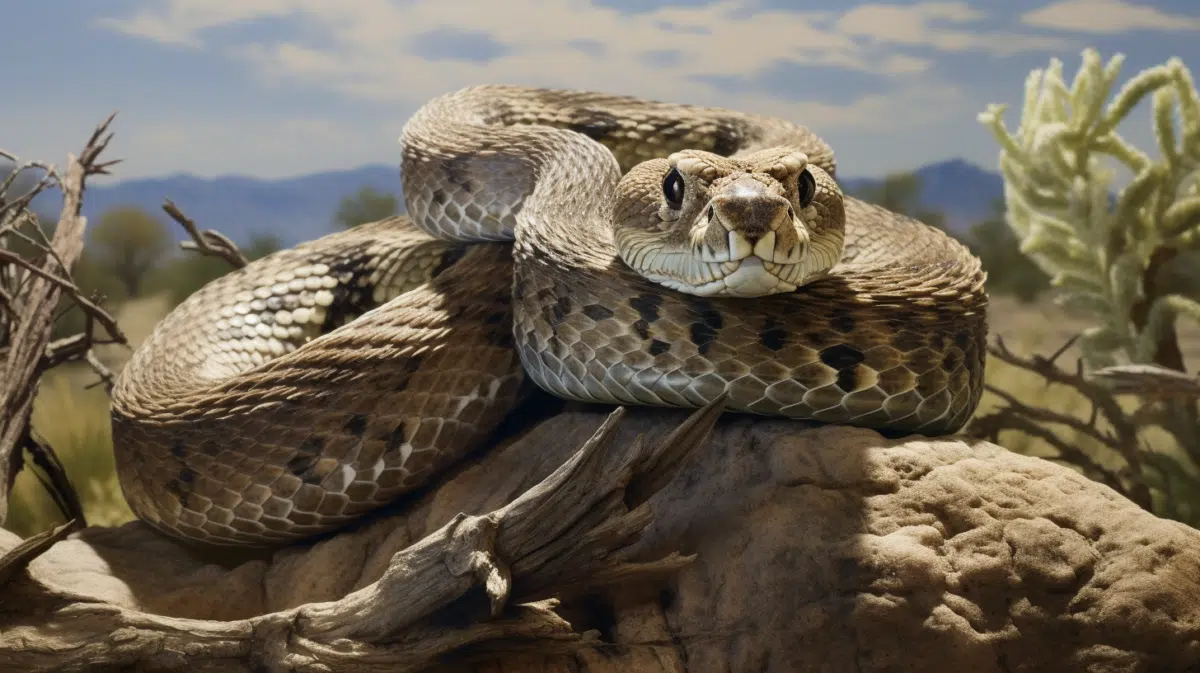
The American Southwest harbors an awe-inspiring secret, where the arid landscapes hold more than just scenic beauty. One of its elusive inhabitants, the Western Diamondback Rattlesnake, has long been a subject of fascination and, occasionally, fear. Imagine stumbling upon a serpent that defies the norms of its species – the largest Western Diamondback Rattlesnake ever recorded. In this exploration, we delve into the dimensions, locales, and implications surrounding this colossal serpent, uncovering a gripping tale that transcends the ordinary.
Unraveling the Dimensions
In the realm of serpents, the Western Diamondback Rattlesnake stands out as a master of adaptation, surviving in diverse environments from deserts to grasslands. The usual length of these reptiles hovers around 150 cm (5 ft), making encounters with larger specimens a rarity. However, tales of the extraordinary circulate, with reports of individuals reaching an astonishing 213 cm (7 ft) – a size that challenges the very limits of the species.
Locations and Background
This giant among rattlers predominantly calls the American Southwest home, ranging from Arizona to Texas and into Mexico. The harsh and unforgiving terrains of these regions have sculpted the Western Diamondback into a resilient predator. The snake’s cryptic coloration, featuring diamond-shaped patterns along its back, serves as a clever camouflage amidst the arid landscapes, allowing it to strike unsuspecting prey with lethal precision.
Physical Characteristics
Beneath the sun-soaked rocks and dusty trails, the Western Diamondback’s physical attributes unfold like a testament to evolutionary prowess. A robust body, characterized by keeled scales and a distinctive rattle on its tail, makes it an unmistakable icon of the American Southwest. The venomous bite of this serpent is a potent defense mechanism and a tool for subduing its prey.
Behavioral Intricacies
Beyond its impressive size and striking appearance, the Western Diamondback Rattlesnake showcases a fascinating array of behaviors. These snakes are primarily crepuscular, meaning they are most active during dawn and dusk. Their iconic rattling serves as both a warning and a means of communication within their social structure. Witnessing this mesmerizing ritual can be a spine-tingling yet captivating experience for those fortunate enough to be in their presence.
Significance of Gigantic Proportions
The emergence of exceptionally large Western Diamondbacks adds a layer of intrigue to the species’ narrative. Size, in the animal kingdom, often correlates with factors such as age, reproductive fitness, and environmental conditions. These colossal snakes may represent survivors of a bygone era. Thus, possessing genetic traits that have allowed them to thrive against the odds. Their significance extends beyond mere measurements, becoming a testament to the intricacies of nature’s design and the adaptability of life in the harsh Southwest.
Implications and the Climate Change Quandary
While the discovery of a colossal Western Diamondback may captivate the imagination, it also raises concerns about the potential impact of climate change on these reptiles. The changing environmental conditions in their native habitats can disrupt the delicate balance these snakes maintain with their surroundings. Elevated temperatures, altered prey distribution, and habitat loss may threaten the very existence of these remarkable creatures.
Wrapping Up with the Largest Western Diamondback Rattlesnake
Finally, in the heart of the American Southwest, where the sun beats down and the desert winds whisper ancient secrets, the Western Diamondback Rattlesnake emerges as a symbol of adaptability and survival. Evidently, the revelation of the largest recorded specimen adds an extra layer of mystique to this already enigmatic species. As we marvel at the colossal proportions and delve into the implications of their existence, it becomes clear that these serpents are not just inhabitants of the desert. Additionally, they are guardians of a delicate ecosystem, facing challenges that resonate far beyond their rattling tails. The tale of the largest Western Diamondback Rattlesnake ever recorded is a reminder that, in the vast tapestry of nature, every species has a story to tell, and it’s up to us to listen.
Thank you for following along with this article

For any feedback please message Feedback@animalsaroundtheglobe.com
- Discover The Largest Chicken - July 19, 2026
- Top 20 States With The Most Rattlesnake Species - July 19, 2026
- Discover The World Of Gibbons - July 18, 2026