


Worried about unexpected vet bills?
Pet insurance can cover thousands in unexpected vet costs. Get a free quote from Lemonade in under 2 minutes.
Get My Free Quote →Sponsored · Opens Lemonade.com
Off the coast of Maryland and Virginia lies a small, windswept barrier island that seems frozen in time. Assateague Island, spanning just 37 miles in length, harbors a secret that draws thousands of visitors each year: approximately 300 feral horses roaming freely across its beaches, salt marshes, and maritime forests. These wild horses, often called “Assateague ponies,” have inhabited the island for centuries, creating one of America’s most unique and enchanting wildlife spectacles. Their presence on this slender strip of Atlantic coastline represents a remarkable story of adaptation, survival, and coexistence with both the natural environment and the humans who come to witness their untamed beauty.
The Origins: Legends and Historical Evidence

The origin of Assateague’s feral horses remains shrouded in romantic mystery and debated history. Local folklore tells of horses swimming ashore from a Spanish galleon shipwrecked off the coast in the 17th century. This captivating tale has persisted for generations, painting a dramatic picture of storm-tossed equines finding refuge on the island’s shores. However, most historians and scientists now believe a more prosaic explanation: the horses are likely descendants of domestic animals brought to the island by mainland settlers in the late 1600s.
Early colonists used the barrier island as free grazing land, allowing their livestock to roam without the expense of fencing or taxation. Historical records from the 17th century include references to horses being moved to the island by local farmers, supporting this theory. Whether they arrived by shipwreck or by human design, these horses have thrived in their island home for over 300 years, developing unique adaptations to their coastal environment.
A Tale of Two Herds: Maryland and Virginia

Assateague Island is divided by a fence that runs along the Maryland-Virginia state line, creating two separate herds of feral horses with different management approaches. The Maryland herd, located in Assateague Island National Seashore, consists of about 80-100 horses managed by the National Park Service.
These horses roam freely without significant human intervention, controlled primarily through a contraceptive vaccine program to maintain sustainable population levels. In contrast, the Virginia herd, known locally as “Chincoteague ponies,” numbers approximately 150 animals and resides within the Chincoteague National Wildlife Refuge. This herd is privately owned and managed by the Chincoteague Volunteer Fire Company, which conducts the famous annual “Pony Swim” and auction. Each July, some of the Virginia herd is rounded up, swum across the channel to Chincoteague Island, and a portion of the foals are auctioned to prevent overpopulation.
This division creates two distinct management philosophies on the same island: one focused on minimal intervention and natural processes, the other on a balanced approach to herd management through controlled breeding and the continuation of a unique cultural tradition.
Remarkable Adaptations to Island Life

Despite their domestic ancestry, Assateague’s horses have developed remarkable physiological adaptations to thrive in their harsh island environment. Perhaps most notable is their dietary adaptation—these horses have evolved to consume the salt marsh cordgrass and beach grasses that dominate the island’s vegetation, plants that would be harmful to most domestic horses.
Their digestive systems have adjusted to process these salt-laden, nutrient-poor foods efficiently. To counteract the high salt content in their diet, the horses drink twice as much fresh water as domestic horses, sometimes consuming up to 10 gallons daily when available. Their bodies have also developed a stockier, more rounded appearance compared to mainland horses, with shorter legs and thicker necks—adaptations that help conserve heat during harsh winter storms. Their coats grow thicker and longer than those of domestic horses, providing insulation against winter winds that whip across the exposed barrier island.
These adaptations demonstrate the remarkable plasticity of horses as a species and their ability to evolve in response to environmental pressures, even within a relatively short evolutionary timeframe of a few hundred years.
The Annual Pony Swim: A Century-Old Tradition

The Chincoteague Pony Swim stands as one of America’s oldest and most unusual continuous equine traditions, drawing tens of thousands of spectators each July. Dating back to 1925, the event was originally conceived as a practical solution to manage the herd’s size while raising funds for the Chincoteague Volunteer Fire Company.
During “Pony Penning Week,” riders known as “Saltwater Cowboys” round up the Virginia herd and guide them across the narrow channel between Assateague and Chincoteague islands at slack tide. The swim itself lasts only about 3-5 minutes, but represents the culmination of days of preparation. The event gained national attention after the 1947 publication of Marguerite Henry’s children’s classic “Misty of Chincoteague,” which romanticized the wild ponies and their annual swim.
Today, the pony auction that follows the swim serves multiple purposes: it controls the herd population, raises vital funds for veterinary care for the remaining ponies, supports the volunteer fire company, and allows carefully screened buyers to adopt a piece of living history. Each year, several foals are designated as “buybacks” that return to Assateague after the auction to replenish the herd, ensuring its continuation for future generations.
Wildlife Management Challenges
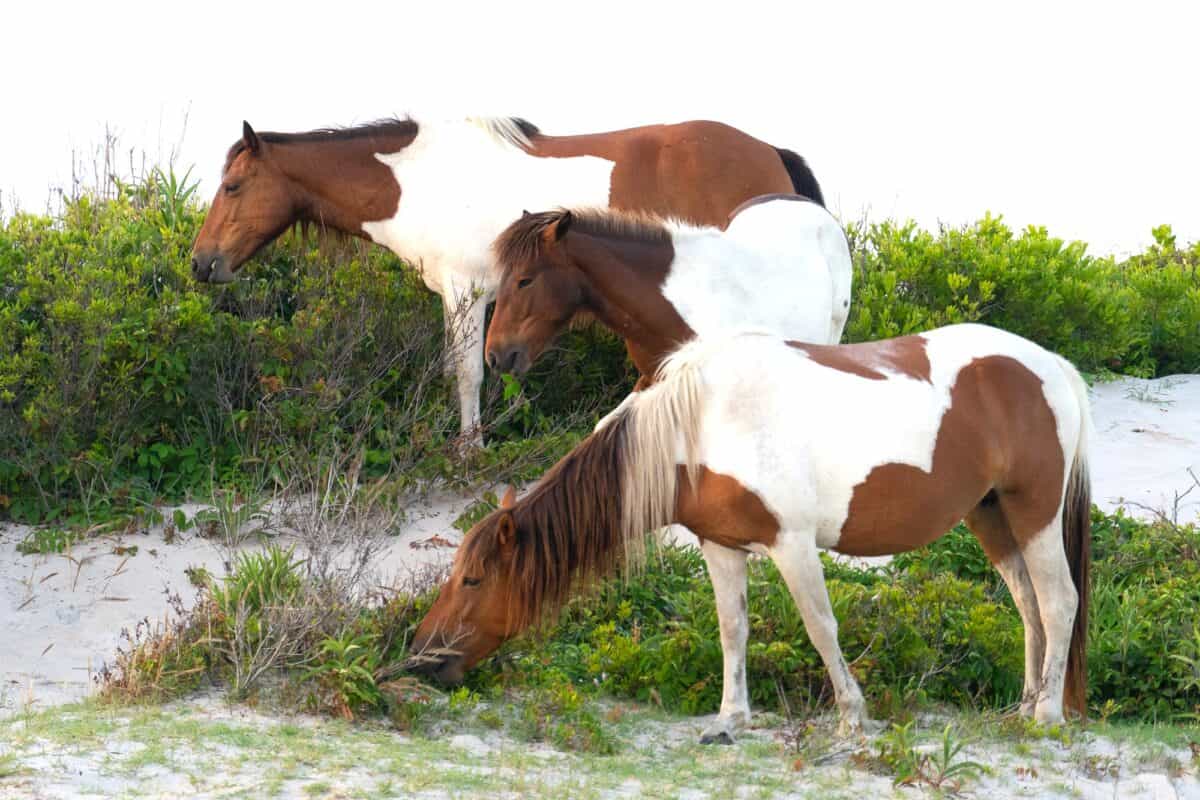
Managing feral horses on a fragile barrier island presents complex ecological challenges that require balancing animal welfare with environmental preservation. Though beloved by visitors, the horses are technically an introduced species that can impact native ecosystems. Each adult horse consumes up to 35 pounds of vegetation daily, potentially reducing resources available to native species. Their grazing and trampling can affect dune stability, marsh vegetation, and ground-nesting bird habitats.
In Maryland, the National Park Service implemented a birth control program in 1994 using porcine zona pellucida (PZP), a non-hormonal contraceptive vaccine administered to mares via dart gun. This program has successfully reduced the Maryland herd from over 175 horses to a more sustainable population of 80-100 animals without removing horses from the island. The Virginia herd’s management through the annual auction serves a similar purpose of population control.
Both approaches aim to maintain healthy horses while minimizing their environmental impact on the sensitive barrier island ecosystem. These management strategies represent a delicate balance between preserving a cultural icon and protecting the natural systems that support all island wildlife.
Life in the Wild: Social Structure and Behavior
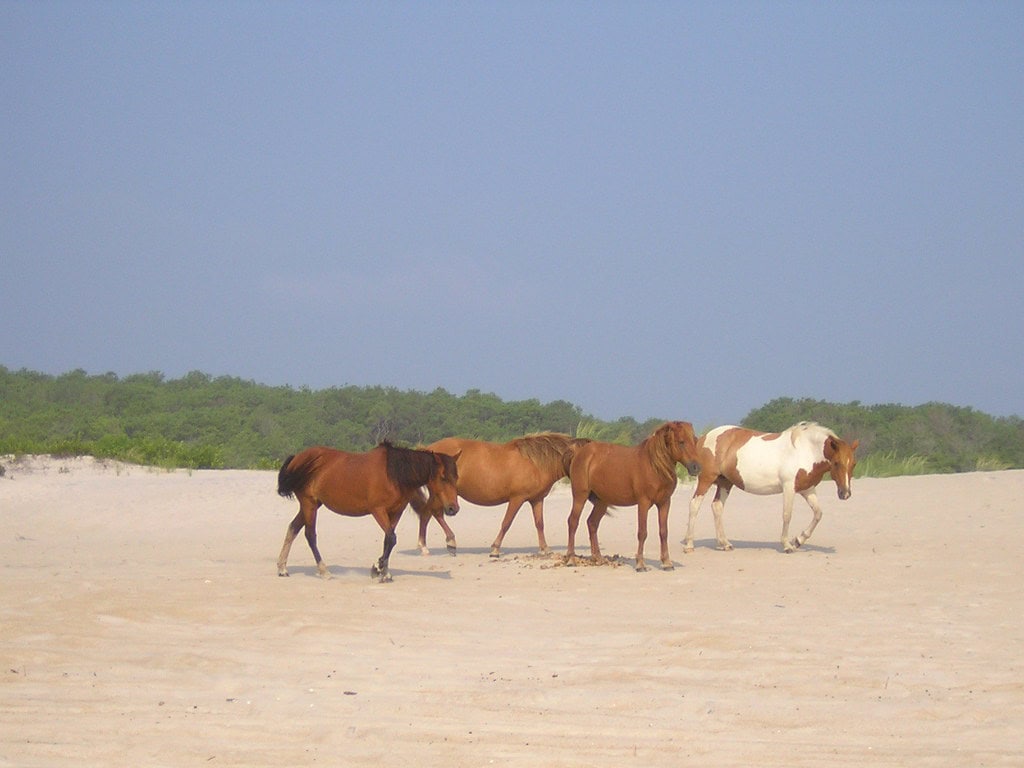
Assateague’s feral horses display fascinating social behaviors that closely resemble those of truly wild equids, despite their domestic ancestry. They organize themselves into distinct social groups called “bands,” typically consisting of one dominant stallion, several mares, and their offspring. These family bands remain relatively stable, with strong bonds forming between members. Young stallions that haven’t established their own harems often form “bachelor bands” until they’re strong enough to challenge established stallions for mares.
Dominance hierarchies exist within bands, with horses communicating through subtle body language, vocalizations, and sometimes dramatic displays of rearing, kicking, or biting during conflicts. The horses follow seasonal patterns in their movement across the island, seeking sheltered forests during winter storms and summer heat while frequenting the beaches during the calmer days and bug-heavy seasons when sea breezes provide relief from insects. Their daily routine typically includes 15-17 hours of foraging, with the remainder devoted to rest, social interaction, and play. Observers note that each band has distinctive movement patterns and territories they prefer, demonstrating the complex social intelligence these animals possess even in their feral state.
The Economic Impact of Wild Horse Tourism
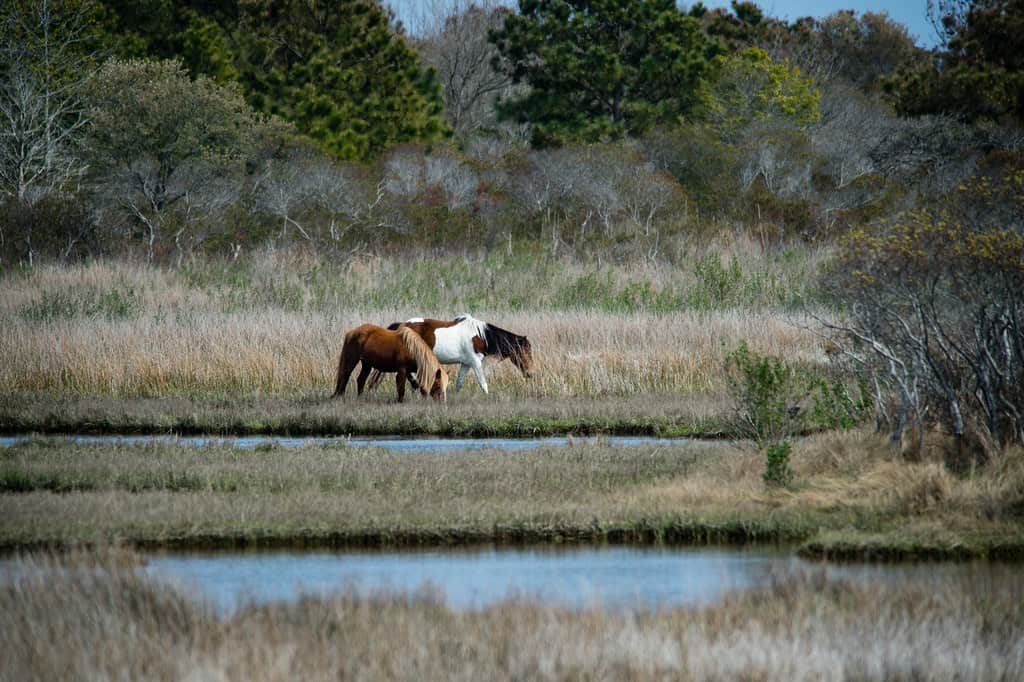
The wild horses of Assateague Island generate substantial economic benefits for the surrounding communities, serving as the primary tourist draw for the region. Each year, approximately 1.5 million visitors come to Assateague Island National Seashore, and surveys indicate that seeing the wild horses ranks as the top reason for their visit.
The Chincoteague Pony Swim alone attracts up to 40,000 spectators annually, filling hotels, restaurants, and shops on an island with just 3,000 year-round residents. A 2019 economic impact study estimated that tourism related to Assateague’s horses generates over $110 million annually for the local economy in Maryland and Virginia, supporting approximately 1,300 jobs in the region. Merchandise featuring the wild ponies—from t-shirts to artwork to stuffed animals—fills gift shops throughout the area. Commercial tour operators offer specialized “pony tours” by boat, kayak, and bus.
The economic importance of the horses has transformed what was once considered a nuisance (feral livestock) into a treasured resource, creating financial incentives for their protection and appropriate management. This economic dimension adds another layer to the complex relationship between the horses, the environment, and human communities.
Human Interaction: The Danger of Habituation
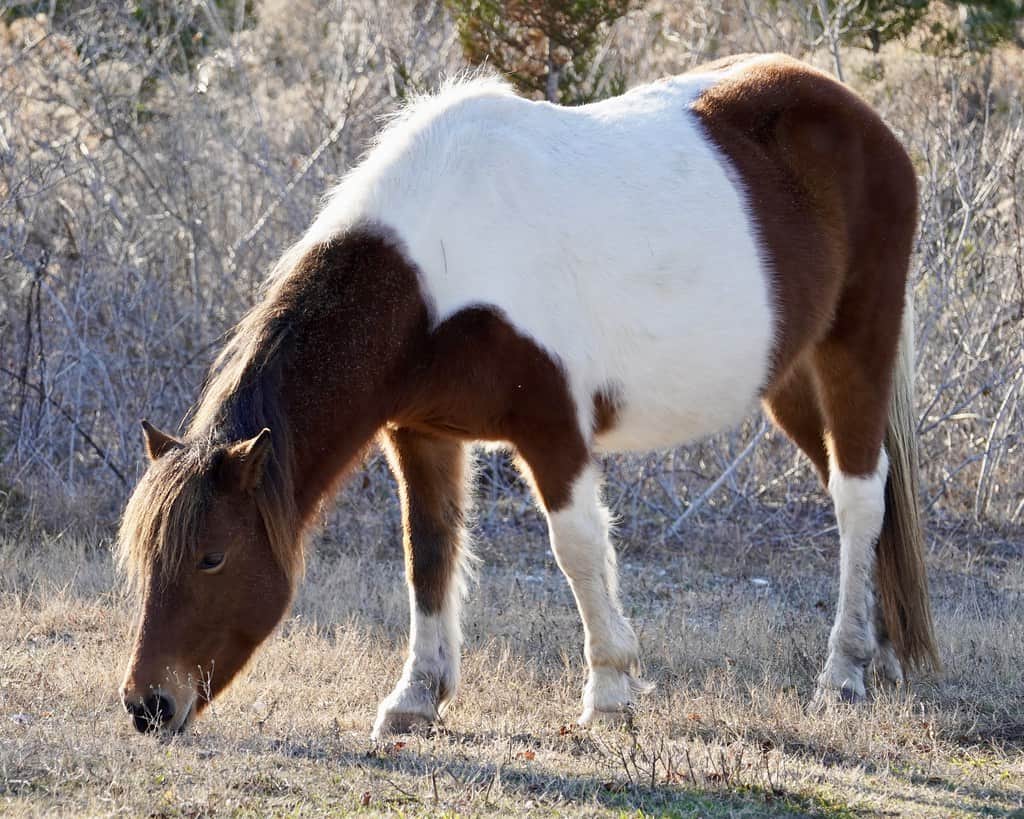
Despite their wild allure, the horses of Assateague face a serious modern threat: habituation to humans. Park regulations require visitors to stay at least 40 feet from the horses, but these rules are frequently violated by well-meaning tourists seeking photos or attempting to feed the animals. This human interaction has dangerous consequences for both species.
Horses that associate humans with food may become aggressive, charging, kicking, or biting when expectations aren’t met. Since 1982, over 100 documented incidents of horses kicking, biting, or stomping visitors have occurred, some resulting in serious injuries requiring hospitalization. For the horses, human food can cause deadly colic, nutritional imbalances, and dangerous behavioral changes. The National Park Service has implemented an extensive education campaign with the slogan “A fed horse is a dead horse” to discourage feeding. Rangers actively enforce distance regulations with fines up to $5,000 for feeding or touching the horses.
Despite these efforts, habituation remains a significant management challenge, representing the complex reality that even on a seemingly wild island, the boundary between human and horse worlds continues to blur. The most successful conservation approach has proven to be one that allows visitors to observe and appreciate these magnificent animals from a respectful distance.
Genetic Research and Conservation Efforts
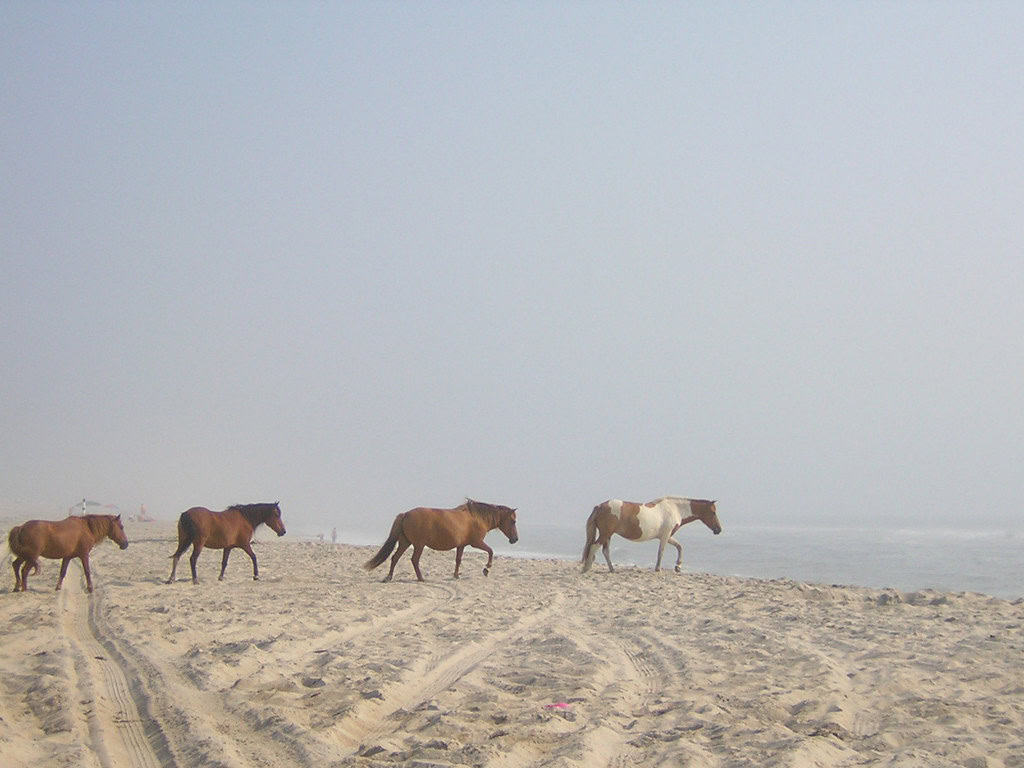
Recent genetic research has revealed fascinating insights about Assateague’s feral horses, informing conservation strategies to ensure their long-term survival. DNA analysis confirms that the horses are primarily of colonial Spanish ancestry, with some later admixture from other domestic breeds. Their relatively small, isolated population has led to concerns about genetic diversity and inbreeding depression.
To address this, managers of both herds have implemented careful genetic monitoring programs. In the Maryland herd, genetic samples are regularly collected during contraceptive darting operations, allowing scientists to track diversity metrics. The Virginia herd benefits from a studbook maintained by the Chincoteague Volunteer Fire Company, recording lineages to manage breeding decisions. In 2021, a comprehensive genetic health assessment revealed concerning levels of inbreeding in the Maryland herd, prompting discussions about potentially introducing new genetics through carefully selected horses.
Conservation efforts also include regular health monitoring, with veterinarians conducting field assessments of body condition, parasite loads, and general health indicators. During extreme weather events or environmental emergencies, both management agencies have protocols to provide supplemental feed or emergency care if necessary. These science-based approaches to genetic and health management help ensure that Assateague’s iconic horses will continue to thrive for generations to come.
Environmental Threats to the Island and Its Horses
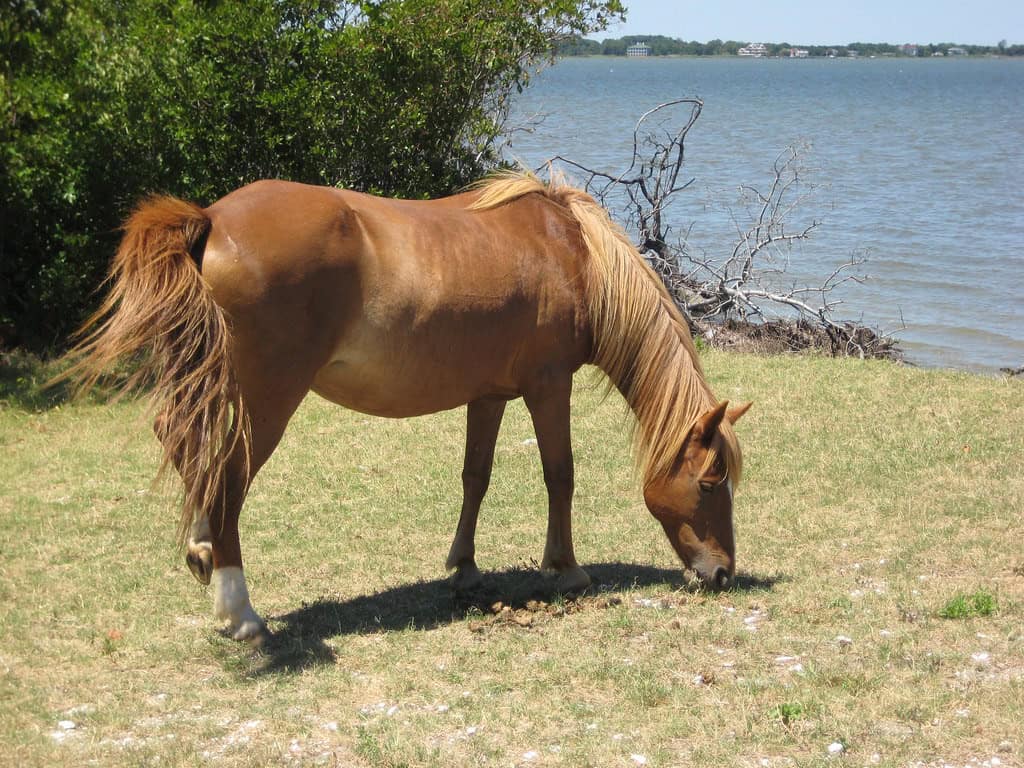
As a low-lying barrier island, Assateague faces existential threats from climate change and sea-level rise that directly impact its feral horse population. The island averages just 5 feet above sea level, making it particularly vulnerable to storm surges and flooding that can inundate grazing areas and freshwater sources critical to horse survival.
Increasingly severe storms have already reshaped portions of the island, washing out roads and creating new inlets. The U.S. Geological Survey projects that large portions of Assateague could be underwater by 2100 if current climate trends continue. Rising water tables have increased saltwater intrusion into freshwater ponds the horses depend on, potentially limiting their drinking options. The island’s slow westward migration—a natural process for barrier islands—is accelerated by sea-level rise, compressing the habitable area for all wildlife. Park managers have begun implementing climate adaptation strategies, including creating elevated evacuation areas for horses during extreme storms and monitoring changes in vegetation as salt-tolerant species replace traditional grazing areas.
The horses’ remarkable adaptability has helped them survive environmental changes for centuries, but the accelerated pace of current climate impacts presents unprecedented challenges that may eventually require difficult management decisions, including the possibility of relocating horses if portions of the island become uninhabitable.
The Health Challenges of Island Horses

Surviving on a barrier island presents unique health challenges for Assateague’s feral horses, requiring specialized monitoring and occasional intervention. Perhaps their most visible health issue stems from their diet—the salt marsh grasses they consume create a perpetual state of mild bloating, giving many of the horses a distinctive “hay belly” appearance that tourists often misinterpret as pregnancy.
Parasites present another significant challenge, with sandy soil and concentrated grazing areas creating ideal conditions for internal parasites like strongyles and bot fly larvae. Both management agencies periodically test fecal samples to monitor parasite loads, though treatment is generally reserved for severe cases to prevent resistance development. The island’s mosquito and biting fly populations can reach extreme levels in summer months, plaguing the horses and potentially transmitting diseases like Eastern Equine Encephalitis, prompting managers to monitor for unusual neurological symptoms.
Heat stress poses risks during summer, with horses sometimes standing in the ocean to cool themselves—a behavior rarely seen in domestic horses. Winter brings different challenges, including hypothermia during nor’easter storms and potential food scarcity when vegetation dies back. Injuries from fighting, barbed wire from historic fencing, and vehicle collisions on the Maryland portion of the island (where a road runs the length of the island) account for some horse mortality. Despite these challenges, veterinary intervention is minimized to maintain the wild nature of the herds, with treatment generally limited to life-threatening conditions or injuries caused by human activity.
Conclusion: A Living Legacy of Wildness and Adaptation
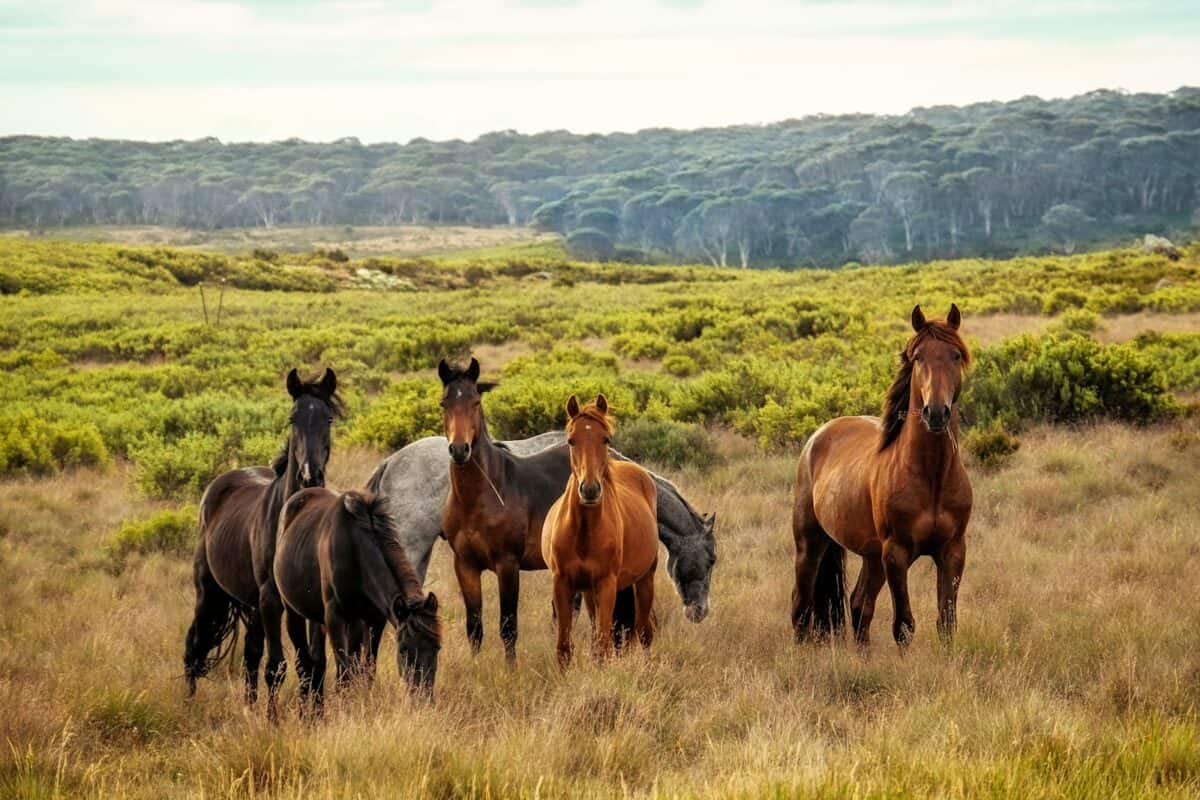
The feral horses of Assateague Island represent a living testament to the remarkable adaptability of their species and the enduring power of wildness in an increasingly managed world. For more than three centuries, these horses have survived Atlantic storms, shifting sands, changing vegetation, and human presence, developing unique physiological and behavioral adaptations to their island home. They exist in a fascinating middle ground—neither fully wild nor domestic, but rather emblematic of the complex relationship between humans and nature that defines our modern world.
Their presence teaches us valuable lessons about wildlife management, conservation ethics, and the delicate balance between public access and environmental protection. As climate change and human pressure continue to transform Assateague Island, the future of these iconic horses remains uncertain, yet their ability to adapt and persevere offers hope. In their weathered forms, windblown manes, and free-spirited movements across the dunes, we glimpse something increasingly rare and precious: a connection to an untamed world that still has the power to inspire wonder and remind us of our own place in the natural order.
Worried about unexpected vet bills?
Pet insurance can cover thousands in unexpected vet costs. Get a free quote from Lemonade in under 2 minutes.
Get My Free Quote →Sponsored · Opens Lemonade.com

From exploring the marine wonders in the Azores and witnessing the vast savannas of Kenya, to delving deep into the rich biodiversity of South Africa and traversing iconic landscapes in Australia and the US like Yellowstone, Chris's experiences are vast.
With a penchant for diving alongside sharks, the ocean holds a special place in his heart.
Through his academic insights, he champions wildlife conservation, striving with 'Animals Around The Globe' to cultivate a profound connection between humans and animals, enhancing our mutual appreciation.
Connect with him at Feedback@animalsaroundtheglobe.com.
- Why Sea Turtles Return to the Same Beach to Lay Eggs - June 10, 2026
- Why Pangolins Are the Most Trafficked Mammals on Earth - June 10, 2026
- 10 Animals with the Craziest Defensive Mechanisms in the Wild - June 10, 2026