

Intelligence in the animal kingdom extends far beyond what many people imagine. Numerous species demonstrate remarkable problem-solving abilities that showcase their cognitive flexibility, learning capabilities, and even creativity. From using tools to navigating complex social dynamics, these brilliant animals employ various mental strategies to overcome challenges in their environments. This article explores some of the most intellectually impressive creatures on our planet and examines the fascinating ways they demonstrate their problem-solving prowess.
Corvids: The Feathered Geniuses
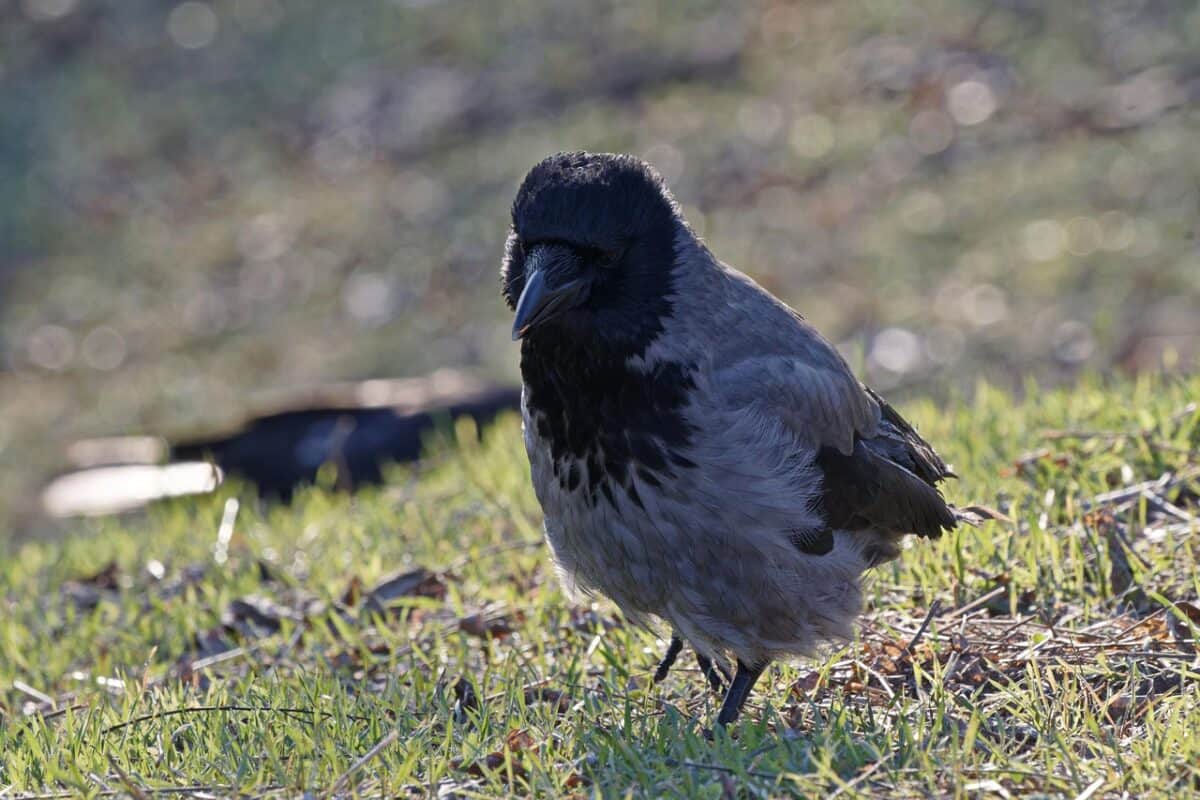
Crows, ravens, and other corvids consistently rank among the most intelligent animals on Earth. These birds possess problem-solving abilities that rival those of great apes, despite having very different brain structures. Crows are famous for their tool use, creating hooks from twigs to extract insects from crevices. In one remarkable study, New Caledonian crows bent wire into hooks to retrieve food from containers—something previously thought possible only by humans and some primates. Ravens have been observed dropping nuts onto roadways for cars to crack open, then waiting for traffic lights to change before safely retrieving their meal. Perhaps most impressive is the corvids’ ability to plan ahead, as demonstrated by studies showing they can solve multi-step problems and even delay gratification for better rewards later.
Chimpanzees: Our Problem-Solving Cousins
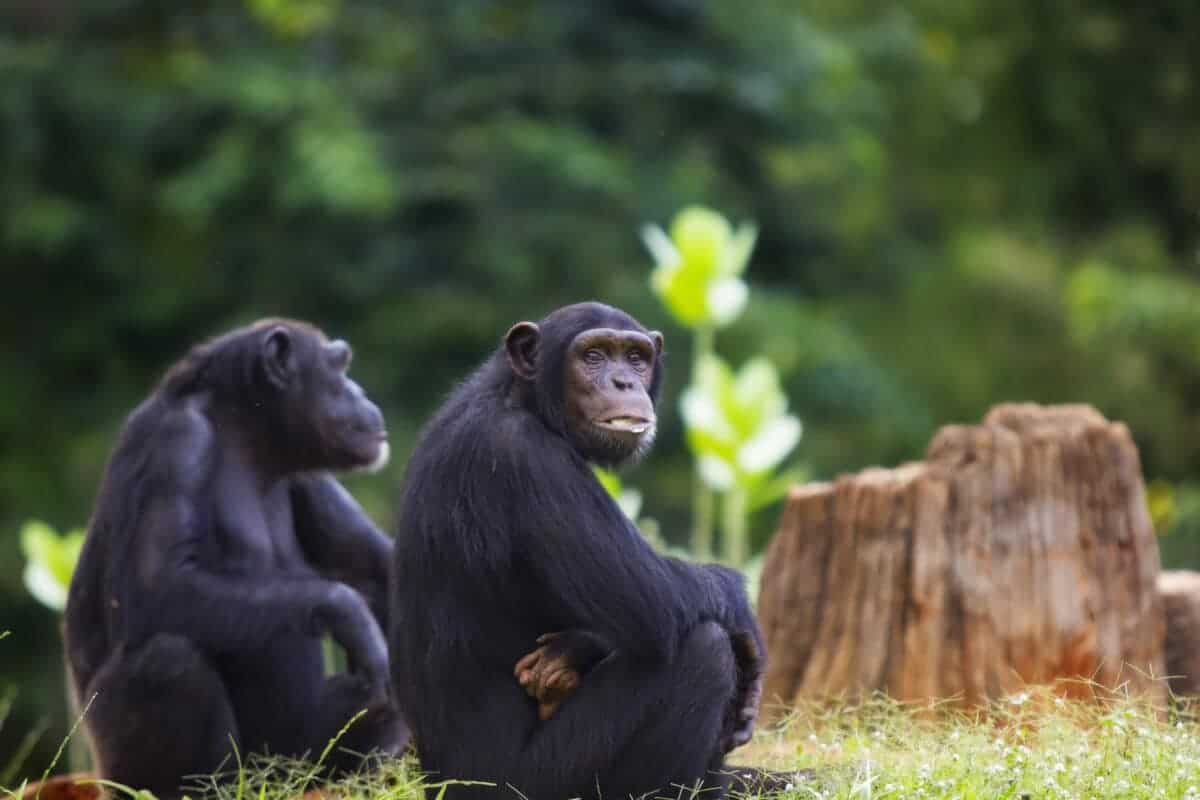
As our closest genetic relatives, chimpanzees display complex problem-solving abilities that often mirror human approaches. They regularly create and use tools in the wild, from stripping twigs to “fish” for termites to using stones as hammers to crack nuts. In captivity, chimps have demonstrated even more sophisticated cognitive abilities. Researchers have documented chimps stacking boxes to reach hanging food, using water as a tool to float objects within reach, and even learning rudimentary forms of symbolic language. The famous bonobo Kanzi can understand spoken English and communicate using lexigrams on a keyboard. Perhaps most remarkably, chimpanzees show evidence of metacognition—awareness of their own knowledge—seeking additional information when unsure about a task and proceeding confidently when they know the solution.
Octopuses: The Invertebrate Intellectuals
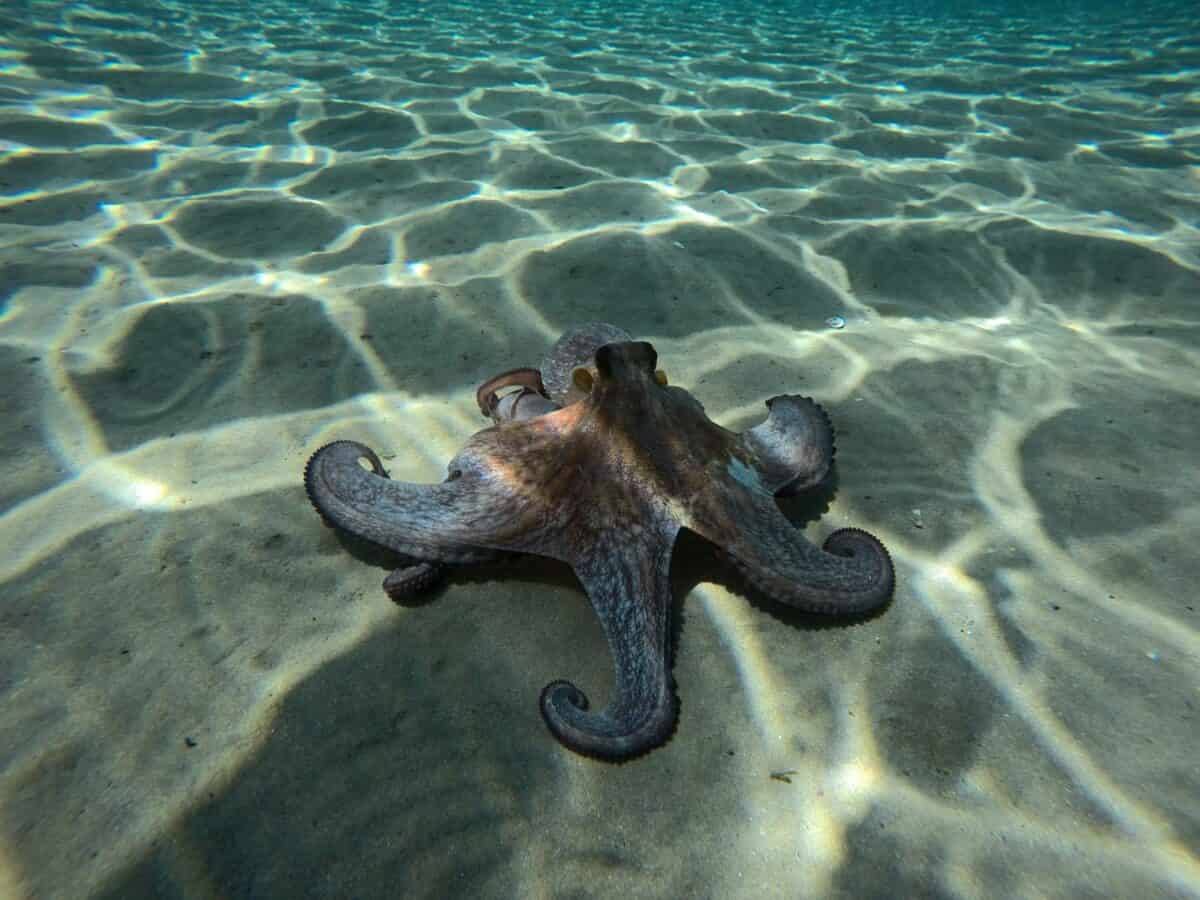
Octopuses represent a unique form of intelligence that evolved completely independently from vertebrates, with a distributed nervous system that gives them remarkable problem-solving capabilities. These cephalopods regularly escape from sealed containers, unscrew jar lids to reach food, and navigate complex mazes. Their problem-solving extends to creative solutions: they’ve been documented using coconut shells as portable shelters and disguising themselves with collected debris. In laboratory settings, octopuses quickly learn to distinguish between different shapes and patterns, and they remember solutions to problems for months. Perhaps most impressively, they can observe and learn from watching other octopuses solve problems, despite having no natural social structures. Their intelligence is all the more remarkable considering their short lifespan of just 1-2 years for most species.
Elephants: The Thoughtful Giants

Elephants possess some of the largest brains in the animal kingdom, and they put them to good use with exceptional problem-solving skills. These social mammals demonstrate self-awareness (recognizing themselves in mirrors), tool use, and remarkable spatial memory. Researchers have documented elephants using branches to swat flies, covering water holes with bark to prevent evaporation, and even modifying their environment by digging wells and maintaining trails. Their collaborative problem-solving is particularly impressive—studies show elephants understanding when they need a partner to complete a task, and they can coordinate their efforts accordingly. In one experiment, elephants quickly learned they needed to pull different ends of a rope simultaneously to receive a food reward, and would even wait for a partner if needed to complete the task.
Dolphins: Marine Masterminds

Dolphins exhibit extraordinary intelligence through their problem-solving capabilities, complex communication, and social learning. These marine mammals possess self-awareness and can recognize themselves in mirrors—a rare trait in the animal kingdom. They demonstrate tool use by wearing sponges on their snouts to protect themselves while foraging on the rough ocean floor. Their problem-solving extends to hunting strategies, where they develop innovative techniques like “mud-ring feeding,” creating circular mud plumes to trap fish. Dolphins also show exceptional social learning, passing hunting techniques through generations. Their communication involves a complex system of whistles, clicks, and body language, with individuals having signature whistles that function similarly to names. Research suggests dolphins can understand abstract concepts, including symbolic language and basic numerical values.
Pigs: Underestimated Problem Solvers
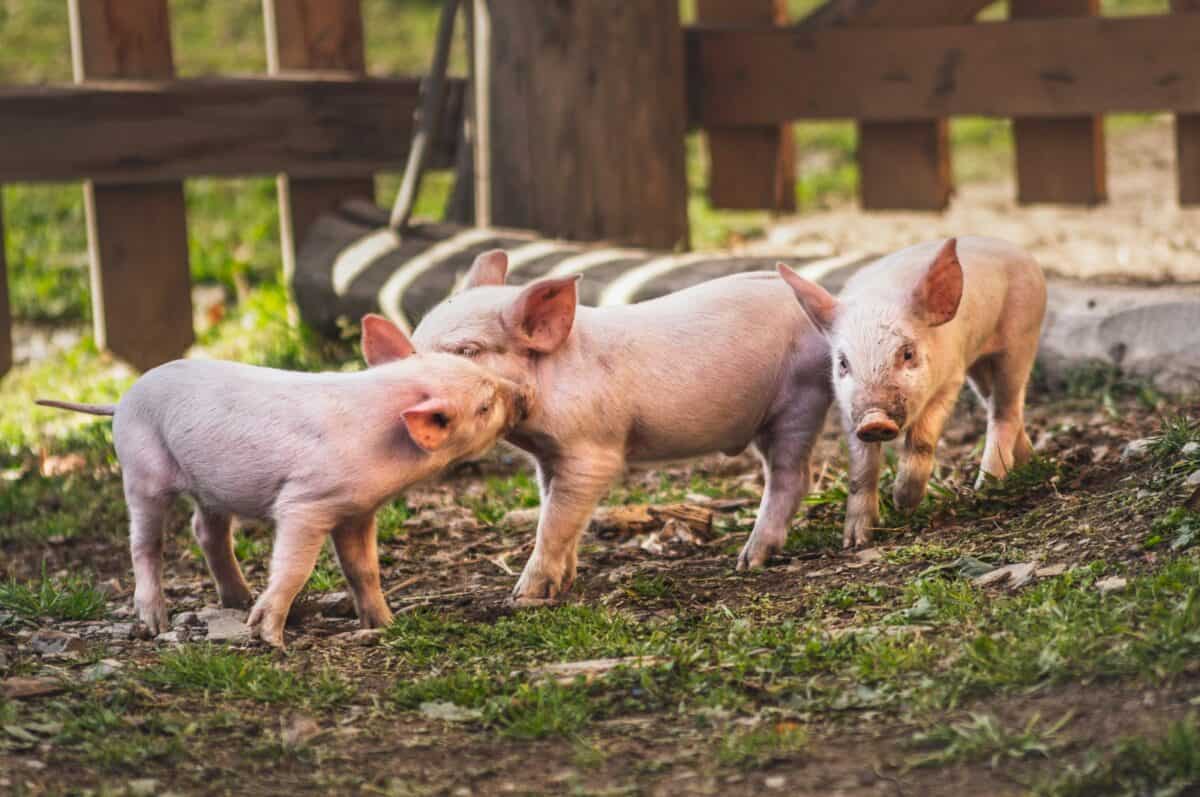
Despite their portrayal in popular culture, pigs are actually among the most intelligent domestic animals. Their problem-solving abilities often surprise researchers with their sophistication. Pigs can use mirrors to find food, play simple video games using joysticks, and understand basic symbolic language. They excel at spatial learning and memory tasks, often outperforming dogs on certain cognitive tests. Studies show pigs can learn from observing others, both pigs and humans, and they retain this knowledge for long periods. Their intelligence extends to understanding cause and effect—when presented with manipulable objects that yield food rewards, pigs quickly learn the mechanisms and remember them years later. Perhaps most impressively, pigs demonstrate emotional intelligence, showing empathy toward distressed members of their group and displaying complex social behaviors.
Parrots: The Linguistic Problem Solvers

Parrots combine exceptional vocal learning with impressive cognitive abilities, making them extraordinary problem solvers. Beyond their famous mimicry, research with African grey parrots has revealed they understand numerical concepts, categorization, and even some aspects of zero—a concept challenging for human children. The famous parrot Alex demonstrated knowledge of over 100 words, could identify colors, shapes, and materials, and even asked questions about objects. Kea parrots from New Zealand show exceptional mechanical problem-solving, manipulating multiple locking mechanisms and working cooperatively to access food. Their understanding of physical properties extends to making and using tools. In one study, a cockatoo named Figaro spontaneously crafted sticks to rake in food that was out of reach—then improved his design with practice. These birds also show remarkable social intelligence, forming complex flock structures and demonstrating sensitivity to fairness.
Rats: The Resourceful Rodents

Rats showcase impressive problem-solving abilities that have made them staples in cognitive research. These rodents excel at spatial navigation, quickly learning complex mazes and remembering their solutions. They demonstrate causal reasoning, understanding relationships between actions and outcomes—a sophisticated cognitive skill. Rats show metacognition (awareness of their own knowledge), seeking more information when uncertain about a task. Their social intelligence is particularly notable; they engage in cooperative behaviors, understand reciprocity, and even demonstrate empathy, helping trapped companions or sharing food with hungry group members. Rats can learn complex sequences of actions to solve multi-step problems and show remarkable flexibility in finding alternative solutions when their first approach fails. Research indicates they can use tools, pushing small objects to reach desired items, and can learn by observing other rats solve problems—abilities that contribute to their survival and adaptation in diverse environments worldwide.
Orangutans: The Forest Engineers

Orangutans display remarkable problem-solving capabilities both in the wild and captivity. These great apes construct elaborate sleeping nests daily, demonstrating sophisticated spatial awareness and manipulation of forest materials. Their tool use is extensive and varied; wild orangutans fashion sticks to extract insects from tree holes, use leaves as gloves to handle spiny fruits, and create leaf umbrellas during tropical rainstorms. In captivity, they show even more impressive problem-solving, using water as a tool to raise floating objects within reach and combining multiple tools to solve complex tasks. Their mechanical reasoning is particularly notable—orangutans can figure out complicated locking mechanisms and understand the functional properties of unfamiliar objects. They demonstrate exceptional planning abilities, even saving tools for future use. Perhaps most impressively, orangutans show cultural transmission of knowledge, with different populations developing and passing down unique tool use and problem-solving techniques through generations.
Dogs: The Cooperative Problem Solvers

Dogs’ cognitive abilities have co-evolved with humans over thousands of years, resulting in unique problem-solving approaches. Unlike many animals that solve problems through trial and error, dogs often look to humans for assistance—a strategy called “social referencing.” This cooperative problem-solving makes them exceptionally good at understanding human communicative cues like pointing and eye gaze, sometimes outperforming even chimpanzees in these tasks. Dogs demonstrate impressive inference capabilities, understanding the implications of seeing someone hide an object even when they don’t witness the hiding directly. They show emotional problem-solving, comforting distressed humans and detecting subtle emotional states. Recent research reveals dogs can learn words through fast-mapping (connecting a new word to an object after minimal exposure)—previously thought unique to human children. While their independent problem-solving may not match some other species, dogs excel in collaborative cognition, making them ideally adapted to their role as human companions and working partners.
Raccoons: The Dexterous Intellects

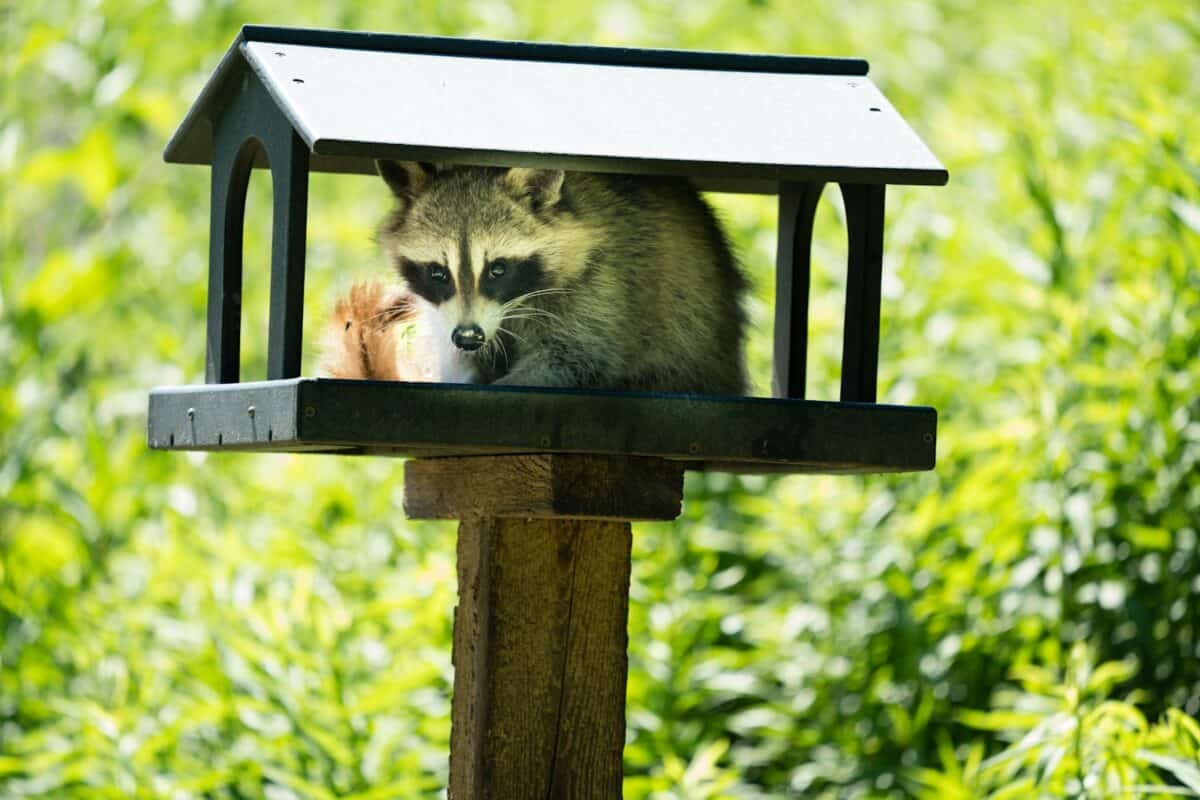
Raccoons combine exceptional manual dexterity with impressive problem-solving capabilities, earning them a reputation as nature’s “little bandits.” Their remarkable tactile sensitivity comes from having four times more sensory receptors in their paws than most mammals, allowing them to identify objects without visual input—essentially “seeing” with their hands. This sensory advantage supports their extraordinary problem-solving abilities. Raccoons consistently master complex locking mechanisms, remember solutions for years, and apply learned techniques to new situations. Urban raccoons demonstrate particularly advanced problem-solving, developing specialized skills for navigating human environments. In laboratory settings, they’ve solved versions of the Aesop’s Fable test (dropping stones into water to raise floating food), showing understanding of water displacement. Raccoons also show remarkable persistence, working methodically through multiple solution attempts. Their cognitive flexibility is demonstrated by their ability to adapt to novel urban challenges, with documented cases of raccoons learning to open garbage bins secured with increasingly complex latches—showcasing an evolutionary arms race between human design and raccoon intelligence.
Bees: Collective Problem Solvers

Despite their tiny brains, bees demonstrate remarkable problem-solving abilities both individually and collectively. Individual bees can learn to pull strings to access nectar, navigate complex mazes, and even understand the concept of zero—placing it correctly at the start of a numerical sequence. They show impressive social learning, with novice bees observing and replicating the techniques of experienced foragers. What’s particularly fascinating is their collective intelligence; honeybee colonies function as “superorganisms” that solve complex problems through distributed cognition. Swarms make democratic decisions when selecting new nest sites, with scout bees advocating for different locations until consensus emerges. Colonies solve complex resource allocation problems, adjusting foraging strategies based on available flower resources, distance, and colony needs. Bees also demonstrate remarkable spatial problem-solving in their waggle dances, translating three-dimensional flight paths into two-dimensional communications that other bees can interpret. Their ability to solve complex navigational problems is particularly impressive—bees create cognitive maps of their environments and can find direct routes home even from unfamiliar locations.
The remarkable problem-solving abilities demonstrated across such diverse animal species reveal that intelligence has evolved through multiple pathways in the animal kingdom. From the distributed brain of an octopus to the collaborative cognition of dolphins, each species has developed unique cognitive tools suited to their ecological niches and evolutionary history. These examples challenge our traditional notions of intelligence as a single, linear scale with humans at the top. Instead, they suggest we should appreciate the diverse forms of intelligence that have evolved to solve different types of problems across various environments. As research methods continue to improve, we’re likely to discover even more impressive cognitive abilities in species we’ve previously underestimated. Understanding animal cognition not only enriches our appreciation of the natural world but also provides valuable insights into the evolution of intelligence itself—including our own.

- Why Zebras Are So Vocal—and What Their Sounds Mean - June 21, 2026
- 10 Dog Breeds That Are Stronger Than They Look - June 21, 2026
- 10 Surprising Facts About Hammerhead Sharks - June 21, 2026