


In the harsh, unforgiving landscapes of Arctic and subarctic regions, nature has crafted extraordinary survivors. Among these remarkable creatures is the wood frog (Lithobates sylvaticus), a small amphibian with an almost supernatural ability: it can survive being completely frozen for weeks at a time. This remarkable adaptation represents one of the most extreme survival mechanisms in the vertebrate world, allowing these frogs to endure conditions that would be fatal to almost any other animal with a backbone. As climate change increasingly affects global ecosystems, understanding these extraordinary survival mechanisms becomes not just a scientific curiosity, but potentially a source of inspiration for human medical advances and conservation efforts.
Meet the Wood Frog: Nature’s Freeze-Tolerant Marvel

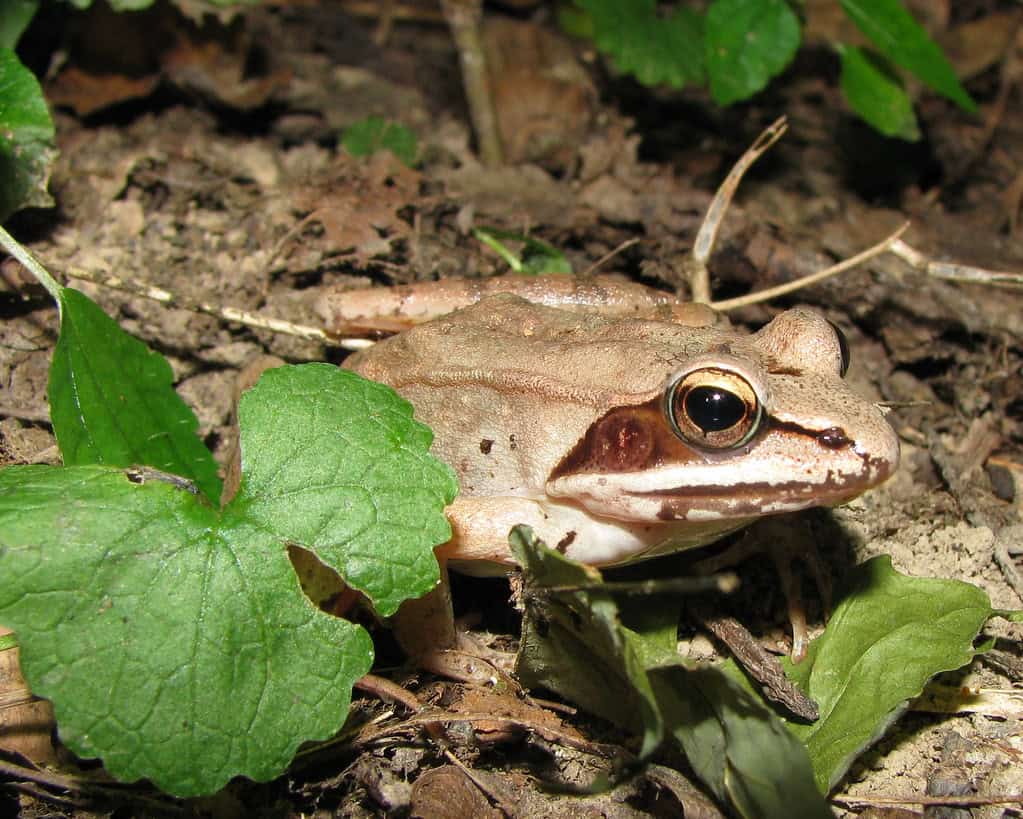
The wood frog (Lithobates sylvaticus) is a relatively small amphibian, typically measuring between 3.5 to 7 centimeters in length. Distinguished by their characteristic dark eye mask and tan to brown coloration, these frogs inhabit a vast range stretching from the northeastern United States and Canada all the way to Alaska, making them the most northerly amphibian species in North America.
What makes this seemingly ordinary frog extraordinary is not its appearance but its remarkable ability to survive freezing temperatures that would kill most other vertebrates. Unlike many frogs that avoid winter by burrowing deep underground below the frost line, wood frogs have evolved to face the cold head-on, developing one of the most sophisticated freeze-tolerance mechanisms known to science.
The Freeze-Thaw Cycle: Understanding Cryobiosis

The wood frog’s freeze tolerance is a form of cryobiosis—a state where metabolic activity is severely reduced due to low temperatures. As autumn transitions to winter and temperatures drop below freezing, wood frogs undergo a remarkable transformation. Their hearts stop beating, they cease breathing, and up to 65% of their total body water converts to ice. From an external perspective, they appear completely frozen and lifeless—hard to the touch, with no detectable vital signs.
In this suspended animation state, the frogs can remain frozen for weeks, sometimes months, depending on winter conditions. The most remarkable aspect is what happens when spring arrives: as temperatures rise, the frogs gradually thaw from the inside out, their hearts resume beating, and within hours they return to normal activity as if nothing extraordinary had occurred.
The Science Behind Freezing Without Dying

How does the wood frog prevent the lethal consequences of freezing that would kill most animals? The secret lies in a sophisticated biochemical process that begins in autumn as temperatures drop. Wood frogs start producing massive amounts of glucose and urea, which function as natural cryoprotectants or “antifreeze” compounds. These substances lower the freezing point of their body fluids and minimize cell shrinkage during freezing.
As ice forms in extracellular spaces (between cells rather than within them), these cryoprotectants prevent the complete dehydration of cells that would otherwise occur as water is drawn out to form ice crystals. Additionally, specialized ice-nucleating proteins in their blood help control where ice formation begins, ensuring it happens gradually in spaces where it causes minimal damage. This orchestrated biochemical response allows cells to survive in a severely dehydrated state without rupturing—a phenomenon that would typically cause fatal damage in other animals.
Frozen But Not Dead: Redefining Life’s Boundaries

The wood frog’s frozen state challenges our conventional understanding of what constitutes “alive” versus “dead.” During freezing, the frog exhibits no heartbeat, no breathing, no brain activity, and no movement—criteria that would typically define death in most animals. Yet, the frog is not dead but in a state of suspended animation. Cellular activity continues at an extremely reduced rate, maintained by the minimal metabolism of stored glucose.
Perhaps most remarkable is that the frogs can undergo this freeze-thaw cycle multiple times in a single winter, each time reviving completely without apparent damage. This extraordinary adaptation has led scientists to question traditional definitions of life and death, suggesting instead a spectrum of states between fully functioning and completely non-functioning that organisms can traverse under extreme conditions.
Geographical Distribution and Adaptation

The wood frog’s freeze tolerance capability has allowed it to become the most northerly amphibian in North America, with populations extending above the Arctic Circle in Alaska. This remarkable distribution showcases how this specialized adaptation has enabled wood frogs to colonize habitats inhospitable to other amphibians. Interestingly, research has shown that the freeze tolerance abilities of wood frogs vary by region—northern populations can tolerate colder temperatures and longer freezing periods than their southern counterparts.
Alaskan wood frogs, for instance, can survive temperatures as low as -18°C (0°F) and remain frozen for over six months, while those in southern regions might only endure freezing for a few weeks. This gradient in freeze tolerance demonstrates the ongoing evolutionary process, as populations continue to adapt to their specific environmental challenges through natural selection.
Seasonal Preparation: The Annual Freeze Strategy
Wood frogs don’t simply freeze at random—they undergo a carefully orchestrated preparation process as winter approaches. In autumn, these amphibians begin accumulating glycogen in their liver, which will later be converted to glucose when freezing begins. They also select specific microhabitats for overwintering, typically choosing shallow depressions under leaf litter or logs that provide some insulation while still allowing the frogs to freeze.
Rather than burrowing deep underground like many other frog species, wood frogs intentionally position themselves where they will freeze. This counterintuitive strategy actually provides an advantage: by freezing early and in a controlled manner, they avoid the energetic costs of maintaining unfrozen metabolism throughout winter. Additionally, being among the first amphibians to thaw in spring gives them early access to breeding ponds, providing a reproductive advantage over deeper-hibernating species.
Medical Implications: From Frogs to Human Medicine

The wood frog’s extraordinary ability to survive freezing has captured the attention of medical researchers looking to improve organ preservation for transplantation. Currently, human organs can only be preserved outside the body for relatively short periods—typically hours rather than days or weeks—severely limiting transplantation logistics. Scientists are studying the wood frog’s natural cryoprotectants and cellular mechanisms to develop better preservation solutions for human organs.
Research is also exploring applications in trauma medicine, where the ability to temporarily slow metabolism could give emergency responders more time to treat severe injuries. Additionally, understanding how wood frogs prevent cell damage during extreme dehydration could lead to improved methods for preserving cells, tissues, and perhaps even whole organs through freezing—potentially revolutionizing transplant medicine and emergency care protocols.
Other Freeze-Tolerant Species: A Comparative View

While the wood frog may be the most famous freeze-tolerant vertebrate, it’s not alone in this remarkable adaptation. Several other frog species, including the spring peeper (Pseudacris crucifer), chorus frog (Pseudacris triseriata), and gray treefrog (Hyla versicolor), also demonstrate varying degrees of freeze tolerance.
Beyond amphibians, certain reptiles like the painted turtle (Chrysemys picta) can survive partial freezing, and some fish species like the Antarctic blackfin icefish (Chaenocephalus aceratus) produce antifreeze proteins that prevent their blood from freezing in sub-zero waters. In the invertebrate world, freeze tolerance is even more common, with various insects, spiders, and marine invertebrates able to survive being frozen. Each species has evolved slightly different biochemical and physiological adaptations to achieve freeze tolerance, offering scientists multiple models to study and potentially apply to human medical challenges.
Climate Change Threats: An Uncertain Future

Despite their remarkable cold-hardiness, wood frogs face an uncertain future due to climate change. Their freeze-tolerance adaptation evolved in response to predictable seasonal temperature patterns, but climate change is disrupting these patterns with increasing frequency. Warmer, fluctuating winter temperatures can cause premature thawing followed by refreezing, potentially exceeding the frogs’ physiological capacity to repeatedly mobilize their cryoprotectant systems.
Each freeze-thaw cycle requires significant energy expenditure, and too many cycles can deplete the frogs’ energy reserves before winter ends. Additionally, reduced snow cover provides less insulation for overwintering frogs, exposing them to more extreme temperature fluctuations. Research suggests that southern populations of wood frogs, which already have less robust freeze tolerance, may be particularly vulnerable to these changing conditions, potentially leading to range contractions or local extinctions as climate patterns continue to shift.
The Revival Process: From Frozen to Active

The thawing and revival process of wood frogs is as remarkable as their freezing ability. As temperatures rise in spring, thawing begins from the inside out—the heart and brain, protected by higher concentrations of cryoprotectants, thaw first. Within hours of the heart resuming beating, respiratory functions restart, and blood circulation returns. Remarkably, wood frogs appear to suffer no ill effects from this process—no tissue damage, no impaired function.
Within 24 hours of complete thawing, the frogs are typically hopping around and preparing for breeding season. Studies show that the liver plays a crucial role in this revival, rapidly clearing excess glucose from the bloodstream and restoring normal metabolic function. Scientists have documented that the first detectable movement often occurs while parts of the frog are still frozen, highlighting the extraordinarily coordinated nature of this revival process that has been perfected through millennia of evolution.
Evolutionary Origins: How Freeze Tolerance Developed

The evolution of freeze tolerance in wood frogs represents a fascinating case of adaptation to extreme environmental challenges. Researchers believe this ability didn’t evolve suddenly but developed gradually over millions of years. The ancestral trait was likely freeze avoidance—the ability to supercool body fluids below freezing without ice formation. As wood frogs expanded their range northward following the retreat of glaciers after the last ice age, populations faced increasingly harsh winter conditions.
Natural selection favored individuals with physiological mechanisms that could tolerate, rather than just avoid, freezing. Genetic studies suggest that many of the biochemical pathways involved in freeze tolerance were repurposed from existing stress response systems that help animals deal with dehydration, as freezing creates similar cellular challenges. This evolutionary history demonstrates nature’s remarkable ability to build complex adaptations by modifying existing traits rather than developing entirely new mechanisms—a process that continues today as different wood frog populations face varying environmental pressures across their extensive range.
Conclusion: Nature’s Frozen Miracle

The wood frog’s ability to survive freezing represents one of nature’s most extraordinary adaptations, blurring the line between life and death in ways that continue to fascinate scientists and challenge our understanding of biological limits. This remarkable amphibian has developed biochemical and physiological mechanisms that allow it to endure conditions that would be fatal to almost any other vertebrate, demonstrating the incredible potential of natural selection to produce seemingly miraculous solutions to environmental challenges.
As climate change intensifies and medical needs grow more complex, the lessons from these freeze-tolerant frogs may prove increasingly valuable, potentially inspiring new approaches to organ preservation, trauma care, and other medical applications. The wood frog stands as a humbling reminder that after centuries of scientific advancement, nature still holds secrets that can surprise, inspire, and potentially help solve some of our most pressing challenges.

From exploring the marine wonders in the Azores and witnessing the vast savannas of Kenya, to delving deep into the rich biodiversity of South Africa and traversing iconic landscapes in Australia and the US like Yellowstone, Chris's experiences are vast.
With a penchant for diving alongside sharks, the ocean holds a special place in his heart.
Through his academic insights, he champions wildlife conservation, striving with 'Animals Around The Globe' to cultivate a profound connection between humans and animals, enhancing our mutual appreciation.
Connect with him at Feedback@animalsaroundtheglobe.com.
- The Best Cat Breeds for Highly Empathetic Owners - July 21, 2026
- Why Spiders Don’t Get Stuck in Their Own Webs - July 20, 2026
- What Scientists Found in a 10,000-Year-Old Beehive - July 20, 2026