


From the steamy jungles of South America to the arid deserts of Africa, giant snakes continue to captivate our imagination and inspire both awe and fear. These impressive reptiles have adapted to survive in diverse habitats across the globe, evolving remarkable abilities that have secured their place as apex predators in many ecosystems. Despite habitat loss and human encroachment threatening many species, these magnificent creatures persist, silently slithering through remote wilderness areas where few humans venture. This article explores 13 of the world’s most impressive giant snake species that can still be found in the wild today, detailing their unique characteristics, habitats, and the conservation challenges they face in our rapidly changing world.
Reticulated Python (Python reticulatus)

The reticulated python holds the title of the world’s longest snake, with verified specimens reaching lengths of over 25 feet (7.6 meters) and unconfirmed reports suggesting even greater dimensions. Native to Southeast Asia, these massive constrictors inhabit rainforests, grasslands, and occasionally semi-aquatic environments across Thailand, Indonesia, the Philippines, and neighboring countries. Their name derives from the complex geometric patterns adorning their scales—a network of irregular diamonds and polygons that provide perfect camouflage in their natural habitat. Reticulated pythons are ambush predators with impressive strength, capable of taking down prey as large as deer and even, in rare cases, humans. Despite being hunted extensively for their skin and meat, wild populations persist in less disturbed areas, though they are increasingly threatened by habitat destruction and human persecution.
Green Anaconda (Eunectes murinus)

While not the longest snake in the world, the green anaconda easily claims the title of the heaviest, with adult females sometimes exceeding 500 pounds (227 kg) and measuring up to 20 feet (6 meters) in length. These South American behemoths are primarily aquatic, spending much of their time submerged in the slow-moving waters of the Amazon and Orinoco basins. Their olive-green coloration, accented with black oval patches, provides perfect camouflage among the floating vegetation and murky waters they call home. As apex predators, green anacondas employ a deadly hunting strategy—lurking beneath the water’s surface with just their eyes and nostrils exposed, then explosively striking and constricting unfortunate prey that comes to drink. Their diet includes capybaras, caimans, deer, and occasionally jaguars. Despite their formidable reputation, wild anaconda populations face threats from habitat destruction as the Amazon rainforest continues to shrink due to human activity.
Burmese Python (Python bivittatus)

The Burmese python is one of Asia’s largest snakes, regularly reaching lengths of 18 feet (5.5 meters) and weights of 200 pounds (91 kg) in the wild. Native to the tropical and subtropical regions of Southeast Asia, these massive constrictors have adapted to a variety of habitats, including rainforests, grasslands, marshes, and even semi-aquatic environments. They’re recognized by their distinctive brown blotches bordered by black, arranged in a pattern reminiscent of a giraffe’s spots against a tan background. In recent decades, the Burmese python has gained notoriety as an invasive species in Florida’s Everglades, where released or escaped pets have established a breeding population that threatens native wildlife. In their natural range, however, these pythons face significant threats from habitat loss and harvesting for their skin, meat, and the exotic pet trade. Despite these pressures, wild populations persist in protected areas across Southeast Asia.
African Rock Python (Python sebae)
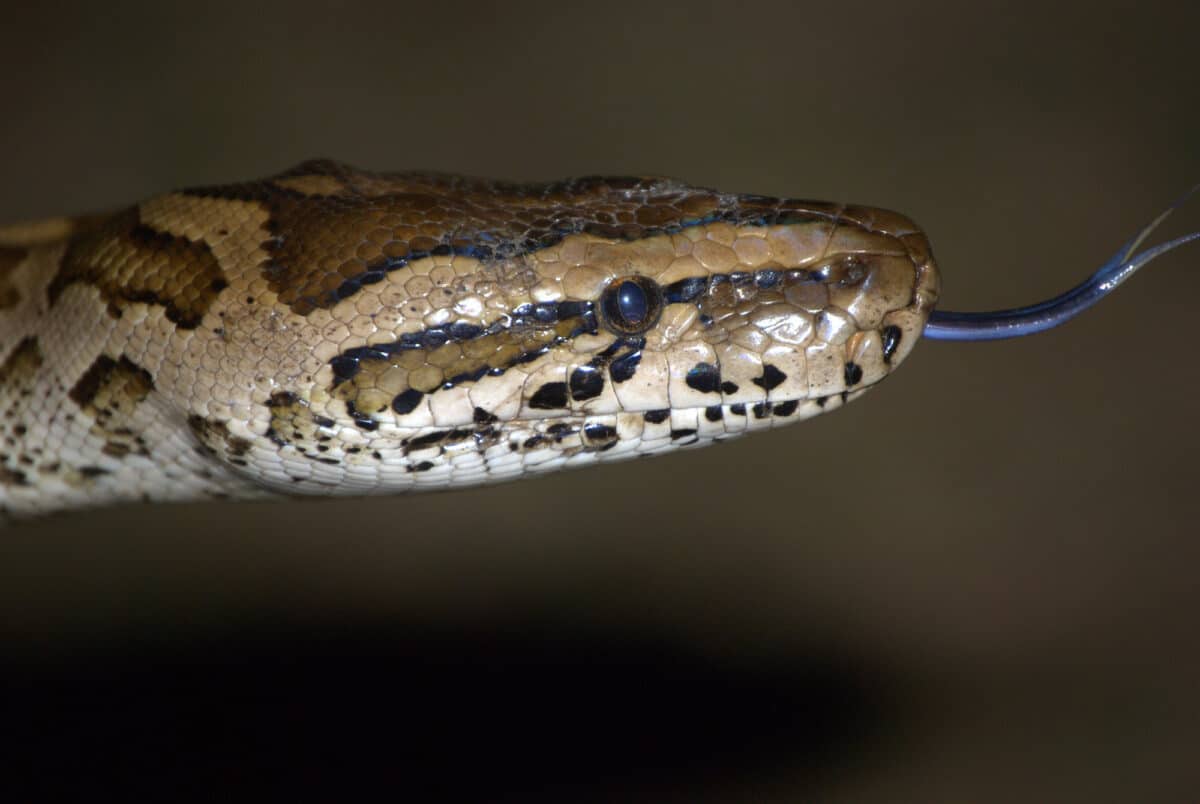
Africa’s largest snake, the African rock python, commands respect throughout sub-Saharan Africa where it can reach lengths of 20 feet (6 meters) and weights exceeding 200 pounds (91 kg). These powerful constrictors display a complex pattern of brown, olive, and yellowish blotches set against a lighter background—coloration that serves them well in the varied habitats they occupy, from savannas and forests to rocky outcrops and occasionally semi-aquatic environments. Unlike many other giant snakes, African rock pythons have earned a reputation for their particularly aggressive temperament when threatened, making them one of the few python species known to attack humans without provocation. They’re remarkably adaptable predators, consuming everything from rodents and monitor lizards to antelopes and crocodiles. While still relatively common across their range, African rock python populations face pressure from habitat destruction, hunting for their skin and meat, and persecution due to fear.
Boa Constrictor (Boa constrictor)
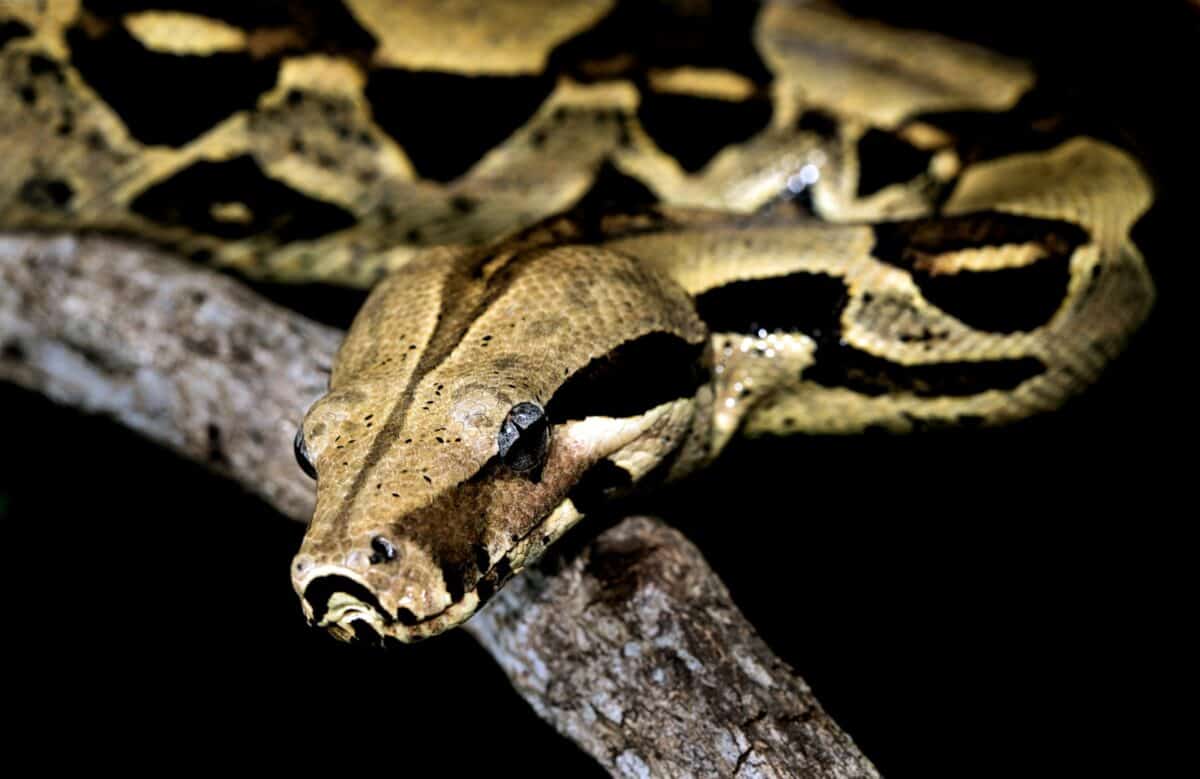
The iconic boa constrictor, while not the largest of the giant snakes, still commands attention with specimens regularly reaching 10-13 feet (3-4 meters) in length. These heavy-bodied constrictors range throughout much of Central and South America, adapting to diverse habitats from tropical rainforests to arid regions. Their distinctive saddle-like brown or reddish-brown markings on a tan or grayish background make them instantly recognizable even to casual observers. Unlike some other giant snakes that specialize in aquatic habitats, boa constrictors are excellent climbers, especially when young, and hunt from both the ground and trees. Their diet typically consists of small to medium-sized mammals, birds, and lizards, which they kill through constriction—tightening their coils with each exhale of their prey. Despite their widespread distribution, boa constrictors face threats from habitat destruction and over-collection for the pet trade, with some regional populations showing concerning declines.
Indian Python (Python molurus)

The Indian python, also known as the black-tailed python or Indian rock python, is a large constrictor native to the Indian subcontinent, reaching lengths of 12-18 feet (3.7-5.5 meters). These impressive snakes display a complex pattern of asymmetrical brown blotches bordered in black against a yellowish or cream-colored background, providing effective camouflage in their natural habitats of grasslands, marshes, and open forests. Unlike many other giant snakes, Indian pythons are known for their tolerance of both tropical and subtropical conditions, allowing them to survive in a variety of environments across India, Pakistan, Sri Lanka, and Nepal. They’re primarily nocturnal predators, feeding on mammals, birds, and reptiles, which they detect using heat-sensing pits along their upper lips. Once widespread across the Indian subcontinent, Indian python populations have declined significantly due to habitat loss, hunting for their skin, and collection for traditional medicine, leading to their protected status in many regions.
Yellow Anaconda (Eunectes notaeus)

The yellow anaconda, while smaller than its famous green cousin, still qualifies as a giant snake, with females reaching lengths of 10-12 feet (3-3.7 meters) and weights of up to 120 pounds (55 kg). Native to south-central South America, including Paraguay, southern Brazil, northeastern Argentina, and Bolivia, these predominantly aquatic snakes inhabit swamps, marshes, and slow-moving rivers of the Paraguay River basin and the Pantanal wetlands. As their name suggests, yellow anacondas display a base color of golden-yellow to greenish-yellow, overlaid with black or dark brown blotches and streaks that provide excellent camouflage among wetland vegetation. Like other anacondas, they’re supremely adapted to aquatic life with eyes and nostrils positioned on top of their heads, allowing them to remain almost completely submerged while breathing and observing potential prey. Their diet consists primarily of water birds, capybaras, fish, and caimans. While not as endangered as some other giant snakes, yellow anacondas face threats from habitat destruction and hunting for their skin.
Amethystine Python (Simalia amethistina)

The amethystine python, also known as the scrub python, is Australia and New Guinea’s largest snake, reaching impressive lengths of up to 20 feet (6 meters), though most specimens are considerably smaller. These arboreal giants inhabit rainforests, woodlands, and scrublands across northern Australia, Papua New Guinea, and Indonesia, where they display remarkable climbing abilities despite their substantial size. Their name derives from the iridescent sheen of their scales, which can reflect purple, blue, and green hues in certain lighting—a characteristic that complements their base coloration of brown or olive with irregular darker markings. Amethystine pythons are primarily nocturnal hunters, using their excellent vision and heat-sensing pits to locate prey ranging from rodents and birds to wallabies and occasionally domestic animals. While they remain relatively common in remote areas, these impressive pythons face increasing pressure from habitat fragmentation, road mortality, and persecution by humans who fear their imposing size.
Dark-Spotted Anaconda (Eunectes deschauenseei)
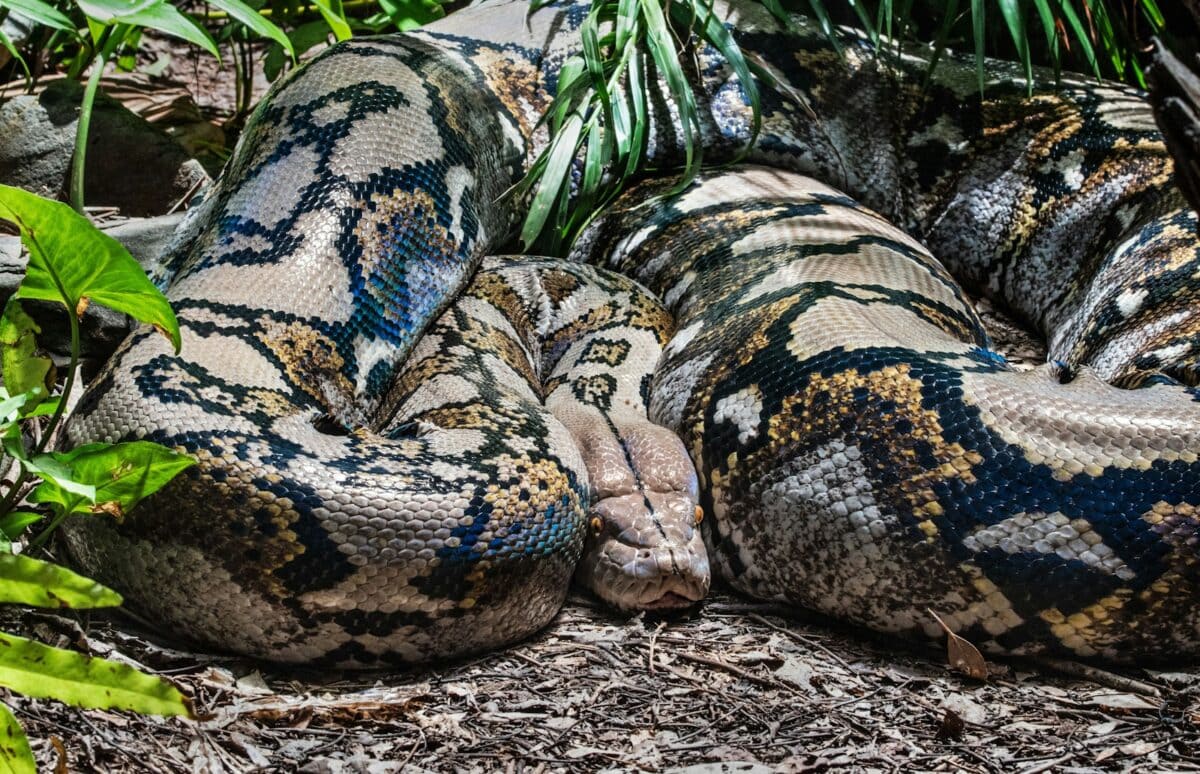
The dark-spotted anaconda remains one of the least studied of the giant snake species, inhabiting the northeastern regions of South America, particularly coastal areas of Brazil, French Guiana, Guyana, and Suriname. While smaller than both the green and yellow anacondas, this species still reaches impressive lengths of 9-10 feet (2.7-3 meters). Their coloration consists of a brown or olive-brown base adorned with dark, sometimes nearly black, spots and blotches—a pattern that provides excellent camouflage in the muddy, vegetation-rich waters they inhabit. Like other anaconda species, dark-spotted anacondas are predominantly aquatic, preferring freshwater marshes, swamps, and slow-moving streams near coastal regions. Their diet typically includes fish, amphibians, small reptiles, and water birds, which they ambush using their excellent aquatic hunting abilities. Due to their remote habitat and secretive nature, relatively little is known about wild populations, though they likely face threats similar to other anaconda species: habitat destruction, pollution of waterways, and occasional hunting by humans.
Papuan Olive Python (Apodora papuana)

The Papuan olive python, sometimes called the Papuan python, is a large, heavy-bodied snake endemic to New Guinea, where it can reach lengths of 14-16 feet (4.3-4.9 meters). As their name suggests, these impressive constrictors display a relatively uniform olive-brown to olive-green coloration, sometimes with subtle darker markings—a simple but effective camouflage in the dense rainforest habitats they prefer. Unlike many other giant snake species that are either terrestrial or aquatic specialists, Papuan olive pythons demonstrate remarkable versatility, moving comfortably through trees, along the ground, and even in water when necessary. They’re primarily nocturnal hunters, feeding on a variety of mammals, birds, and reptiles native to New Guinea’s diverse ecosystems. Despite their impressive size, these pythons remain poorly studied in the wild, partly due to the challenging terrain of their native habitat. While their remote distribution has somewhat protected them from human pressures, deforestation for agriculture, logging, and mining increasingly threatens their rainforest homes.
Bolivian Anaconda (Eunectes beniensis)
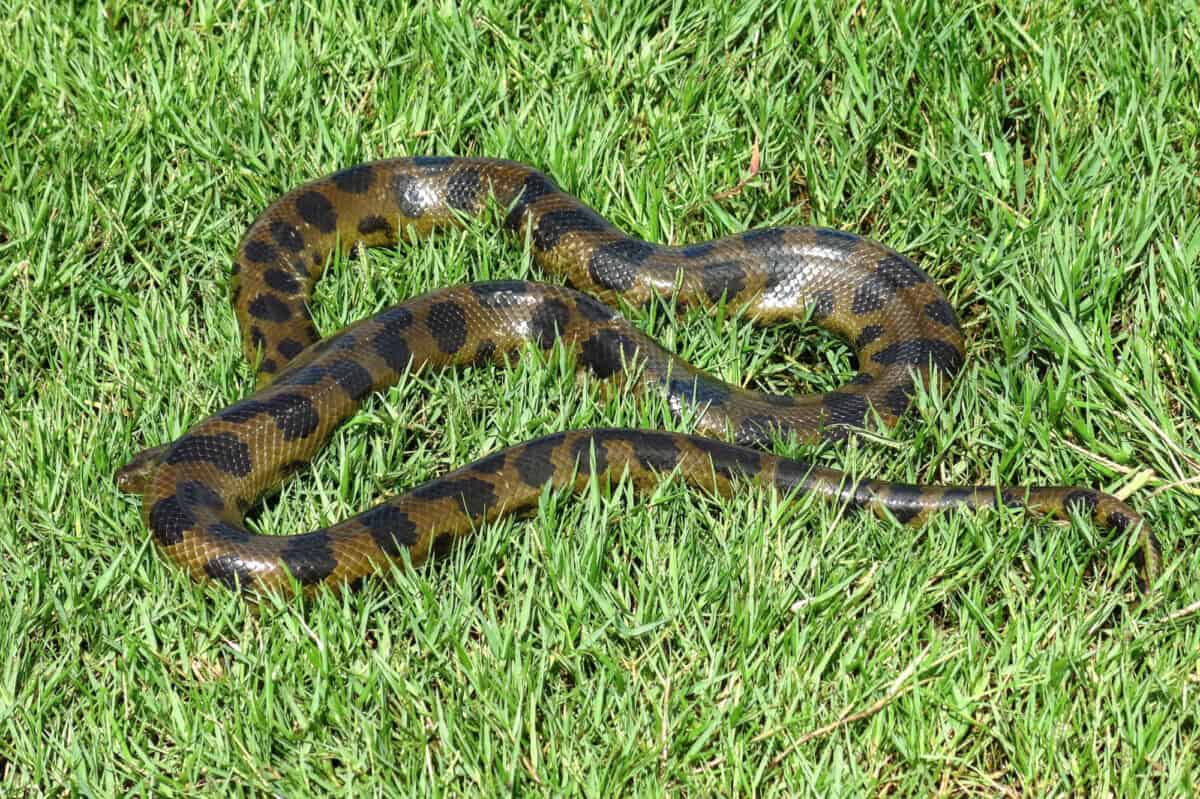
The Bolivian anaconda, described scientifically only in 2002, represents one of the most recently recognized giant snake species. Endemic to the Beni Province of northeastern Bolivia, these large constrictors inhabit the flooded grasslands and rainforests of the Amazon Basin, particularly areas associated with the Beni and Madre de Dios River drainage systems. While smaller than the green anaconda, Bolivian anacondas still reach impressive lengths of 9-12 feet (2.7-3.7 meters). Their appearance resembles that of the green anaconda but with subtle differences in pattern and coloration—typically displaying a greenish-brown base color with large oval black spots arranged in a distinctive pattern. Like other anaconda species, they’re predominantly aquatic, with females substantially larger than males. Their diet likely consists of fish, birds, small caimans, and mammals that they ambush from the water. Due to their limited range and relatively recent scientific description, Bolivian anacondas remain poorly studied, and specific conservation concerns haven’t been thoroughly assessed, though habitat destruction related to agriculture and development likely poses the greatest threat.
Southern African Python (Python natalensis)
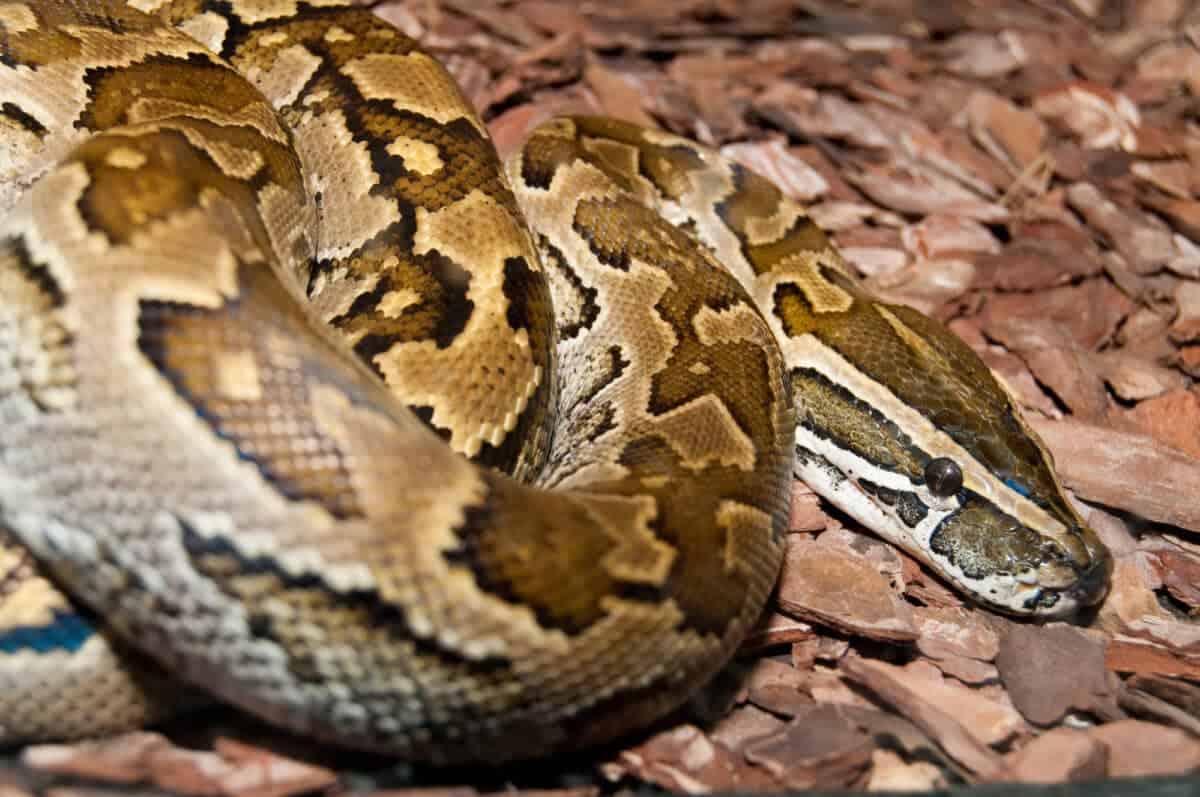
The Southern African python, formerly considered a subspecies of the African rock python but now recognized as a distinct species, inhabits the southern regions of Africa, including South Africa, Namibia, Botswana, and Zimbabwe. These impressive constrictors can reach lengths of 16-20 feet (4.9-6.1 meters) in exceptional cases, though most adults are considerably smaller. They display a complex pattern of brown, chestnut, and tan blotches on a lighter background, providing effective camouflage in the varied habitats they occupy, from savanna grasslands to woodlands and rocky outcrops. Southern African pythons are ambush predators, lying in wait along game trails or near water sources before striking with remarkable speed for their size. Their diet includes a wide range of prey, from rodents and monitor lizards to antelopes and occasionally small crocodiles. While more adaptable than many other giant snake species, Southern African pythons face significant threats from habitat fragmentation, roadkill, and direct persecution by humans who fear them. In some regions, they’re also hunted for their skin, meat, and use in traditional medicine.
Blood Python (Python brongersmai)
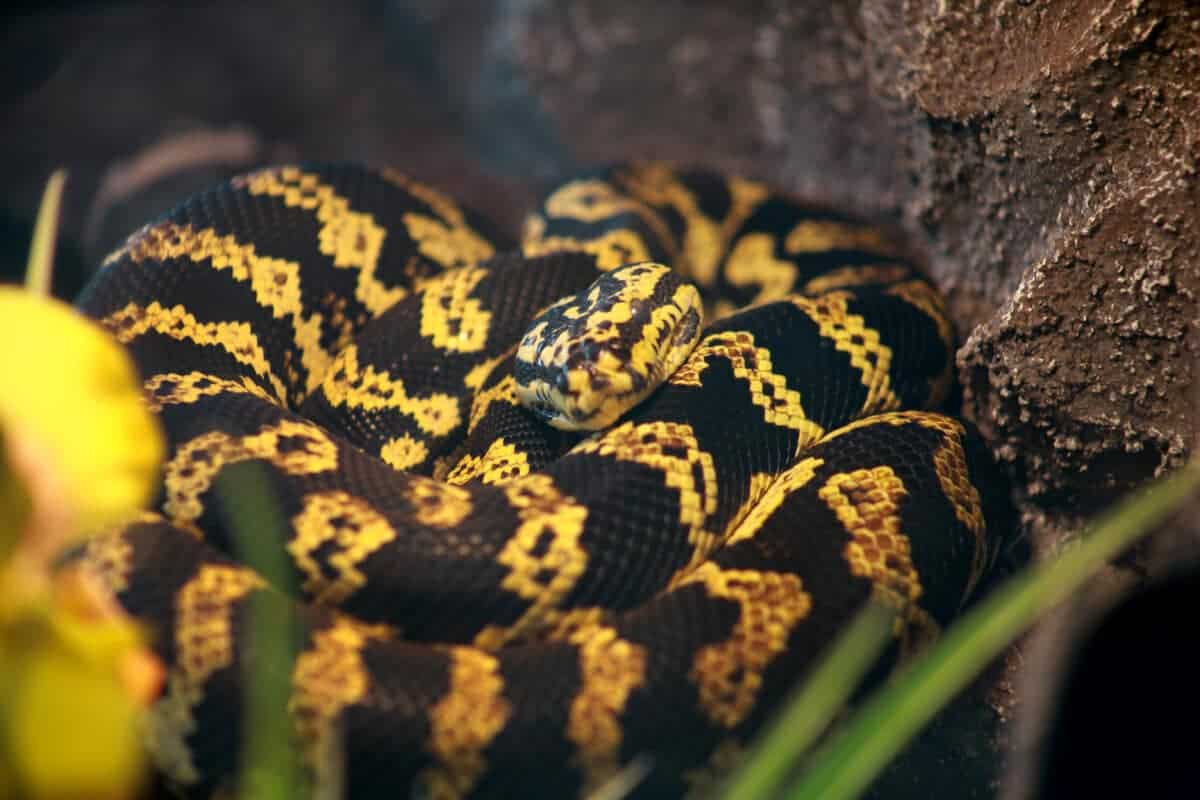
The blood python, while not among the longest giant snakes, compensates with its impressive girth and distinctive coloration. Native to southeastern Asia, particularly Malaysia, Singapore, Sumatra, and nearby islands, these stout constrictors typically reach lengths of 5-8 feet (1.5-2.4 meters) but can weigh up to 50 pounds (23 kg) due to their exceptionally thick body. As their name suggests, many blood pythons display a striking brick-red to blood-red base color with irregular tan or brown blotches, though coloration varies significantly between individuals and geographic locations. Unlike many other giant snakes that prefer arboreal or aquatic habitats, blood pythons are primarily terrestrial, inhabiting lowland swamp forests and nearby agricultural areas like rubber and palm oil plantations. They’re known for their relatively sedentary lifestyle, often remaining motionless for extended periods while waiting to ambush prey, which includes rodents, birds, and small mammals. Despite their somewhat limited range, blood pythons remain relatively common, though they face increasing pressure from habitat destruction, particularly the conversion of native forests to palm oil plantations, as well as collection for the pet trade and their skin.
Cuban Boa (Chilabothrus angulifer)
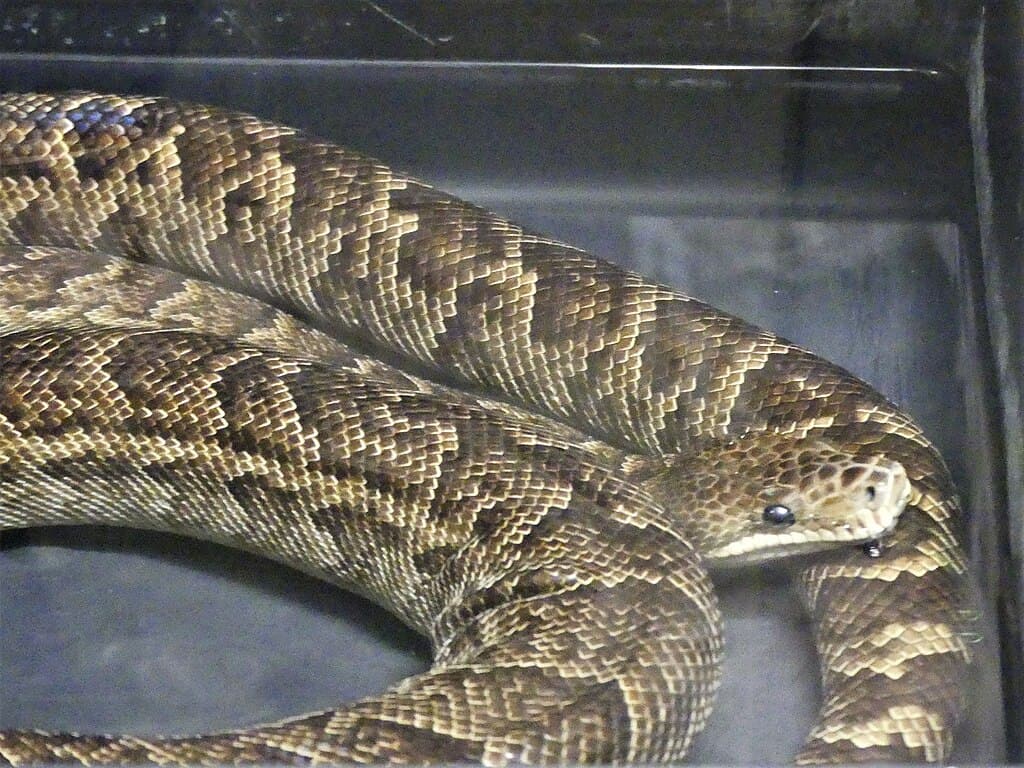
The Cuban boa holds the distinction of being the largest snake native to the Caribbean islands, with exceptional specimens reaching lengths of 16 feet (4.9 meters), though most adults are considerably smaller. Endemic to Cuba and some nearby islands, these impressive constrictors display a variable pattern of irregular brown or gray blotches against a lighter background, often with a distinctive herringbone pattern along the spine. Cuban boas demonstrate remarkable habitat versatility, occupying environments ranging from lowland forests and caves to agricultural areas and even suburban regions. Unlike many other giant snake species that specialize in either terrestrial or arboreal lifestyles, Cuban boas move comfortably both on the ground and in trees, particularly when younger. They’re primarily nocturnal hunters, feeding on a diet of rodents, birds, and occasionally bats, which they sometimes capture at cave entrances using a unique hunting strategy of hanging from the ceiling and grabbing passing prey. Despite their adaptability, Cuban boas face significant conservation challenges, including habitat destruction, direct persecution by humans, and the introduction of invasive predators like cats and mongooses, leading to their classification as “Near Threatened” by the International Union for Conservation of Nature (IUCN).
Conclusion

Giant snakes have long inspired wonder and fear, not just for their size but for their mysterious, often misunderstood roles in ecosystems around the world. From the swampy waters of South America to the dry savannas of Africa and the dense forests of Asia, these powerful predators have evolved to thrive in a wide variety of environments. Yet despite their resilience, many face growing threats from habitat destruction, hunting, and human encroachment. Understanding and protecting these remarkable reptiles is essential—not only to preserve biodiversity but also to maintain the balance of the ecosystems they inhabit. As we continue to explore and learn more about these elusive giants, their survival will depend largely on our willingness to coexist and conserve the wild spaces they call home.

As a little kid, I fell in love with nature, wildlife, and animals. Living in the USA, South Africa, Italy, China and Germany gave me the opportunity to discover the world's Wildlife. My favorite animals are Mountain Gorillas, Siberian Tigers, and Great White Sharks.
I'm a certified PADI Open Water Diver, went to Everest Base Camp and Trekked Gorillas in Uganda. I hold a Master of Science in Economics and Finance.
Please send any feedback to feedback@animalsaroundtheglobe.com
- 13 Giant Snake Species Still Found in the Wild - August 15, 2026
- 13 Pets That Are Surprisingly Good at Navigating Emergencies - August 15, 2026
- Top 10 Cave Animals - August 15, 2026
Leave a comment
You must be logged in to post a comment.