

When we think of Earth’s ancient creatures, dinosaurs often steal the spotlight. These magnificent reptiles dominated our planet for around 165 million years before their extinction approximately 65 million years ago. But what if some creatures swimming in our oceans today have lineages that stretch back even further—to times before dinosaurs roamed the Earth? In the depths of our oceans live remarkable survivors, evolutionary success stories that have weathered multiple mass extinctions and continued to thrive while countless other species vanished forever. These living fossils offer us a glimpse into Earth’s distant past, connecting us to a primordial world that existed long before humans appeared. Let’s dive deep into the fascinating world of ancient marine creatures whose ancestors may have been swimming the prehistoric seas while dinosaurs were still evolving.
The Concept of Living Fossils

The term “living fossil” was first coined by Charles Darwin in his groundbreaking work “On the Origin of Species” (1859). It refers to species that have remained relatively unchanged for millions of years and closely resemble their ancient ancestors found in the fossil record. These organisms have maintained their basic body plans and ecological niches despite the passage of vast stretches of geological time.
Living fossils represent evolutionary stability rather than stagnation—their unchanging forms testify to a remarkably successful adaptation that has stood the test of time. While evolution continues in all living things, some species experience much slower rates of morphological change than others, particularly when they occupy stable ecological niches that impose consistent selective pressures over millions of years.
The Age of Dinosaurs in Context

To understand whether certain sea creatures predate dinosaurs, we need to establish a clear timeline. Dinosaurs first appeared during the Triassic Period, approximately 231 million years ago. They evolved from archosaur ancestors and quickly diversified, dominating terrestrial ecosystems throughout the Mesozoic Era (which includes the Triassic, Jurassic, and Cretaceous periods).
This means that any marine lineage with a confirmed evolutionary history extending back more than 231 million years would indeed be older than dinosaurs. The Mesozoic Era is often called the “Age of Reptiles” due to the dominance of dinosaurs, but during this same time, the oceans teemed with their own diverse ecosystems, including many creatures whose descendants still swim in today’s seas.
The Horseshoe Crab: A 445-Million-Year Legacy
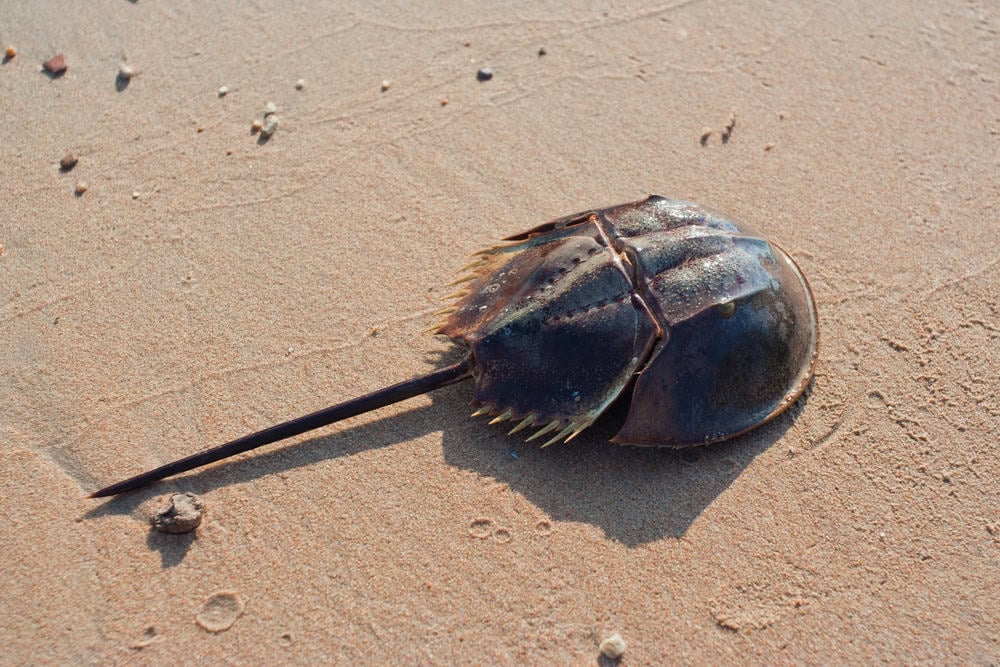
Horseshoe crabs (Limulidae) represent one of the most ancient lineages still present on Earth today. Despite their name, they aren’t true crabs but are more closely related to spiders and scorpions. Fossil evidence indicates that horseshoe crabs have existed for at least 445 million years, dating back to the Ordovician Period—a staggering 214 million years before the first dinosaurs appeared. What’s truly remarkable about horseshoe crabs is how little they’ve changed over this vast timespan.
Comparing modern specimens with their fossilized ancestors reveals striking similarities, suggesting that their distinctive body plan—with its horseshoe-shaped carapace, long tail spike, and multiple legs—was perfected hundreds of millions of years ago. Their blue copper-based blood, which is harvested for medical testing due to its unique properties, further highlights their evolutionary distinctiveness.
Nautilus: The Last Shelled Cephalopod

The chambered nautilus (Nautilus pompilius) represents another ancient marine lineage that predates dinosaurs. Nautiloids, the group to which modern nautiluses belong, first appeared approximately 500 million years ago during the Late Cambrian period. While modern nautilus species themselves aren’t that old, they belong to a lineage that has remained remarkably consistent for hundreds of millions of years. The nautilus is the only surviving member of the externally shelled cephalopods, a group that once dominated ancient seas.
Their distinctive spiral shells, divided into chambers connected by a siphuncle, allow these animals to control their buoyancy with remarkable precision. Their primitive compound eyes lack lenses but function effectively in the deep, dimly lit waters where they typically live. While their relatives—octopuses, squids, and cuttlefish—evolved to reduce or eliminate their shells, the nautilus has maintained its ancestral form, continuing a design that predates dinosaurs by hundreds of millions of years.
Sturgeon: Ancient Fish with Prehistoric Origins

Sturgeons represent one of the oldest lineages of bony fish still swimming in our waters today. These remarkable fish first appeared in the fossil record approximately 245 to 208 million years ago during the Triassic Period. This places their origin right around or slightly before the emergence of the first dinosaurs. Modern sturgeons retain many primitive characteristics that have changed little over this vast time span. Their bodies are mostly cartilaginous rather than bony, and they possess distinctive rows of bony plates called scutes that serve as armor.
Perhaps most notably, sturgeons have a heterocercal tail (where the upper lobe is larger than the lower) and an elongated snout with barbels—sensory organs that help them locate food in murky waters. Some sturgeon species can live for over a century and grow to enormous sizes, with the beluga sturgeon potentially reaching lengths of more than 20 feet and weights exceeding 3,500 pounds. These “living fossils” have survived multiple mass extinction events, though today many sturgeon species face critical endangerment due to human activities including overfishing, habitat destruction, and dam construction.
Sharks: Over 400 Million Years of Evolution

Sharks represent one of Earth’s greatest evolutionary success stories, with a lineage stretching back more than 400 million years—long before dinosaurs appeared. The earliest shark-like fish date to the Late Ordovician period, though they differed somewhat from modern sharks. By the Devonian Period (approximately 380 million years ago), definitive sharks had evolved, establishing a basic body plan that would prove remarkably successful across geological ages. While sharks have certainly evolved over time, their fundamental design—cartilaginous skeleton, multiple rows of replaceable teeth, and streamlined bodies—has remained consistent for hundreds of millions of years.
This makes sharks significantly older than dinosaurs, which appeared roughly 231 million years ago. Modern sharks comprise over 500 species, ranging from the massive whale shark (reaching up to 40 feet) to the diminutive dwarf lanternshark (less than 8 inches). Their evolutionary success stems from remarkable adaptations including electroreception, powerful jaws, efficient metabolisms, and sophisticated reproductive strategies—innovations that allowed them to survive multiple mass extinctions, including the one that eliminated the dinosaurs.
Crinoids: Sea Lilies from the Depths of Time
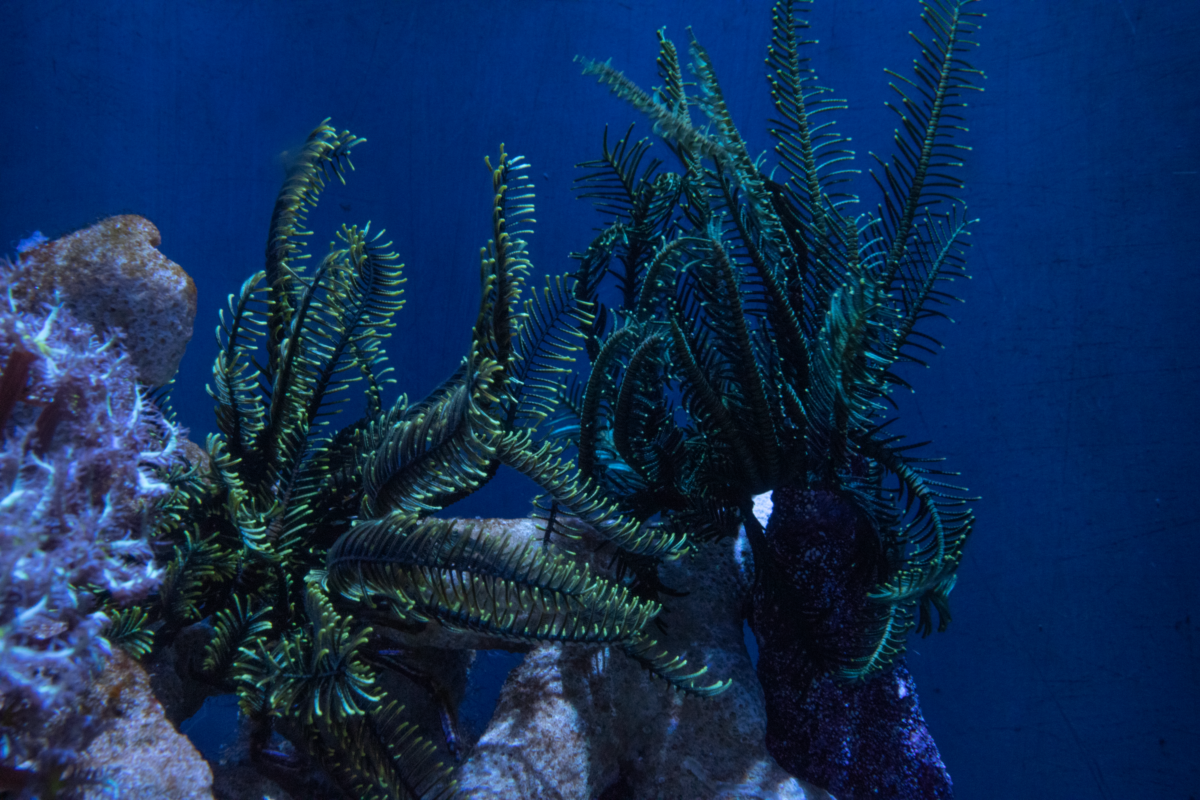
Crinoids, commonly known as sea lilies or feather stars, represent one of the most ancient animal lineages still present in modern oceans. These echinoderms (relatives of starfish and sea urchins) first appeared in the fossil record about 480 million years ago during the Ordovician Period—approximately 250 million years before dinosaurs evolved. While modern crinoids have evolved from their ancestors, their basic body plan has remained remarkably consistent through the eons.
Fixed crinoids (sea lilies) attach to the seafloor with a stalk, while mobile crinoids (feather stars) can move freely using their feathery arms. Both groups use these arms, which contain thousands of tube feet, to filter-feed by capturing plankton from passing currents. Crinoids were among the dominant marine animals during the Paleozoic Era, forming vast “gardens” on the seafloor that would have created otherworldly underwater landscapes. Though less numerous today, with approximately 600 living species, they continue to represent a direct link to Earth’s ancient oceans.
Lamprey: Jawless Fish from Another Era
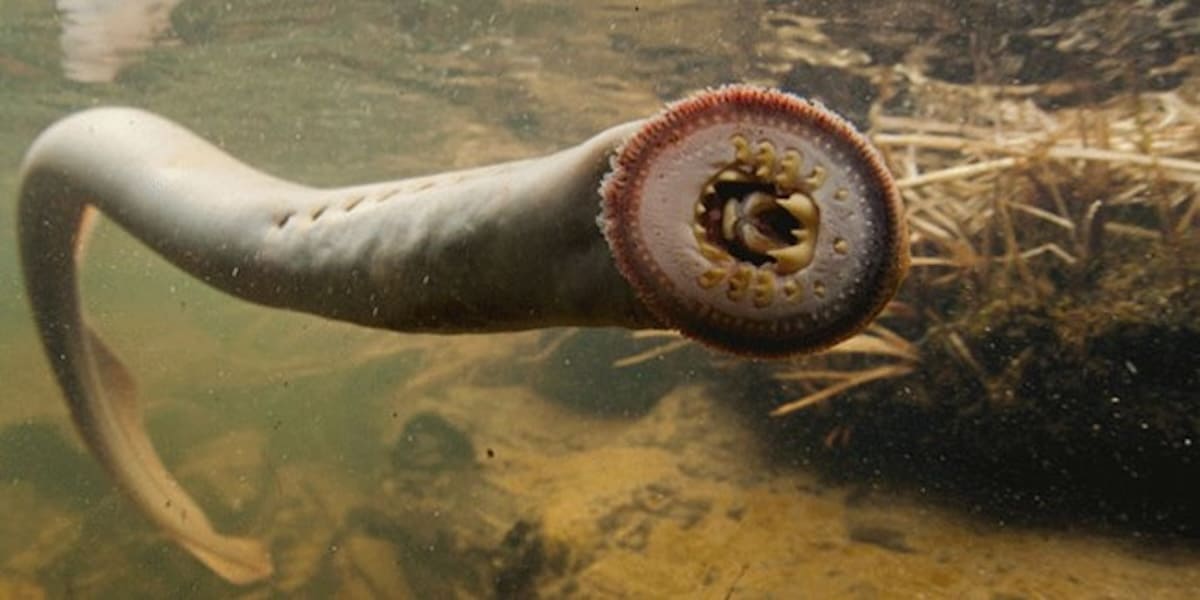
Lampreys belong to an ancient lineage of jawless fish that has existed for approximately 360 million years, with ancestors dating back over 500 million years to the Cambrian Period. This makes them significantly older than dinosaurs. These eel-like creatures lack jaws, paired fins, and scales, representing a body plan that evolved before these features became common in most fish.
Instead of jaws, lampreys possess a circular, sucker-like mouth lined with rows of keratin teeth, which parasitic species use to attach to host fish and feed on their blood and tissues. Not all lampreys are parasitic, however; some species feed only during their larval stage and do not eat as adults. Their skeleton is made entirely of cartilage, and they have a notochord rather than a vertebral column—primitive features that reflect their ancient evolutionary history. The lamprey’s brain, sensory organs, and single nostril also showcase primitive characteristics that have remained relatively unchanged for hundreds of millions of years.
Brachiopods: Ancient Shelled Creatures
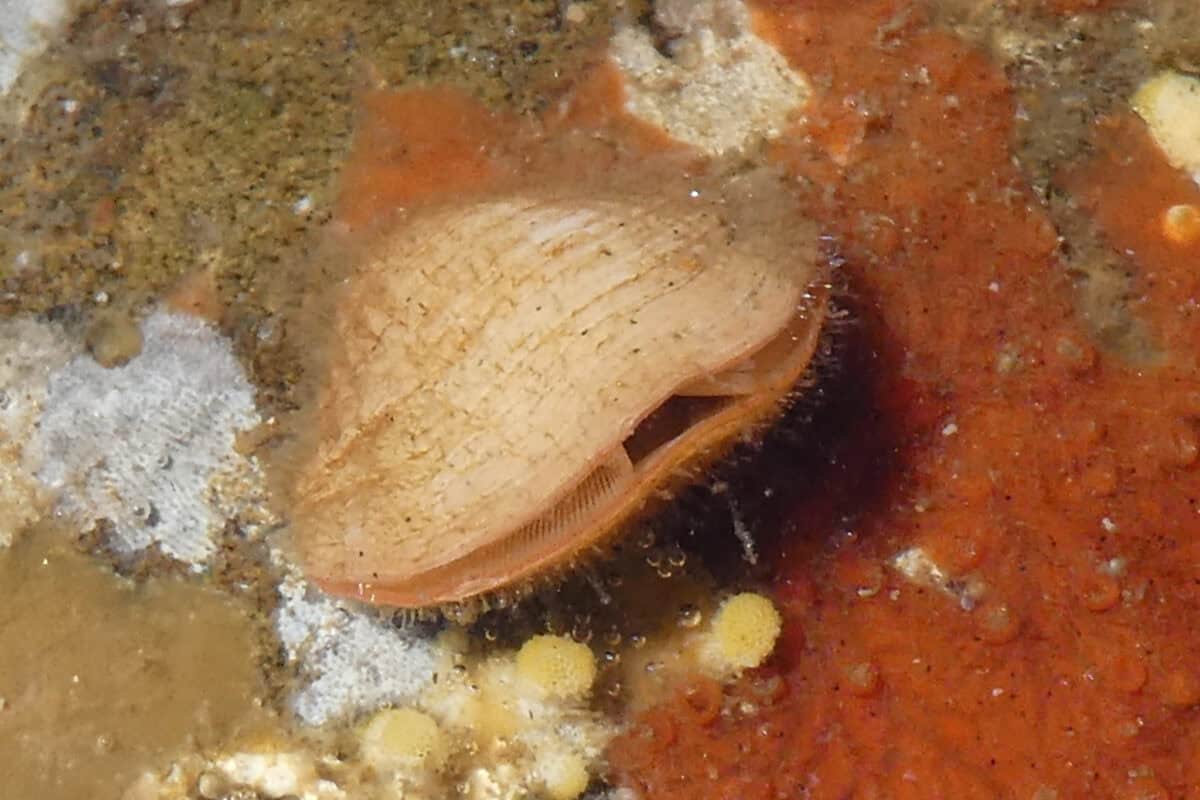
Brachiopods are marine animals that might be mistaken for clams or other bivalve mollusks at first glance, but they represent an entirely different phylum with a much more ancient lineage. These shelled creatures first appeared in the early Cambrian period, about 541 million years ago—nearly 310 million years before the first dinosaurs. While incredibly diverse and abundant in ancient seas, with over 30,000 fossil species identified, only about 450 species survive today.
Modern brachiopods maintain the same basic body plan as their ancient ancestors: two hinged shells (valves) that house a specialized feeding organ called a lophophore, which filters food particles from seawater. Unlike bivalve mollusks, whose shells are positioned on the left and right sides of their bodies, brachiopod shells cover the upper and lower surfaces. Most attach to the seafloor by a fleshy stalk called a pedicel. Having survived all five major mass extinction events, including the Permian-Triassic extinction that eliminated approximately 96% of marine species, brachiopods represent true evolutionary survivors whose lineage significantly predates dinosaurs.
Chitons: Armored Mollusks with Prehistoric Roots

Chitons are marine mollusks distinguished by their eight overlapping shell plates, which give them an armored, segmented appearance. This ancient group first appeared in the fossil record during the Late Cambrian period, approximately 500 million years ago—long before dinosaurs evolved. Their distinctive eight-plated design was established early in their evolutionary history and has remained remarkably consistent over hundreds of millions of years. Modern chitons, comprising about 940 living species, closely resemble their ancient ancestors, making them true “living fossils.”
These creatures typically inhabit intertidal zones, where they graze on algae using their specialized radula (a tongue-like organ covered with teeth). Chitons possess a fascinating adaptation called aesthetes—sensory organs that penetrate their shell plates and can sometimes develop into eyes capable of forming images. While not as well-known as some other ancient lineages, chitons represent one of the most successful and stable molluscan body plans, having survived multiple mass extinctions while maintaining their distinctive characteristics across geological ages.
Lingula: The Unchanged Brachiopod
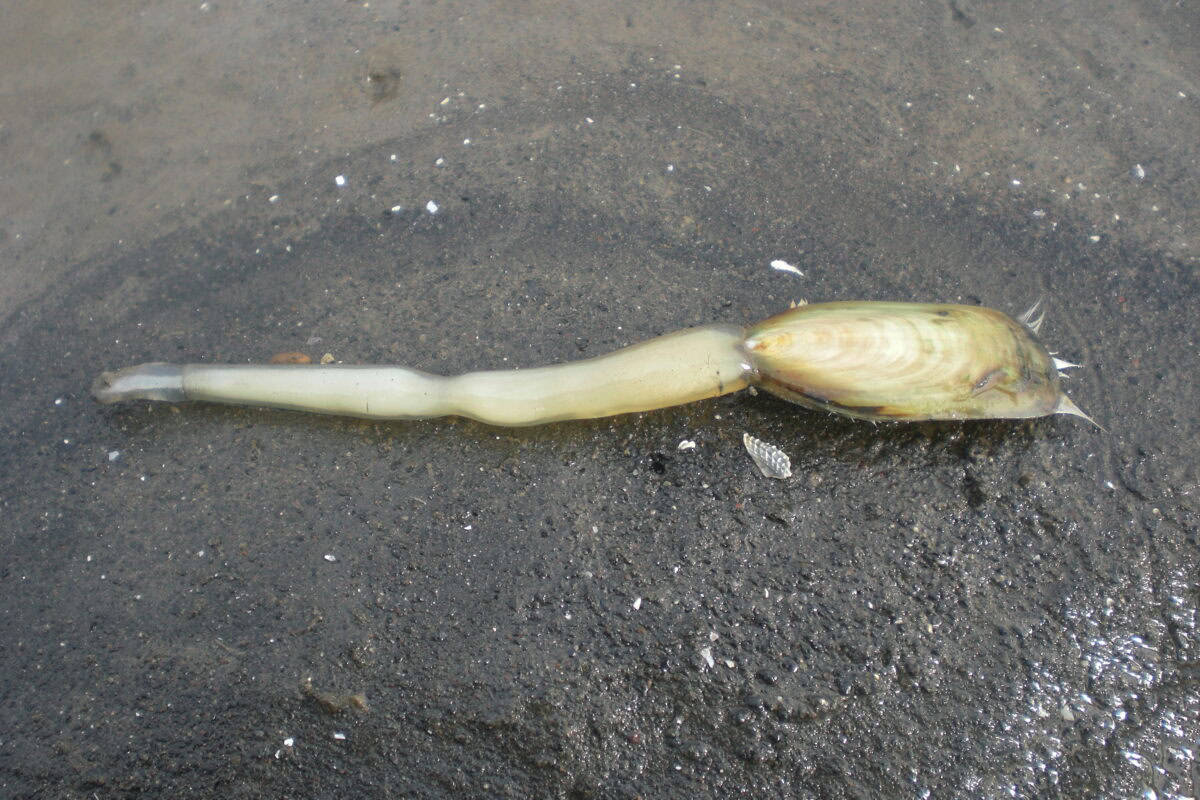
Among brachiopods, the genus Lingula deserves special mention as perhaps the oldest unchanged animal genus on Earth. Fossils virtually identical to modern Lingula date back to the Ordovician period, approximately 485 million years ago. Some paleontologists even suggest that similar forms extend back to the Cambrian period, potentially making Lingula over 500 million years old—more than twice as ancient as the first dinosaurs. Unlike most brachiopods, which attach directly to hard surfaces, Lingula lives in vertical burrows in sandy or muddy seafloors, anchored by a fleshy pedicel (stalk).
This lifestyle may have contributed to their evolutionary stability, as their soft-bottom habitat has remained relatively consistent across geological eras. Lingula possesses a phosphate-rich shell rather than the calcium carbonate shell typical of most other brachiopods, which may provide better protection in their slightly acidic burrowing environment. Their remarkable evolutionary conservatism has made them famous in paleontological circles as one of the most striking examples of morphological stasis over immense timescales.
Hagfish: Slime-Producing Primitive Vertebrates
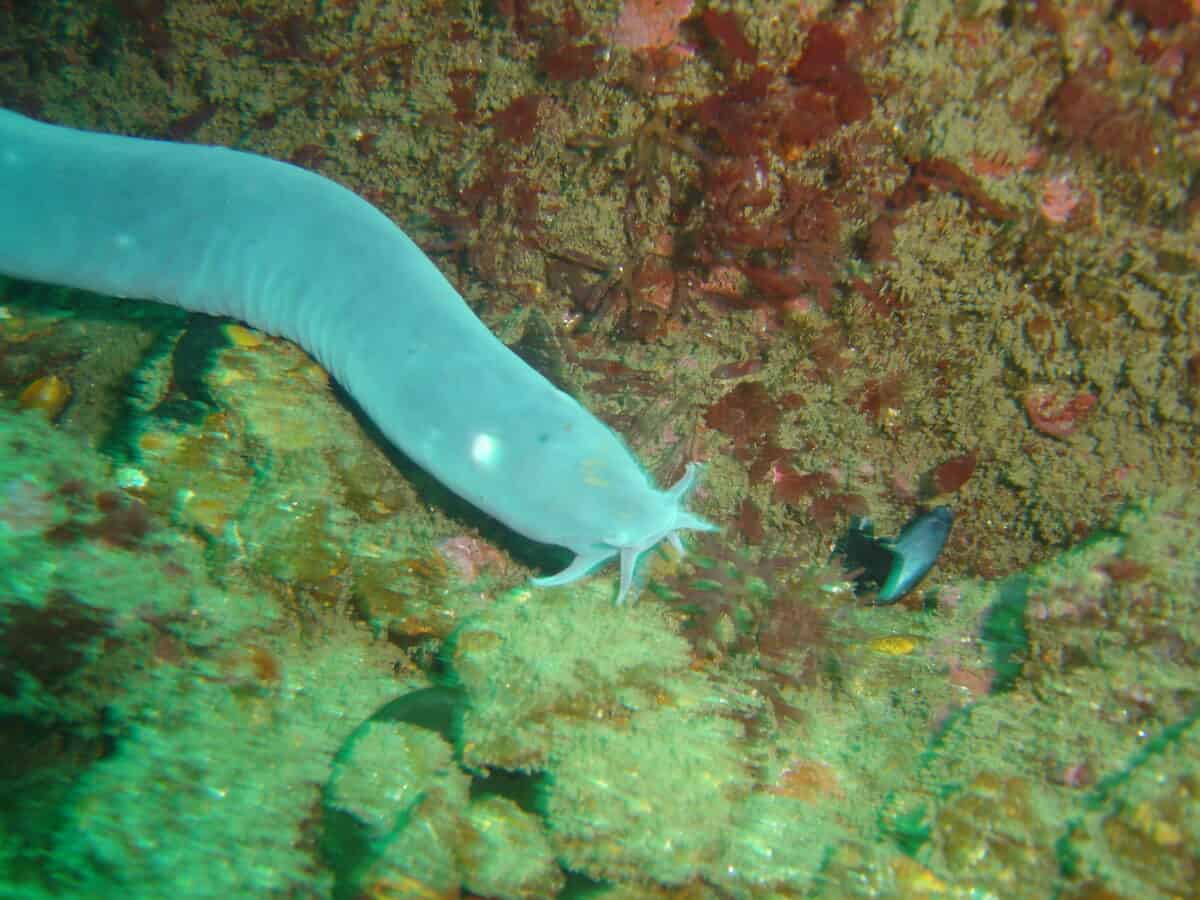
Hagfish represent one of the most primitive vertebrate lineages still swimming in today’s oceans. Fossils clearly identifiable as hagfish date back about 300 million years, but their lineage is believed to have diverged much earlier—likely over 500 million years ago during the Cambrian Period. This places their evolutionary origin well before dinosaurs evolved. These eel-shaped creatures lack jaws and paired fins, instead possessing a partial skull made of cartilage and a notochord rather than a true vertebral column.
Their most famous adaptation is their defensive slime, which they produce from specialized glands along their bodies when threatened. This slime expands dramatically upon contact with water, creating a gelatinous mass that can choke potential predators. Hagfish are primarily scavengers, feeding on dead or dying animals on the seafloor. They enter carcasses through any available opening or simply bore through the flesh, feeding from the inside out. Despite their primitive appearance and seemingly simple anatomy, hagfish have survived essentially unchanged for hundreds of millions of years, outlasting countless more “advanced” species—including dinosaurs.
The Significance of Ancient Marine Lineages

The existence of marine creatures whose lineages predate dinosaurs provides crucial insights into evolution and the history of life on Earth. These animals represent extraordinary cases of evolutionary success and stability—body plans so well-adapted to their environments that they’ve required minimal modification over hundreds of millions of years. By studying these living fossils, scientists can better understand the conditions of ancient oceans and how organisms respond to environmental changes over vast timescales.
Many of these creatures have survived multiple mass extinction events, including the Permian-Triassic extinction (which eliminated approximately 96% of marine species) and the Cretaceous-Paleogene extinction that killed the dinosaurs. Their resilience offers valuable lessons about evolutionary adaptability and survival. Additionally, these ancient lineages often possess unique biochemical adaptations that have evolved over hundreds of millions of years, such as the horseshoe crab’s copper-based blood or the novel compounds produced by various primitive marine organisms. These biochemical innovations represent potential resources for medical and biotechnological applications.
Conclusion: Windows into Earth’s Ancient Past

The oceans indeed harbor remarkable creatures whose lineages extend back to times before dinosaurs walked the Earth. From the 445-million-year-old horseshoe crab to the ancient chambered nautilus, these living fossils connect us directly to Earth’s distant past. They represent evolutionary success stories of extraordinary duration, having survived multiple mass extinctions and vast environmental changes while maintaining body plans that have proven successful for hundreds of millions of years.
As we face unprecedented rates of species extinction today, these ancient survivors remind us of nature’s resilience while simultaneously highlighting the fragility of ecosystems subjected to rapid change. By protecting these living windows into prehistoric times, we preserve not only unique modern species but also irreplaceable living connections to our planet’s deep history—connections that once lost, cannot be recovered.

From exploring the marine wonders in the Azores and witnessing the vast savannas of Kenya, to delving deep into the rich biodiversity of South Africa and traversing iconic landscapes in Australia and the US like Yellowstone, Chris's experiences are vast.
With a penchant for diving alongside sharks, the ocean holds a special place in his heart.
Through his academic insights, he champions wildlife conservation, striving with 'Animals Around The Globe' to cultivate a profound connection between humans and animals, enhancing our mutual appreciation.
Connect with him at Feedback@animalsaroundtheglobe.com.