


Animals continue to amaze scientists with behaviors and abilities that challenge our understanding of cognition, adaptation, and survival. While science has made tremendous strides in explaining animal behavior through evolutionary biology and neuroscience, some remarkable instances still leave researchers scratching their heads. These extraordinary cases where animal instincts seem to defy scientific explanation showcase nature’s complexity and remind us that despite our technological advances, the natural world still holds many mysteries. From seemingly impossible navigation skills to unexplained premonitions of natural disasters, these 14 examples demonstrate how animal instincts can transcend our current scientific understanding.
Elephants Sensing Death and Mourning Rituals
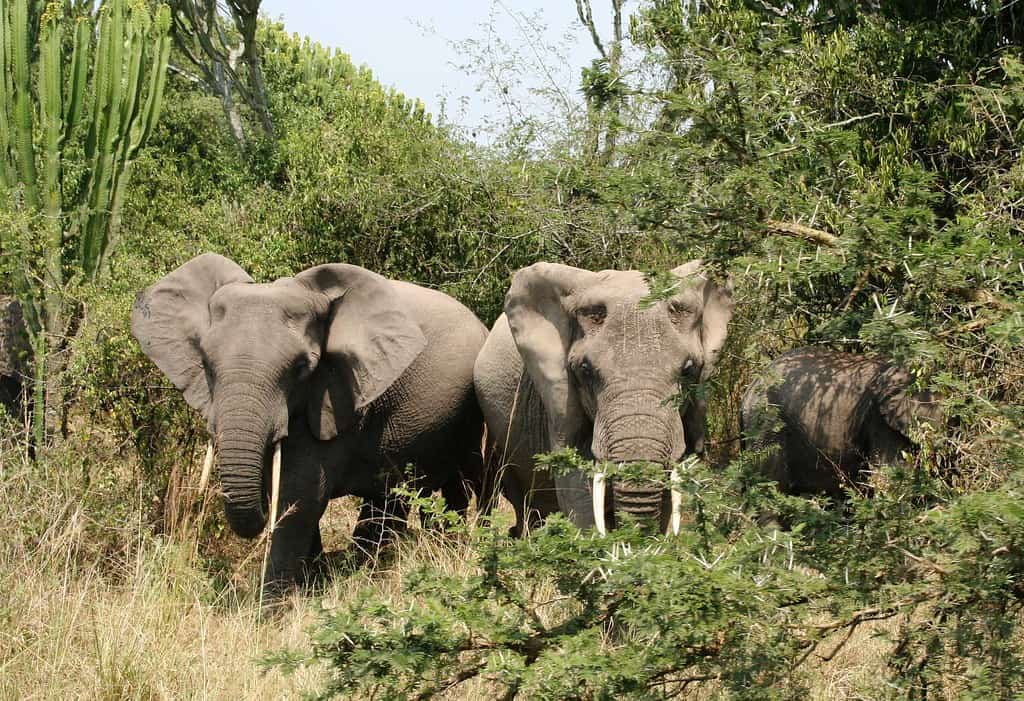
Elephants have demonstrated an uncanny ability to sense when death is approaching, not only for members of their own species but sometimes for humans as well. In multiple documented cases, elephants have traveled long distances to attend the death or funeral of a human caretaker they knew, arriving precisely when needed despite no apparent way of knowing about the event. Their mourning rituals for their own kind are even more elaborate, with elephants returning to the remains of family members years after death, gently touching and examining the bones in what appears to be a form of remembrance. Scientists have struggled to explain how elephants can detect imminent death or maintain such long-term memories of deceased individuals. While research has shown that elephants have complex brain structures associated with memory and emotion, their apparent psychic connection to death continues to challenge purely mechanistic explanations.
Birds’ Magnetic Navigation Mysteries

Migratory birds navigate thousands of miles with astonishing precision, often returning to the exact same nesting locations year after year. While scientists have identified magnetoreception—the ability to detect Earth’s magnetic field—as a key mechanism, the complete picture of how birds process and integrate this information remains elusive. The Arctic tern, which migrates from the Arctic to Antarctica and back annually (covering about 44,000 miles), demonstrates navigation accuracy that exceeds what should be possible based on our current understanding of magnetoreception. Even more puzzling, young birds can make these journeys without ever having traveled the route before and without guidance from adults. Recent studies suggest birds may actually “see” magnetic fields through quantum effects in their eyes, a phenomenon that bridges biology with quantum physics in ways science is still struggling to fully comprehend.
Animal Earthquake Prediction

Throughout history, there have been numerous accounts of animals exhibiting strange behavior just before earthquakes strike. From snakes abandoning their nests to toads disappearing from breeding sites days before major seismic events, these behaviors suggest animals can detect precursors to earthquakes that our most sophisticated instruments cannot. In 2009, researchers in Italy noted that a colony of toads abandoned their breeding site five days before a 6.3-magnitude earthquake struck L’Aquila, only returning after the last significant aftershock. Scientists have proposed that animals might sense changes in groundwater chemistry caused by pressurized rocks, detect subtle electromagnetic field variations, or feel minute vibrations imperceptible to humans. However, no single theory has adequately explained the range and timing of these predictive behaviors, particularly those occurring days before an earthquake rather than minutes or seconds.
Unexplained Tsunami Escape by Wild Animals

One of the most striking examples of animal instincts defying scientific explanation occurred during the 2004 Indian Ocean tsunami. Despite the devastating impact on human populations with over 230,000 casualties, wildlife deaths were surprisingly minimal. At Yala National Park in Sri Lanka, where the tsunami waves reached up to two miles inland, researchers found virtually no dead wild animals. Eyewitnesses reported seeing animals, including elephants, buffalo, and deer, moving to higher ground hours before the tsunami struck, with no apparent environmental cues that would trigger such behavior. Similar accounts emerged from other affected regions. While some scientists suggest animals might detect infrasound waves produced by earthquakes or perceive subtle changes in air or water pressure, these theories don’t fully explain how animals predicted a tsunami triggered by an underwater earthquake hundreds of miles away with enough advance warning to reach safety.
Anticipatory Behavior in Companion Animals

Many pet owners report their dogs or cats seem to know when they’re about to return home, exhibiting excited behavior minutes or even hours before they arrive. Dr. Rupert Sheldrake, a controversial biologist, conducted experiments suggesting some dogs could anticipate their owners’ returns even when they came home at random, unpredictable times and in unfamiliar vehicles, ruling out routine, scent, or sound as explanations. In one well-documented case, a dog named Jaytee began waiting by the window approximately when his owner decided to return home, regardless of the time of day or mode of transportation, even when the owner was miles away. Conventional science struggles to explain this phenomenon, with some researchers suggesting it might involve quantum entanglement or fields of consciousness not yet understood by physics. While skeptics point to selective observation or coincidence, the consistency of these reports across cultures and throughout history suggests something more complex may be at work.
Collective Intelligence in Insect Colonies

Termite mounds in Africa represent architectural achievements that seem impossible given the limited individual intelligence of termites. These structures maintain remarkably stable internal temperatures of around 87°F despite external temperatures fluctuating between 35°F at night and 104°F during the day. The mounds incorporate sophisticated ventilation systems, agricultural chambers for growing fungus, and structural reinforcement that rivals human engineering—all without centralized planning or blueprint. Similarly, honeybees solve complex mathematical problems collectively when selecting new hive locations, consistently finding optimal solutions that would require differential calculus if solved by humans. This emergent intelligence, where simple organisms create systems far more complex than any individual could conceive, challenges our understanding of consciousness and intelligence. Scientists have termed this “swarm intelligence,” but how exactly simple neural systems coordinate to solve complex problems remains incompletely understood.
The Mysterious Migration of Monarch Butterflies

The multi-generational migration of monarch butterflies presents one of biology’s most perplexing mysteries. These insects travel up to 3,000 miles from Canada and the northern United States to specific mountaintop locations in central Mexico, but what makes this remarkable is that no single butterfly completes the entire journey. It takes four generations of monarchs to complete the annual migration cycle, meaning the butterflies that return to Mexico are the great-grandchildren of those that left. Yet somehow, they navigate to the exact same trees their ancestors used, despite never having been there before. This genetic memory transmission contradicts conventional understanding of inheritance, which holds that only physical traits, not memories or knowledge, can be passed through genes. Scientists have identified genes associated with directional flight and timing, but the precise mechanism for transmitting the specific geographic knowledge remains one of science’s great unsolved mysteries.
Animals Detecting Human Illness

Numerous cases exist of animals—particularly dogs—detecting serious human illnesses like cancer, diabetes, and even COVID-19 before medical tests can identify them. In controlled studies, trained dogs have demonstrated accuracy rates exceeding 90% in detecting prostate, colorectal, and breast cancers from breath, urine, or sweat samples. More remarkably, there are documented cases of untrained pets persistently sniffing or pawing at specific areas of their owners’ bodies where tumors were later discovered. In one notable case, a dog named Sierra repeatedly sniffed her owner’s nose before doctors diagnosed a basal cell carcinoma. While scientists have identified that dogs can detect volatile organic compounds released by cancer cells, the ability of untrained animals to distinguish these specific molecules among thousands of other scents—often before advanced medical equipment can detect the disease—challenges our understanding of canine olfactory capabilities. Even more puzzling are cases where cats have detected seizures or diabetic episodes before they occur, suggesting mechanisms beyond scent detection.
Unexplainable Homing Abilities

Animals returning home across impossible distances has confounded scientists for centuries. One of the most famous cases involved a collie named Bobbie who, after being lost on a family trip in Indiana in 1923, traveled 2,551 miles back to Oregon over six months. The dog crossed mountains, rivers, and deserts, arriving home emaciated but alive. Similarly, a cat named Sugar traveled 1,500 miles from California to Oklahoma. While pigeons’ homing abilities have been partially explained through magnetoreception and visual landmarks, mammals crossing unfamiliar terrain over such vast distances remains scientifically puzzling. Even more inexplicable are cases where pets have found their owners after the humans moved to entirely new locations unknown to the animal. In controlled studies, cats returned from distances of 1-4 miles in environments they had never visited before, often traveling in a straight line toward home rather than retracing their outward journey. These abilities suggest forms of navigation beyond our current scientific understanding, possibly involving geomagnetic fields or even quantum entanglement.
Ravens’ Future Planning Capabilities

Recent research has revealed that ravens possess cognitive abilities previously thought unique to humans and great apes. Studies at Lund University demonstrated that ravens can plan for future events, selecting tools they’ll need for tasks up to 17 hours in advance, even forgoing immediate rewards for better future outcomes. What makes this particularly challenging for science is that ravens lack the neural structures humans and primates use for such complex cognition. The prefrontal cortex, which enables human planning and delayed gratification, has no clear analog in the avian brain. Yet ravens not only plan ahead but demonstrate flexibility in their planning that suggests genuine understanding rather than conditioned responses. In one experiment, ravens selected tokens they could later trade for food, generalizing this behavior to new situations without specific training. This suggests a convergent evolution of advanced cognition through entirely different neural pathways than those used by mammals, forcing scientists to reconsider fundamental assumptions about brain structure and cognitive function.
Octopus Intelligence and Problem-Solving

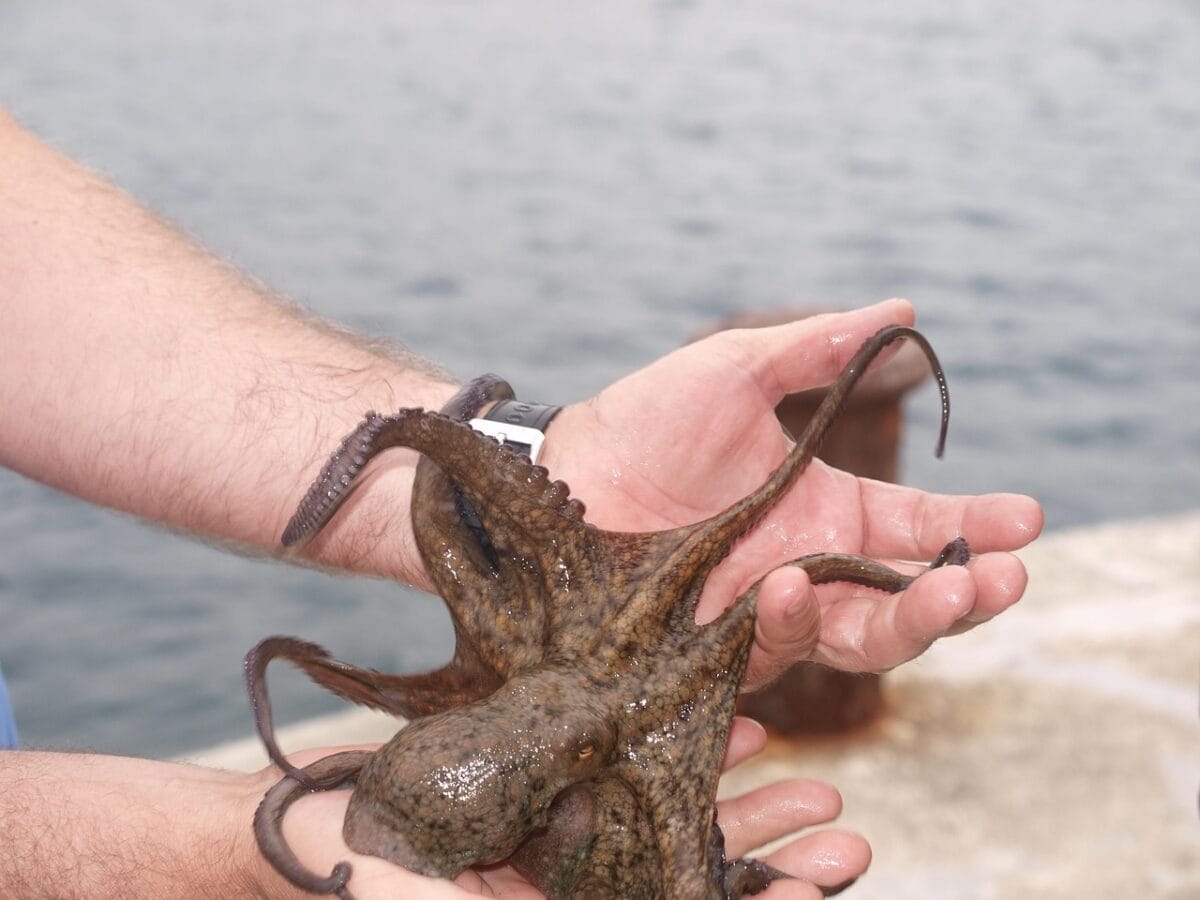
Octopuses display problem-solving abilities and intelligence that defy conventional understanding of invertebrate cognition. Their nervous system is radically different from vertebrates, with two-thirds of their neurons located in their arms rather than centralized in a brain. Despite this alien neural architecture, octopuses can solve complex puzzles, use tools, recognize individual human faces, and even escape from secured tanks through elaborately planned maneuvers. In laboratories, octopuses have unscrewed jar lids, assembled structures from found objects, and navigated mazes with efficiency rivaling mammals. One particularly confounding case involved an octopus at a New Zealand aquarium that learned to short-circuit lights by squirting water at them during nighttime hours. The rapid learning and apparent understanding of cause-and-effect demonstrated by octopuses challenges our mammal-centric models of intelligence. Their cognitive abilities suggest either convergent evolution produced similar intelligence through entirely different biological pathways, or that intelligence may emerge from neural complexity regardless of architecture, a concept that reshapes our understanding of consciousness itself.
Precognitive Behavior During Natural Disasters

Beyond earthquakes and tsunamis, animals have displayed seemingly precognitive behaviors before various natural disasters. Before the eruption of Mount St. Helens in 1980, observers noted deer, elk, and other wildlife abandoning the area weeks before any human-detectable signs of imminent eruption. Similarly, flamingos in Mumbai left their breeding grounds days before the 2004 flood that devastated the region. During Australia’s Black Summer bushfires of 2019-2020, numerous accounts emerged of koalas, normally slow-moving animals, rapidly evacuating areas sometimes days before fires reached them. While some cases might be explained by animals detecting subtle environmental changes like air pressure fluctuations or gas releases, the consistency and advance timing of these behaviors often exceed what current scientific understanding suggests is possible. Particularly challenging are instances where animals appear to predict weather events like cyclones and hurricanes well before barometric pressure changes occur, suggesting they may be sensitive to atmospheric or electromagnetic phenomena currently beyond our measurement capabilities.
Interspecies Communication and Cooperation
Wild animals from different species sometimes form cooperative relationships that seem to transcend instinct and enter the realm of conscious collaboration. One remarkable example involves honeyguide birds and humans in parts of Africa. These birds deliberately attract human attention, then lead people to bee colonies. After humans extract the honey, the birds feed on the beeswax left behind. This relationship has existed for thousands of years and involves complex communication where humans make specific calls to signal their willingness to follow, and birds respond with distinctive guiding behaviors. Similarly, cooperative hunting between coyotes and badgers in the American West shows sophisticated coordination where each species complements the other’s hunting style. In marine environments, groupers have been observed signaling to moray eels to initiate joint hunting expeditions targeting prey neither could catch alone. These interactions involve what appears to be theory of mind—the ability to understand another species’ perspective, intentions, and capabilities—which challenges traditional views of animal cognition as merely reactive or instinctual.
Conclusions: The Frontier Between Science and Mystery
These 14 remarkable examples of animal behaviors that defy current scientific explanation remind us of the limitations in our understanding of the natural world. While science continues to advance, revealing mechanisms behind previously mysterious animal abilities, new questions emerge with each discovery. The gap between what animals can do and what our scientific models predict they should be capable of suggests we may need to reconsider fundamental assumptions about cognition, consciousness, and the ways living beings perceive and interact with their environment. Perhaps most humbling is the recognition that despite our technological sophistication, many animals possess sensory abilities and forms of intelligence that evolved over millions of years to solve problems in ways humans are only beginning to comprehend. As we continue to study these phenomena, we may find that the line between “instinct” and “intelligence” is far more blurred than previously thought, and that consciousness itself may exist on a spectrum throughout the animal kingdom rather than being uniquely human.

As a little kid, I fell in love with nature, wildlife, and animals. Living in the USA, South Africa, Italy, China and Germany gave me the opportunity to discover the world's Wildlife. My favorite animals are Mountain Gorillas, Siberian Tigers, and Great White Sharks.
I'm a certified PADI Open Water Diver, went to Everest Base Camp and Trekked Gorillas in Uganda. I hold a Master of Science in Economics and Finance.
Please send any feedback to feedback@animalsaroundtheglobe.com
- The 10 Most Remote US Locations Where Wild Animals Still Rule - July 19, 2026
- 10 Reasons Lions Are the True Kings of the Wild - July 19, 2026
- 11 Cold Blooded Truths About Snakes And 2 Big Misconceptions - July 19, 2026