


From the mysterious depths of the ocean to the playful shores of coastal waters, marine animals have captivated the American imagination for generations. These creatures of the deep have found their way into our popular culture, scientific research, conservation efforts, and even our family vacations. Americans’ fascination with marine life extends beyond mere curiosity—it reflects our complex relationship with the ocean that borders our nation on multiple sides. Whether through blockbuster movies, aquarium visits, or wildlife conservation campaigns, certain marine species have secured a special place in the American consciousness. Here are twelve marine animals that have Americans particularly entranced, exploring why these creatures continue to fascinate us and what this obsession reveals about our values and concerns regarding ocean life.
12. The Bottlenose Dolphin

Bottlenose dolphins have secured their position as America’s marine sweetheart through decades of cultural prominence. From the beloved 1960s television show “Flipper” to the numerous dolphin encounter programs dotting coastal tourist destinations from Florida to Hawaii, Americans have developed a special relationship with these intelligent cetaceans. Their permanent “smile,” remarkable intelligence (with brain-to-body ratios second only to humans), and apparent friendliness toward humans have made them enduring favorites. The National Marine Mammal Foundation estimates that over 3 million Americans participate in dolphin-watching or dolphin encounter activities annually, generating approximately $300 million in tourism revenue. Research showing dolphins can recognize themselves in mirrors, solve complex problems, and maintain sophisticated social structures has only deepened Americans’ fascination with what many consider the ocean’s most charismatic ambassador.
11. The Great White Shark

Since Steven Spielberg’s 1975 blockbuster “Jaws” terrorized beachgoers across America, the great white shark has occupied a complex place in the American psyche—equal parts fear and fascination. This predator has spawned an entire subgenre of entertainment, from Discovery Channel’s wildly popular “Shark Week” (which draws approximately 20 million viewers annually) to countless documentaries, films, and books. While initial fascination stemmed from fear, America’s relationship with the great white has evolved toward respect and conservation awareness. Organizations like OCEARCH track and study these magnificent predators, garnering millions of social media followers who monitor the journeys of tagged sharks like “Mary Lee” and “Katherine.” Scientists estimate fewer than 3,500 great whites remain in U.S. waters, transforming America’s obsession from fear-based entertainment to conservation concern. This shift represents one of the most remarkable changes in public perception of any wild animal in recent decades.
10. The Sea Otter

With their expressive faces, tool-using abilities, and heart-melting habit of floating on their backs while holding paws, sea otters have become social media sensations and conservation icons. After being hunted to near extinction for their fur in the early 20th century, their population recovery represents one of America’s early conservation success stories, though they remain endangered with approximately 3,000 southern sea otters in California waters. The Monterey Bay Aquarium’s sea otter cam regularly attracts over 50,000 daily viewers, while videos of otters holding hands or using rocks to crack open shellfish routinely go viral, generating millions of views. Beyond their undeniable cuteness, sea otters serve as a keystone species in kelp forest ecosystems, controlling sea urchin populations that would otherwise decimate these underwater forests. Their ability to capture American hearts has translated into concrete conservation support, with otter-related merchandise funding crucial marine protection initiatives across the Pacific Coast.
9. The Killer Whale (Orca)

America’s relationship with orcas exemplifies our evolving understanding of marine mammal intelligence and captivity ethics. Once feared as “killer whales,” these apex predators transformed into beloved performers at marine parks like SeaWorld, where an estimated 400 million visitors have witnessed orca shows since the 1960s. The 2013 documentary “Blackfish,” which criticized captivity practices, marked a turning point in American attitudes, garnering over 21 million viewers and precipitating SeaWorld’s decision to end its breeding program. Wild orca populations, particularly the endangered Southern Resident pods of the Pacific Northwest with fewer than 75 individuals remaining, have become conservation priorities. Orcas’ complex social structures, distinct cultural practices, and remarkable intelligence continue to fascinate Americans, who now increasingly appreciate these creatures through responsible whale-watching rather than captive displays. An estimated 500,000 people participate in orca-watching tours annually in Washington state and British Columbia alone, contributing over $60 million to local economies.
8. The Sea Turtle

Sea turtles have swum their way into American hearts as symbols of ancient wisdom and oceanic endurance. All seven species found in U.S. waters are either threatened or endangered, transforming these gentle reptiles into powerful conservation ambassadors. Their remarkable life cycle—hatching on beaches, navigating to the open ocean, and females returning decades later to the exact beaches of their birth to lay eggs—captures the public imagination. Beach communities from North Carolina to Texas organize volunteer turtle watch programs, with over 10,000 volunteers participating annually to protect nesting sites. The National Oceanic and Atmospheric Administration (NOAA) reports that public sea turtle rehabilitation facilities attract over 1.5 million visitors each year. Organizations like the Sea Turtle Conservancy have leveraged this obsession into effective conservation, with satellite tracking programs allowing Americans to “adopt” and follow individual turtles online, raising both awareness and crucial funding. Their appearances in films like “Finding Nemo” and as characters in folklore across many cultures have cemented sea turtles as both cultural icons and conservation priorities.
7. The Manatee

These gentle, slow-moving “sea cows” have cultivated a devoted following in America, particularly in Florida where approximately 7,500 manatees make their home. Despite their somewhat ungainly appearance, manatees’ peaceful nature, curious disposition, and vulnerable conservation status have endeared them to Americans. An estimated 1.2 million people visit Florida annually specifically to observe manatees, generating over $30 million in ecotourism revenue. Conservation efforts have shown promising results, with the U.S. Fish and Wildlife Service reclassifying manatees from endangered to threatened in 2017, though recent increases in mortality rates have raised new concerns. The Save the Manatee Club, founded by singer Jimmy Buffett, allows Americans to “adopt” individual manatees, supporting protection efforts while fostering personal connections with these unique marine mammals. Manatee license plates remain among Florida’s most popular specialty designs, generating over $1 million annually for conservation. Their unusual evolutionary history as relatives of elephants that returned to the water, combined with their docile nature, continues to fascinate scientists and the public alike.
6. The Octopus
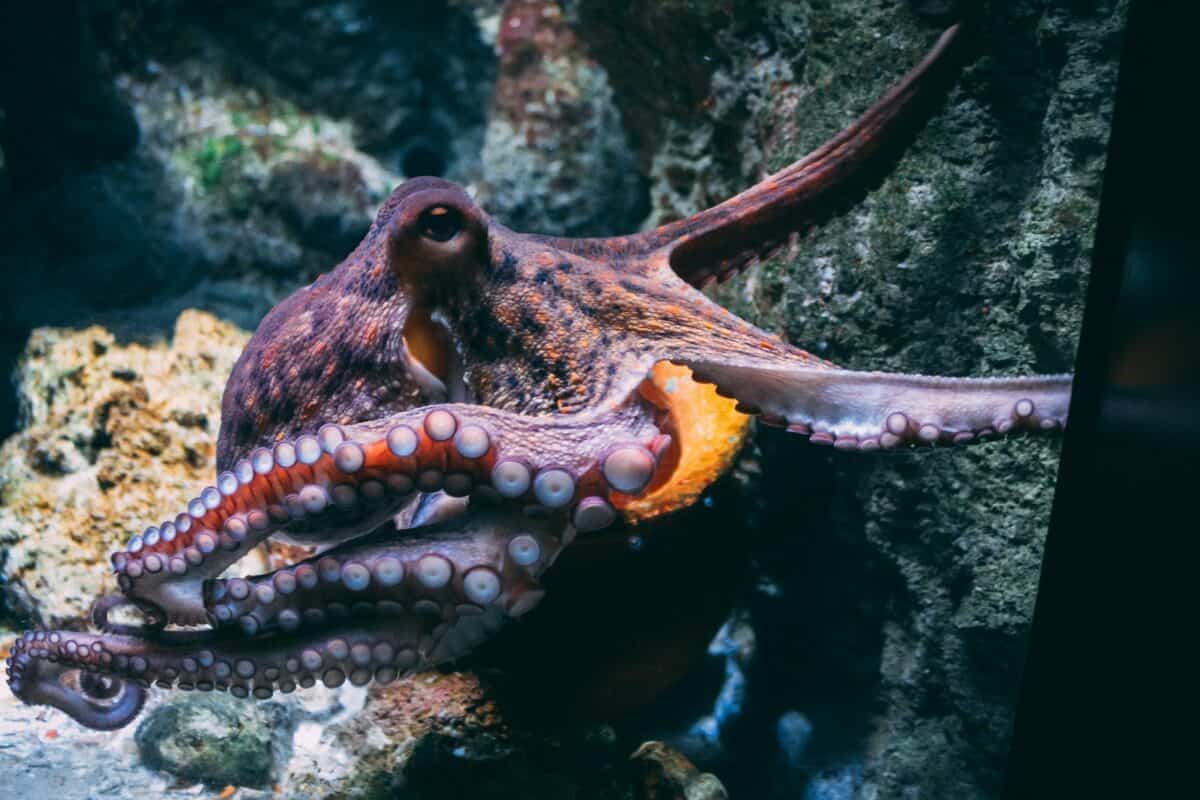
America’s fascination with octopuses has surged in recent years as research reveals their extraordinary intelligence and problem-solving abilities. These cephalopods can solve complex puzzles, use tools, recognize individual humans, and even exhibit play behaviors—cognitive abilities that challenge our understanding of intelligence evolution. The 2020 documentary “My Octopus Teacher” captivated American audiences, winning an Academy Award and drawing over 5 million viewers in its first month on Netflix. Major aquariums report that octopus exhibits consistently rank among their most popular attractions, with the Seattle Aquarium’s annual “Octopus Week” drawing over 50,000 visitors. The Giant Pacific Octopus, which can reach 16 feet across and weigh over 100 pounds, particularly captivates the public imagination. Recent scientific discoveries about octopus RNA editing abilities—effectively rewriting their genetic code in response to environmental changes—have further heightened scientific and public interest. Their alien-like appearance combined with their remarkable intelligence makes octopuses particularly fascinating subjects for Americans grappling with questions about the nature and evolution of consciousness.
5. The Blue Whale

As the largest animal ever to exist on Earth, the blue whale holds a special place in American fascination with the natural world. These magnificent creatures can reach lengths of 100 feet and weights of 200 tons, with hearts the size of small cars and tongues that can weigh as much as an elephant. While direct sightings are rare—approximately 2,000 blue whales inhabit the waters off California—their massive scale has captured the American imagination through museum exhibits, documentaries, and educational programming. The blue whale model suspended from the ceiling of the American Museum of Natural History in New York draws over 5 million visitors annually. Conservation efforts have shown promising results, with population increases since commercial whaling was banned, though numbers remain at approximately 10,000 worldwide, just 3-5% of their historical abundance. The blue whale’s haunting vocalizations, which can travel hundreds of miles underwater, have been incorporated into musical compositions, art installations, and even meditation applications, further cementing this leviathan’s cultural significance.
4. The Seahorse
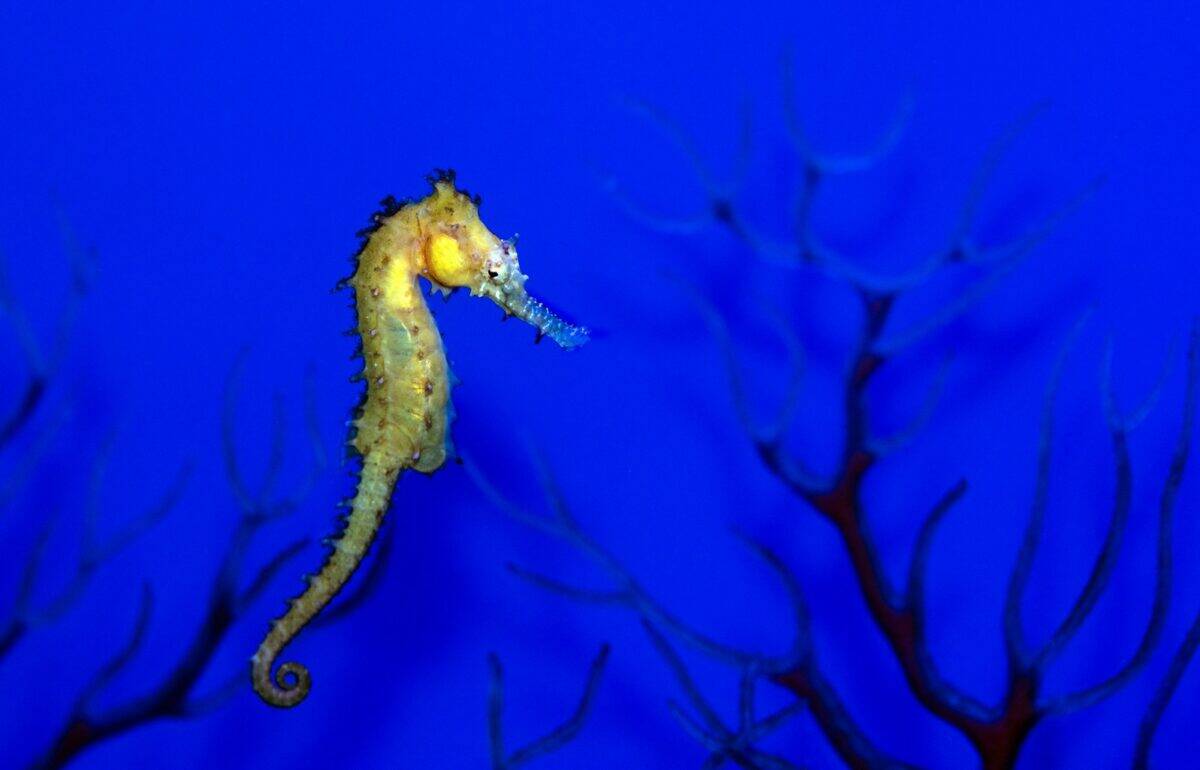
Seahorses occupy a unique position in America’s marine fascination, combining biological oddity with delicate beauty. These fish with horse-like heads swim upright, anchor themselves with prehensile tails, and feature the animal kingdom’s most radical gender role reversal: males become pregnant and give birth to hundreds of fully-formed miniature seahorses. Approximately 25 million Americans keep aquariums, with seahorses ranking among the most coveted—though challenging—species to maintain. Their popularity extends beyond hobbyists; seahorse-themed jewelry, art, and décor generate estimated annual sales exceeding $100 million in the U.S. alone. Conservation concerns have grown as wild populations decline due to habitat destruction and harvesting for traditional medicine markets, with an estimated 37 million seahorses removed from oceans annually worldwide. Organizations like Project Seahorse have leveraged Americans’ affection for these unusual creatures to advance marine protected areas that benefit entire ecosystems. Their extraordinary life history, including monogamous pair bonding and daily “greeting dances” between partners, continues to captivate both scientists and the general public.
3. The Manta Ray

With wingspans reaching up to 23 feet, manta rays glide through ocean waters with a balletic grace that belies their massive size. These gentle giants have seen their popularity soar among Americans, particularly as ecotourism destinations like Kona, Hawaii, and the Flower Garden Banks National Marine Sanctuary in the Gulf of Mexico offer opportunities to witness their underwater acrobatics. An estimated 350,000 Americans participate in manta ray snorkeling or diving experiences annually, contributing approximately $50 million to coastal economies. Recent research documenting mantas’ surprising intelligence—they have the largest brain-to-body ratio of any fish and can recognize themselves in mirrors—has deepened public fascination. Conservation concerns have mounted as manta ray populations face threats from fishing pressure, with their gill plates valued in some traditional medicine markets. In response, the United States has implemented strict protections, and several conservation organizations have launched “Adopt a Manta” programs that allow Americans to support research by sponsoring individual rays, which can be tracked via distinctive spot patterns on their undersides that are as unique as human fingerprints.
2. The Narwhal

Often called the “unicorns of the sea,” narwhals have captured American imagination despite being rarely seen by most citizens. These Arctic whales, known for the males’ spectacular spiral tusks (actually elongated teeth that can grow up to 10 feet long), have become cultural phenomena far beyond their remote habitat range. Narwhal-themed products—from pool floats to coffee mugs to holiday ornaments—generate estimated annual sales exceeding $25 million in the U.S. market. The 2003 film “Elf” famously featured the main character bidding farewell to a narwhal, introducing millions of Americans to this unusual species. Scientific interest has intensified as researchers have discovered that narwhal tusks contain millions of nerve endings and may serve as sensory organs capable of detecting changes in water temperature, pressure, and possibly even chemical composition. Climate change threatens narwhal populations, estimated at 75,000 worldwide, as Arctic sea ice diminishes and shipping routes expand into their habitat. Conservation organizations report that narwhals consistently rank among Americans’ top choices for symbolic wildlife “adoptions,” despite most donors never expecting to encounter these elusive creatures in person.
1. The Jellyfish
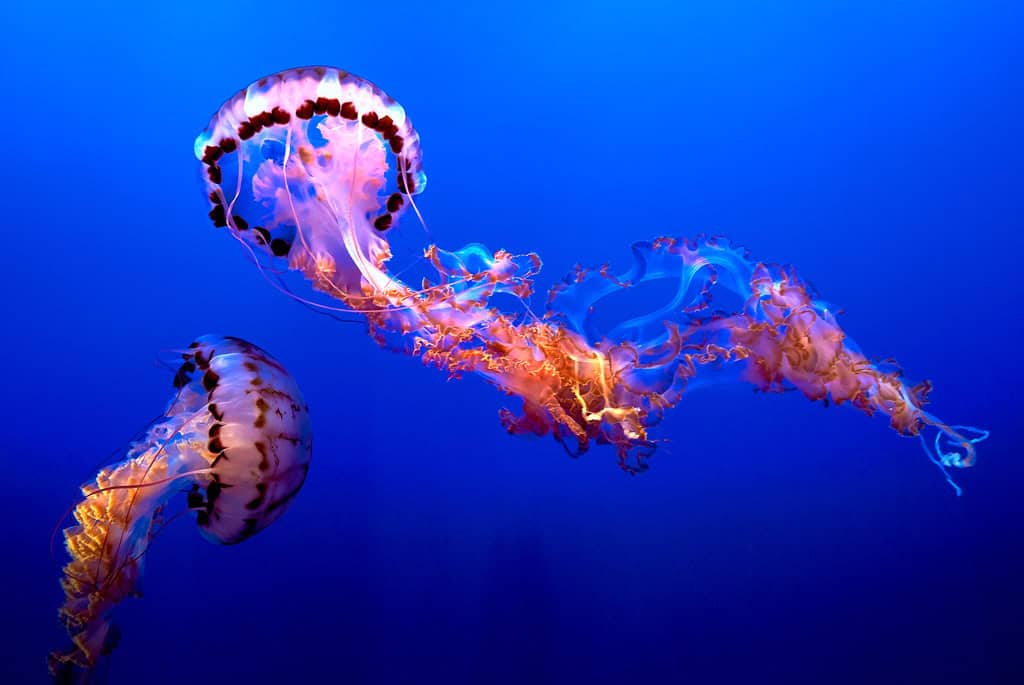
Jellyfish have emerged as unlikely stars of America’s aquarium scene, with specialized jellyfish exhibits drawing record crowds across the country. These ancient creatures, which have existed for over 650 million years and survived five mass extinctions, offer a mesmerizing combination of alien beauty and biological simplicity. The Monterey Bay Aquarium’s “The Jellies Experience” and similar exhibits at major aquariums regularly rank among their most photographed and visited attractions. Despite lacking brains, blood, or even true tissues, jellyfish have inspired technological innovations, including more efficient propulsion systems and bio-inspired robots. Some species, like the immortal jellyfish (Turritopsis dohrnii), can potentially live forever by reverting to earlier life stages when stressed, prompting research into human aging. While some Americans fear jellyfish stings during beach vacations, increasing jellyfish blooms—partially driven by warming oceans and overfishing of their predators—represent ecological warnings that resonate with growing climate concerns. Their simple yet successful evolutionary design, combined with their otherworldly pulsating movement, has established jellyfish as both aesthetic inspirations and biological marvels in American culture.
Conclusion: Our Enduring Connection to Ocean Life

America’s fascination with marine animals reflects our complex relationship with the ocean itself—a mix of wonder, respect, exploitation, and increasingly, conservation concern. These twelve species represent different facets of this relationship, from the intelligent mammals we’ve come to see as kindred spirits to the alien-like invertebrates that challenge our understanding of life’s possibilities. As ocean health faces unprecedented threats from climate change, pollution, and overfishing, Americans’ obsession with marine creatures has evolved from mere entertainment to informed advocacy. This shift demonstrates how emotional connections to charismatic species can ultimately foster broader environmental consciousness. While we continue to be captivated by these remarkable ocean dwellers, our fascination has matured into a deeper awareness of our responsibility toward the marine world—suggesting that our enduring obsession may ultimately contribute to preserving these animals for generations to come.

As a little kid, I fell in love with nature, wildlife, and animals. Living in the USA, South Africa, Italy, China and Germany gave me the opportunity to discover the world's Wildlife. My favorite animals are Mountain Gorillas, Siberian Tigers, and Great White Sharks.
I'm a certified PADI Open Water Diver, went to Everest Base Camp and Trekked Gorillas in Uganda. I hold a Master of Science in Economics and Finance.
Please send any feedback to feedback@animalsaroundtheglobe.com
- 10 Most Popular National Parks to See Wildlife - July 28, 2026
- 14 Most Dangerous Predators Roaming North America - July 28, 2026
- 9 Times Snakes Stay Silent And 3 They Hiss Loudly - July 28, 2026