

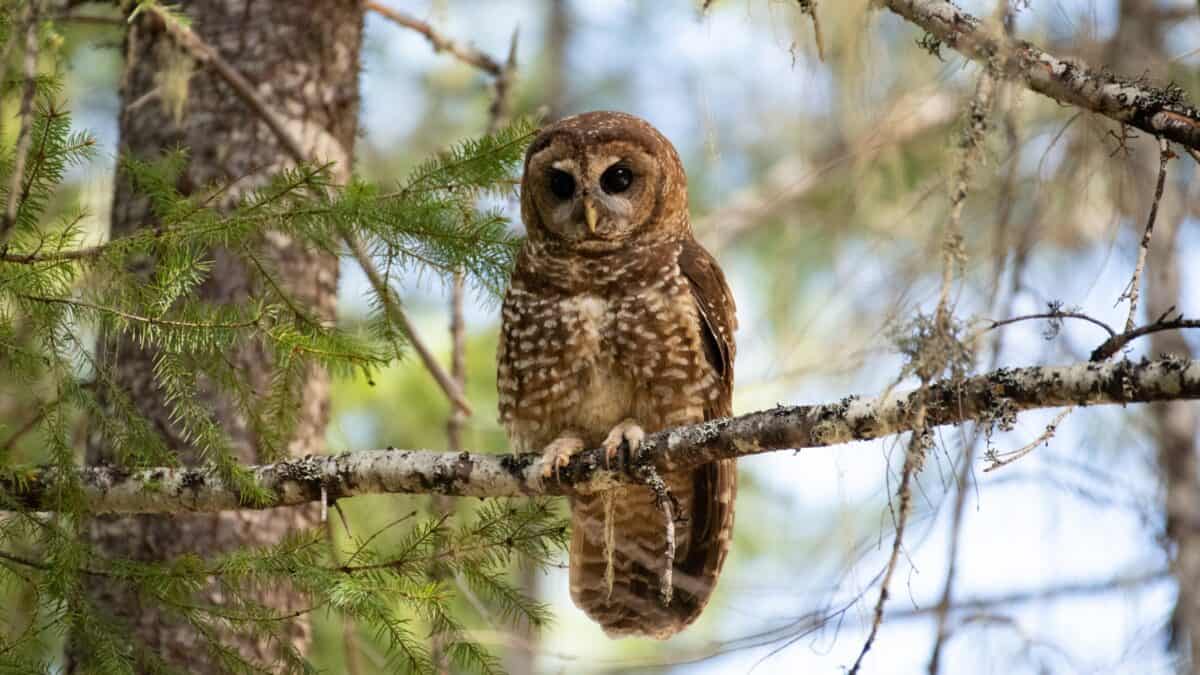
Owls have captivated human imagination for millennia, appearing in folklore and mythology across virtually every culture on Earth. Their nocturnal habits, silent flight, and haunting calls have inspired both wonder and fear throughout history. These mysterious birds have become deeply embedded in human superstition, with beliefs about them ranging from harbingers of death to symbols of wisdom and protection. While some cultures revere owls as sacred messengers, others view them with trepidation and dread. This fascinating dichotomy makes owl superstitions particularly rich for exploration. Join us as we delve into ten of the most intriguing owl superstitions from around the world, examining their origins and the cultural contexts that shaped these beliefs.
Death Omens in European Folklore

Throughout much of European folklore, the owl has been associated with death and dark omens. In medieval England, the screech of an owl was believed to foretell an imminent death in the household that heard it. This superstition was so widespread that Shakespeare referenced it multiple times in his works, most notably in “Macbeth” when the owl’s cry accompanies Duncan’s murder. Similarly, in French rural traditions, if an owl was heard calling near the home of a sick person, it was taken as a sign that death was approaching. These beliefs likely stemmed from the owl’s nocturnal nature and its eerie, human-like calls that can be particularly unsettling in the darkness. The bird’s association with nighttime—a period historically linked with danger and the unknown—cemented its reputation as a harbinger of doom in European consciousness.
Messengers of Wisdom in Ancient Greece

In stark contrast to the fear-based superstitions of medieval Europe, Ancient Greek culture revered the owl as a symbol of wisdom and good fortune. The little owl (Athene noctua) was the sacred companion of Athena, the goddess of wisdom, handicraft, and warfare. This association was so strong that the owl became emblematic of the city of Athens itself, appearing on their currency and considered a protective presence. Greek soldiers would interpret an owl’s flight over their army before battle as a promising sign of victory. This positive association has had remarkable staying power in Western culture, where the image of the “wise old owl” continues to persist in modern times. Archaeological findings show owl figures were commonly placed in children’s graves, suggesting they were thought to guide the souls of the departed.
Weather Forecasters in Native American Traditions

Among various Native American tribes, owls were considered supernatural weather forecasters. The Lenape people believed that if you heard an owl hooting at night, you should expect cold weather or snow the following day. In Cherokee traditions, the screech owl was known as the “night forecaster” or “happiness maker,” and its calls were interpreted as predictions about coming weather and community events. The Plains tribes observed owls’ behavior carefully, believing that changes in their calling patterns signaled shifting weather fronts. These beliefs weren’t merely superstitious but based on generations of observational knowledge—owls are indeed sensitive to barometric pressure changes and may alter their behavior before storms. This practical wisdom was wrapped in spiritual significance, with the owl serving as a messenger between the natural and supernatural worlds.
Soul Birds in Ancient Egyptian Belief

In Ancient Egyptian mythology, owls held a complex and somewhat contradictory position. They were often associated with death and the night, but unlike European traditions, this wasn’t necessarily fearsome. Egyptians believed owls could serve as guides and protectors for souls traveling to the afterlife. The owl hieroglyph represented the sound “m” and was frequently used in the word for “death,” creating a linguistic connection between owls and the afterlife. Archaeological evidence shows owl amulets among burial goods, suggesting they were thought to provide protection during the soul’s journey. Interestingly, Egyptians also believed that seeing an owl in dreams could be prophetic, potentially warning of coming changes or transitions in life. These beliefs reflected the Egyptian view of death not as an ending but as a transformation, with owls serving as guides through this momentous passage.
Witches and Shapeshifters in Latin American Lore

Throughout Latin America, particularly in Mexico and parts of South America, owls are frequently associated with witchcraft and shapeshifting. The “lechuza” legend, especially prevalent in Mexican and Tex-Mex culture, describes witches who transform into large owls to carry out mischief or revenge. These witch-owls are said to be able to speak human languages and call out the names of intended victims. In some versions of the legend, the lechuza is believed to be the spirit of a woman who died unjustly and returned to seek vengeance. Peruvian folklore similarly features the “tukwillay,” an owl believed to be a transformed shaman or sorcerer. These beliefs may have originated from the pre-Columbian period and merged with European witch traditions during colonization. The owl’s ability to turn its head almost completely around contributed to beliefs in its supernatural abilities and connection to shapeshifting.
Bringers of Birth Announcements in Mongolia

In traditional Mongolian folklore, the owl plays a surprisingly positive role as a harbinger of new life and fertility. Mongolian nomadic tribes believed that owls were messengers that brought souls to women who would soon become pregnant. A woman who heard an owl calling near her ger (traditional dwelling) might interpret it as an announcement that she would soon conceive. This belief extended to owls being protectors of pregnant women and newborns, with owl feathers sometimes placed near a baby’s cradle for protection. The eagle owl in particular was held in high esteem, considered a sacred bird that should never be harmed. This positive association contrasts dramatically with many Western traditions and likely stems from the Mongolian shamanic tradition, which viewed certain animals, including owls, as spiritual messengers and protectors rather than omens of misfortune.
Wealth and Prosperity in Indian Traditions

In several Indian traditions, particularly those associated with the goddess Lakshmi, owls represent wealth, prosperity, and good fortune. Lakshmi, the Hindu goddess of wealth and abundance, is often depicted with a white owl as her vahana (vehicle or mount). During Diwali, the festival of lights celebrating Lakshmi’s blessings, owls hold special significance as symbols of the goddess’s presence and favor. Some Indian business owners even keep owl imagery in their shops or offices to attract prosperity. However, this positive association isn’t universal across all Indian cultures—in some regions, particularly in rural areas, owls may still be viewed with suspicion as potential harbingers of misfortune. This duality reflects India’s diverse cultural landscape, where beliefs can vary significantly from one region to another. The owl’s association with Lakshmi may stem from the bird’s reputation for patience and sharp vision, qualities valued in business and financial matters.
Rain Callers in Australian Aboriginal Beliefs

Among several Australian Aboriginal groups, owls play an important role in weather-related mythology, particularly concerning rain. The Powerful Owl (Ninox strenua), Australia’s largest owl species, features in Dreamtime stories as a rain-bringer. In some traditions, the call of the owl is believed to summon rain clouds, making it an important figure in communities where rainfall is precious and sometimes scarce. Other Aboriginal groups consider certain owl species to be ancestral beings who helped shape the landscape during the Dreamtime. The Barking Owl, known for its dog-like call, is particularly significant in northern Australian traditions, where it’s sometimes associated with water spirits. These beliefs reflect the deep connection between Aboriginal peoples and the Australian landscape, where animals like owls serve as both practical indicators of environmental changes and spiritual links to ancestral knowledge.
Guardians Against Evil in Middle Eastern Folklore

In parts of the Middle East, particularly in ancient Arabian traditions, owls were believed to offer protection against evil spirits and the evil eye. Contrary to many Western superstitions, some Middle Eastern cultures hung owl feathers or talons in their homes as protective amulets. The owl’s ability to see in darkness was interpreted metaphorically as an ability to see through deception and evil intentions. In ancient Mesopotamian culture, owl imagery appeared on protective talismans meant to ward off demons and illness. The goddess Lilith was sometimes depicted with owls, representing her role as a guardian of the night. These protective associations existed alongside more negative interpretations—in some Islamic traditions, owls were viewed with suspicion as potential vessels for jinn (supernatural beings). This ambivalence reflects the complex relationship many cultures have with these mysterious nocturnal birds.
Portents of Weather in Celtic Tradition

Celtic folklore from Ireland, Scotland, and Wales contains numerous superstitions about owls as weather predictors. In Scottish Highland traditions, if an owl was heard calling during foul weather, it signaled that conditions would soon improve. Conversely, an owl hooting during clear weather might foretell an approaching storm. Welsh farmers would observe owl behavior carefully when planning agricultural activities, believing that changes in calling patterns or hunting times could predict significant weather shifts. In Irish tradition, the Barn Owl (known as “scréachóg” in Irish) was thought to have special knowledge of coming weather changes, with its screeches interpreted as specific forecasts. These beliefs, like many weather-related superstitions, likely contained kernels of observational truth—owls do alter their behavior in response to barometric pressure changes and may become more vocal before weather fronts move through an area.
Souls of the Departed in Japanese Shintoism

In traditional Japanese Shinto beliefs, owls (known as “fukurō”) occupy an interesting spiritual position as potential vessels for human souls. Some traditions hold that the souls of the recently deceased might temporarily inhabit an owl before moving on to the afterlife. This isn’t necessarily seen as frightening but rather as a natural part of the soul’s journey. The word “fukurō” is a homophone for “no hardship” in Japanese, giving owls positive associations with protection from suffering. In some regions, owl figurines are given as gifts to wish someone protection and good fortune. The horned owl (Bubo bubo) in particular features in Japanese folklore as a protective spirit that warns of danger and wards off disasters. These beliefs reflect Shintoism’s animistic worldview, where the boundaries between human, animal, and spirit realms are fluid and permeable, with owls serving as messengers between these domains.
Conclusion: The Enduring Mystery of Owl Superstitions

The remarkably diverse range of owl superstitions across world cultures reveals much about our complex relationship with these enigmatic birds. From death omens to wisdom symbols, from witches’ familiars to divine messengers, owls have occupied a unique position in human imagination for thousands of years. These varying beliefs aren’t merely arbitrary but often reflect genuine observations about owl behavior interpreted through cultural and spiritual lenses. Modern science has explained many of the behaviors that once seemed mysterious—their silent flight, exceptional night vision, and weather sensitivity—yet the mystique of the owl persists in contemporary culture. Even in our scientific age, the sudden appearance of an owl can still evoke a sense of the supernatural, a testament to the enduring power of these ancient superstitions. Perhaps what these diverse beliefs share is a recognition of the owl as a creature that exists between worlds—neither fully of day nor night, neither entirely wild nor tame—making it a perfect canvas for our human tendency to find meaning in the mysterious.

As a little kid, I fell in love with nature, wildlife, and animals. Living in the USA, South Africa, Italy, China and Germany gave me the opportunity to discover the world's Wildlife. My favorite animals are Mountain Gorillas, Siberian Tigers, and Great White Sharks.
I'm a certified PADI Open Water Diver, went to Everest Base Camp and Trekked Gorillas in Uganda. I hold a Master of Science in Economics and Finance.
Please send any feedback to feedback@animalsaroundtheglobe.com
- 23 Ancient Animals that Still Alive Today - July 26, 2026
- The 12 Most Powerful Spirit Animals and Their Meanings - July 26, 2026
- 10 Animals Most Likely to Take over the World if Humans Dissappeared - July 26, 2026