


Rwanda, often called the “Land of a Thousand Hills,” is not only famous for its breathtaking landscapes but also for its incredible biodiversity. This small East African nation offers wildlife enthusiasts an opportunity to witness some of the most fascinating creatures on the planet. From the iconic mountain gorillas in the misty Virunga Mountains to the diverse array of birds that color the skies, Rwanda provides unforgettable wildlife encounters. Let’s explore 18 stunning animals you can see in this remarkable country, each representing the natural wealth that makes Rwanda a premier eco-tourism destination.
14. Mountain Gorilla

The mountain gorilla (Gorilla beringei beringei) is undoubtedly Rwanda’s most famous resident and the cornerstone of the country’s tourism industry. Found in the Volcanoes National Park, these magnificent primates share 98% of their DNA with humans, creating an almost spiritual connection with visitors who encounter them. With fewer than 1,000 individuals left in the wild, Rwanda has become a global conservation success story, with gorilla numbers steadily increasing due to intensive protection efforts.
Trekking to see mountain gorillas in their natural habitat is a profound experience. Visitors are allowed to spend one hour with a habituated gorilla family after potentially strenuous hiking through the forest. Watching silverbacks interact with their family members, seeing mothers tenderly care for their infants, and observing juveniles playfully tumble through the vegetation offers insights into the complex social structures of these gentle giants. The conservation fees paid by tourists directly support protection efforts and community development around gorilla habitats.
13. Golden Monkey
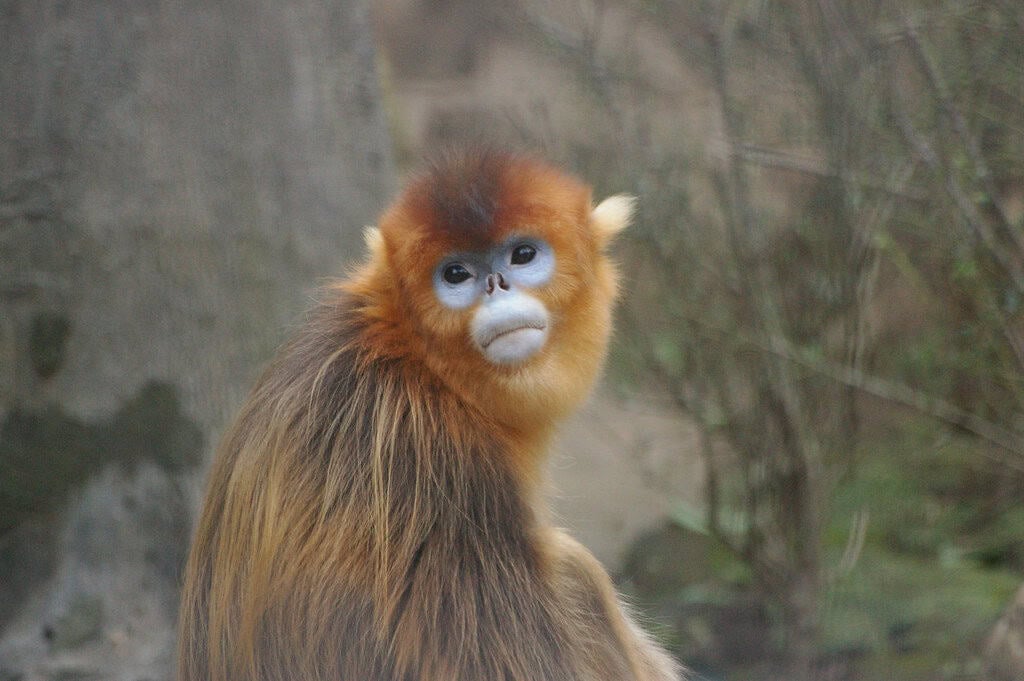
The golden monkey (Cercopithecus kandti) is another primate treasure found in Rwanda’s Volcanoes National Park. These distinctive monkeys are characterized by their bright orange-gold coloration on their backs and crowns, contrasting beautifully with their black limbs and facial features. Endemic to the Albertine Rift, they inhabit the bamboo forests that flourish at the base of the volcanoes, where they feed primarily on bamboo shoots, fruits, and occasionally insects.
Golden monkey tracking offers a less strenuous but equally rewarding alternative to gorilla trekking. These playful, social creatures live in large troops of up to 100 individuals, making for dynamic and entertaining viewing as they swing through the bamboo forests with remarkable agility. Despite being classified as endangered, conservation efforts focused on protecting their habitat and reducing human encroachment have helped stabilize their population in Rwanda, offering hope for their future survival.
12. African Elephant

Rwanda’s Akagera National Park is home to the African savanna elephant (Loxodonta africana), the largest land mammal on Earth. These magnificent creatures were reintroduced to the park after being nearly extirpated during the country’s civil unrest in the 1990s. Today, visitors can witness family herds of elephants moving majestically across the savanna landscapes or gathering around waterholes, especially during the dry season when water sources become concentrated.
What makes Rwanda’s elephant viewing special is the backdrop of rolling hills and lakes that characterize Akagera’s scenery. Watching these intelligent giants communicate through low-frequency rumbles, care for their young with remarkable tenderness, or display their problem-solving abilities as they navigate their environment offers a window into their complex social structures. Conservation efforts in Akagera have been remarkably successful, with elephant numbers increasing steadily, representing Rwanda’s broader commitment to restoring its natural heritage.
11. Black Rhino
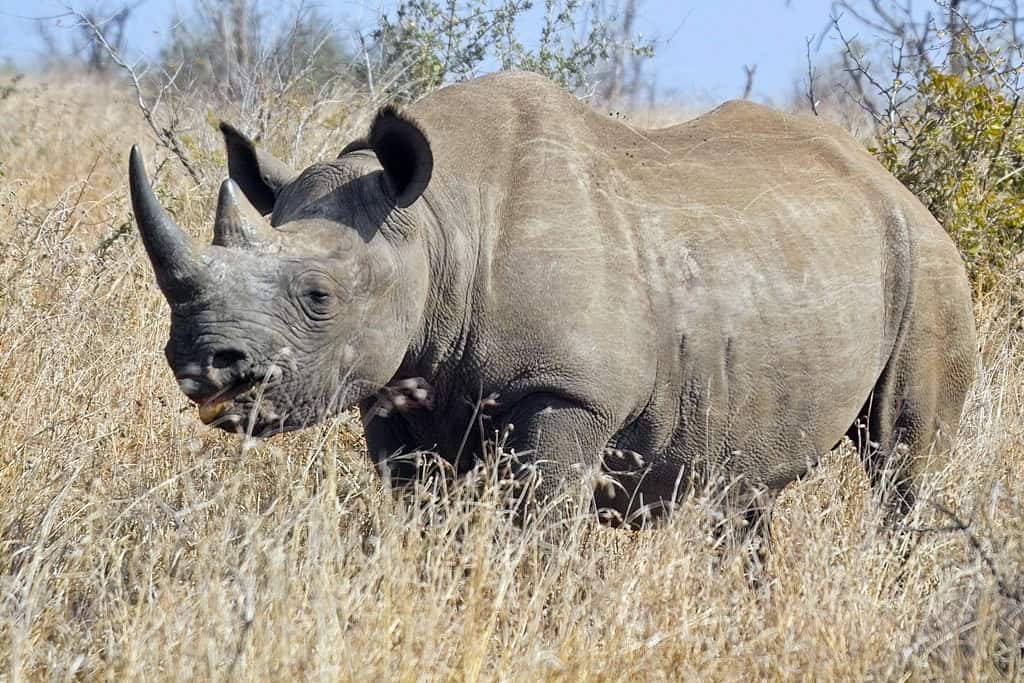
The critically endangered eastern black rhinoceros (Diceros bicornis michaeli) has made a triumphant return to Rwanda after being extinct in the country for nearly two decades. In 2017, 18 black rhinos were reintroduced to Akagera National Park, marking a significant milestone in Rwanda’s conservation journey. These magnificent creatures, characterized by their two horns and prehensile upper lip, now roam the savanna and woodland habitats of the park, completing the “Big Five” wildlife experience that draws visitors from around the world.
Spotting a black rhino in Rwanda is particularly special given their rarity and the remarkable conservation story they represent. Despite their imposing size and prehistoric appearance, black rhinos are surprisingly agile and can reach speeds of up to 35 mph (55 km/h). They are generally solitary animals, with mothers and calves forming the primary social bond. Their reintroduction represents one of Africa’s most ambitious wildlife restoration projects and highlights Rwanda’s commitment to becoming a conservation leader on the continent.
10. Hippopotamus

The common hippopotamus (Hippopotamus amphibius) thrives in Rwanda’s water bodies, particularly in Lake Ihema and other lakes in Akagera National Park. These massive semi-aquatic mammals spend most of their day submerged in water to keep their sensitive skin cool and protected from the sun. Despite their seemingly docile appearance, hippos are considered among Africa’s most dangerous animals, capable of surprising speed and aggression when threatened. Their massive jaws and canine teeth can inflict serious damage, making them respected and feared throughout their range.
Observing hippos in Rwanda offers a fascinating glimpse into their unique behavioral patterns. At dusk, they emerge from the water to graze, consuming up to 88 pounds (40 kg) of grass in a single night. Boat safaris on Lake Ihema provide an excellent opportunity to safely witness pods of hippos interacting in their aquatic environment, their eyes, ears, and nostrils perched just above the water’s surface. The distinctive “honking” calls of territorial males echo across the water, creating an unmistakable soundtrack to the African wilderness experience in Rwanda.
9. Masai Giraffe
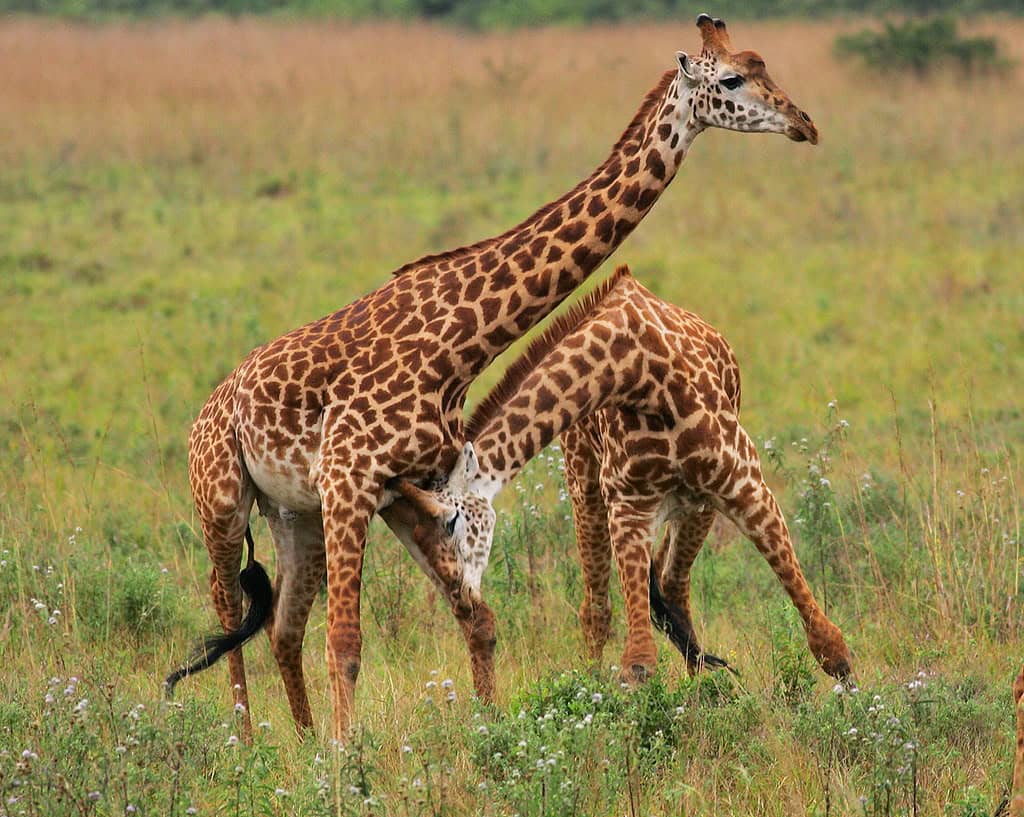
The Masai giraffe (Giraffa camelopardalis tippelskirchi), Earth’s tallest land animal, has been successfully reintroduced to Rwanda’s Akagera National Park. In 2019, 18 giraffes were translocated to the park, adding to a smaller existing population and boosting the genetic diversity of these magnificent creatures in the country. Their distinctive net-like pattern of dark patches separated by cream-colored channels makes them visually striking against Rwanda’s savanna landscapes. Rising to heights of up to 18 feet (5.5 meters), they create an iconic silhouette against the African horizon.
Watching giraffes in Rwanda provides a unique perspective on animal adaptation. Their extraordinary height allows them to feed on acacia leaves that other herbivores cannot reach, while their specialized cardiovascular system enables blood to be pumped all the way up their long necks to their brains. Visitors to Akagera can observe their graceful movement as they “amble” with both legs on one side moving together, or witness the spectacular “necking” behavior of males competing for dominance. Their reintroduction represents another successful chapter in Rwanda’s ongoing efforts to restore its natural ecosystems to their former glory.
8. Leopard
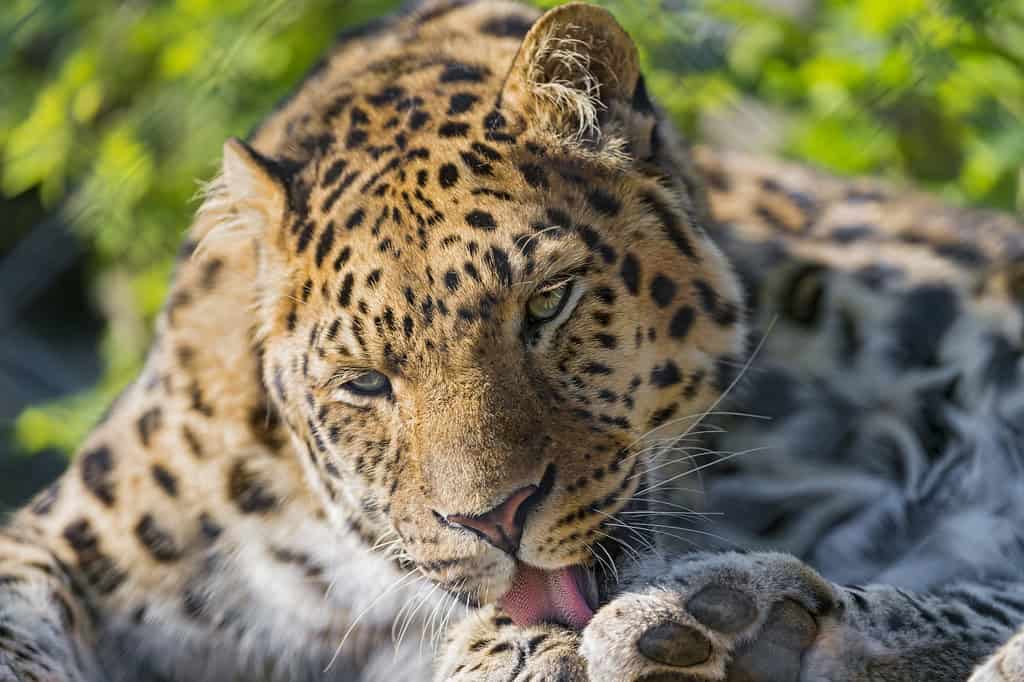
The African leopard (Panthera pardus pardus) is perhaps Rwanda’s most elusive big cat, primarily found in Akagera National Park. These magnificent solitary predators are masters of camouflage, their rosette-patterned coats blending perfectly with the dappled light of woodland areas. Incredibly adaptable, leopards in Rwanda hunt everything from insects to large antelopes, and are famous for their extraordinary strength—often hoisting prey two to three times their own weight into trees to avoid competition from other predators like lions and hyenas.
Spotting a leopard in Rwanda is considered a wildlife viewing privilege, requiring patience and a sharp-eyed guide. They are most active at dawn and dusk, when they emerge from their daytime resting places in trees or thick vegetation to hunt. Unlike other big cats, leopards are excellent swimmers and climbers, giving them access to a diverse range of prey. Their presence in Akagera represents the remarkable recovery of the park’s ecosystem following years of degradation during Rwanda’s troubled past. While sightings are never guaranteed, the possibility of glimpsing this spectacular cat adds an element of anticipation to any safari in Rwanda.
7. Lion

The African lion (Panthera leo) has made a remarkable comeback in Rwanda after being wiped out following the 1994 genocide. In 2015, seven lions were reintroduced to Akagera National Park from South Africa, marking the return of the “King of Beasts” to Rwanda after a 15-year absence. Today, the lion population has more than tripled, with several prides establishing territories throughout the park. These magnificent big cats, with their distinctive manes in males and powerful builds, represent the successful restoration of the natural order in Rwanda’s premier savanna ecosystem.
Observing lions in Rwanda offers insights into their complex social structures. Unlike other big cats, lions are highly social, living in prides dominated by a coalition of males who protect the territory while females do most of the hunting. Early morning game drives in Akagera provide the best opportunity to see lions active, perhaps lounging on kopjes (rocky outcrops) or patrolling their territories. The sound of a lion’s roar—audible up to 5 miles (8 km) away—remains one of Africa’s most spine-tingling wilderness experiences and a highlight for visitors lucky enough to encounter these magnificent predators in Rwanda.
6. Spotted Hyena

The spotted hyena (Crocuta crocuta), often misunderstood and unfairly maligned, is one of Rwanda’s most fascinating predators. Found primarily in Akagera National Park, these highly intelligent social carnivores play a crucial role in the ecosystem as both hunters and scavengers. Contrary to popular belief, spotted hyenas kill up to 95% of their food rather than merely scavenging. Their extraordinarily powerful jaws can crush bones that other predators leave behind, allowing them to extract nutritional value from carcasses that would otherwise go unused.
What makes hyenas particularly interesting to observe in Rwanda is their complex clan structure. Led by dominant females (who are larger and more aggressive than males), hyena clans can number up to 80 individuals with strict hierarchies determining access to food and breeding opportunities. Their distinctive “whooping” calls and cackling “laughs” create one of the most recognizable soundscapes of the African night. Night drives in Akagera offer the best chance to see these primarily nocturnal animals, their eyes glowing in the spotlight as they patrol their territories or gather around kills, showcasing their unique blend of strength, intelligence, and social complexity.
5. Chimpanzee
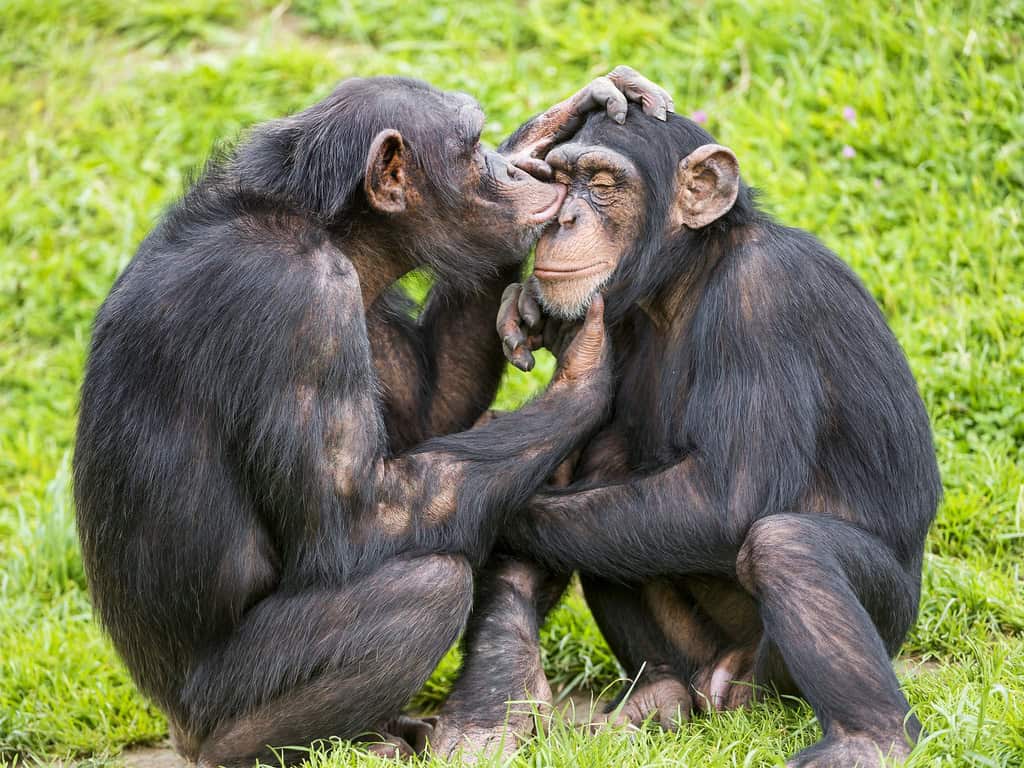
The eastern chimpanzee (Pan troglodytes schweinfurthii) represents one of Rwanda’s most charismatic and intelligent wildlife species. Found in Nyungwe Forest National Park in the southwest of the country, these great apes share approximately 98.6% of their DNA with humans, making encounters with them particularly poignant. Nyungwe is home to one of East Africa’s largest protected populations of chimpanzees, with several habituated communities that visitors can trek to see. Watching them use tools, communicate through an extensive repertoire of vocalizations, and navigate their complex social politics offers a window into our own evolutionary past.
Chimpanzee trekking in Rwanda differs from the gorilla experience, often requiring more hiking as chimps move rapidly through the forest canopy. When encountered, their energy and expressiveness create an entirely different primate viewing experience. Visitors might witness dramatic displays as males compete for status, tender grooming sessions between family members, or the fascinating process of tool use as chimps fish for termites or crack nuts using stones. Conservation efforts in Nyungwe have focused on protecting these endangered apes from habitat loss and poaching while developing sustainable tourism that benefits local communities, creating a model for primate conservation throughout Africa.
4. Colobus Monkey
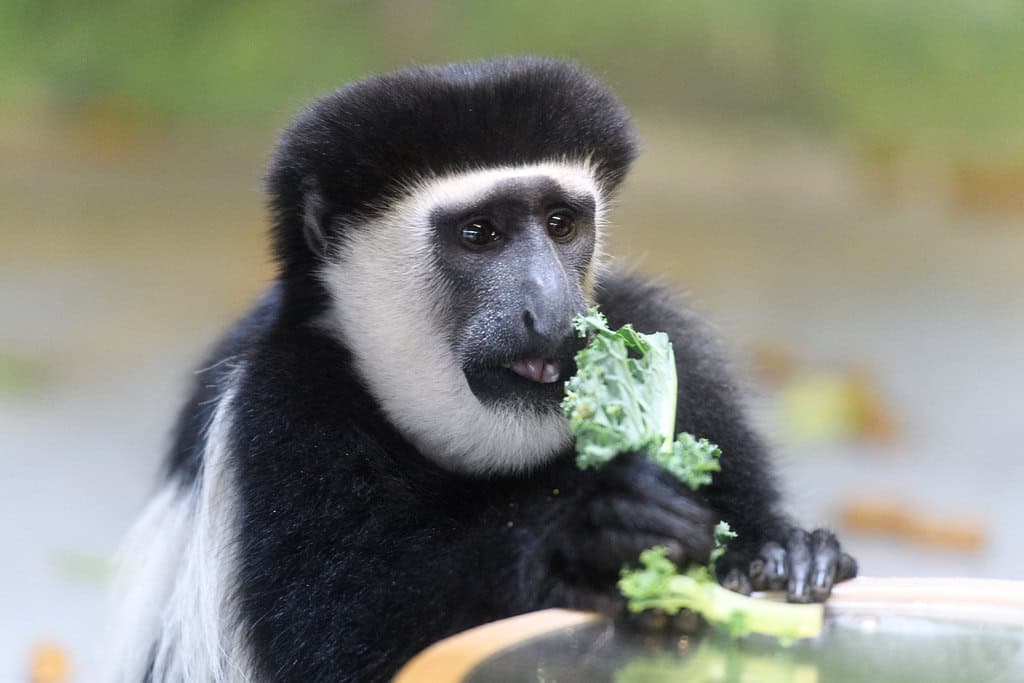
The Angolan colobus monkey (Colobus angolensis) creates a striking sight in Rwanda’s forests with its dramatic black and white coloration. Most notably found in Nyungwe Forest National Park, these arboreal primates are easily identified by their flowing white mantle, beard, and tail tip that contrast sharply against their otherwise black fur. Unlike other monkeys, the colobus lacks thumbs, having evolved four long fingers that form a hook-like structure perfect for swinging through the forest canopy. They are primarily leaf-eaters, possessing specialized multi-chambered stomachs that allow them to digest the cellulose in mature leaves that other primates cannot process.
What makes colobus monkeys particularly spectacular to observe in Rwanda is their incredible leaping ability. They can jump distances of up to 50 feet (15 meters) between trees, often appearing to fly as they extend their limbs and use their white mantle and tail as a parachute to control their descent. They live in troops of up to 15 individuals typically consisting of a dominant male, several females, and their offspring. Early morning hikes in Nyungwe offer the best opportunity to see these monkeys as they begin their day of feeding and social interaction high in the forest canopy, their distinctive black and white forms creating perfect contrast against the lush green foliage.
3. Grey Crowned Crane

The grey crowned crane (Balearica regulorum), Rwanda’s national bird and the emblem featured on its coat of arms, is one of Africa’s most regal and visually stunning birds. Standing nearly 4 feet (1.2 meters) tall, these elegant creatures are instantly recognizable by their crown of stiff golden feathers, bright red throat pouch, and distinctive white cheek patches. Their presence on Rwanda’s national emblem represents grace, prosperity, and longevity, values deeply embedded in Rwandan culture. These birds can be spotted in wetland areas throughout the country, particularly in Akagera National Park and around the marshes of Rugezi.
Observing grey crowned cranes in Rwanda often includes witnessing their elaborate courtship dance, which involves bowing, jumping, wing-flapping, and calling—a spectacle that has inspired traditional Rwandan dance forms. Unlike many crane species that migrate, Rwanda’s grey crowned cranes are largely resident, forming lasting pair bonds that can endure for years. Despite their cultural significance, these magnificent birds face challenges from wetland degradation and illegal capture for the pet trade. Conservation efforts, including community education and habitat protection, aim to ensure that this iconic species continues to grace Rwanda’s landscapes for generations to come.
2. Sitatunga
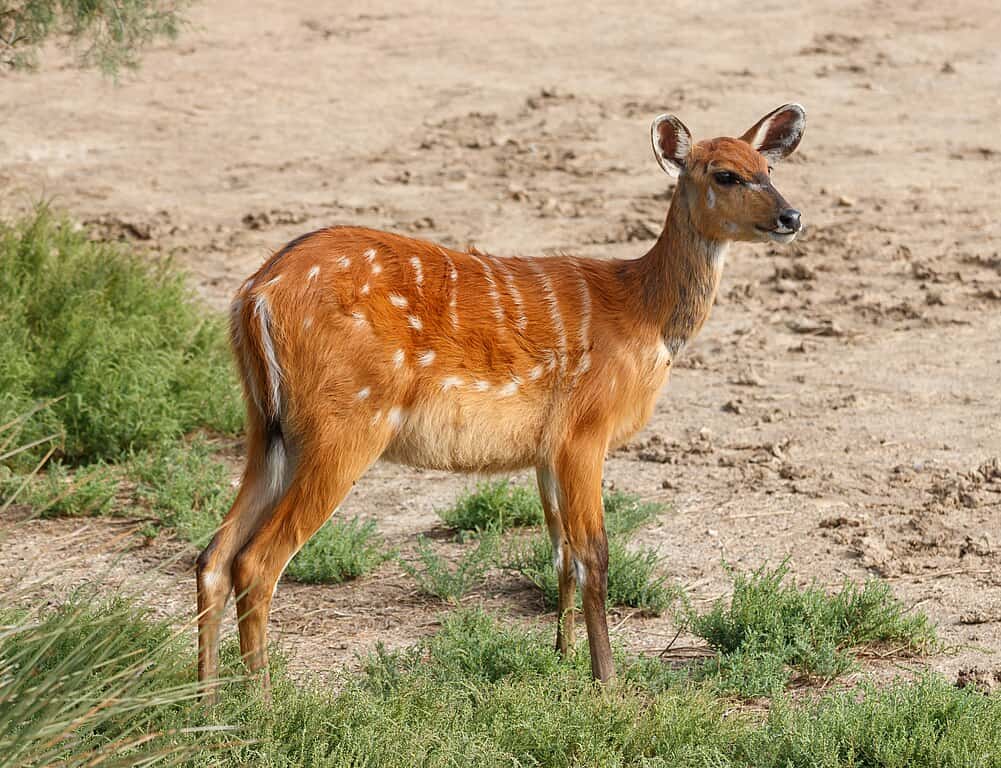
The sitatunga (Tragelaphus spekii) is one of Africa’s most specialized and elusive antelopes, perfectly adapted to the swampy environments found in parts of Rwanda. Most commonly spotted in the wetland areas of Akagera National Park, these unique ungulates possess splayed, elongated hooves that prevent them from sinking in marshy terrain—almost like natural snowshoes. Their water-resistant coats and ability to submerge almost completely, with only their nostrils above the surface, make them masters of their aquatic habitat. Males sport impressive spiral horns that can reach lengths of up to 35 inches (90 cm) and display a darker coat than the reddish-brown females.
What makes sitatunga particularly fascinating to observe in Rwanda is their remarkable adaptation to wetland living. They feed on aquatic plants inaccessible to other antelope species and can remain motionless in water for hours to avoid detection by predators. The best opportunity to spot these shy creatures comes during early morning boat trips on Lake Ihema or other water bodies in Akagera, when they might venture to the edges of reed beds to feed. Their specialized ecological niche makes them important indicators of wetland health, and their presence in Rwanda’s protected areas speaks to the successful conservation of these vital but often threatened ecosystems.
1. African Buffalo
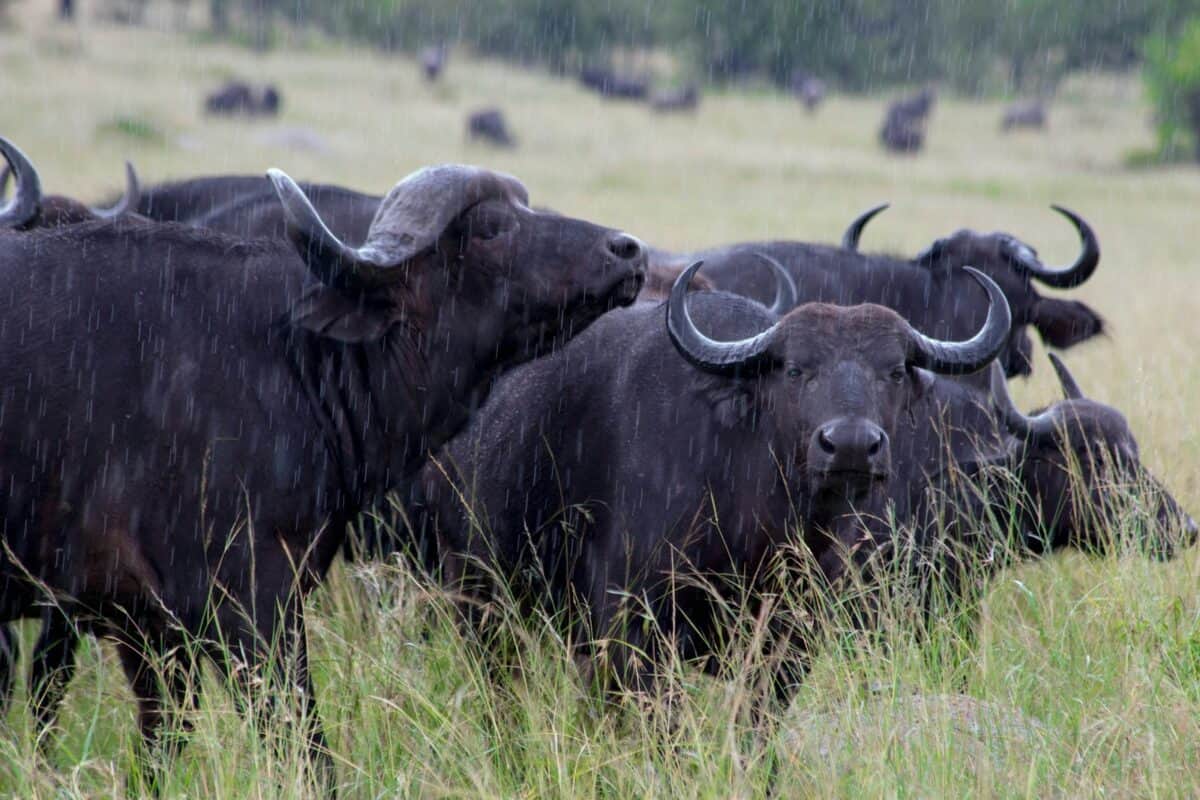
The African buffalo (Syncerus caffer), often regarded as one of Africa’s “Big Five,” is a powerful and unpredictable grazer found in Rwanda’s Akagera National Park. These robust animals live in large herds that can number in the hundreds, moving together across the savanna in search of water and grazing areas. Males are especially formidable, with thick, fused horn bases—known as a “boss”—that offer both defense and dominance in social hierarchy.
Observing buffalo in Rwanda offers a chance to witness their complex herd dynamics and protective instincts. Females form the core of the herd and fiercely defend their calves, while dominant bulls maintain order and scan for threats. Despite their resemblance to domestic cattle, buffalo remain entirely wild and are known for their unpredictable temperament—especially when cornered or threatened. Their presence in Akagera contributes to the park’s authentic East African safari experience, and their resilience reflects the successful recovery of Rwanda’s wildlife after decades of ecological decline.
Conclusion

From mist-shrouded mountain forests to sun-drenched savannas and tranquil wetlands, Rwanda offers a mosaic of ecosystems that support an astonishing variety of wildlife. The 18 animals highlighted in this article—each with their own unique behaviors, adaptations, and conservation stories—reflect the rich natural heritage that makes Rwanda a rising star in eco-tourism and biodiversity preservation.
Whether it’s locking eyes with a mountain gorilla, listening to the distant roar of a lion across Akagera’s plains, or watching a crowned crane perform its graceful courtship dance, every wildlife encounter in Rwanda feels deeply personal and unforgettable. But beyond the thrill of these moments lies a powerful testament to resilience—of animals, habitats, and a nation that has prioritized conservation as a cornerstone of its future.
Rwanda is not just a place to see wildlife—it’s a place to witness hope, regeneration, and the profound interconnectedness of all living things. For travelers seeking beauty, meaning, and purpose in their adventures, few destinations offer such a rich and rewarding journey into the wild.

As a little kid, I fell in love with nature, wildlife, and animals. Living in the USA, South Africa, Italy, China and Germany gave me the opportunity to discover the world's Wildlife. My favorite animals are Mountain Gorillas, Siberian Tigers, and Great White Sharks.
I'm a certified PADI Open Water Diver, went to Everest Base Camp and Trekked Gorillas in Uganda. I hold a Master of Science in Economics and Finance.
Please send any feedback to feedback@animalsaroundtheglobe.com
- Why the Great Barrier Reef Is the Best Place to Spot Sea Turtles - June 3, 2026
- 2 Animals With Super Sized Body Parts and What They are For - June 3, 2026
- Explore The Azores - June 3, 2026