

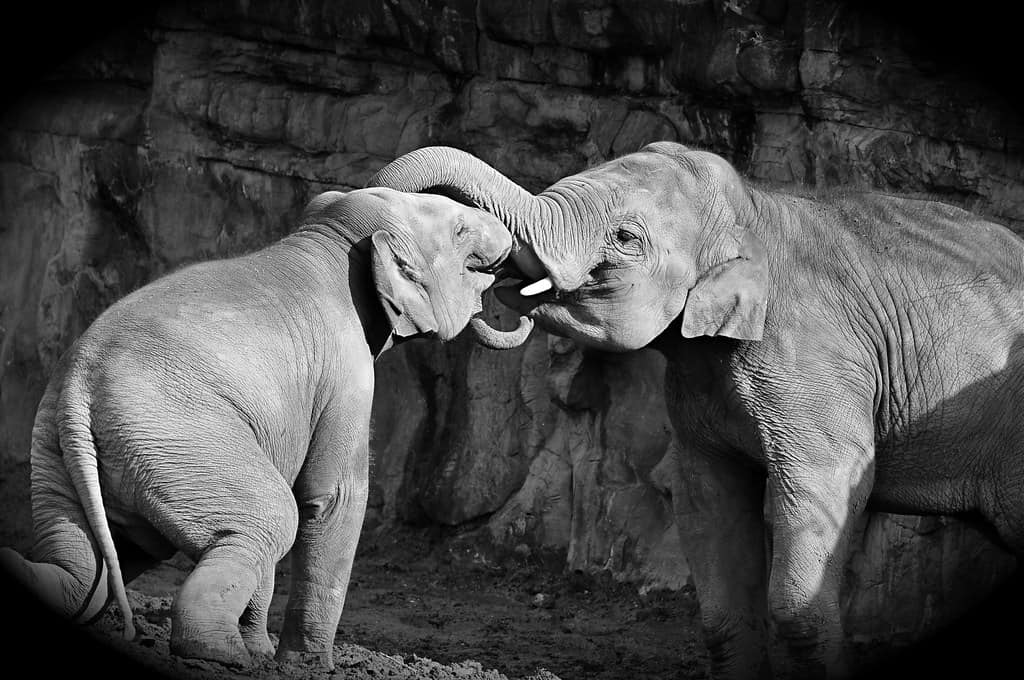
In the vast savannas and forests where elephants roam, one of the most endearing behaviors observed in elephant calves is their tendency to suck on their trunks—much like human babies with pacifiers. This self-soothing behavior is not just adorable to witness but serves important developmental and emotional functions for young elephants. Baby elephants, with their playful demeanor and curious nature, often explore the world through their most versatile appendage: the trunk. This remarkable organ, which contains over 40,000 muscles and can perform delicate tasks, becomes a source of comfort during the early stages of life. As we explore this fascinating behavior, we’ll discover how it helps young elephants develop crucial skills while providing emotional security in their complex social environment.
The Developmental Purpose of Trunk Sucking

Trunk sucking serves a vital developmental purpose for baby elephants as they learn to master control of this versatile appendage. Elephant trunks contain tens of thousands of muscles and require significant practice to develop the fine motor skills necessary for adult life. When calves suck on their trunks, they’re actually engaging in a form of neuromuscular training that helps strengthen the intricate muscles and neural connections needed for precise trunk movements.
Researchers studying elephant behavior have observed that trunk sucking typically begins within the first few weeks of life and can continue for several years, gradually decreasing as the elephant gains more control and confidence in using its trunk for feeding, drinking, and social interactions. This behavior helps establish the neural pathways that will eventually allow them to perform delicate tasks like picking up a single blade of grass or precisely manipulating objects. Just as human babies develop hand-eye coordination through repetitive movements, elephant calves develop “trunk-brain” coordination through this seemingly simple behavior.
Emotional Comfort and Self-Soothing

Beyond physical development, trunk sucking provides significant emotional comfort for baby elephants. Young elephants often resort to this behavior when they feel anxious, tired, or separated from their mothers. The familiar action of sucking creates a calming effect, similar to how human babies are soothed by pacifiers or thumb-sucking. This self-soothing mechanism helps elephant calves regulate their emotions in a complex social environment where they must learn to navigate relationships within the herd.
Wildlife biologists have noted increased instances of trunk sucking during potentially stressful situations, such as when new elephants join the herd or during thunderstorms. The behavior appears to activate the parasympathetic nervous system, which helps reduce stress hormones and induces a state of relaxation. This emotional regulation skill is particularly important for a species that forms deep social bonds and lives in tight-knit family groups where emotional stability contributes to overall herd harmony.
Maternal Bonding and Trunk Sucking
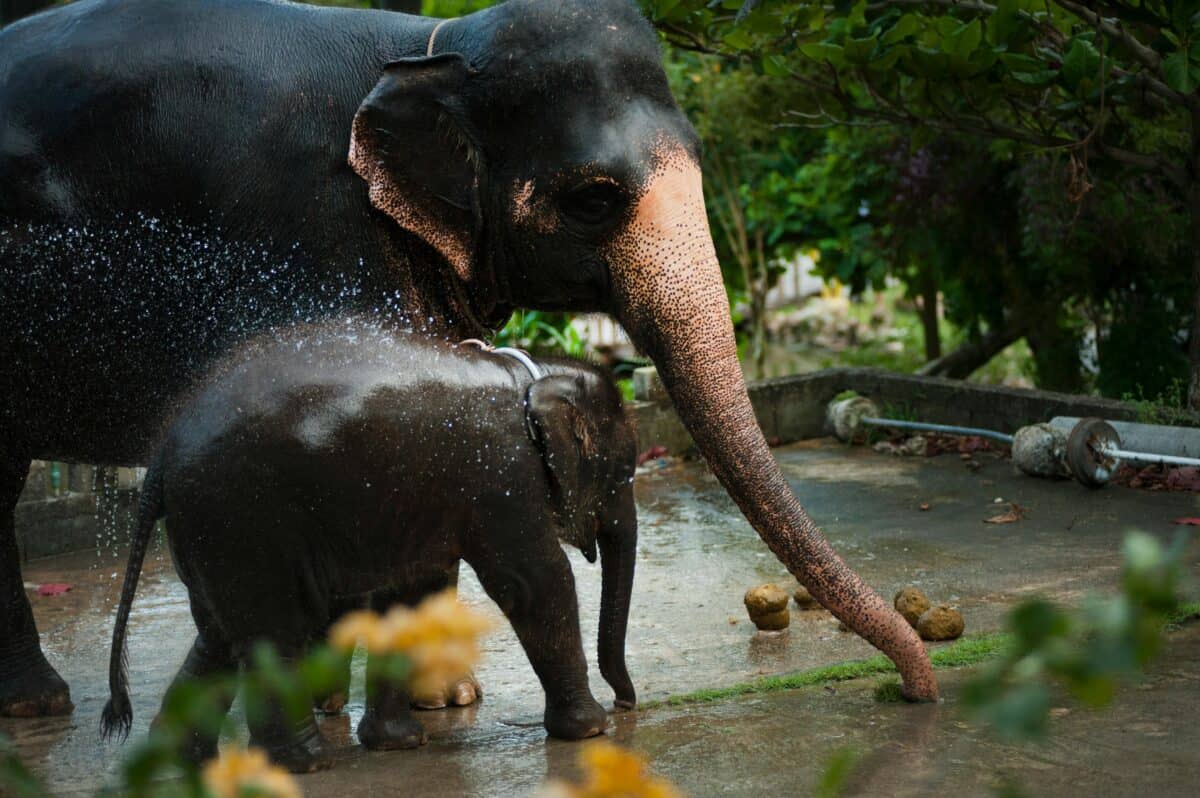
The relationship between maternal bonding and trunk sucking is significant in elephant development. While human babies suckle at their mother’s breast, elephant calves actually use their mouths (not their trunks) to nurse from their mothers. However, researchers have observed that after nursing sessions, calves often engage in increased trunk-sucking behavior. This pattern suggests that trunk sucking may serve as a transitional comfort activity that helps maintain the feeling of security associated with maternal care even when not directly nursing.
Mother elephants often encourage and respond to their calves’ trunk-sucking behavior with gentle touches and rumbles of approval. This positive reinforcement strengthens the mother-calf bond while simultaneously supporting the calf’s developmental progression. In orphaned elephants raised in sanctuaries, caretakers have noticed that trunk sucking may become even more pronounced, possibly as a way to compensate for the absence of natural maternal bonding opportunities. This observation underscores the behavior’s importance in both emotional and social development.
Trunk Sucking Versus Actual Feeding

It’s important to distinguish between trunk sucking for comfort and the actual feeding process in elephants. While baby elephants suck their trunks for comfort, they don’t use their trunks for feeding in the same way. When actually consuming food or water, young elephants must learn the complex process of using their trunk to gather material and transfer it to their mouth. This skill takes years to perfect, and young calves often struggle with this coordination initially, sometimes stepping on their trunks or spraying water in unintended directions while learning.
The transition from trunk-sucking to skillful feeding represents a significant developmental milestone. Wildlife researchers have documented that elephant calves typically begin attempting to use their trunks for feeding at around three to four months of age, but may not become truly proficient until they are a year old or older. Throughout this learning period, trunk sucking continues as a parallel behavior, occurring most often during rest periods or times of stress, while the more functional feeding behaviors develop separately through observation and practice.
Age-Related Patterns in Trunk-Sucking Behavior

The frequency and intensity of trunk-sucking behavior follow predictable age-related patterns. Newborn elephants exhibit the behavior almost immediately after birth, but lack the trunk control to do it effectively. By several weeks of age, the behavior becomes more pronounced and coordinated. The peak period for trunk sucking typically occurs between three months and two years of age, when calves are simultaneously developing independence while still requiring significant maternal support.
As elephants mature, trunk sucking gradually diminishes in frequency. By around five years of age, most elephants engage in the behavior only occasionally, usually during periods of heightened stress or uncertainty. However, researchers have documented instances of adolescent and even adult elephants reverting to trunk-sucking behavior during particularly challenging situations, such as after being rescued from traumatic circumstances or during significant environmental changes. This suggests that the self-soothing mechanism established in infancy remains accessible throughout life, similar to how some humans may revert to childhood comfort behaviors during times of extreme stress.
Variations in Trunk-Sucking Techniques

Not all elephant calves suck their trunks in the same way. Researchers have documented several distinct trunk-sucking styles that vary among individuals and sometimes among different elephant populations. Some calves prefer to curl the tip of their trunk into their mouth, while others may fold a portion of the trunk’s length and insert that section. Some even develop unique methods, such as holding the trunk tip against the roof of their mouth without actively sucking, or simultaneously swaying while engaged in trunk-sucking behavior.
These personal preferences appear to develop early and often remain consistent throughout the period when trunk sucking is common. Interestingly, there seems to be some familial patterns in these techniques, with calves sometimes adopting similar styles to their mothers or older siblings, suggesting both a genetic component and a learned aspect to the specific expression of this behavior. These variations highlight the individuality of elephants even at a young age and demonstrate the complex interplay between instinctual behaviors and learned techniques.
Social Learning and Trunk Sucking

Elephant calves learn many behaviors through observation, and trunk sucking is no exception. Young elephants frequently observe older calves engaging in trunk-sucking behavior and may mimic these actions as part of their social learning process. In multi-generational herds, researchers have observed what appears to be “waves” of trunk-sucking behavior, where one calf’s engagement in the activity triggers similar behavior in other young elephants nearby.
This social aspect of trunk sucking creates informal learning opportunities within the herd. Younger calves may adopt specific trunk-sucking techniques or patterns from slightly older calves they admire, while simultaneously receiving feedback from adults about appropriate contexts for the behavior. This social reinforcement helps establish both the physical techniques and the social rules surrounding comfort behaviors, demonstrating how even seemingly simple self-soothing activities contribute to the complex social fabric of elephant society.
Differences Between African and Asian Elephant Calves

While both African and Asian elephant calves engage in trunk-sucking behavior, there are subtle differences in how this behavior manifests between the two species. African elephant calves (Loxodonta africana and Loxodonta cyclotis) typically begin trunk sucking slightly earlier than their Asian counterparts (Elephas maximus) and tend to engage in the behavior more frequently. This difference may relate to the African elephant’s trunk having two “fingers” at its tip versus the Asian elephant’s single “finger,” which creates different sensory experiences and control challenges.
Another notable difference is the social context of trunk sucking. African elephant calves, living in more fluid social structures, often engage in trunk sucking during social play with peers. Asian elephant calves, typically living in more stable family groups, show a tendency to engage in the behavior more during quiet, solitary moments. These differences reflect the broader distinctions in social organization and behavioral patterns between the two species, demonstrating how even comfort behaviors are shaped by evolutionary and ecological factors specific to each elephant species.
Environmental Triggers for Trunk Sucking

Certain environmental conditions and situations reliably trigger increased trunk-sucking behavior in baby elephants. Stressful situations, such as the presence of predators, unfamiliar elephants, or human disturbances, often prompt immediate trunk-sucking responses. Researchers working with elephants in both wild and sanctuary settings have documented increased trunk-sucking during thunderstorms, during veterinary procedures, and when herds must navigate challenging terrain or cross bodies of water.
Interestingly, positive excitement can also trigger the behavior. When new food is introduced, during playful social interactions, or when exploring novel but non-threatening environments, elephant calves often engage in brief episodes of trunk sucking, almost as if to center themselves during stimulating experiences. Weather conditions also appear to influence the behavior, with particularly hot weather sometimes corresponding with increased trunk sucking, possibly because the behavior helps moisten the inside of the mouth and provides a cooling sensation. These environmental triggers highlight how trunk sucking serves as a flexible coping mechanism that helps young elephants navigate a wide range of experiences and emotions.
Conservation Implications of Understanding Comfort Behaviors

Understanding natural comfort behaviors like trunk sucking has significant implications for elephant conservation efforts. For rehabilitation programs working with orphaned elephant calves, recognizing and supporting natural self-soothing behaviors is crucial for psychological development. Conservation professionals have found that providing opportunities for normal behavioral development, including trunk sucking, significantly increases survival rates and successful reintegration of orphaned elephants into wild or semi-wild conditions.
This knowledge also informs wildlife management practices for elephants in protected areas. Conservation areas that maintain stable family groups and minimize unnecessary disturbances allow for the natural progression of developmental behaviors like trunk sucking. When human interference disrupts these processes—through poaching that creates orphans or habitat fragmentation that stresses family groups—the developmental trajectory of young elephants can be compromised. By protecting the social and environmental conditions that support normal infant development, conservation efforts contribute not just to elephant numbers but to the psychological well-being of these highly intelligent and emotionally complex animals.
The Fascinating Science of Elephant Trunk Development
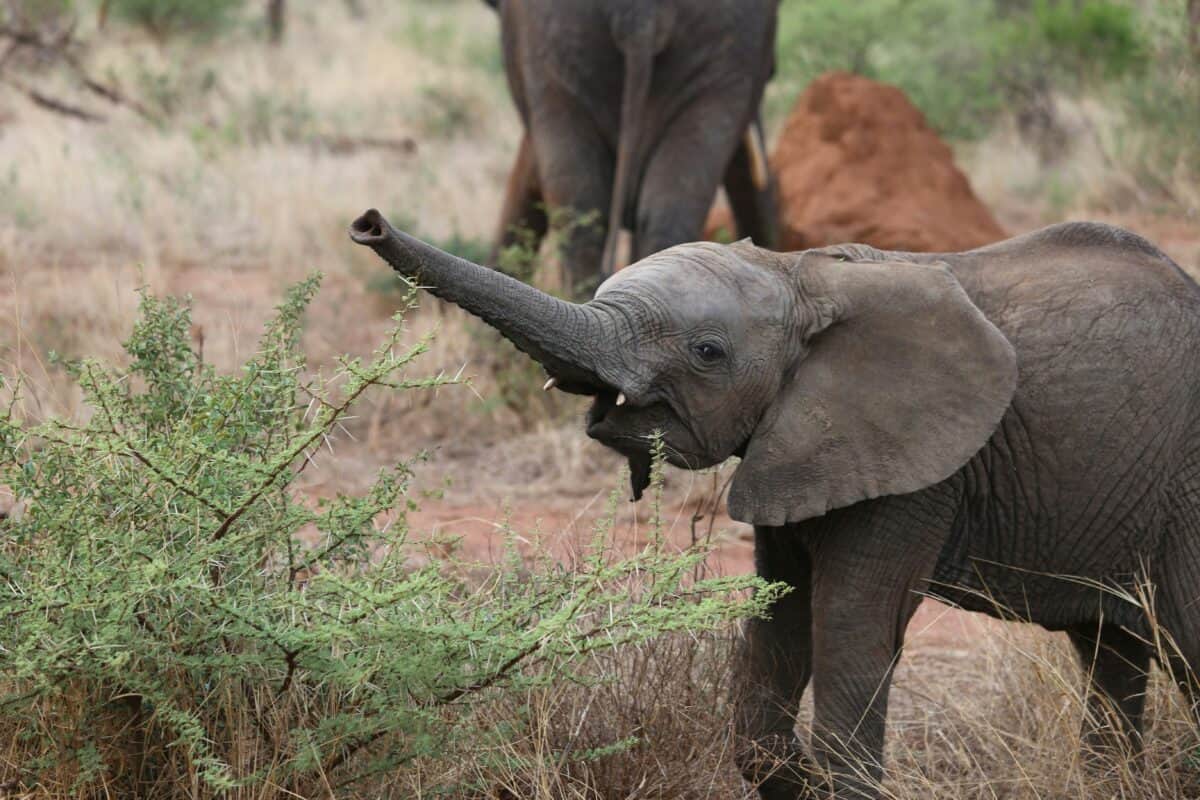
The elephant’s trunk is one of the most remarkable structures in the animal kingdom, containing approximately 40,000 muscles organized in a complex, hydrostatic skeletal system with no bones. For comparison, the entire human body contains roughly 650 muscles. This extraordinary appendage begins developing before birth but requires years of practice to master. Trunk sucking represents an important part of this developmental process, helping to strengthen muscles and establish neural pathways for the precise control needed in adulthood.
Neuroscience research has revealed that a disproportionately large section of the elephant’s brain is dedicated to trunk control, similar to how a large portion of the human brain manages our dexterous hands. When elephant calves suck their trunks, they’re essentially engaging in a form of neural exercise that strengthens these brain regions. Behavioral studies using thermal imaging have shown increased brain activity in these motor control areas during trunk-sucking episodes, suggesting that what appears to be a simple comfort behavior is actually a sophisticated developmental process that prepares young elephants for the complex trunk manipulations they’ll need throughout their long lives.
Understanding the Heartwarming Nature of Elephant Comfort Behaviors
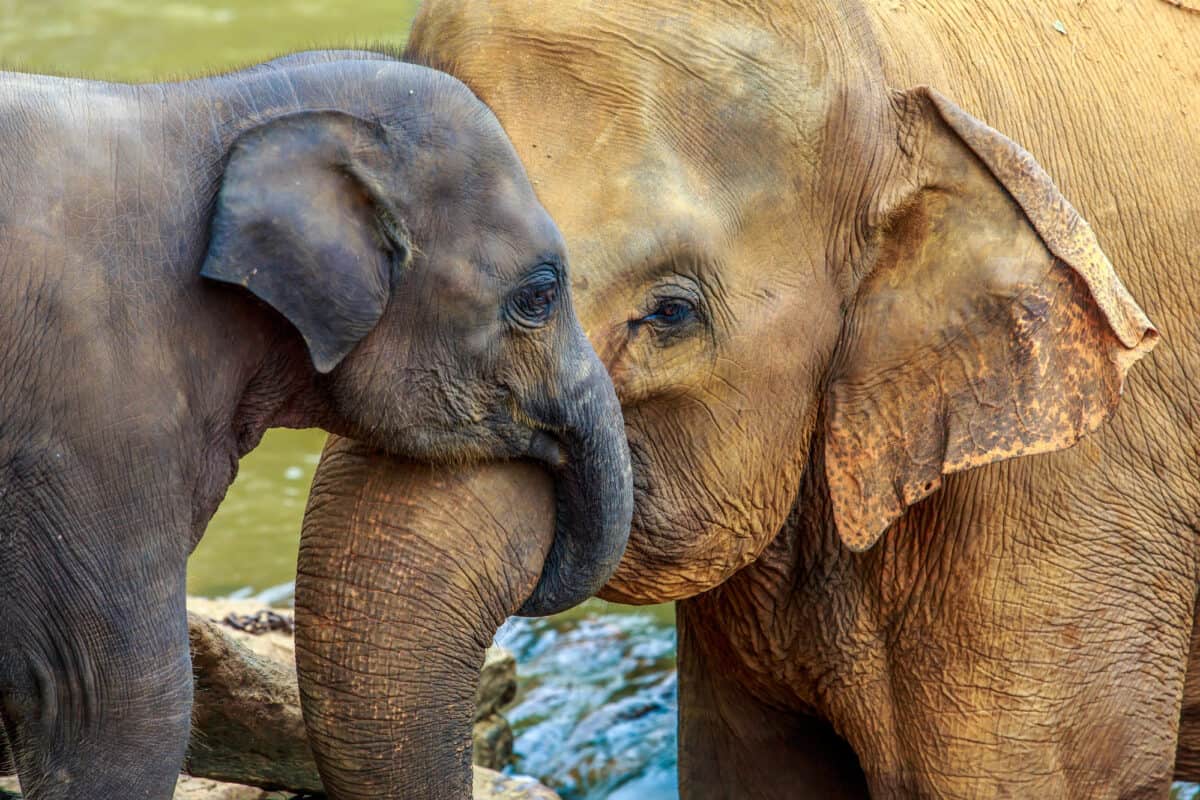
The phenomenon of baby elephants using their trunks like pacifiers offers a fascinating window into both the developmental biology and emotional lives of these remarkable animals. From strengthening vital muscle control to providing emotional regulation during stressful situations, trunk sucking serves multiple crucial functions in elephant development. This behavior beautifully illustrates the interconnected nature of physical and emotional development in highly intelligent, social species like elephants.
As we continue to study and protect these magnificent creatures, appreciating the subtleties of their developmental processes enhances our conservation approaches and deepens our connection to them. The image of a baby elephant contentedly sucking its trunk reminds us that despite our obvious differences, humans and elephants share fundamental needs for comfort, security, and the gentle progression from dependence to mastery. In this seemingly simple behavior, we witness the complex interplay of biology, psychology, and social learning that shapes elephant development, providing insights that extend far beyond mere scientific curiosity to touch our understanding of what it means to nurture the next generation of any species.

From exploring the marine wonders in the Azores and witnessing the vast savannas of Kenya, to delving deep into the rich biodiversity of South Africa and traversing iconic landscapes in Australia and the US like Yellowstone, Chris's experiences are vast.
With a penchant for diving alongside sharks, the ocean holds a special place in his heart.
Through his academic insights, he champions wildlife conservation, striving with 'Animals Around The Globe' to cultivate a profound connection between humans and animals, enhancing our mutual appreciation.
Connect with him at Feedback@animalsaroundtheglobe.com.
- 6 Cat Breeds that Bond Instantly with Humans and 6 Who Don’t - July 16, 2026
- How Baby Elephants Use Their Trunks Like Pacifiers - July 16, 2026
- The Largest Jellyfish Ever Found - July 16, 2026
Leave a comment
You must be logged in to post a comment.